Team
Mohammad graduated from Imperial College Business School and is passionate about teaching, having delivered over 3,000 hours in schools, tuition centres and charities. Florence is a Software Crafter and Hacking Coach with 4 years of Software Development experience, as well as 2 years of experience as an Computer Science examiner. Nikk is a 2nd-year Computer Science student, having developed numerous full-stack products in the past. Bill is a Computer Science graduate with 2 years of industry experience. Dan is a Computer Science graduate with 5 years of experience as a SysAdmin Technician. Furthermore, he has 3 years of experience as a teaching assistant for SEN students, where he realised the importance of differentiating education. But most importantly, we are united by a common vision that one day, every child will have equal access to high-quality, personalised education.
Inspiration
As educators, we have experience teaching students in one-to-one and classroom settings, where we saw the immense impact that personalised education can have on boosting student motivation and thus performance.
Across the world today, children are being taught in large classrooms at the same pace, in the same style, and in the same order to all students. The problem is that learning is a highly individual process, the delivery of which should be tailored depending on prior knowledge, ability and preferences.
This one-size-fits-all approach hurts many students who need to be taught in a tailored manner. When a student misunderstands a topic early on, the class simply forges ahead, progressing to more advanced concepts that demand a robust understanding of the previous topic. This leaves them in an even deeper hole than the one they started off with, compounding their underperformance. Unfortunately, for the teacher to help, they would need to be able to precisely identify and track all their students’ fundamental misconceptions and design tailored strategies for each of them. Teachers don’t have the time nor the tools they need to achieve this. While some parents resort to one-to-one private tuition to address this issue, this costs the average household £900-1,000 annually (CIL Consultants, 2017), a luxury many parents can’t afford. 32% of advantaged students receive one-to-one tuition, compared to only 7% of disadvantaged students (Sutton Trust, 2017).
The COVID-19 pandemic has further exacerbated this problem, where over 2 million students received less than an hour of schoolwork a day throughout lockdown.
This urgent educational inequality crisis motivated us to develop a scalable yet affordable approach to personalised learning.
What it does
We're developing adaptive Maths videos that tailors learning content to the student's individual needs based on prior interactions.
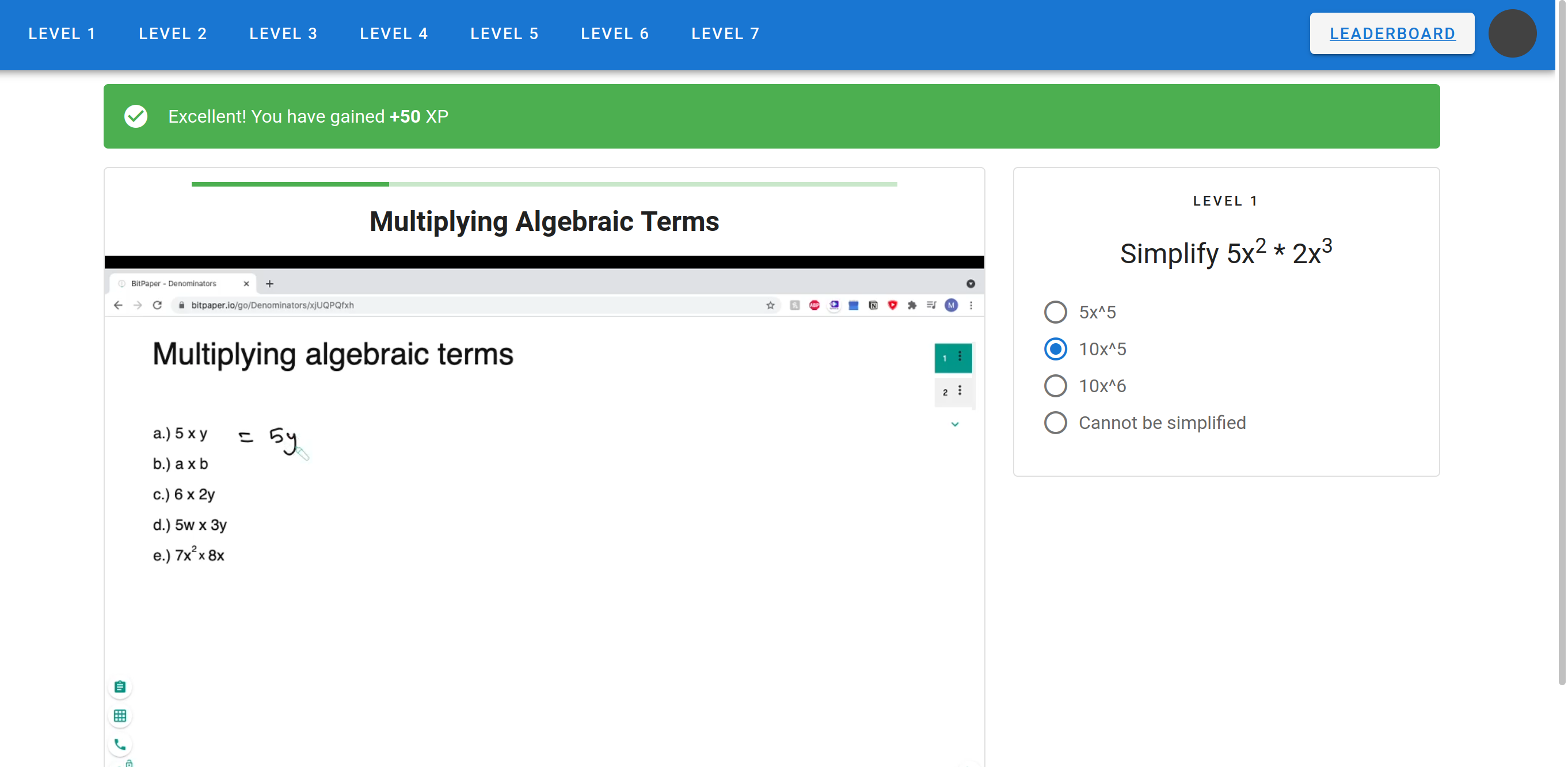
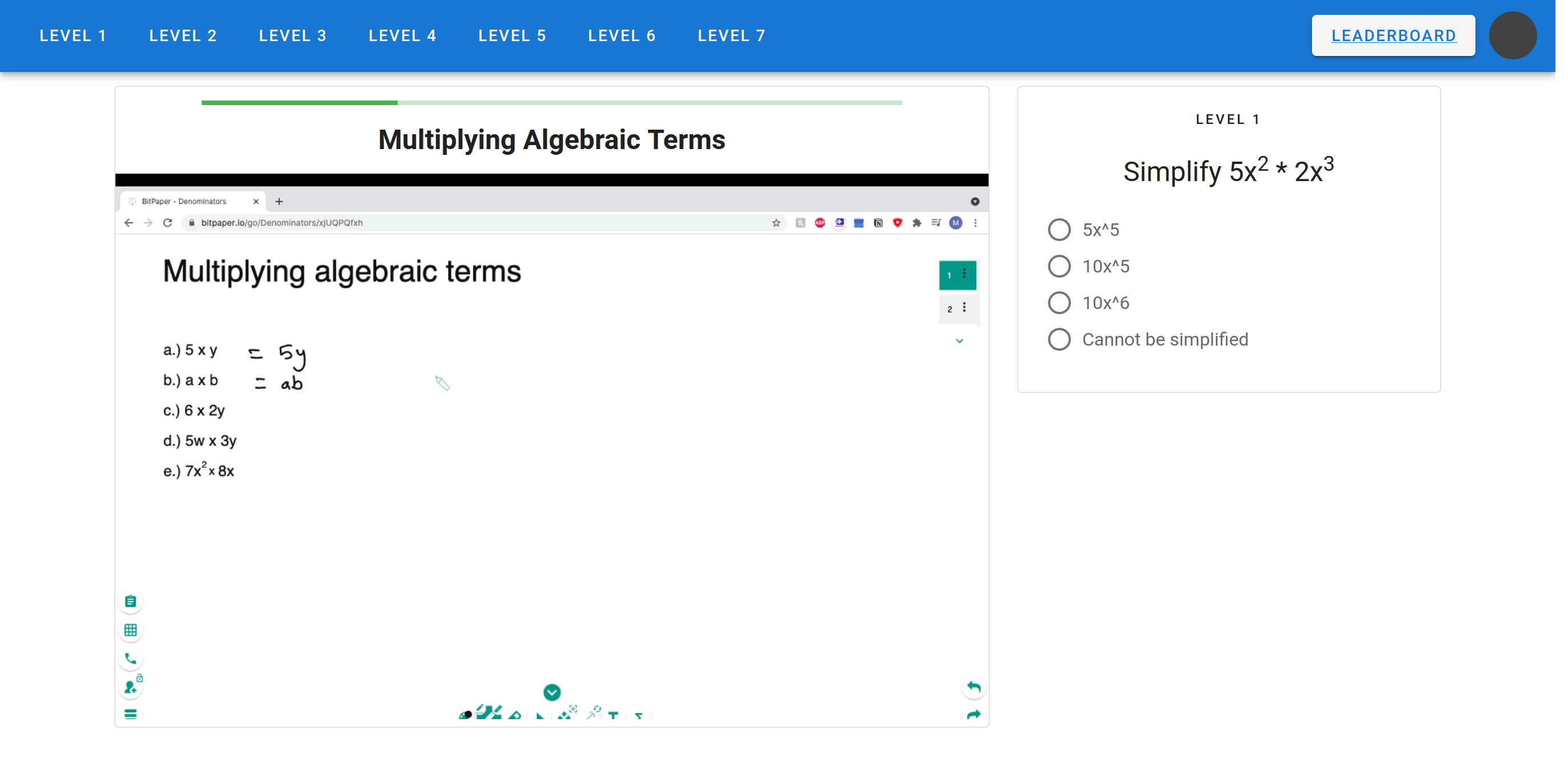
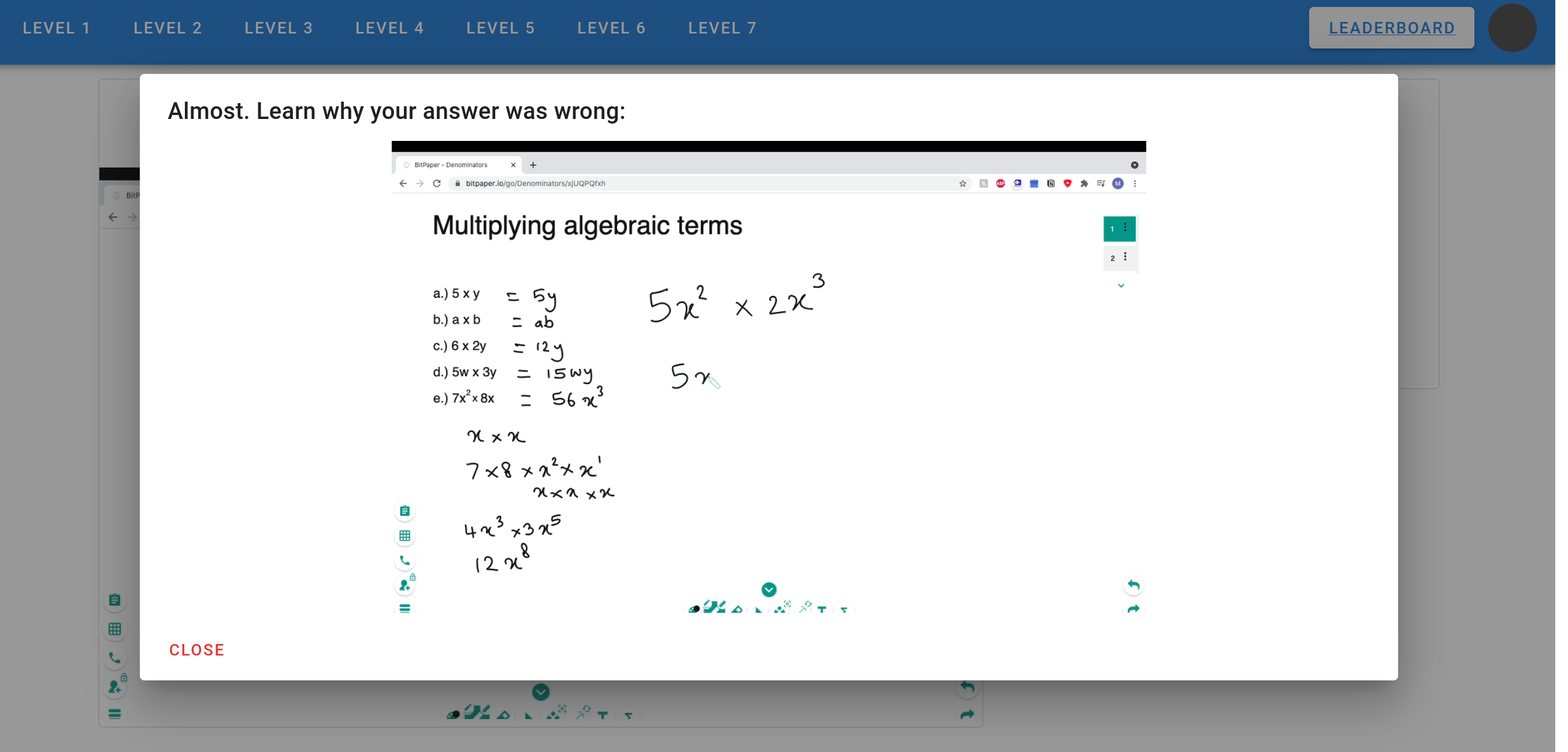
Students start by watching a Maths video pertaining to a topic they haven't mastered. Once concepts are taught, the teacher in the video prompts the student to answer an MCQ question to test their understanding. Each MCQ option, whether correct or incorrect is tagged to misconceptions that the student demonstrates if they selected that option. For example, if the student's response to 'What is 9 - -5?' is '4', it is evident that they have misunderstood how to subtract negative integers. The video then adapts learning content based on their misconception, explaining the prerequisite concept (in this case, subtraction of negative integers) and following up with further questions to ensure mastery.
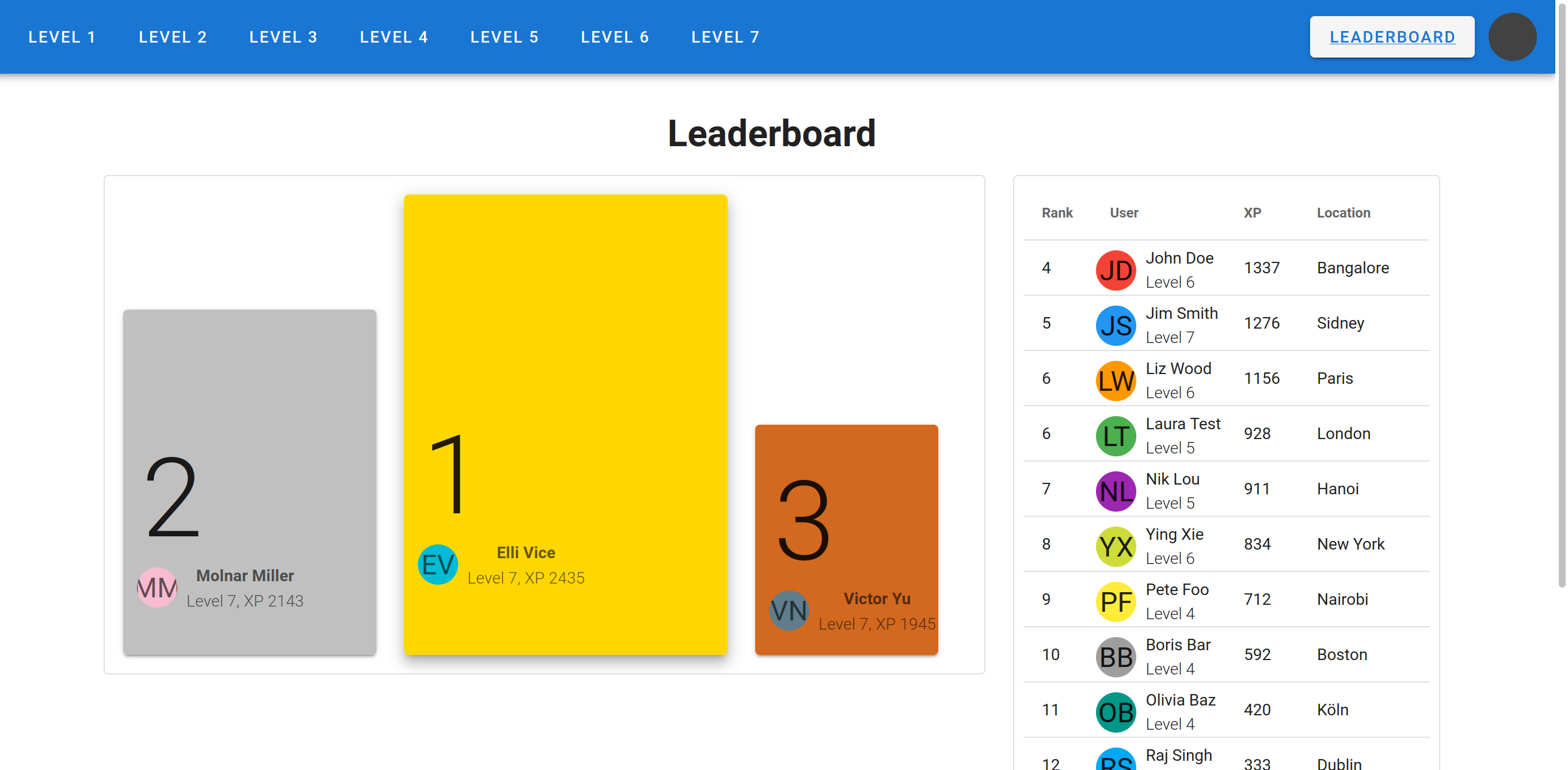
By adapting learning content, it is never too easy or too hard for the student, thus optimising the duration in which they are in the flow state while learning and gamifying the experience. Furthermore, students gain points for watching videos and answering questions correctly, allowing them to level up and compete against classmates on the leaderboard.
How we built it
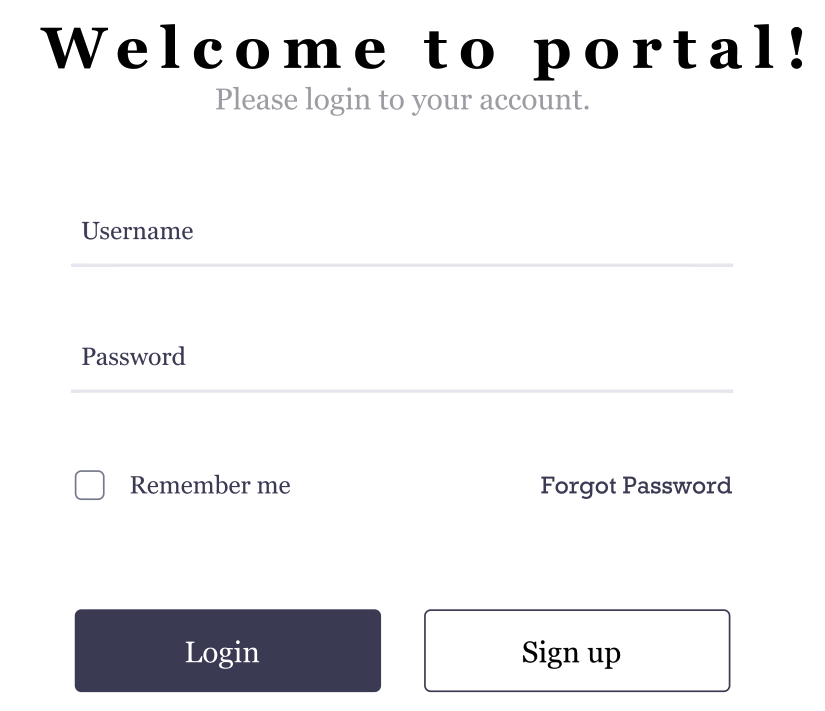
We used Adobe XD and Miro to sketch designs and wireframe our product. We then created questions and adaptive learning videos as well the branching logic to redirect the user to a given video given their response. We subsequently used Vuetify to render the videos and coded the branching logic as well as the scoring logic for the leaderboard.
Challenges we ran into
Our main technical challenge was building the custom logic to make our videos reactive based on user responses. Another challenge we faced was efficiently coordinating our tasks to maximise value delivery in the shortest period of time.
Accomplishments that we're proud of
Being able to develop a lean product that tests our UVP and engaging users to demonstrate the validity of our value proposition. We're also proud of having conducted extensive market sizing, competitor analyses and developing a go-to-market plan within 48 hours.
What we learned
- Developing a product under strict time pressure, taking a lean, agile approach.
- Coordinating product and marketing activities across wireframing, product development, market research and engaging our target customers.
- Building custom logic involving videos
What's next for The Denominators
- User testing with 25 students to refine UX and optimise our scoring logic for maximising motivation for learning (measured in hours of usage/week).
- Development of adaptive learning video content for one sub-topic within Algebra (Notation, vocabulary and manipulation) using the DofE National Curriculum (https://assets.publishing.service.gov.uk/government/uploads/system/uploads/attachment_data/file/254441/GCSE_mathematics_subject_content_and_assessment_objectives.pdf)
- Trialing our MVP with 50 disadvantaged students (BAME communities and on free school meals) and monitoring KPIs such as average hours of usage/week and average grade improvement.
- Engaging 50 stakeholders across parents, teachers, tuition providers to identify which segment has the highest willingness-to-pay and to subsequently secure letters of intent within our sales pipeline and to incorporate learnings within our customer acquisition strategy.
- Conducting impact assessments with secondary school maths students (RCT) to validate that our product has a cost-effective improvement in learning-adjusted years of study (LAYS).
Built With
- vue


Log in or sign up for Devpost to join the conversation.