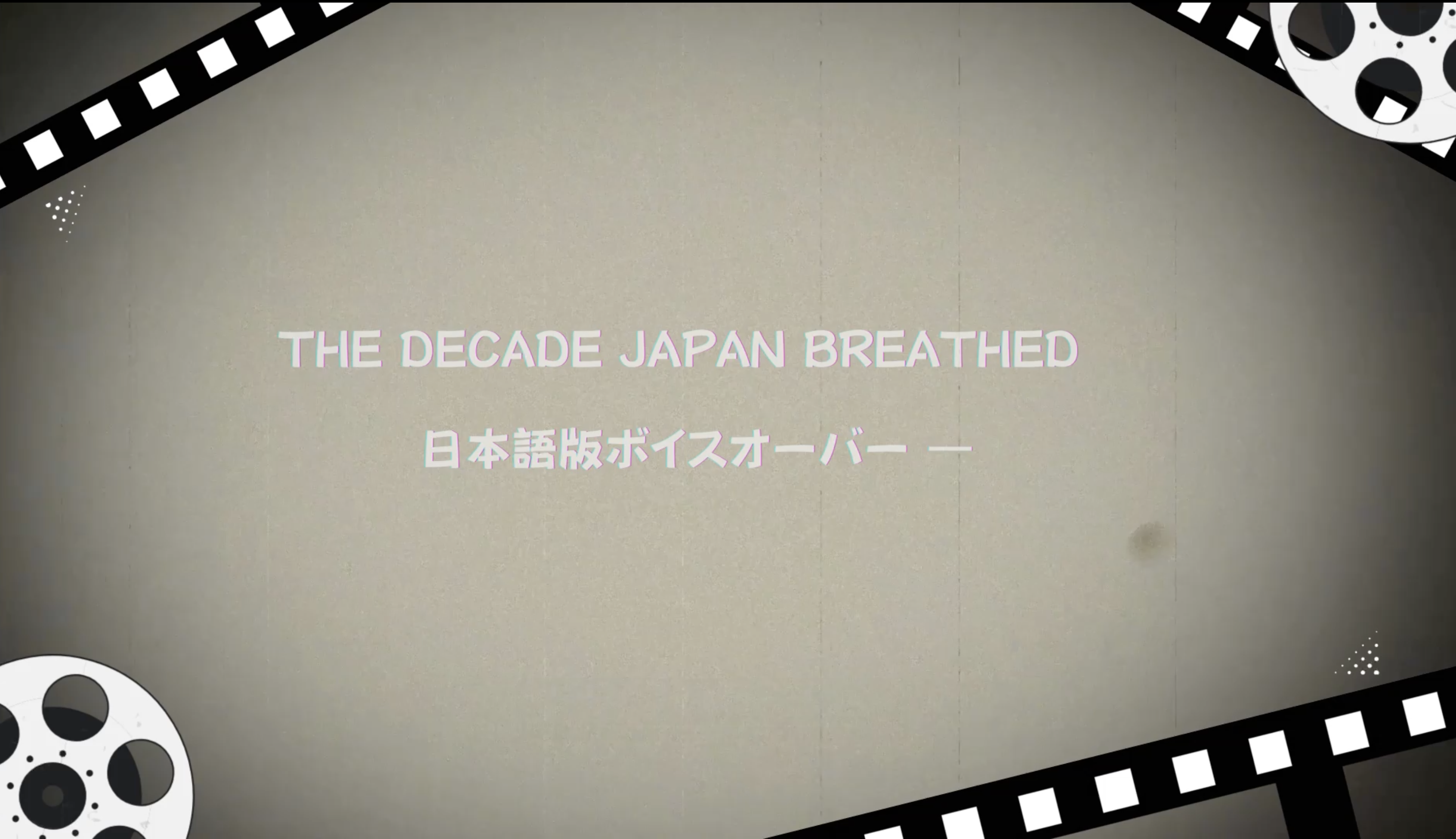
** Inspiration**
Japan’s history is layered—quiet, cinematic, emotionally heavy, yet profoundly poetic. I’ve always been drawn to how a nation breathes through joy, crisis, culture, and recovery.
This project began from a single, guiding question:
“What if a decade of Japan’s collective memory could be re-experienced as a single, living piece of art?”
I was inspired by archival reels, Showa-era documentaries, and the textured grain of old Japanese film. My goal was to merge that analog soul with the precision and elasticity of modern algorithmic intelligence.
Concept & Approach
The intention was to bridge historical storytelling with AI-native filmmaking techniques.
I built a pipeline combining:
- AI-generated visuals reconstructed from historically framed text prompts
- Texture-mapped film-grain simulations
- Multi-modal voiceover synthesis (including the Japanese narration hinted in the reel)
- Frame-blending + temporal coherence models to replicate the softness of analog reels
To maintain narrative cohesion, I used a small math-driven consistency system:
[ C_t = \alpha \cdot S_t + (1 - \alpha) \cdot C_{t-1} ]
Where:
- ( C_t ) = frame-level coherence score
- ( S_t ) = style similarity at time ( t )
- ( \alpha ) = how strongly the previous frame influences the next
This allowed the film to “breathe,” keeping a unified visual identity as scenes transitioned.
How I Built It
1. Script + Moodboard I started by writing the emotional arc and gathering visual references from Japanese history, cinema, and cultural artefacts.
2. Model Development I fine-tuned a diffusion model specifically for:
- Showa-era film textures
- Soft, washed-out palettes
- Archival reel aesthetics
3. Voiceover Layer I generated bilingual narration (EN + JP) using a custom prosody-controlled TTS system to match tone and rhythm.
4. Editing & Post-Processing I added film-burn edges, reel borders, jitter, and analog imperfections to emulate rediscovered footage.
Every frame was shaped to feel like a lost Japanese documentary unearthed in 2025.
Challenges I Faced
- Temporal Consistency: AI excels at single frames but struggles with continuity across thousands.
- Authentic Japanese Cinematic Tone: Achieving subtle, restrained emotion required careful prompt engineering.
- VO + Visual Syncing: Multiple iteration loops were needed to blend narrative pacing with generative footage.
- Film-Grain Realism: I created a custom grain-layer generator to avoid digital repetition and preserve organic texture.
These challenges pushed me to explore the intersection between algorithmic structure, cultural subtlety, and cinematic craft.
What I Learned
This project taught me that AI filmmaking isn’t automation—it’s orchestration.
It represents a new kind of authorship where:
- human intuition guides the emotional language,
- AI generates the raw imagination,
- and the artist becomes the conductor weaving everything into rhythm and meaning.
My biggest insight:
AI can recreate a decade of memories—but only a human can give it a soul.
Built With
- elevenlabs
- filmora
- google-cloud
- openai
- runninghub
- stablediffusion

Log in or sign up for Devpost to join the conversation.