-
-
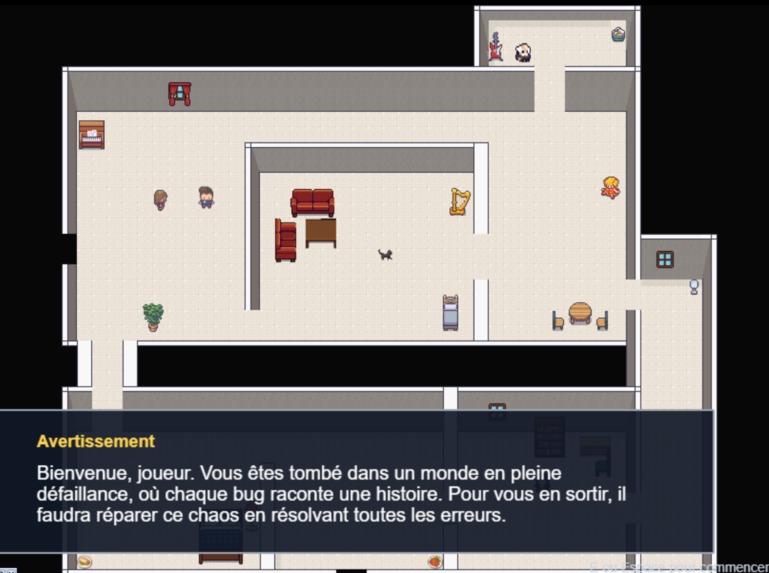
The debugger Scene
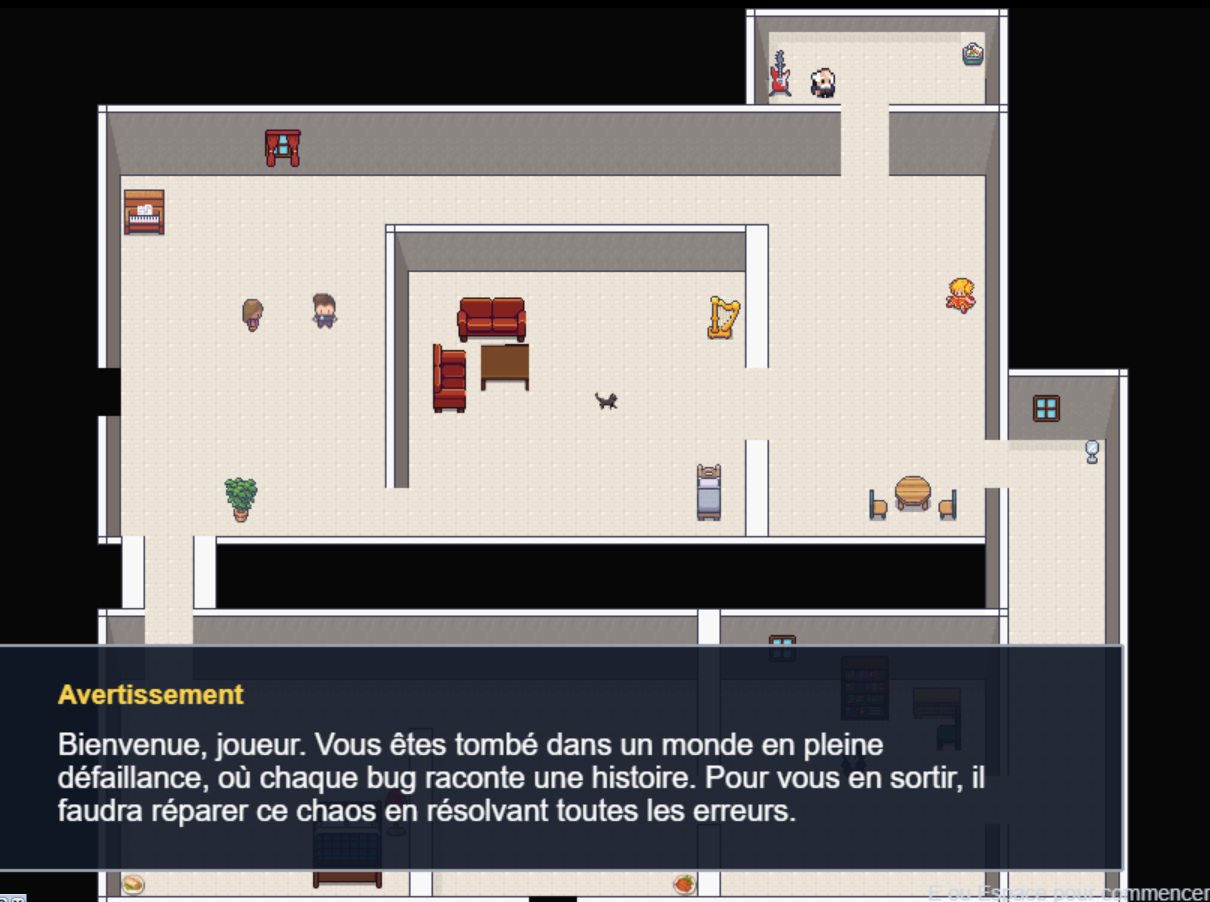
Inspiration
The idea was born from a simple but powerful question: what if the real world bugged like our programs?
As a developer, I'm constantly confronted with bugs, calculation errors, and unpredictable code behavior. One day, I wondered what our world would look like if the same problems manifested there. How would we navigate a universe where the camera became disconnected from the scene, or where elements behaved chaotically?
From this simple question was born The Debugger: an immersive experience where the player must repair a corrupt virtual world as the first developer of reality itself.
What it does
The Debugger is a 2D RPG adventure game where you are absorbed into a virtual world full of bugs. Your objective: repair this world to escape.
First quest: fix the camera. To do this, you must catch a cat that is the source of the chaos. When you approach the cat, a notification appears and a progress bar fills slowly to allow you to capture it.
Controls:
- WASD or arrow keys: move around
- E or R: interact with objects
How we built it
The project was developed entirely with Maki, a modern 2D JavaScript framework. We prioritized:
- Clear and modular architecture
- Using tilesets to quickly build the environment
- A simple but effective interaction system
- Gameplay mechanics based on challenges and perseverance
Tools used:
- Maki (JS framework)
- Node.js and npm
- JavaScript
- Maki's tilemap editor for environment creation
Challenges we ran into
Time management
The biggest challenge was time management. Debugging the game proved to be time-consuming: reproducing bugs, understanding their origin, and fixing them took considerably more time than expected. Each test iteration extended the development cycle.
Maki editor bugs
Maki's tilemap editor presented sporadic display bugs that complicated level creation. We had to adopt a strategy of regular saving to avoid losing work.
Accomplishments that we're proud of
- Original concept: transforming developer frustration into a unique game concept
- Successful transition: migration from Phaser to Maki with better productivity
- Engaging gameplay: creating an intuitive and fun capture mechanic
- Immersive world: building a coherent and atmospheric 2D environment
What we learned
I had recently used Phaser for a school project, and I noticed the limitations of the process: manually calculating the positions of each asset on the map was tedious and time-consuming.
Using Maki, I discovered a much more efficient solution. This tool offers an intuitive and productive creation system. The experience was fun—I could finally focus on gameplay and story rather than positioning calculations.
Additionally, we learned the importance of good versioning practices and regular saving when working with new tools.
What's next for The Debugger
- Add more quests: expand the storyline with new bugs to fix
- Improve physics: implement more complex mechanics to increase difficulty
- Enhance graphics: add more visual details and animations
- Integrate immersive sound: ambient music and sound effects for interactions
- Performance optimization: ensure a smooth experience on all devices


Log in or sign up for Devpost to join the conversation.