Project Story: The Crow’s Eye Algorithm
🌿 Inspiration
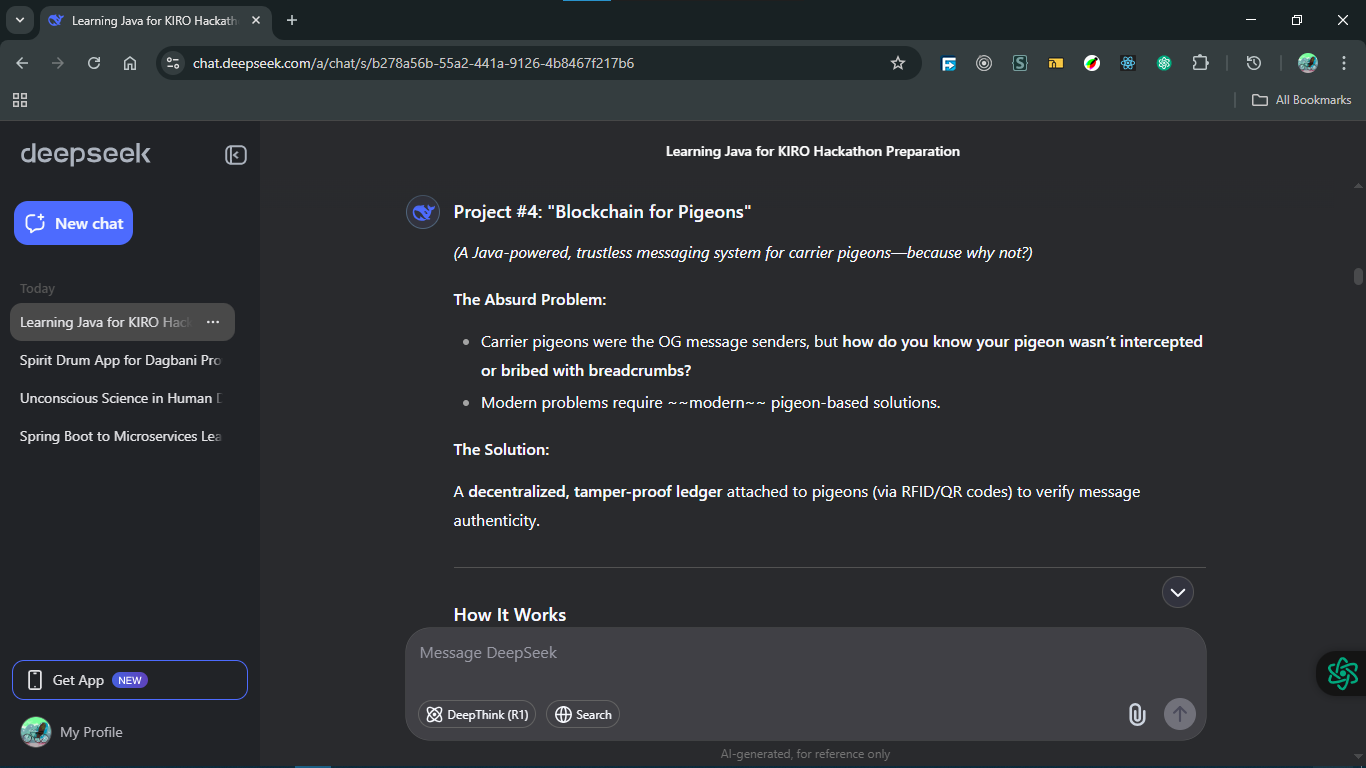
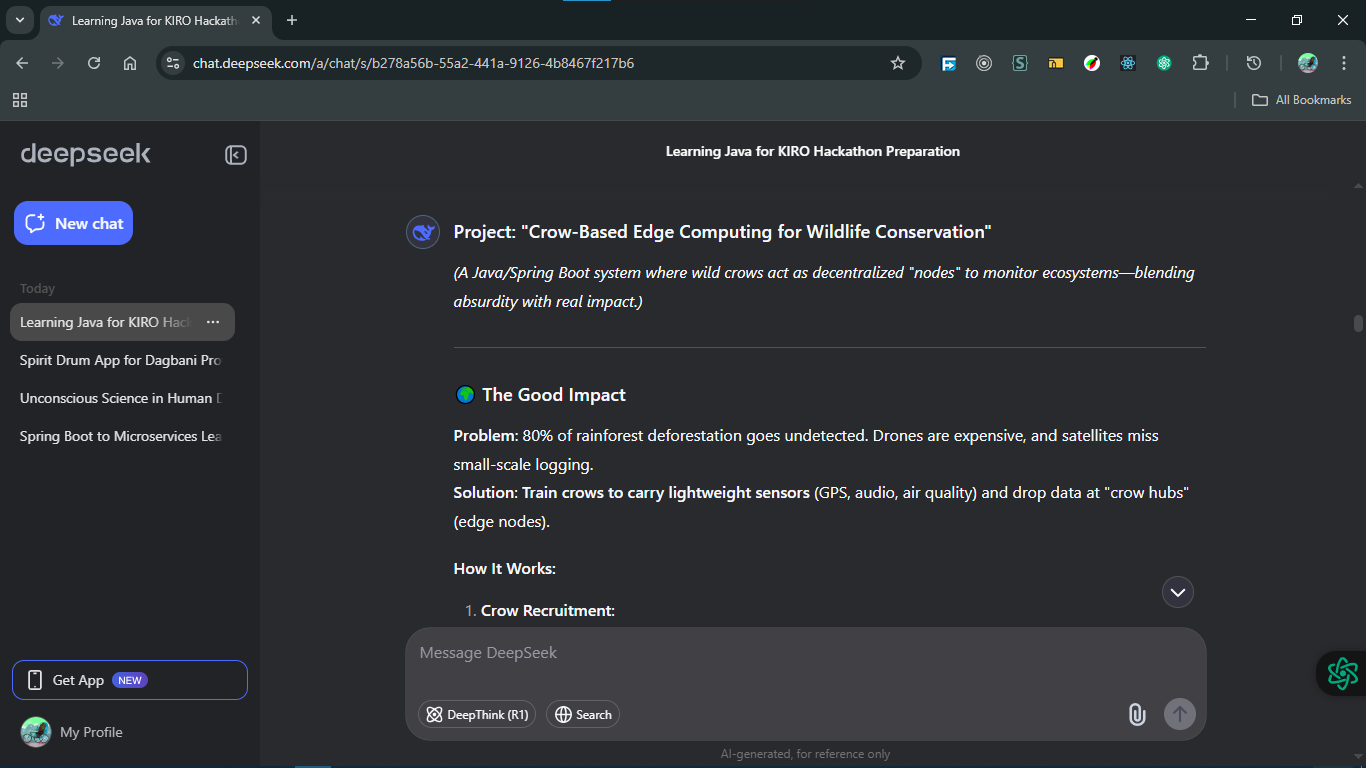
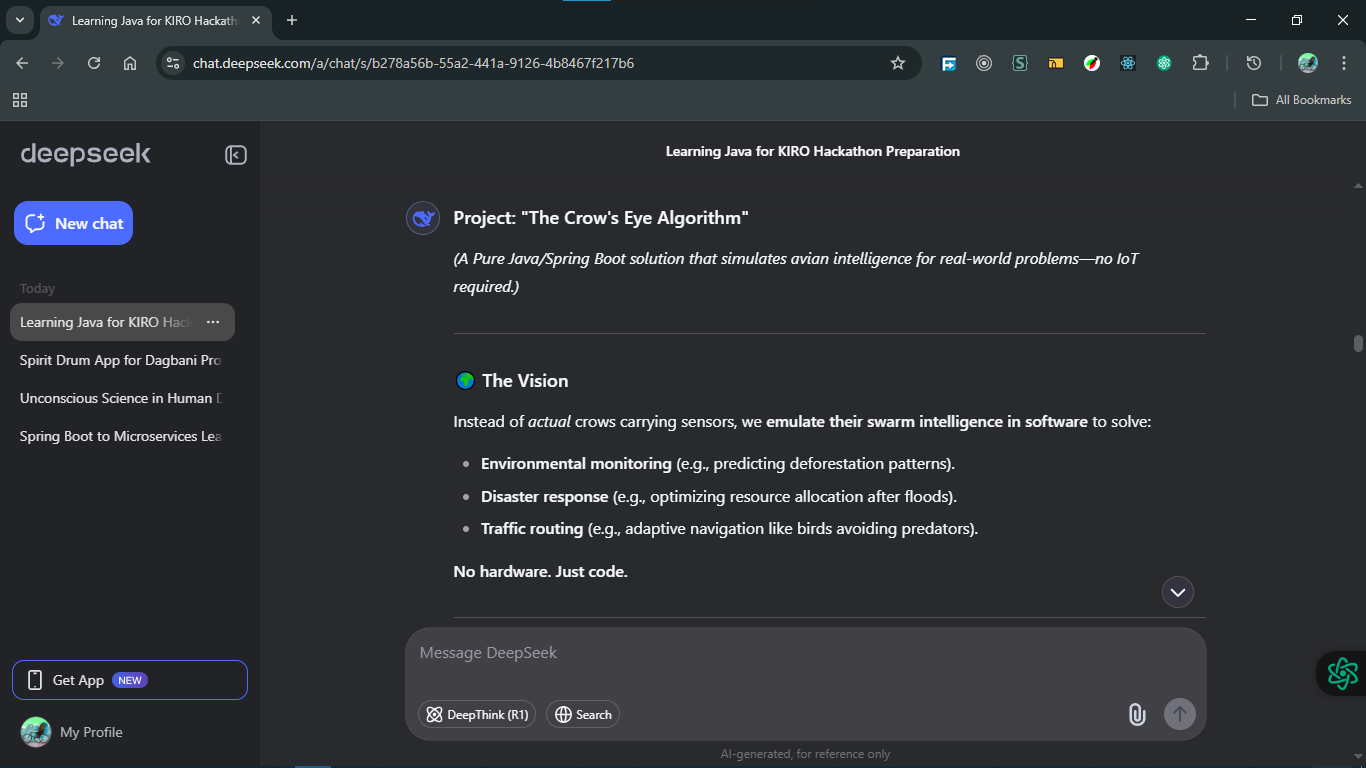
I’ve always been fascinated by how crows communicate, coordinate, and respond to threats as a unified flock. After watching documentaries like BBC’s Crows are Smarter Than You Think and reading about corvid intelligence, I began to wonder: Could we encode this kind of natural vigilance into machines?
This project started as a curiosity-driven experiment—a blend of biomimicry and machine learning aimed at bringing adaptive, nature-inspired intelligence to surveillance systems.
🧠 What I Learned
- Swarm Intelligence: Simple rules at the individual level can lead to highly intelligent group behavior.
- Bayesian Inference: How to model uncertainty and update beliefs dynamically, much like crows assessing threats.
- Fractal Geometry: How L-systems and recursive patterns can optimize search and coverage strategies.
- Ethics in AI: The importance of building transparent, explainable, and morally constrained systems.
⚙️ How I Built It
Core Architecture
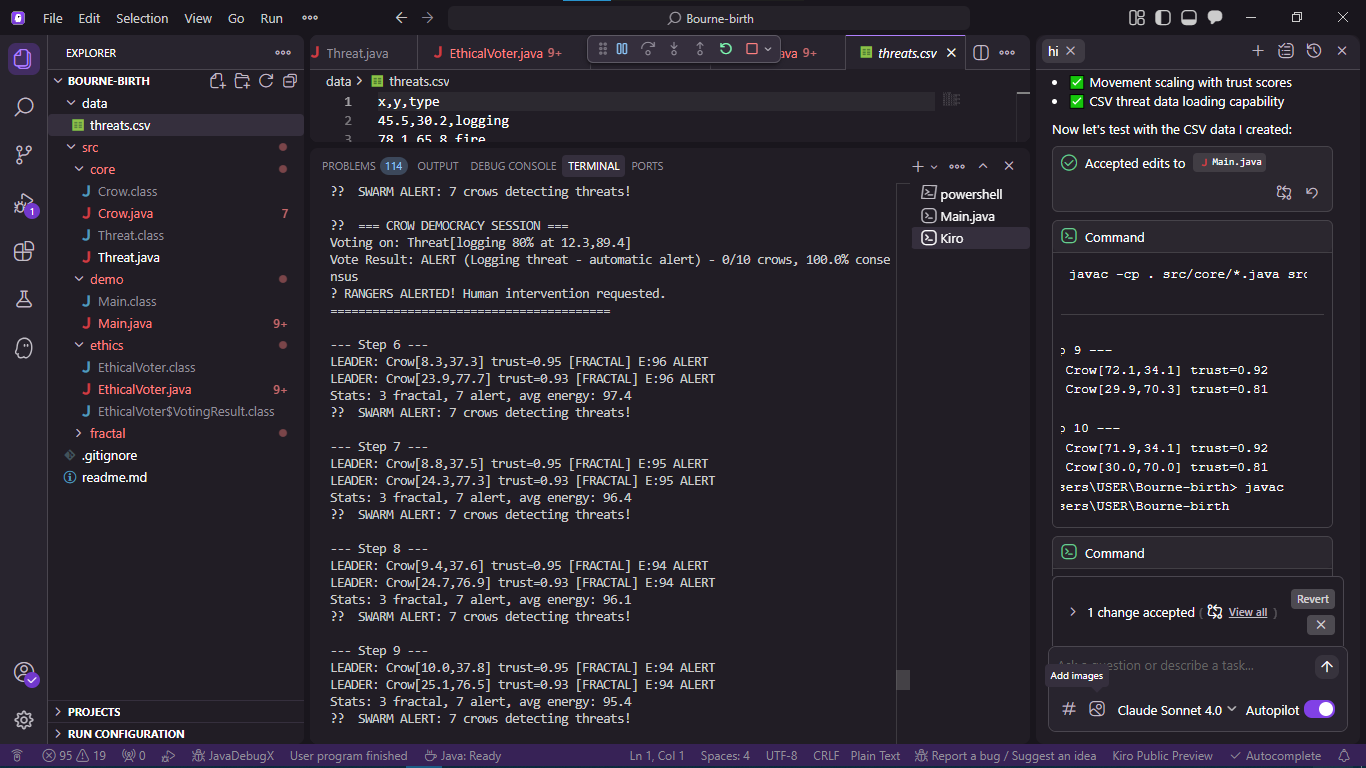
The system is built in Java for performance and portability, with the following components:
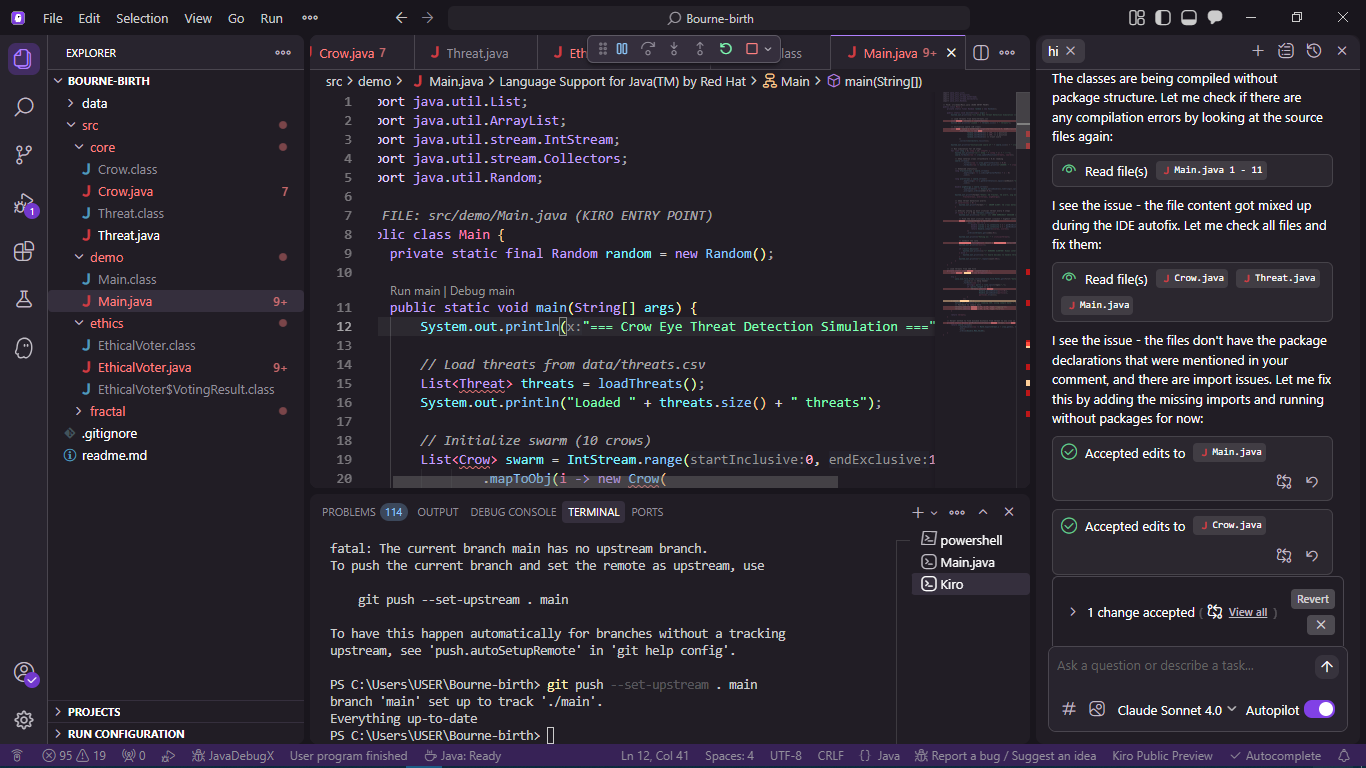
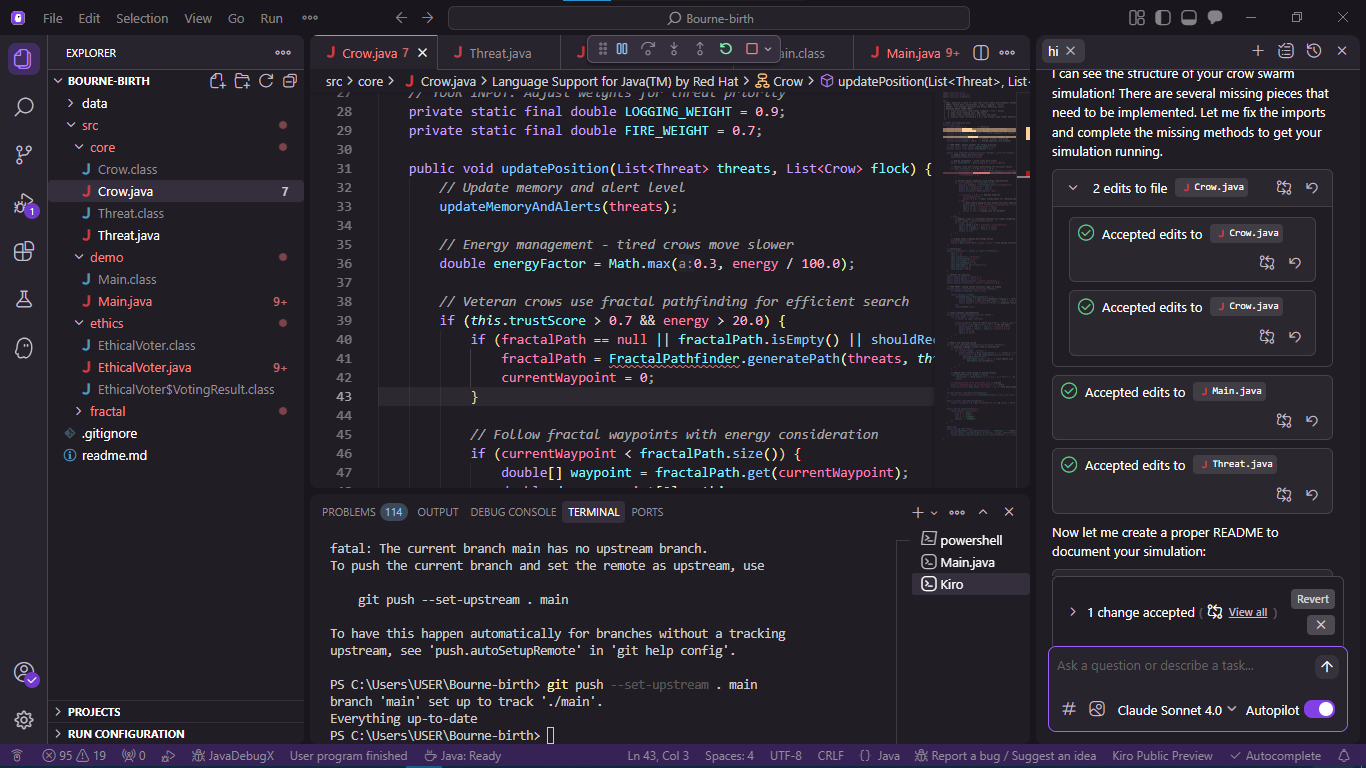
Crow.java: Models individual agents with properties like trust score, position, and energy.Swarm.java: Handles collective decision-making using Bayesian updating:
[ P(\text{Threat} | \text{Data}) \propto P(\text{Data} | \text{Threat}) \cdot P(\text{Threat}) ]FractalPathfinder.java: Uses Lindenmayer systems (L-systems) to generate efficient patrol paths.EthicalVoter.java: Applies game-theoretic voting to decide whether to escalate alerts.
Development Process
- Prototyping: Started with simple crowd simulation rules.
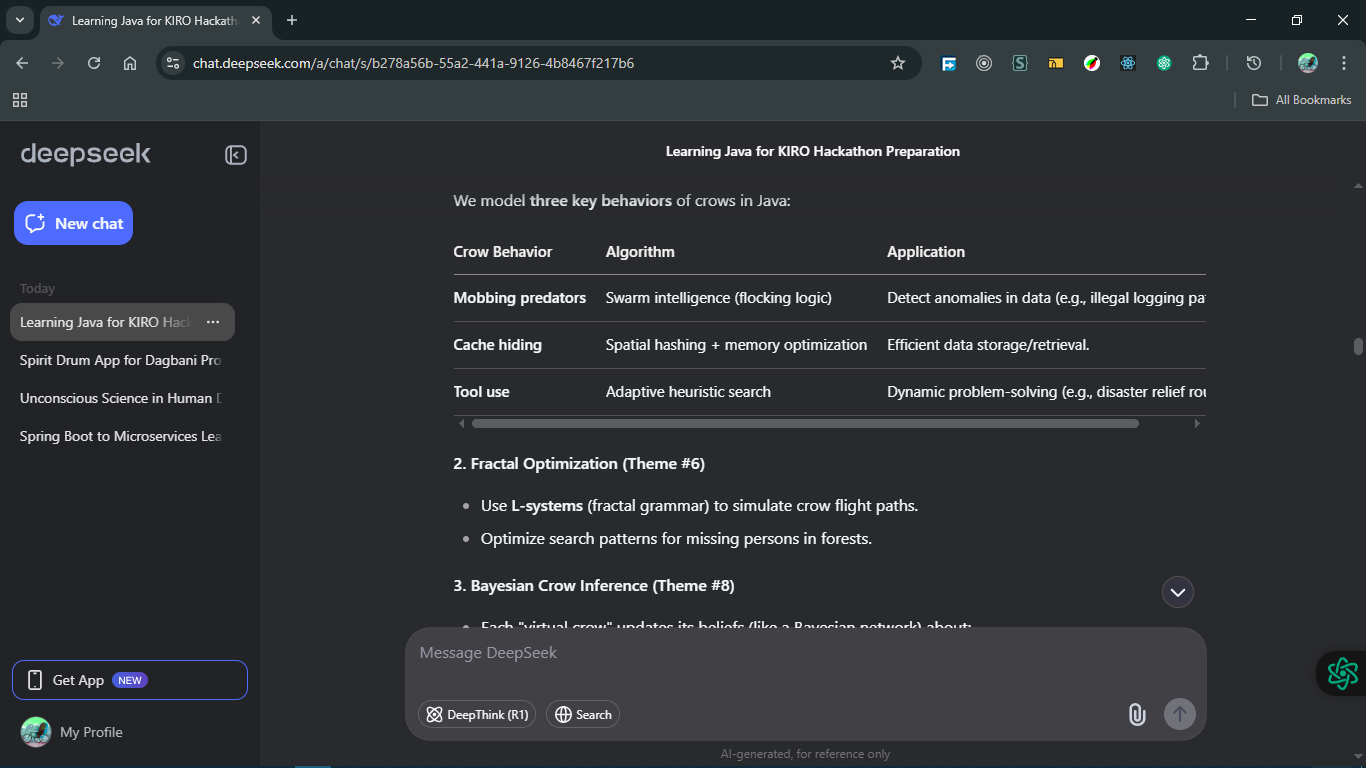
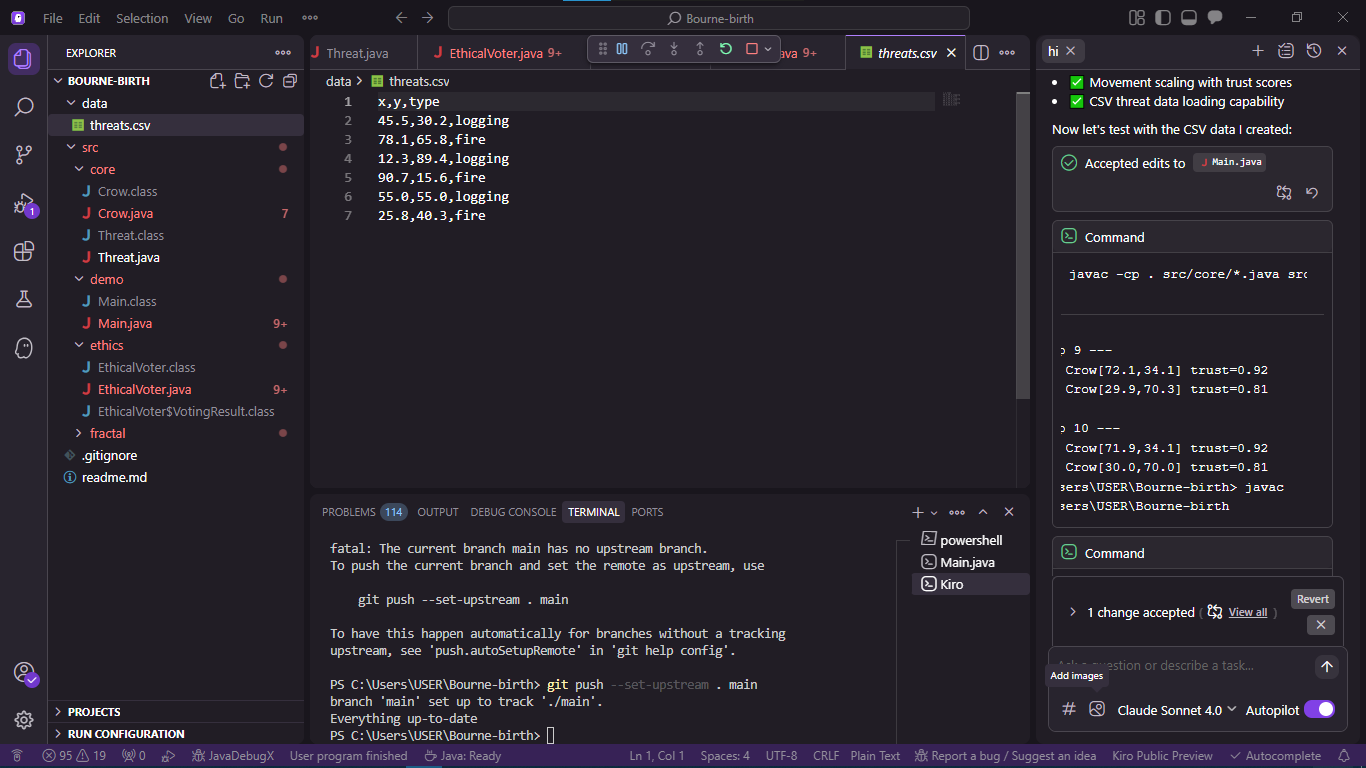
- AI-Assisted Optimization: Used DeepSeek AI and KIRO IDE (Claude Sonnet 4.0) to refine fractal algorithms and debug swarm synchronization.
- Integration: Combined all modules into a cohesive system with real-time visualization.
Tools & Technologies
- Java 17, Apache Commons Math, IntelliJ IDEA
- Git for version control
- KIRO IDE + Claude Sonnet 4.0 for iterative debugging and optimization
⚠️ Challenges I Faced
- Energy Management: Early versions drained agent energy too quickly.
- Solution: Introduced fractal-based path optimization and recharge logic.
- Solution: Introduced fractal-based path optimization and recharge logic.
- False Positives: The system initially over-alerted.
- Solution: Implemented multi-agent consensus requiring ≥85% agreement.
- Solution: Implemented multi-agent consensus requiring ≥85% agreement.
- Cultural & Ethical Alignment: Ensuring the system’s decisions were fair and transparent.
- Solution: Added moral constraints and explainable AI traces.
🎯 What’s Next
- Hardware Integration: Port the algorithm to Raspberry Pi for real CCTV testing.
- Multi-Sensor Support: Extend to audio and thermal data inputs.
- Open-Source Community: Launch a platform for others to build atop the architecture.
🔗 Learn More
- Code: GitHub Repository
- Demo: Video Overview
- Inspiration: BBC Crow Intelligence Video
This project is a tribute to nature’s genius—and a step toward more adaptive, empathetic AI.
Built with curiosity, coded with care, and inspired by crows. 🐦⬛💻


Log in or sign up for Devpost to join the conversation.