-
-
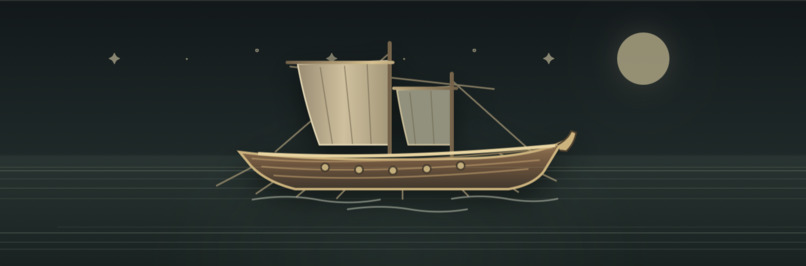
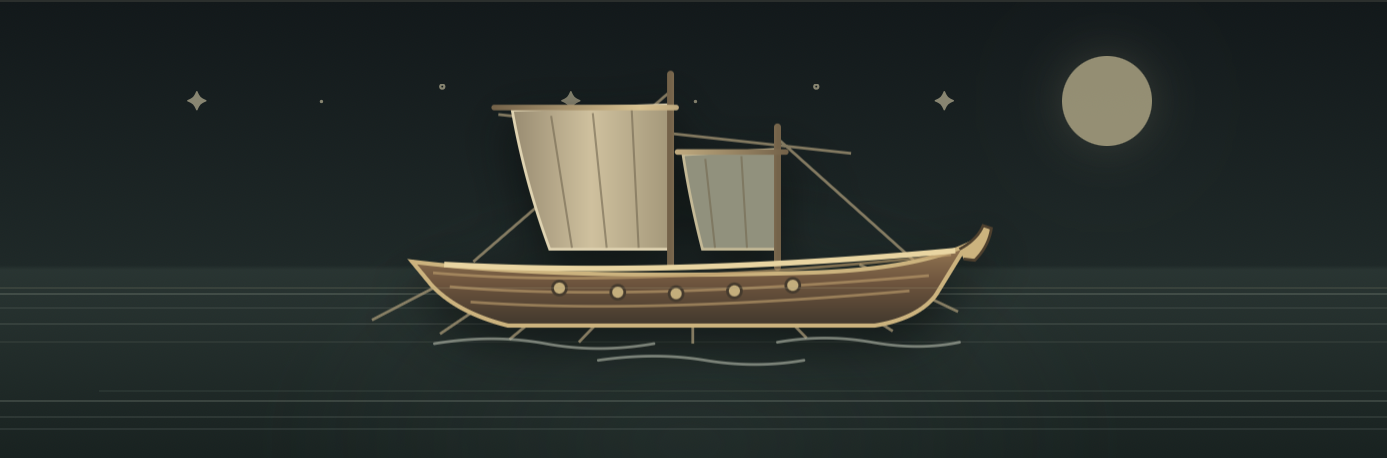
Theme of The Game
-
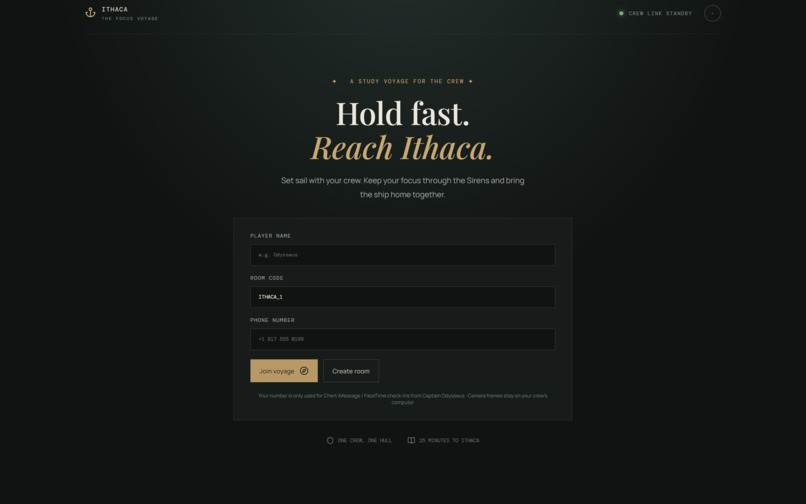
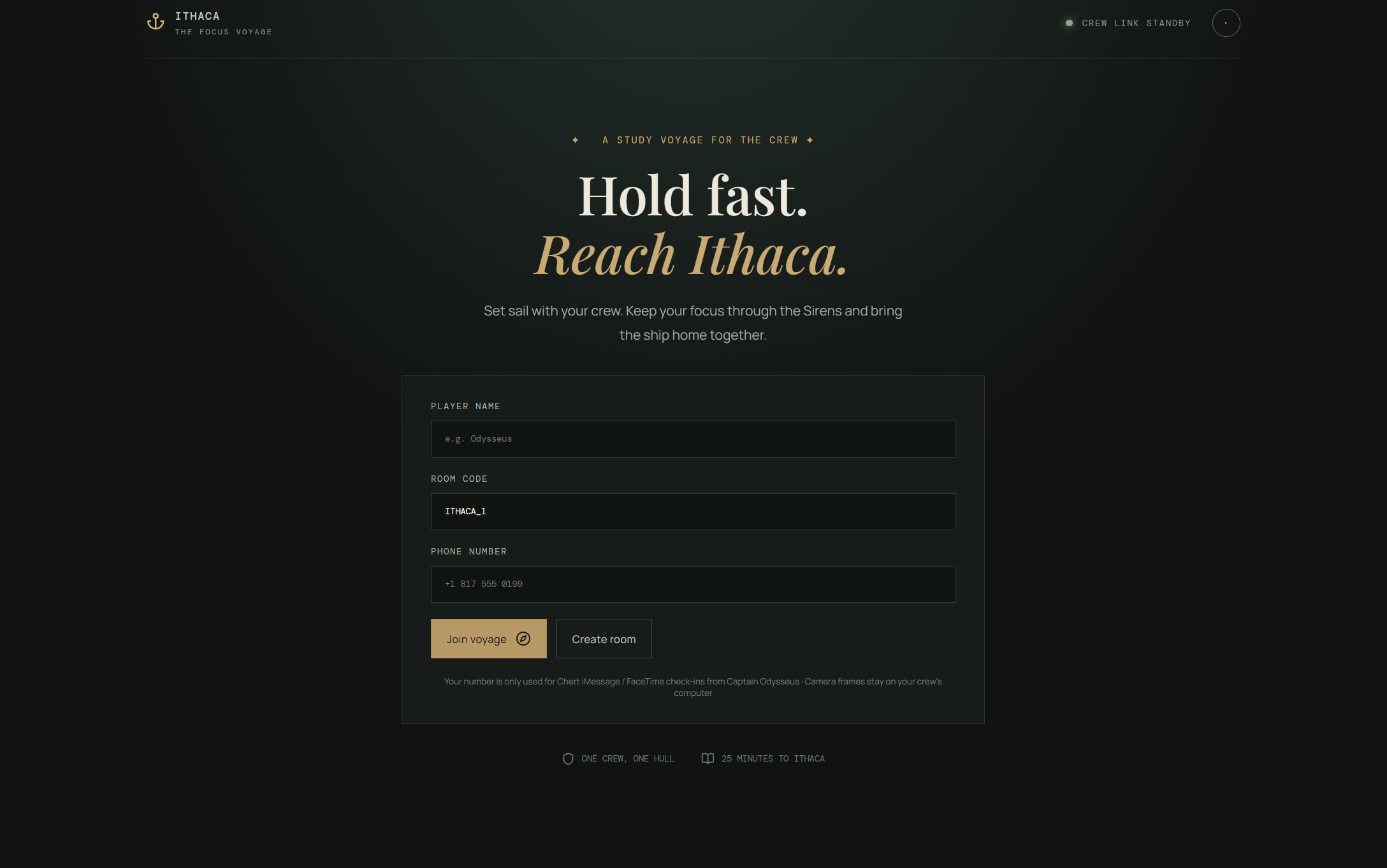
Entering Room
-
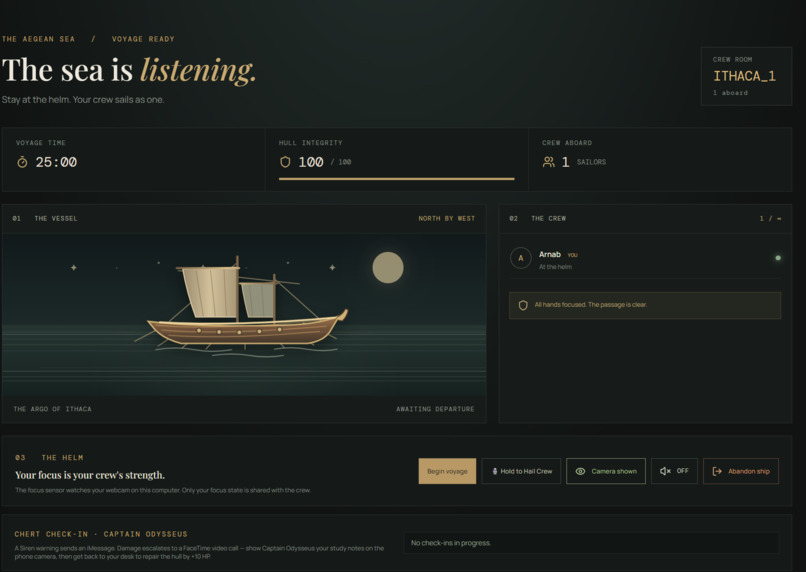
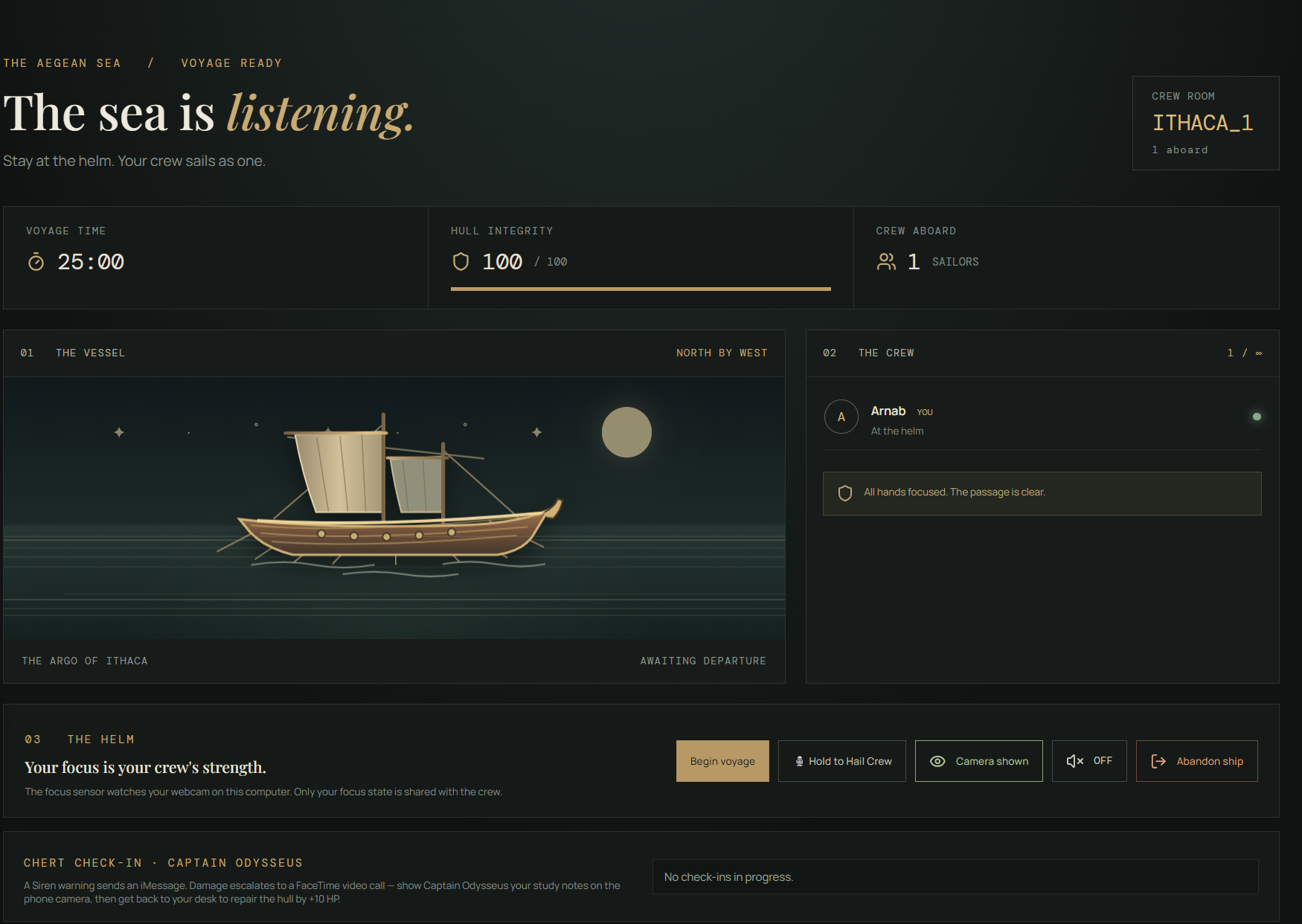
Main Window
-
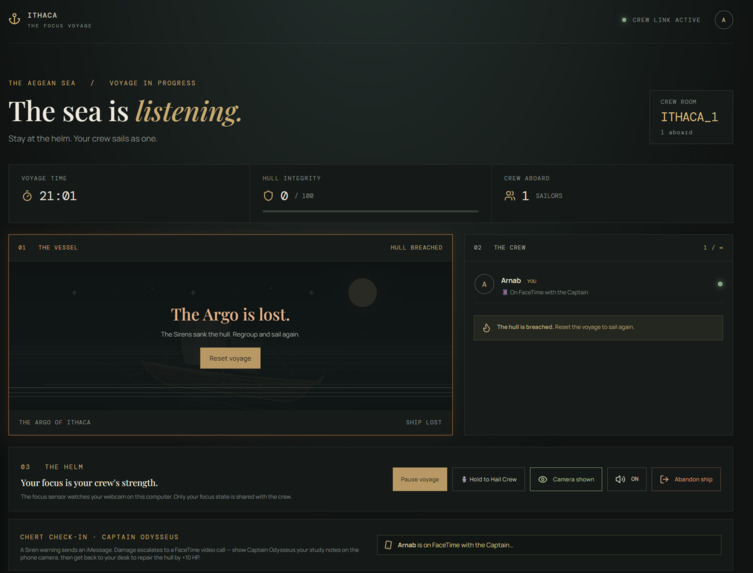
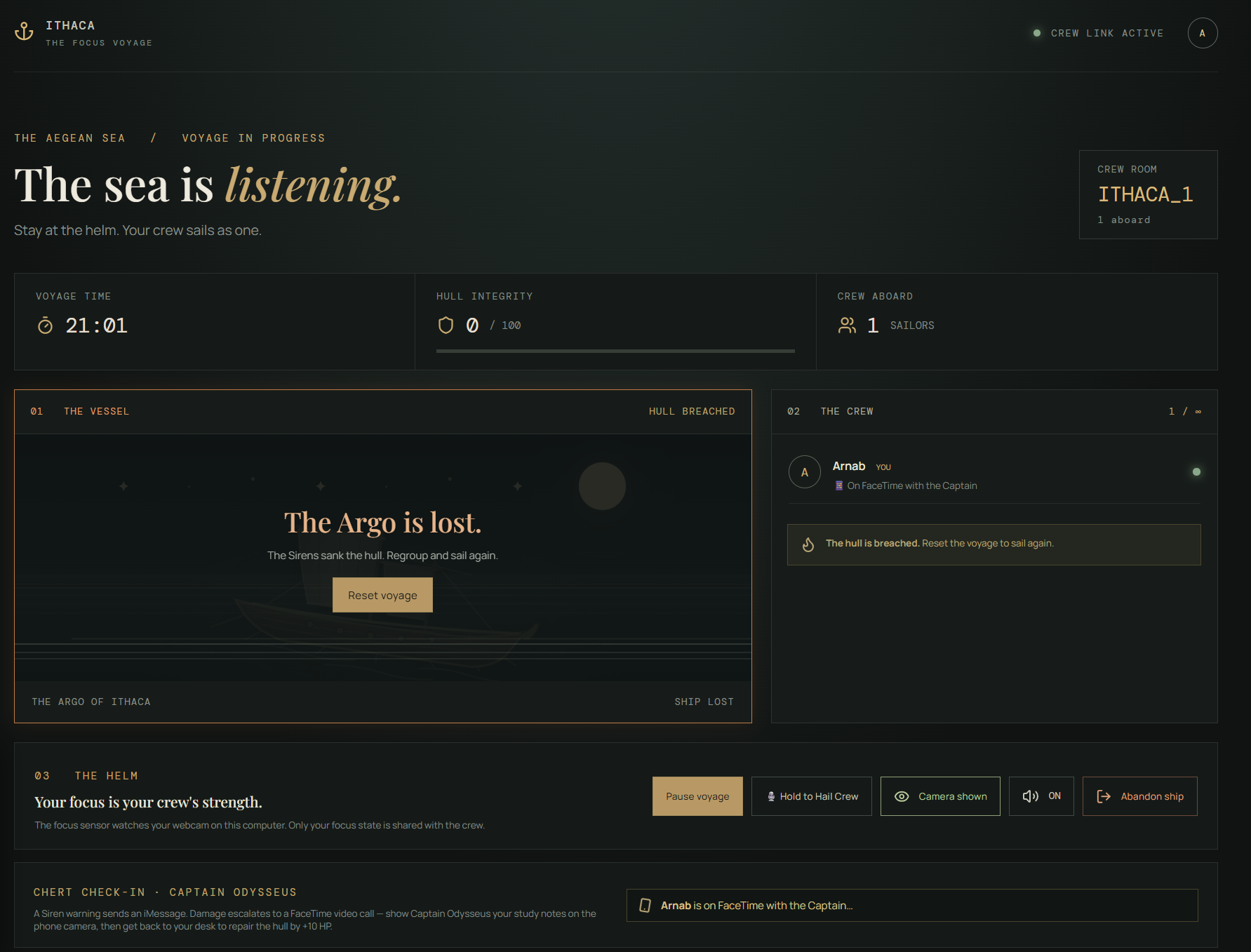
No HP anymore, ship shrink
Inspiration
In Homer’s The Odyssey, Odysseus must sail through dangerous waters to make it home. Two of the journey’s most famous hazards, the Sirens and Scylla, inspired The Crew of Ithaca and its approach to digital distraction.
- The Sirens sing irresistible songs that lure sailors toward a deadly shore. They represent distractions such as phone notifications, social media, and YouTube.
- Scylla, the six-headed monster beside the whirlpool Charybdis, represents deadlines, exams, and heavy workloads that can be difficult to navigate.
- The mast represents the app’s focus tools. As Odysseus tied to his ship, players use the game, camera-based posture tracking, and optional check-ins to notice distractions and return to their work.
What it does
The Crew of Ithaca turns a focus session into a shared voyage. Players can join a room with a code and work alongside their crew as the ship sails.
The app uses camera-based machine learning to track facial landmarks, including the head, eyes, and nose, as indicators of posture and attention. When enabled, Chert can support check-ins through text messages and FaceTime calls. The goal is to help players notice distractions and refocus on homework or other tasks.
How we built it
- Machine learning: We worked on tracking facial landmarks and head movement to estimate whether a player was focused.
- Frontend: We built an Odyssey-inspired game interface with a dark, mystical palette, a ship, a crew, and focus-session controls.
- Backend: We worked on the services that support rooms, player activity, and communication between the app and its integrations.
- Chert: We worked through Chert setup and explored how text messages and FaceTime calls could support focus check-ins.
- ElevenLabs: We planned to use ElevenLabs as part of the project’s voice experience.
Challenges we ran into
One of our biggest challenges was figuring out how Chert fits into the game. We needed to understand its setup and verification flow, then determine how text messages and FaceTime calls could work as focus check-ins.
We also had to bring together camera-based posture tracking, multiplayer rooms, and the game interface so that each part supports the same focus experience.
Accomplishments that we're proud of
We’re proud that we brought the Odyssey concept into the game’s visual design and built a foundation for the voyage experience.
We also made progress on facial tracking: after a player nods or moves their head, the system can track facial landmarks. We explored how a Chert FaceTime call could check whether someone is still working on paper or has turned to their phone for another distraction.
What we learned
We learned that connecting a third-party service takes more than adding a button. It requires understanding its setup and verification flow, connecting it to the app’s backend, and making the experience clear to players.
We also learned that camera-based focus tools should support a player’s own goals. Clear setup, visible controls, and user awareness matter when using a camera or sending check-ins.
How We Used ElevenLabs
- We connected the backend to the ElevenLabs text-to-speech API.
- When the Captain has a line to say, the backend sends the text to ElevenLabs and receives an MP3.
- The game plays that audio as Captain Odysseus’s voice.
- If ElevenLabs audio isn’t available, the game falls back to the browser’s built-in speech.
What's next for The Crew of Ithaca
- Finish and refine posture tracking so it responds reliably to head and facial movement.
- Complete and test multiplayer rooms with join codes.
- Connect Chert’s text and FaceTime check-ins to focus events in the game.
- Integrate ElevenLabs into the voice experience.
- Improve onboarding and setup instructions so players can run the project and join a shared voyage more easily.


