-
Graph Relationship Findings
-
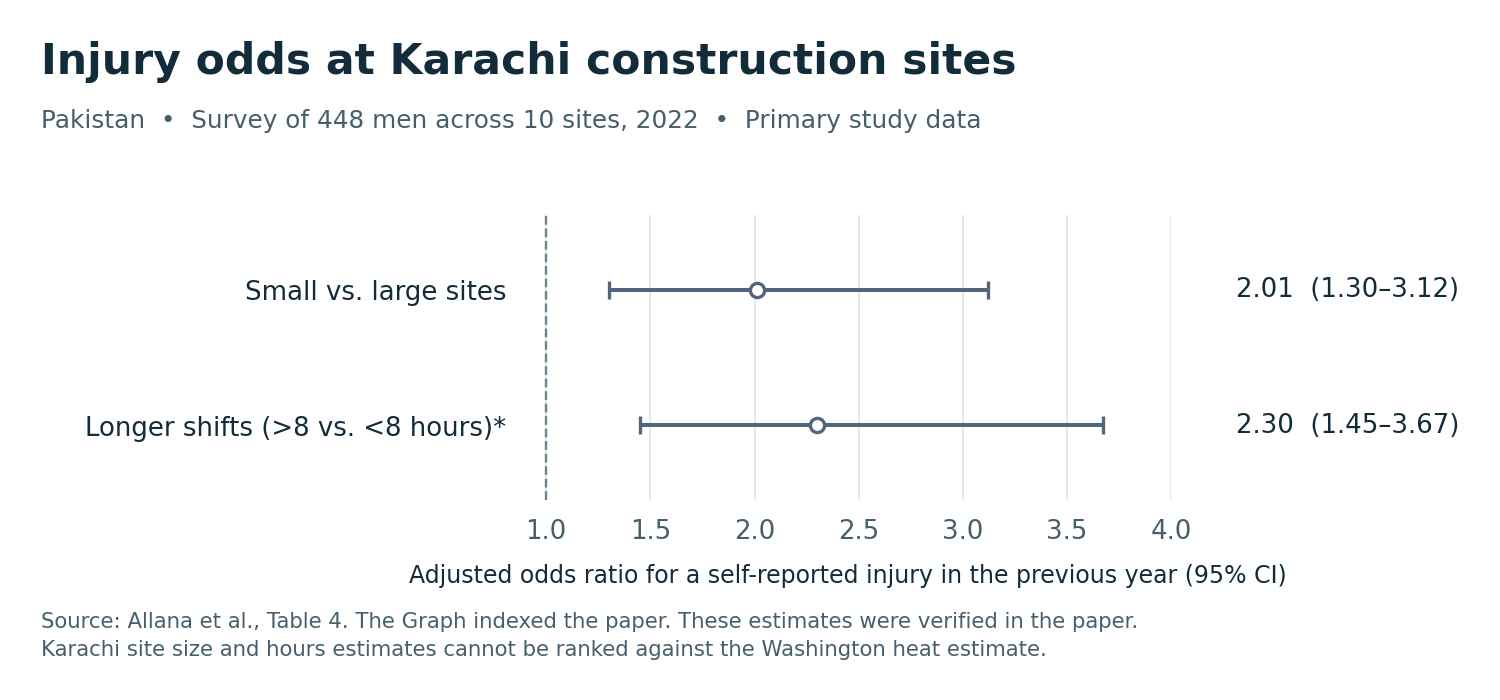
Case Study: Injury Odds in Karachi, Pakistan
-
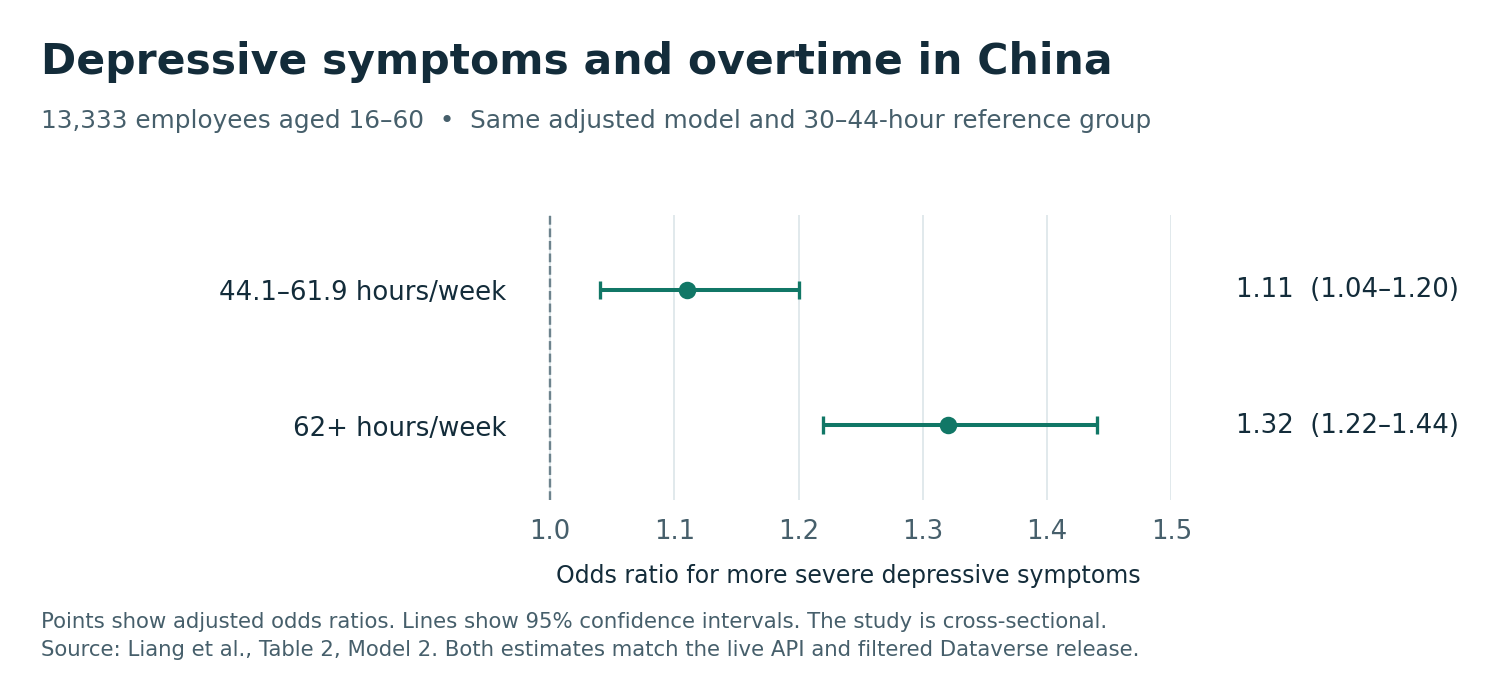
Case Study: Depressive Symptoms and Overtime in China
The Cost of Work
What inspired us
A paycheck tells you what a job pays. It tells you little about whether workers can take a sick day, get home on time, or count on having work next week. We started with construction in the United States and Pakistan because it gave us a concrete question. When policymakers want to make a job better, which conditions should they address first?
What we learned
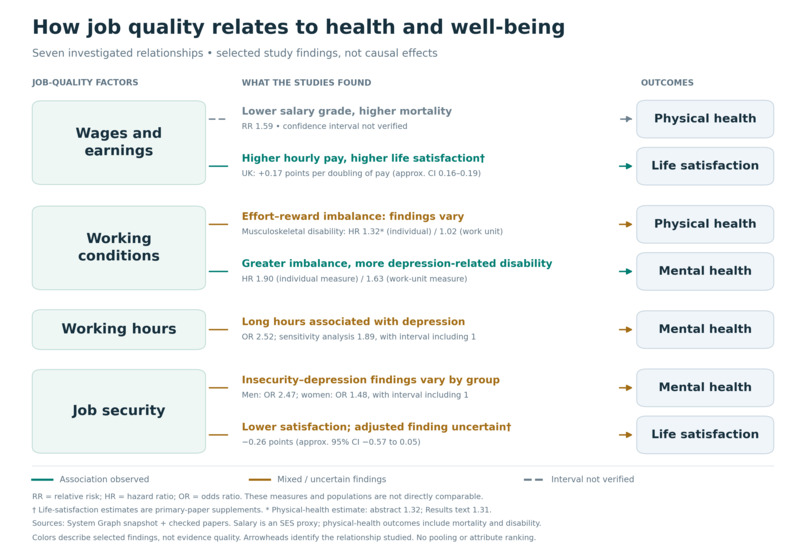
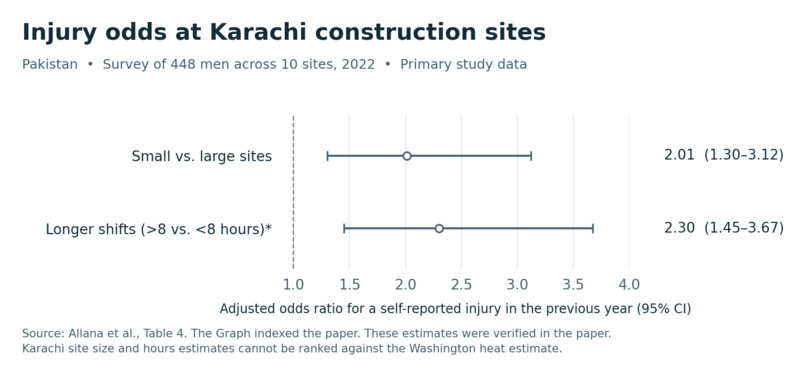
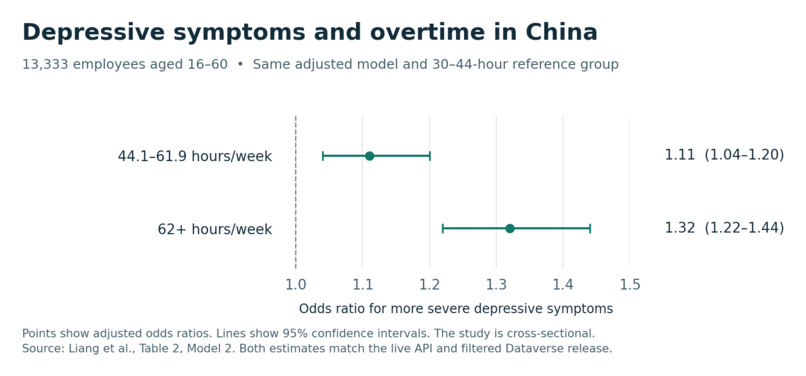
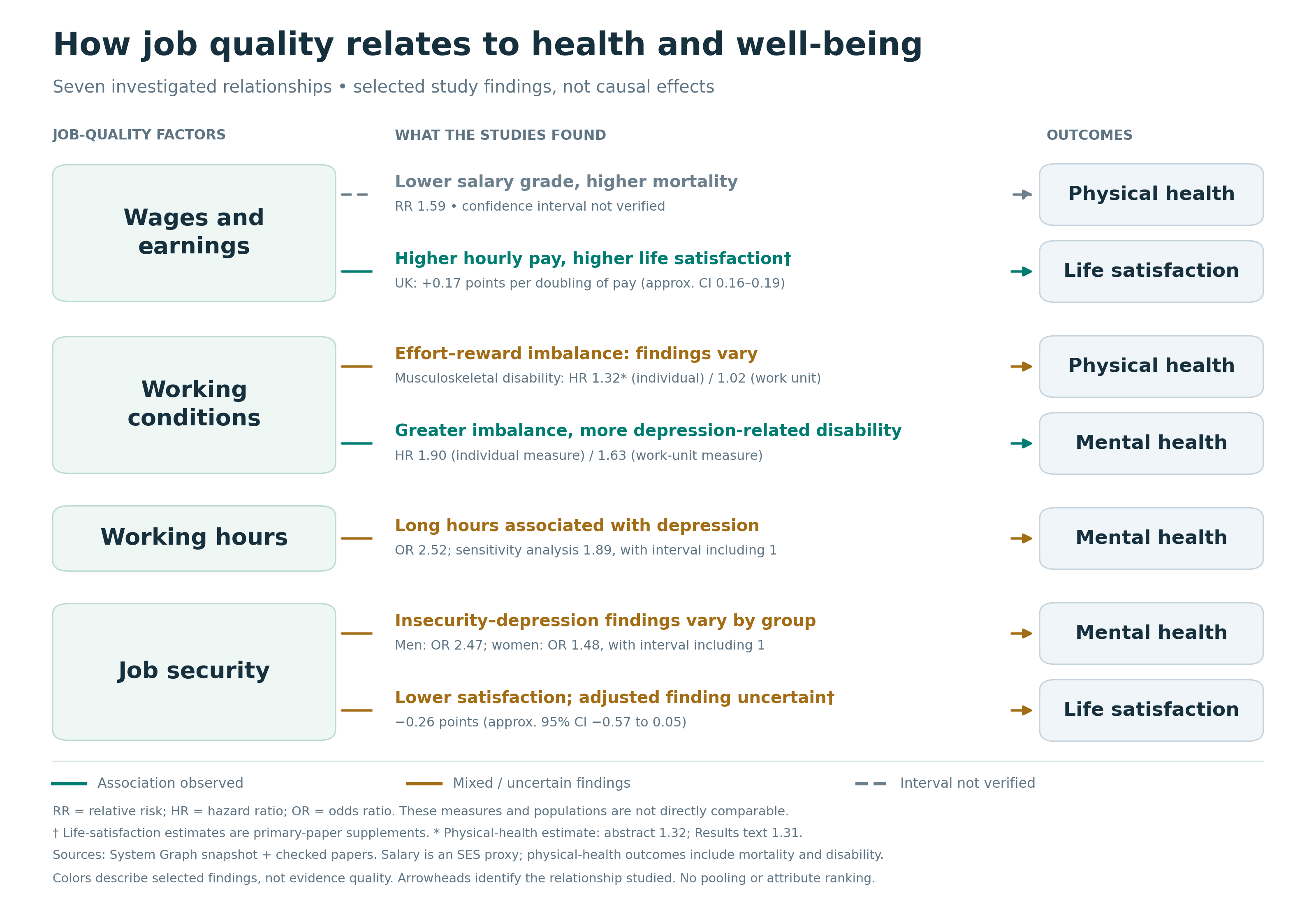
Working conditions and long hours had the clearest links to health across the studies we reviewed. Heat was linked to injuries in U.S. construction, and long hours were linked to depression or depressive symptoms in studies from the UK and China. The overtime findings varied by region.
We also asked whether the things that make a job healthier tend to come with higher pay. In U.S. data, 43% of workers in the lowest-paid tenth of jobs had access to paid sick leave, compared with 96% in the highest-paid tenth. We had less comparable evidence on whether safer conditions, manageable hours, and greater job security follow the same pattern.
How we built it
We used the System Public Graph API to investigate seven relationships between job quality, health, and life satisfaction. We used broad concepts to guide the search, then grouped related variable names, such as “overtime” and “long working hours.” Before comparing results, we checked what each study actually measured.
A number counted as verified Graph evidence when we could match the association to the filtered Dataverse release and confirm the estimate in the original paper. We used U.S. Bureau of Labor Statistics data, Pakistan’s Labour Force Survey, ILOSTAT, and World Bank data to put those studies in labor-market and purchasing-power context.
The challenges we faced
Finding a paper in the Graph was easier than verifying its result. For job security and life satisfaction, we found relevant papers, but our API queries didn’t return an estimate we could verify. We cited those papers as external evidence. We also found that only one of the seven papers we verified through the Graph came from a low- or middle-income country. That made it hard to draw a fair comparison between U.S. and Pakistani construction workers.
What policymakers can do with it
Our final visual turns the evidence into a decision. Start with safer working conditions and manageable hours. Track who has access to paid sick leave by wage group. To close the job security gap, follow formal and informal construction workers in both countries and use the same measures of contract terms, fear of job loss, and well-being.
