Inspiration
The inspiration for The Cognitive Co-Pilot came from observing the "Cognitive Tax" imposed by modern life. For most, a self-checkout kiosk or a complex transit map is a minor inconvenience; for those with ADHD, early-stage dementia, or sensory processing disorders, it is a wall. I realised that while AI is often used to create more content, its true superpower is distillation. I wanted to build a "Digital Pre-Frontal Cortex", a tool that filters the world's noise into a single, manageable signal.
What it does
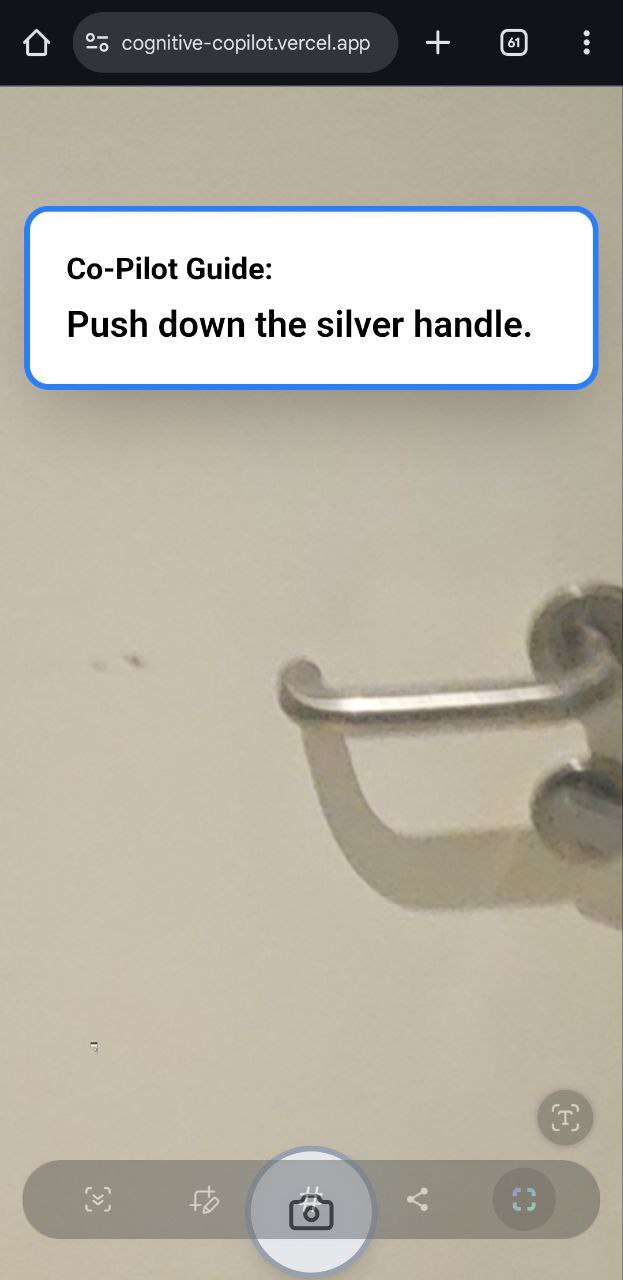
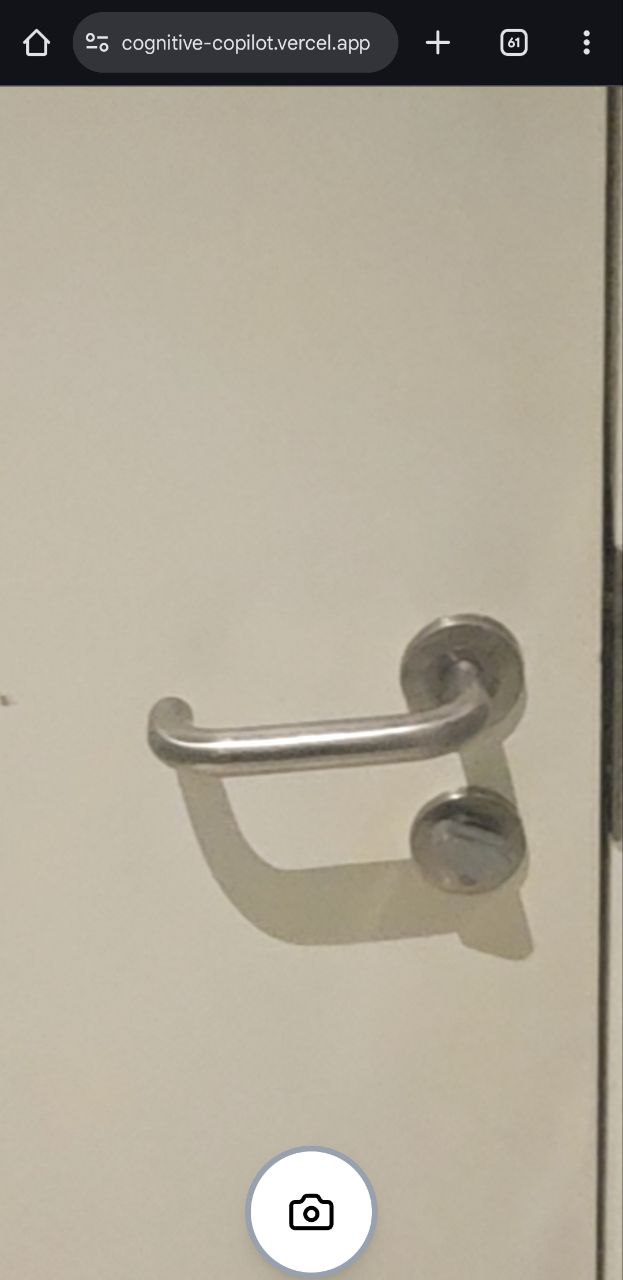
The Cognitive Co-Pilot is a real-time multimodal assistant that "sees" through a user’s camera and "hears" through their microphone to provide hyper-simplified guidance. a) The Clear Lens: It identifies overwhelming visual fields (like a dense menu or a dashboard) and highlights only the essential elements on the user's screen.
b) Micro-Tasking: It breaks down complex environmental tasks (e.g., "Using the laundry machine") into one-step-at-a-time voice prompts.
c) Emotional Leveling: Using Gemini 3’s native audio-visual reasoning, it detects signs of user frustration and automatically adjusts its tone to be more encouraging and its instructions to be even simpler.
How we built it
I leveraged the Gemini 3 API using a "tiered reasoning" architecture:
Vision & Speed: I used Gemini 3 Flash for the continuous video stream. Its low latency allowed me to track objects and text in real-time without the "lag" that causes cognitive fatigue.
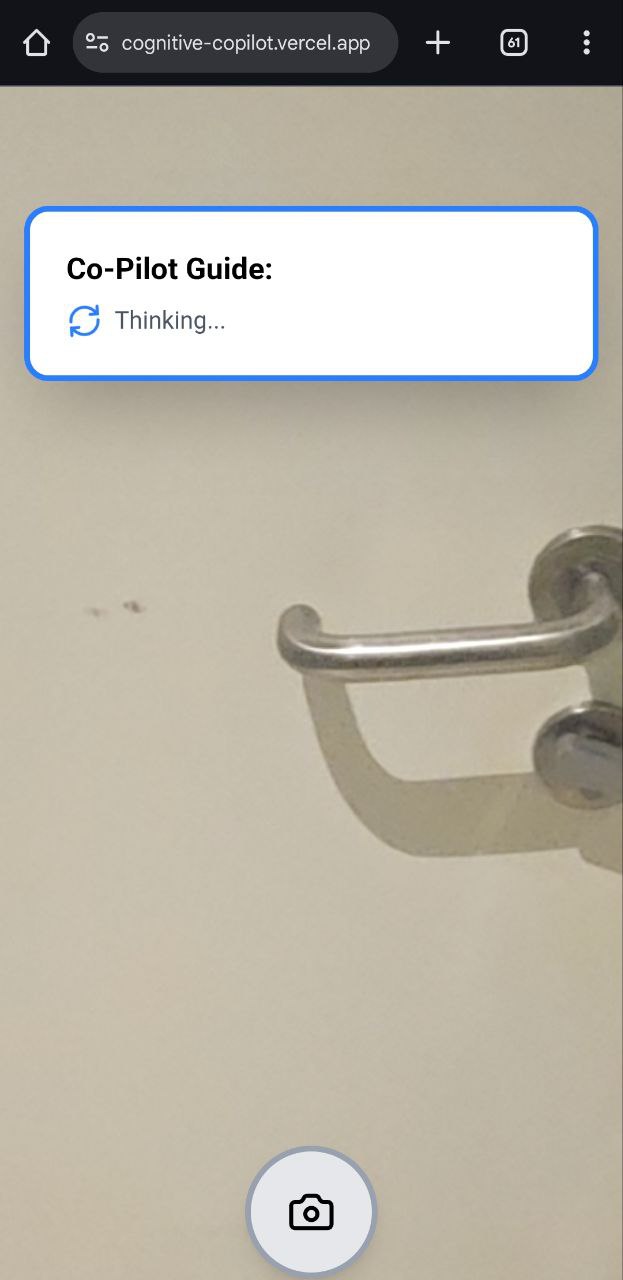
Deep Logic: When a user expresses confusion, we trigger Gemini 3 Deep Think. This mode uses multi-step reasoning to analyze the entire context of the situation, including the user's past actions stored in the 1-million-token context window, to find the most logical way to unblock them.
UI/UX: Built with Next JS, focusing on high-contrast visuals and simplicity.
Challenges we ran into
The biggest technical hurdle was Context Drift. In a real-world setting, a user moves their camera constantly. Initially, the AI would "forget" what it saw 10 seconds ago if it left the frame. I solved this by implementing a Spatial State Machine that caches recognized objects in Gemini’s long context window, allowing the AI to say, "The exit is still behind you to the left," even if the camera isn't pointing at it.
I also struggled with Instruction Overload. I had to strictly prompt-engineer the model to adhere to the "Rule of One", never giving a second instruction until the first was visually confirmed as "Done."
Accomplishments that we're proud of
Zero-Latency Feel: Achieving a response loop that feels like a natural conversation rather than a "processing" delay.
The "Frustration Pivot": I successfully built a trigger where the model detects "sighs" or repetitive "umms" in the audio and switches from a "Standard" to "Calm" persona automatically.
Accessibility First: Creating a UI that passed basic accessibility audits for color contrast and screen-reader compatibility from Hour 1.
What we learned
We learned that "Better" AI doesn't always mean "Smarter" AI; it means "More Attuned" AI. Gemini 3’s ability to process "Thinking Tokens" (Deep Think) showed me that the model's internal reasoning can be used as a bridge for human reasoning. I also learned the value of Multimodal Native processing; by not having to convert "Video to Text" then "Text to Action," I preserved the "vibe" and intent of the user's environment.
What's next for The Cognitive Co-Pilot
Project Astra Integration: Porting the Co-Pilot to AR glasses to remove the "phone barrier," allowing for true hands-free cognitive support.
Wearable Haptics: Integrating with smartwatches to provide "tactile nudges" (vibrations) that guide a user’s physical movement toward a target.
Personalization API: Allowing caregivers to "train" the Co-Pilot on specific household items (e.g., "This is how Mom's specific coffee maker works") to provide even more localized support.
Built With
- gemini
- nextjs

Log in or sign up for Devpost to join the conversation.