-
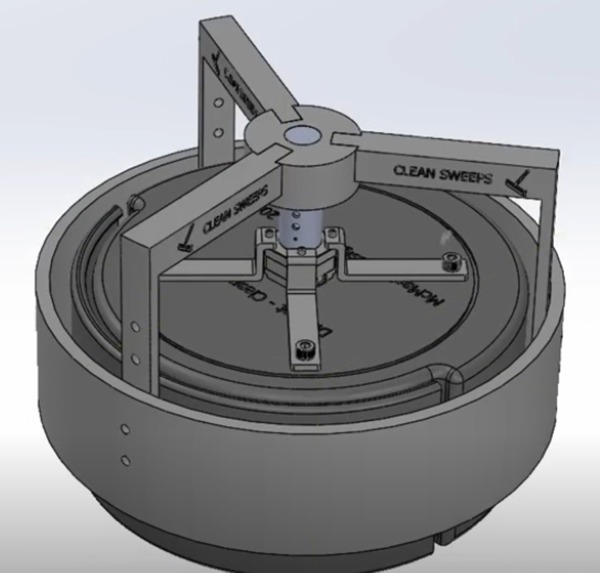
Clean Sweeps: Dirt and Dust Full View
-
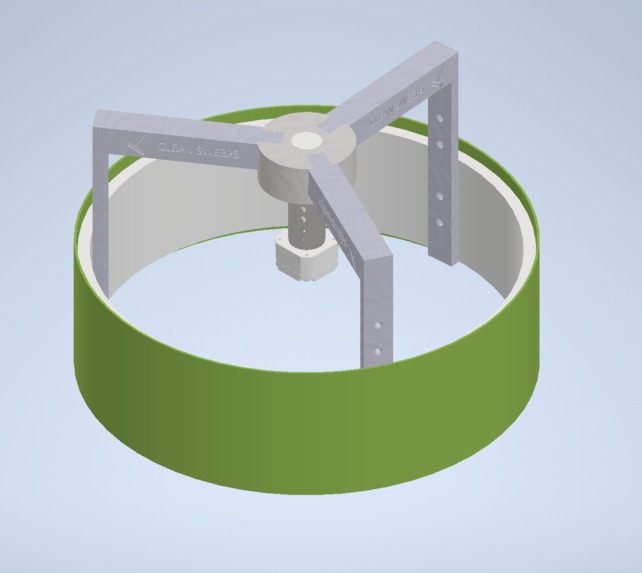
Clean Sweeps - Rotation Component
Inspiration
We initially started brainstorming household chores that those with bodily limitations might have trouble with and I recalled the difficulty my mother had with cleaning the baseboards while dealing with lyme disease when I was younger. Understanding that the dirt bot often goes right up to the baseboards while cleaning the floors anyways we thought it was a perfect design project to take on.
What it does
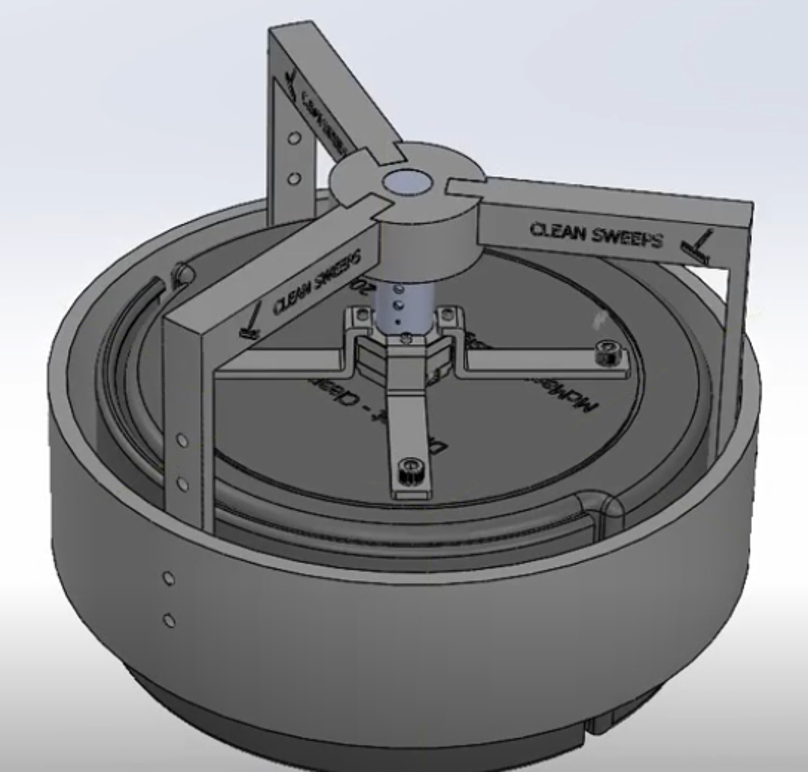
Our device is an attachment to the top of the Dirt Bot which includes a rotating microfiber ringt the dusts the baseboards of a room while the Dirt Bot cleans the floor near the walls.
How we built it
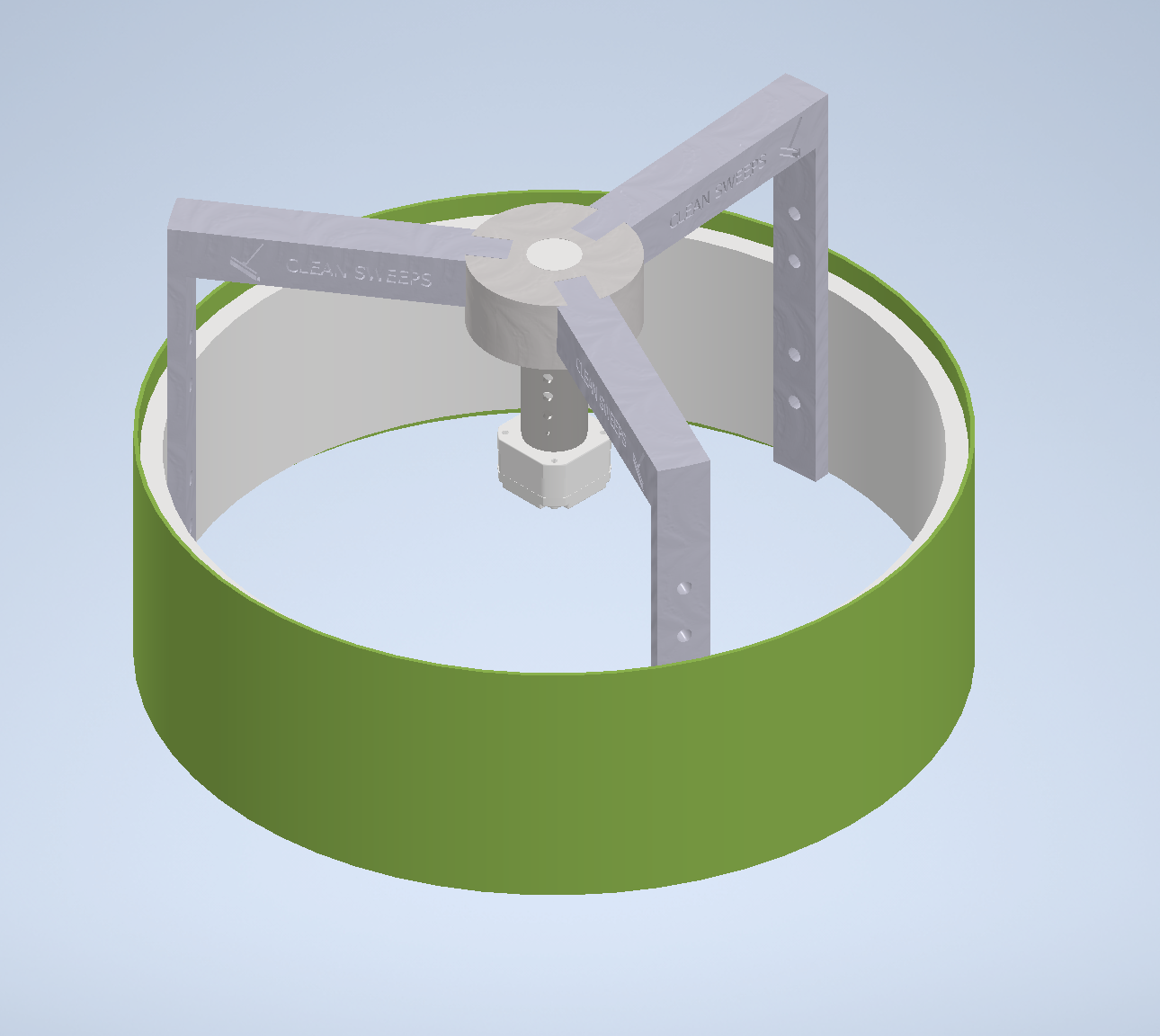
Our device is an assembly of smaller detachable components. First, we have a vertical motor attached to the top of the original base plate with a rotating rod attached on top. The rod is one of two concentric rods, which allow for a simple and easy to use height adjustment feature to ensure the microfiber ring is able to clean baseboards of all sizes. The top rod is then connected to three equidistant supports which hang over the edge of the of the Dirt Bot, which creates a stable and reliable support for the outer plastic ring. The plastic ring has 2 velcro strips around its entire circumference, which allows for simple and quick removal/attachment of the microfiber cloth. This allows for the microfiber cloth to be removed, washed and reused, cutting down on waste and decreasing cost of use for the user.
Challenges we ran into
Due to our design being modeled with the dirtbot assembly file as a reference, our model was life sized. This caused our parts to take longer to print than we had initially expected. We, therefore, came up with the idea of printing smaller connecting parts; this, however, turned out to be a beneficial idea in the end as it would allow for easier shipment of the design were it to be brought to the market. We also faces issues with the tolerances of the 3D model. Most of our model was designed to be assembled with small plastic dowels to ensure no power tools would be required for assembly. The dowels we printed were originally designed to be the same diameter of the holes we designed in our other features, this resulted in dowels that were far too large for use and for the dowels to be reprinted with a smaller diameter for use in our prototype.
Accomplishments that we're proud of
We believe that our initial idea is a truly innovative and feasible addition that could be added to any automatic floor cleaners and could help many people complete a task that is otherwise physically challenging.
What we learned
In the future for presenting a model we feel we should scale the model down before printing. All group members were able to practice their CAD skills with 3/4 members creating moving assemblies in solidworks for the first time.
What's next for Clean Sweeps
In the future we wish to create more attachments that could be swapped out on top of the Dirt Bot to add more functionality/complete more household tasks. We also feel if this were to be brought on to the market that looking into injection molding and metal supports could make the parts more precise which creates less of a concern of the physical model to be at risk of not fitting within the desired tolerance.
Built With
- autodesk
- inventor
- solidworks

Log in or sign up for Devpost to join the conversation.