Inspiration
Most of us have a phone within arm's reach right now. Very few of us have ever thought about what is inside it. Inside the battery is cobalt, and roughly 70% of the world's supply is sourced from one country: the Democratic Republic of the Congo (DRC). Some of it is dug by hand, and some of it by children.
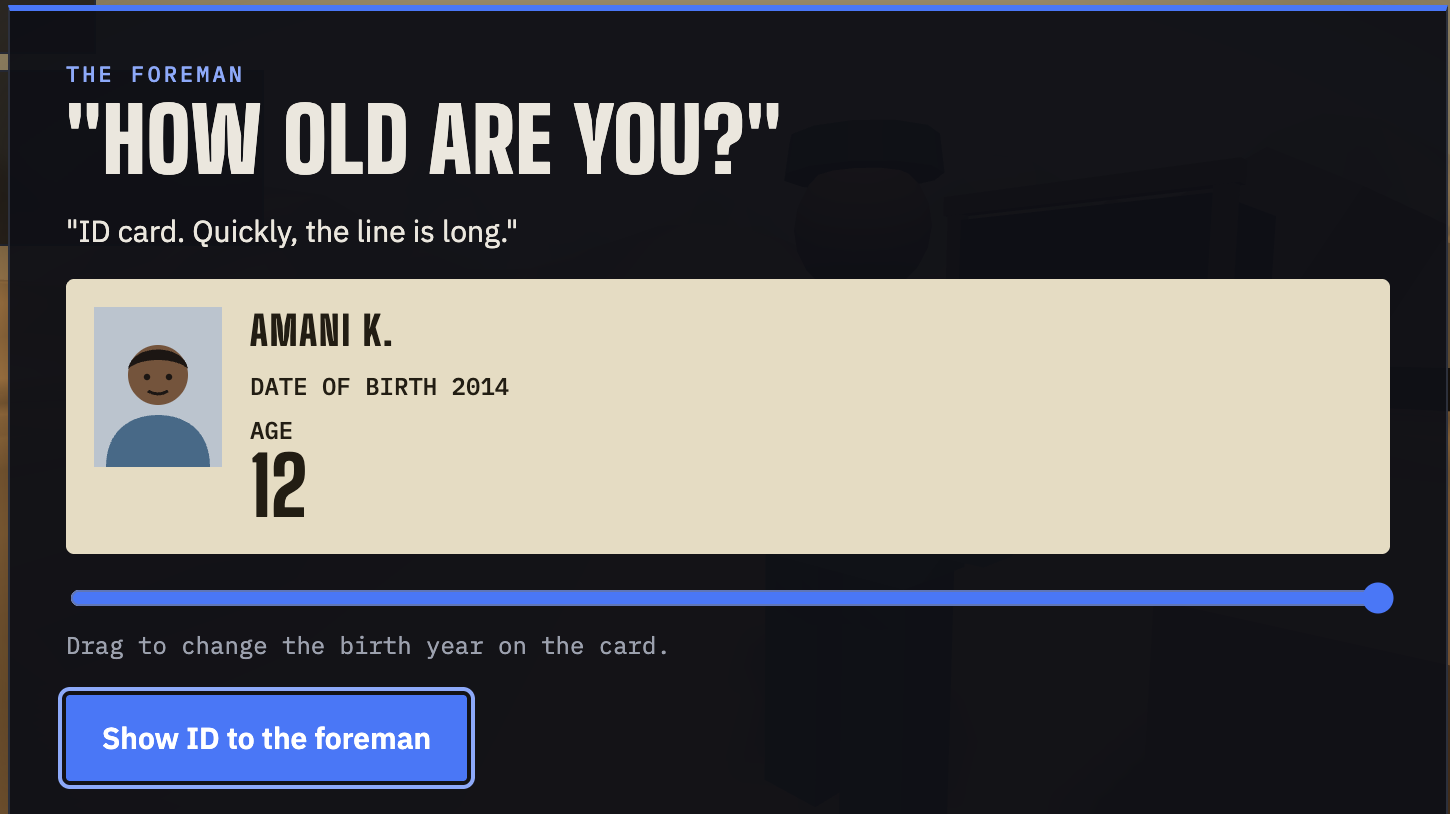
UNICEF estimated that about 40,000 children worked in mines across southern Congo in 2014. We kept seeing that number in reports, and we noticed it never changed how anyone felt. A statistic is easy to scroll past. A boy named Amani, standing in front of you, is harder to ignore. So we set out to turn the number into a day you walk through yourself.
What it does
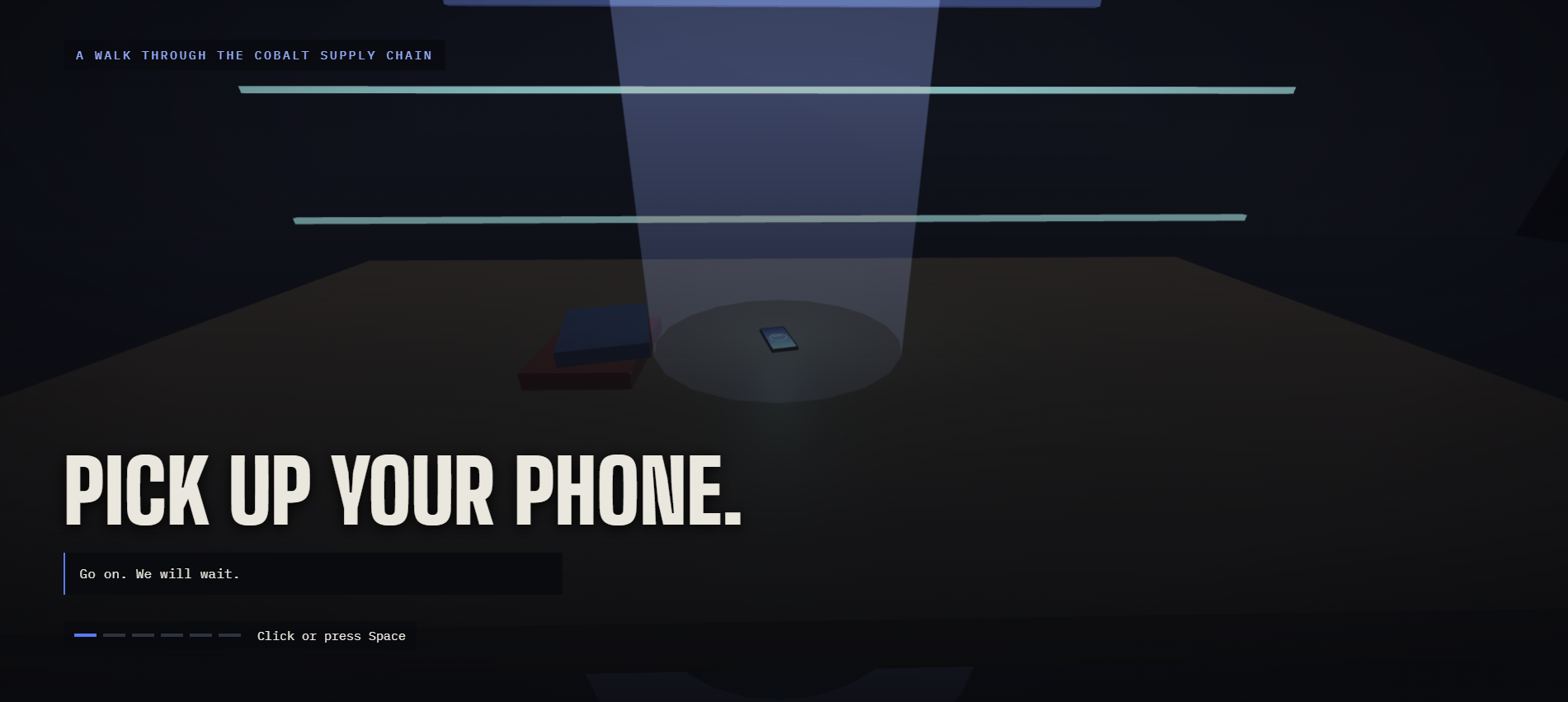
The Children of Cobalt is a short first-person experience in your browser. You start by picking up a phone, and then you live one day as Amani, a child miner. Amani is a composite character built from documented reports.
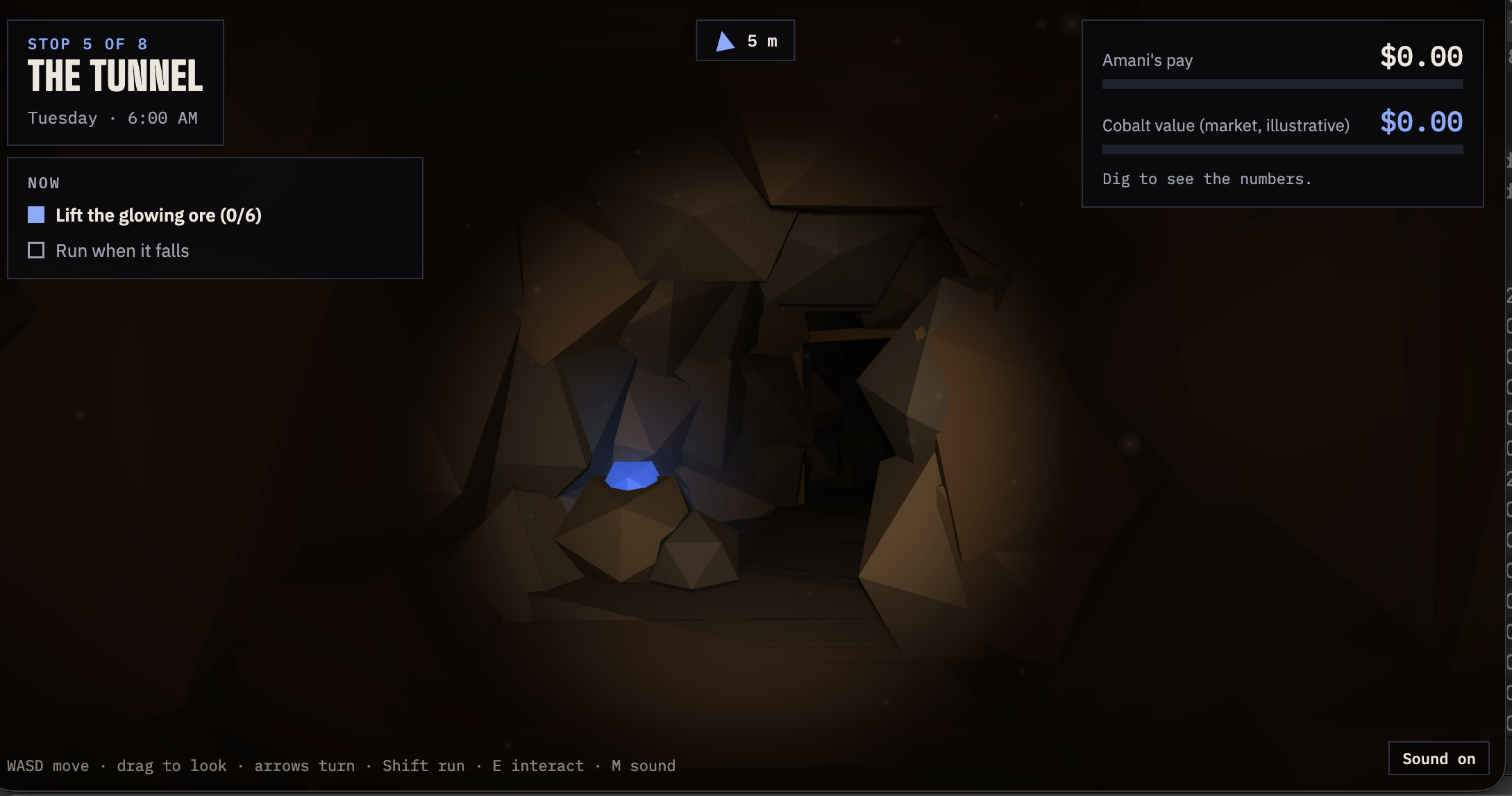
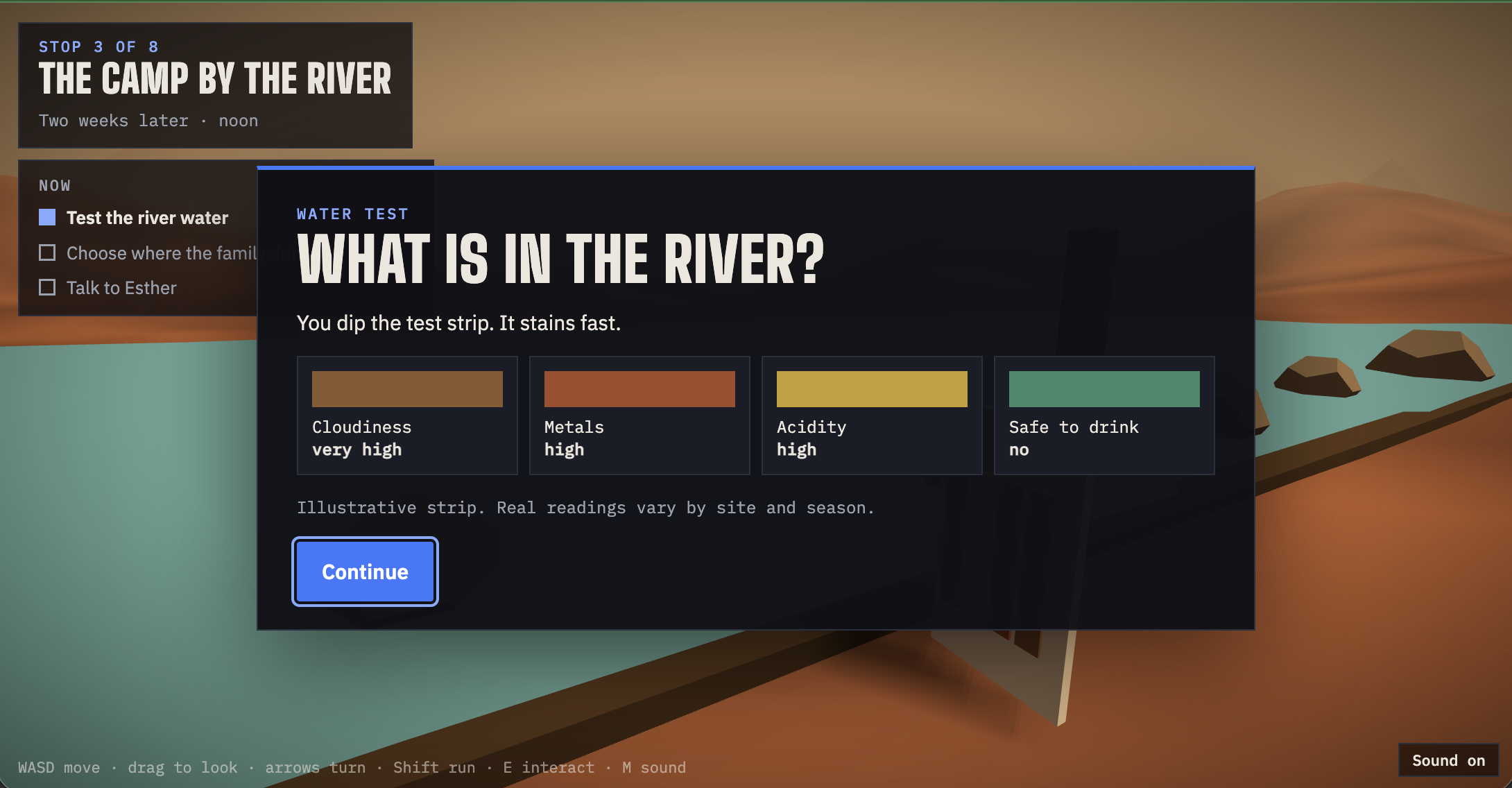
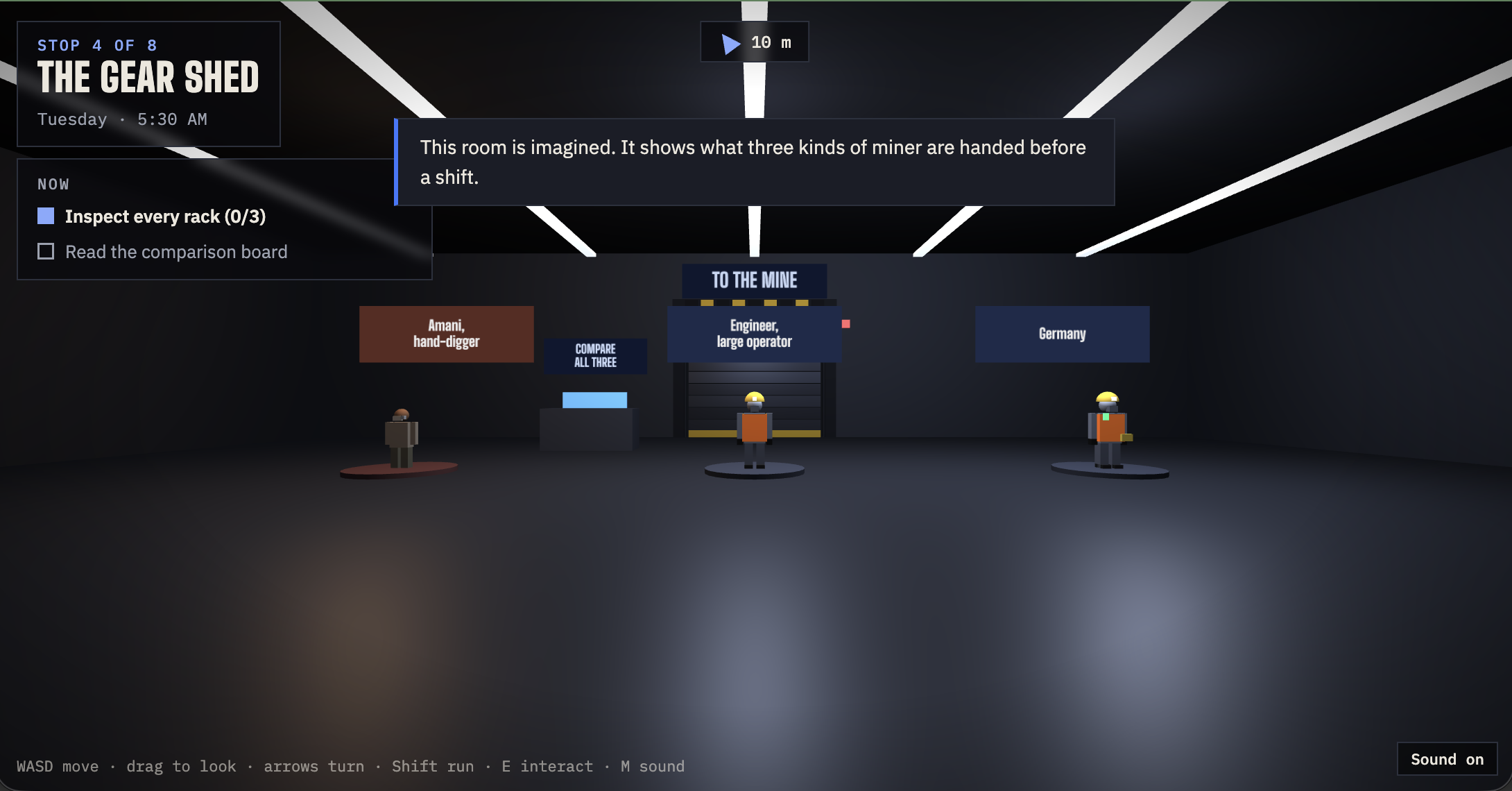
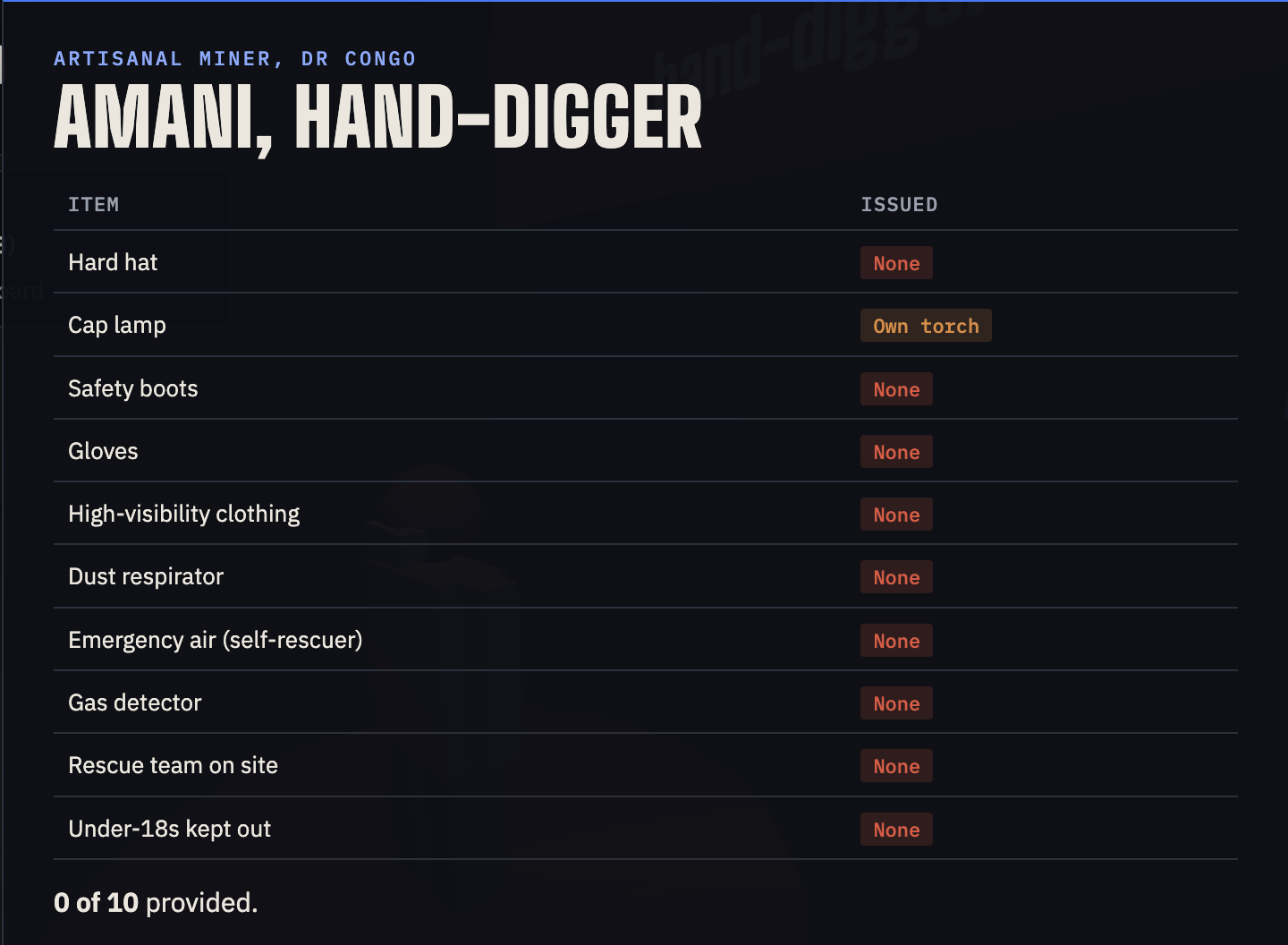
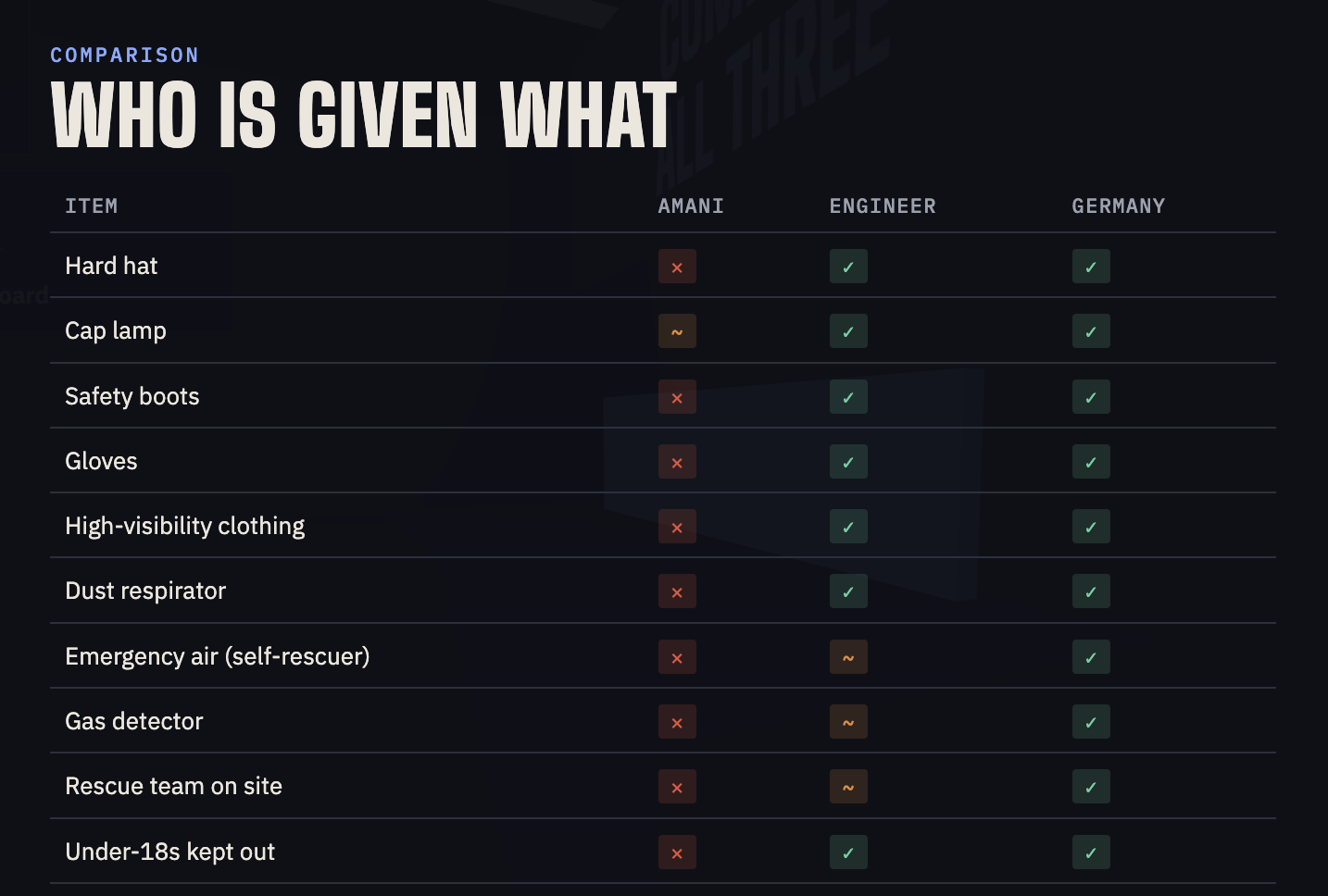
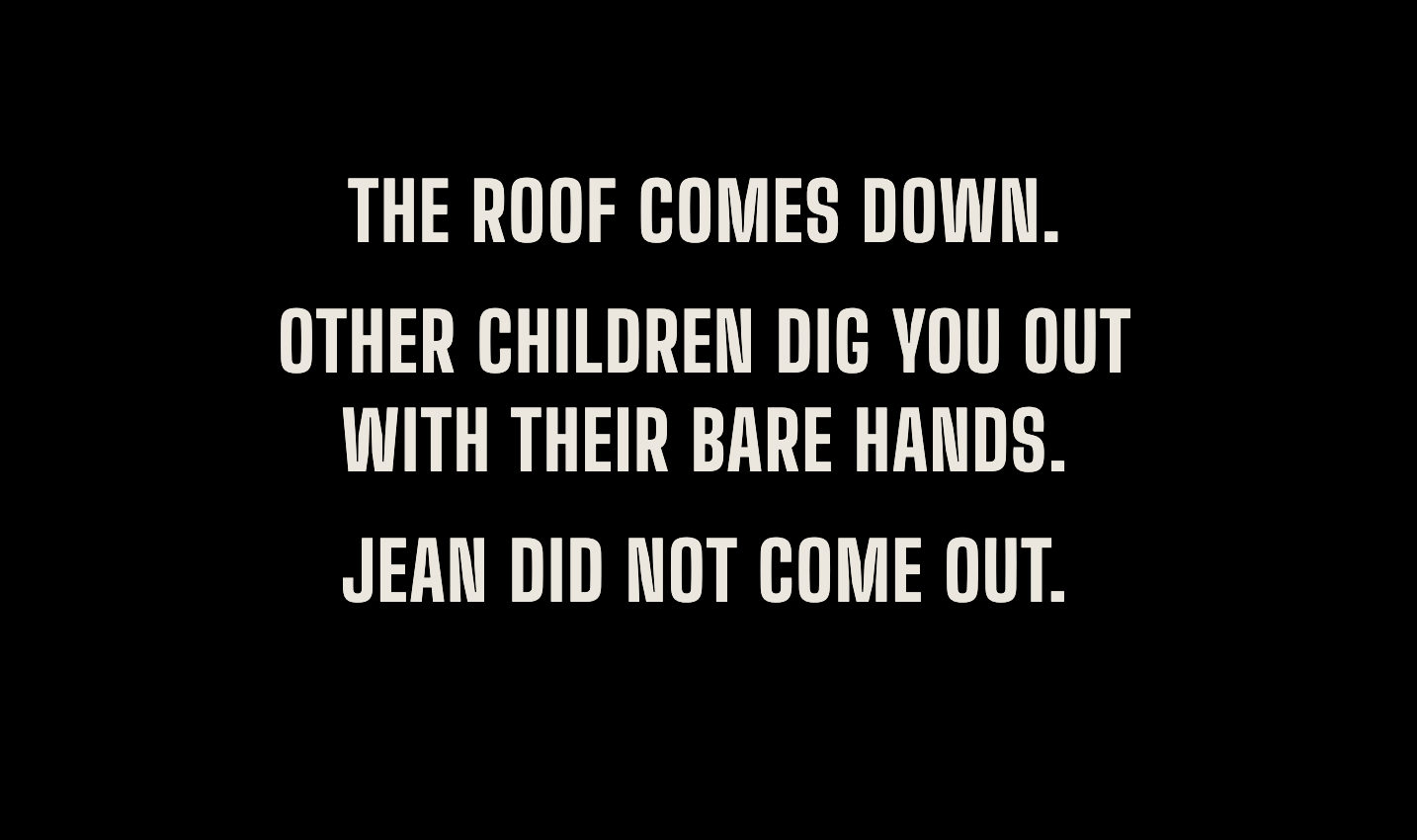
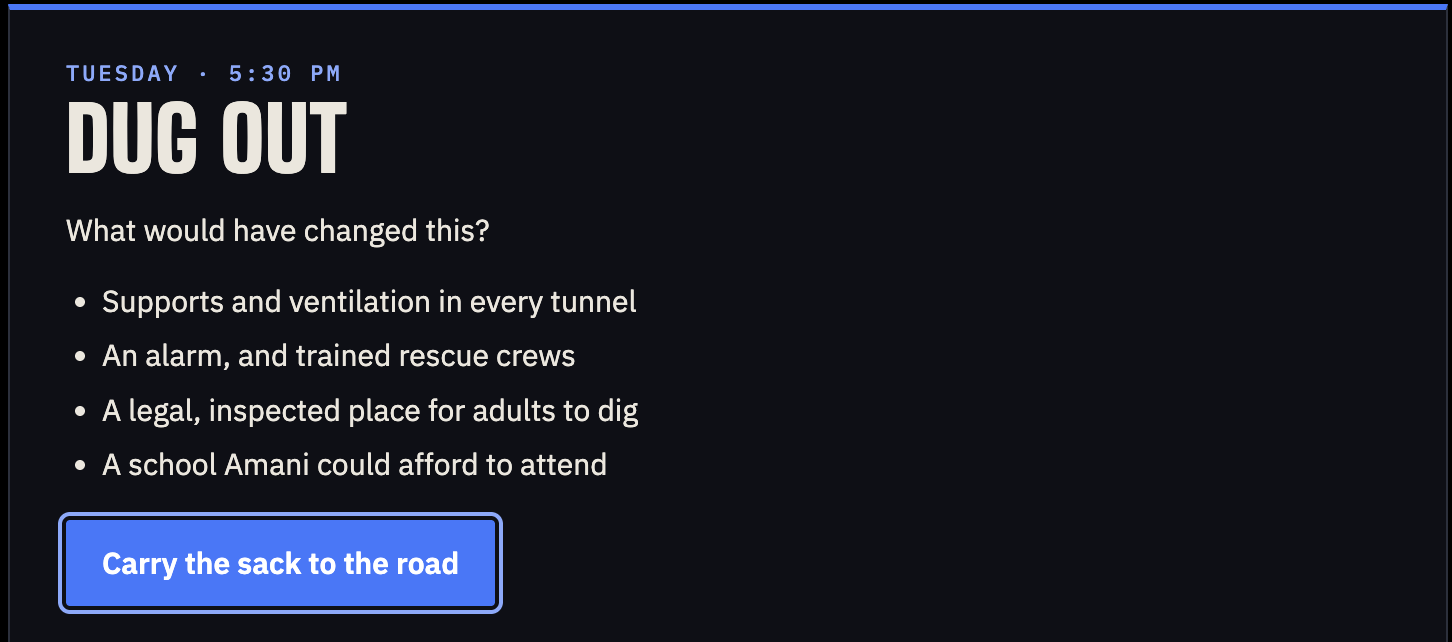
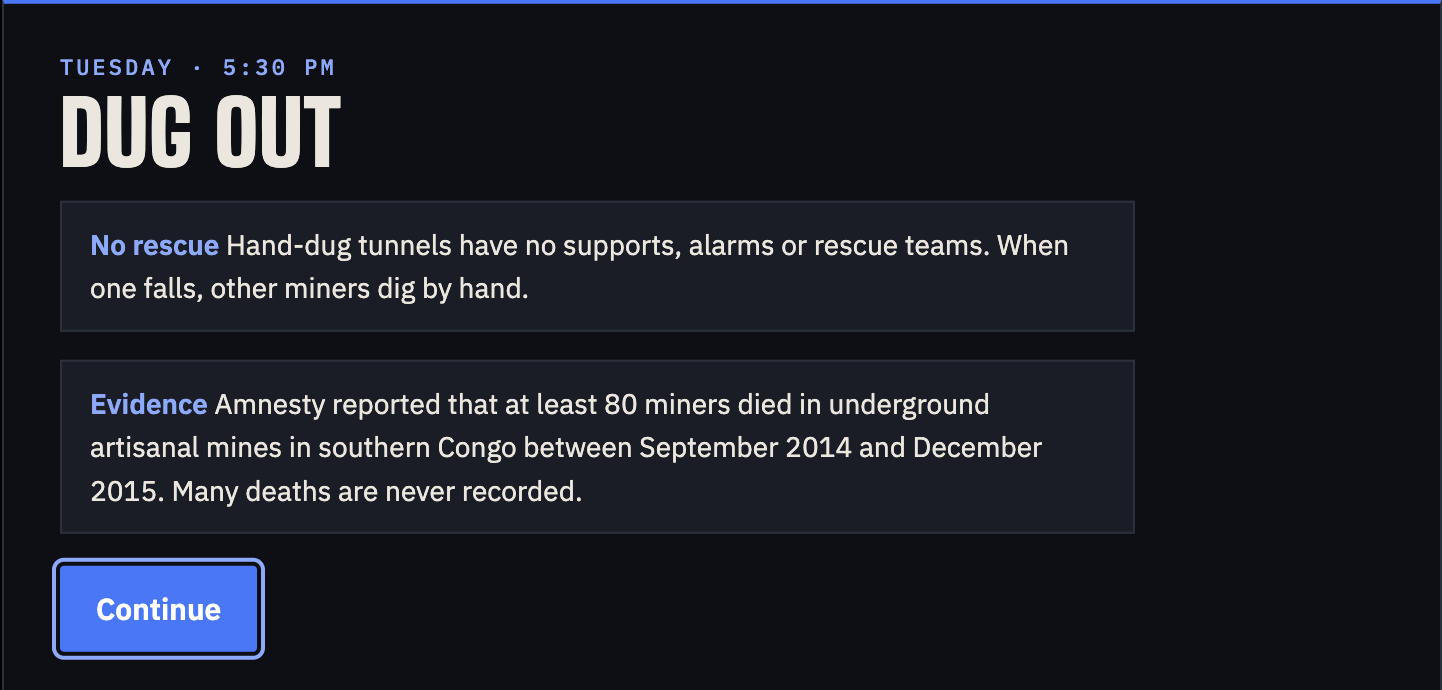
You wake up at home and talk to your mother. You are short on the informal school fees, lacking funds to afford basic necessities, and now digging looks like the only way out. You test the river water at camp and decide where your family drinks. You walk through a gear shed and see what Amani is handed compared with an engineer at an official mine and a miner in Germany, a developed country. You continue underground, dig out glowing ore, and live through a collapse. Jean, the boy digging beside you, does not come out.
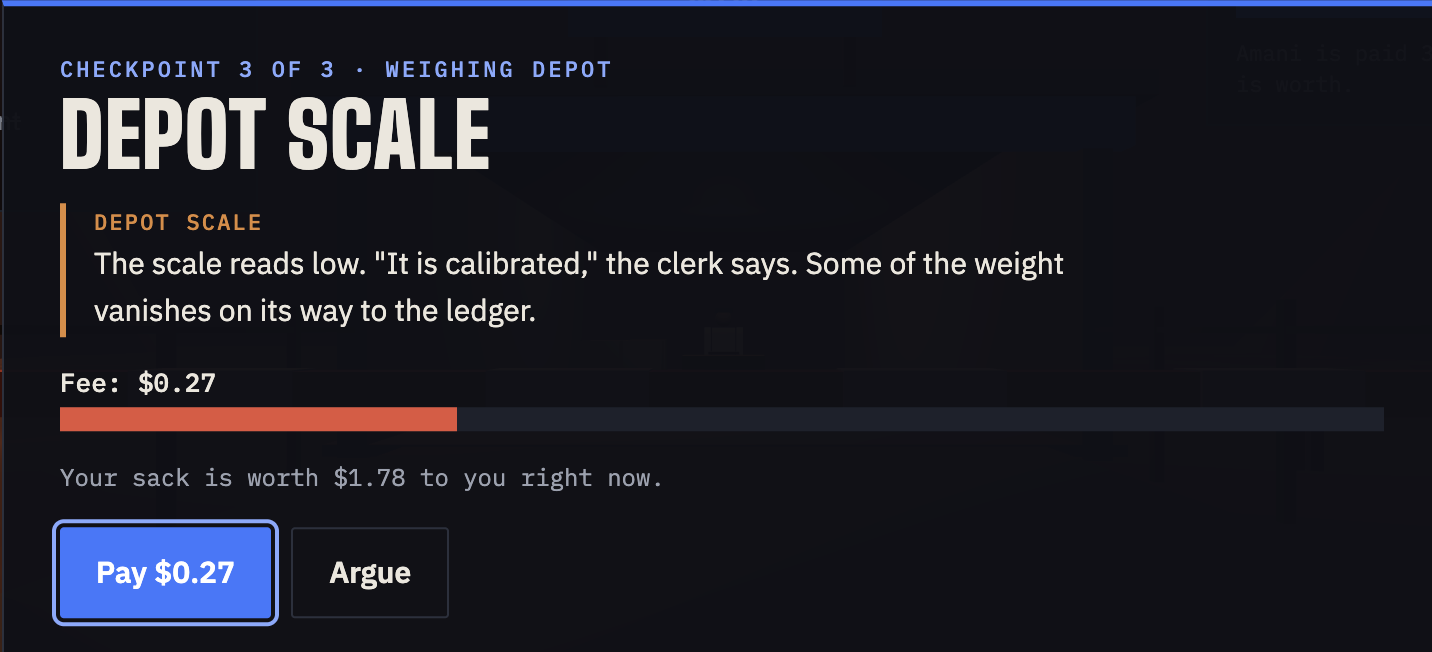
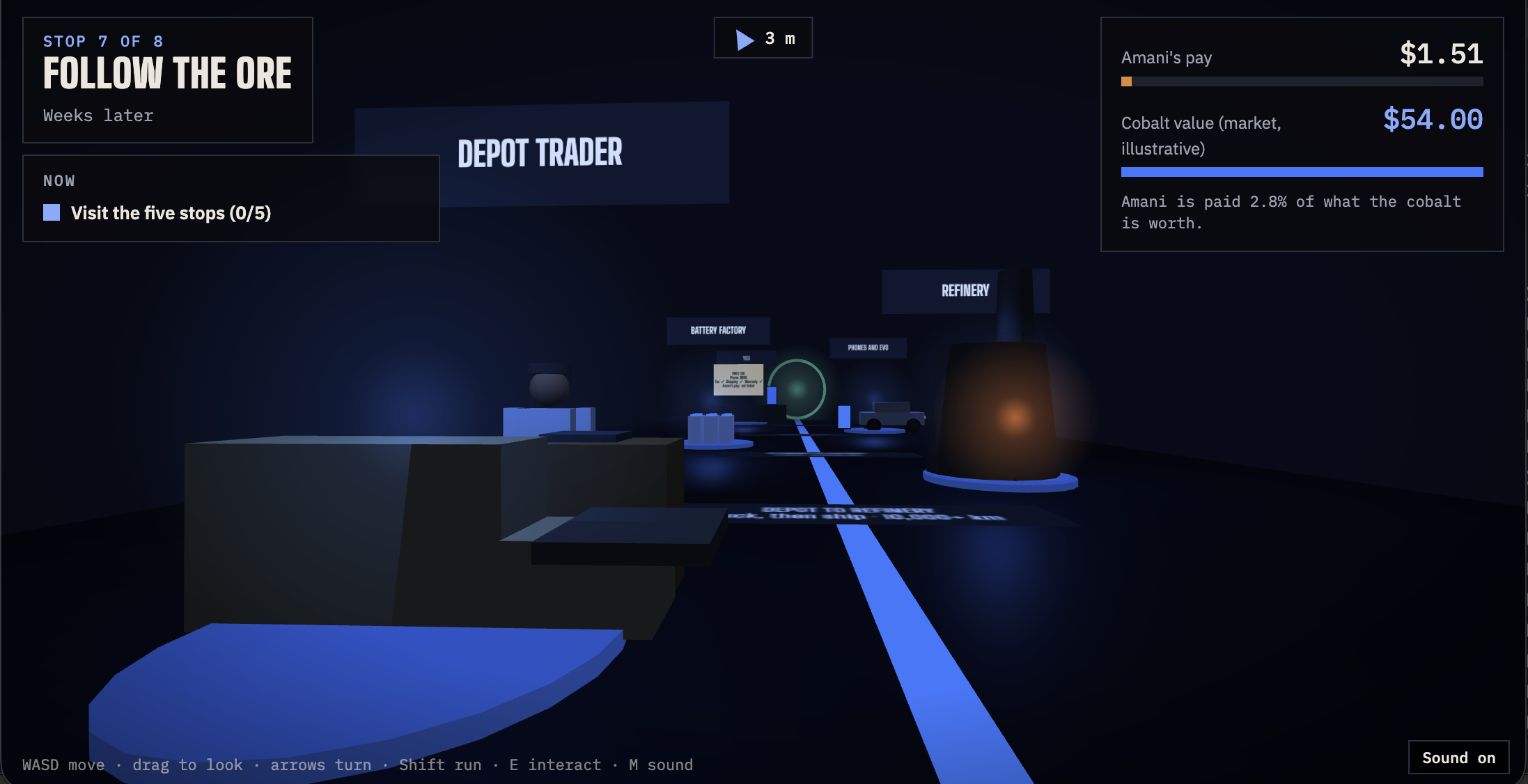
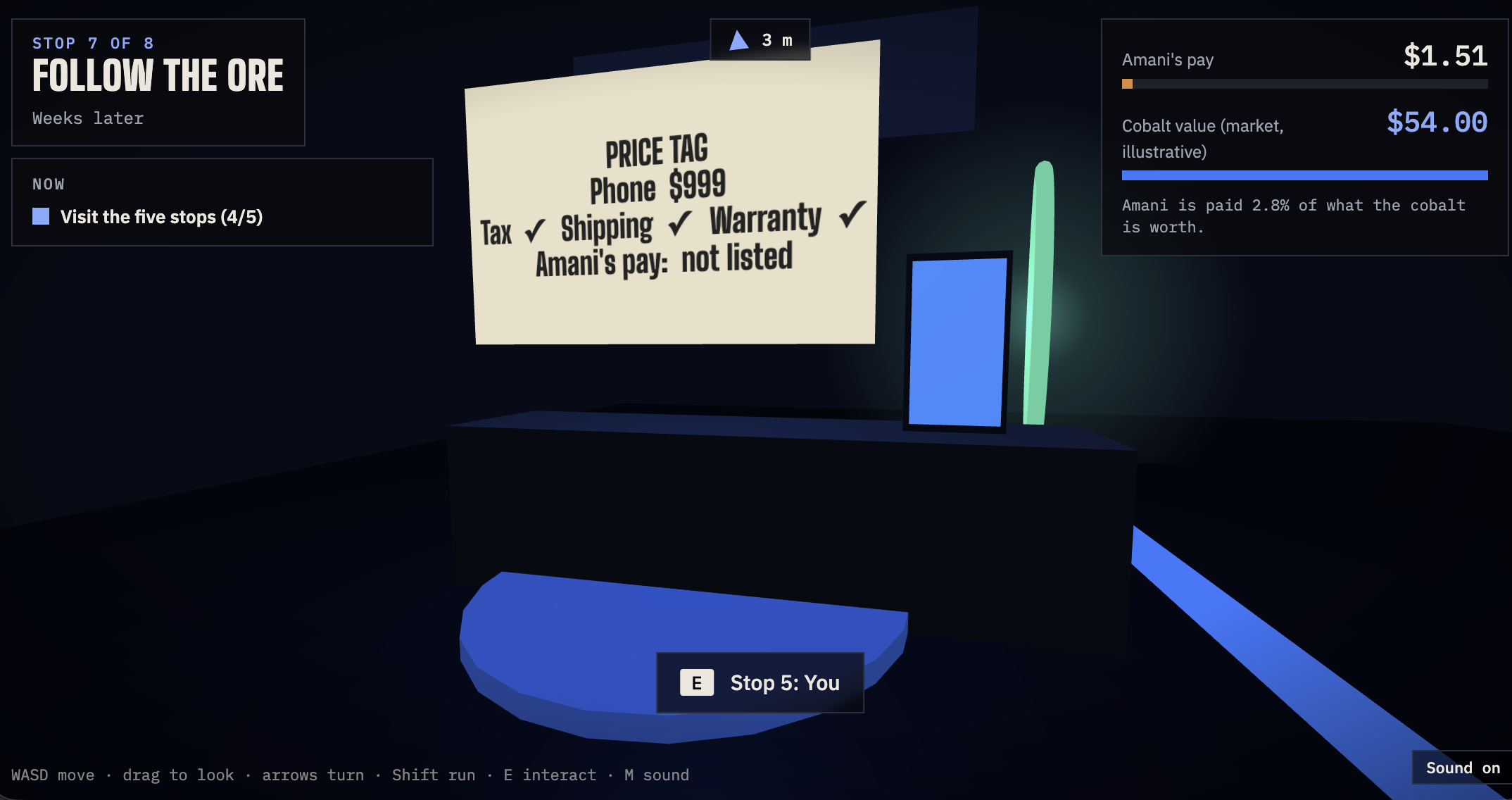
On the road home, three gates take their cut before you reach the buyer. After that you follow your ore across the world, from the depot trader to the refinery, the battery factory, the EV, and finally the shop. The last scene puts two things side by side: what Amani earned for his day, and the profit made from a single battery, made possible only by Amani's contribution.
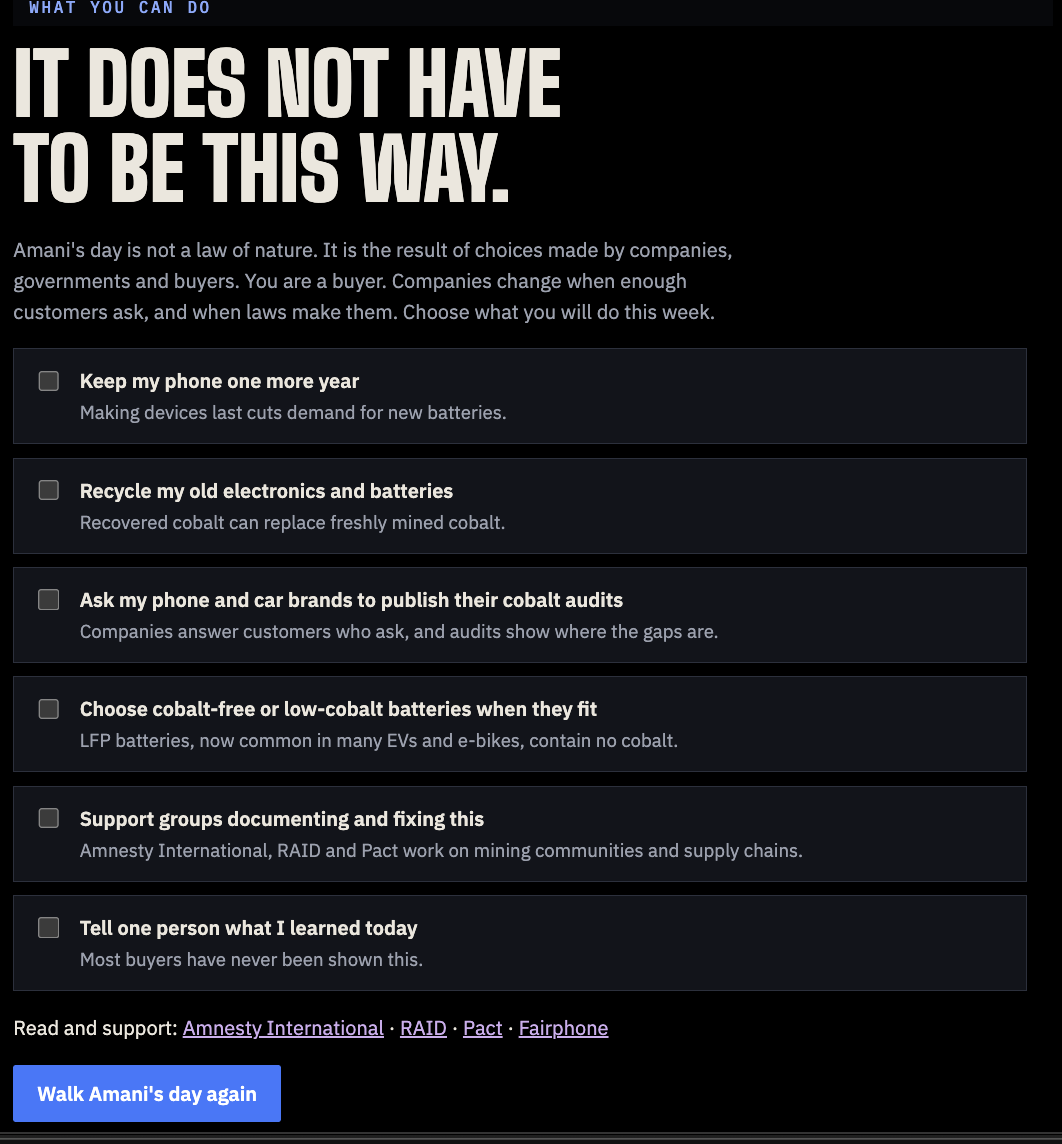
It ends with an invitation, not a lecture: a short list of things a buyer can actually do.
How we built it
We built it as one web page, with simple 3D scenes you can walk through on desktop or touch devices. Nothing to install.
We kept the look deliberately simple, with low-poly shapes, dim light and a single headlamp underground. That kept the focus on the story, and it lets us show hard things without anything graphic. The money is on screen all day. Two counters, Amani's pay and the market value of the cobalt he carries, climb at very different speeds.
Every scene had a job. The gear shed shows the gap in protection. The tunnel makes you feel the risk. The gates show where the pay disappears. The final scene draws the gap to scale: a small stack of coins next to a tower of gold, with a skyscraper behind it.
Tech stack
The Children of Cobalt is a single web page written in HTML, CSS and JavaScript. We used Three.js, a popular library for 3D graphics in the browser, to draw every scene.
Sound and interface
The ambient audio, such as wind, dripping water, creaking beams and the rumble of the collapse, is generated live with the browser's Web Audio API instead of audio files. The on-screen parts, such as the objectives, the pay counters, the dialogue cards and the ending pledge, are plain HTML and CSS layered over the 3D view.
Challenges we ran into
The hardest part was tone. We wanted people to feel something without turning a child's suffering into a game. That meant cutting anything that felt like a score or a reward, and letting the hard moments, like Jean not coming out, land quietly.
We also merged two earlier prototypes into one. One had a stronger story, the other had better comparisons and facts. Combining them meant rebuilding the flow so each scene followed the last.
Then there was the long tail of small problems in a 3D world: ore sunk inside rocks, a depot buried under sand, signs that blended into the background, and a tunnel whose sides disappeared into black. Each one pulled the player out of the story, so each one mattered.
Accomplishments that we're proud of
- The ending: the comparison of a day's pay against a battery's profit lands in a few seconds, with no charts to read.
- The structure: a full day, from home to the shop, plays through in a few minutes.
- The balance: it deals with child labour, injury and death honestly, in text and simple 3D, with nothing graphic.
- The reach: it runs in a browser tab, so anyone can open it from a link.
What we learned
We learned how much a story changes a number. People who skim past 40,000 will stop for one named boy.
We learned that the system matters more than any single villain. The guards, the traders and the buyers are each a small step, and together they decide what Amani keeps.
We also learned to be careful with facts. Amani, Jean and Esther are composites, and the pay, fees and battery profit are rounded teaching figures, not measurements of one mine. We say so inside the experience.
What's next for The Children of Cobalt
We would like to add voices and include more places, such as other camps and the families who live around the mines. This includes bringing in people who have worked on this issue to provide insight and guidance to our project.
Adding additional languages such as French, which is widely spoken in the DRC, would make it more accessible to use in educational settings with a short guide for teachers.
Finally, we want to make the ending more actionable by adding up-to-date links to organizations working on this issue, along with cobalt-free and recycled-battery alternatives.
Why it matters
As demand for EVs and “greener” technology grows, so does demand for cobalt. The shift to clean energy is built on batteries, yet few of us ask where their materials come from or who dug them out of the ground. If the future is going to be sustainable, it must begin with the people at the start of the supply chain.
Built With
- claude
- css
- html5
- javascript
- lovable
