-
-
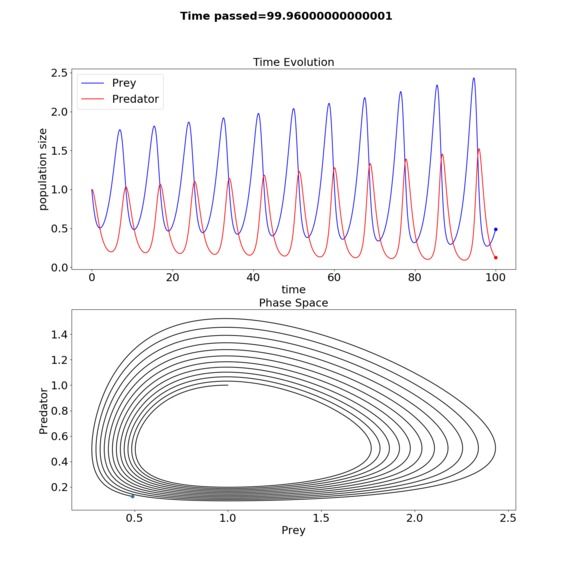
1 predator 1 prey
-
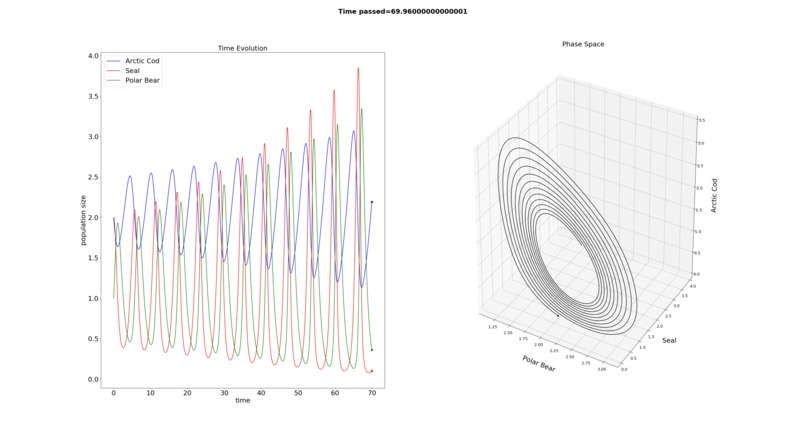
Arcitc ecosystem
-
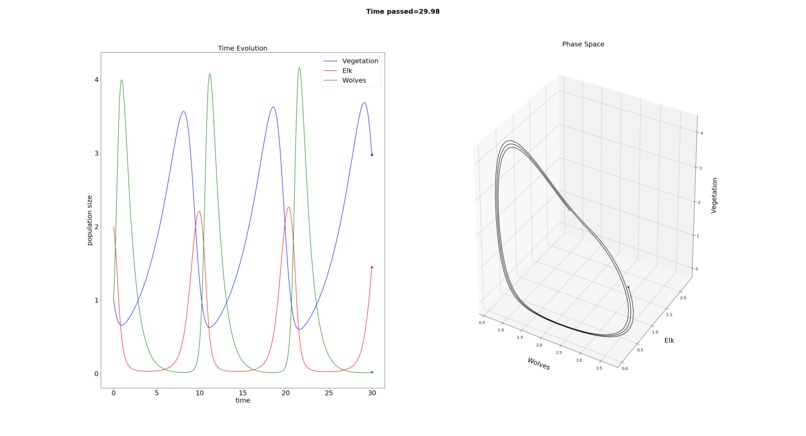
Yellow Stone Wolves
Inspiration
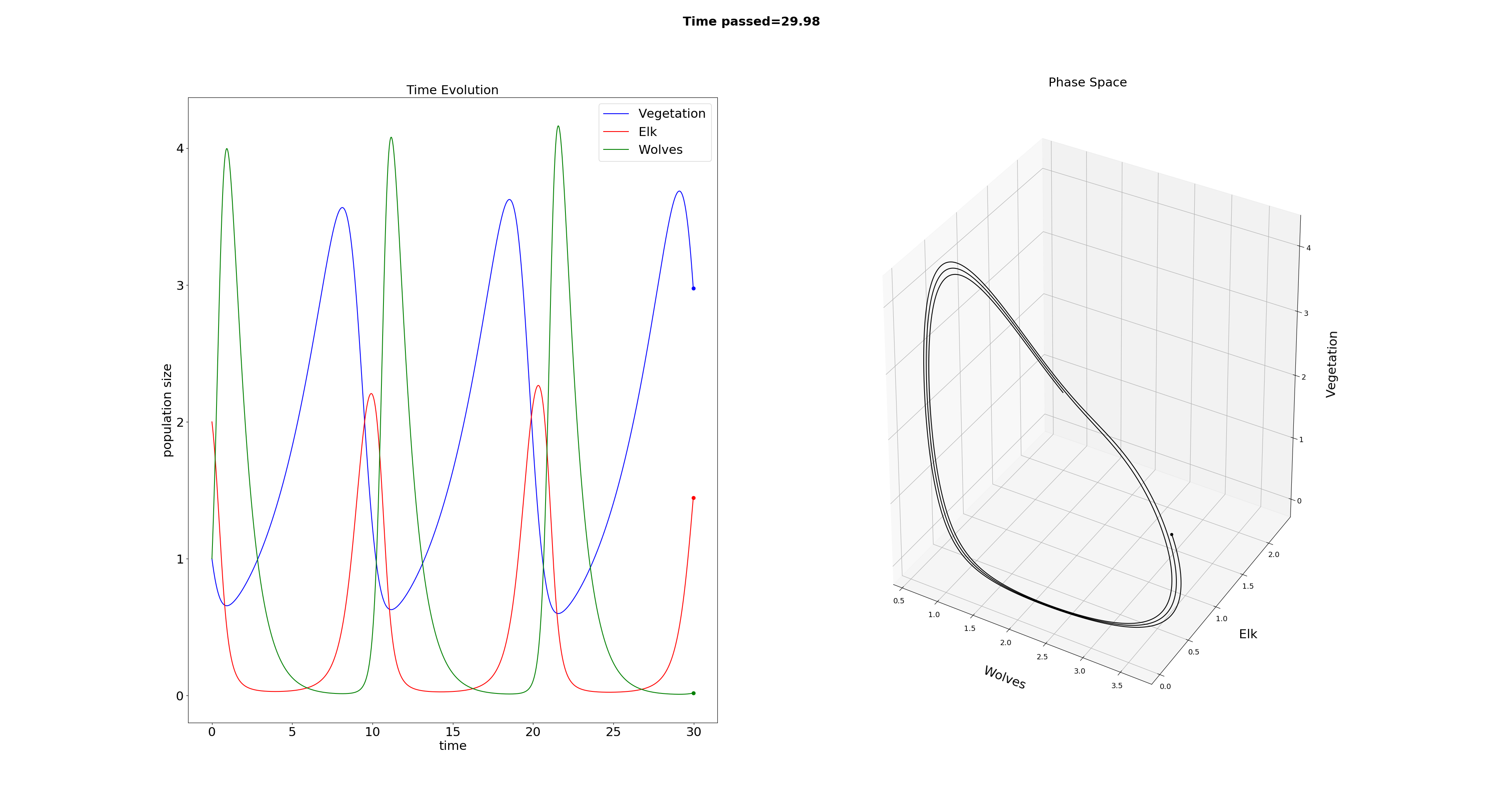
We became inspired to work on this topic after reading about how reintroducing wolves back into Yellowstone National Park in the United States resulted in the whole ecosystem becoming more balanced; as the static elk population in the park resulted in diminished food resources for themselves, as well as other species.
This inspired us to look into the equations that predict the evolution of the population of animals in a specific ecosystem. Therefore we create a generalized code to be able to simulate for any number of animals in any food chain configuration.
What it does
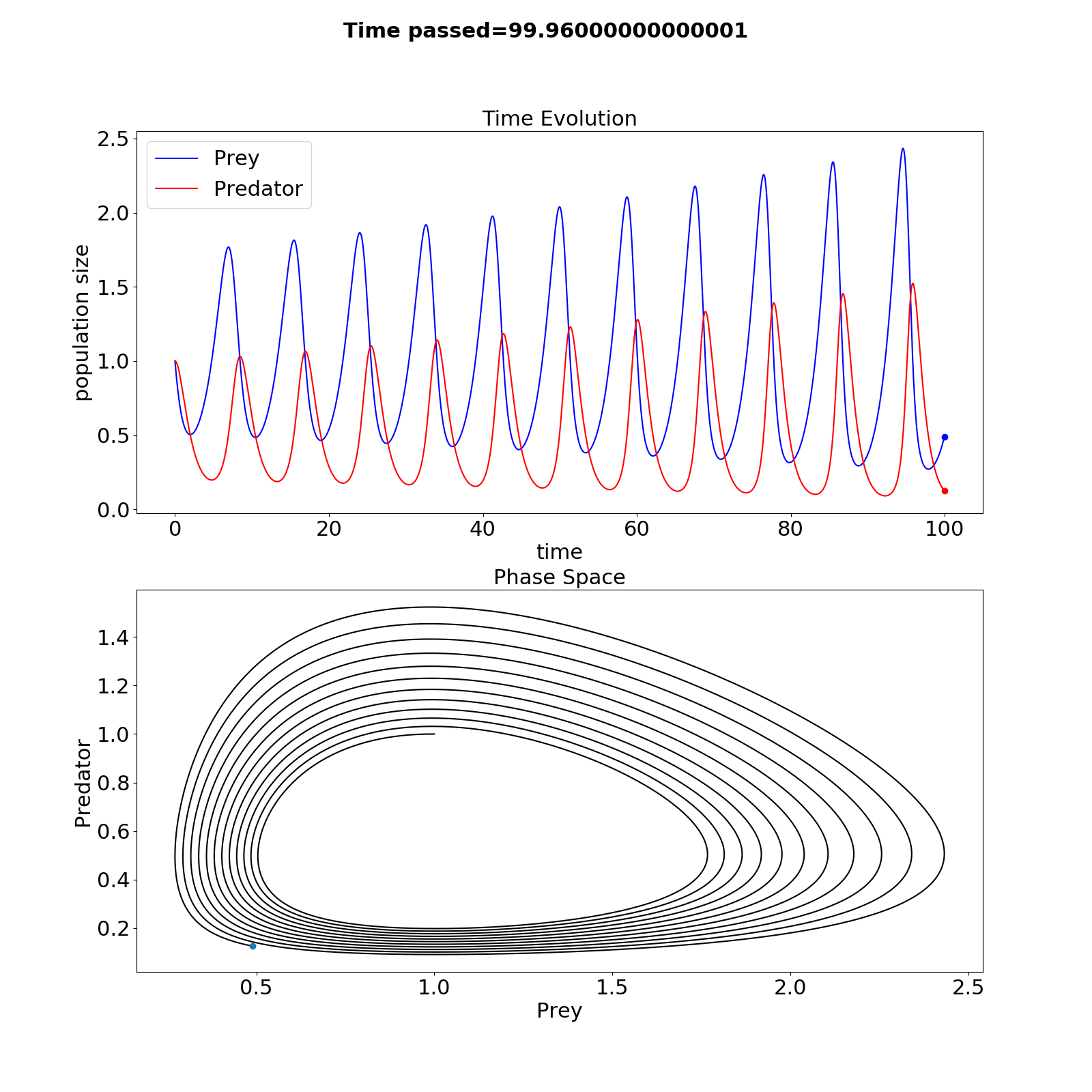
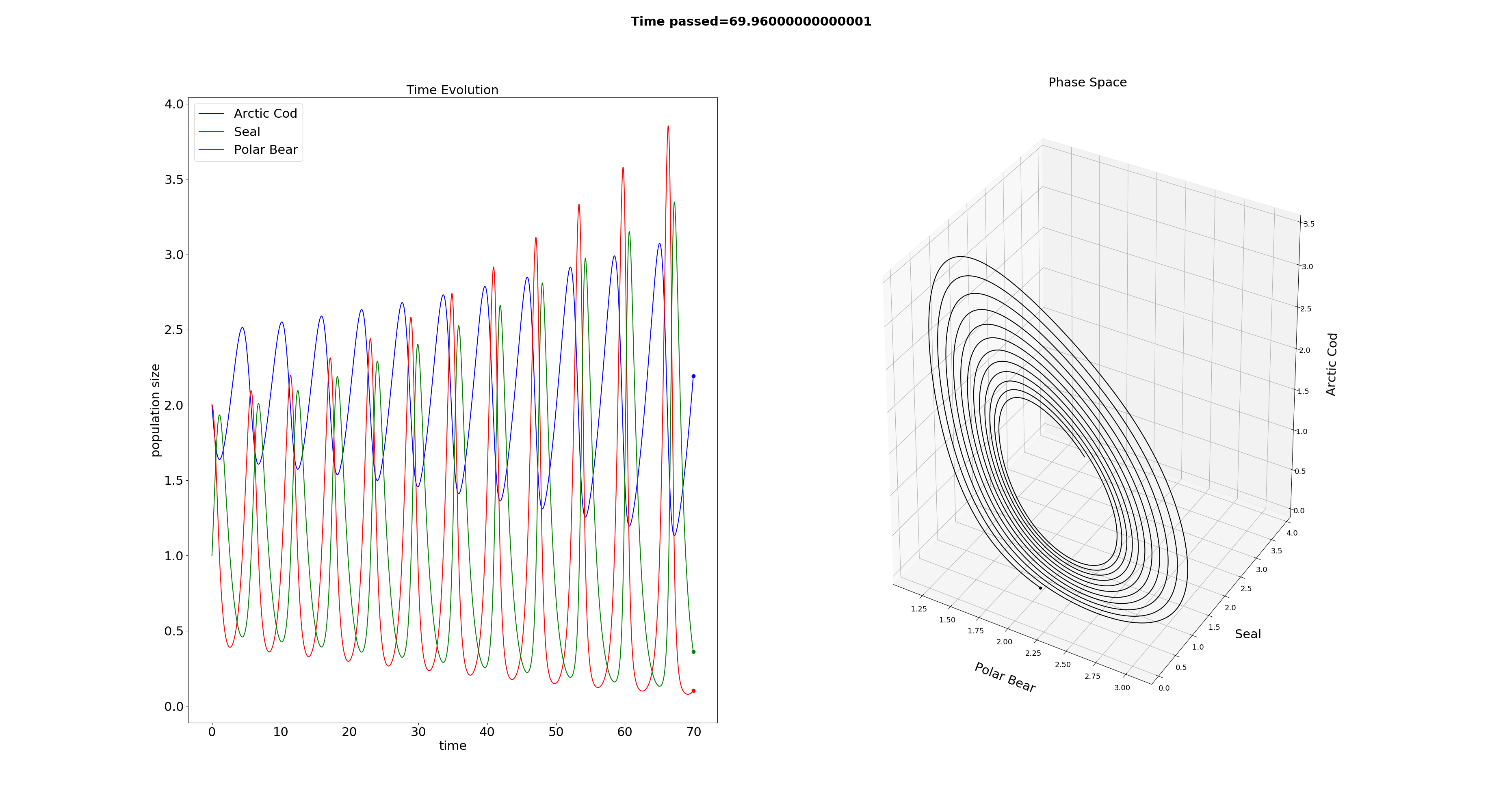
Our Codes creates two diagrams, one being the time evolution of the population of each species, and the other is the phase space diagram of two (or three) of the different species' populations. These two outputs are a function of each species's growth rate, and interaction parameters, and initial populations with each other.
How we built it
In essence our code is numerically solving the Competitive Lotka–Volterra equations, with the help of the Euler method. Python was used for the code.
Accomplishments that we're proud of
We were able to simulate what we were expecting, which was the balance in ecosystem is the result of the contribution of all living species.
What we learned
We conclude that all animals play a part in the stability of the population of other animals, and that wildlife population is an interlinked and quite chaotic phenomenon.
What's next for The Chaotic Food Chain
Using it for more complicated and diverse ecosystems, such as the Amazon Forest.



Log in or sign up for Devpost to join the conversation.