-
-
Dragon Busters by The Carbon Games!
-
Game overview: Roles and Points
-
Goal 1: How we enable healthy competition in teams
-
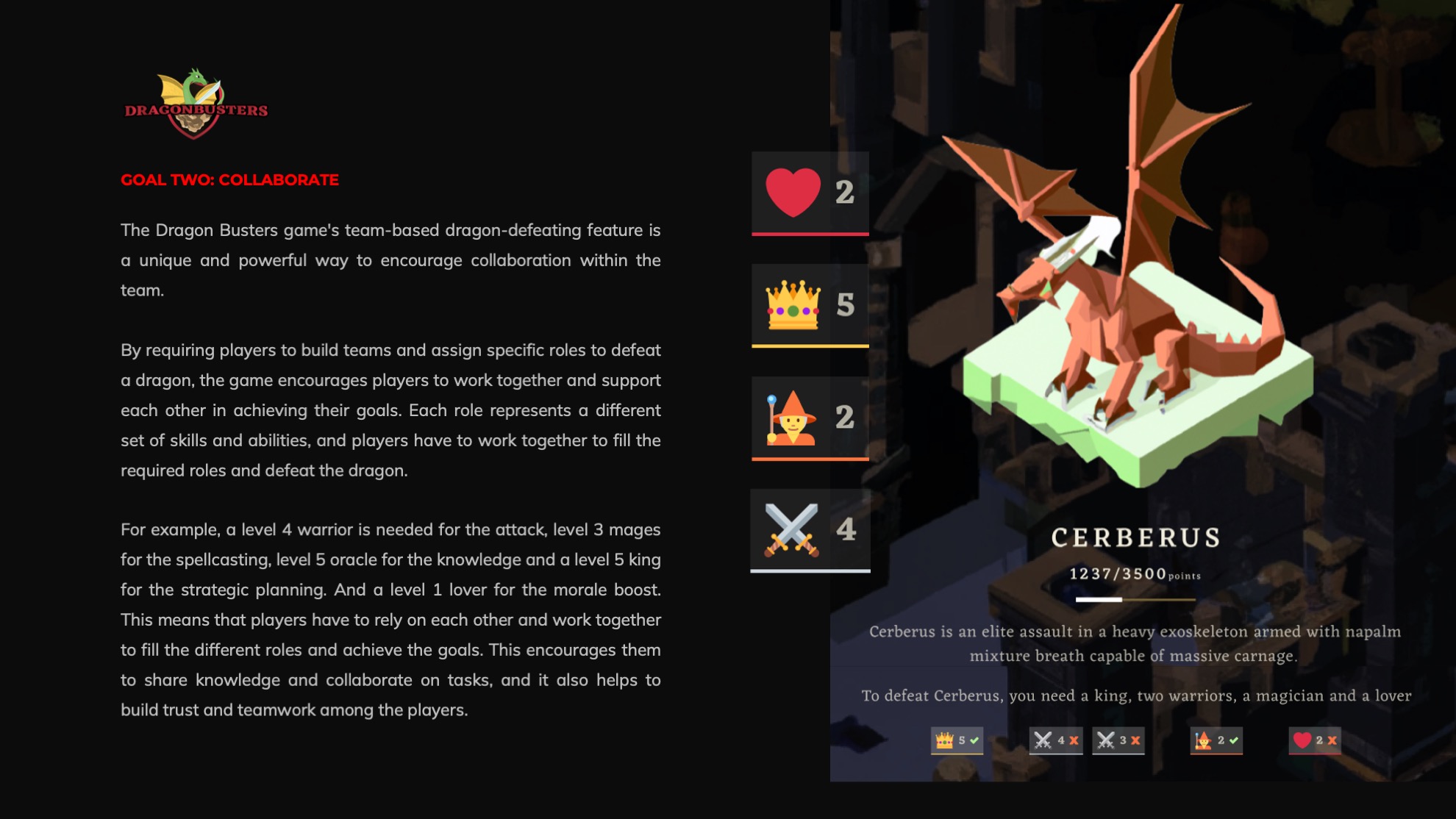
Goal 2: How we enable collaboration in teams
-
The quote that inspired us!
Inspiration
DragonBusters - the Origin Story: We noticed that our team were feeling pretty burnt out and uninspired by their work as software developers. Don't get me wrong, the team loves a good technical challenge, but the daily grind of tracking and completing tasks in Jira had become a real drag (pun intended). So, we sat down to brainstorm ways to make our work more enjoyable and ended up hitting upon the idea of turning our tasks into a game. We imagined a world where the issues and epics in Jira were represented by dragons, and we could work together to "bust" these dragons by completing tasks and earning points. It was a pretty sweet idea if we do say so ourselves. And as we developed the concept further, we realized that this game could not only make our work more fun, but it could also help to increase collaboration and communication within the team. So, we got to work building the game using Atlassian Forge and APIs, and before we knew it, the prototype for DragonBusters was born.
What it does
DragonBusters is a game that gamifies the experience of using Atlassian products like Jira, Compass, Confluence and more. It was designed to make work more fun and engaging for teams by turning tasks and projects into exciting challenges.
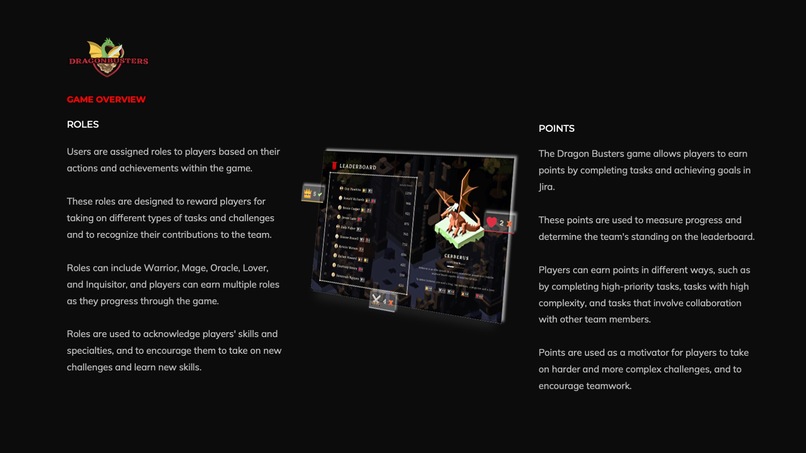
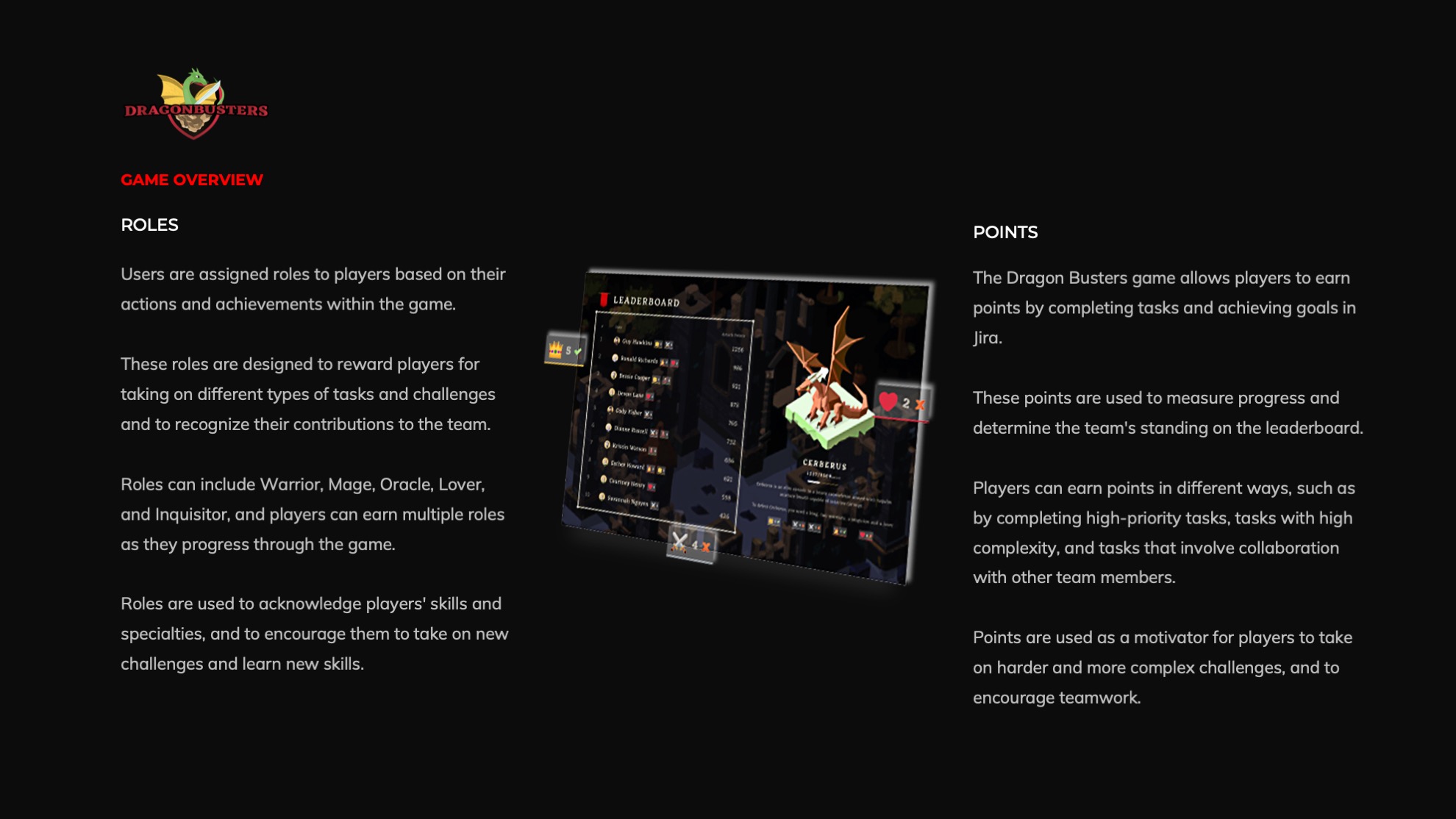
In the game, users earn points for completing tasks and can use those points to attack "dragons," which represent epics or issues in Jira. As users earn more points and progress through the game, they can unlock new roles like Warriors, Mages, Oracles, Seneschals, Royals and more. These roles come with unique abilities and perks that can help users defeat more powerful dragons and climb the leaderboard.
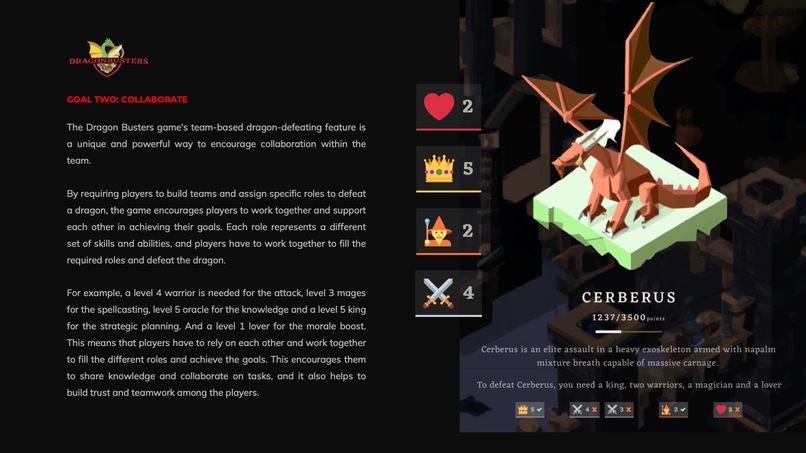
DragonBusters is not just about competition, however. It is also about collaboration and teamwork. Users can join forces with their coworkers to take down the toughest dragons and achieve their goals together. The game is designed to foster a sense of community and camaraderie within teams, and it is a great way to motivate and reward employees for their hard work.
How we built it
DragonBusters was built using Atlassian Forge and REST APIs, which allowed the team to leverage data from various Atlassian products and create a seamless, integrated experience for users.
The team began by identifying the key features and functionality that they wanted to include in the game. We then used Forge to create custom UI elements and integrations with various Atlassian products, such as Jira, Confluence, and Bitbucket.
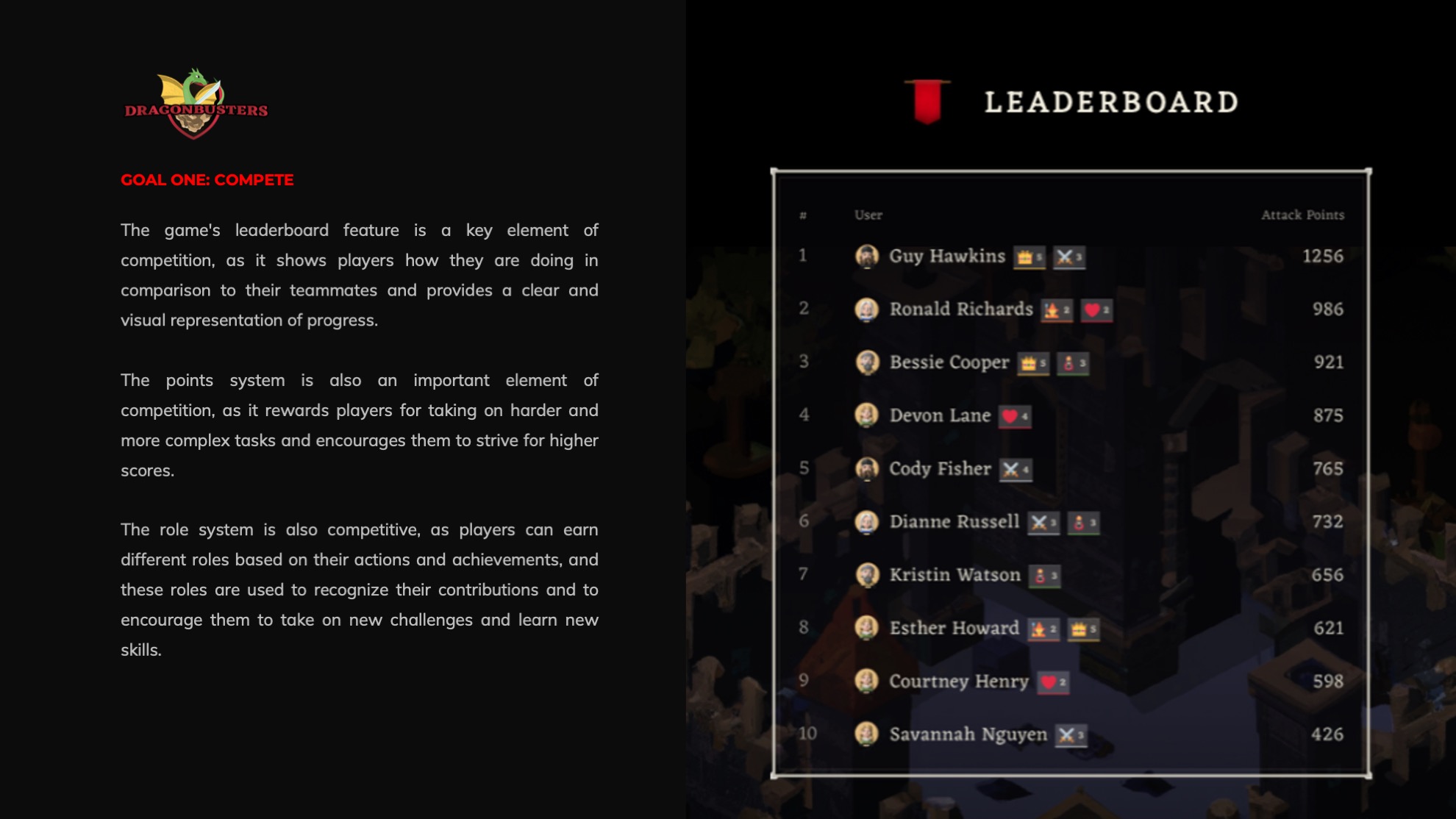
To track progress and reward users for their achievements, we implemented a points system and created a leaderboard to showcase the top performers. We also designed a variety of roles and abilities that users could unlock as they progressed through the game.
Overall, building DragonBusters required a combination of technical expertise, creativity, and a deep understanding of how teams use Atlassian products in their day-to-day work. The end result was a fun and engaging game that has helped to make work more enjoyable for teams all over the world.
Challenges we ran into
Some of the technical challenges that the team encountered while building DragonBusters include:
(1) Integrating with various Atlassian products: It can be challenging to create a seamless, integrated experience for users when building on top of multiple products. We had to spend time testing and debugging different integrations to ensure that everything worked as intended. (2) Managing data and performance: Working with large amounts of data, such as user activity and task data from Jira, can be resource-intensive and requires careful optimization to ensure good game experience. (3) Ensuring security and compliance: When building a game that leverages data from enterprise software, it is important to ensure that all data is secure and that the game complies with any relevant regulations and policies. We put in extra effort into securing the game and ensuring that it meets all necessary standards. (4) Balancing competitiveness and collaboration: Creating a game that is both competitive and collaborative can be a delicate balance. We had to fine-tune the gameplay and rewards system to ensure that it encourages both individual achievement and teamwork.
Accomplishments that we're proud of
There are a number of accomplishments that our team is proud of, in developing The Dragon Busters on Atlassian Forge, including:
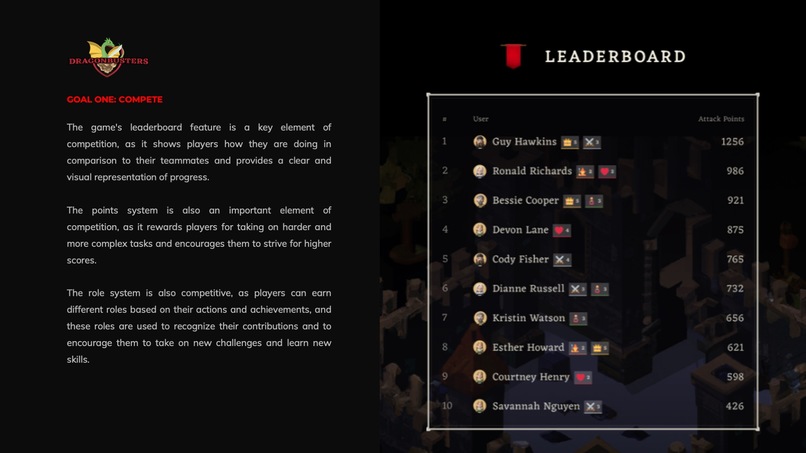
(1) Successfully integrating the app with various Atlassian products such as Bitbucket, Opsgenie, Confluence and JIRA, which allows the game to interact seamlessly with tasks and issues in those platforms. (2) Successfully building a game that enhances the user experience of completing tasks in Jira, making it more fun and engaging. (3) Implementing a real-time leaderboard that allows teams to compete and collaborate to complete tasks and earn points, which helps to increase motivation and productivity. (4) Developing a system that rewards players with unique roles and personas based on their actions, which encourages players to continuously complete tasks and level up. (5) Creating a system that allows administrators to access and manage game settings, such as point values and roles, which allows for customizability for different teams and use cases. (6) Building a game that is built on Atlassian Forge which provides a scalable architecture for future development, making it easier to add new features and functionalities.
What we learned
While developing The Dragon Busters on Atlassian Forge, our team learned a number of things, including: (1) The intricacies of integrating a game with various Atlassian products, such as Bitbucket, Opsgenie, Confluence, and JIRA, and how to use the APIs for those products effectively. (2) The importance of user experience design and how to make tasks more engaging and fun for users. (3) The benefits of using a leaderboard system for tracking progress and motivating teams to compete and collaborate. (4) The importance of providing rewards for completing tasks, and how to design a system that rewards players with unique roles and personas. (5) The importance of having an administration system that allows for customizing the game settings for different teams and use cases. (6) How to build a scalable architecture on top of Atlassian Forge, that allow future development and easy to add new features and functionalities. (7) How to work with Forge and its APIs, customizing its capabilities to adapt to your specific use case. (8) The value of testing and iterating on the game design to ensure that it is enjoyable and motivating for players.
What's next for the Dragon Busters
There are a number of things that we are considering doing next with The Dragon Busters. Some possibilities include:
(1) Releasing the game to the public and promoting it to potential users. (2) Updating the game with new features and functionalities, to keep users engaged and interested, for example, adding new dragons to capture, new roles, new ways to earn points, etc. (3) Conducting user research and gathering feedback from users to further improve the game and fix any issues. (4) Adding more integrations with other Atlassian products and other tools that teams might be using, to make the game even more useful and engaging. (5) Creating a support system to help users with any issues they might encounter while using the game, for example, a community forum or a dedicated support team. (6) Creating tutorials, documentation, and other resources to help users get the most out of the game. (7) Creating a pricing strategy and monetizing the game, to be able to sustain the development and support of the game. (8) Providing training and consultation services to teams that want to use the game in their workflow.


