-
-
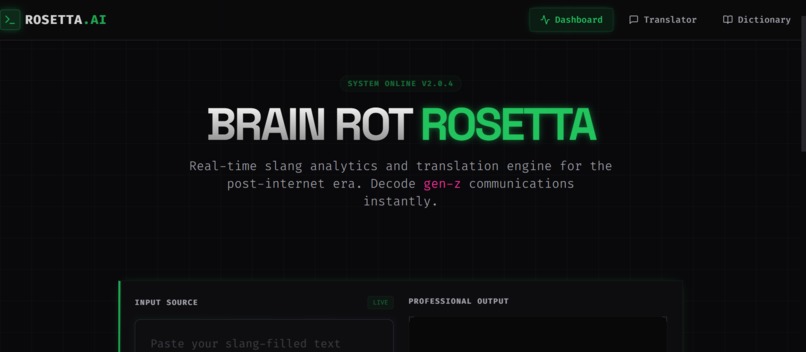
Dashboard
-
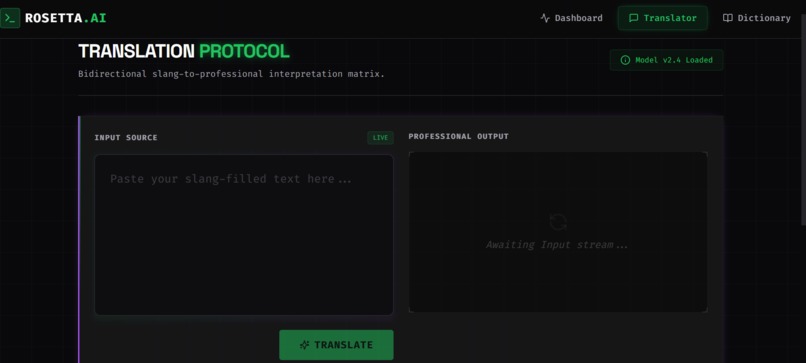
Translation
Inspiration
I noticed that by 2026, the gap between Corporate Speak and Gen Alpha Slang has become a genuine communication barrier. I wanted to build a tool in Hex that treats slang not as noise, but as a dynamic data stream to be decoded.
What it does
The Brain Rot Rosetta is a real-time translator and trend tracker. It uses AI to translate Brain Rot (Gen Alpha/Z slang) into professional English, track the Cringe Velocity of words which predicting when a term is about to go out of style and provide a dashboard for linguistic trends across social platforms.
How we built it
I used Hex as the end-to-end engine: Python: Scraped trending tokens from social media APIs and Reddit. AI Logic: Leveraged Hex’s LLM integration to handle contextual translations. Math: Calculated Term Density using: D = count(slang)/total(words) to determine the Brain Rot Score. UI: Used Hex Input Parameters to let users toggle Slang Intensity levels.
Challenges we ran into
.The hardest part was Contextual Drift. Slang evolves faster than static models can update. I had to build a freshness ilter in Python to prioritize data from the last 72 hours so the app wouldn't suggest dead trends.
Accomplishments that we're proud of
Creating a Corporate-to-Alpha toggle that actually sounds natural. It’s one thing to define a word; it’s another to capture the vibe correctly using AI.
What we learned
Slang is highly efficient. I learned that modern digital dialects use lexical compression that conveying complex emotions in fewer characters than formal English, which is fascinating from a data density perspective.
What's next for The Brain Rot Rosetta: Real-Time Slang Analytics
Plan to add a Slack Integration that provides TL;DR summaries of Gen Alpha team chats for managers, helping maintain the vibe check across the whole company.


Log in or sign up for Devpost to join the conversation.