-
-
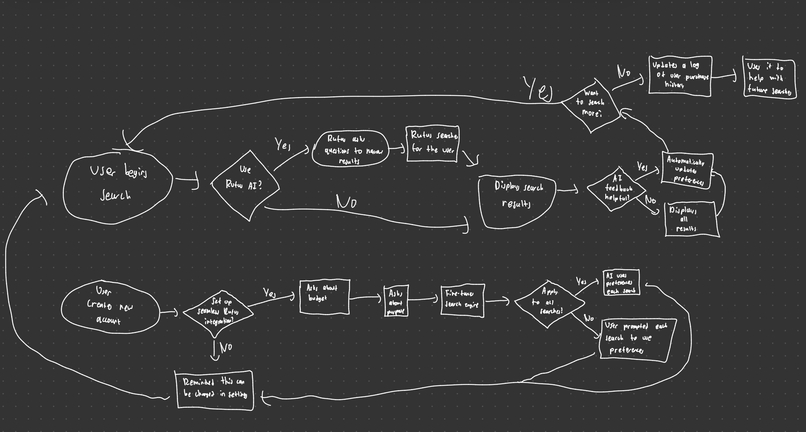
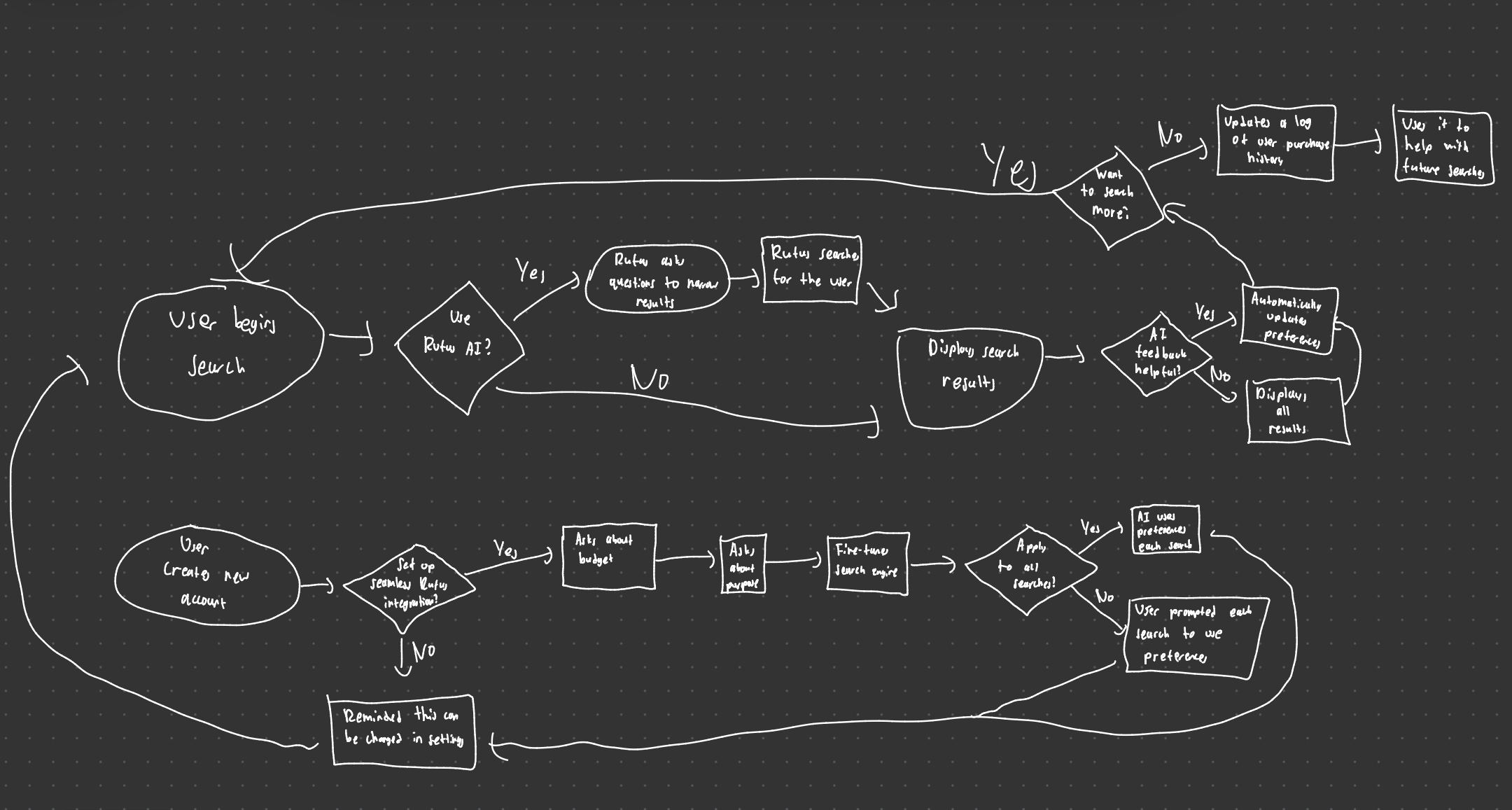
user flow
Inspiration
Amazon already had an AI assistant Rufus but almost nobody was using it. Buried in a side panel, disconnected from the search flow, and returning results that felt generic, it was a feature most shoppers didn't know existed. We saw a real gap: the hardest part of online shopping isn't finding products, it's choosing between thousands of nearly identical ones. That frustration, validated through our own Google Forms survey, became the spark. We wanted to make Rufus the first thing you reach for, not the last.
What it does
Better Rufus AI embeds an AI-guided search experience directly into Amazon's core shopping flow. After a user enters a query, Rufus asks 2–3 clarifying questions budget, use case, brand preference and returns a curated shortlist of 5–10 products instead of thousands. It synthesizes user reviews into unbiased summaries, learns from purchase history to personalize future results, and supports multilingual experiences for German and Japanese markets. The goal: take a shopper from query to confident purchase in under 5 minutes.
How we built it
We approached this as a full product cycle rather than just a prototype. We started with user research Google Forms surveys and two detailed personas (a time-pressed Business Professional and a budget-conscious College Student) to ground every design decision in real behavior. From there we built a PRD defining the problem, solution, scope, and launch roadmap across four phases. We designed the end-to-end user flow, created a stakeholder alignment deck for engineering, design, and marketing teams, and mapped every feature to a measurable KPI. The demo was built to show the clarifying-question flow and shortlist experience live.
Challenges we ran into
The biggest challenge was scope discipline. Rufus touches search, recommendations, reviews, and personalization all of which could spiral into a years-long project. Deciding what to cut (review system architecture, Alexa integration, Seller Central) was harder than deciding what to build. We also found that designing for two very different users a bulk-ordering professional and a deal-hunting student meant the same feature had to serve completely different mental models without feeling like two different products.
Accomplishments that we're proud of
We're proud that the solution never compromised on one core principle: AI is optional, not forced. The existing Amazon experience stays intact. We're also proud of how cleanly the persona research translated into product decisions the budget-aware shortlist feature exists entirely because of what college students told us they needed. And building a pitch deck tight enough to deliver the full case in 5 minutes, including a live demo, felt like a real product management achievement.
What we learned
Framing matters more than features. The same Rufus capability pitched as "an AI chatbot on Amazon" lands very differently than "a tool that cuts your shopping time from 15 minutes to under 5." We also learned that cross-functional alignment getting engineering, design, and marketing to agree on scope before a single line of code is written is where most product initiatives actually succeed or fail. Getting that right on paper first saved enormous time downstream.
What's next for The Better RUFUS AI
The immediate next step is Beta 50 customers, April 30, with a clear exit criterion of 25 confirming improved shopping experience. Beyond that, the roadmap points toward a Limited Release in May and full launch across the US, Germany, and Japan by end of June. Longer term, we want to bring Rufus into Amazon Business for B2B procurement workflows, explore voice integration via Alexa, and expand the personalization engine to learn across product categories not just within a single search session.
Built With
- figma

Log in or sign up for Devpost to join the conversation.