-
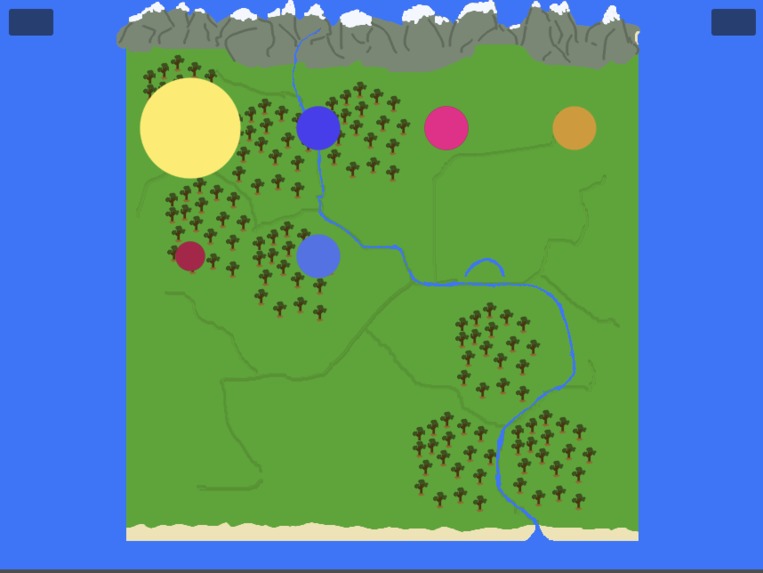
Each society is represented by a different-coloured circle. The larger the circle, the bigger the society.
-
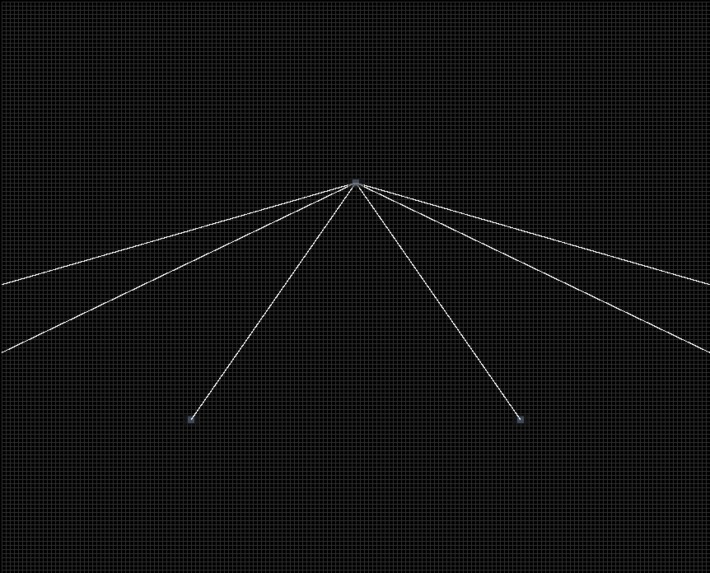
Each world can be split into multiple timelines, forming a timeline tree that grows in complexity as the game progresses.
Inspiration
We were inspired by two different challenges: Marshall Wace's challenge of Bridging Worlds and by Waterstons' challenge to improve the world by connecting things that normally aren't. Taking additional inspiration from the main Durhack theme of Legacy combined with the mindboggling game 5D Chess with Multiverse Time Travel, we decided to create a game all about connecting timelines.
What it does
The aim of the game is to survive as long as possible, by selecting the most promising societies from each world to form their own timelines in order to survive natural disasters.
How we built it
We decided to use the game engine Godot, as its custom language GDScript is very similar to Python, the language our team is most familiar with.
We created 2 main scenes: the world view, which shows how the societies are developing within a particular world, and the timeline view, which depicts the timeline tree. The timeline tree, starting with just a singular world, grows as that world splits into different timelines.
We implemented algorithms to control the growth of societies. Then, we added randomly occurring natural disasters, which had the chance to decimate societies.
Lastly, we added the split button, allowing the user to split a world so that each society within it started a separate timeline.
Challenges we ran into
It was certainly a challenge to integrate the timeline tree so that it showed every timeline, rather than just the current world and its offshoots. We tackled this by saving each offshoot timeline seperately, then stitching them together using tree traversal.
Accomplishments that we're proud of
We're proud of learning a new platform and using it to successfully create a product that, while not perfect, is at least finished! We're also proud of smoothly working together by using GitHub to push and pull our changes.
How we met the themes
Main theme: The theme of Legacy is central to our game: each world leaves a legacy in the form of the societies it creates, which then go on to form new timelines, all impacted by the legacy of the worlds and societies that came before.
Marshall Wace's Bridging Worlds: In our game, you quite literally bridge worlds by travelling between different timelines. What more could you want?
Waterston's Improve the World by Connecting Things that Normally Aren't Connected: The aim of our game is to create the best possible world by connecting timelines which aren't usually connected.
What we learned
We learned that a clear plan of what needs to get done and who will do it is vital, after making one only halfway through the process! After that, work went much more smoothly.
What's next for The Best Timeline
We'd like to make it more tactical and more mindboggling by giving the user a way to transfer societies between worlds, as well as a way to view each society's stats. We'd also like to make it just a little more deadly!
Built With
- gdscript
- godot


Log in or sign up for Devpost to join the conversation.