Inspiration
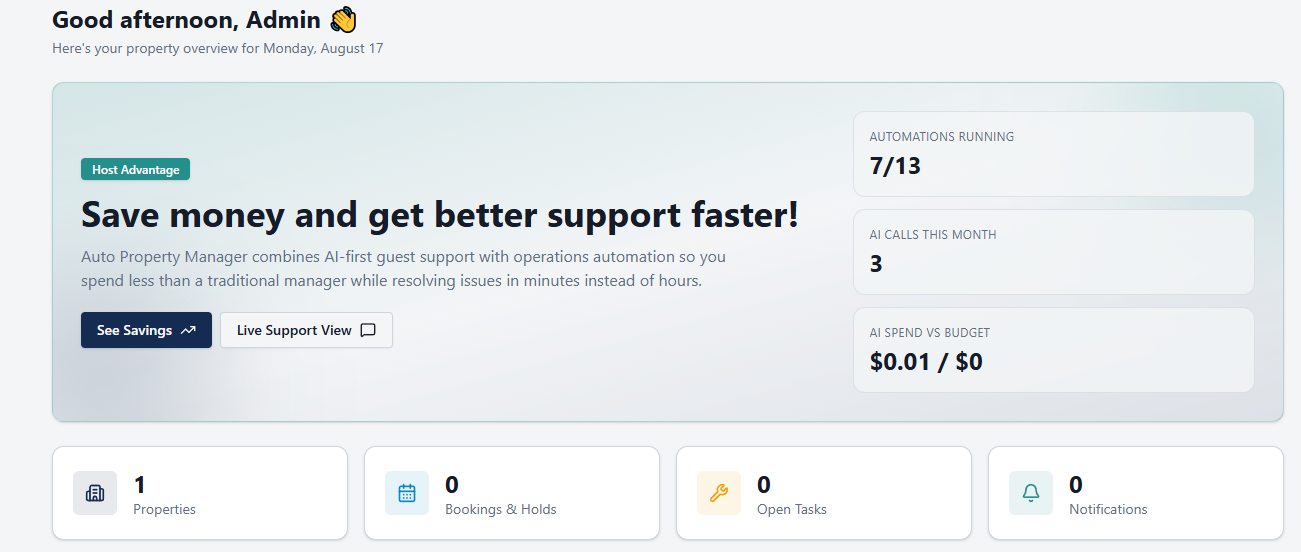
Short term rentals, such as with Airbnb or VRBO, take a lot of coordination and resources (whether time, money, or both). AI is to a point where it can take over every aspect of this in full, and that's exactly what the Auto Property Manager is designed to do - everything.
A Deeper Dive on the Auto Property Manager
The current options for property management aren't ideal. Long term rentals have their own hurdles, with large amounts of proceeds going to the management firm without there being much to actually take care of most of the time. One of the key things they need to do, though, is place new tenants, in which case they typically take at least the first month's rent in its entirety plus more. On the other hand, with short term rentals, there is a lot to do and coordinate but there is no need to give property tours or anything of that sort. All the work and coordination is the type of thing that AI can handle really well, in its entirety.
This lightbulb realization occurred when talking with someone who is trying to start getting into the world of Airbnb. They own a home in another state because they visit frequently enough that having a home and renting it out when they weren't there made quite a lot of financial sense for them. However, existing solutions take a lot of money, but by being not even in the same state, it's really tough to coordinate everything well themselves.
What it does
The automatic property manager, or "Auto Property Manager" for short, takes care of everything. The goal is that it can do truly all of it autonomously, so there's a lot it does but here are some key highlights.
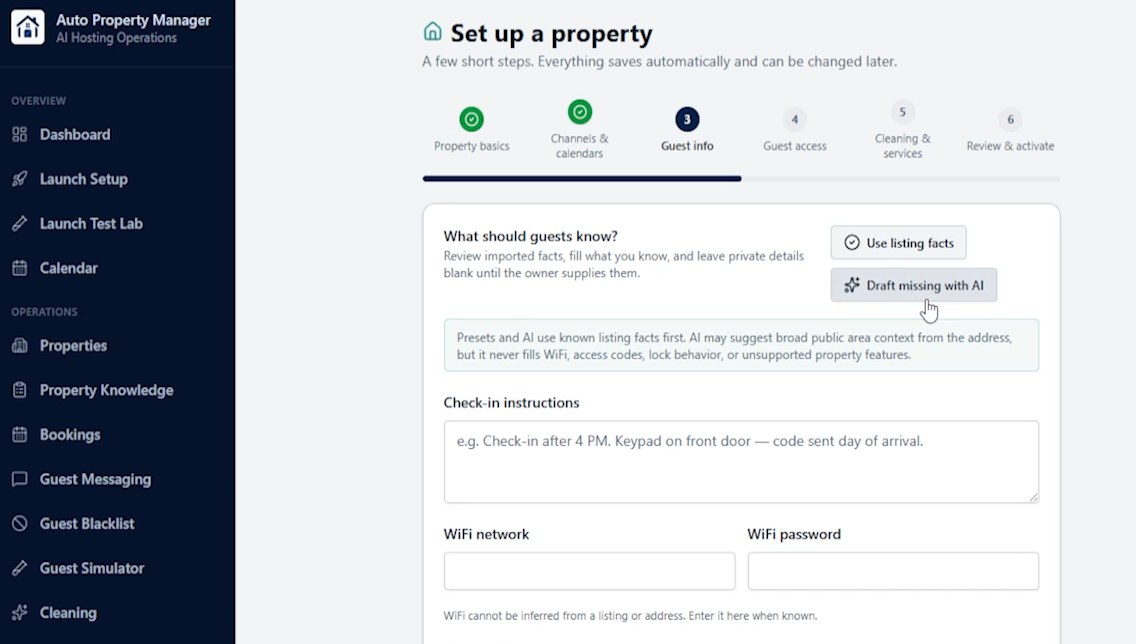
First, it can help with the full creation of the listing. It can fetch any and all info available for the property, such as if there's a listing already it can import all info so it doesn't need filled in again. If there isn't, it can take the address and fill in quite a lot of info itself. AI can then help generate all initial info for the listing that the user may need help with.
In general, one of the most important ongoing things is coordinating services, particularly cleaning. Users can add preferred people/companies for various services, like cleaning, handyman work, electricians, etc. They can also import a spreadsheet of this info into the site. Or, the AI can do research and determine ideal recommendations. Services of the same type are prioritized in order of preference. Users can also blocklist companies they don't like, where we prioritize any other option before them, and if it ever comes to using them as a last resort the AI must ask permission.
With this in place, all services can be coordinated automatically. If a guest or service notes that there is an issue, AI determines if it is something that needs fixed, and of course we can have users be as involved or not as they prefer in these decisions. In an emergency, it's setup that AI is able to actually call services to get someone out. If it just needs dealt with in general, AI will get in contact with the relevant contractor/service and figure out when the next available overlapping time window would be such that there won’t be a guest at the house and the contractor/service is available. Cleaning would get coordinated between every visit, and other ongoing services like if there’s a septic tank would be serviced at the appropriate intervals, automatically.
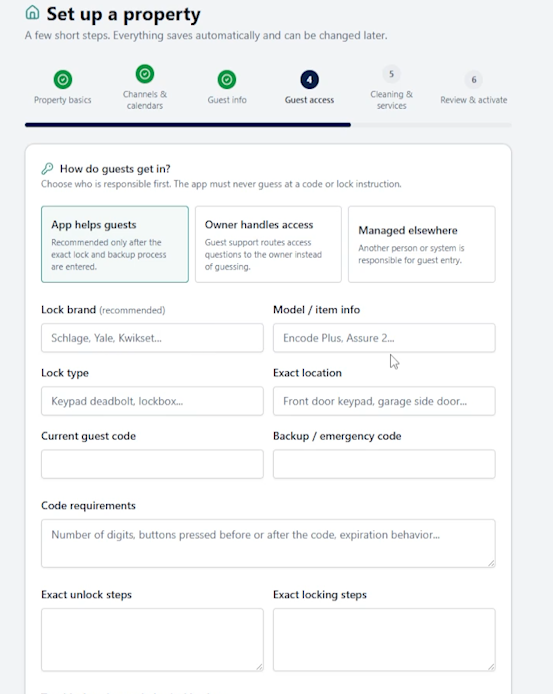
Another big aspect is being able to handle door codes automatically. To be truly hands off, the site needs to be able to coordinate getting people into the property, and thankfully there are a lot of locks that can be used to remotely update and control door codes. It’s programmed in to be able to provide guests a code that’s unique to them and works for a time interval appropriate to their stay, and it works with all locks that are compatible with this flow.
If the user has any issues, the site has a full AI driven chat that can help orchestrate things and also report issues if any do come up. In general, users can report issues, as can the AI chat, and then we are able to iterate through issues easily with AI coding to resolve issues quickly and effectively.
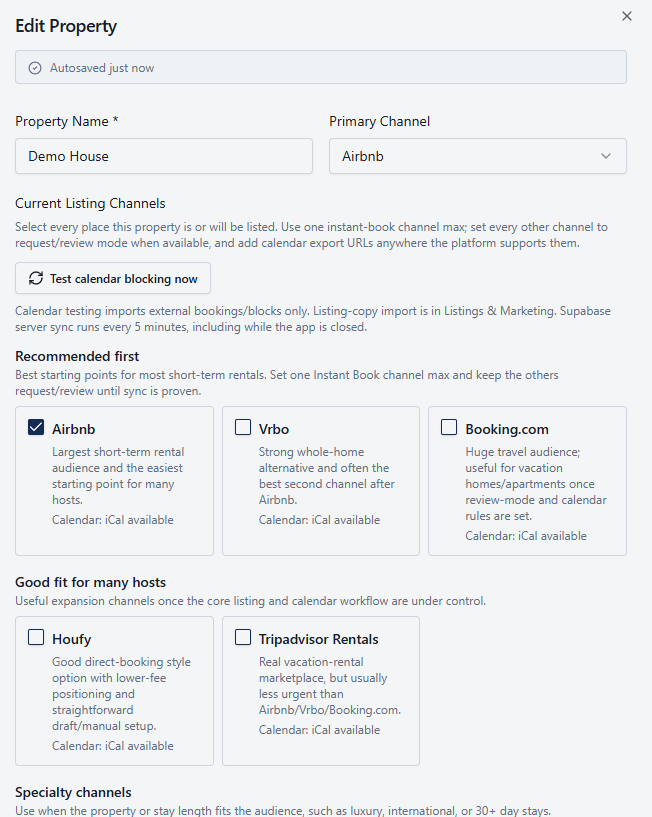
Another major aspect is preventing overlapping bookings. The site imports connected calendars on the server, provides export feeds that block reserved dates, processes a calendar only when its contents change, and shows sync freshness and failures. It also recommends safer booking settings when a marketplace’s slower calendar system cannot guarantee instant updates.
The site can also handle guest communication through private web chat and email, with SMS and WhatsApp available once their paid sender integrations are enabled. Every conversation is tied to the correct guest, reservation, and property. AI uses the conversation history and property knowledge, recognizes first-time guests, returning guests, and stay extensions, and escalates consequential issues. Owners can schedule who is on duty, take over individual conversations, and decide how involved they want to be.
All of the property’s knowledge remains editable and autosaves while the owner works. This includes pictures, rooms, amenities, instructions, supplies, access information, service schedules, AI reference information, and any additional notes the owner wants to provide. The system can also retain concise lessons from previous guest issues and completed work when that information would help in the future. The autonomy also has substantial safety controls. AI filters unreasonable complaints into feedback instead of blindly ordering expensive work, while legitimate maintenance problems enter the appropriate service and approval workflow. Spending limits, paid-feature entitlements, notification overrides, token limits, duplicate-request protection, and loop circuit breakers prevent AI from taking uncontrolled or unexpectedly expensive actions.
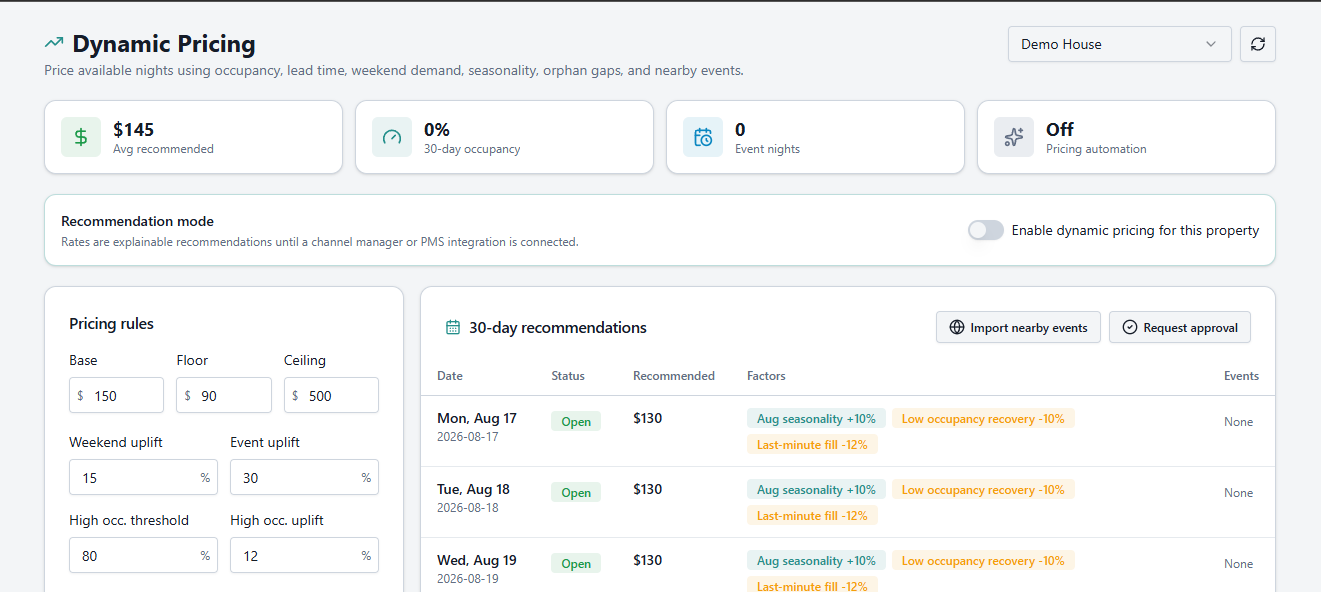
The site also helps with guest screening, future-guest blocklisting, dynamic pricing recommendations, nearby event demand, owner approvals, and operational reporting. Owners can see the relevant conversations, work history, expenses, provider attempts, incidents, and AI actions instead of having automation operate invisibly.
Once a master listing exists, the owner can choose supported destination marketplaces and prepare destination-specific drafts and listing materials without re-entering the property. Direct publishing and official marketplace inbox messaging remain hidden until the necessary marketplace partner access or channel manager is connected.
The Wrap Up - What's next?
With that, the site is fully up and functional, but there is even more on the horizon. AI and users alike can identify any issues or areas of improvement that come up, which AI then iterates on, leading to ongoing, self-sustaining site development. As it grows, features like guest communication, which are integrated now but work via other channels like texting, can be built in with sites like AirBnB and VRBO to allow in-app communication once Auto Property Manager gains credibility and traction. The whole operation is low cost while bringing a lot of value to the customers, so the growth potential is high.
Built With
- cloudflare-pages
- cloudflare-turnstile
- deno
- gemini-api
- github
- ical
- postgresql
- posthog
- react
- resend
- rest-apis
- seam
- stripe
- supabase
- supabase-auth
- supabase-edge-functions
- tailwind-css
- ticketmaster
- twilio
- typescript
- vite

Log in or sign up for Devpost to join the conversation.