-
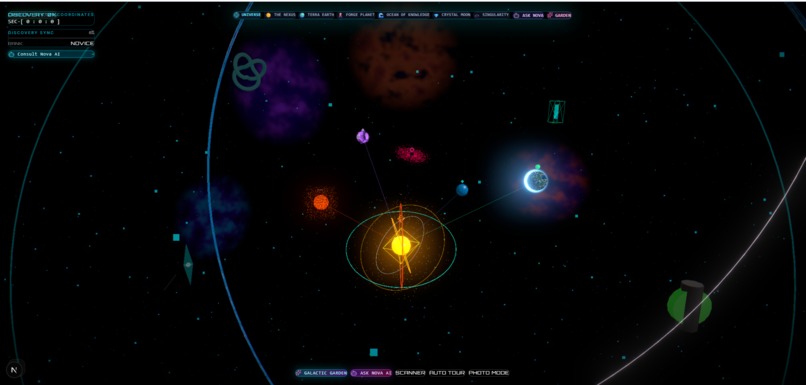
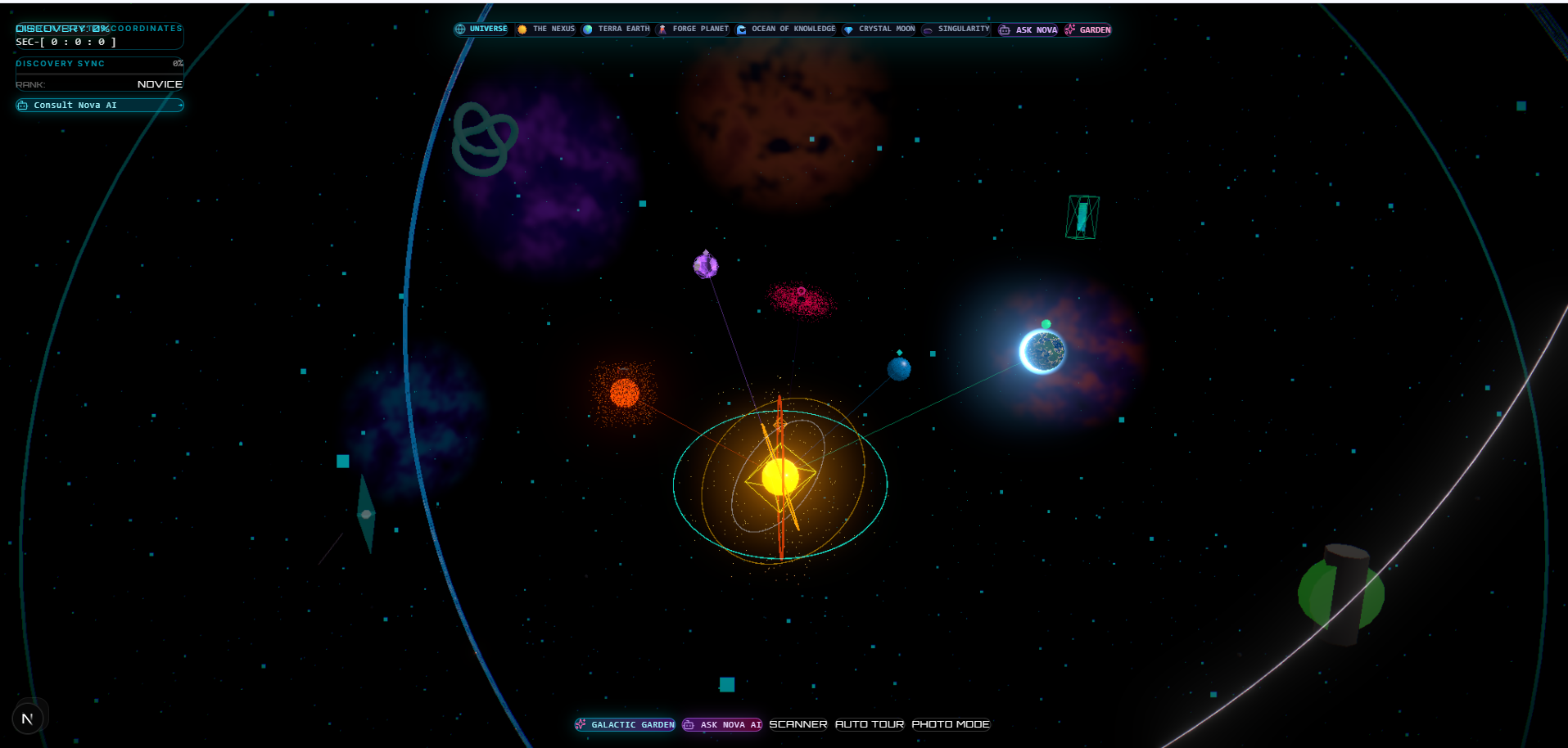
The Architect Universe Overview
-
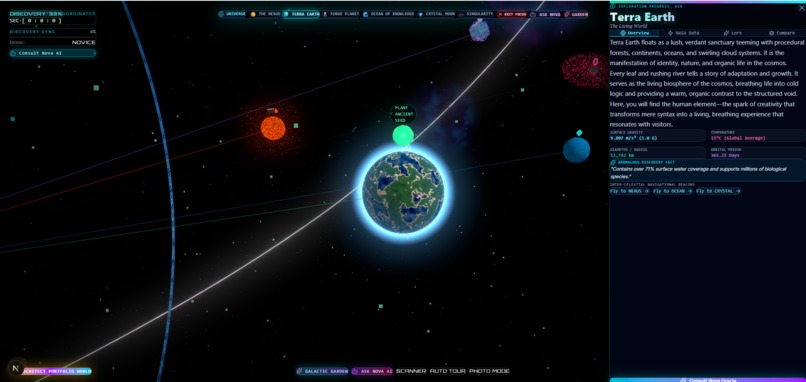
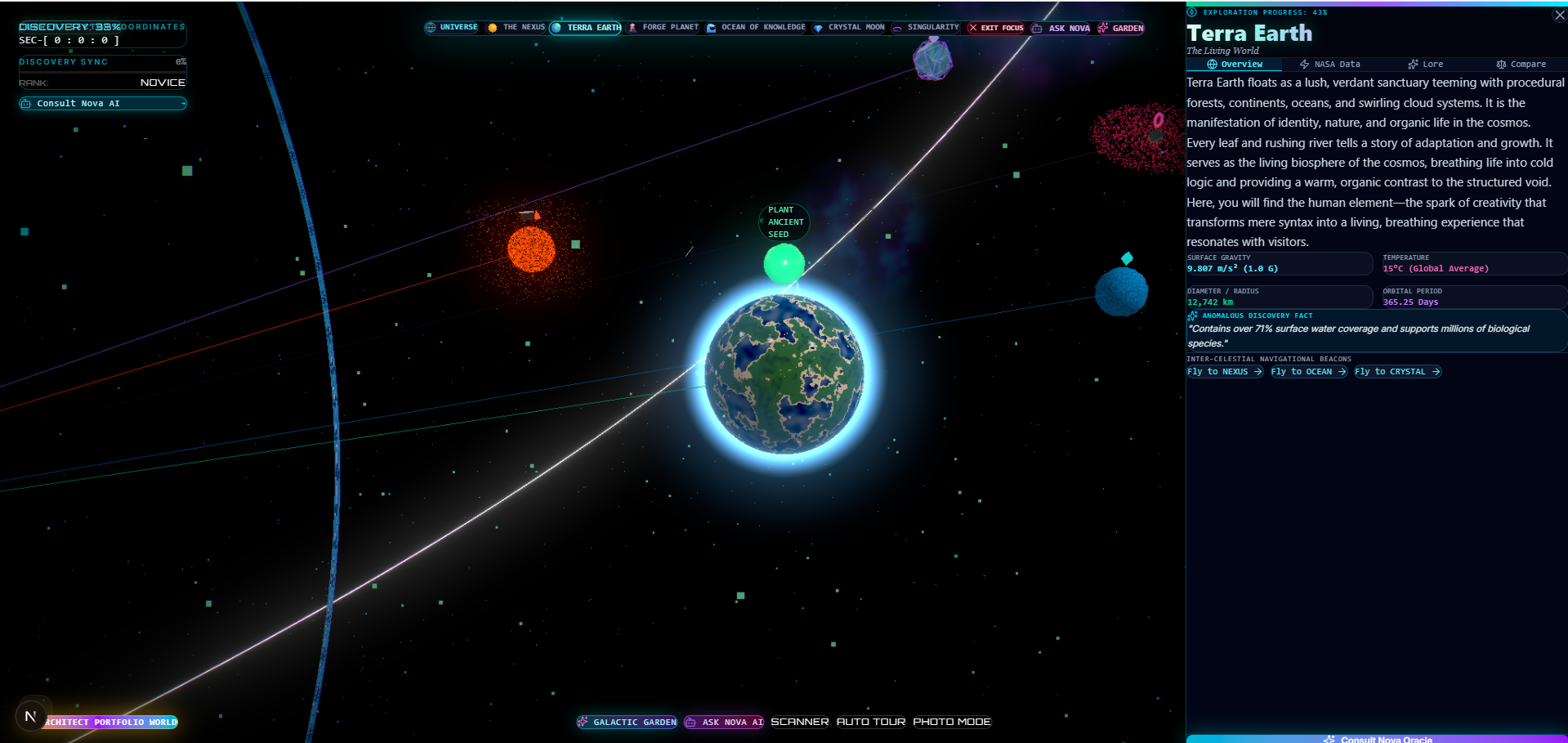
Terra Earth (The Living World)
-
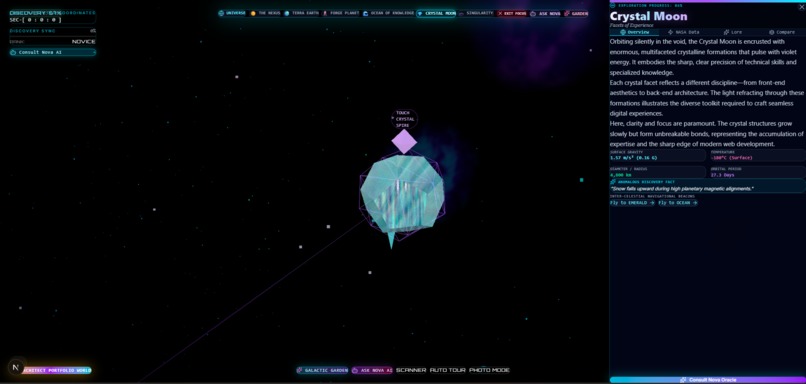
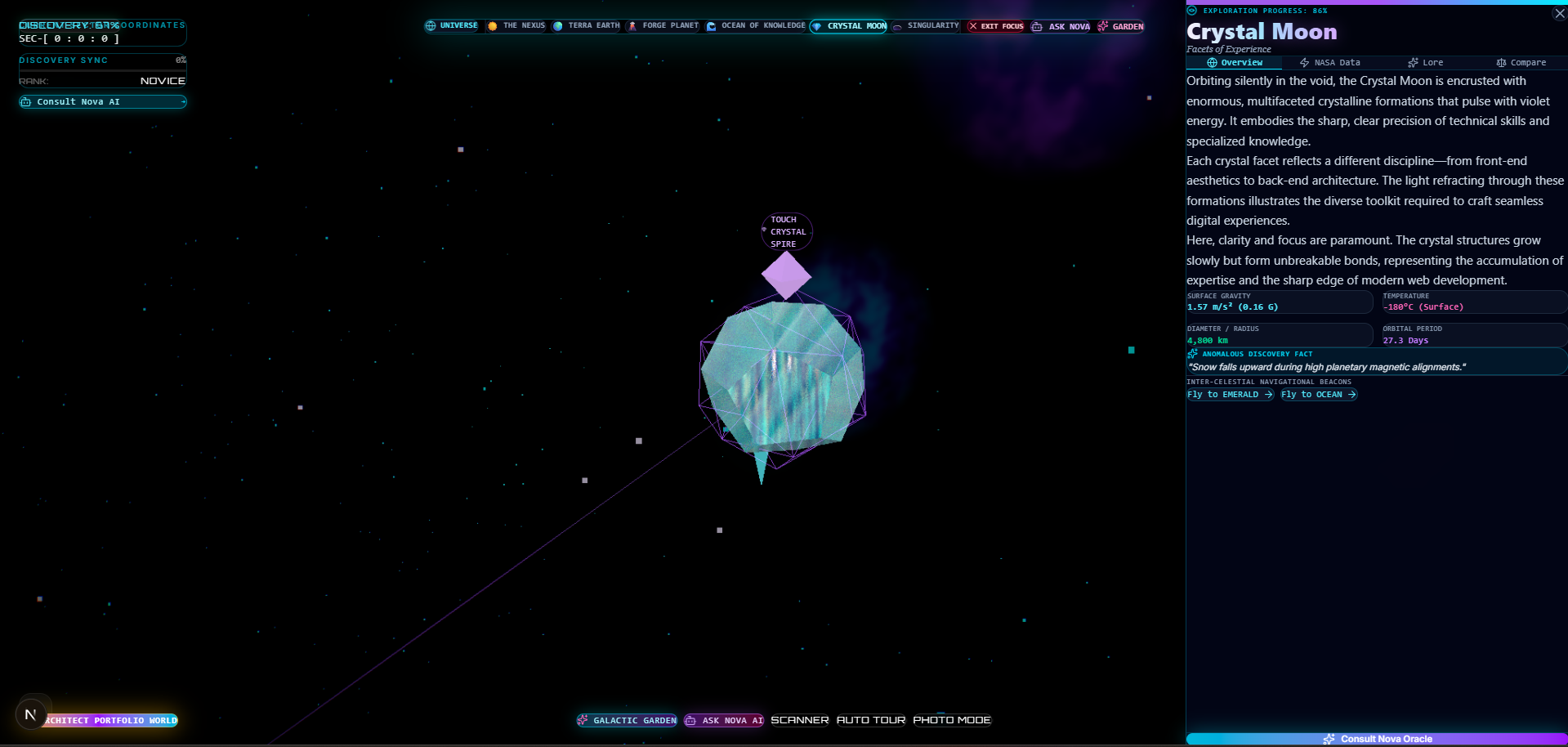
Crystal Moon (Facets of Experience)
-
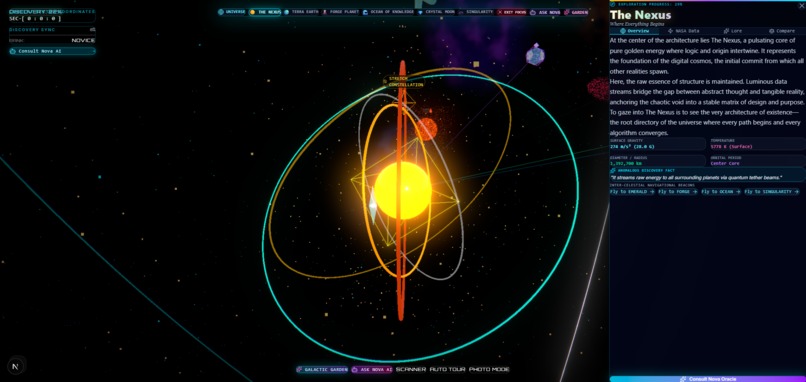
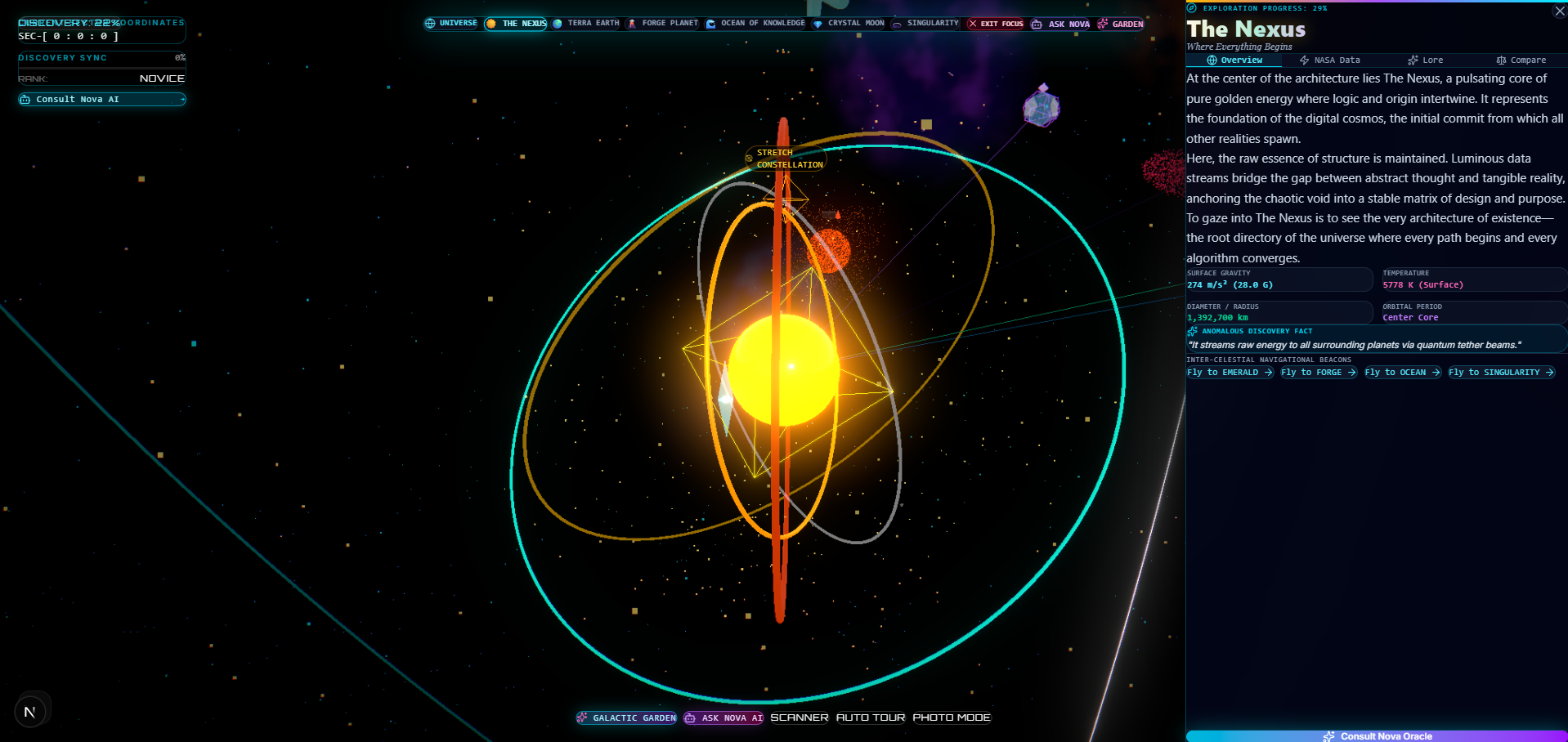
The Nexus
-
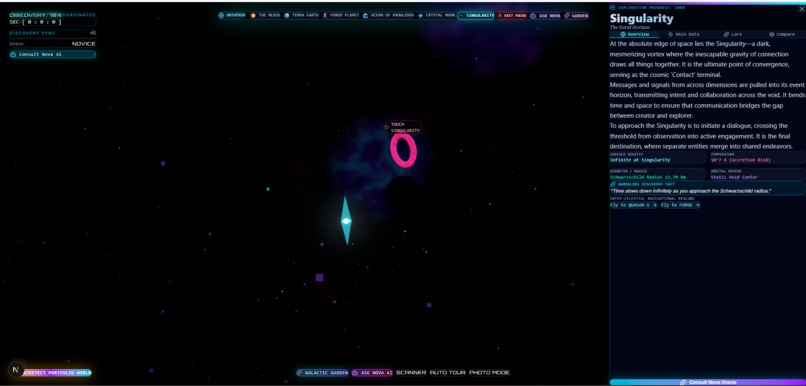
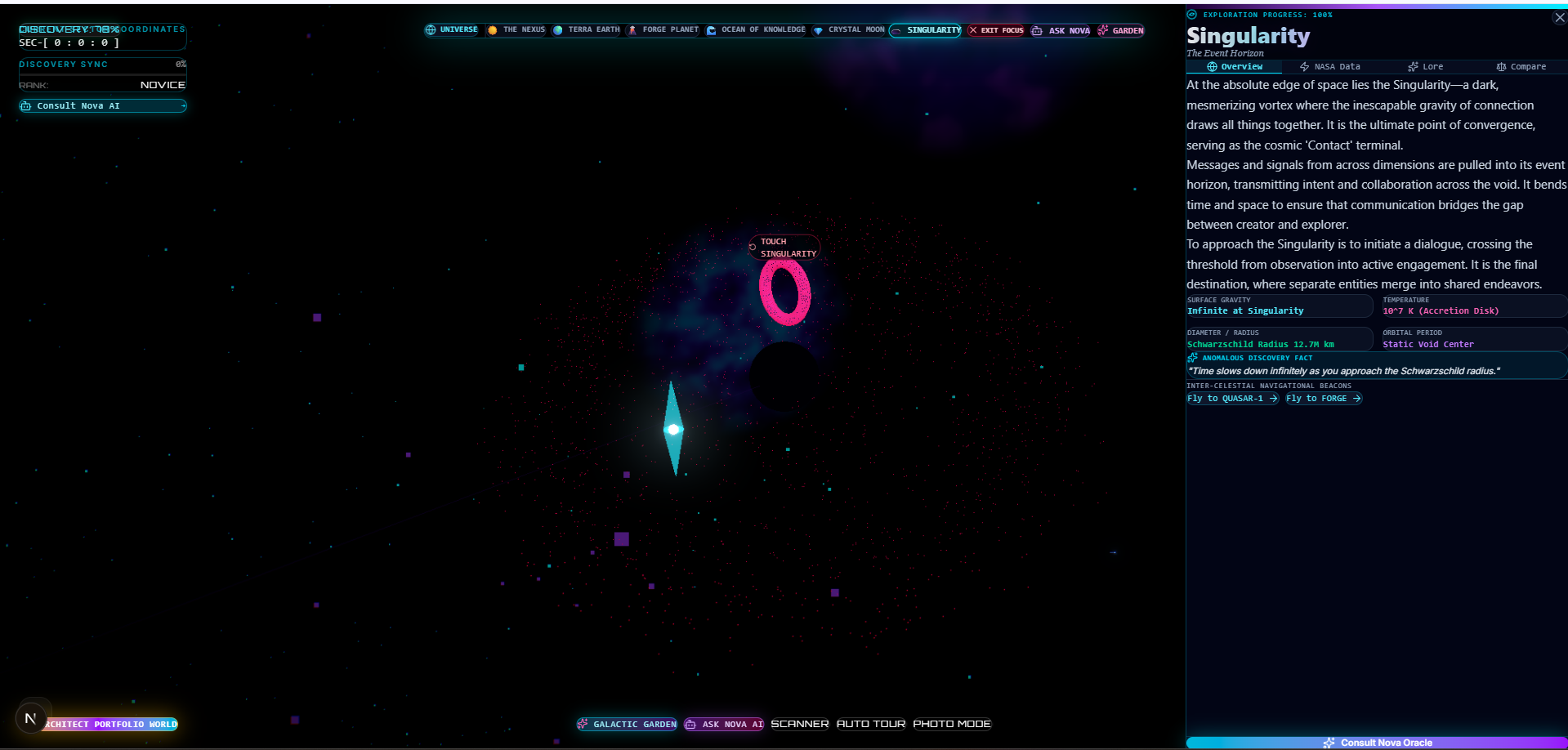
Singularity (The Event Horizon)
-
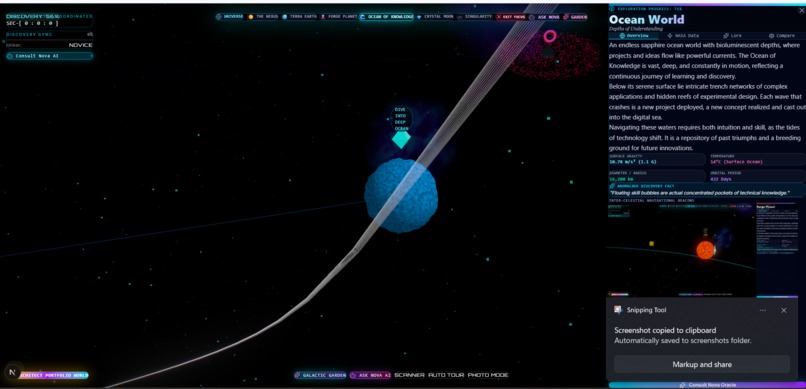
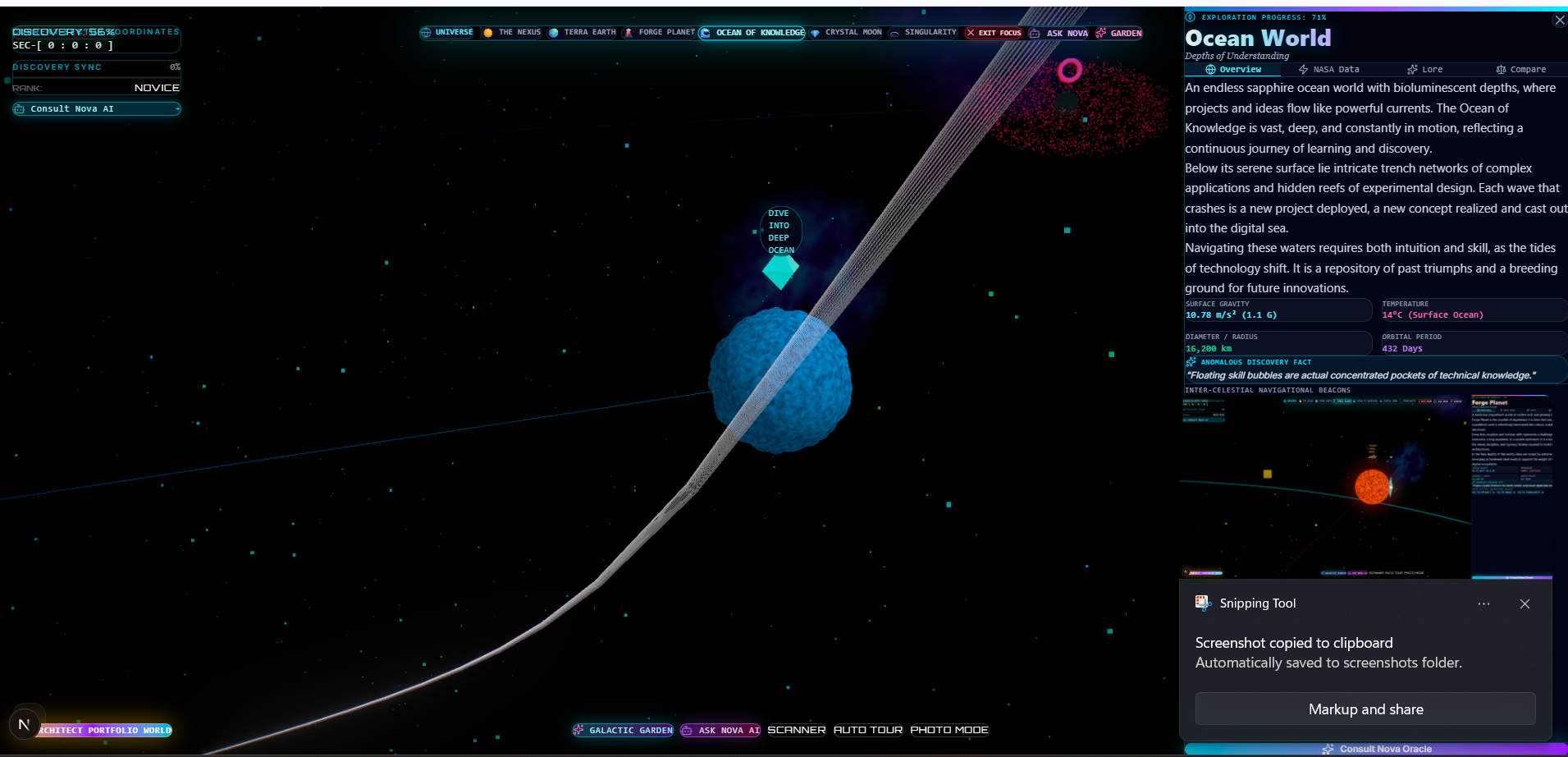
Ocean World
-
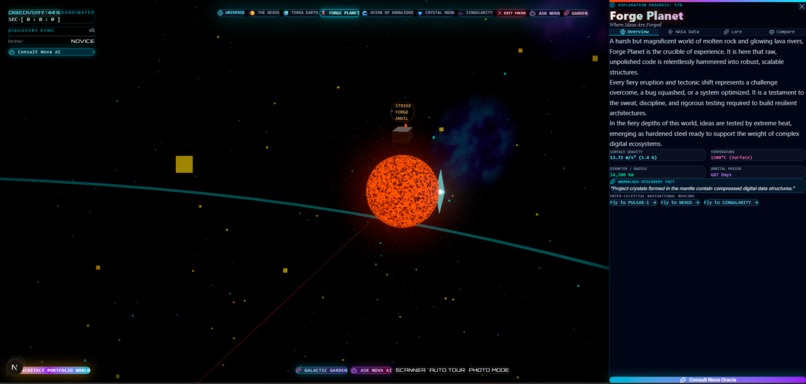
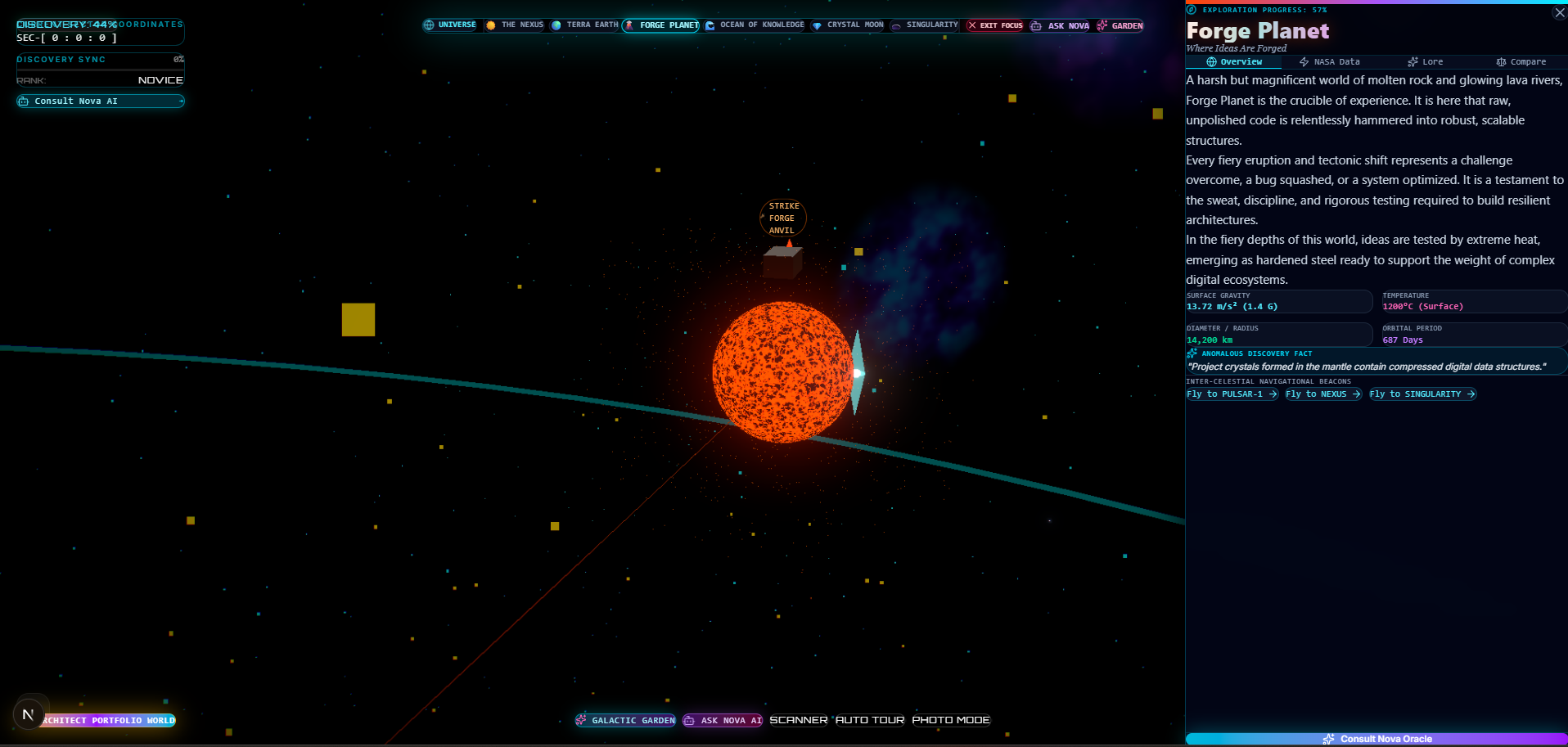
Forge Planet (Where Ideas Are Forged)
-
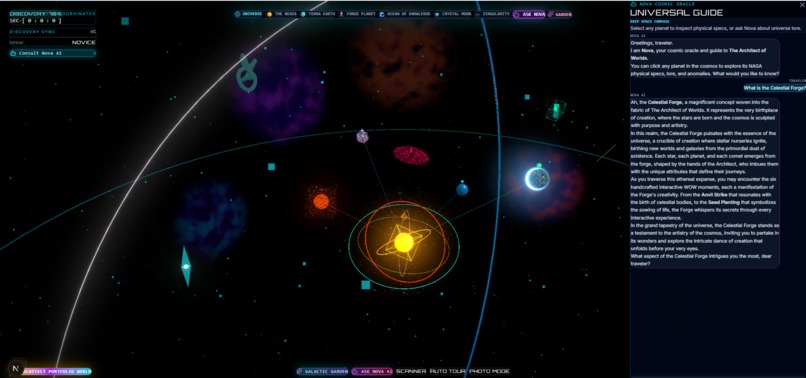
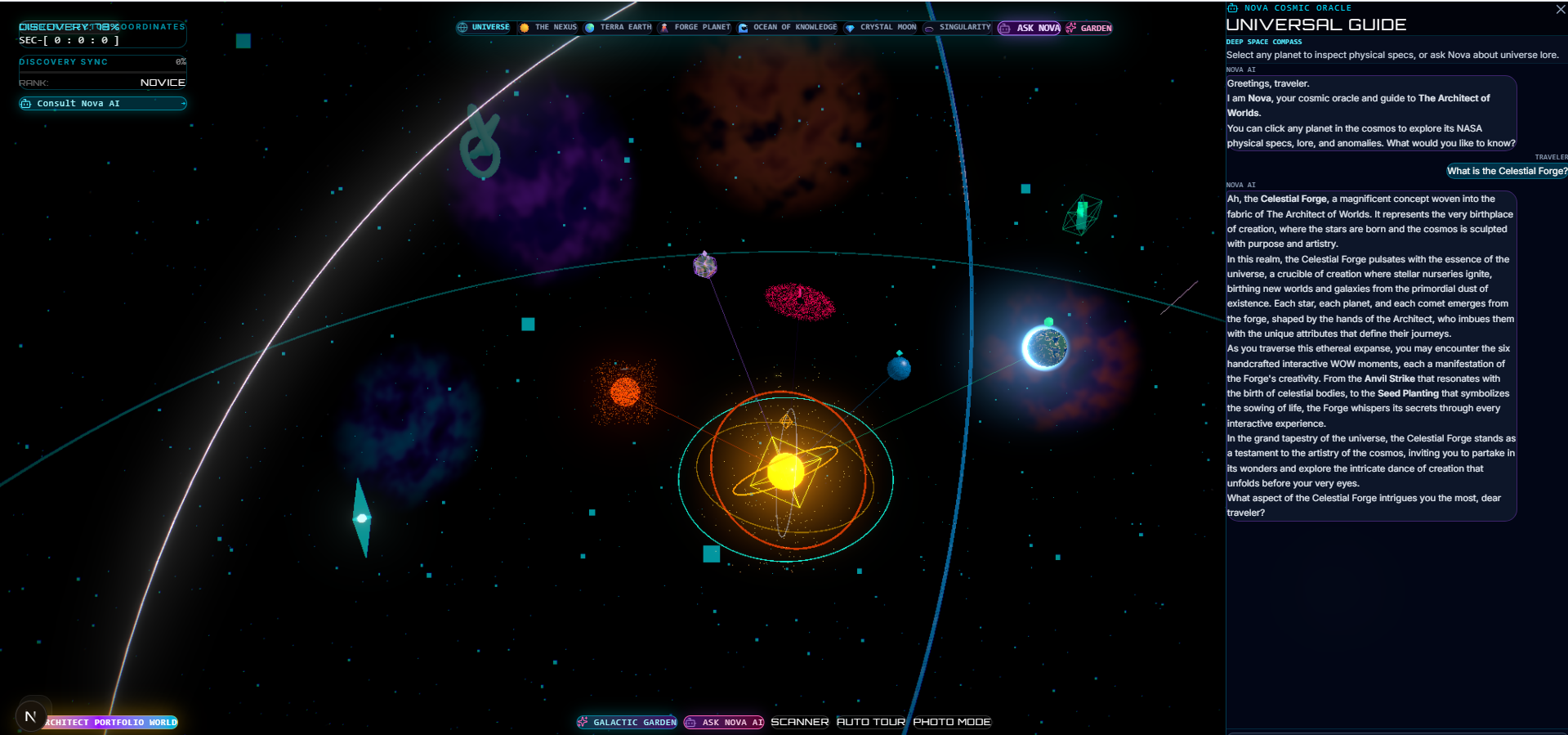
Universal Guide(Nova)
-
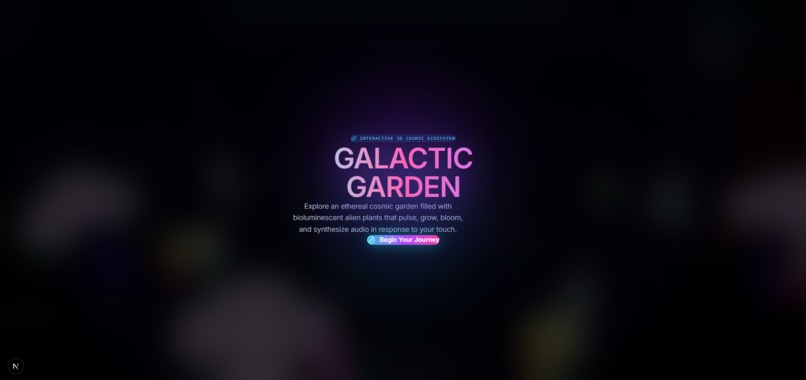
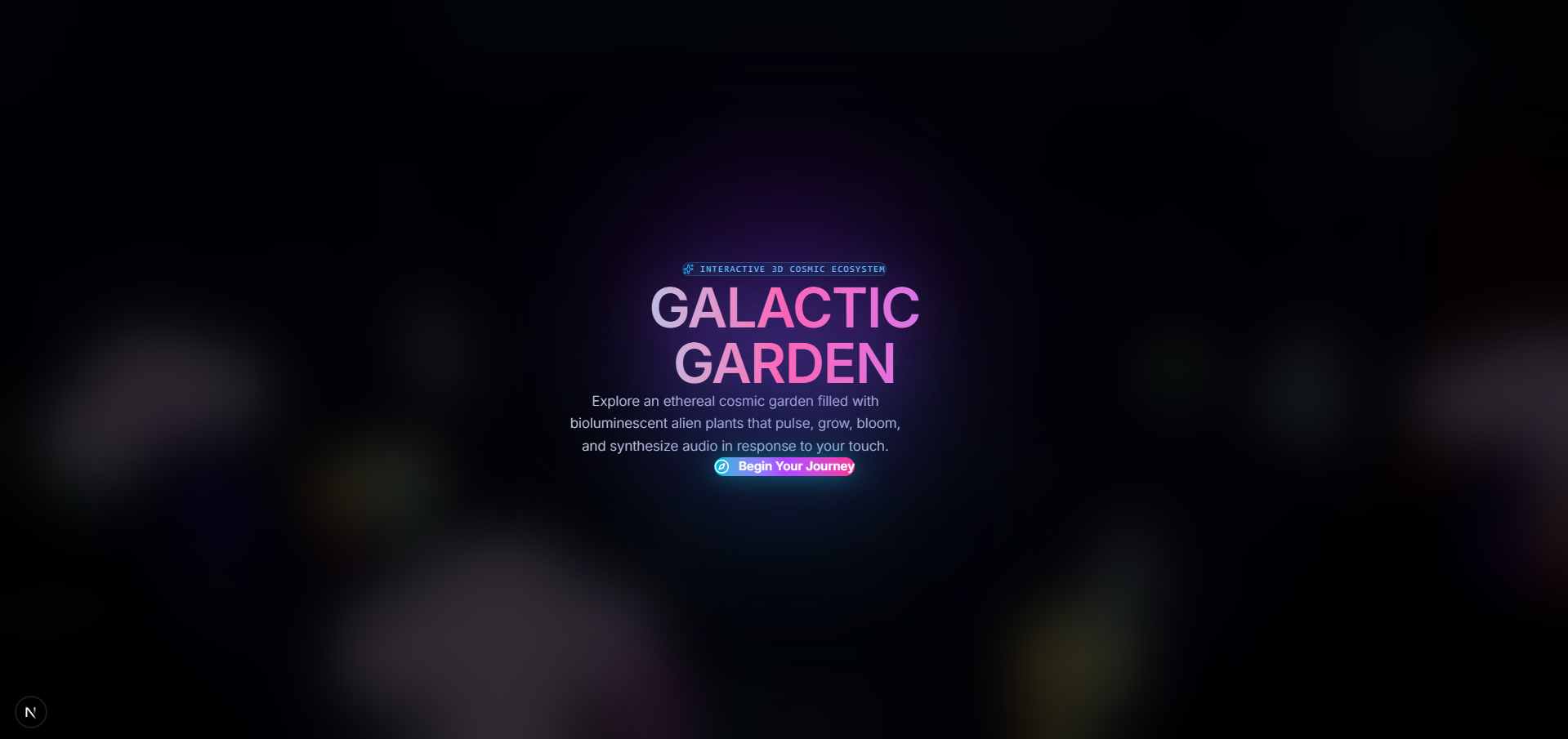
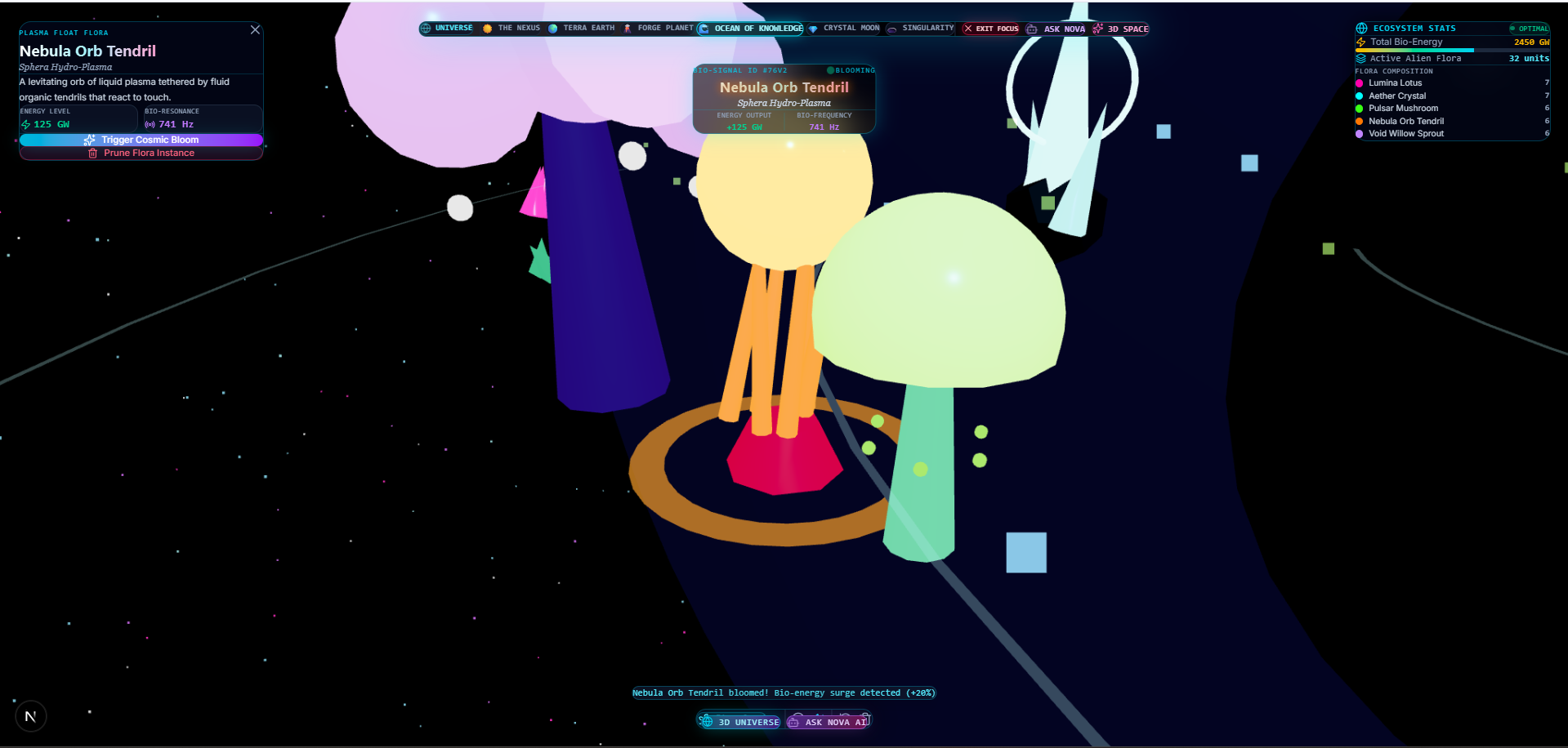
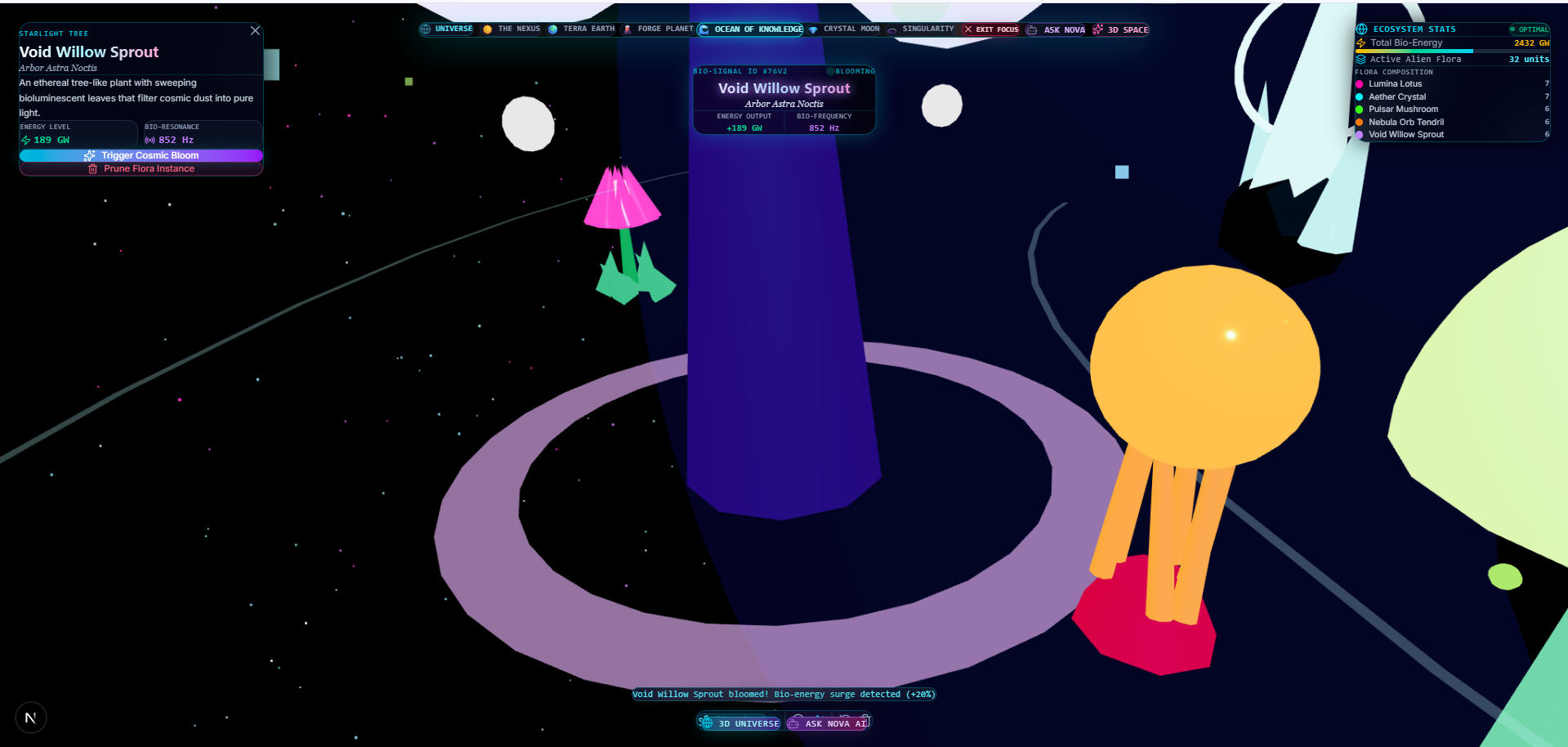
Galactic Garden
-
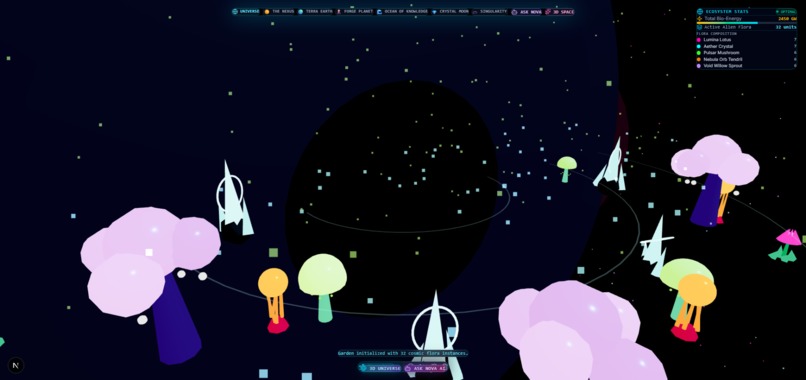
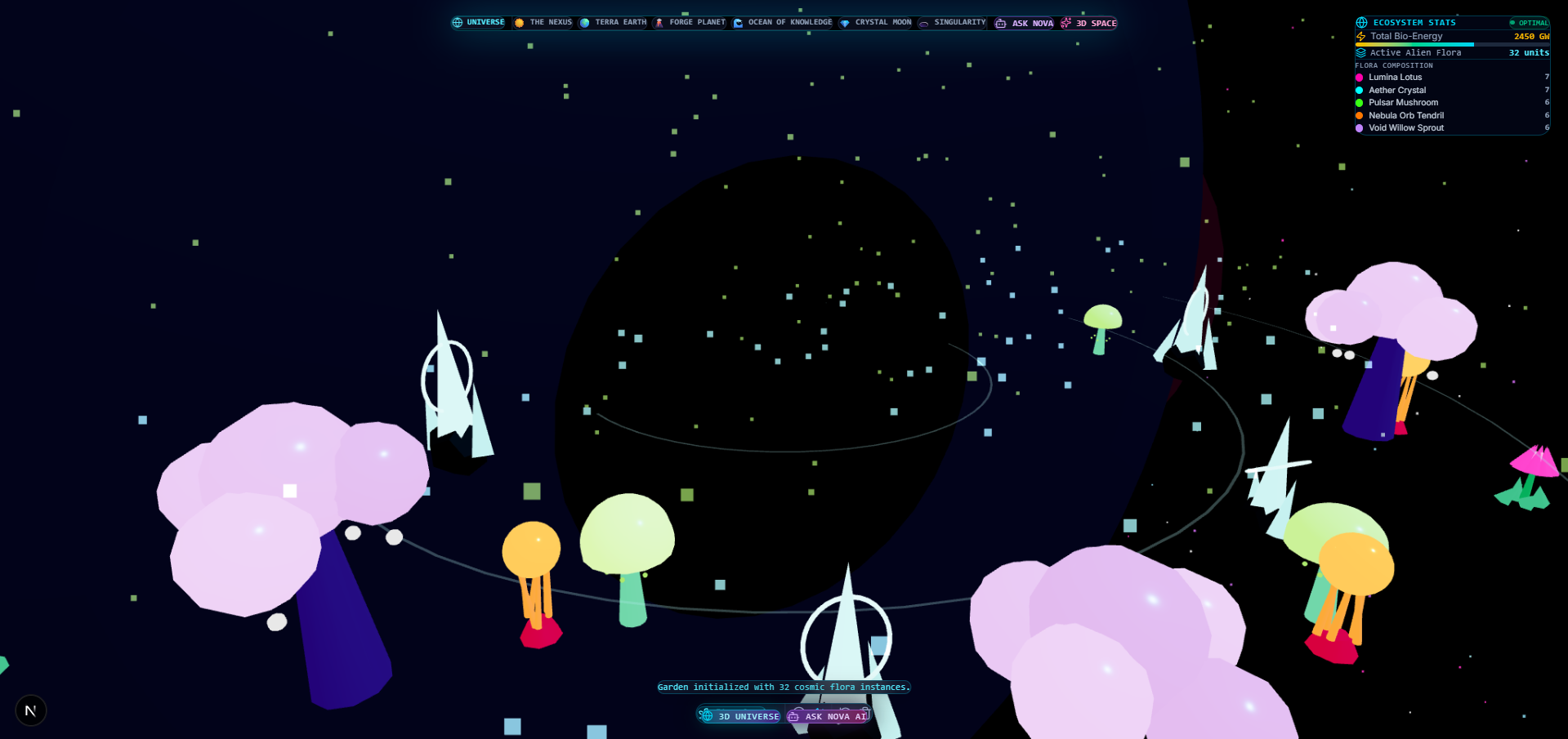
Galactic Garden Full View
-
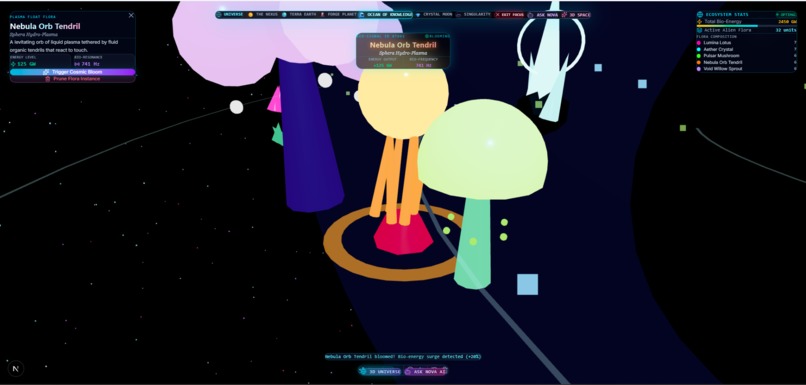
Nebula Orb Tendril
-
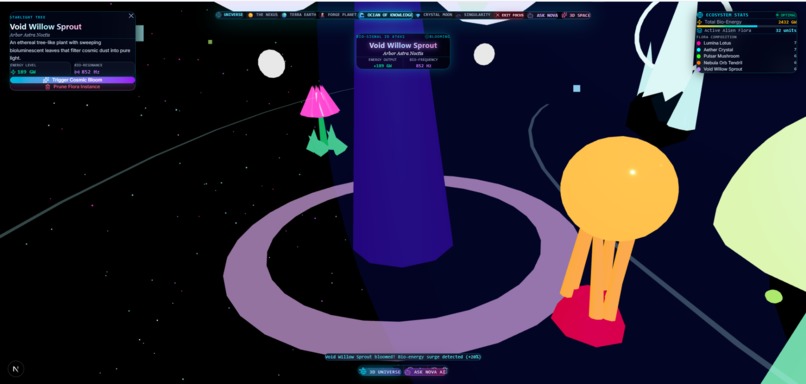
Void Willow Sprout
-
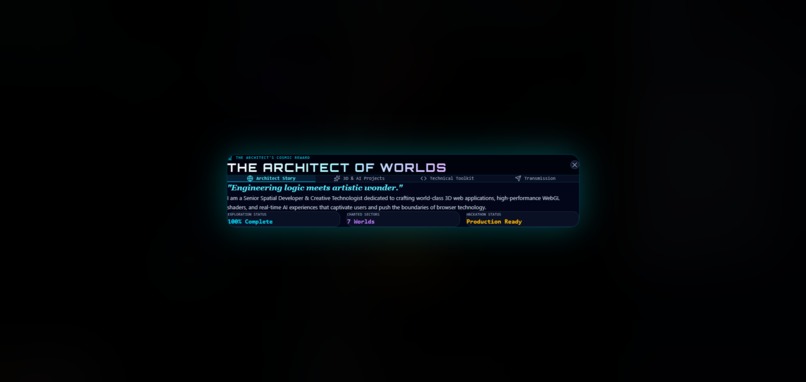
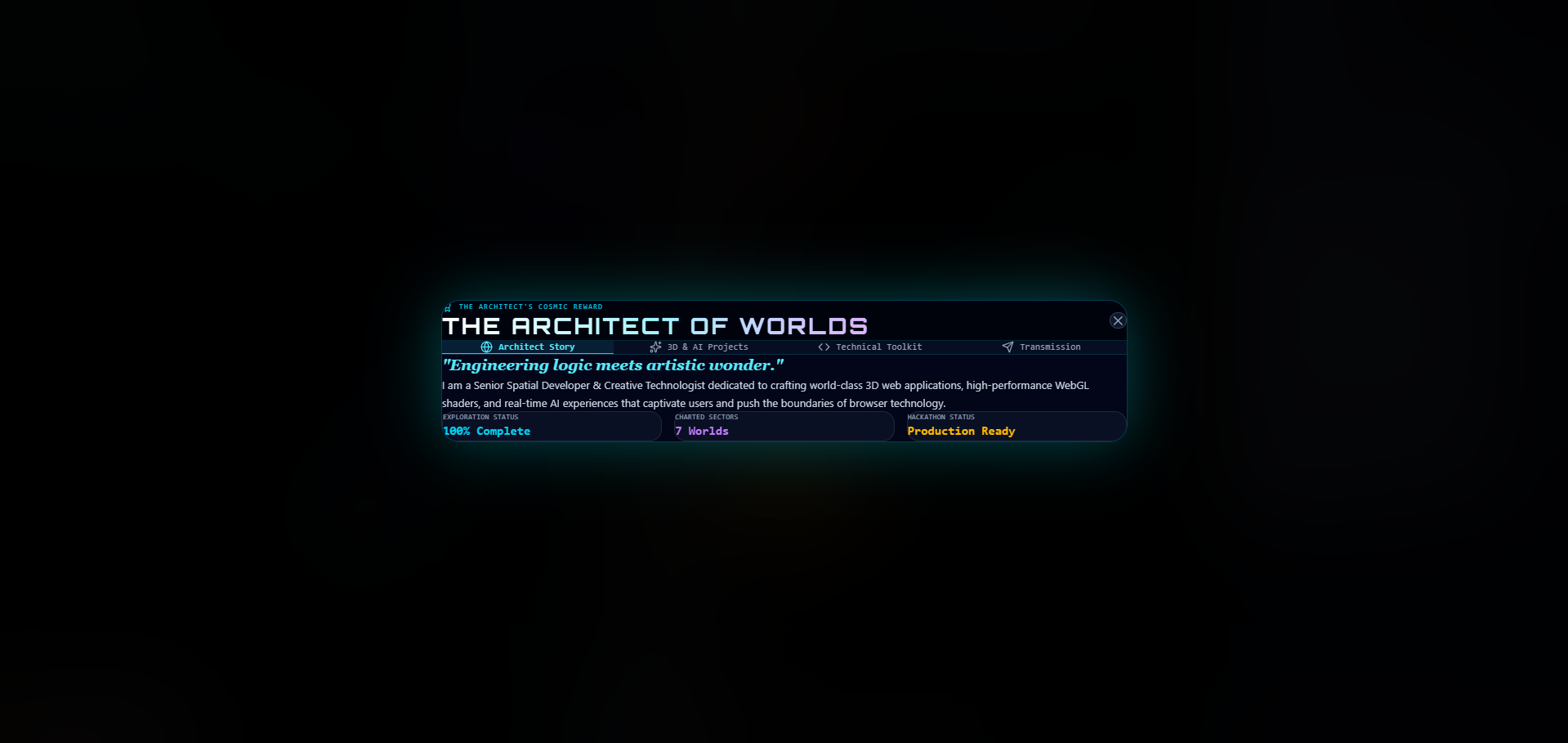
Architect Story
-
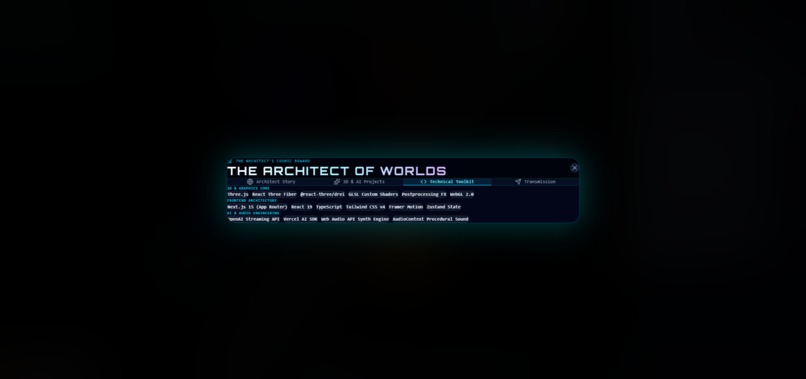
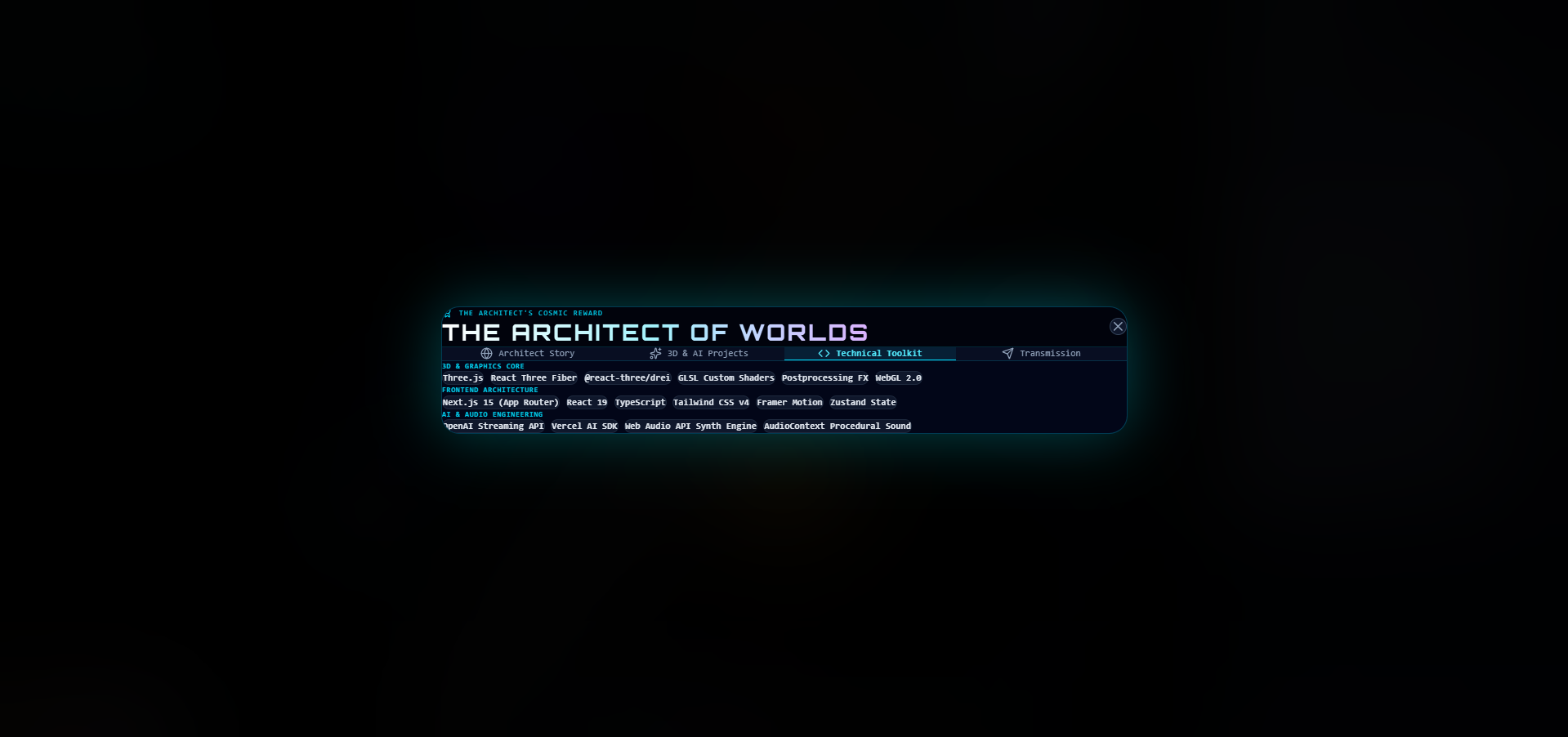
Technical Toolkit
🌌 The Architect of Worlds
"Every world tells a story. Every story is a part of the journey."
Inspiration
Most websites are designed to be navigated.
I wanted to create one that could be explored.
Inspired by cinematic science fiction, space exploration, and immersive game environments such as Interstellar, Avatar, No Man's Sky, and Outer Wilds, I imagined a universe where visitors don't simply browse pages—they travel through handcrafted worlds.
Rather than presenting information through traditional menus, I wanted each section of the experience to feel like discovering a new destination. Every interaction, camera movement, and visual effect was designed to encourage curiosity and make visitors pause, explore, and enjoy the journey.
This project became an experiment in combining storytelling, modern web technologies, and real-time 3D graphics to create an experience that feels closer to an interactive world than a conventional website.
The Experience
The experience begins inside a vast cosmic universe rendered entirely in the browser.
Visitors are welcomed into an interactive space filled with handcrafted celestial worlds, animated particles, glowing nebulas, and cinematic camera movements.
Each major world represents a unique part of the experience and invites visitors to explore it through smooth transitions and interactive elements.
The current universe includes:
🌍 Terra Earth — A vibrant living world representing growth and exploration.
🔥 Forge Planet — A volcanic world inspired by creation, engineering, and building ideas.
🌊 Ocean World — A peaceful environment centered around knowledge, depth, and discovery.
💎 Crystal Moon — A luminous world showcasing experience, precision, and reflection.
🌌 The Nexus — The central hub connecting the universe together.
🕳️ Singularity — A mysterious region inspired by black holes, space-time, and cosmic phenomena.
Throughout the journey, visitors can explore different environments, interact with worlds, and use Nova, the integrated AI guide, to learn more about the universe and its concepts.
Instead of navigating pages, users experience an interactive journey through a living 3D environment.
How I Built It
The Architect of Worlds is built using a modern web stack focused on real-time rendering and interactive experiences.
The application is powered by Next.js 15 and React, while Three.js and React Three Fiber render the entire 3D universe directly inside the browser.
To create cinematic movement and smooth transitions, I used GSAP, while Framer Motion enhances the user interface with polished animations.
The project combines multiple rendering techniques including:
- Real-time 3D rendering
- Custom planetary materials and shaders
- Particle systems
- Dynamic lighting
- Bloom and post-processing effects
- Interactive camera transitions
- React state management
- Responsive UI overlays
- AI-powered Nova assistant
- Modular component architecture
The goal was to balance visual quality with performance while maintaining an enjoyable interactive experience across modern browsers.
Challenges
Building a large interactive 3D scene inside a browser presented several technical and creative challenges.
One of the biggest challenges was maintaining smooth performance while rendering multiple animated objects, particle systems, lighting effects, and interactive components simultaneously.
Another challenge was designing intuitive navigation without relying on traditional menus. Instead of directing users through standard pages, the experience encourages exploration through movement, interaction, and visual storytelling.
Integrating AI assistance while preserving the immersive nature of the project also required careful planning to ensure Nova complemented the experience rather than interrupting it.
What I Learned
This project significantly expanded my understanding of creative web development.
During development I explored:
- Three.js and React Three Fiber
- Real-time 3D rendering
- Scene composition
- Camera choreography
- Interactive UI/UX design
- Performance optimization
- Component architecture
- AI integration within web applications
More importantly, I learned that memorable user experiences are created by combining thoughtful design, storytelling, and technical execution rather than relying solely on complexity.
Future Improvements
The current project establishes the foundation for a much larger interactive universe.
Future improvements may include:
- Deeper world-specific interactions
- Expanded Nova knowledge system
- Richer environmental storytelling
- Additional handcrafted worlds
- Improved visual effects and shaders
- Enhanced accessibility and mobile interactions
- Dynamic procedural space events
- Spatial audio
- Optional WebXR / VR support
These ideas will continue to evolve while maintaining performance and usability.
Conclusion
The Architect of Worlds is an exploration of what modern web experiences can become when storytelling, design, and technology work together.
Rather than presenting information through traditional pages, the project invites visitors to discover handcrafted worlds, experience cinematic interactions, and explore an evolving universe built entirely with web technologies.
This project reflects my passion for creative development, interactive experiences, and pushing the boundaries of what can be achieved inside a web browser.
Every world represents an idea.
Every interaction tells part of the story.
And every visitor is invited to explore it in their own way.

Log in or sign up for Devpost to join the conversation.