-
-
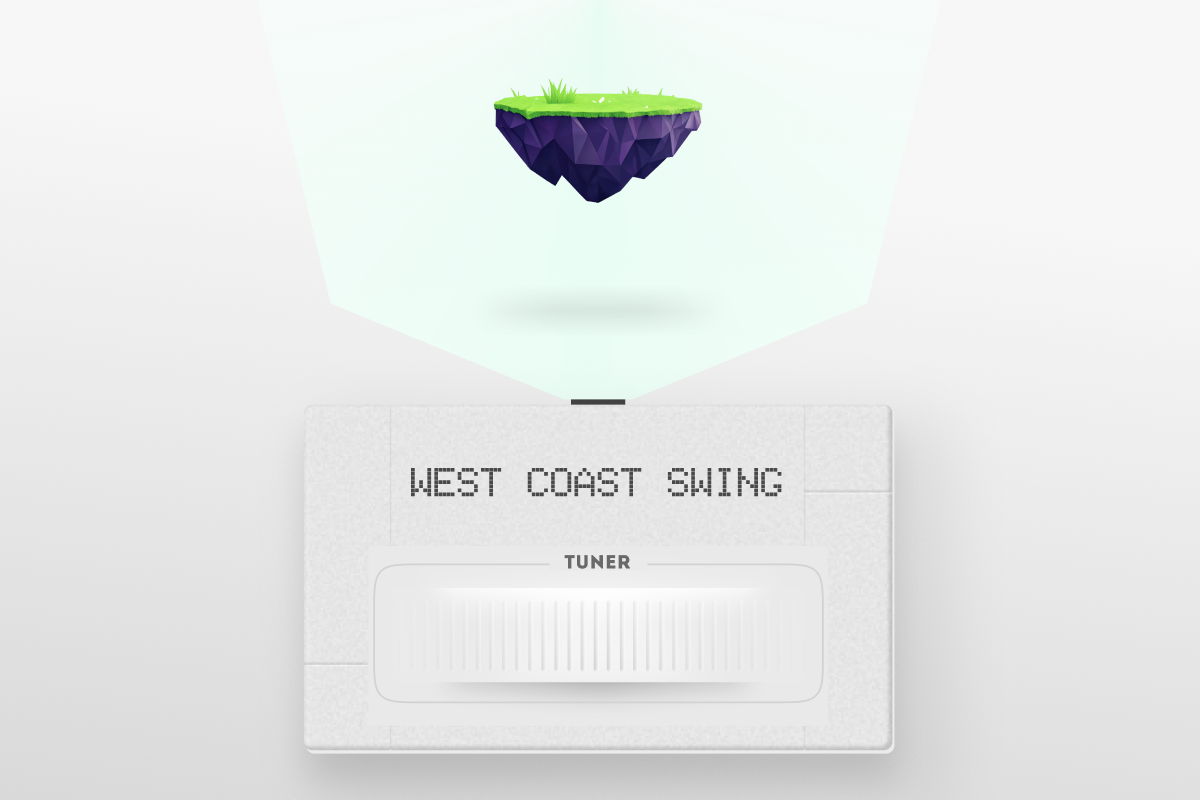
Welcome Screen
-
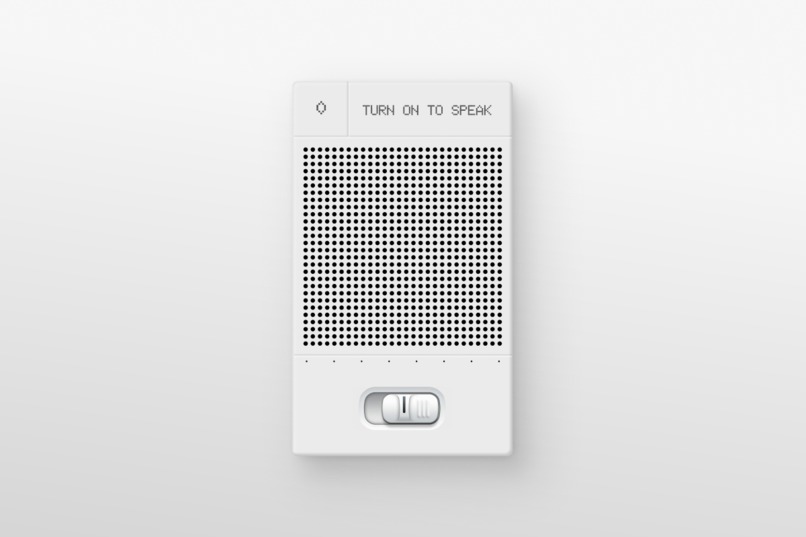
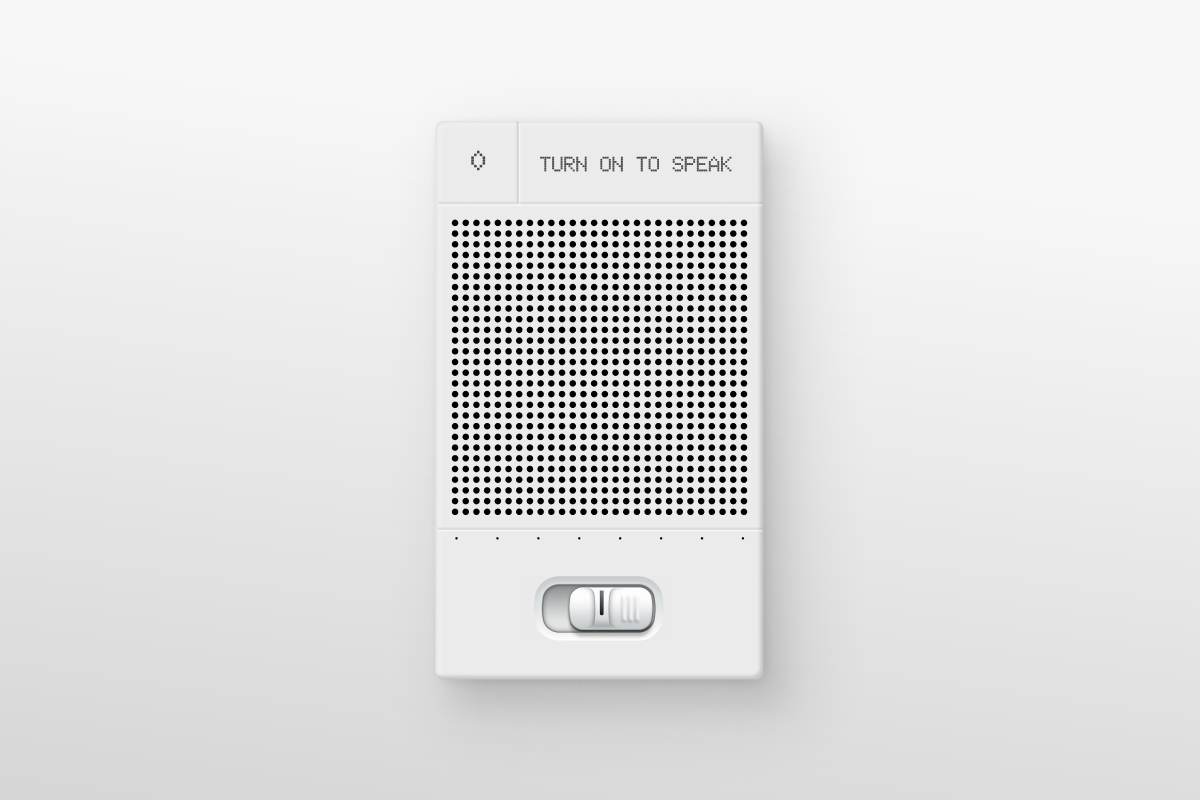
Recorder Device
-
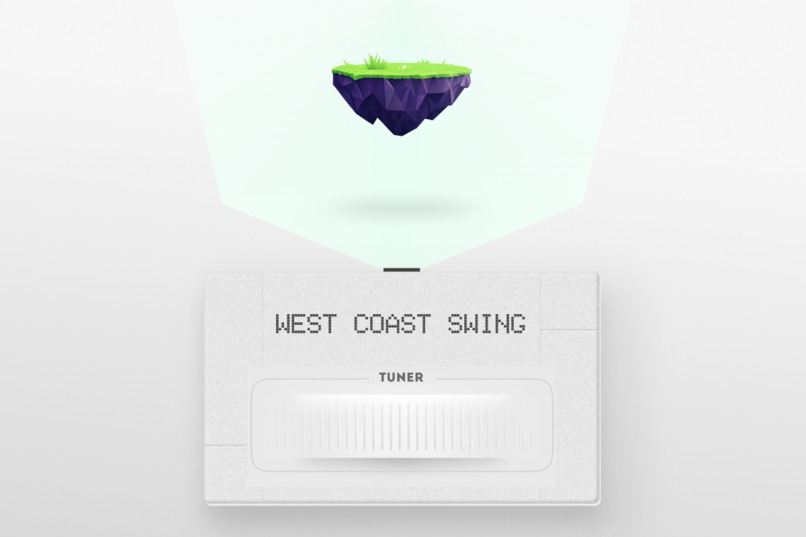
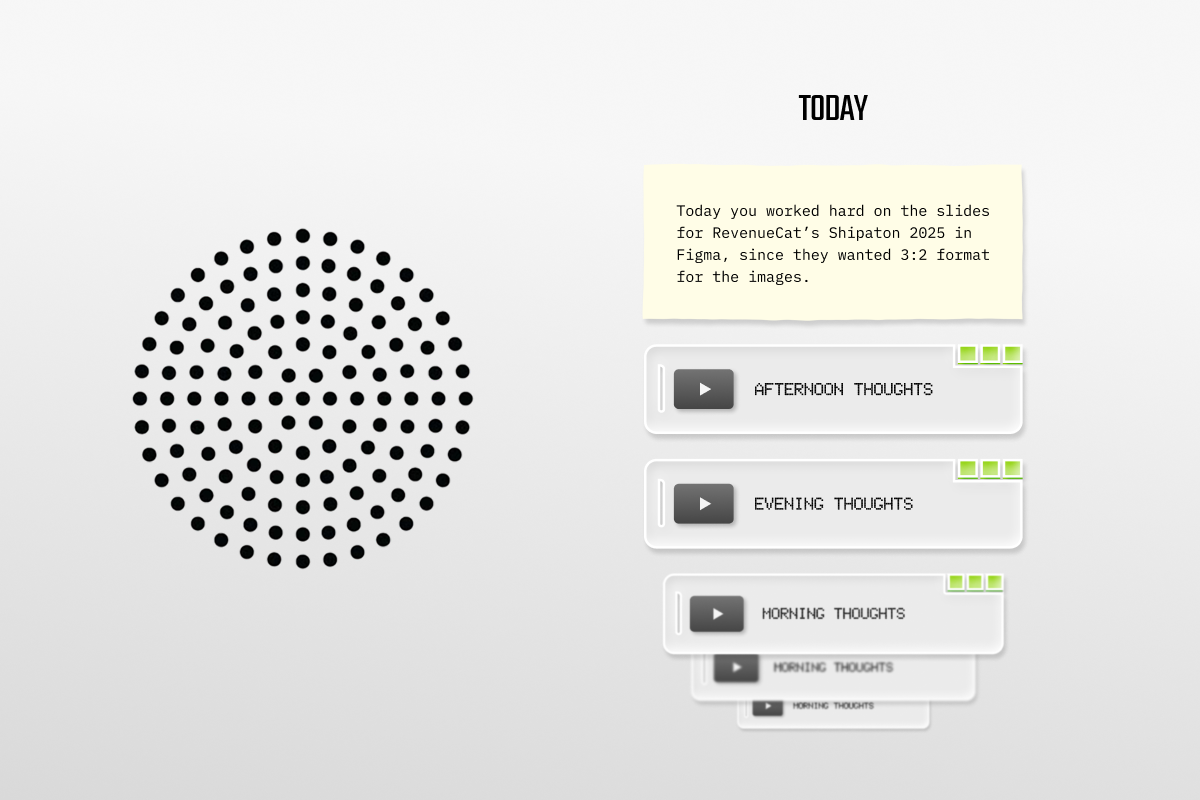
Topic Selection Device
-
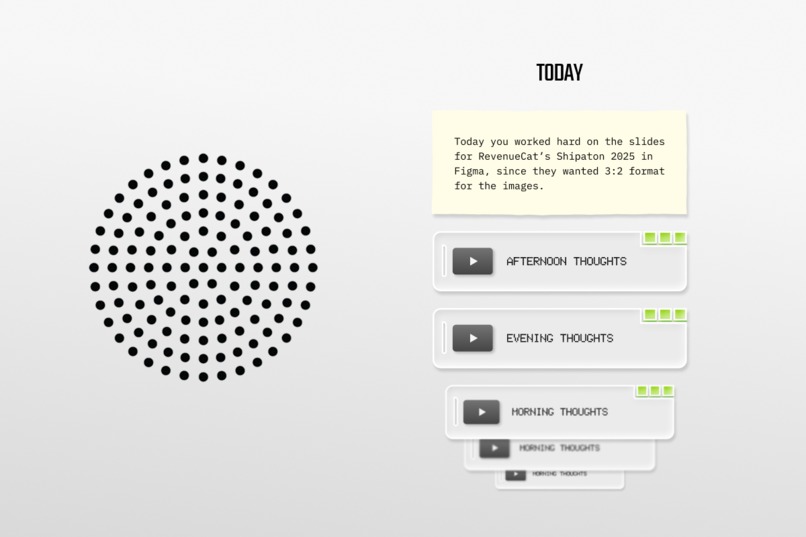
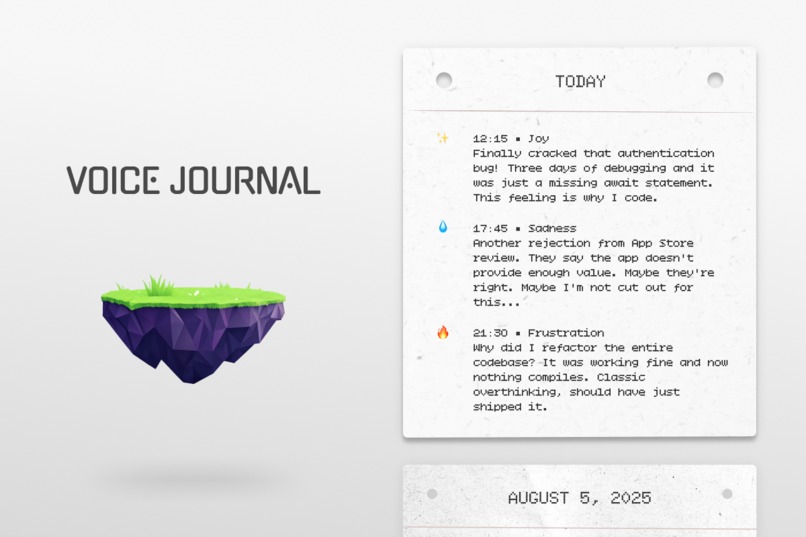
List of memos with a summary
-
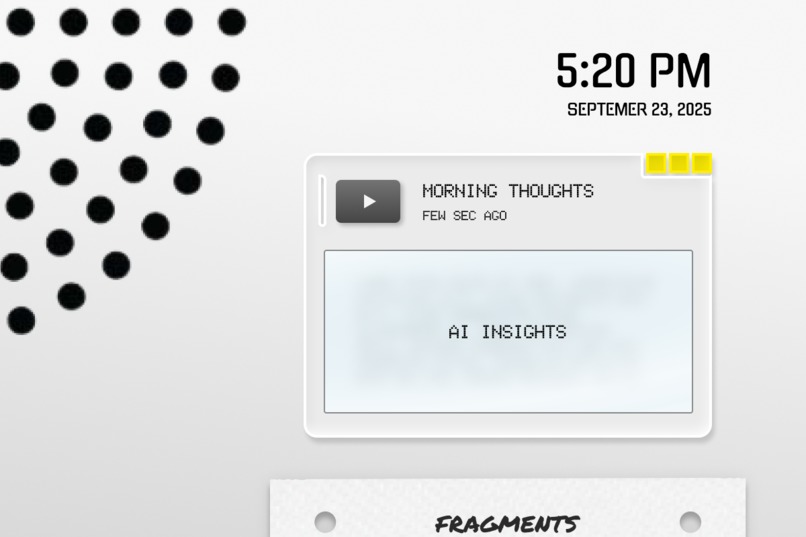
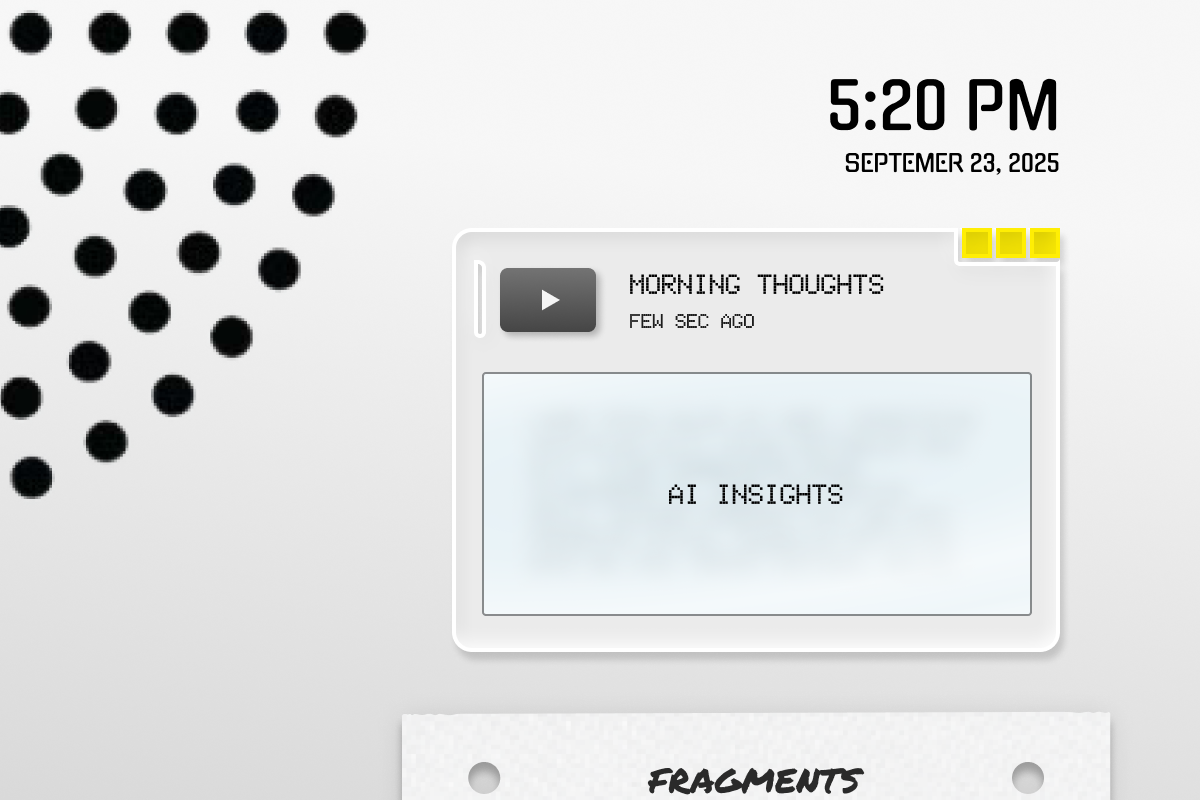
Memo details view
-
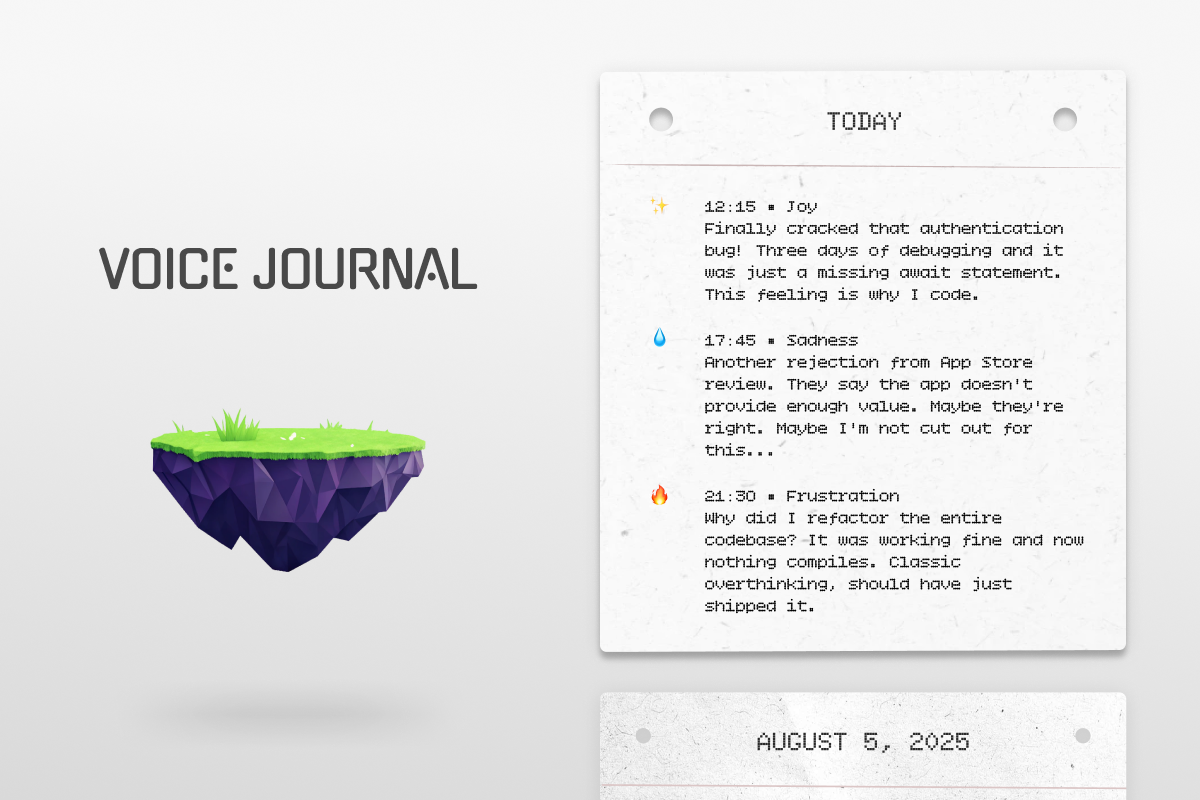
Topic details view
The Architect: The 20-Year Overnight Success
Inspiration
I've been coding since I was 14. Twenty years of building for others - banks, startups, enterprise systems. I even created Flutter courses and mentored developers. But I never shipped anything significant that was mine.
Not because I didn't have ideas. I had 12 app concepts sitting in various states of "almost done" on my hard drive. The problem was perfectionism. I'd read too many Steve Jobs biographies and convinced myself that one bad user experience would kill the product forever.
Then two things happened in June 2025 that changed everything:
First, I was building yet another side project - a Flutter template to solve the painful Firebase + RevenueCat integration. Just for myself, like always. I was having fun with Claude Code and the newly released Claude 4 models, making rapid progress.
Second, I saw a Shipaton ad on Reddit. September 30 deadline. Three months away. For the first time in 20 years, I thought: "I could actually finish one of those 12 ideas."
The deadline transformed paralysis into possibility. If I picked one concept and focused, three months was realistic. And luckily, Poland had the coldest summer on record - I stayed inside and just... built.
The app I chose to build: A voice journal that solves my ADHD brain's biggest problem.
I teach West Coast Swing dancing. After every Wednesday class, I'd drive home with my head exploding - did that move work? Should I change the progression? That Firebase bug I need to fix... What my girlfriend said yesterday... By the time I got home, half the thoughts had vanished.
Voice memos were easy to record but impossible to find later. Text notes were searchable but too slow to capture flowing thoughts. I needed both - the ease of speaking with the utility of text.
And I needed pattern detection. My relationship was going through a rough patch. Was I consistently negative about her, or just having bad days? I needed something to just listen without judgment and show me patterns I couldn't see myself.
Basically, I needed Dumbledore's Pensieve from Harry Potter: "Sometimes I find that I simply have too many thoughts and memories crammed into my mind... At these times, I use the Pensieve."
So I built one.
What it does
The Architect transforms chaotic voice rambles into organized, searchable text with AI insights - automatically.
The core loop:
- Hit record and speak naturally about anything - work problems, relationship thoughts, dance class planning, random ideas - switching between topics and languages freely
- The app transcribes with 98% accuracy using ElevenLabs Scribe (handles 101 languages, including Polish/English mixing)
- AI auto-sorts each thought into your custom topics: "Work", "Relationships", "Teaching", "App Development"
- You receive instant insights: emotion analysis, cognitive distortion detection, pattern recognition, and actionable next steps
What makes it different:
When I record for 10 minutes about five different things, each thought lands in the right topic automatically. The app remembers context - when I say "Aleksandra" once, then later say "my girlfriend" or "moja dziewczyna" (Polish), it knows I'm talking about the same person in the "Relationships" topic.
The AI detects 10 cognitive distortions from CBT (catastrophizing, all-or-nothing thinking, mental filtering) and 5 self-talk patterns (critical, anxious, compassionate). When I vent about being stuck, it identifies the patterns and suggests next step.
The islands visualization shows where your mental energy goes. Topics start as bare floating stones and grow trees/plants as you record more. My "App Development" island towers over others while "Exercise" stays embarrassingly barren - that's data I can act on.
Last week I felt completely stuck with development. I checked my Work island summary and it literally said: "You solved the Firebase auth issue three days ago" I was further along than I thought. That moment of seeing actual progress when your mind insists you're failing - that's what The Architect does.
How I built it
Solo mission. Twenty years of coding experience but I'd never touched Firebase Cloud Functions, never built real-time backends, never integrated complex AI APIs at scale.
The tech stack:
- Flutter for the app (my expertise)
- Firebase (Cloud Functions, Firestore, Storage, Auth)
- ElevenLabs Scribe for transcription (98% accuracy, 101 languages)
- Google Gemini 2.5 Pro for AI analysis (cognitive patterns, next steps)
- RevenueCat for subscriptions (making monetization actually possible for solo devs)
- Claude Code eliminating my backend knowledge gap
Month 1: Validation through AI collaboration
I gave Claude Code one mission: build a serverless backend where recordings upload to Firebase Storage, trigger Cloud Functions for processing, and update Firestore for the client to stream changes.
Claude Code generated the entire Firebase Cloud Functions setup - storage triggers, Firestore security rules, real-time stream listeners, error handling. I'd never written a Cloud Function before June. By July, I had a working MVP backend.
This architecture meant the client just listens to database changes. No complex state management. No polling. Recording goes to server → server processes → client streams updates. Claude Code wrote this; I focused on Flutter UI.
Month 2-3: Design obsession
Once the technical validation worked, I obsessed over making it feel like a physical device. Inspired by Dieter Rams' Braun dictaphones from the 1960s, I wanted the recording interface to feel tangible.
The recording screen isn't a button - it's a skeuomorphic dictaphone with a mechanical slider. When you slide it:
- Visual: smooth animation of physical movement
- Haptic: distinct click through your fingers
- Audio: mechanical switch sound from actual vintage devices
- Context collapse: all UI fades away except the dictaphone
I tested 10+ slider designs, spent days perfecting shadows, researched vintage devices at home and even car switches for that satisfying mechanical feel.
The islands visualization took weeks to conceptualize. After endless searching, I found a floating stone with grass on Google Images - that was the eureka moment. Built the entire metaphor around that: bare islands grow trees/plants as you record more about that topic.
The AI orchestration:
- Claude Code = backend specialist (wrote infrastructure I didn't understand)
- ElevenLabs Scribe = transcription API (solved impossible multilingual problem)
- Gemini 2.5 Pro = intelligence layer (NLP, context building, pattern detection)
- GPT-5/Grok 4 = strategic advisors (helped decision-making during development)
Spent 100+ prompt iterations teaching Gemini to remember context across recordings. Now it builds a mental model of each topic that improves over time.
Infrastructure for iteration:
Set up Codemagic (push to main = automatic deploy) and AppScreens.com (instant localized screenshots) so shipping updates is frictionless. Every improvement ships in minutes, not months.
Challenges I ran into
Technical: Multi-language transcription hell
Polish mixed with English technical terms, dance move names, personal nicknames. Most APIs broke completely. Tested Google Speech-to-Text, Whisper, AssemblyAI - all butchered the code-switching.
ElevenLabs Scribe was 3x more expensive but 10x more accurate. When accuracy is part of the user experience, you can't cheap out. Now it perfectly handles "Firebase Cloud Functions" (English) mid-Polish sentence.
Technical: Context persistence across recordings
Teaching Gemini that "Aleksandra", "my girlfriend", and "moja dziewczyna" all refer to the same person in the "Relationships" topic took 100+ prompt iterations. The breakthrough: feeding accumulated topic context with each new recording. Now it builds a mental model that improves over time.
Design: Physical UI in digital space
Making a touch screen feel like a 1965 dictaphone while maintaining modern usability? Brutal. The slider needed to feel satisfying - tested hundreds of haptic feedback combinations, recorded and processed sounds from actual vintage switches.
Users could easily get confused by unconventional UI. Took dozens of iterations to make the physical device aesthetic intuitive. Still refining based on user feedback.
Mental: The paralysis of perfectionism
Right before launch, I discovered dozens of apps "that do the same thing." Almost gave up - the market felt saturated. Then I realized: they all offered features. I was building an experience. Nobody else had the physical device aesthetic. Nobody else auto-organized mixed-language rambles with CBT-informed pattern detection.
The bigger fear hit when about to press "Publish": What if nobody downloads it? What if I abandon this like everything else?
I voice-dumped my fears into the app itself. Seeing the catastrophizing pattern in the transcript helped me realize this was just perfectionism talking. The app's own analysis convinced me to ship.
Mental: Material fatigue during development
There was a moment when I showed the first skeuomorphic dictaphone design and said: "I don't want criticism right now because I'm overloaded. I need to push this forward."
That wasn't weakness - that was someone deep in the trenches of creation who needed to see progress, not analyze more problems. It's an incredibly human feeling for anyone building from scratch.
Accomplishments that I'm proud of
Shipped a global product with paid subscriptions after 20 years of dreaming about it. September 16 (Google Play) and September 20 (App Store). Both stores. Real users. Real revenue ($9.99 from one subscriber who said it might be "life-changing").
Broke the perfectionism barrier. I shipped deeply embarrassed by how much I still wanted to improve. The onboarding was too long. Animations were janky. Paywall timing felt awkward. But those 90 users have taught me more in two weeks than 20 years of planning.
Iterated at velocity: Within 72 hours of launch, I watched friends use the app and shipped a critical patch. Six days later, another major update. Twelve days later, 7-language support. Feedback-to-implementation time: 72 hours.
Processed thousands of test recordings during development. Used the app daily to build the app. The meta-loop of voice-dumping my fears about the app, then seeing patterns in the analysis that convinced me to ship - that was transformative.
Created a reusable Flutter template with Firebase + RevenueCat integration that I can use for future products. The infrastructure work wasn't wasted - it's now a launchpad.
The app actually works for its intended purpose. My West Coast Swing classes are organized. My relationship improved after seeing sentiment patterns. My ADHD brain dumps daily and I can actually find thoughts later. It solved my own problem first.
Validated product-market fit organically. Posted my personal experience with voice journaling on r/selfimprovement (disguised as therapy homework). The post reached 439,000 views and 5,600 upvotes, with dozens of DMs asking "is there an app for this?"
What I learned
Ship when embarrassed > Perfect but never released. Always. ALWAYS.
The Shipaton deadline broke 20 years of paralysis. External constraints beat internal motivation for chronic perfectionists. Without September 30 looming, this would be another project on my hard drive.
Firebase Cloud Functions are awesome. Thanks to Claude Code, I learned an entire backend paradigm in weeks instead of months. Now I understand serverless architectures and real-time sync at a deep level. Would've taken years learning alone.
AI economics are transforming what's possible for solo devs. What cost $100 six months ago costs $1 now. Context windows went to 2 million tokens. The impossible became trivial literally overnight.
Multi-language transcription that would've required a team of engineers? ElevenLabs API call. Psychological pattern detection that would've needed PhD-level NLP expertise? Gemini 2.5 Pro handles it.
Solo devs can compete with funded teams by orchestrating AI capabilities strategically. I didn't build everything myself - I conducted an AI orchestra where each tool plays its part.
Users teach you more than planning. Every assumption I made about onboarding flow was wrong. Watching friends use the app for 5 minutes revealed more UX issues than weeks of solo testing.
The feature users praise most (islands visualization) wasn't even in my original spec - it emerged during development when I realized I needed visual feedback for topic distribution.
The "standing still" illusion is real and solvable. My own app proved to me I was making progress when I felt stuck. Seeing "You solved the Firebase auth issue three days ago" in my Work island summary was life-changing. Now I want to give that clarity to others.
Monetization through RevenueCat is actually doable for solo devs. I spent days on the dictaphone slider, not weeks on payment infrastructure. RevenueCat handled subscriptions, trials, promo codes, cross-platform receipt validation - the unglamorous but critical stuff that would've killed my momentum.
Design matters more than I thought. Users don't say "great feature set" - they say "beautiful and simple." The Dieter Rams-inspired physical device UI creates emotional connection that features alone never could.
What's next for The Architect
Immediate improvements (next 30 days):
- Weather on islands: Sunshine when recent sentiment is positive, rain/storms when negative, showing emotional climate not just topic volume
- Frozen islands: Topics you're neglecting get snow/ice, creating visual guilt that motivates re-engagement
- AI-suggested topics: Based on what you talk about, the app proposes topic structure to reduce setup friction
- Edit and reassign fragments: Manual corrections for when AI auto-organization gets it wrong
Medium-term vision (3-6 months):
- Integration with note-taking apps: Export to Notion, Obsidian, Roam Research with proper formatting
- Collaboration features: Share specific insights or entire topics with therapists, coaches, accountability partners
- Advanced pattern detection: Tracking how topics correlate over time (when Work island grows, Relationships island shrinks - that's data)
- Voice commands: Hands-free topic selection, recording control for accessibility
- Widget support: See your island ecosystem from your home screen
Long-term vision:
Build a real Pensieve for overthinkers, using Dieter Rams' design philosophy. Everyone juggling multiple things deserves to dump their thoughts and get them back organized.
This isn't just for ADHD developers anymore. The r/selfimprovement post (439K views) showed this resonates with:
- Therapy-adjacent users (Internal Family Systems practitioners requested features)
- Anxiety sufferers tracking worry patterns
- Verbal processors who think faster than they type
- Students capturing lecture notes
- Teachers planning lessons (my West Coast Swing use case)
- Entrepreneurs managing scattered ideas
Monetization refinement:
Current model (5 min guest → 15 min registered → 300 min Pro) is untested at scale. Will A/B test:
- Trial periods (3-day vs 7-day)
- Pricing tiers ($9.99/month feels right but data will decide)
- Feature gates (what should be free vs paid?)
- Paywall timing (end of onboarding vs quota limits)
RevenueCat makes experimentation easy. I'll let user behavior guide pricing, not assumptions.
Distribution learning:
I'm a developer who builds delightful experiences but clearly needs to learn distribution. The viral Reddit post proved product-market fit exists. Converting validation into installs is the next mountain to climb.
Planning coordinated Product Hunt launch post-Shipaton, micro-influencer outreach in productivity/mental health spaces, and continued presence in therapy-adjacent communities.
The bigger mission:
My ADHD brain created this because I needed it to function. My relationship improved because sentiment tracking showed reality vs. perception. My teaching improved because I could review what worked.
Now I want to scale that transformation. When your thoughts have a home outside your head, you finally have space to think.
The Architect exists because Shipaton gave me a deadline that broke 20 years of paralysis. Now I'm living proof that external constraints beat internal motivation.
Time to help thousands of overthinkers find what I found: you're not standing still. You just can't see your own movement from inside your head.

Log in or sign up for Devpost to join the conversation.