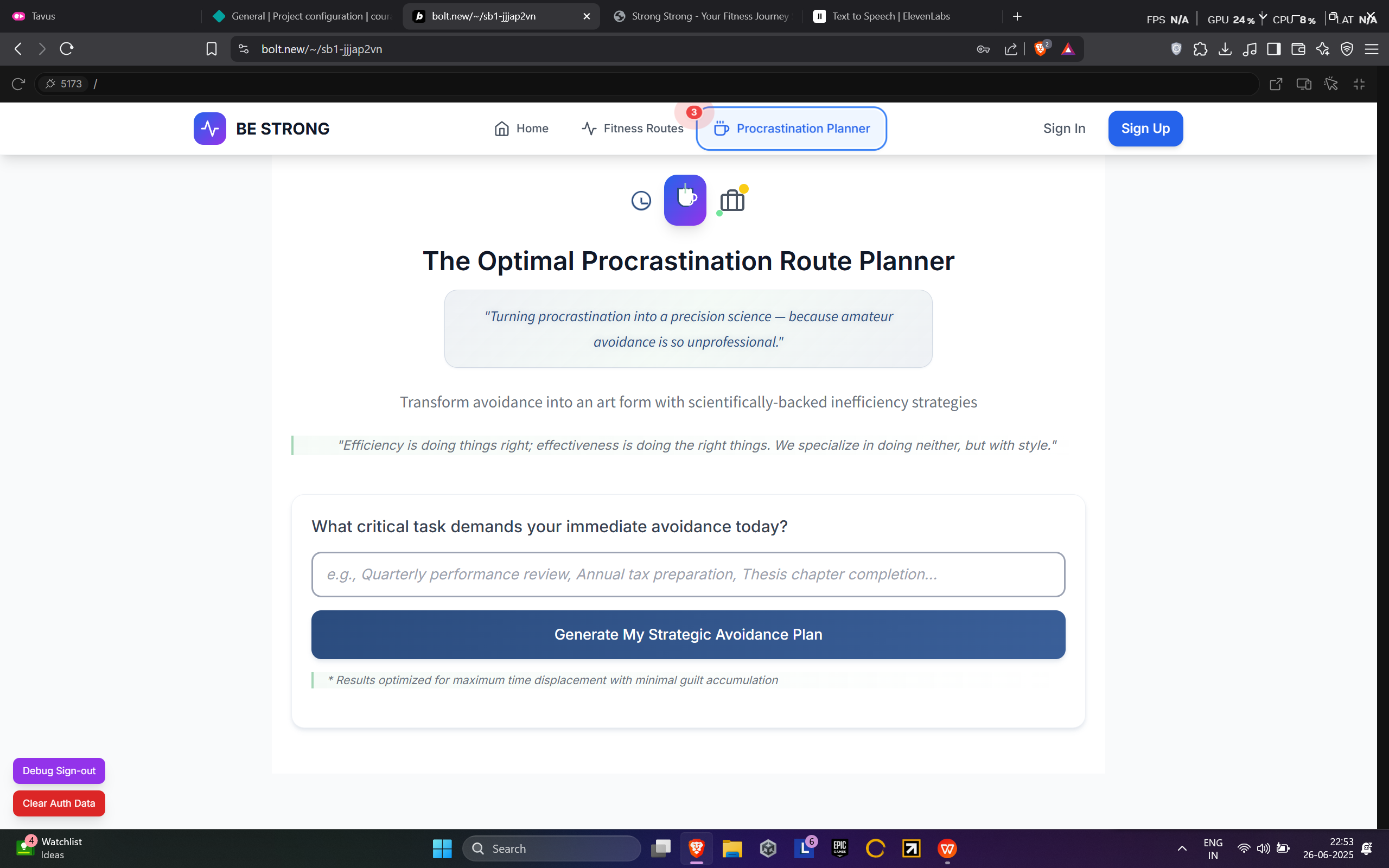
Here's the story behind "The Optimal Procrastination Route Planner," formatted in Markdown, ready for your hackathon submission:
The Genesis of Glorious Idleness: My Hackathon Journey with "The Optimal Procrastination Route Planner"
Inspiration
In a world relentlessly pushing for peak productivity, where every app promises to optimize your time and every guru preaches "getting things done," I found myself pondering a profound, yet often unacknowledged, human truth: sometimes, you just don't want to work. This isn't laziness; it's a strategic, almost artistic, inclination towards avoidance. My inspiration for "The Optimal Procrastination Route Planner" sprang directly from this satirical observation, drawing heavily from the spirit of events like the "Stupid Shit No One Needs & Terrible Ideas Hackathon," which celebrates "redundant, worthless technologies". Why solve world hunger when you can perfectly organize your digital dust bunnies? The true problem, I realized, wasn't a lack of productivity tools, but a glaring absence of tools designed to help us procrastinate optimally, with ironic efficiency. This project is my playful rebellion, a celebration of magnificent idleness in a hyper-productive age.
What it does
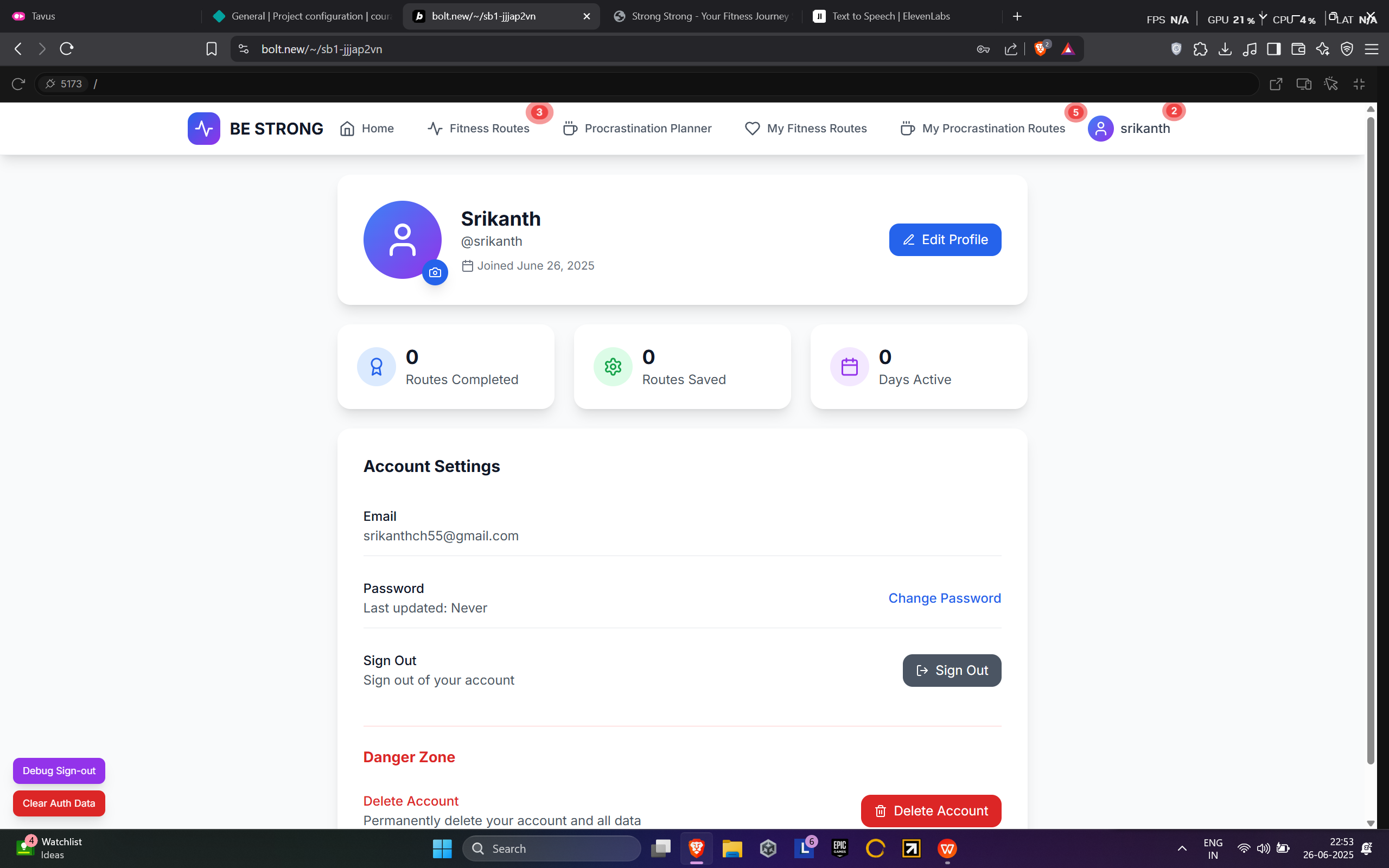
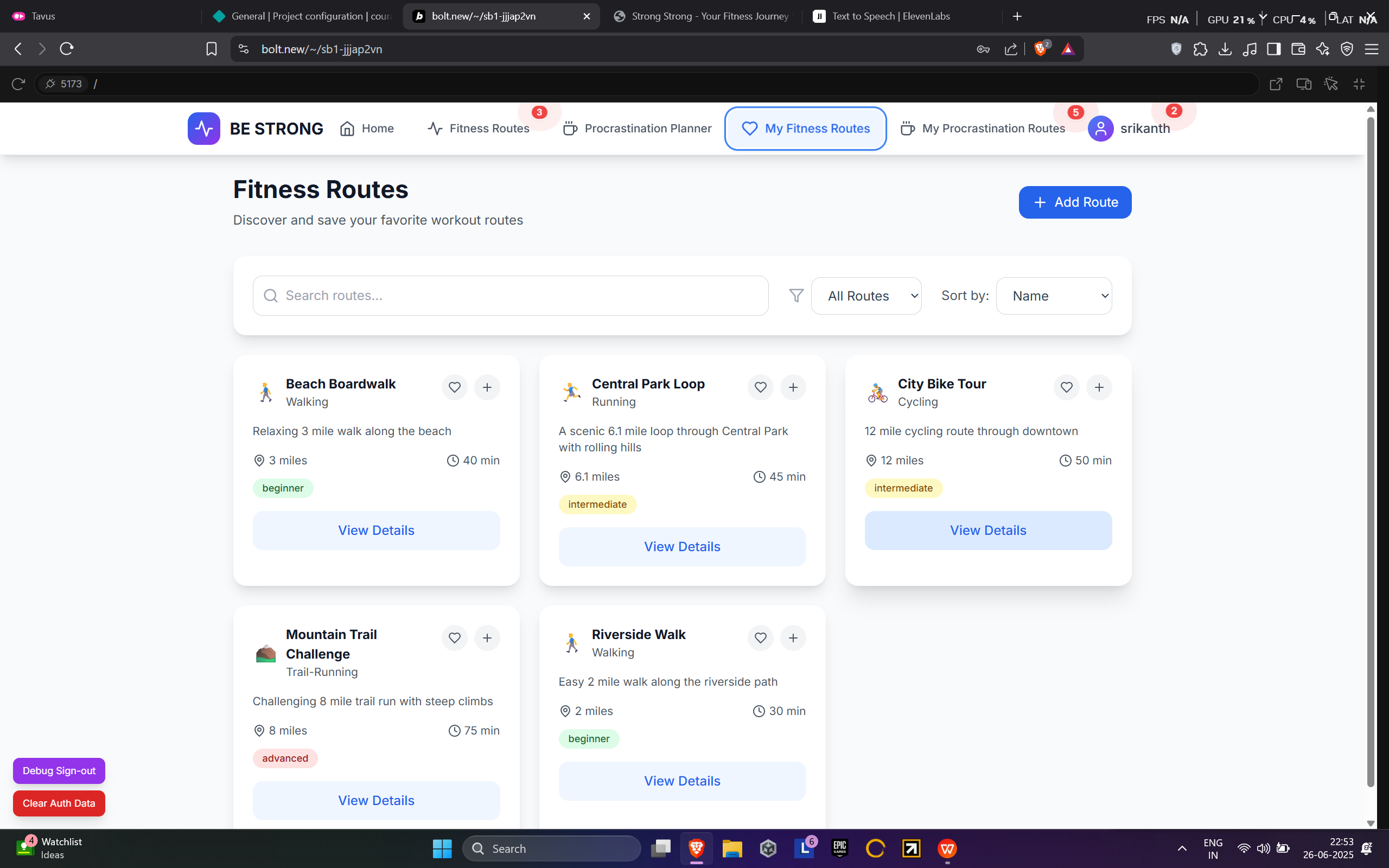
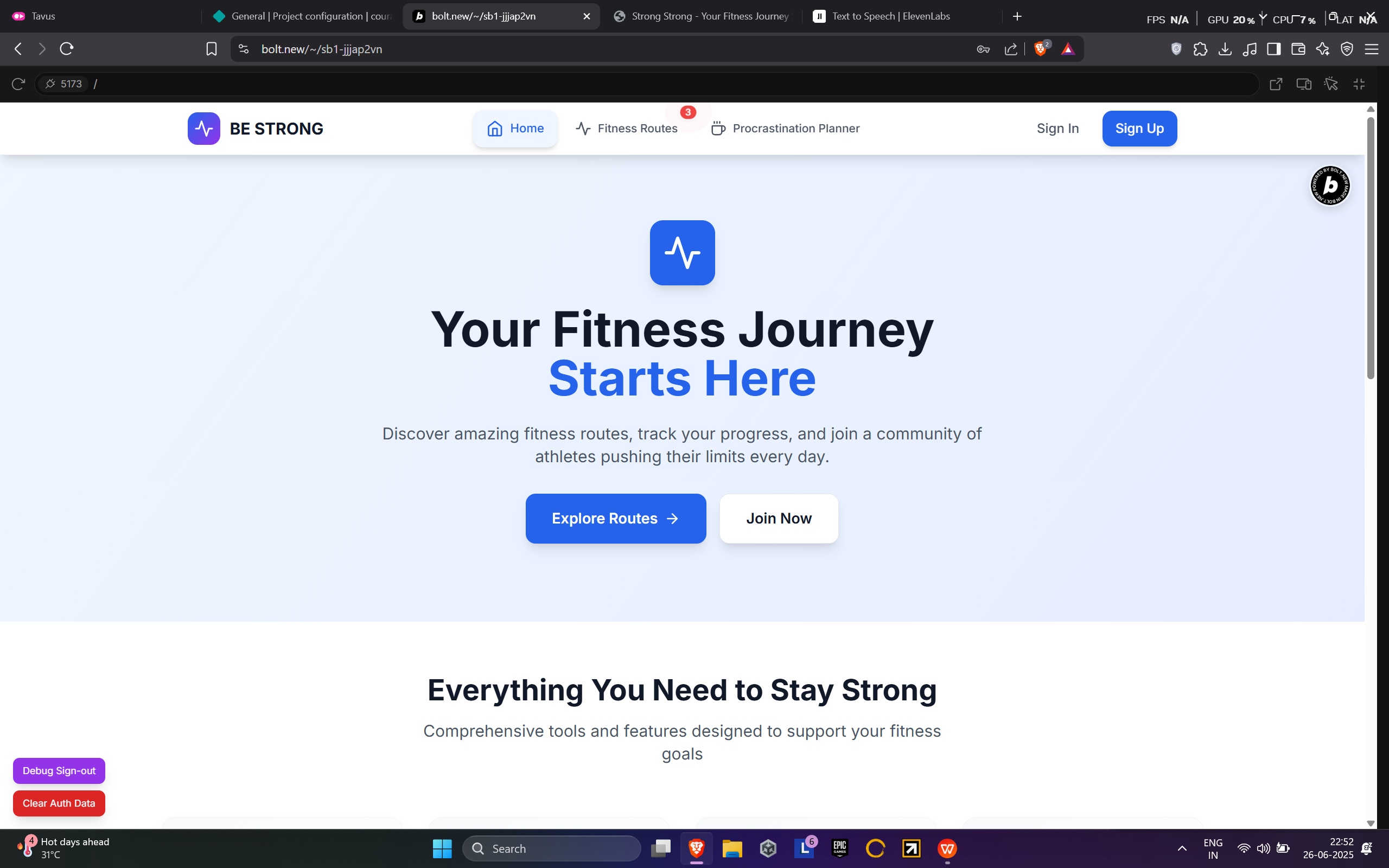
"The Optimal Procrastination Route Planner" is an AI-powered web application designed to help users master the art of strategic avoidance. It's a satirical take on productivity tools, offering a structured, yet utterly useless, path to delay.
- Optimal Procrastination Route Generation: Users input a task they should be doing, and the AI generates a step-by-step "optimal" route of highly distracting, yet seemingly productive, activities to avoid the main task. These are absurd, pseudo-scientific reasons for delay, like "Quantum Wall-Particle Entanglement Observation" or "Micro-Dust Migration Pattern Analysis".
- Unproductive Activity Log: Users can meticulously log their unproductive activities, providing rich, descriptive entries that capture the essence of their idleness, categorized under "Anti-Categories" such as 'Existential Staring' or 'Strategic Avoidance'. They can even rate their "Effort-to-Uselessness Ratio."
- The Procrastination Pantheon: This dynamic leaderboard celebrates the most dedicated practitioners of unproductivity. Users are ranked by metrics like "Total Unproductive Hours," "Longest Single Unproductive Streak," "Most Diverse Unproductive Activities," and an "Effortless Idler" score. The top 10 are prominently displayed, complete with ironic "anti-trophies".
- Unproductive Achievements (Anti-Badges): Users earn "anti-badges" for mastering idleness, such as "The Couch Potato King/Queen" or "Master of the Mundane," proudly displayed on their profiles.
- Daily Unproductive Prompts: The app offers daily AI-generated prompts to inspire new forms of idleness, encouraging creative unproductivity.
- Personalized Unproductivity Insights: The AI analyzes logged activities to generate humorous, personalized insights into a user's procrastination habits.
How we built it
My journey with "The Optimal Procrastination Route Planner" was a testament to Bolt.new's capabilities as an AI-powered development partner, allowing me to build a complex web application as a solo non-coder.
- The Blueprint Prompt: I began by describing the core concept to Bolt.new's chat interface: "Create a web application called 'The Optimal Procrastination Route Planner'. It should have a minimalist, ironically professional design. The main page needs an input field for 'What task are you trying to avoid today?' and a 'Generate My Procrastination Route' button. Integrate user authentication."
- AI-Driven Core Generation: Bolt.new's AI, powered by large language models like Claude Sonnet 4 swiftly generated the foundational frontend, backend (React, Node.js, Express, PostgreSQL), and even the initial database structure in seconds.[5, 8] It was like having an entire development team at my fingertips, instantly translating my natural language into a functional application.
- Iterative Refinement via Chat: The real magic happened in the conversational chat interface. I continuously prompted the AI to refine and expand the application:
- "Integrate Supabase for user authentication and to store saved routes."
- "When the 'Generate' button is clicked, use Claude Sonnet 4 to create 3-5 absurd, pseudo-scientific steps for optimal procrastination based on the user's input."
- "Add a 'Save Route' button for logged-in users and a 'My Saved Routes' page to display them."
- "Implement 'Unproductive Achievements' (anti-badges) and 'Daily Unproductive Prompts' using the AI to generate humorous content."
- "Create the 'Procrastination Pantheon' leaderboard, ranking users by total unproductive hours, longest single streak, and most diverse activities."
- I utilized Bolt.new's visual editor for quick UI tweaks, ensuring the ironic aesthetic was perfectly captured without touching code.
- Seamless Deployment: Once satisfied, Bolt.new's one-click integration with Netlify made deployment effortless. My "Optimal Procrastination Route Planner" was live and publicly accessible in minutes, ready for judges and fellow procrastinators alike.
- AI-Assisted Presentation: Even the demo video benefited from AI. I used AI writing tools like ChatGPT or Squibler AI to refine my script for comedic timing and AI voice generators like Speechify or Narakeet for a clear, ironically serious narration. This allowed me to focus on showcasing the app's humor and functionality without getting bogged down in production complexities.
Challenges we ran into
Being a solo non-coder in a hackathon, even a "silly shit" one, presented its own unique set of challenges:
- The Art of the Absurd Prompt: The biggest hurdle was translating genuinely funny, absurd concepts into precise AI prompts. While AI can generate humor, it requires specific guidance. Getting it to generate "pseudo-scientific reasons for staring at a wall" or perfectly ironic "anti-achievements" required careful wording and iterative refinement, often involving trial and error to hit the comedic mark.
- Balancing Satire with Functionality: The project needed to be funny, but it also had to work as a web application. Ensuring the database connections, user authentication, and leaderboard calculations were robust, even for a satirical purpose, was a constant balancing act.
- Solo Scoping: As a solo participant, the temptation to "overcommit" was ever-present. I had to ruthlessly prioritize core comedic features and ensure they were polished, rather than attempting to build every single absurd idea that came to mind. Bolt.new's rapid prototyping helped, but discipline was key.
- The Demo Performance: While AI assisted with the script and voiceover, the live demo itself required smooth navigation and a clear, engaging presentation within the strict time limit. Practicing the flow and ensuring the humor landed visually was crucial.
Accomplishments that we're proud of
I am immensely proud of several aspects of "The Optimal Procrastination Route Planner":
- Building Without Code: As a non-coder, successfully developing a multi-feature web application with user authentication, a dynamic leaderboard, and AI-driven content generation using only natural language prompts with Bolt.new is a significant accomplishment.
- AI for Humor: Effectively leveraging AI (Claude Sonnet 4) not just for code generation, but for creating the core comedic content—the absurd procrastination routes, the "Unproductive Achievements," and the "Daily Unproductive Prompts"—demonstrates a novel application of AI.
- Engaging Satire: The project successfully delivers its satirical message on productivity culture in a highly relatable and humorous way, designed for maximum user engagement and shareability.
- Rapid Iteration: The ability to move from a whimsical idea to a functional, deployed web application with complex features in a hackathon timeframe, largely due to Bolt.new's rapid prototyping and iterative development capabilities, is something I'm particularly proud of.
What I learned
This hackathon was a masterclass in a new kind of development: prompt engineering. As a solo participant with no traditional coding knowledge, I learned that my "programming language" was now clear, precise, and often humorous communication with an AI. Bolt.new fundamentally shifted my focus from syntax to semantics. I discovered that "no code" doesn't mean "no thought" ; it means channeling your vision into meticulously crafted prompts that guide the AI agent. I learned to iterate rapidly, refining my instructions and watching the application take shape in real-time. This process taught me the immense power of AI in democratizing creation, allowing an idea-first approach where the technical implementation becomes a conversation, not a barrier. I also learned the critical importance of a compelling demo video and clear project description in conveying the essence and humor of a project, especially when the underlying "code" is generated by AI.
What's next for The Optimal Procrastination Route Planner
The future of "The Optimal Procrastination Route Planner" is ripe with opportunities for even more glorious idleness:
- Community Features: Implementing social sharing directly within the app, allowing users to comment on and "applaud" others' unproductive achievements, and perhaps even a "Procrastination Buddy" system for shared avoidance sessions.
- Calendar Integration (Ironic): An ironic integration with popular calendar or task management apps, where the "Optimal Procrastination Route Planner" could suggest routes based on upcoming deadlines, or even block out time for dedicated unproductivity.
- Mobile App Version: Leveraging Bolt.new's Expo integration, I plan to develop a mobile version of the app, allowing users to find optimal procrastination routes on the go, wherever their avoidance takes them.
- "Premium Procrastination Packs": A humorous monetization strategy could involve "premium packs" of even more absurd anti-categories, exclusive "anti-badges," or advanced AI-generated "unproductivity coaching" sessions.
- API for Procrastination: Developing an API that allows other "anti-productivity" tools to integrate with our vast database of unproductive activities and routes, fostering a wider ecosystem of delightful delay.
Built With
- bolt.new
- css
- express.js
- github
- netlify
- node.js
- react
- supabase
- tailwind

Log in or sign up for Devpost to join the conversation.