-
-
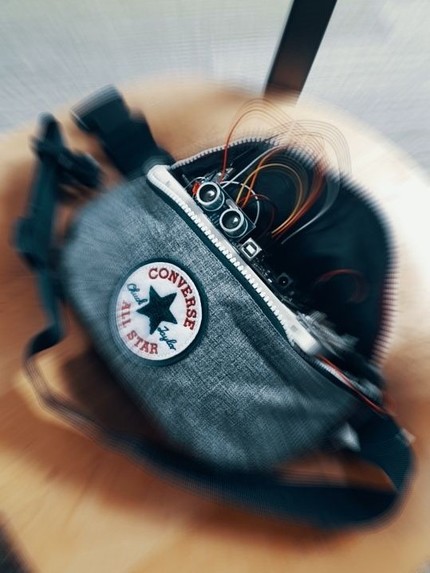
The Final Masterpiece
-
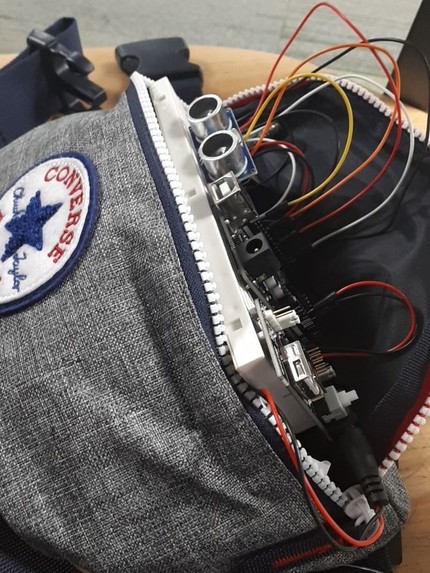
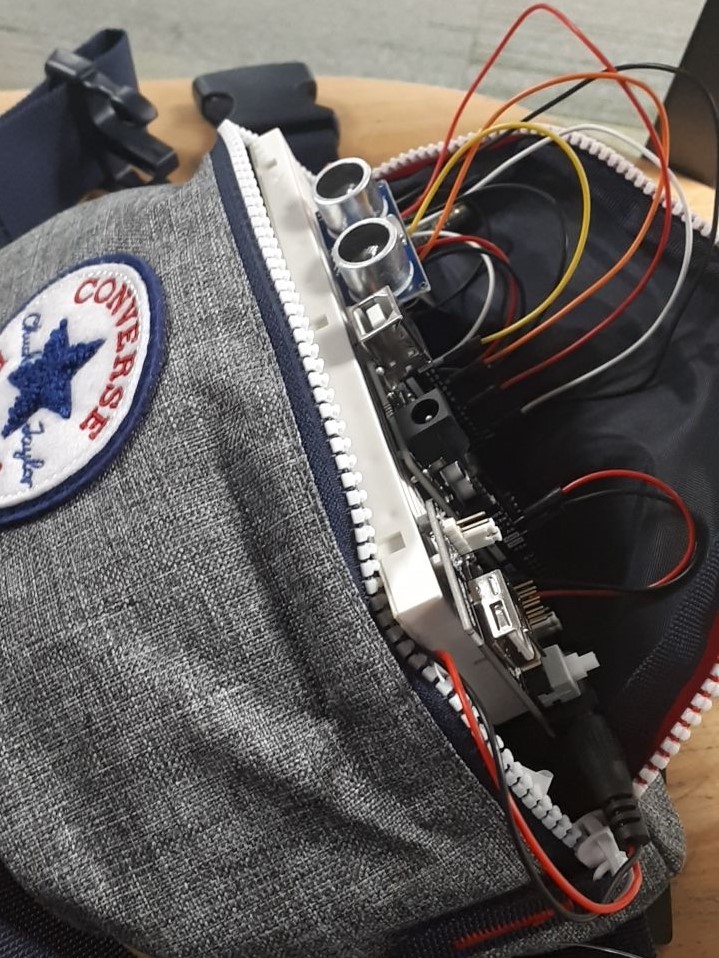
Side view of the final ACIS prototype
-
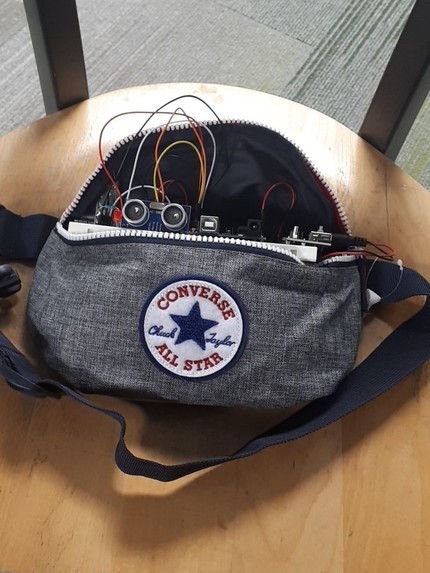
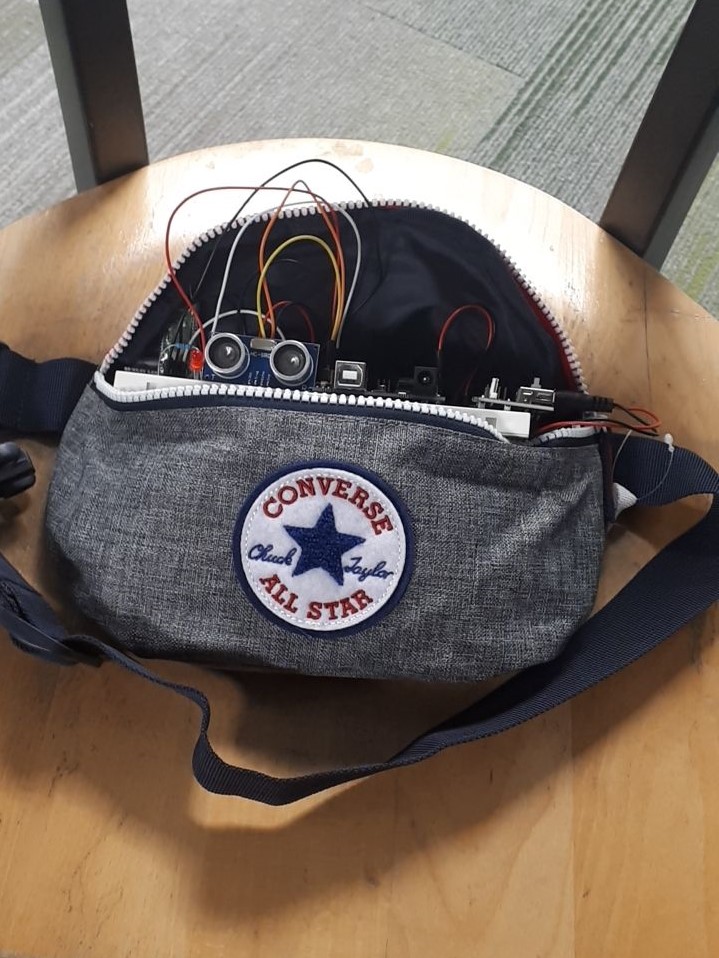
Front view of the final ACIS prototype
-
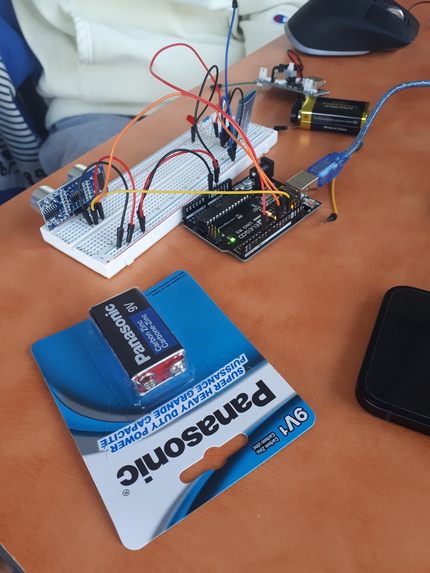
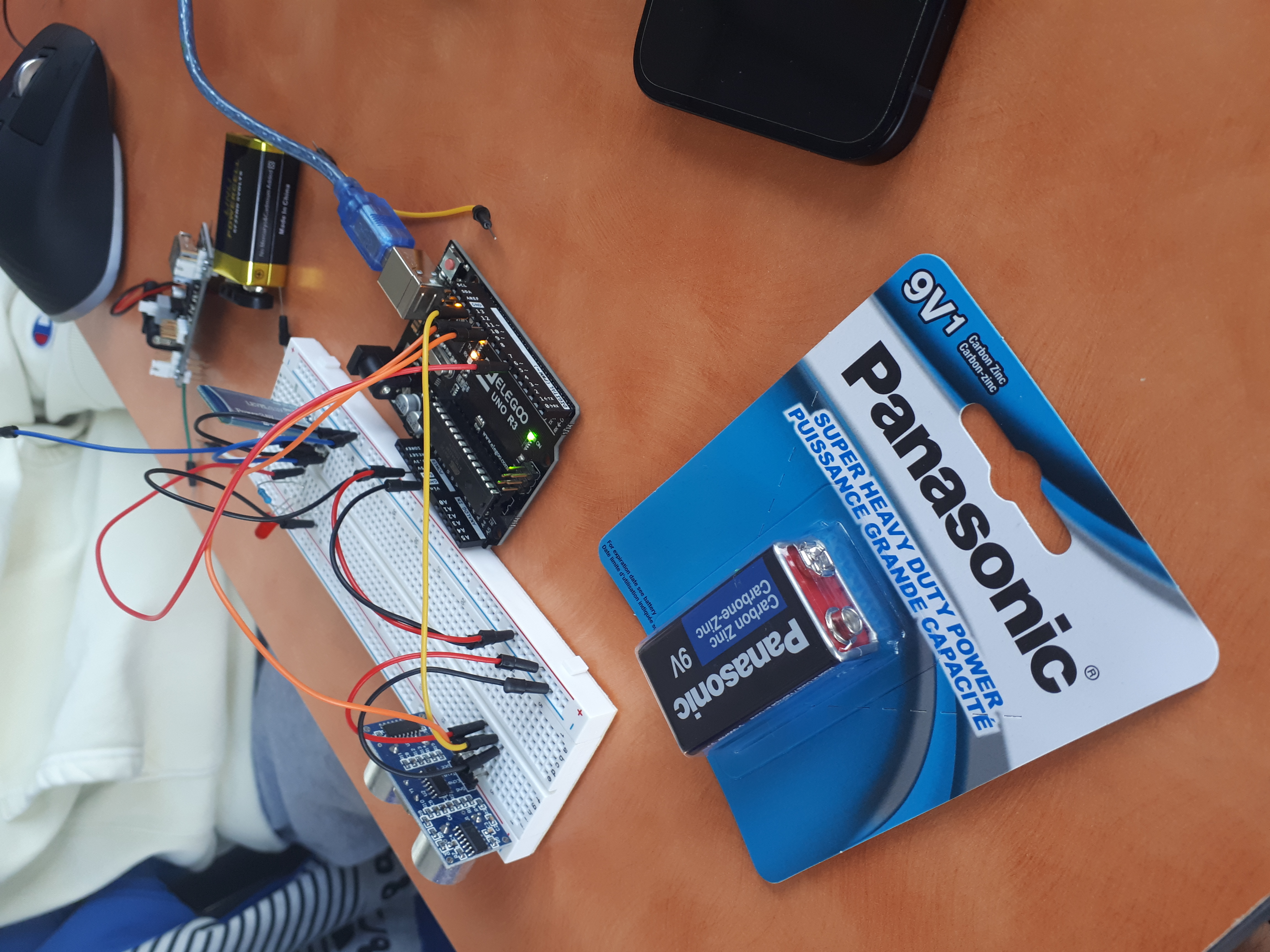
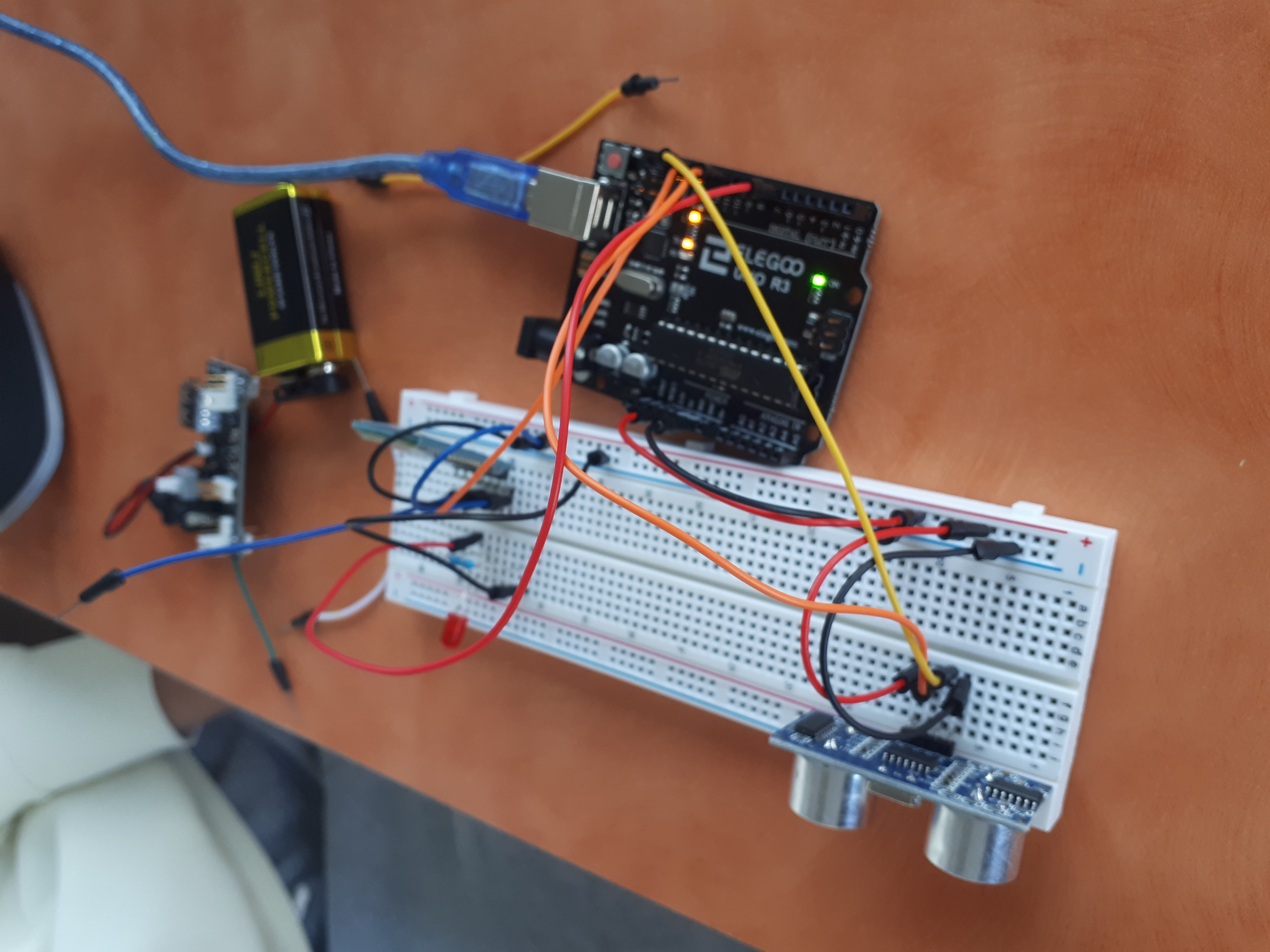
Internals (battery and outlook)
-
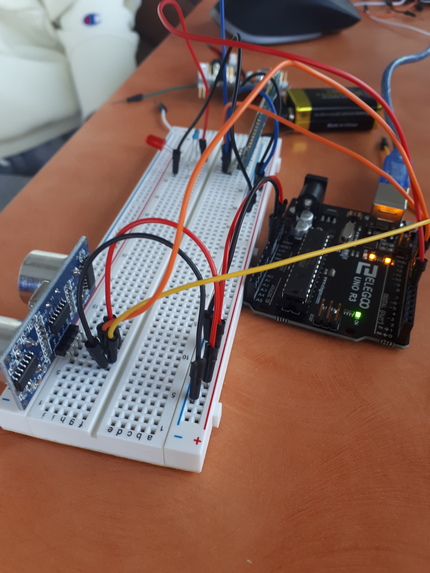
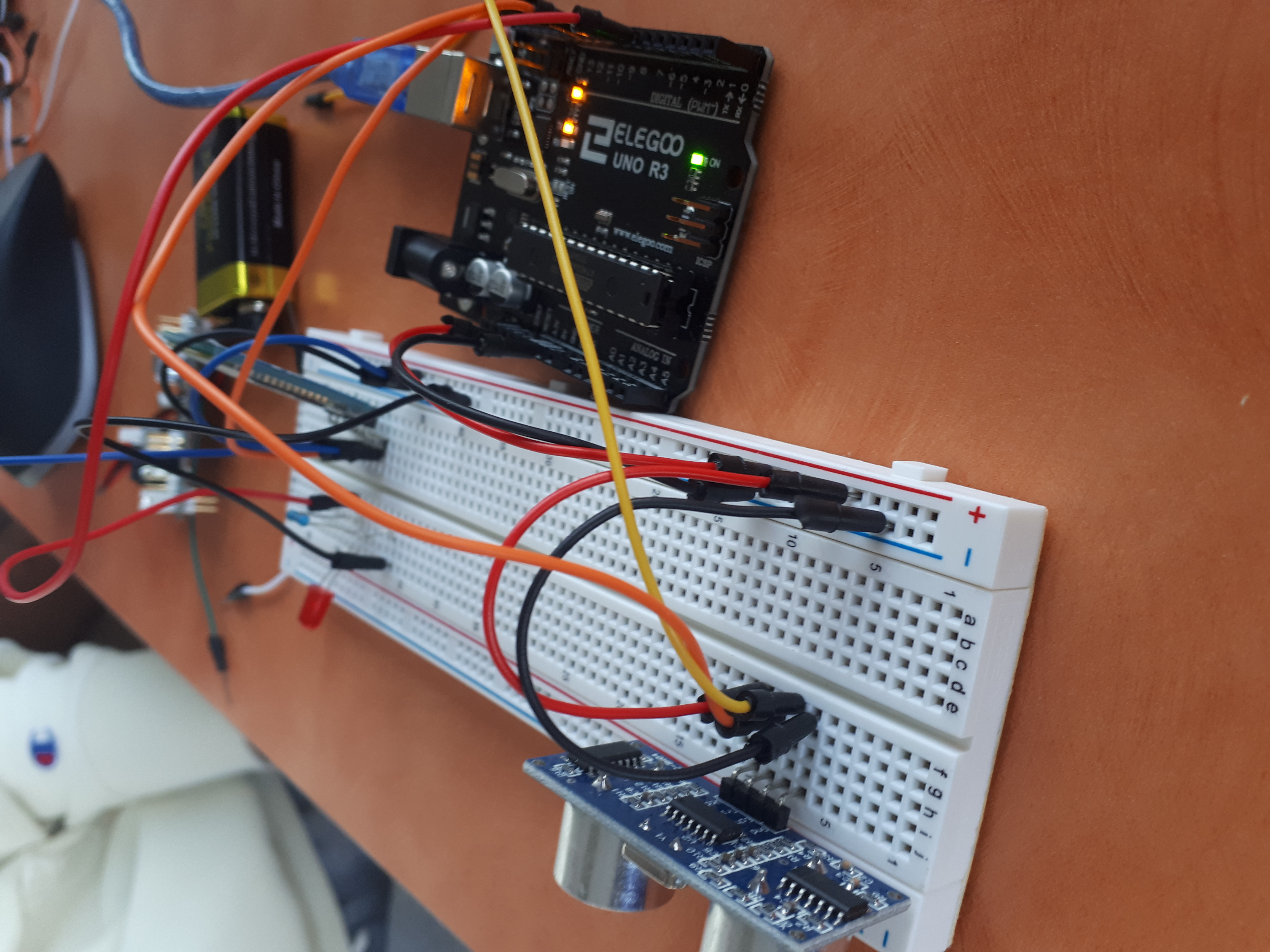
Internals (wiring and layout variations)
-
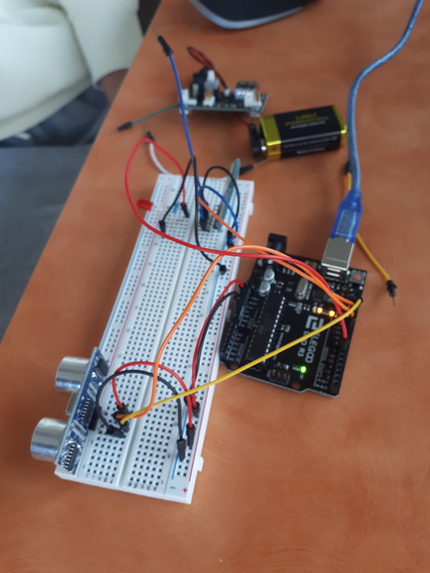
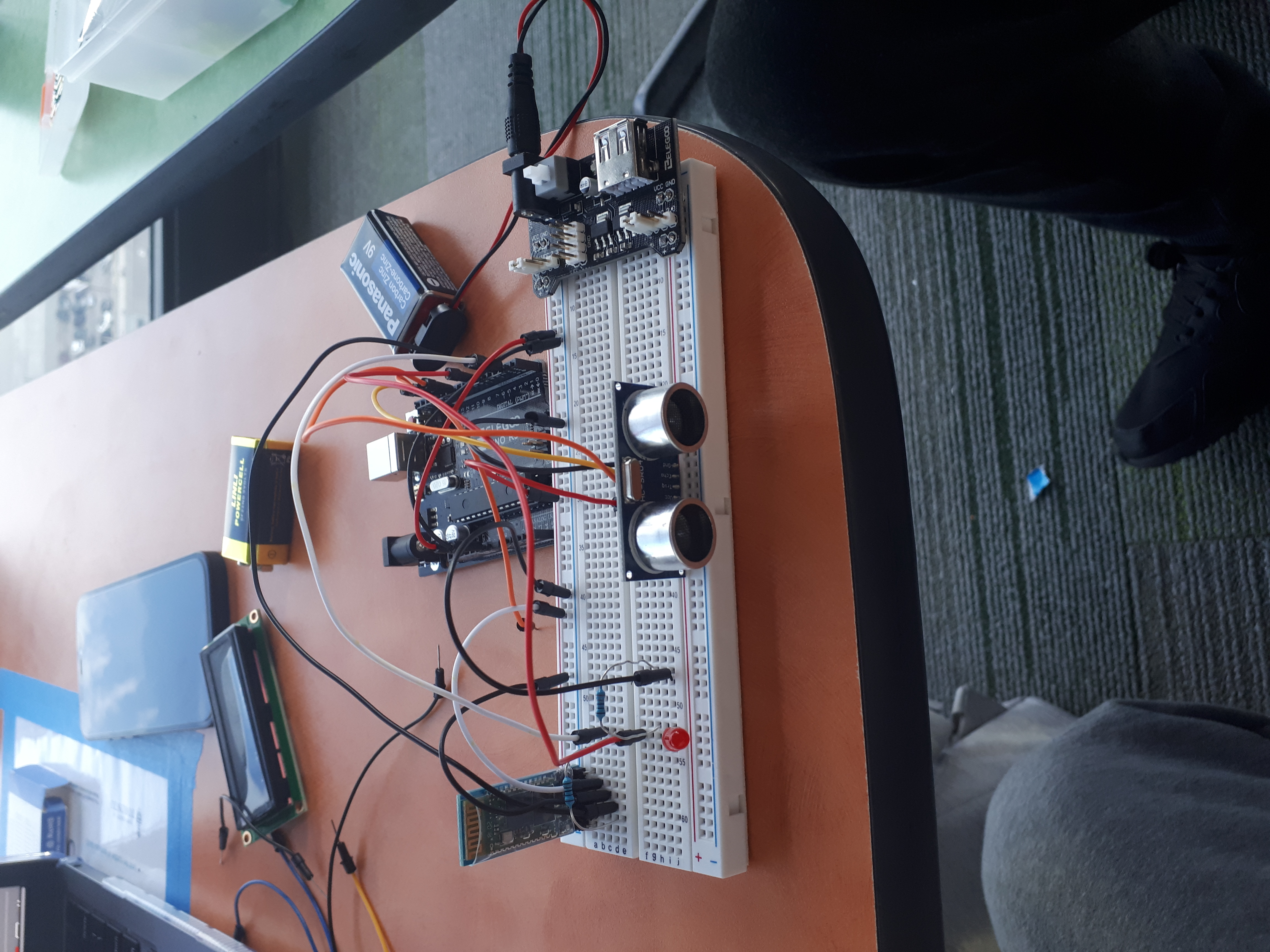
Internals (HC-05 connection and placement)
-
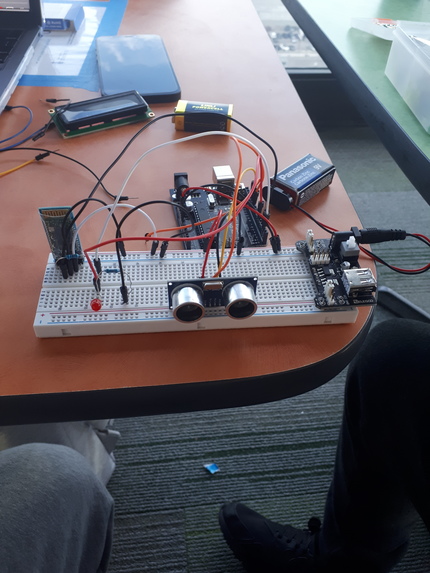
Internals (final layout and placements)
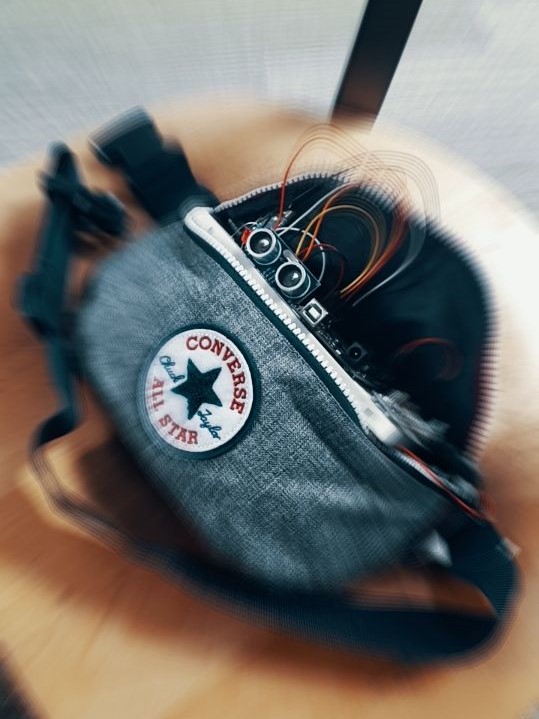
Inspiration
Our team consists of freshmen Electrical and Civil Engineers looking to solve a simple yet not-so-simple problem, which is social distancing. Living in the age of a pandemic, we noticed that it’s really hard to social distance in both regular and working environments, if only we could build something that regulates this… so we built it! We combined a system that can both stop you from violating social distancing rules while tracking your distance, and also acting as proper swag!
What it does
To start, a user has to wear the ACIS which is designed to be very user-friendly. The device senses the presence of people in front of the user, when it detects another person in close proximity (violating the social distance regulations) it will light up an LED which will alert the user that they are too close. As soon as the user moves the required distance away from the person, the light will turn off. In this process, the amount of time that the person is violating the social distancing regulations is also recorded. This data is then sent to an app that is designed specifically for the ACIS. The app sends a message to the user alerting them that they are not following social distancing protocol.
How we built it
We used the Arduino for the proximity detecting aspect of the project. The Arduino uses an ultrasonic sensor to detect people in front of the sensor. If the person is in a 1 meter proximity with the user, a red LED light would light, which indicates that you are too close to the person next to you and you should maintain your distance. The system is activated by an app coded in the MIT app inventor, which sends signals to the Arduino to start the program and receive signals from the Arduino to know whether or not the user is social distancing.
Challenges we ran into
- Finding out what parts we need and how to put them together. Also finding where to find the parts and planning out how to get them was a challenge as well.
- Making the app and connecting to the Arduino was considerably challenging given that the team didn’t have previous experience with Bluetooth capabilities in Arduino so it was something new to us. It was also challenging to send signals from Arduino to the app and vice versa.
- Time limit was definitely a struggle for us because we only had 24 hours to build the prototype and there were a lot of errors that happened over that time frame, so we had to use our time wisely and it was a bit difficult to fully debug certain faulty features, but we tried our best to ensure that the prototype has the expected functionality.
Accomplishments that we're proud of
- We were able to come up with a way to help improve the safety and health of people during the pandemic.
- We were also able to come up with another application to help those with disabilities maneuver in public.
- We were able to successfully connect and allow hardware to communicate with software, while having full control of the logistics.
What we learned
- How to integrate software into hardware and how to ensure that both work together.
- How to use MIT app inventor to create apps and how to connect the Arduino with a smartphone using the HC-05 Bluetooth module.
- How to assemble electrical circuits using Arduino kits.
- How to code in Arduino/sketch
What's next for The Anti-Collision Intelligent System (ACIS)
The current model that we now have is only a prototype. To ensure maximum portability and durability, we would need to move away from using a breadboard and jumper wires for our connections and instead print out a custom PCB board where we can solder the components on directly. Also, we can make the app more advanced and modify the sensors and refine it to differentiate between people and objects as well as increase the proximity range. We can also improve the form factor by making the whole system more compact and comfortable for the users.
Built With
- android
- arduino
- bluetooth
- hc-05
- ide
- mit-app-inventor
- sketch
- ultrasonic-sensor


Log in or sign up for Devpost to join the conversation.