Inspiration
I wanted to create a peaceful collecting game that captures the excitement of discovering something rare without relying on combat. I was inspired by tropical exploration, insect research, creature collecting, and the social excitement of showing friends an unusual discovery.
That idea became The Antennal Isles, a colorful chain of fantasy islands where players begin as explorers and gradually become insect researchers, rangers, and sanctuary owners.
About the Project
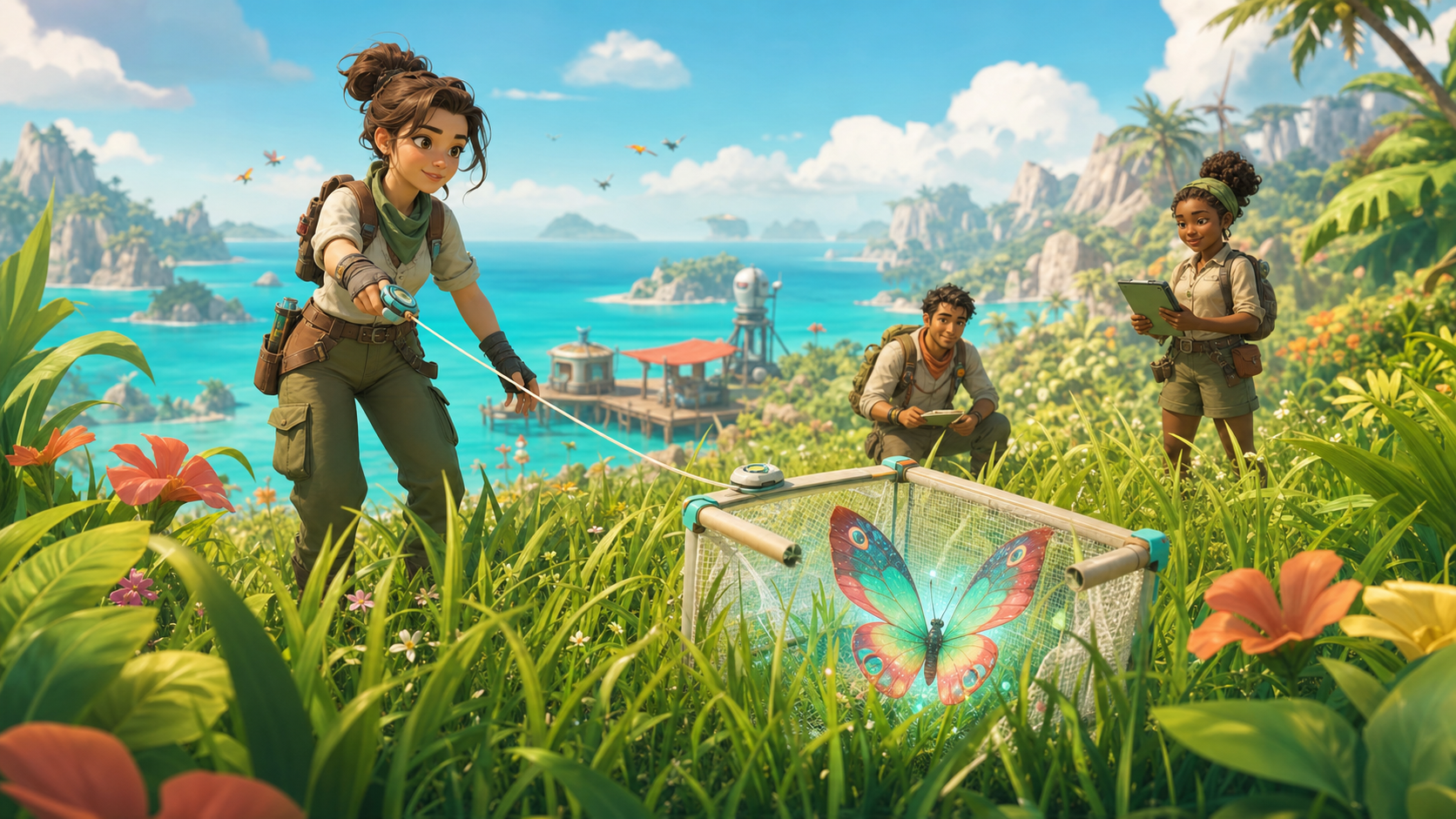
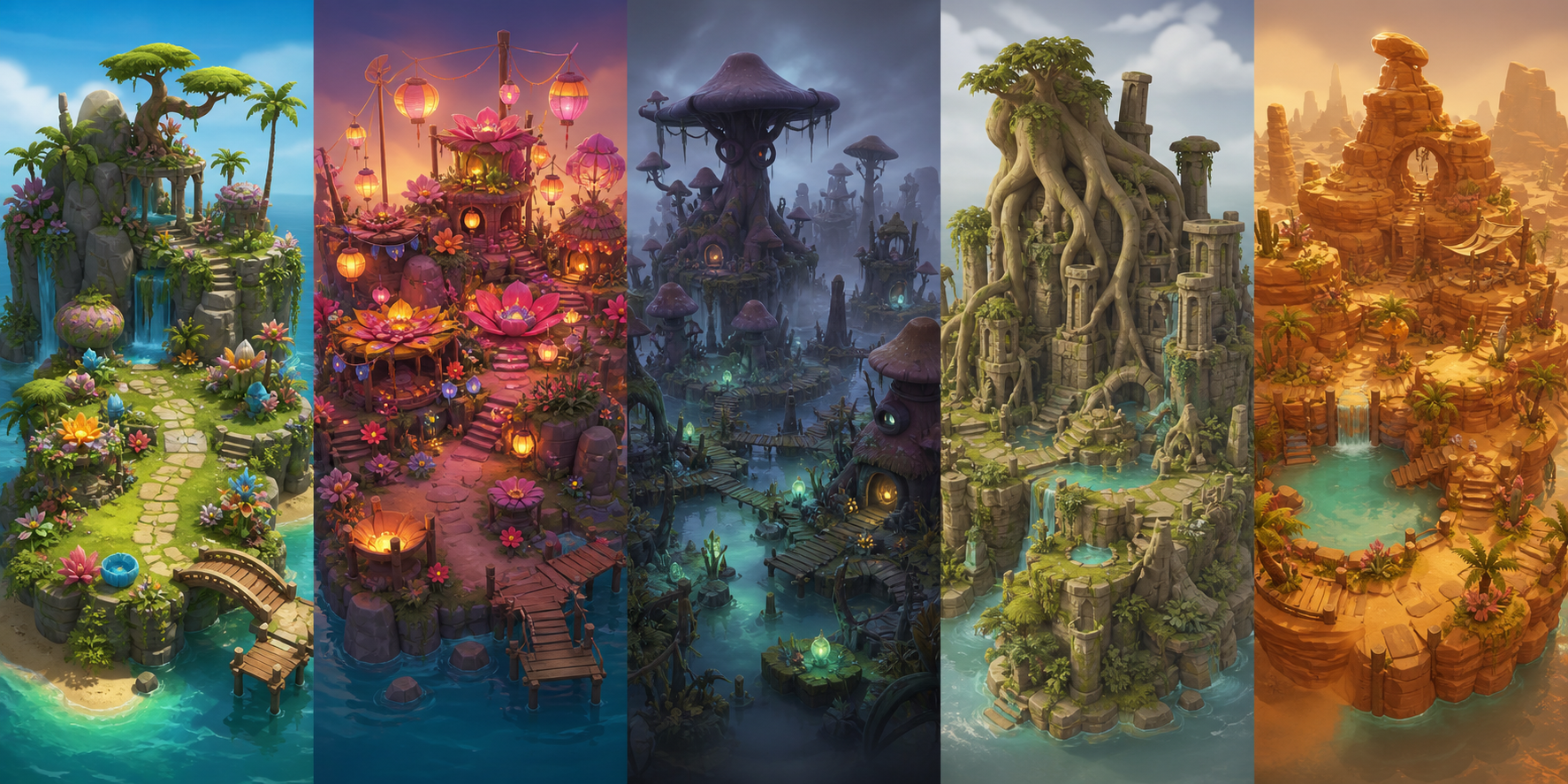
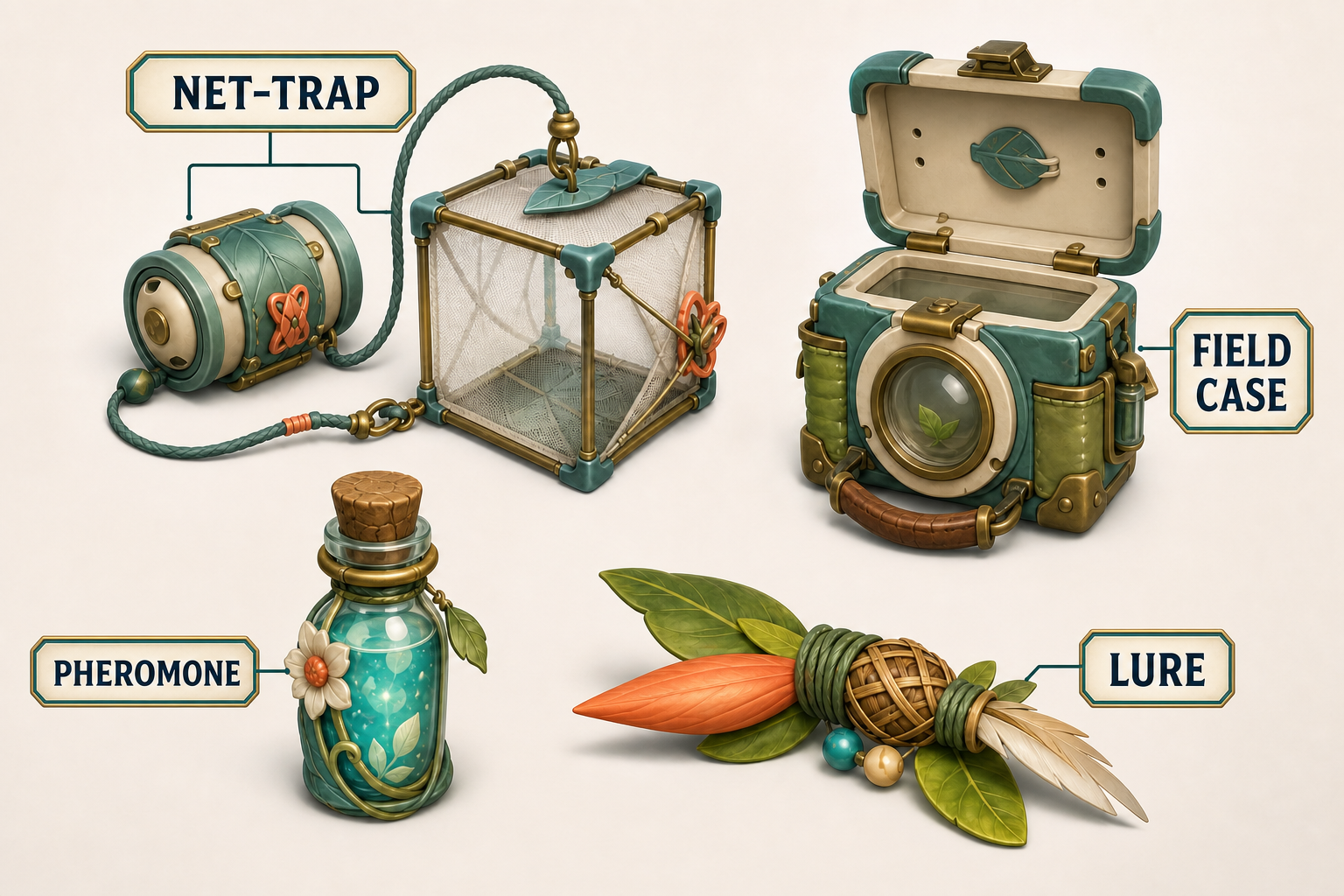
Players travel between five themed islands, deploy an expandable Net-Trap, and wait for an insect encounter. When something enters the trap, the owner receives a private capture challenge. Nearby players can watch the trap deployment but do not see the prompts or rarity until the insect is revealed.
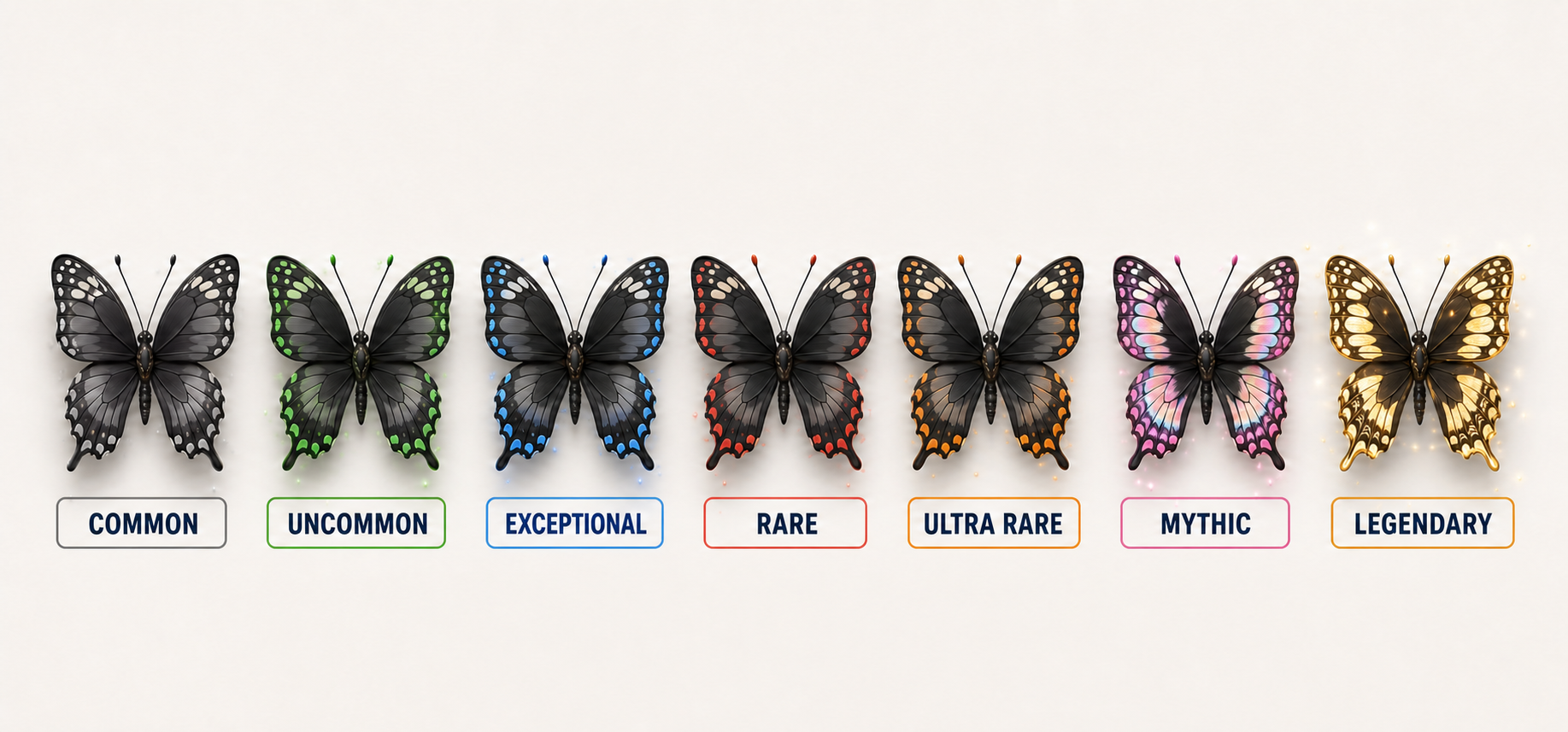
Every insect has a recognizable species, body size, rarity tier, island habitat, and collectible appearance. Rarity is communicated through accent colors:
- Common: Gray
- Uncommon: Green
- Exceptional: Blue
- Rare: Red
- Ultra Rare: Orange
- Mythic: Pink
- Legendary: Gold
Captured insects can be kept inside the player's Field Case for display or sold to sanctuary representatives for Credits. Selling an insect removes the displayable specimen but permanently records the discovery in the player's Index. This creates an important decision: keep a prized insect for social prestige or sell it to improve equipment and unlock new opportunities.
How I Built the Design
I began with the capture interaction and designed the rest of the experience around it. The main loop became:
- Explore an island.
- Select a Lure and Pheromone.
- Deploy one Net-Trap.
- Complete the private capture challenge.
- Reveal the insect.
- Keep or sell the specimen.
- Upgrade equipment and earn island permits.
I then developed the progression systems, equipment roles, island environments, rarity language, player journey, visual direction, and production plan. The design was organized into four connected artifacts: a Game Design Document, Player Journey Map, Visual Concept Package, and Production Plan.
Challenges
The largest challenge was connecting collecting, progression, and management without making the experience feel repetitive. I addressed this through changing island habitats, daily materials, missions, equipment loadouts, specimen sizes, rarity tiers, and the keep-or-sell decision.
Another challenge was supporting multiplayer while keeping capture challenges focused. Making each challenge private protects the player's concentration and preserves the surprise, while the public reveal creates a shared social moment.
What I Learned
I learned that collection games become stronger when every discovery affects several systems. A captured insect can advance the Index, complete a mission, generate Credits, increase Field Insight, become a display specimen, or help unlock another island.
I also learned the importance of controlling scope. The first version focuses on proving one satisfying capture loop, persistent specimen ownership, meaningful equipment progression, and a strong first island before expanding across the complete archipelago.
Built With
- image
- openai
- pillow
- python
- reportlab
- typescript


Log in or sign up for Devpost to join the conversation.