-
-
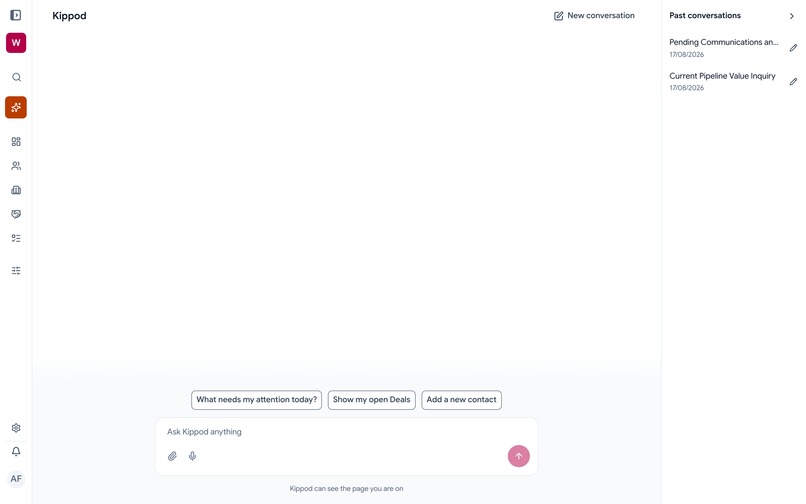
Kippod AI Page
-
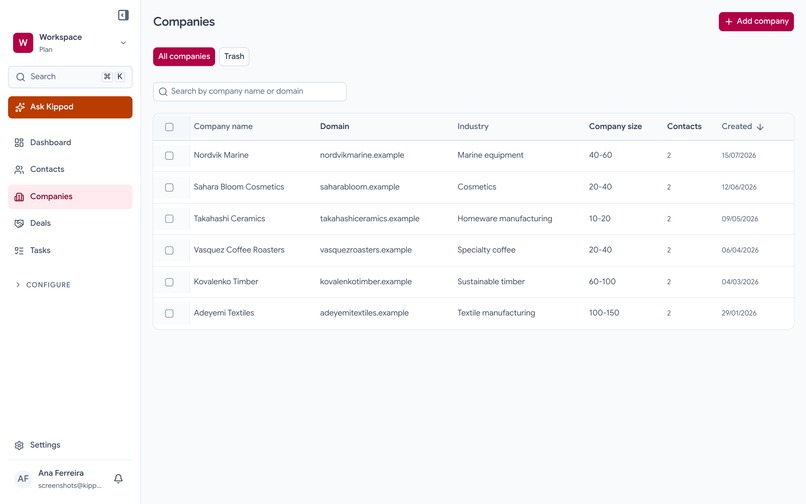
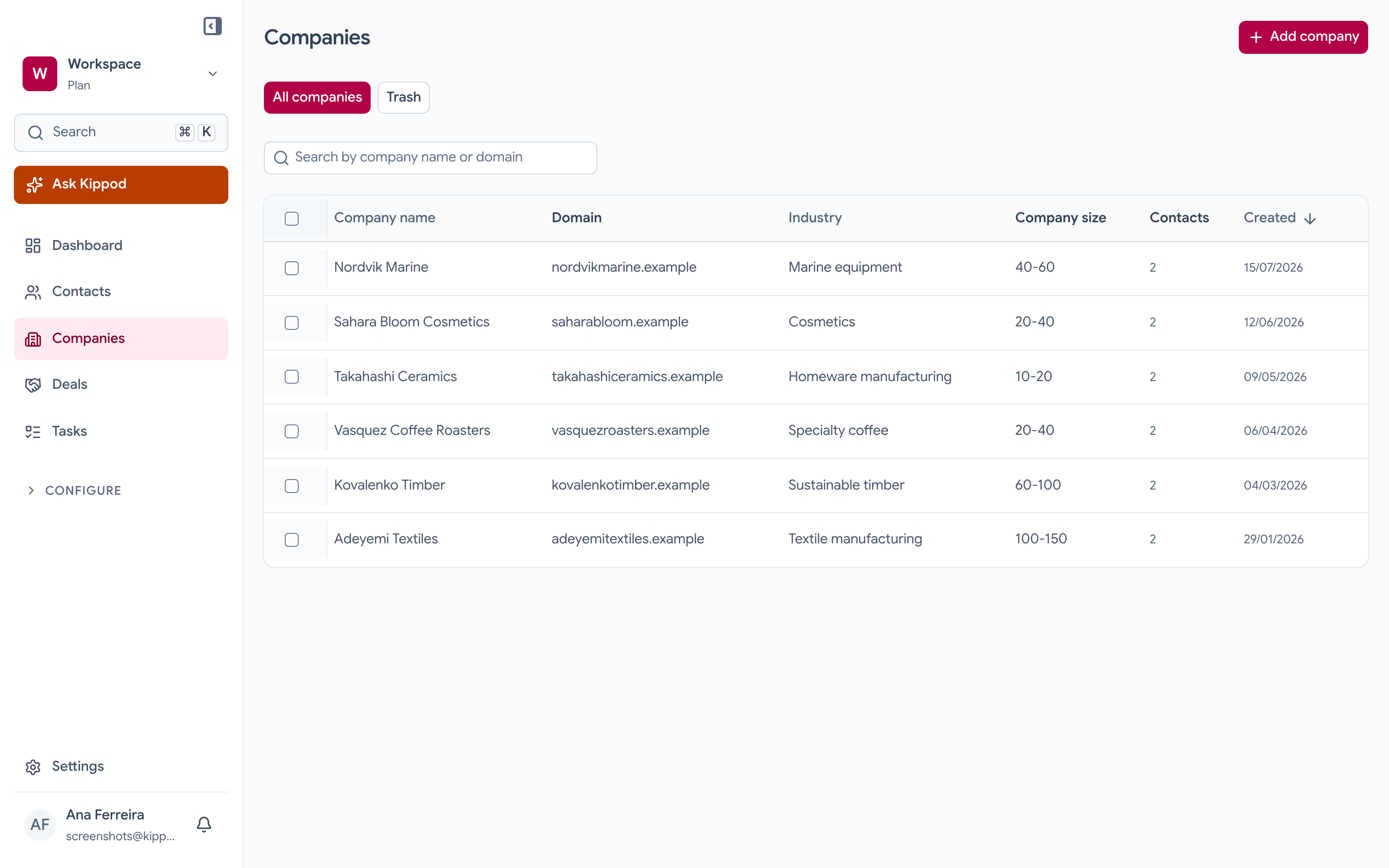
Companies list
-
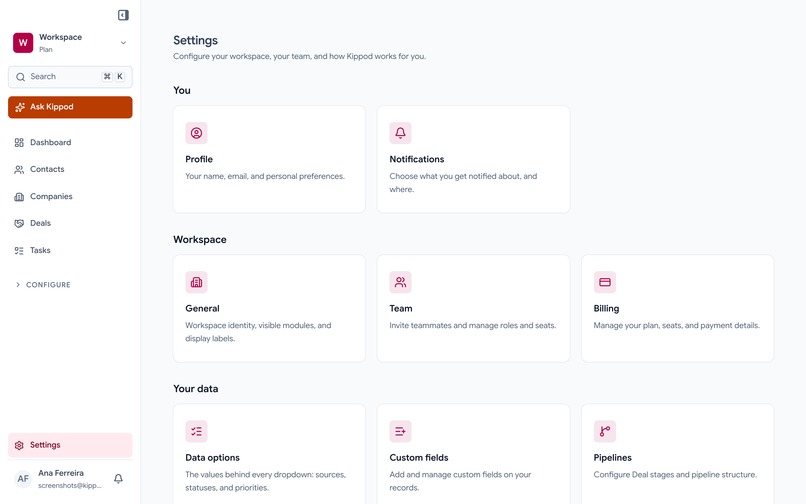
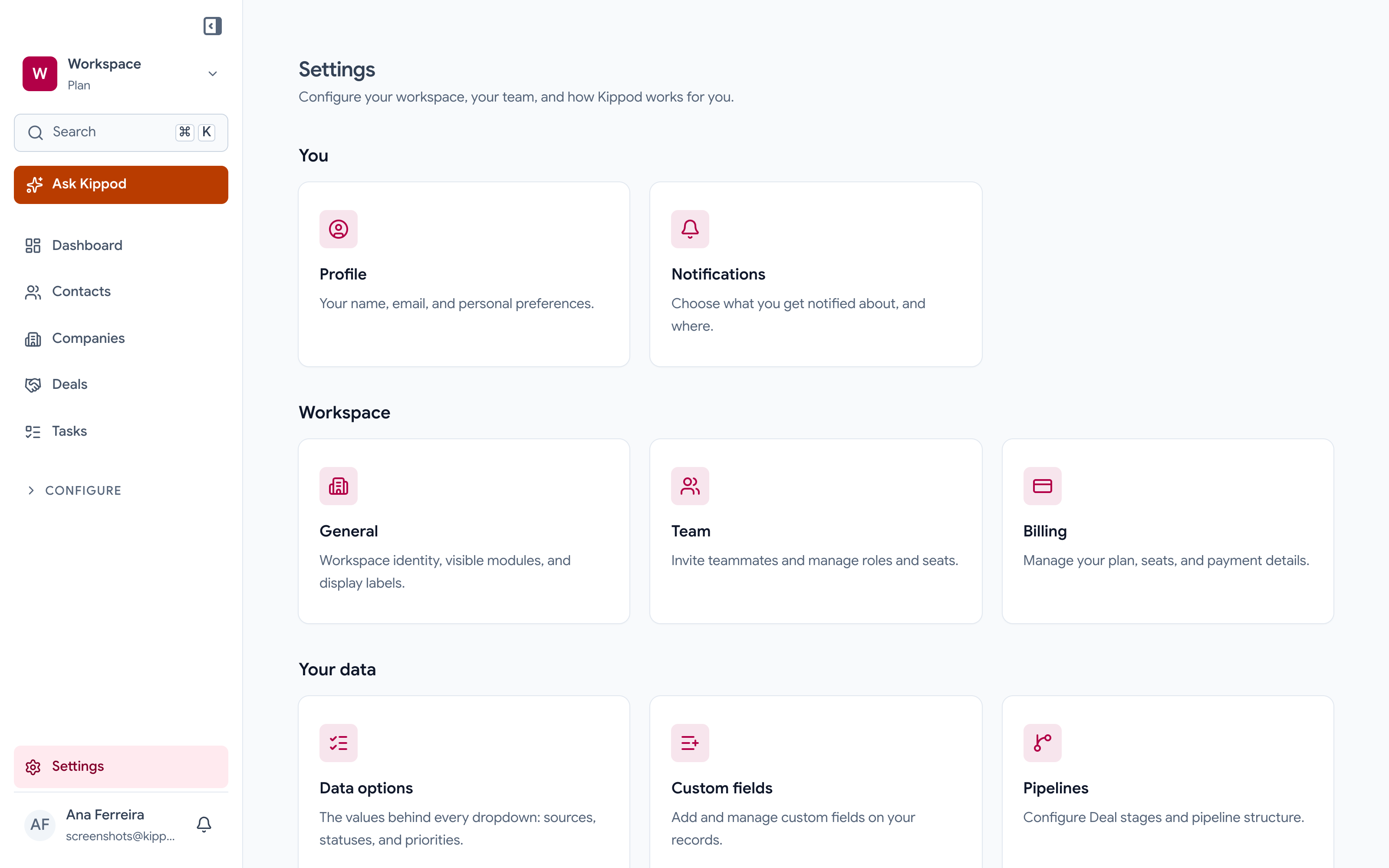
Settings Page
-
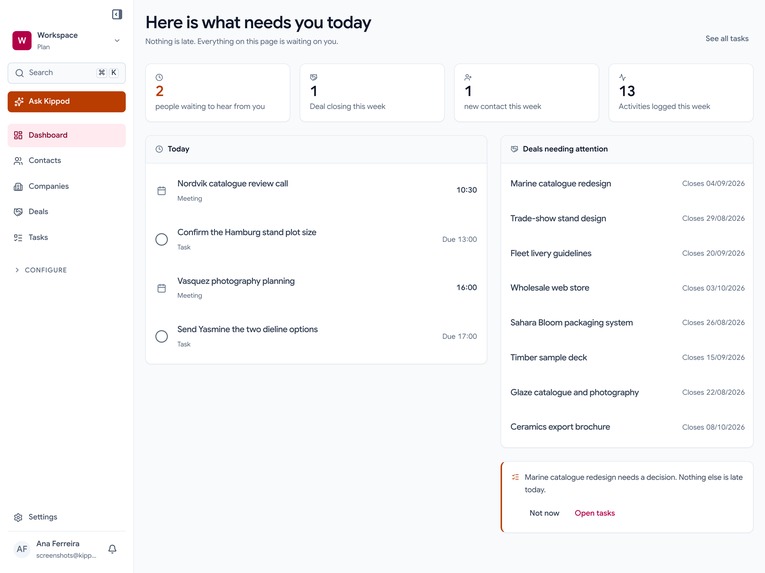
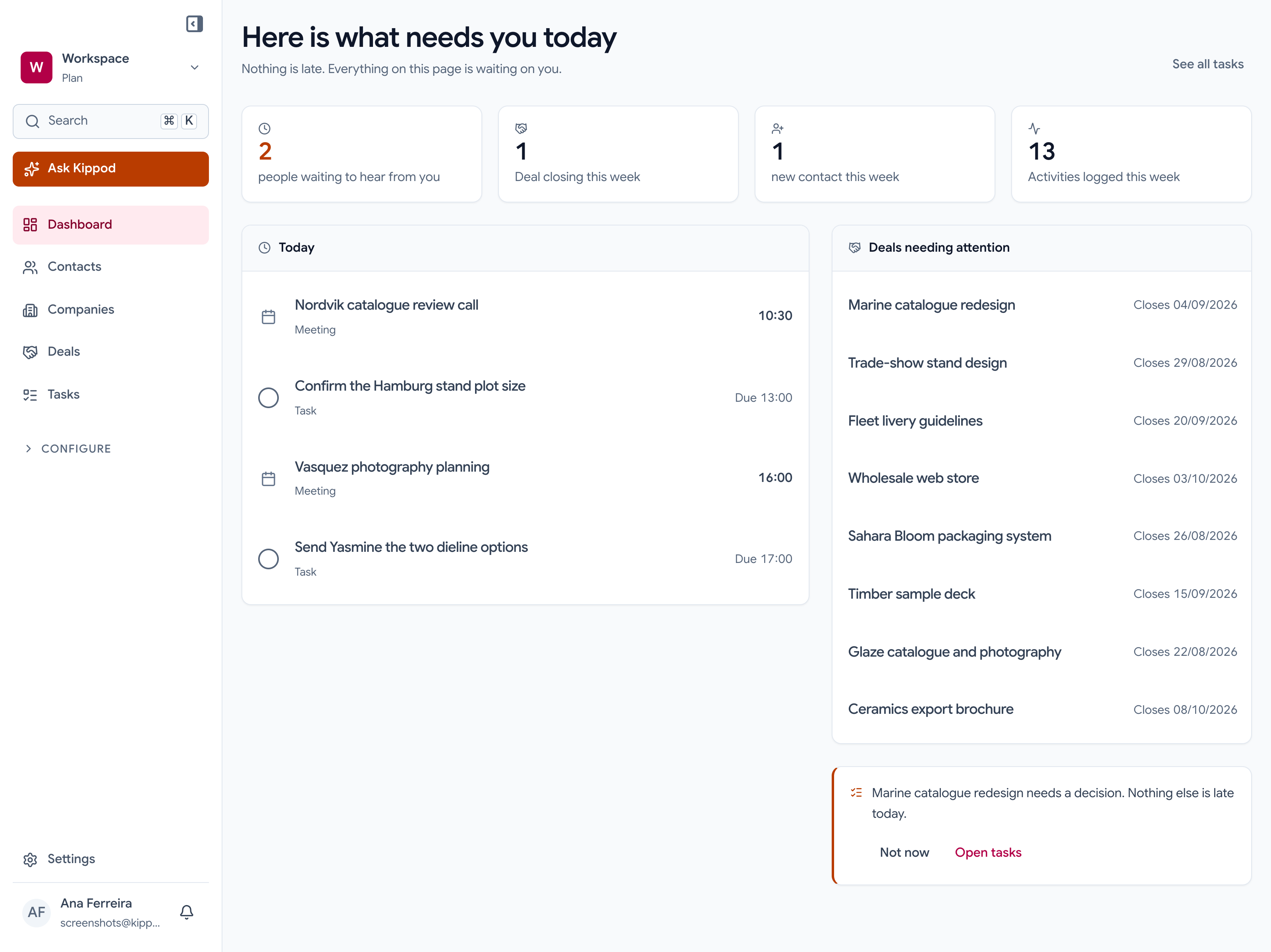
Kippod Dashboard
-
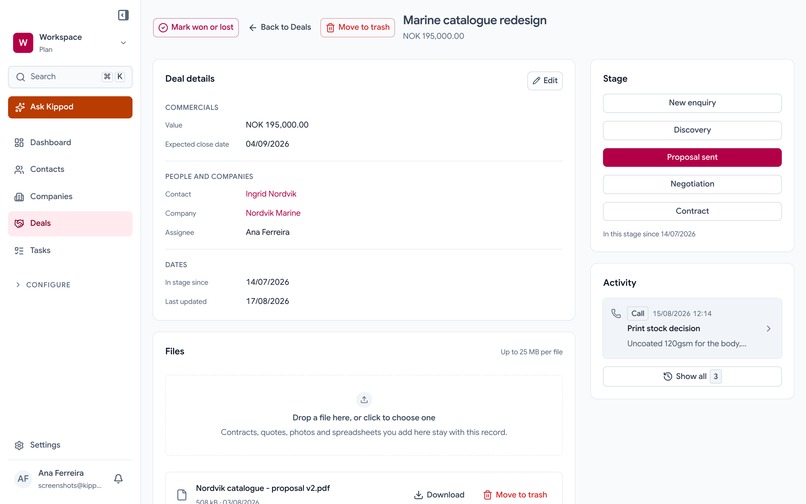
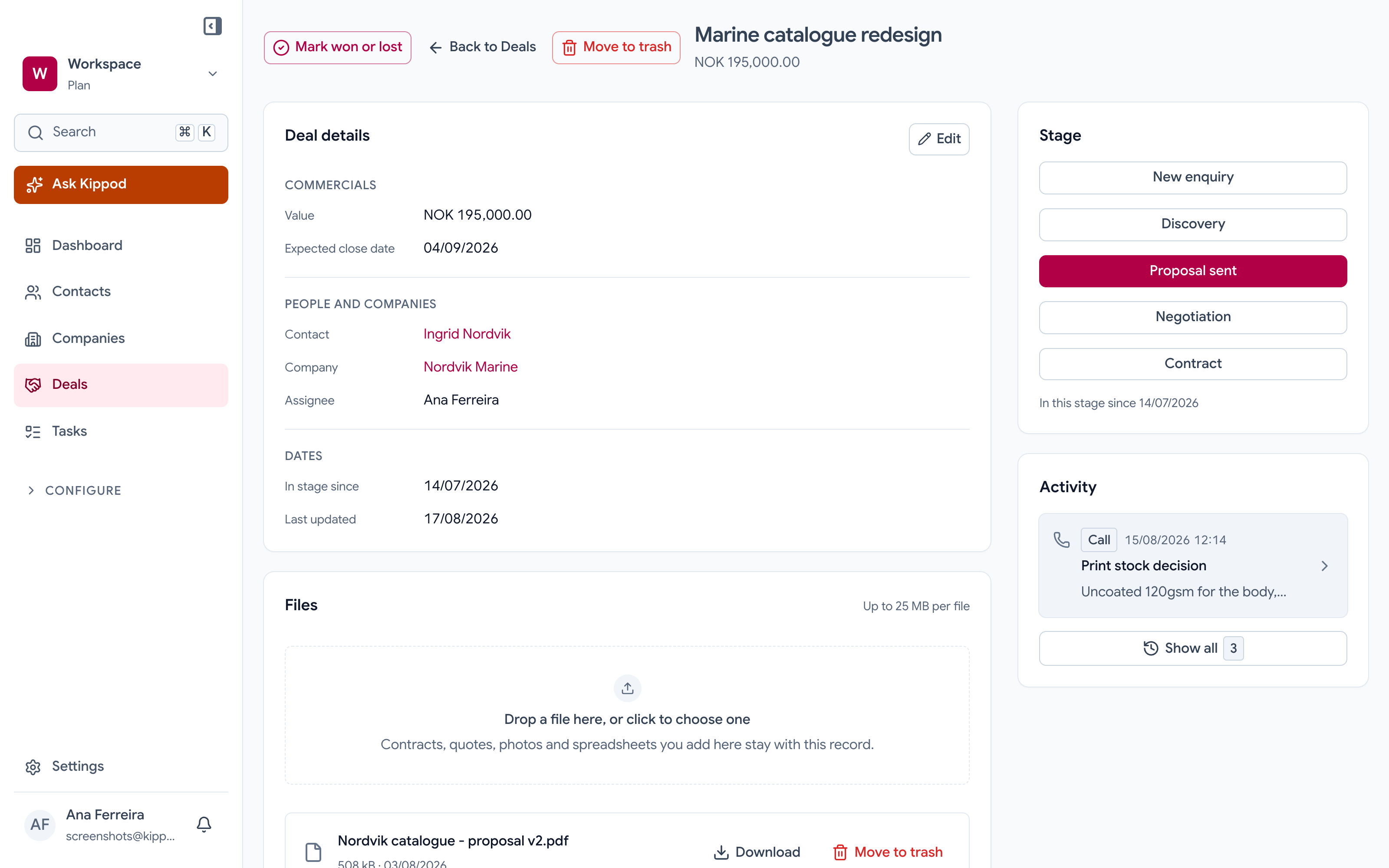
Deal Page
-
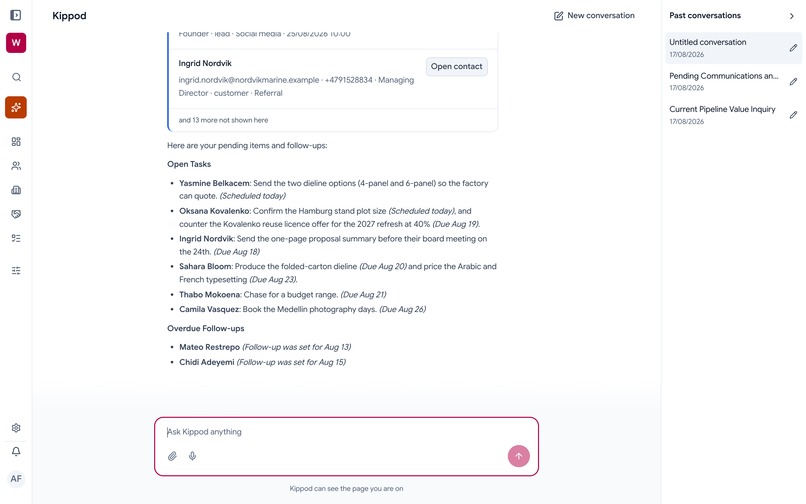
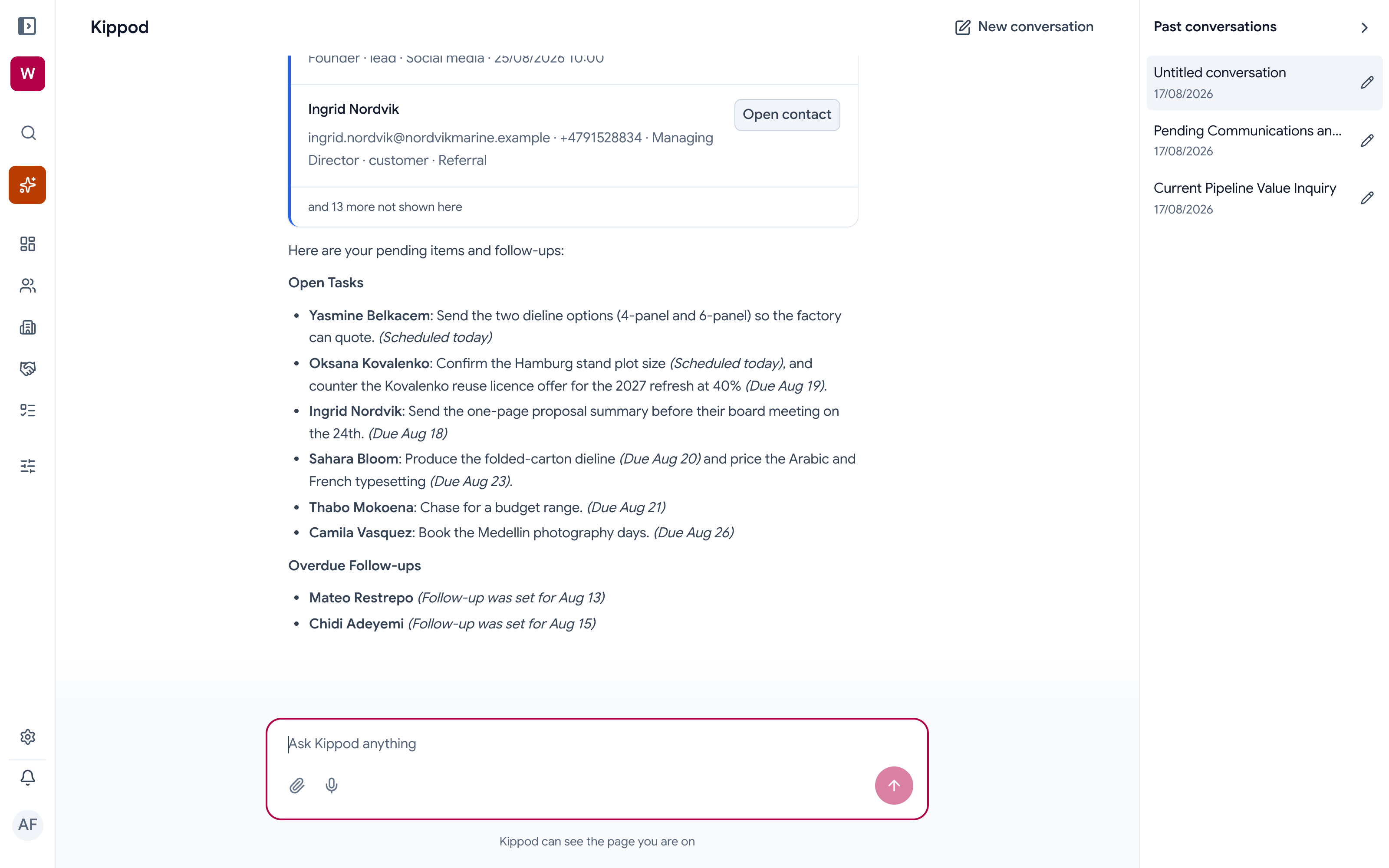
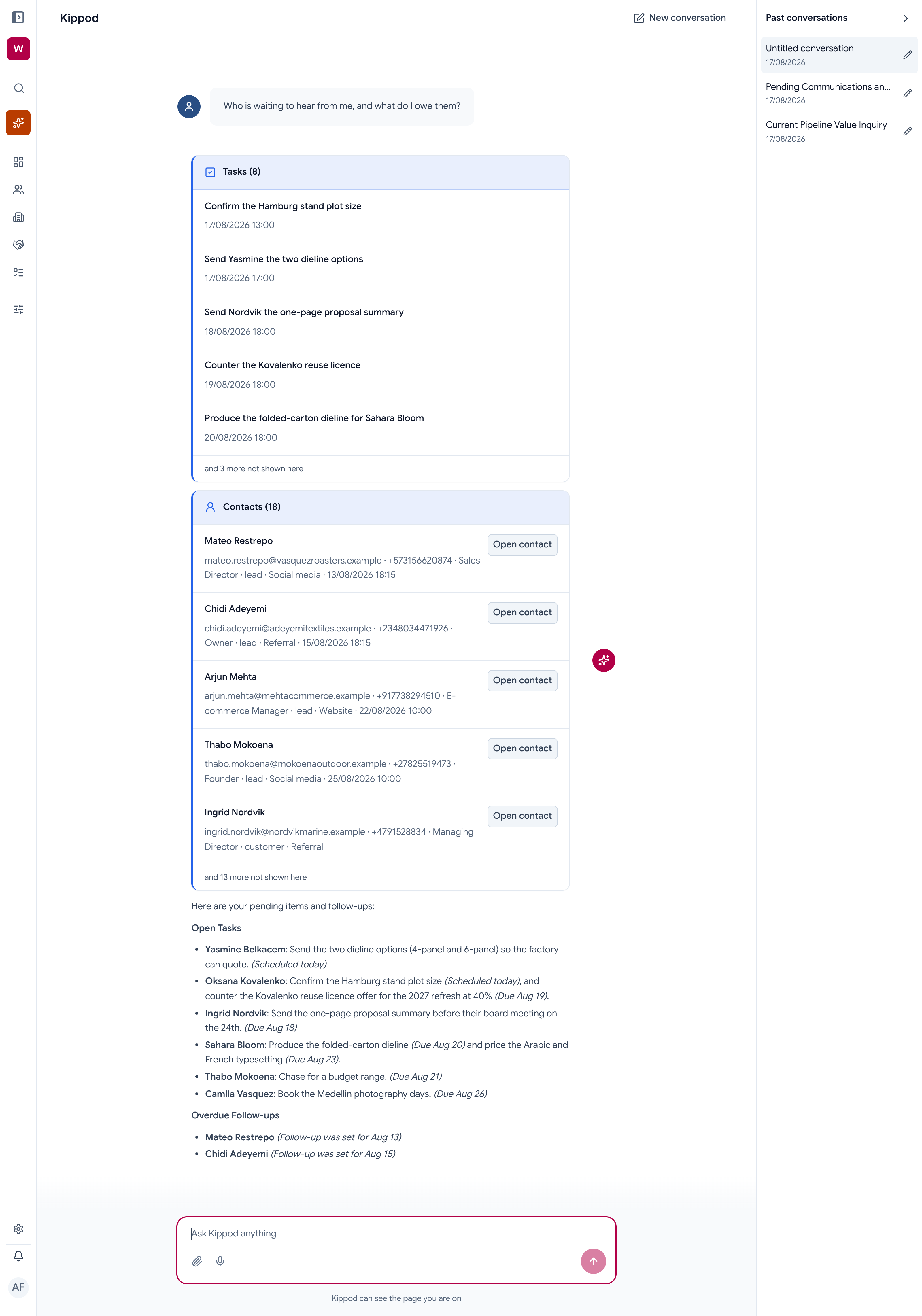
AI Conversation
-
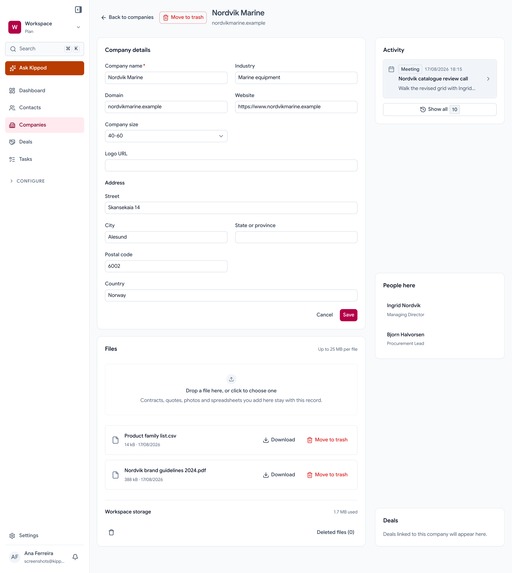
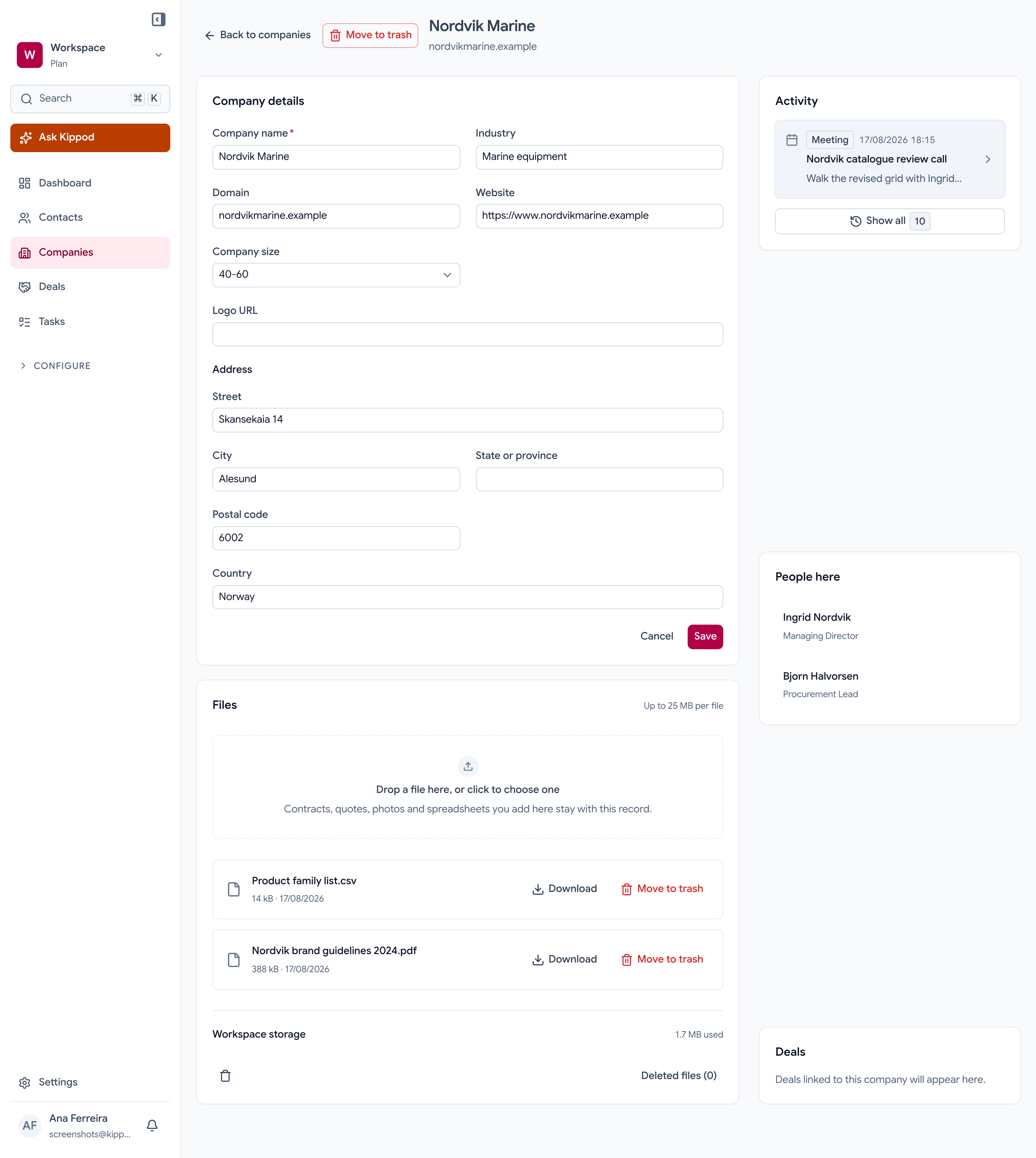
Company Page
-
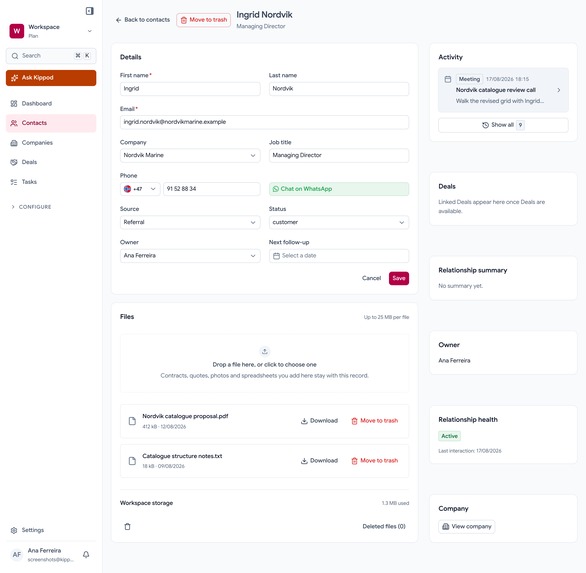
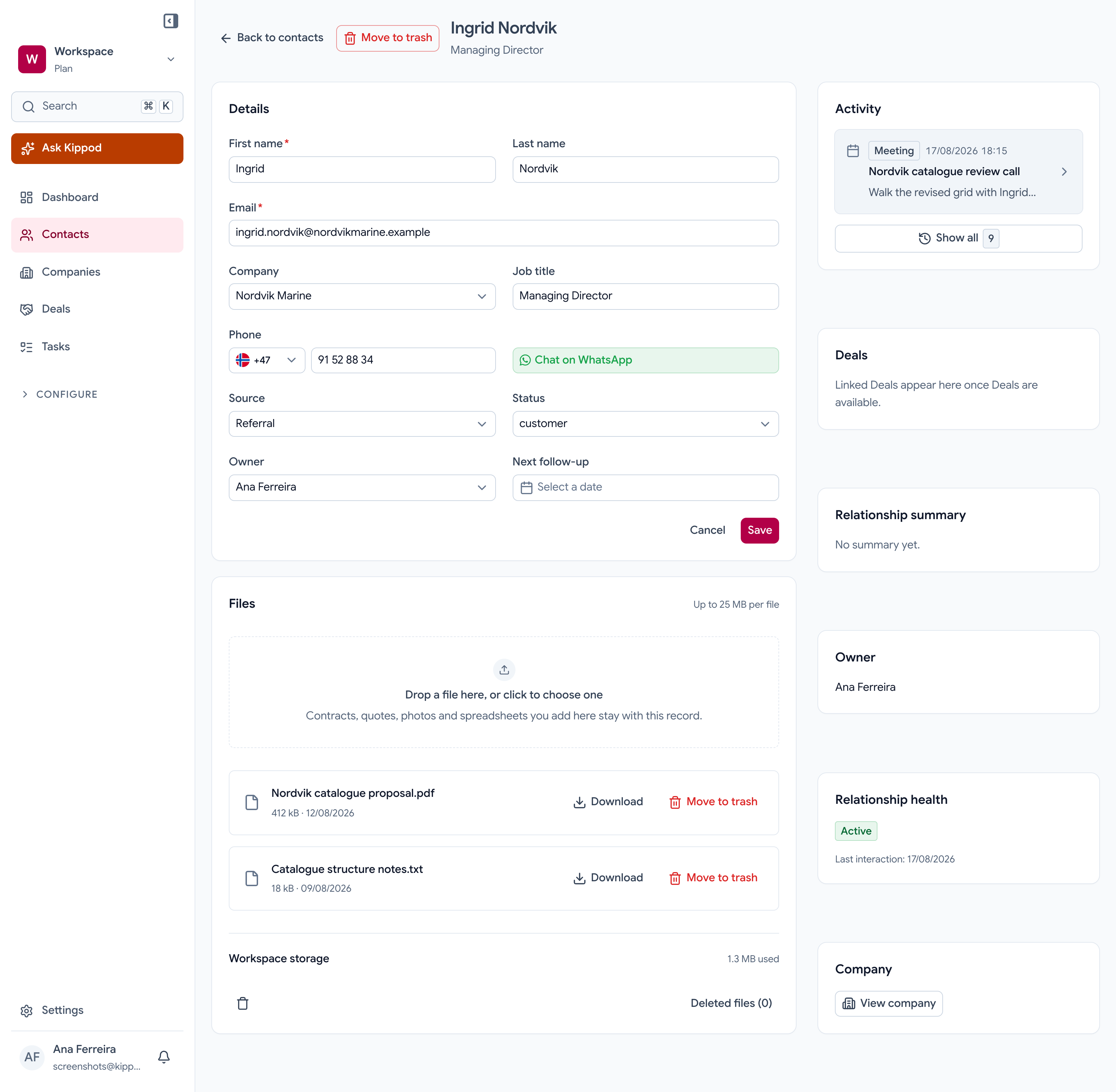
Contact View
-
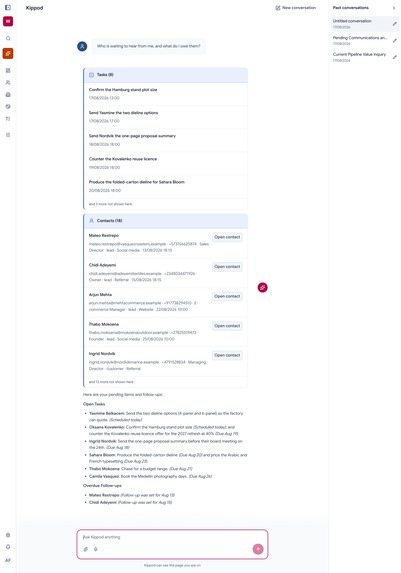
Full AI Conversation
-
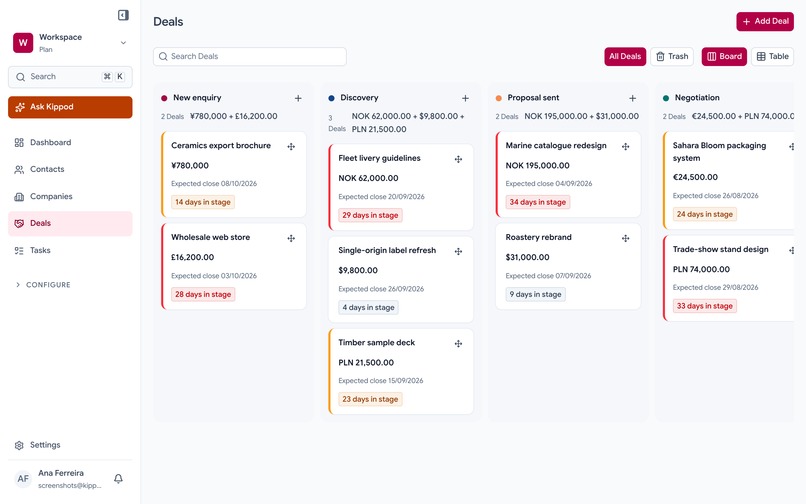
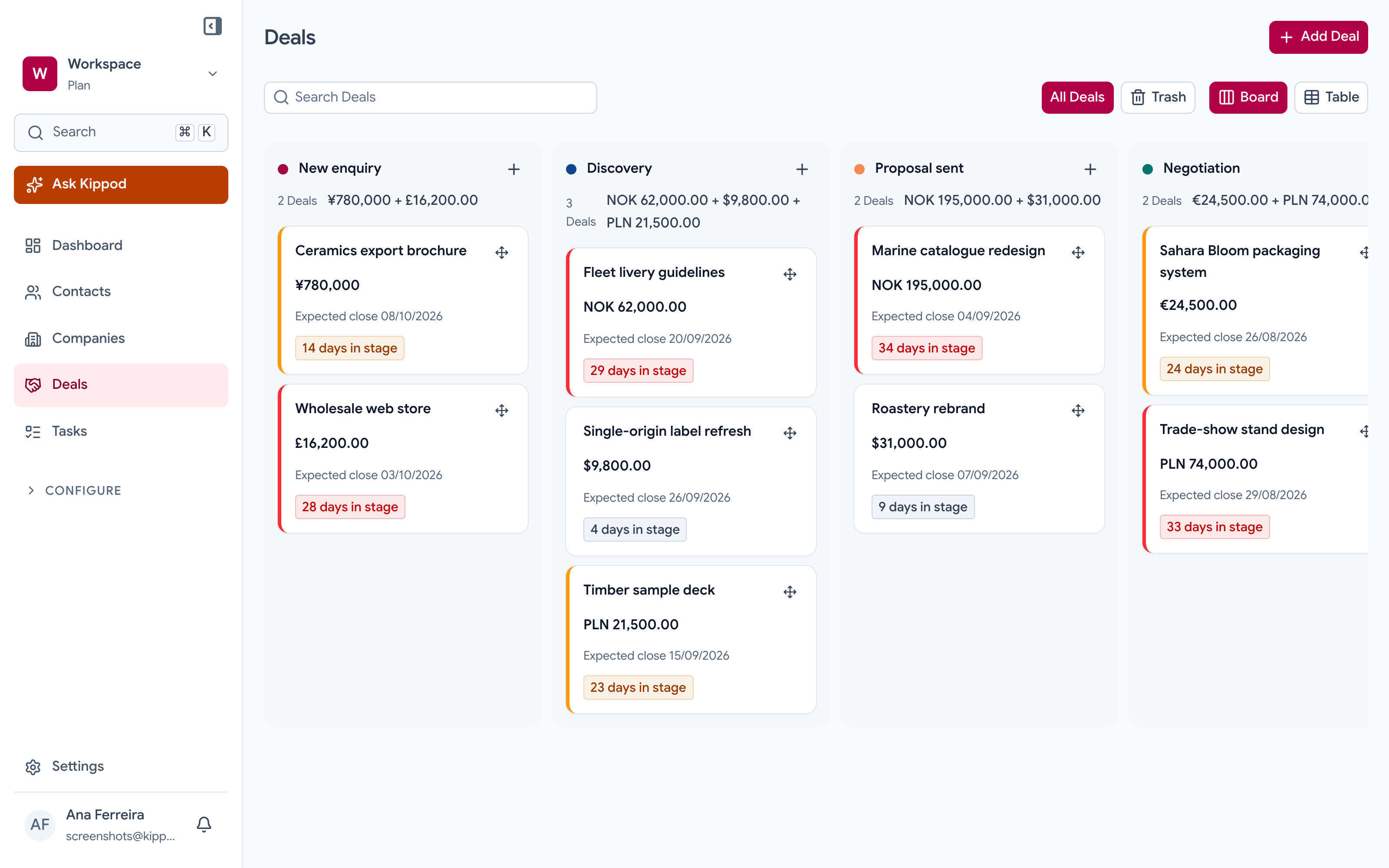
Kanban View Deals
Inspiration
We both began as freelancers and still work closely with SMBs. We have watched capable people, focused on consulting, design, retail, or any other service, spend hours learning CRM setup and administration before the software could help them. It was obvious that this is not the optimal way.
Another inspiration came from seeing how CRMs helped those business owners- the help centers. The place where a simple question can mean searching forever through articles, videos, and even courses only to find that the help center has not kept up with the software and things no longer match what you see on screen.
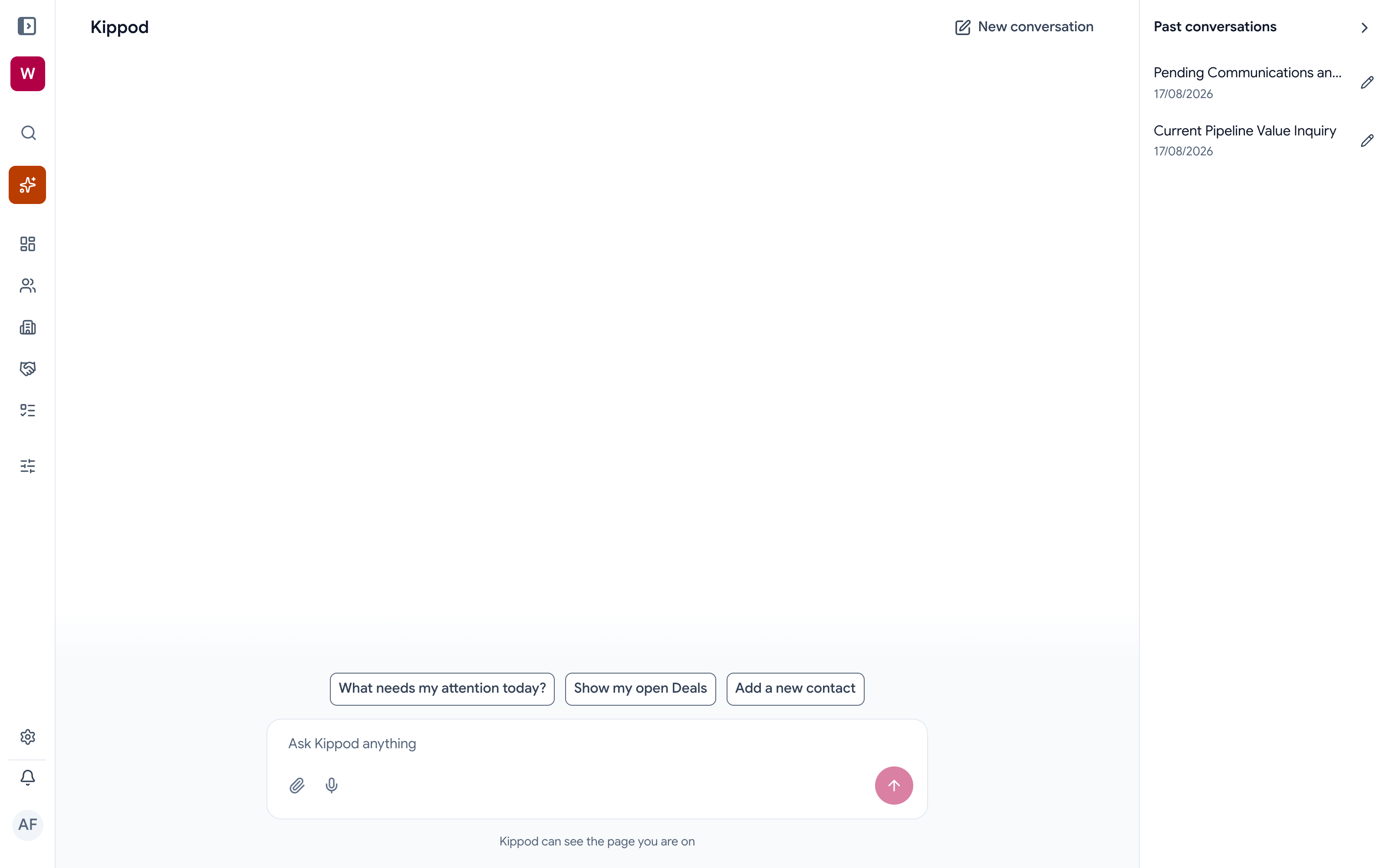
We wanted a CRM that teaches itself while you use it. Kippod uses AI to learn how the business works, answer questions in context, and guide the user through the live product instead of sending them out to the help section.
What it does
Kippod is a CRM built for freelancers and very small businesses. It adapts to how your business already works. During onboarding, it asks you about your process, terminology, and client journey, then configures the workspace accordingly. You can begin with a conversation instead of setting up pipelines, companies, and forms.
Kippod manages client relationships from first inquiry through proposal, project delivery, follow-up, and re-engagement. It keeps contacts, conversations, calls, meetings, tasks, deals, files, and activity history together, with reminders and automations supporting what needs to happen next.
Anything available through the traditional CRM interface can also be requested in plain language: finding a contact, logging a call, creating a pipeline, updating a deal, or building an automation. A user who prefers conversation can work without opening tables or Kanban boards, while the full visual interface remains available to anyone who wants it.
The AI also provides guidance inside the live product whenever you ask. For example, if you want to set an automated reminder for every lead that reaches the third stage of a pipeline, Kippod can point you to the exact controls and guide you through the setup, or better, create the automation itself if you ask it to. Every action remains under your control and requires your confirmation.
How we built it
We used Claude Code to accelerate the development with Opus 5 model. First we created all the architecture ourselves, then we fed Claude our work using specialized skills and dashboards in order for us to build it using AI in a supervised, deterministic way to minimize AI mistakes and/or deviation from the plan.
Challenges we ran into
Making the AI as deterministic as possible, using 70+ AI tools so that users can do everything and tie everything together considering the number of moving AI parts.
Accomplishments that we're proud of
Intuitive- We implemented an intertwined, intricate web of endless moving AI-parts that work invisibly and seamlessly to create an uncanny experience for the user. How uncanny? You don't even have to use traditional CRM tables if you don't feel like it. Spooky.
Never Get Stuck- You don’t need to learn OR EVEN UNDERSTAND the UI to be using it. You can create anything using Kippod’s AI helper without knowing where things are (but you can definitely learn if you prefer to).
Not a techie? Not a problem. Designed to help you create CRM automations that fit the way you already work simply by asking Kippod in human language.
No Help Center- on purpose! Most help centers rarely get updated when the software does. Instead of wasting hours searching an outdated help center, just ask Kippod for help and instantly find your answer or better yet, ask it to execute the job for you. The AI’s answers are always up to date because it IS the software.
Bridging the gap between Freelancers and tech professionals by simplifying their communication. For example, you can just ask your automation pro for the webhook and then tell Kippod what needs to be done. And get this- you don't even have to know what a webhook is. You just need to tell Kippod to use it :)
What we learned
We learned how to use AI in a deterministic way to facilitate complex operations that work the same every time.
We also learned that SMBs could be categorized as having up to 450 employees (taken from USA’s SBA definitions). That’s quite different from having a business of one. Sharing the same category as bigger businesses, freelancers' unique needs are often overlooked, if not ignored.
What's next for Kippod CRM
Proposals
Invoices
Contracts and e-signature
Stripe Integration
Built With
- claude
- cloudflare
- gemini
- hetzner
- linux
- nitro
- nuxt
- postgresql
- tailscale

Log in or sign up for Devpost to join the conversation.