Inspiration
From a young age, I was taught to take care of my appearance. My mother didn’t do it out of malice...she was simply following the path she was taught.
“Hold in your stomach.” “Don’t eat sweets.” “Watch your weight.” “Always look presentable.”
I remember once feeling deeply confused when someone asked if I was ill, only because I wasn’t wearing makeup that day.
I grew up believing these rules were natural. That they were necessary to be accepted, to be valued. But as I entered adulthood, something in me began to shift. I started questioning. Unlearning. Washing away old beliefs.
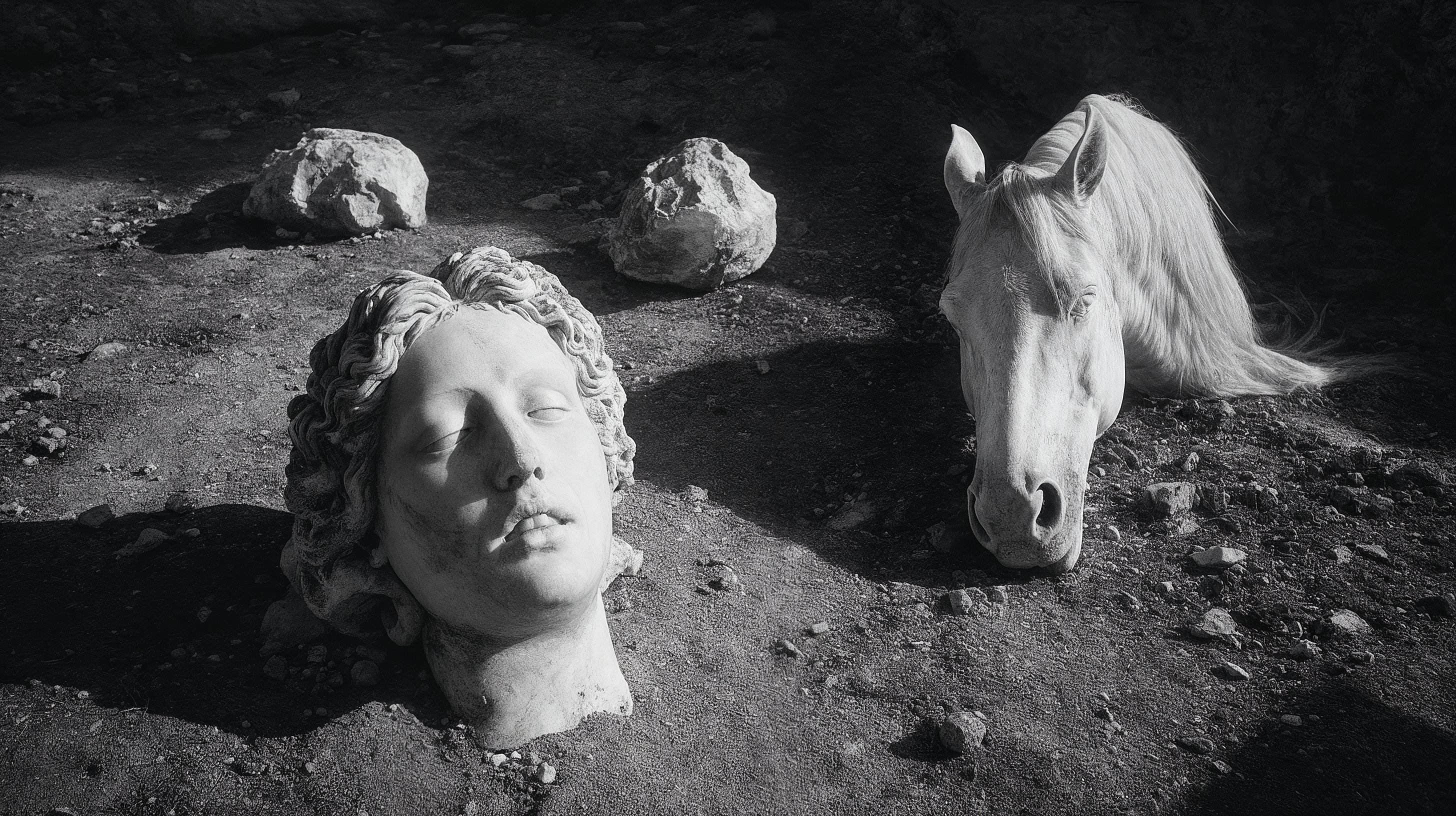
The Afterlife of Aphrodite was born from this process, of remembering, and rediscovering a version of myself untouched by imposed standards. It is a film about liberation through memory. About reclaiming the sacred chaos of womanhood.
It’s not just about beauty. It’s about everything we’ve been told to control in order to be loved.
What it does
A personal essay and reflection on how the beauty standards imposed on women affect personal perception over the years, specially in the child-teen ager face.
How we built it
I began writing the script in a traditional way, with paper and pen. The inspiration for the short film comes from personal experience and the myths of the goddess Aphrodite. I was deeply influenced by Bethany Hughes’ book “Venus and Aphrodite,” as well as “The Beauty Myth” by Naomi Wolf.
Once the draft was ready, I imported it into ChatGPT to help create a shot list, which I then reviewed and refined. To develop the film’s visual style, I built a moodboard in Midjourney, where many of the initial frames and some animations were created.
For consistency in the main character, I used Ideogram via Freepik, an amazing tool for keeping one character visually consistent. All images were upscaled with Magnific AI before being animated.
After creating all the images we moved on to animation part. The tools varies depending on the kind of scene, ranging from Freepik AI Suite, Weavy, Moonvalley, KlingAI and Veo3, Seeddance as well.
Eleven Labs was used to transform a voice over I recorded and change my voice a little bit. Freepik was also used for SFX of the videos.
Before post started, all the videos past by Astra Upscaler. Post Production was made with DaVinci Resolve, sound design was made by Sergio Valdez.
Challenges we ran into
Creating images of the sculpture was a challenge, sometimes the AI would generate partially dressed figures. I had to retouch and censor these images before animating the scenes to ensure the moderator will allow for the animation to proceed.
Accomplishments that we're proud of
Being able to put together this short film means a lot on a personal level. Being deeply inspired by personal experiences, it feels like taking a weight of off my chest to be able to speak out and share this story with the world.
What we learned
There is no written path for Filmmaking with AI. As any traditional production, the roads differ depending on the nature of the project. It's important to let go of prompts that are not working out and try something different at times. And also, being on top of the latest tools helps a lot, but also makes the films look dated very fast.
What's next for The Afterlife of Aphrodite
We have sent it to different film festivals hoping to have a solid festival route and share this story with the world.
Built With
- astra
- chatgpt
- eleven-labs
- freepik
- ideogram
- kling
- magnificai
- moonvalley
- veo3
- weavy


Log in or sign up for Devpost to join the conversation.