-
-
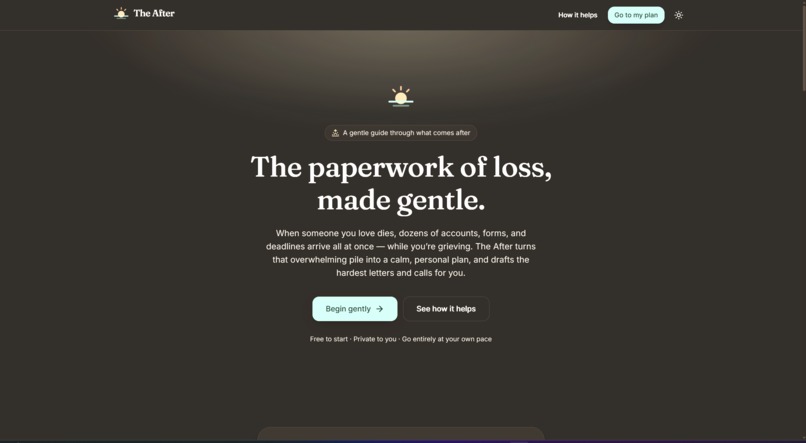
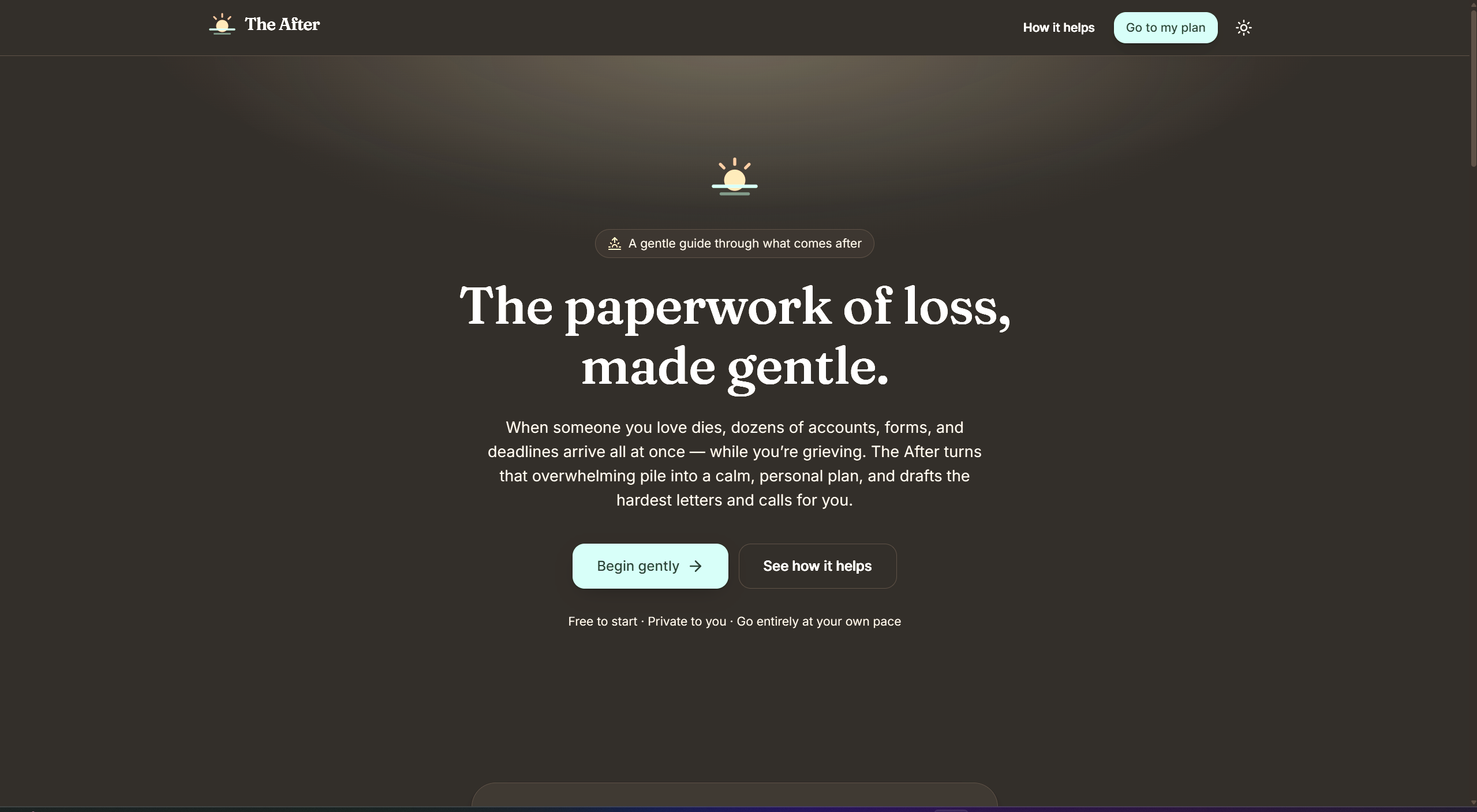
Landing Page
-
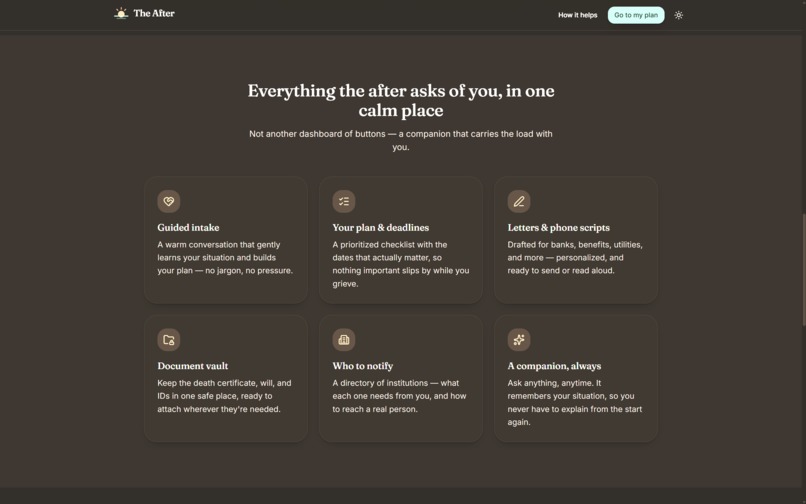
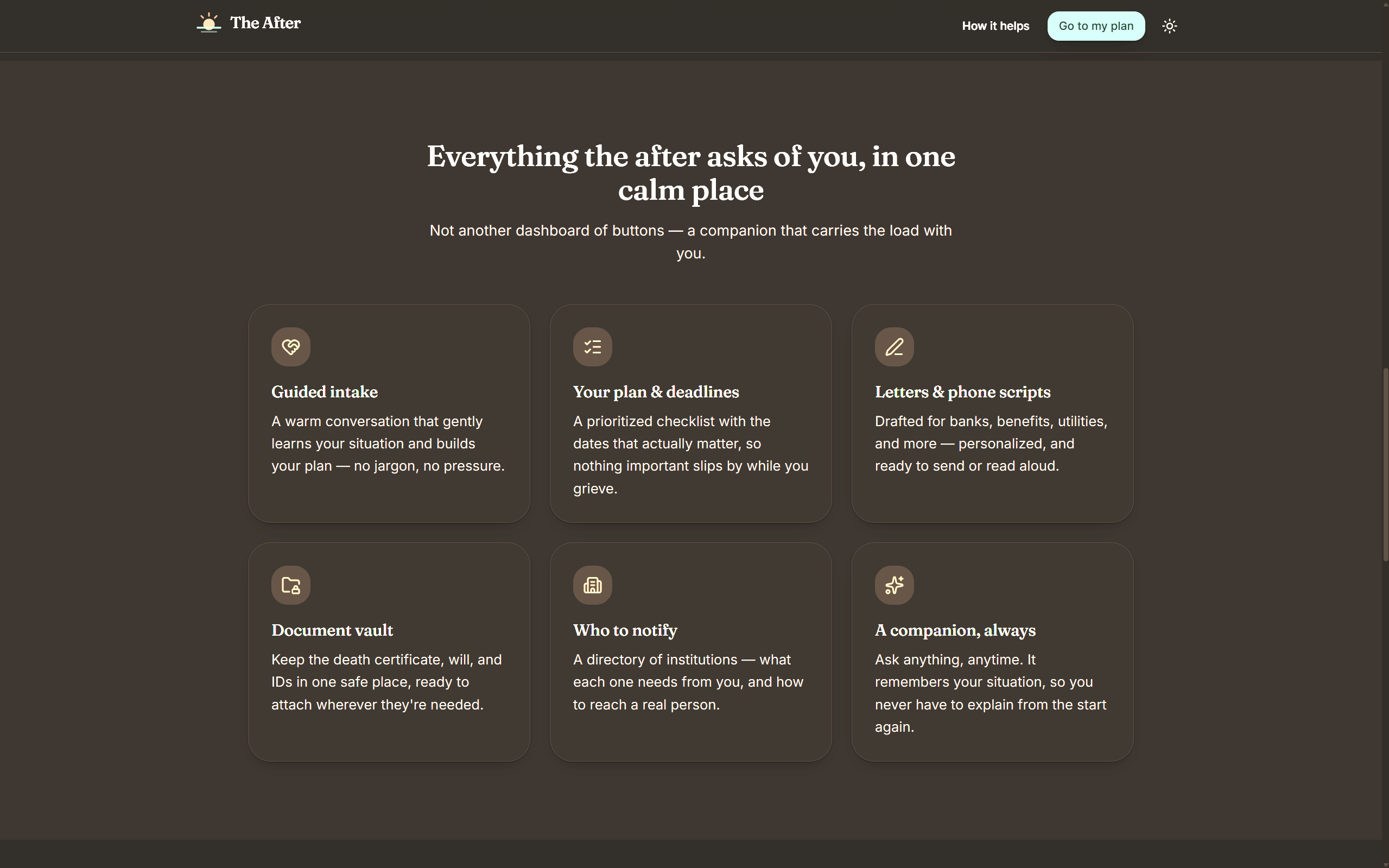
Summary of features
-
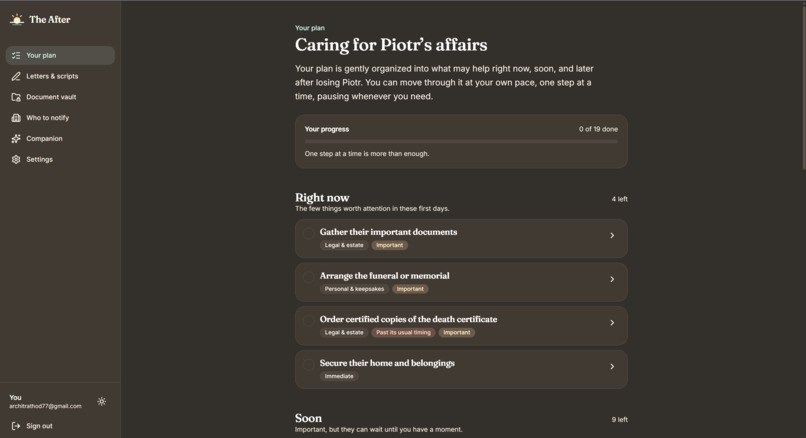
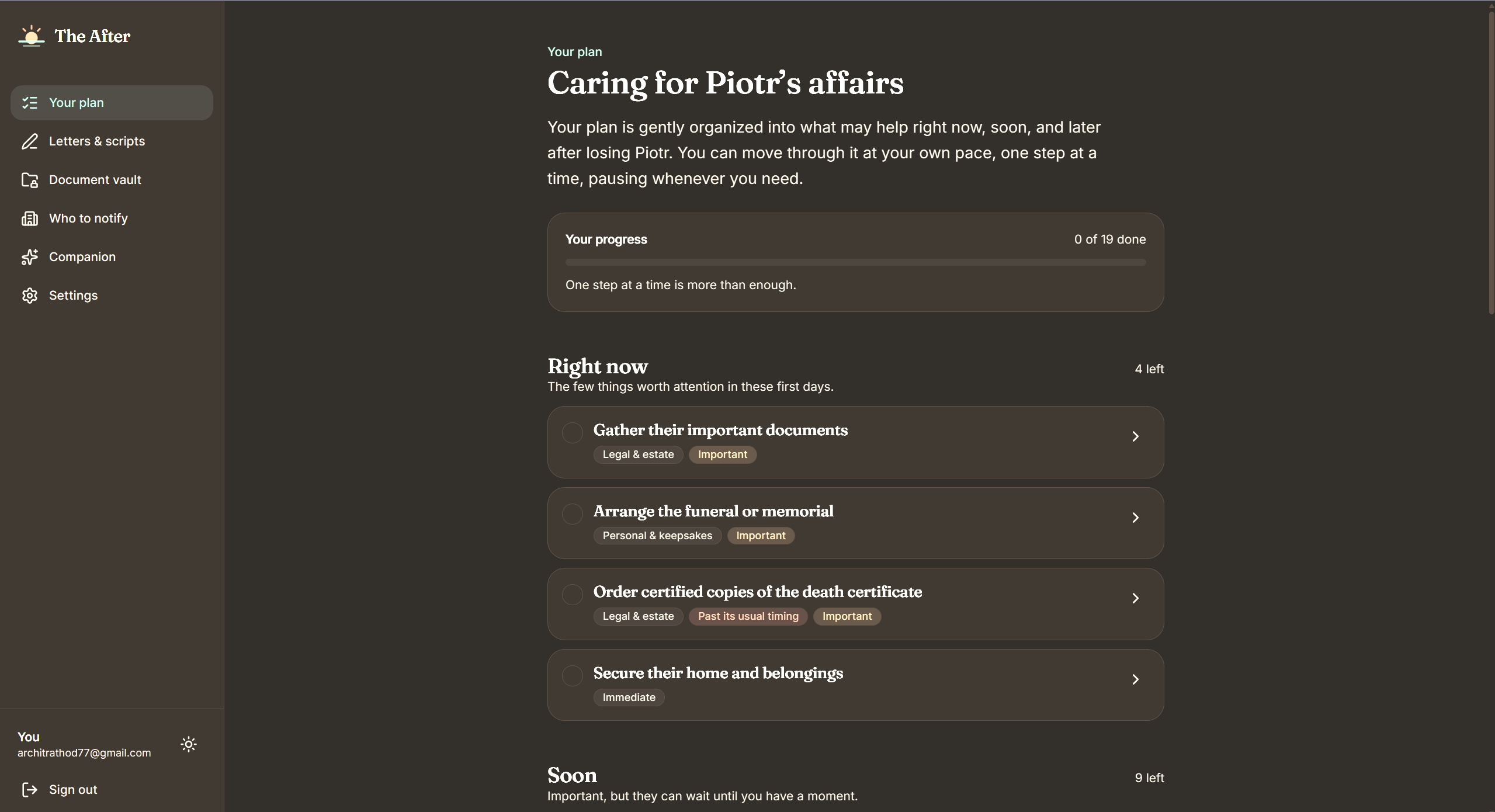
The Plan
-
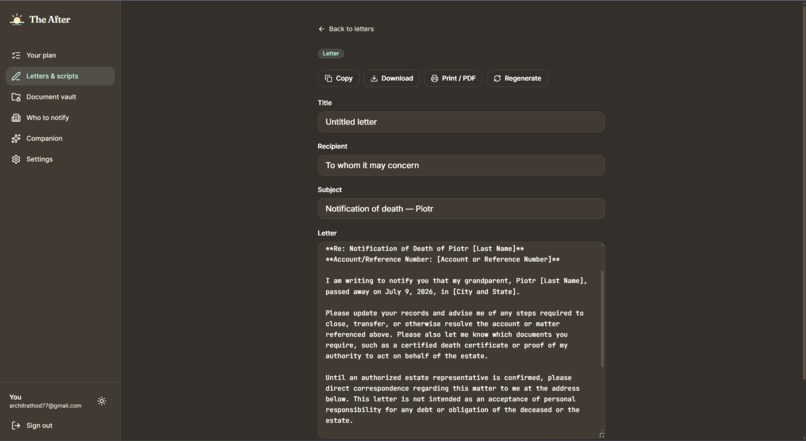
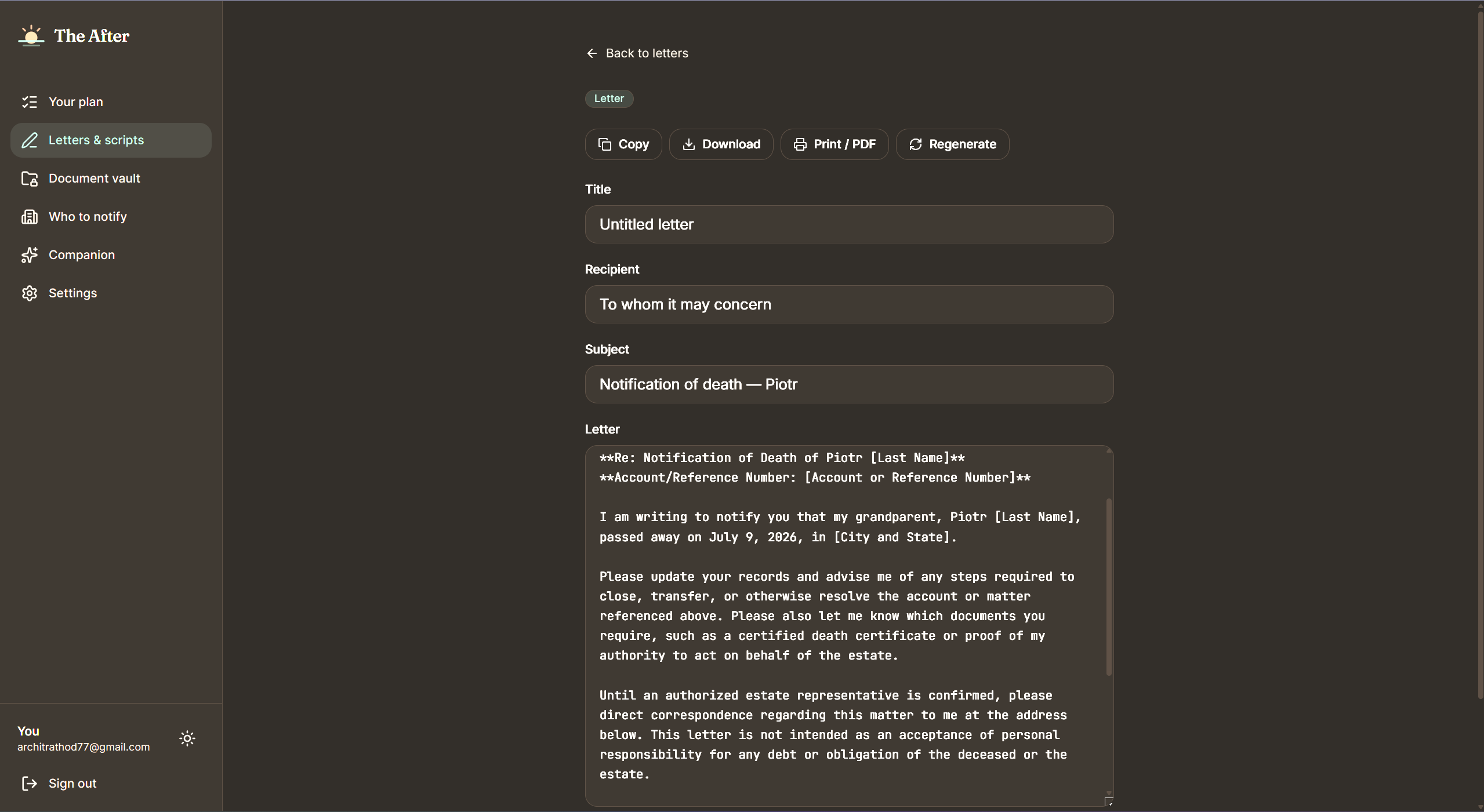
Generate Letters and Call Scripts
-
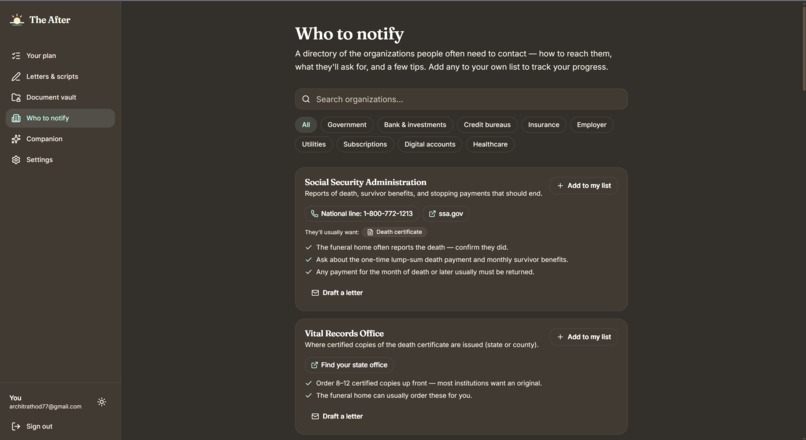
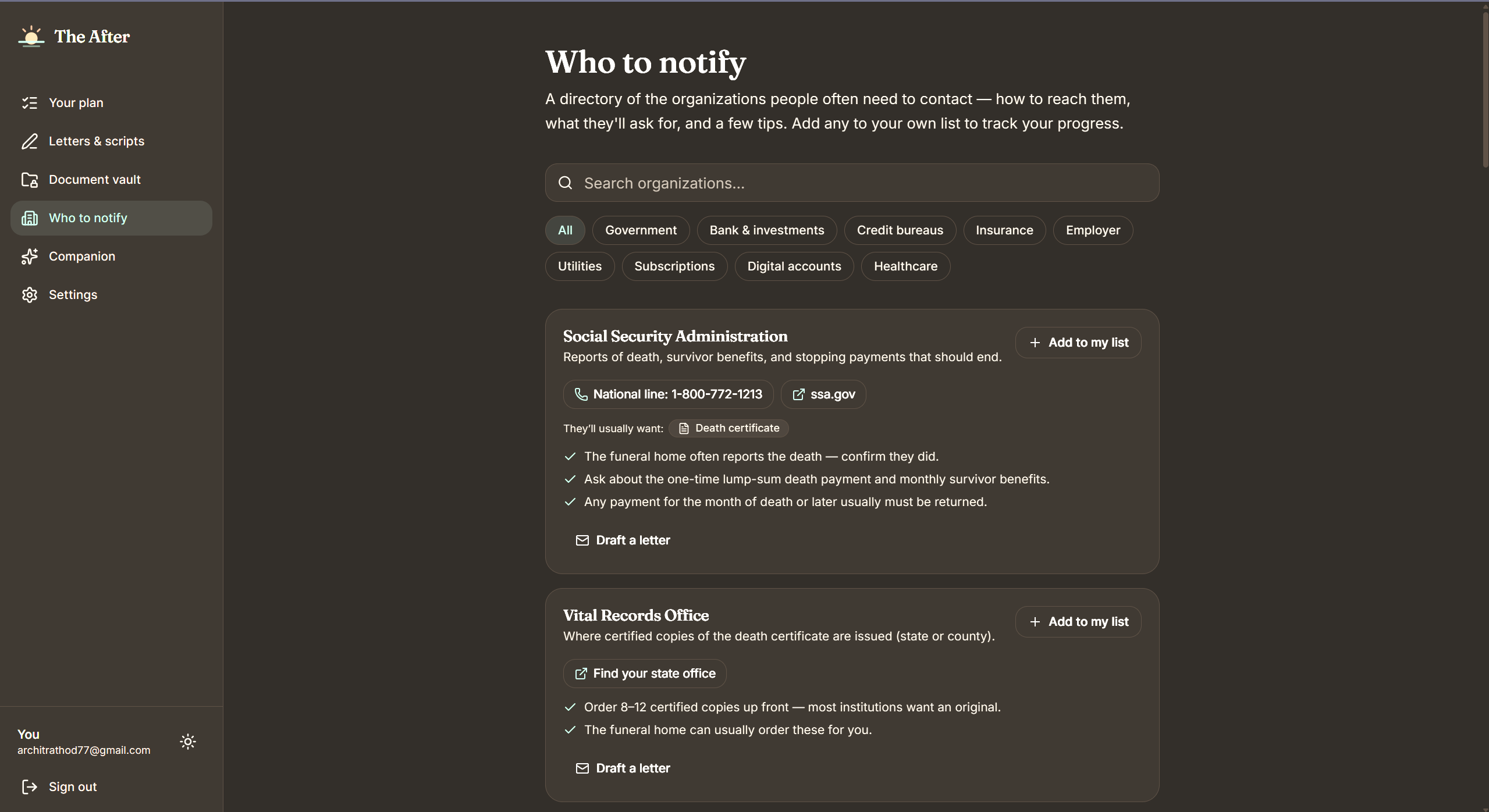
Who to notify
-
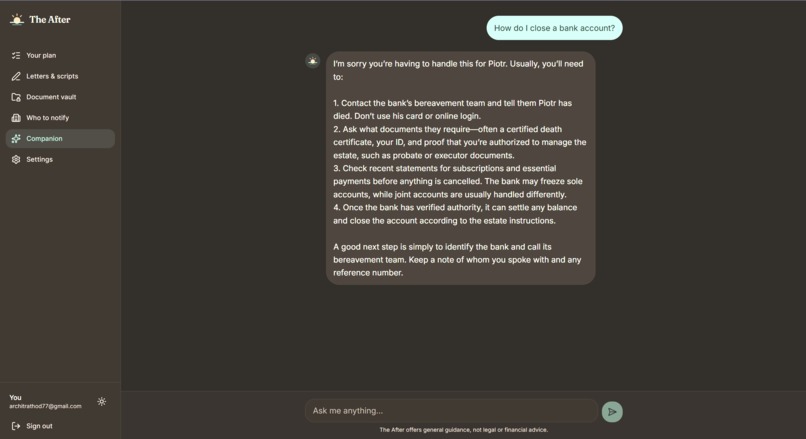
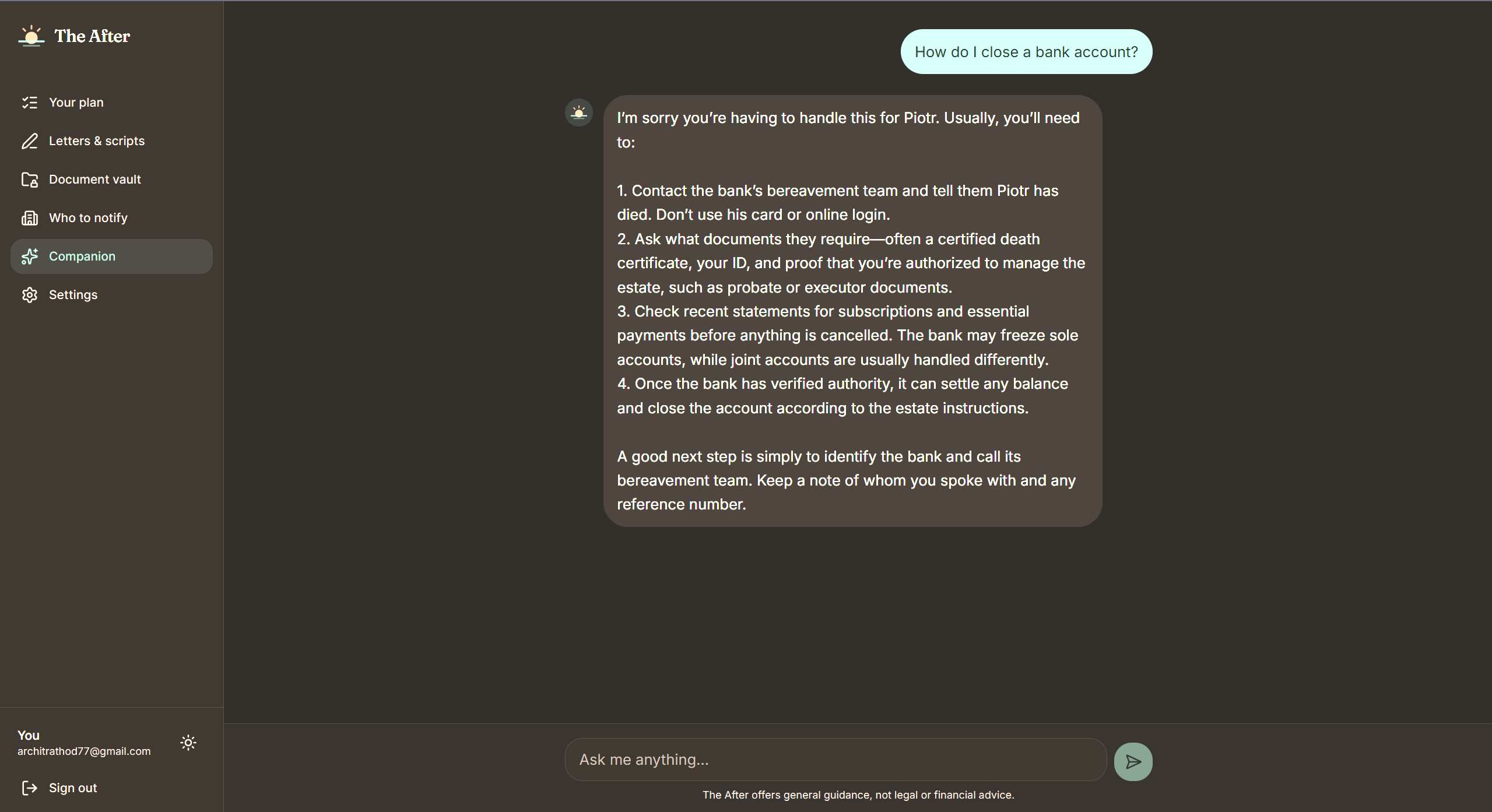
GPT5.6 Companion
Inspiration
When someone dies, the people left behind get almost no help with the practical side. There is grief. There is also a mountain of admin. Banks, benefits, subscriptions, government offices, digital accounts. Each one has its own forms and deadlines. It all arrives in the first week, when you can handle it least. We wanted to build the companion we would want in that moment. Calm, patient, and human.
What it does
The After turns the paperwork of loss into one clear plan.
It starts with a gentle conversation instead of a form. It asks only what you are comfortable sharing. From your answers it builds a personal checklist, sorted into what to do right now, soon, and later. It explains every step in plain words. It drafts the letters and phone scripts you need. It keeps your documents in a private vault. It shows who to notify, and that list adapts to your country. A companion is always there to answer questions, grounded in your own situation.
Nothing has to happen all at once. You can stop and come back anytime.
How we built it
The app is Next.js 16, React 19, TypeScript, and Tailwind. Data and auth run on Supabase. The AI runs on GPT-5.6 through the OpenAI API. It is deployed on Vercel.
We built it with Codex. In our Codex sessions, GPT-5.6 helped us design and ship real features. It added the "Ask about this step" guidance on tasks. It built the accessibility pass, the SEO and metadata, the structured data, and the region logic behind the directory.
Inside the product, GPT-5.6 does the thinking. It reads the intake and shapes the plan. It writes the letters and scripts. It powers the companion. We wired every AI feature through one small interface with a plain, deterministic fallback. So the whole app still runs with no API keys at all. Anyone can open it and try the full flow in seconds.
Challenges we ran into
The tone had to be right. Not clinical, not sugary. We rewrote the copy many times.
We wanted judges to run it with zero setup, and also wanted a real product with accounts. So we built two modes behind one interface. A keyless demo mode, and a full mode with Supabase and GPT-5.6.
On the live site, plan generation could time out, because two model calls ran one after the other. We moved them to run at the same time, with a strict time budget. Now it always finishes, and always returns a plan.
The directory started out US only. We made it region-aware, so a user in the UK, India, or elsewhere sees the right bodies.
What we learned
Small design choices carry a lot of weight when someone is grieving. Showing three tasks instead of thirty changes how it feels. One warm sentence changes how it feels. We learned to let GPT-5.6 handle the judgment, and to keep the interface quiet and calm.
What's next
Deeper localization for more countries. Shared access, so a family can work through the plan together. Deadline reminders. And partnerships with hospices and funeral homes, who meet this need every day.
Built With
- codex
- gpt-5.6
- next.js
- node.js
- openai
- postgresql
- react
- supabase
- tailwindcss
- typescript
- vercel
- zod

Log in or sign up for Devpost to join the conversation.