Inspiration
The inspiration for this project stemmed from classic escape room puzzles, where creativity and problem-solving are crucial to escaping. My goal was to design a game that would challenge players while adding an element of tension and urgency—imagine being trapped in a room with a madman inside, the clock ticking down, the battery is draining and the door seemingly out of reach. I wanted players to think outside the box to find their way to freedom, with each puzzle providing a unique challenge.
What I Learned
Throughout the development of this game, I learned the value of building a project from scratch. I decided not to use a game engine because I wanted more control over the design and feel of the game. This allowed me to make a customizable experience, where every element—right down to the interactive objects and puzzles—was designed with intention. With the addition of Amazon Q it greatly helped by ability to construct a game engine and gave me a deeper understanding of how it works.
How I Built It
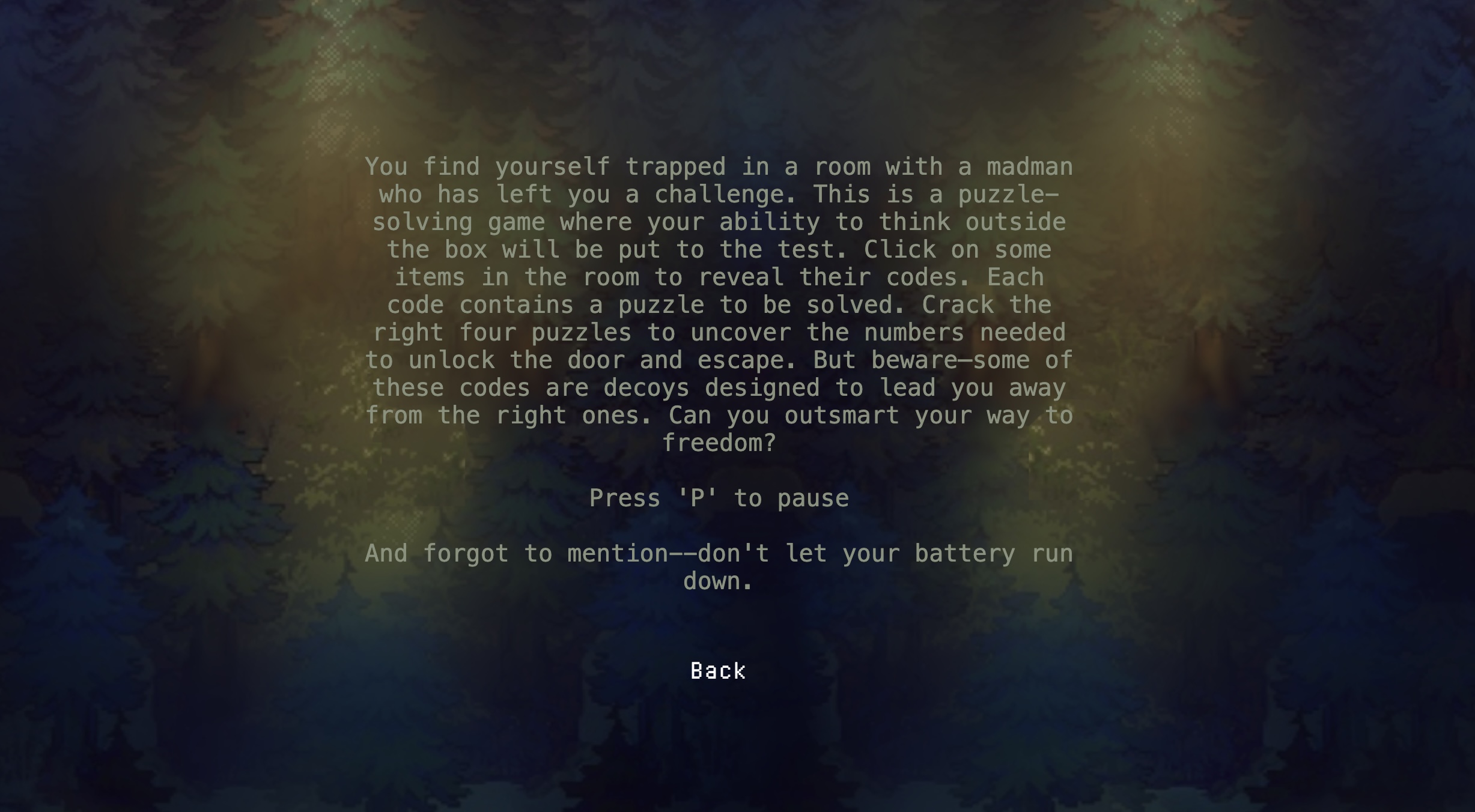
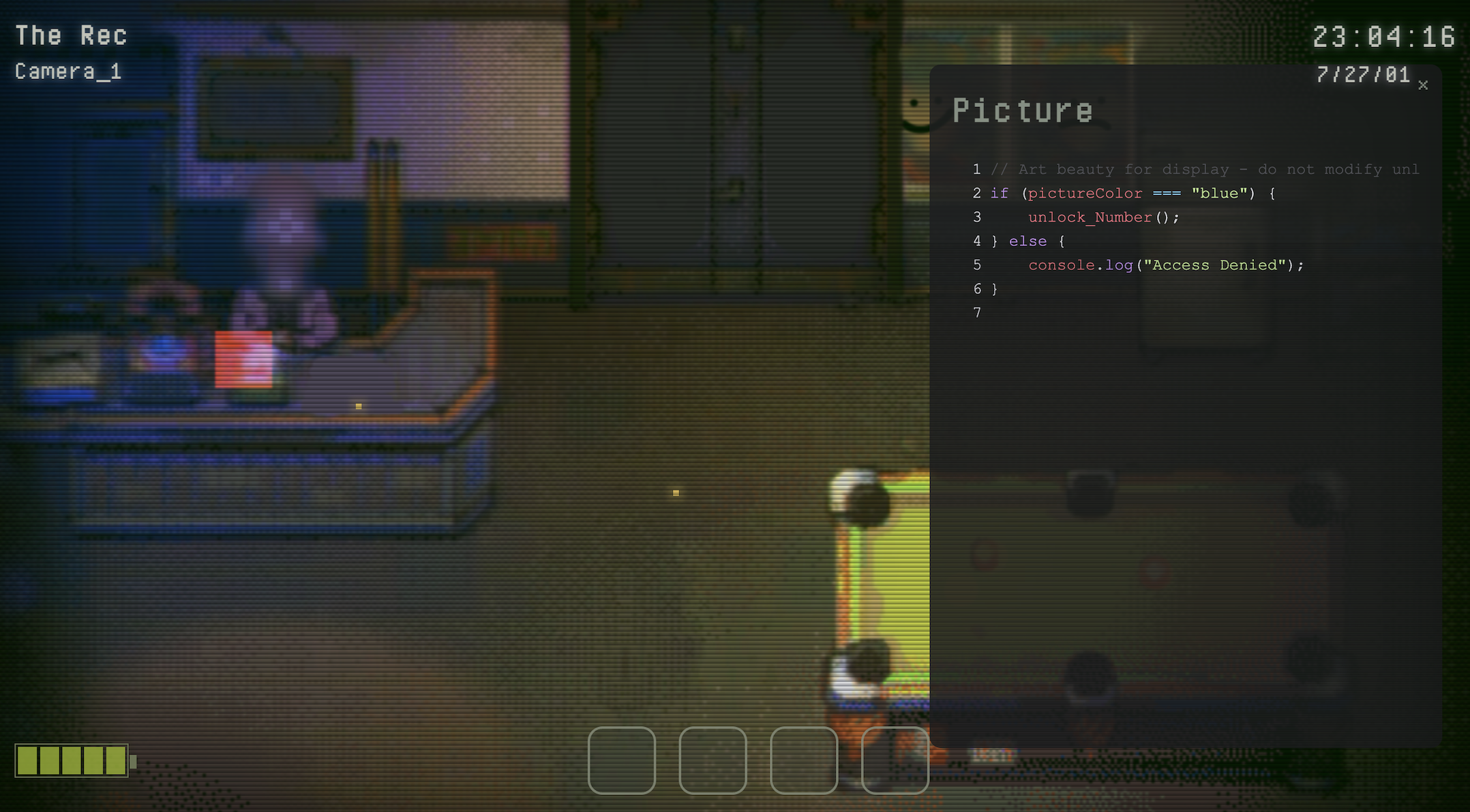
The concept is simple yet immersive: the player is trapped in a room and must click on items around the room to reveal codes. Each code contains a puzzle—when solved, it provides a number. The player needs to collect four numbers to unlock the door and escape. However, not all codes are solvable: some are decoys, designed to mislead the player and add a layer of complexity.
I opted for a hands-on approach, building everything from scratch to have full control over the game's flow, design, and interactions. No traditional game engine here! I also integrated Amazon Q to manage the game logic and provide a proper framework for developer
Key Features:
- Interactive Room: Click on objects to reveal codes.
- Puzzles: Solve challenges within the codes to unlock numbers.
- Decoy Codes: Some puzzles lead to dead ends.
- Battery Timer: Don’t let your battery run out before you escape!
Challenges Faced
Without the convenience of a pre-built game engine, I had to handle everything from player movement to item interactions to real-time puzzle-solving. These aspects required a lot of manual effort but gave me the freedom I needed to provide a better experience.
Built With
- amazon-q
- css
- html
- javascript
- polly


Log in or sign up for Devpost to join the conversation.