
Inspiration
I'm Naufal. My mom hoards groceries, assuming anything in a nice container is still safe. My sister is the opposite — she has OCD and throws away anything that doesn't look pristine, even if it's perfectly safe to consume. Whenever they went out for groceries, they would argue about what we actually had at home and what should stay in the fridge. I had enough. I knew we needed a better way to manage it. The problem is that every existing app requires manual entry. For a fridge with probably 40-ish items, entering 40 items one by one felt so defeating I wouldn't even start. When I told my dad, he suggested getting a maid instead. That got me thinking: maybe we didn't need another fridge app. Maybe we needed something that actually manages the fridge for us.
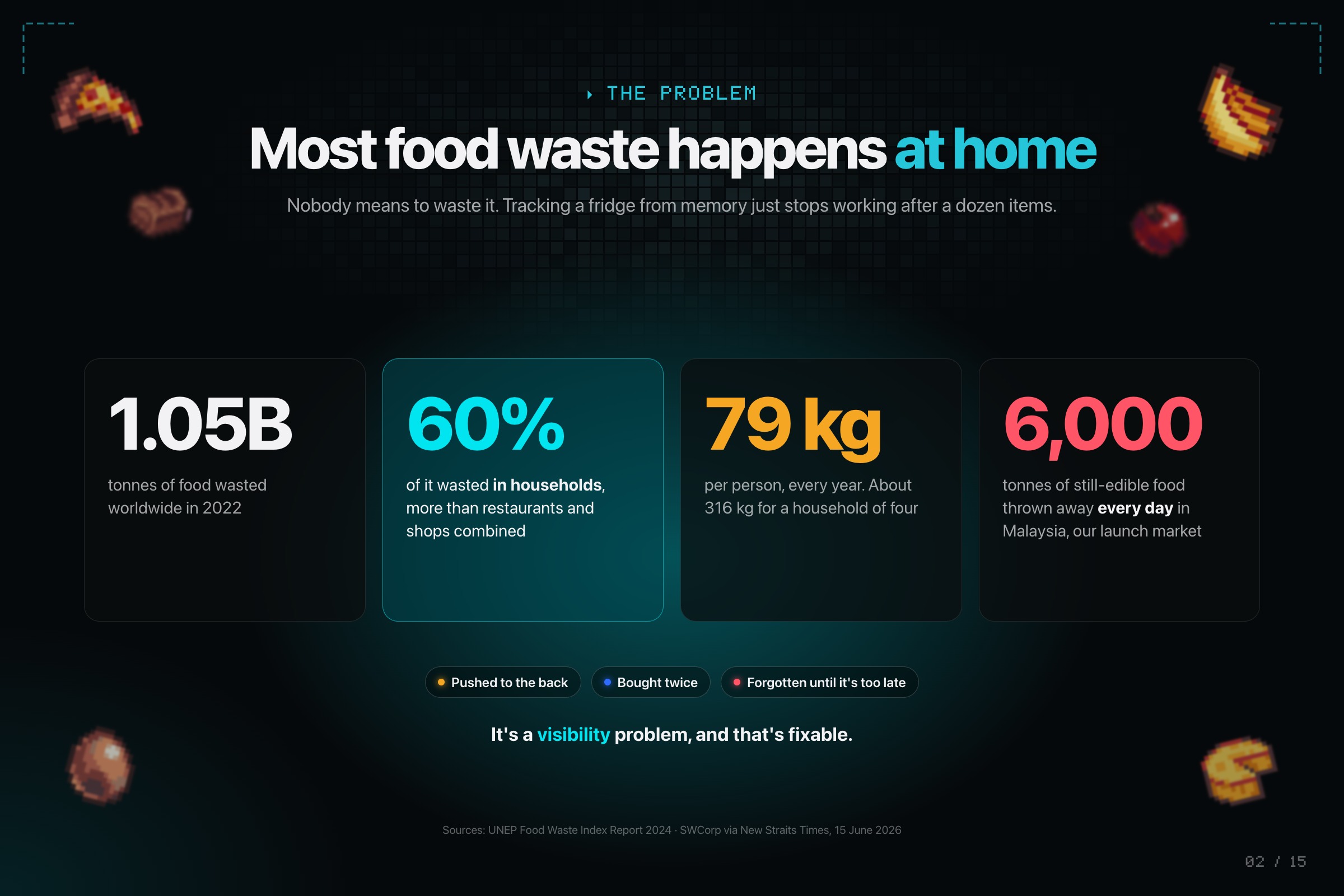
As a CS student who works a lot with AI agents, the idea clicked. But I realized this wasn't just about solving my family's problem. It was about every household wasting $600/year on forgotten groceries, throwing away 79 kilograms per person per year. What if we could help families reduce waste by making fridge coordination something they actually enjoyed doing, instead of a burden they resented?
Instead of another app asking us to manage things, I wanted to build a crew of agents that does the managing—and makes the experience delightful. And that became ThatFridge.
What Does It Do?
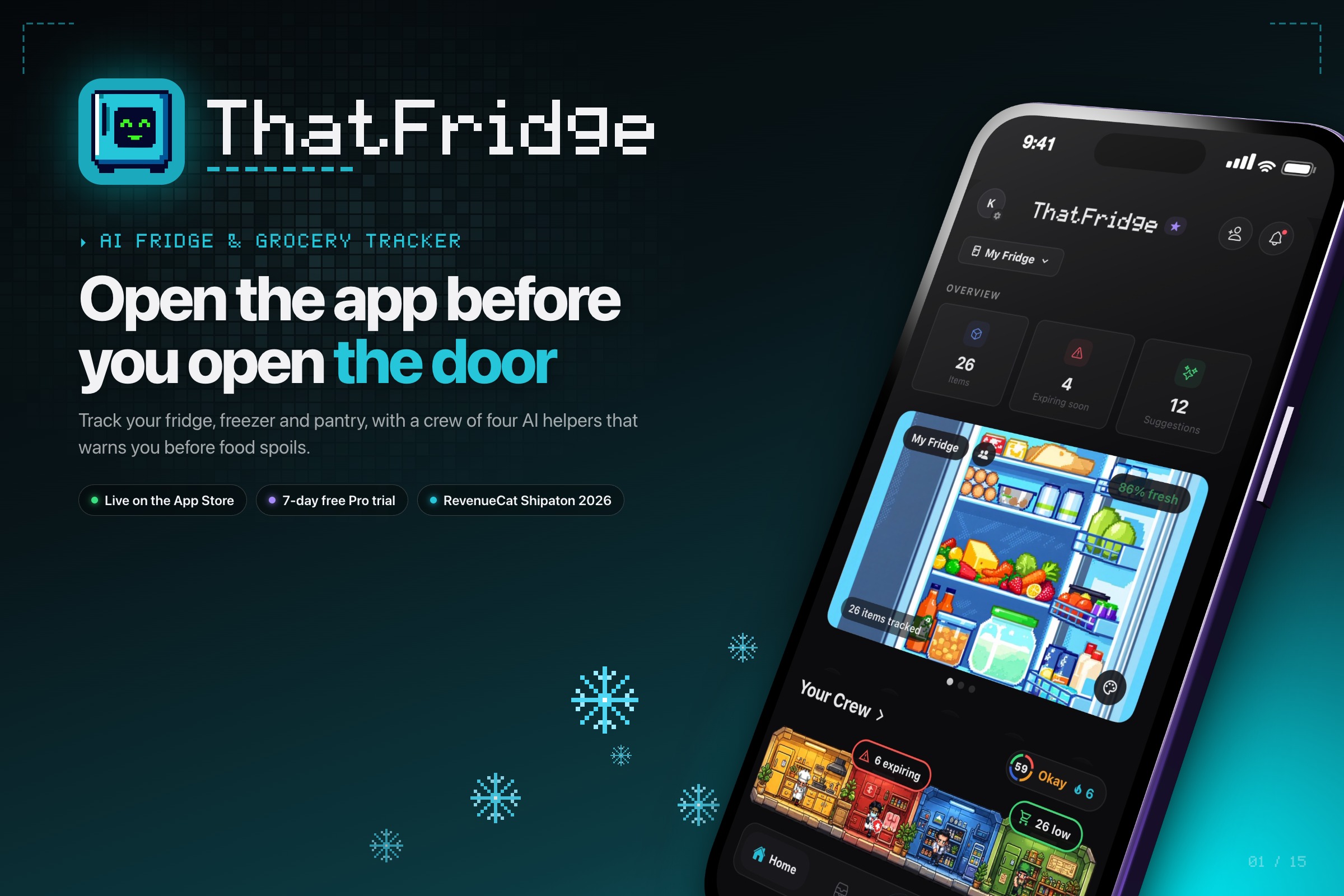
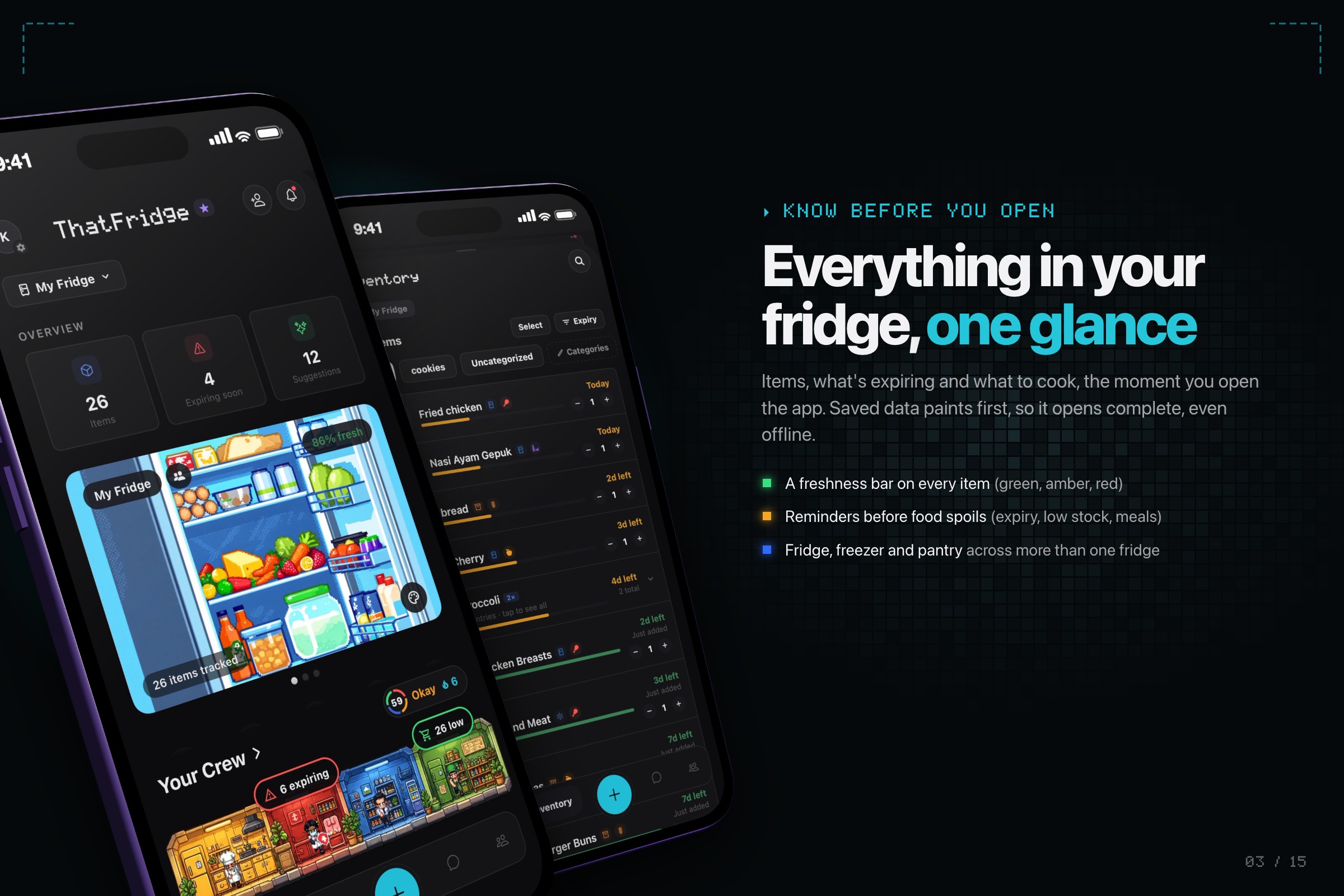
ThatFridge is a shared household food-management app that solves this by helping people know what they have, what to cook, and what to buy.
Add & Track
A full fridge is a forgetful fridge—so ThatFridge keeps track for you.
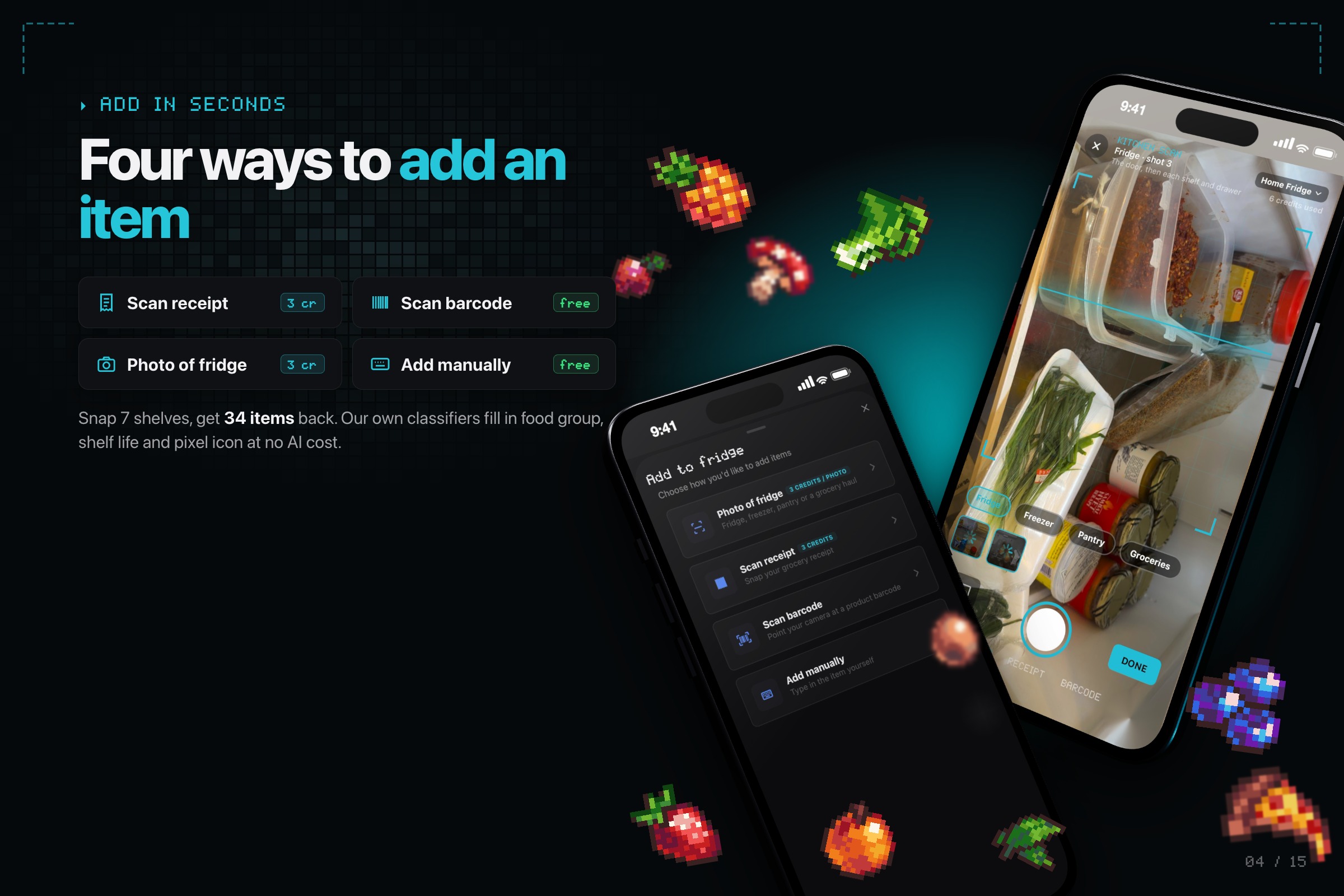
Users can add items however works best for them—scan a receipt, snap a photo of their fridge, scan a barcode or expiry date, add by voice, or enter manually. From there, ThatFridge tracks quantities, locations (fridge/freezer/pantry), and expiry dates across the household.
When there are dozens of items, we don’t treat them all equally. Instead, each item gets a countdown, and the app prioritizes what needs attention soonest, surfacing only the most relevant items first.
Meet the Crew
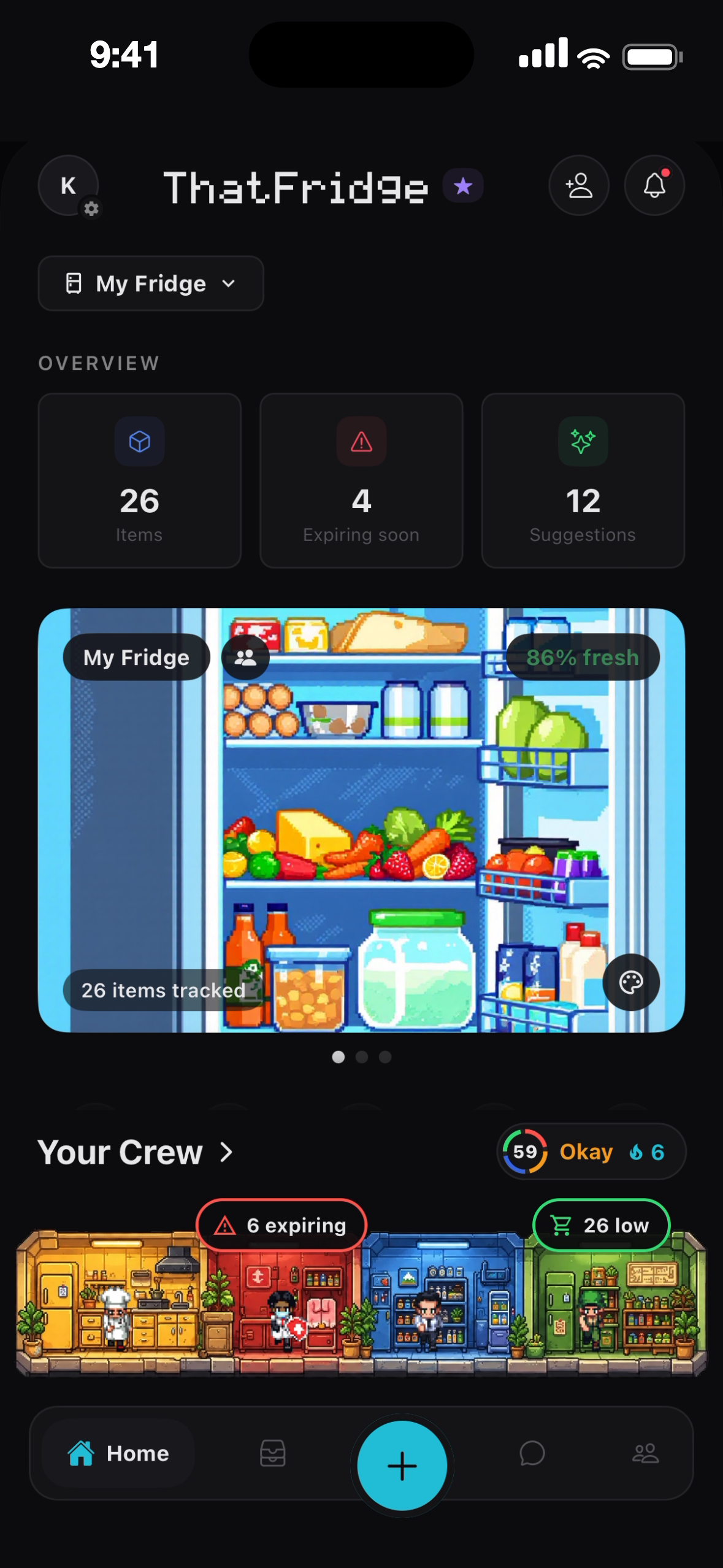
Instead of a spreadsheet, we built a playful, character-driven experience. Four AI personalities solve different kitchen problems:
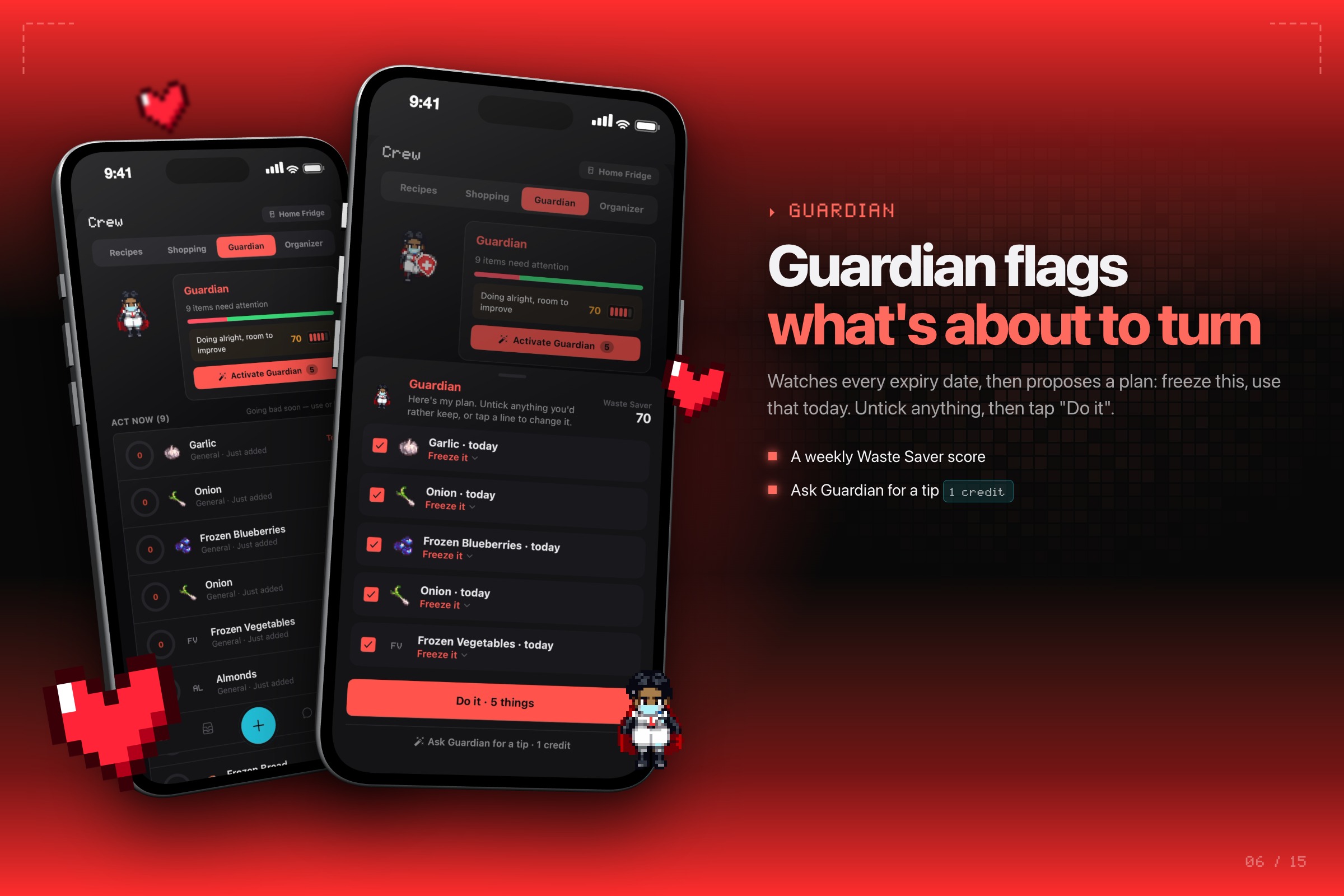
- Guardian watches expiry dates and alerts before food goes bad
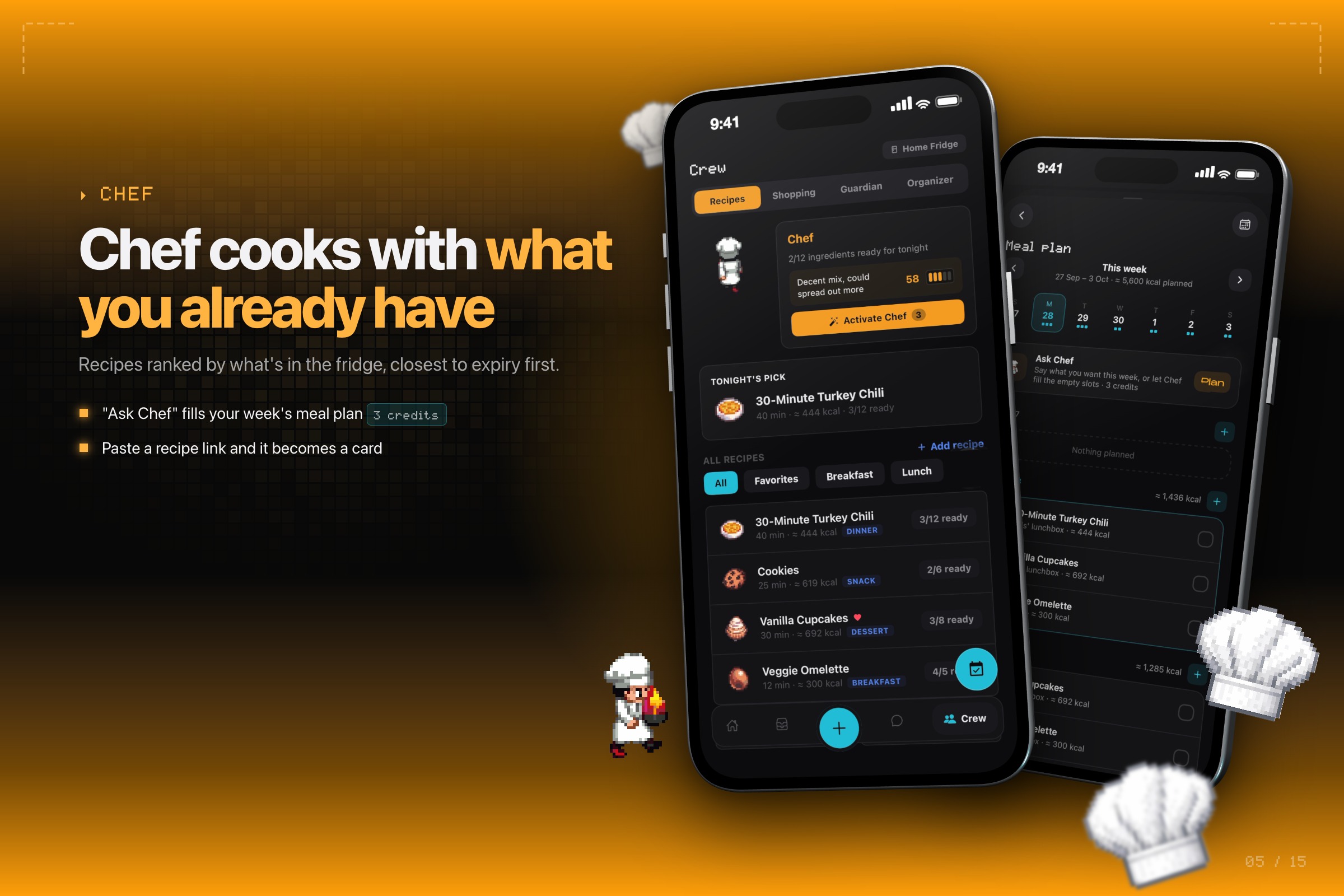
- Chef suggests meals from ingredients you actually have, prioritizing recipes that use items expiring soon.
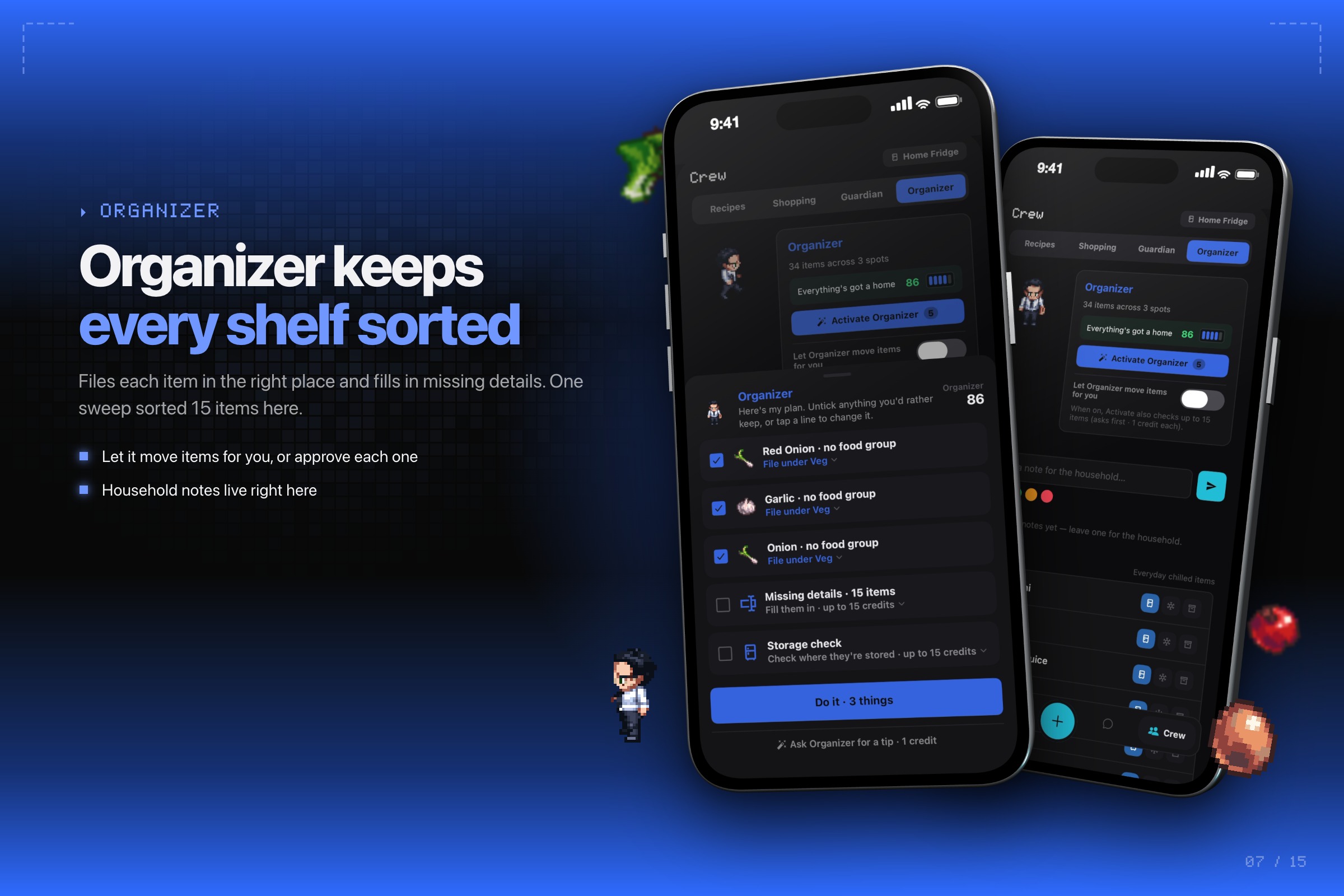
- Organizer keeps items in the right place with shared sticky notes so household members can leave notes about any item
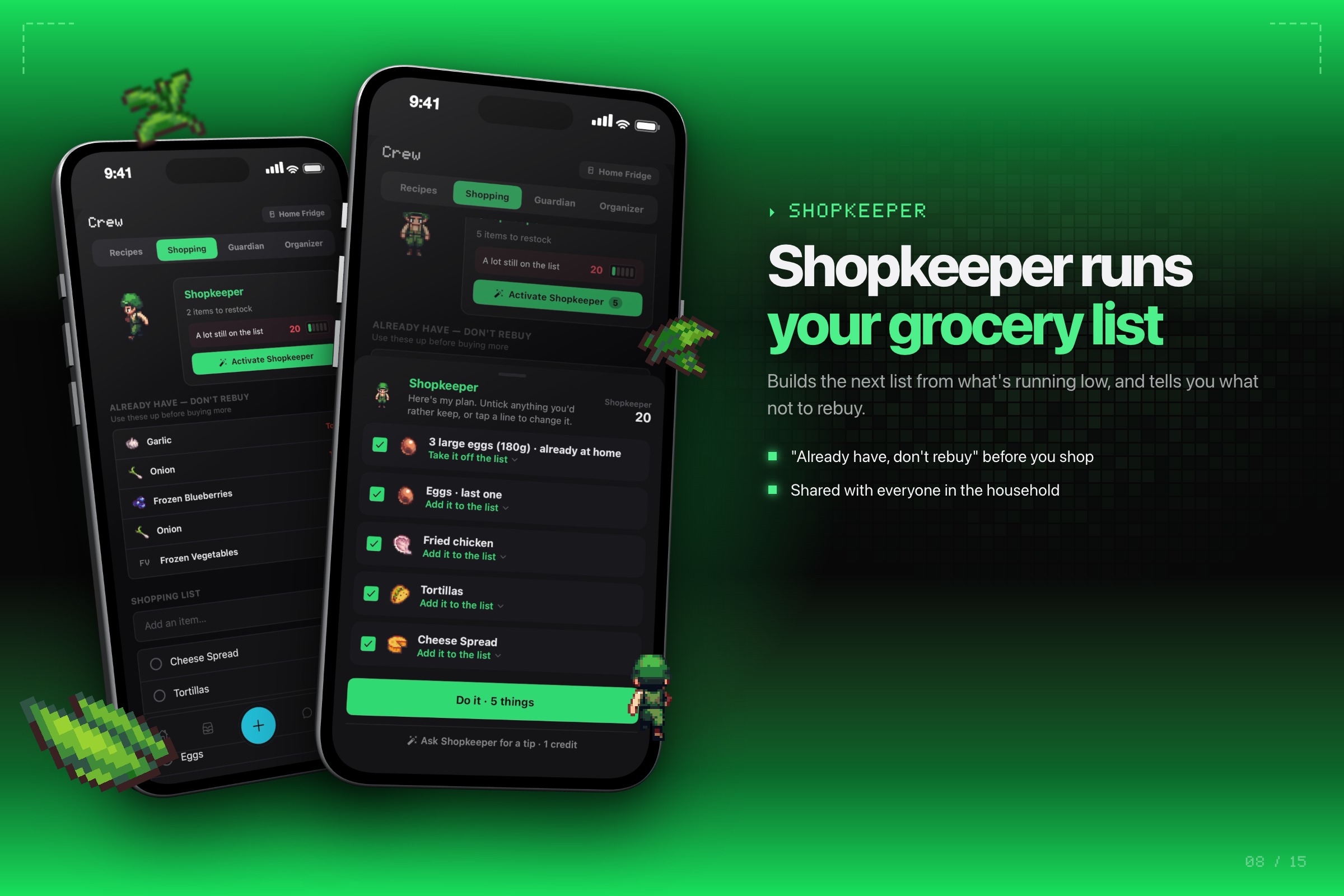
- Shopkeeper tracks what's running low and builds the shopping list
They're not disconnected chatbots—they're personalities connected to the same household inventory. Each has a distinct visual identity and animations that make routine tasks feel playful, not like work.
Quick Chat Interface
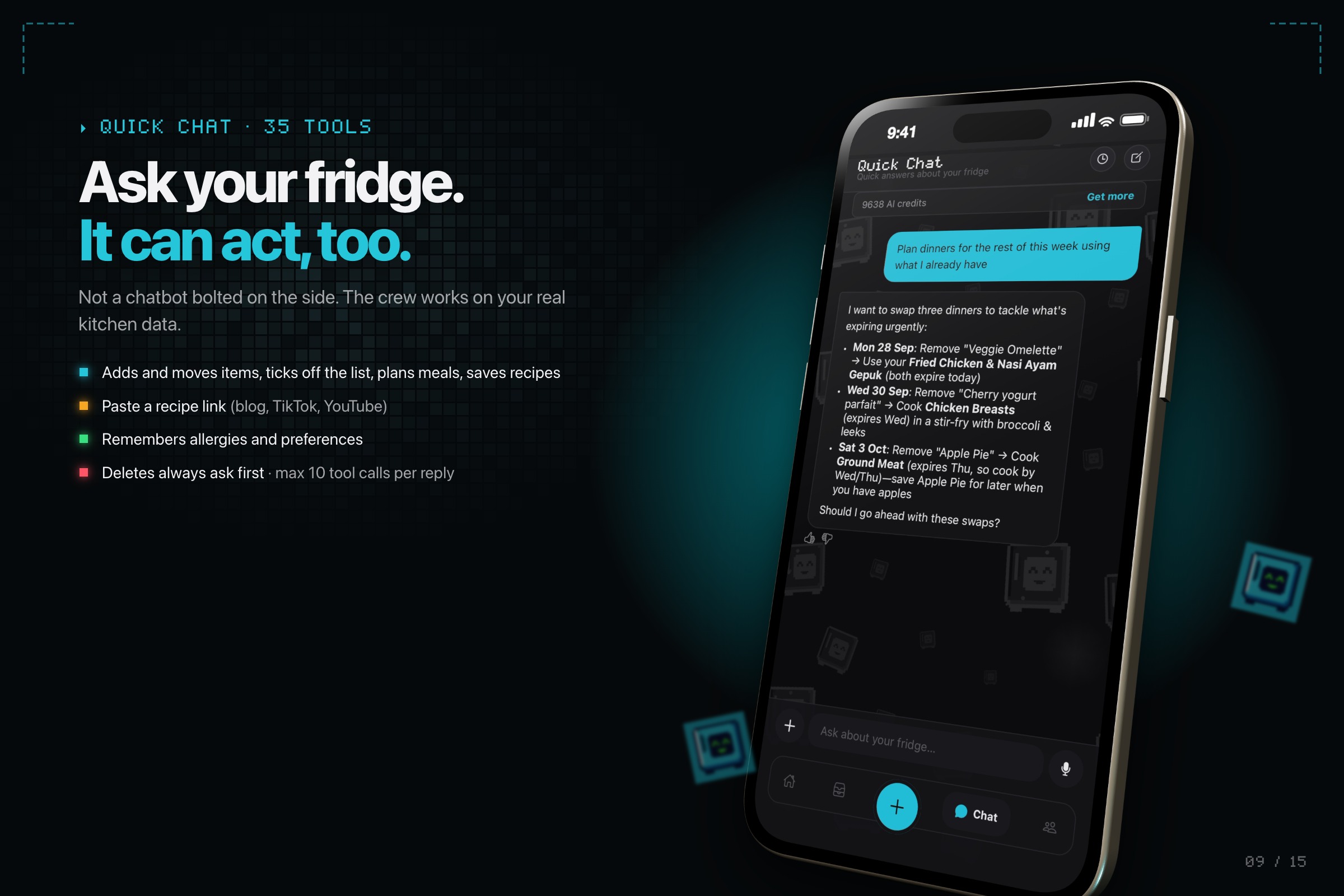
Quick Chat is the all-in-one shortcut for when users want something done fast without going through each crew member.
They can ask things like “What’s expiring soon?” or “What can I cook tonight?” and the agentic workflow reads or updates their real inventory directly.
The crew gives each task a personality and clear role; Quick Chat brings all of them together in one place.
One chat. Every crew capability.
One Household, One Fridge
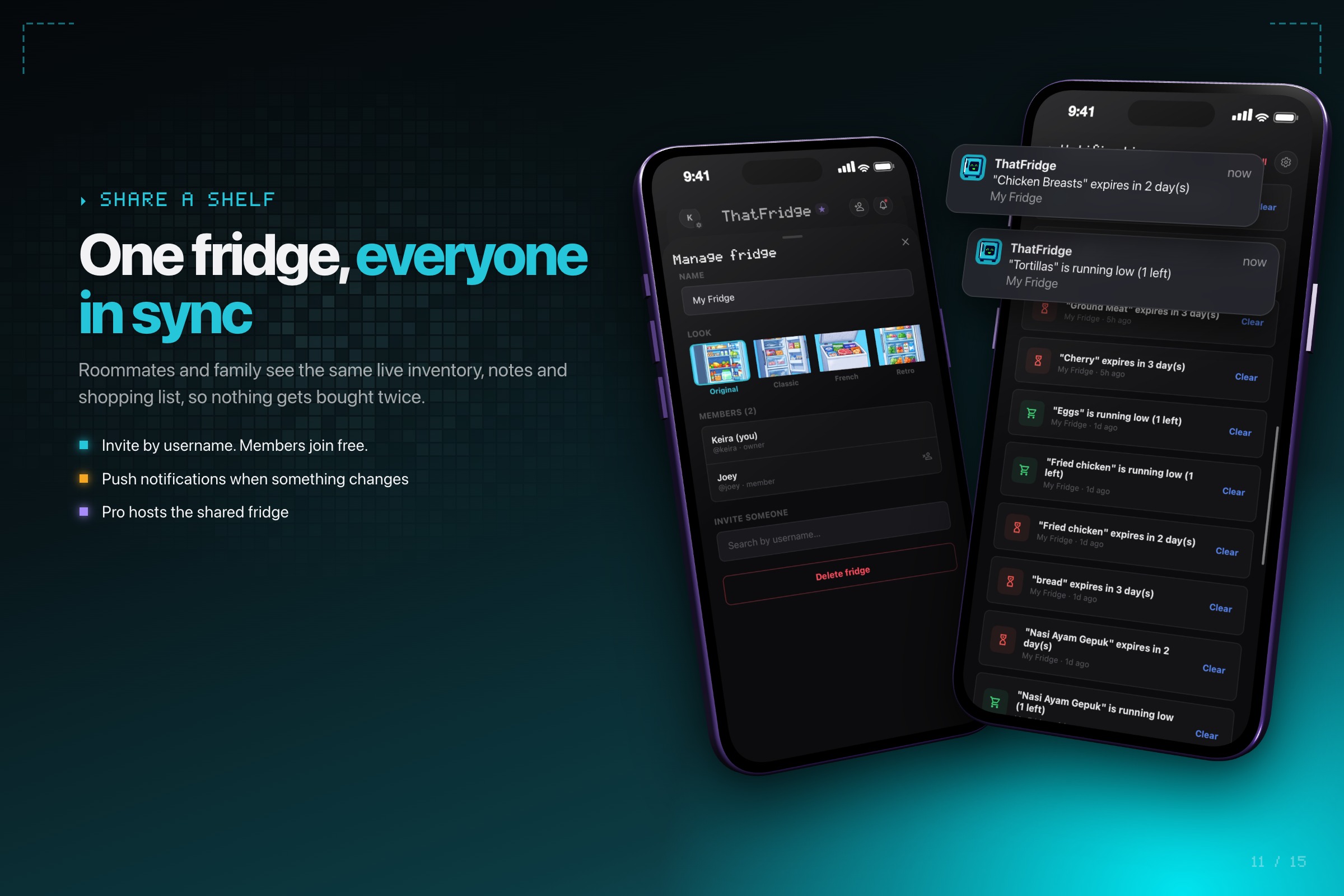
Everyone sees the same inventory. If someone finishes the milk, everyone knows. No duplicate purchases. No forgotten ingredients. This coordination is the whole point.
Waste Reduction Through Habits
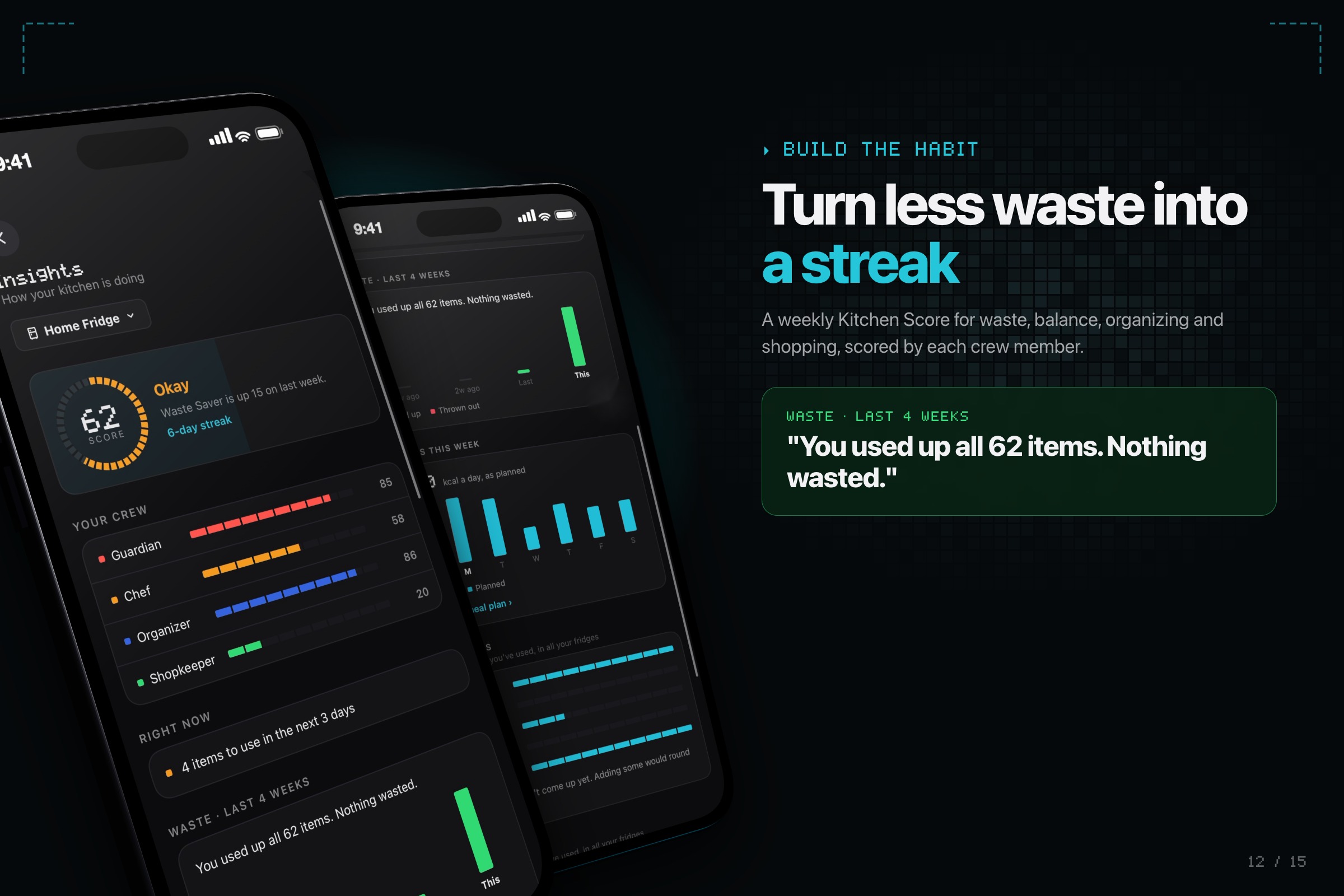
At scale, this addresses the 79 kilograms of food wasted per person per year. But the goal isn't to preach sustainability—it's to make better use of groceries by default, not another task to remember. Users can track whether items were used up or thrown away, with an Insights page showing waste versus used over time.
How did we build it?
Frontend: Expo SDK 57 and React Native with Reanimated for smooth character animations. Offline-first caching keeps data responsive—it appears instantly, then syncs.
Backend: Laravel with PostgreSQL and Redis on DigitalOcean. Handles authentication, household sync, inventory, shopping, notifications, AI credits, and APIs.
AI Core: Quick Chat uses controlled tool calling so agents can safely read and modify household inventory. Custom classifiers handle 80% of tasks (food grouping, shelf-life prediction) in milliseconds; AI only steps in for edge cases. This keeps costs predictable and UX fast.
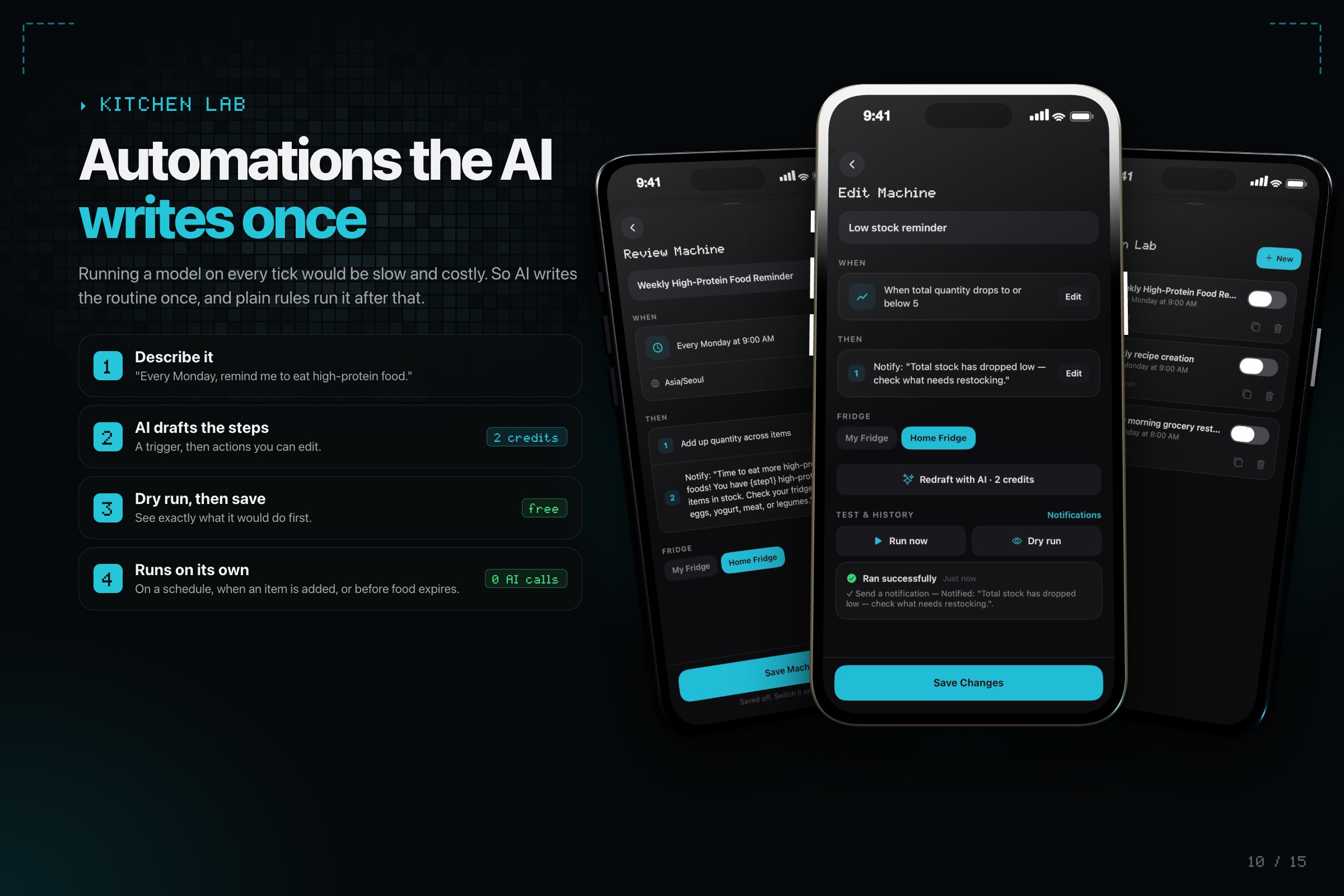
Kitchen Lab Machines: Automations created once, then run repeatedly without additional AI calls.
RevenueCat: Subscriptions for recurring value. AI credits for variable usage. Credit grants are idempotent; failed calls auto-refund.
Challenges
Animations without Friction
We designed pixel characters with movement and personality—little kitchen assistants that feel alive and playful, with retro pixel style and neon accents. But playful animations can feel dense or slow when users simply want a quick answer. We solved this by making animations meaningful but optional: character reactions happen, but they never block quick access to information. Every action needed to feel clear, easy to navigate, controlled, and reversible—keeping the overall experience frictionless while preserving personality.
Representing Global foods
With thousands of food types existing across cultures, a fixed icon set would exclude some users. We built a system where users generate custom food icons when needed, with a smart fallback that selects the most relevant existing icon first. This approach honors cultural diversity while reducing unnecessary generation costs.
Maintaining identity Across Themes
Our main UI identity is built around a dark, black interface, which helps the neon accents and pixel visuals stand out and gives ThatFridge a more distinctive character. At the same time, we also provide a light mode for users who may not prefer a dark interface or find the black theme too heavy.
Maintaining this identity across both required careful color remapping so the visual distinction stays intact without sacrificing accessibility. This taught us that bold design isn't about forcing one aesthetic—it's about making your vision work for everyone.
Monetization Model
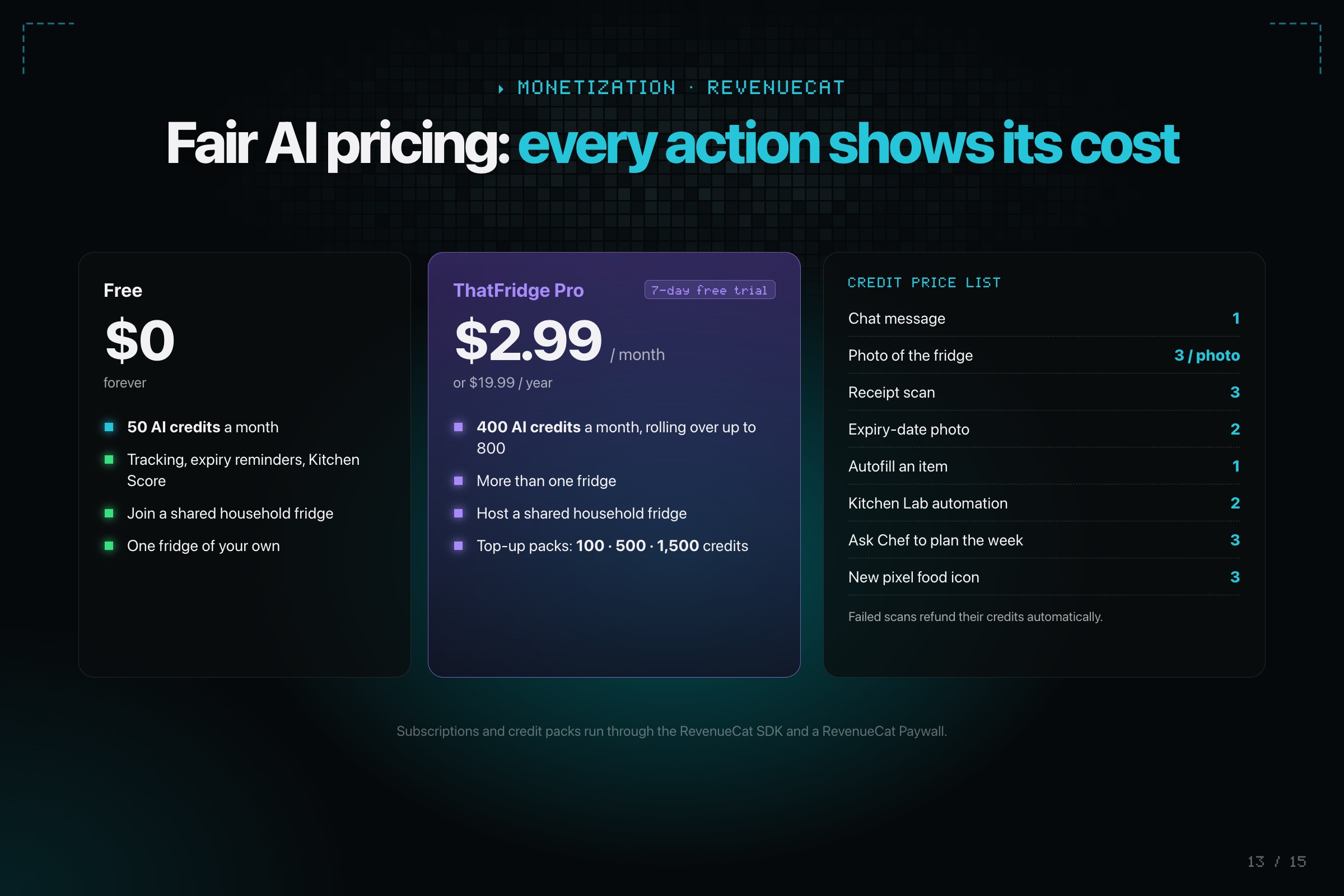
ThatFridge uses a freemium model: Free tier (50 AI credits/month, one fridge) + Pro ($19.99/year, 400 credits, multiple fridges, household sharing)—44% savings vs monthly. We're adding a Lifetime purchase for users who prefer no subscriptions. Credits roll over up to 800, and users can top up anytime: 100 credits for $1.99, 500 for $7.99, or 1,500 for $19.99.
As we scale, we're exploring grocery integrations, B2B partnerships with meal-prep services and API access for recipe apps. These are optional upgrades that solve real problems. Our focus remains: no ads, no forced paywalls, just a clean app that helps people waste less food.
What we have learned
Building ThatFridge taught us that shipping a real product is fundamentally different from building a class project. Features we were proud of got ignored. Things we built last-minute became the most-used parts of the app.
Without this hackathon, we wouldn't have been prepared for a multi-device sync problem. When four phones are updating the same fridge simultaneously, accuracy matters more than speed. We spent more time on conflict resolution and sync operations than on any feature—because a household seeing stale data doesn't feel like a technical failure. It defeats the entire purpose of ThatFridge.
We thought a good UI meant making things look polished. ThatFridge taught us it's really about behavior. Guardian feels urgent because expiry alerts need action. Chef feels collaborative because meal suggestions should feel like a conversation, not commands. The best design decisions we made had nothing to do with how things looked.
We thought waste reduction required habit-building features—streaks, badges, reminders. But early testers showed us something simpler: visibility alone changed behavior. Once they could check their fridge from anywhere, duplicate purchases dropped naturally. The best sustainability feature we built wasn't a feature at all.
Accomplishments (that we’re proud of)
Last summer break, ThatFridge was just an idea between the four of us. Today it's live on the Apple App Store, handling real household data across multiple devices, with Android right around the corner. In the last 28 days: 120 new users, 121 active — all organic, no paid ads. For a team of third-year CS students from Korea University, seeing something we imagined become a real product people can actually use feels unreal.
Production-grade reliability
Multi-device sync works reliably across 4+ phones simultaneously, handling offline scenarios, conflict resolution, and eventual consistency without data loss. Offline-first architecture means the app stays responsive even on poor connections.
User behavior change
Our early testers reported real changes: fewer duplicate purchases, forgotten items used before expiring, and less food thrown away. One household noticed the difference within their first week and it wasn't because of reminders. They just finally knew what they had in their fridge.
Character-Driven Design
We shipped a visual identity that feels nothing like a typical food app—pixel-art crew with neon accents, each character serving a distinct UX purpose. Guardian feels urgent. Chef feels collaborative. Every animation is meaningful and never blocks information access. The details are in the small moments: crew animations that react to each task, seamless dark/light mode switching, and custom food icon generation for items our library doesn't recognize yet.
Future Improvements
- ThatFridge is designed to scale — every household is a potential user and our Commercial Kitchen version extends impact to food service where waste is highest.
- Food Knowledge Graph — Structured map of ingredients, recipes, nutrition, allergens, storage and shelf life—underlying intelligence for all agents.
- Multimodal Food Foundation Model — One model combining images, barcodes, receipts, temperature and behavior to understand food and kitchen environments.
- Commercial Kitchen Version — Scale to restaurants, cafés, and cafeterias where inventory, RFID, expiration prediction and waste analytics add significant value.
- Supply-Chain Integration — Track items from manufacturer → retailer → household, automatically transferring product info, allergens, recalls and storage recommendations.
Prize Categories
Below are the award categories we are participating in:
- Next Gen Award
- RevenueCat Design Award
- RevenueCat Peace Prize
- HAMM Award (Help Apps Make Money)
Built With
- claude
- expo.io
- fal.ai
- github-action
- ios
- laravel
- openrouter
- postgresql
- react-native
- revenuecat


Log in or sign up for Devpost to join the conversation.