Inspiration
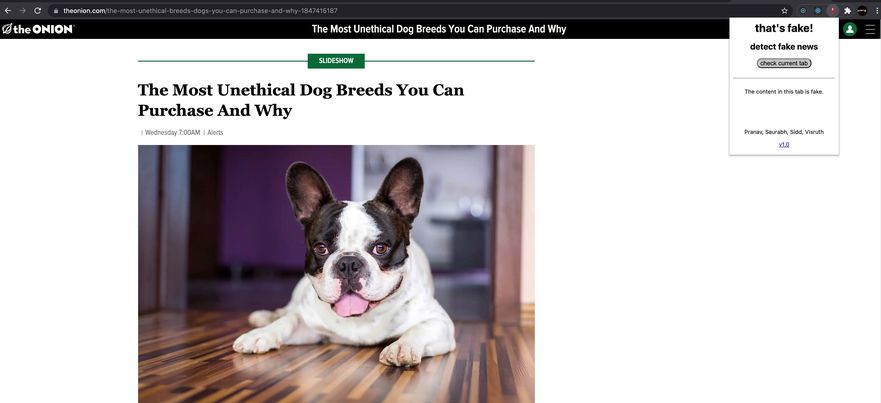
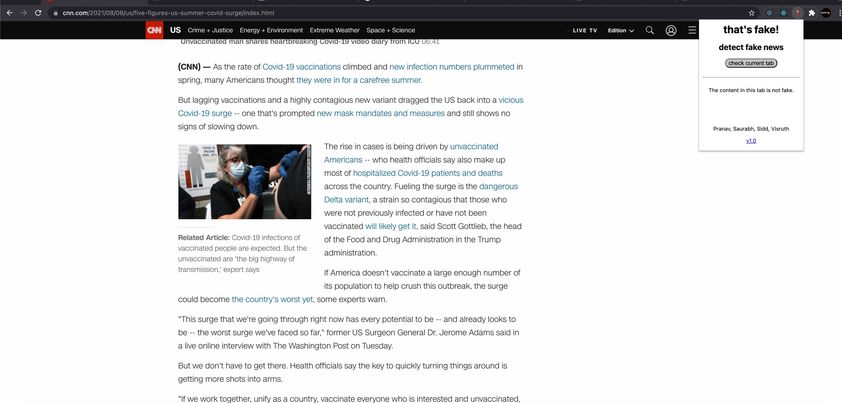
After the COVID-19 pandemic began, we noticed that some web/news sites have been spreading false information. Those who struggled to realize that they were exposed to false information could have been affected by COVID-19 due the spread of misinformation. Our goal is to prevent the spread of any kind of misinformation by using a chrome extension to detect how real or fake an article is.
What it does
Our extension reads the current web page that they are reading and checks the legitimacy of the web page when the user decides to.
How we built it
First, we built a tensorflow model that uses sentiment analysis to detect possible fake news. Then we saved the weights of the model and created a flask app. We made an API from the flask app through heroku, and connected the API to our chrome extension.
Challenges we ran into
We ran into multiple challenges in the past two days. One big challenge that we had was finding a way to implement machine learning inside of a chrome extension, we kept on getting errors regarding the state of tensorflow. We solved this by using a flask app and API to host our machine learning project. Another problem that we faced was actually creating the API as cloud hosting websites didn’t let us import many libraries due the file size. We realized that tensorflow was taking up much space so we switched to tensorflow-cpu.
Accomplishments that we're proud of
We are proud of getting the chrome extension up and running and getting our API to work.
What we learned
We learned how to make an chrome extension, some javascript, and how to make an API
What's next for that's fakeWhat’s next for that’s fake is being able to scan websites in seconds. Built into all browsers to stop the spread of misinformation, and being openly accessible.
Built With
- css3
- flask
- html5
- javascript
- python
- tensorflow


Log in or sign up for Devpost to join the conversation.