Inspiration
As a recent college graduate entering the corporate world for the first time, I found myself fascinated by how much of office work revolves around managing attention rather than completing tasks. Every day brings competing priorities, conflicting instructions, surprise meetings, Slack messages, emails, policy updates, and coworkers who all believe their request is the most important thing happening in the company.
Many games about work focus on building businesses or managing resources, but very few capture the feeling of sitting at a desk trying to stay productive while the organization itself constantly interrupts you. I wanted to explore the humor, absurdity, and tension of modern office culture through a game that treats attention as the primary resource being managed.
The title itself, Thank Goodness It's Friday, became the foundation of the design. Most people understand the feeling of working through a long week and looking forward to Friday. I wanted to turn that universal experience into a game loop where surviving the workweek becomes both the player's objective and their reward.
What It Is
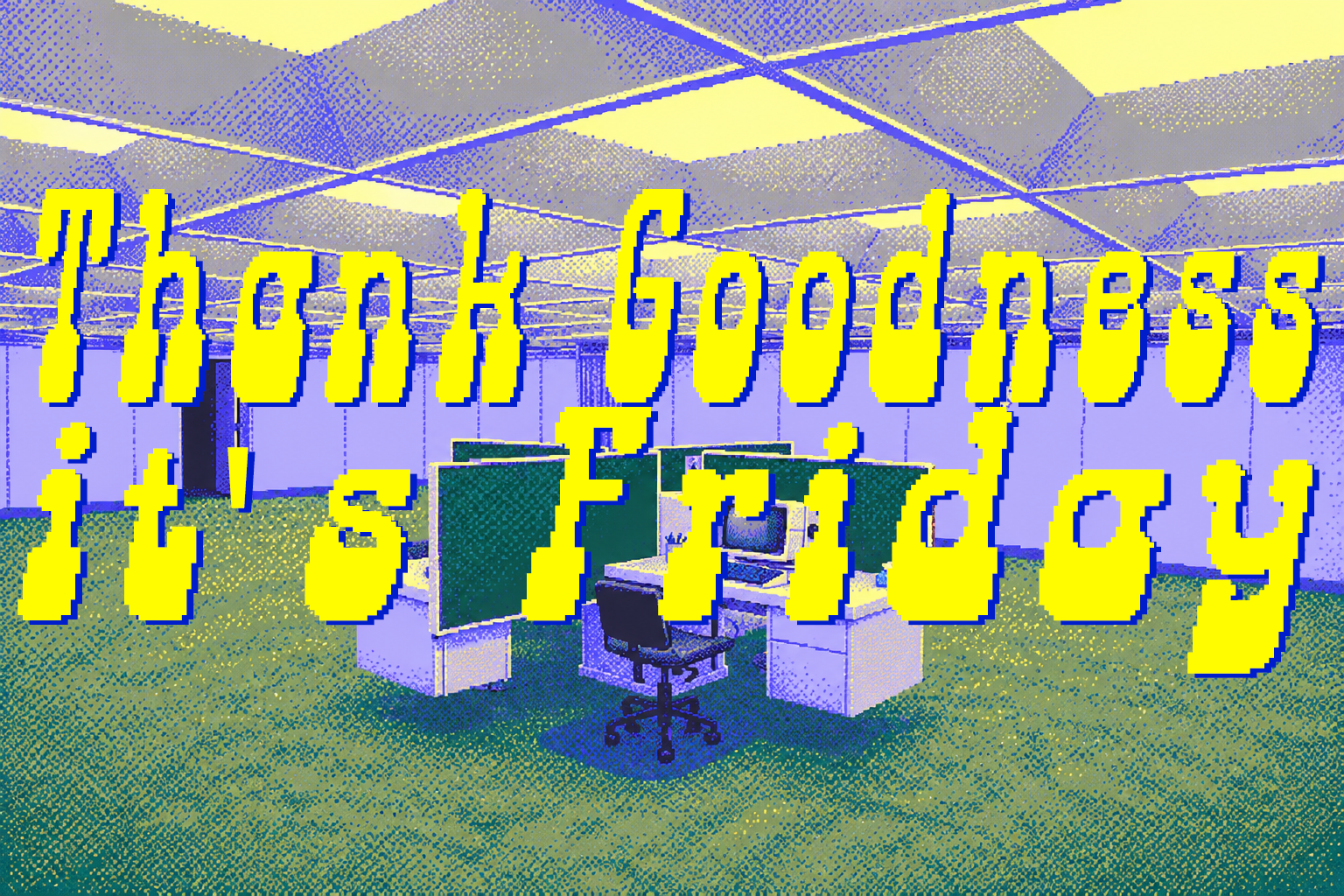
Thank Goodness It's Friday is a mobile-first Simulation & Management game about climbing the corporate ladder while managing an increasingly chaotic workstation.
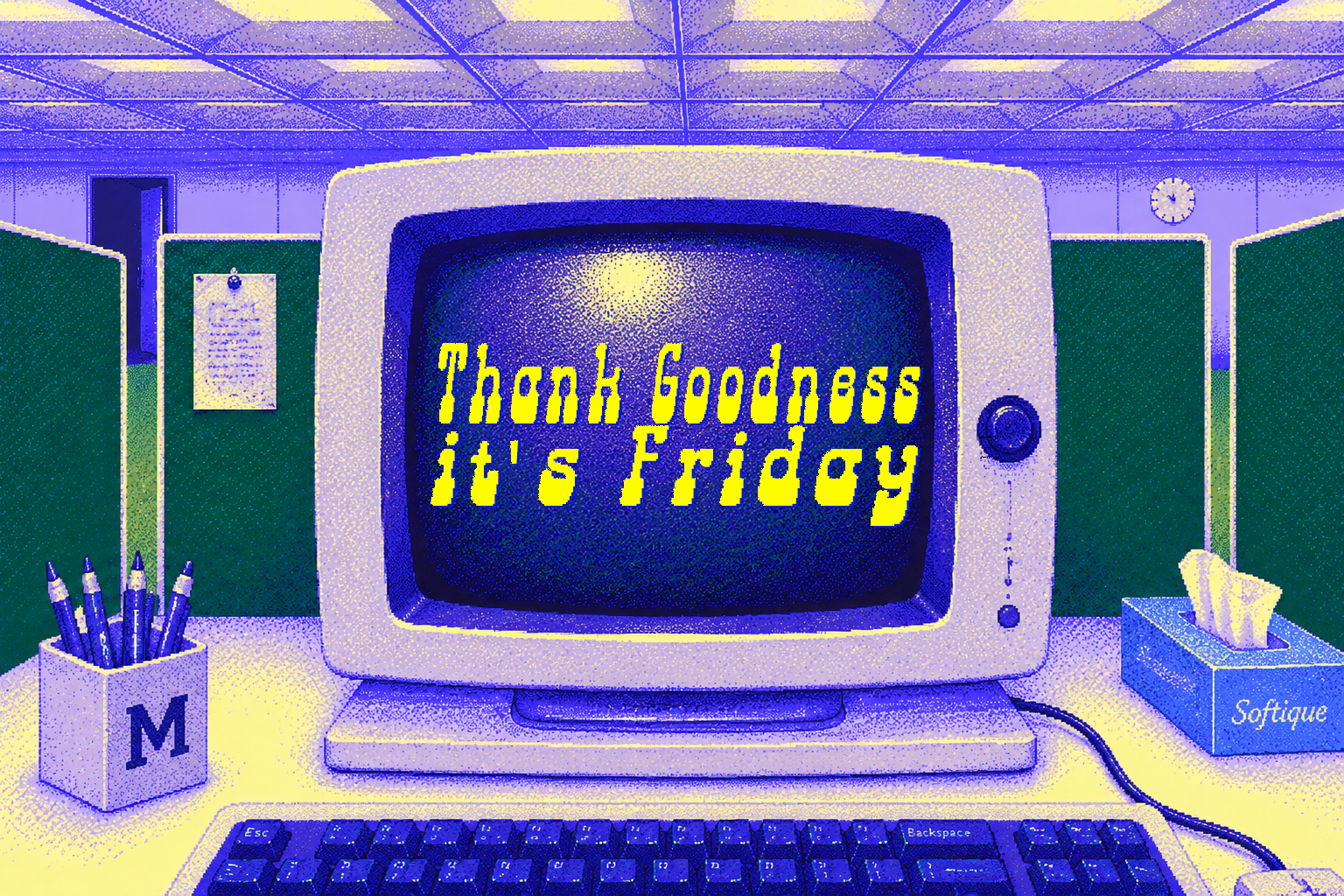
The player experiences the game from a first-person cubicle perspective, processing corporate requests such as expense reports, policy exceptions, employee issues, budget approvals, and executive directives. Each case requires the player to inspect information, identify contradictions, and make decisions under time pressure.
As players perform well, they receive promotions that expand their responsibilities. New roles unlock additional systems such as Slack communication, employee management, delegation, performance reviews, budgeting, and executive politics. Promotions improve the player's desk, workspace, and status, but they also increase complexity and workload.
The core fantasy is that success does not simplify the game—it makes the bureaucracy larger.
How I Designed It
The project was developed as a complete game design package rather than a playable prototype. My focus was on building a cohesive design vision supported by interconnected systems, progression mechanics, visual direction, and player motivation.
The design process began with the question:
"What is the actual challenge of office work?"
Rather than simulating spreadsheets or business growth, I identified attention management as the central mechanic. This led to a gameplay structure built around:
Processing corporate cases Identifying contradictions Managing interruptions Balancing productivity, reputation, focus, and risk Surviving a weekly Monday-to-Friday progression loop
I then layered progression systems around promotions, desk upgrades, recurring coworkers, executive interactions, and branching career paths to create long-term engagement while maintaining short mobile play sessions.
The visual direction was developed alongside the gameplay. The game uses a surreal corporate aesthetic inspired by fluorescent office spaces, retro workplace software, and exaggerated corporate positivity. The workstation itself becomes a visual representation of player progression, evolving from a single monitor in a cramped cubicle to a sprawling executive command center.
Challenges
The biggest challenge was designing a gameplay loop that could support both short mobile sessions and long-term progression.
Many office-themed concepts initially felt either too repetitive or too similar to existing document-inspection games. The breakthrough came when I shifted the focus from paperwork to attention management. This allowed interruptions, social interactions, executive conversations, deadlines, and workplace politics to become meaningful gameplay systems rather than simple flavor text.
Another major challenge was establishing a strong visual language. Corporate offices are familiar environments, but familiarity can easily become visually boring. I spent significant time developing a visual direction that felt recognizable yet exaggerated, combining corporate satire, retro technology, fluorescent office environments, and increasingly chaotic workstation growth to reinforce both gameplay and progression.
Finally, balancing promotions presented an interesting design challenge. Most progression systems make the player more powerful while reducing difficulty. In Thank Goodness It's Friday, promotions needed to feel rewarding while simultaneously increasing responsibility, complexity, and pressure. This became one of the defining pillars of the design.
What I Learned
This project reinforced the importance of designing around a strong core player fantasy.
The most successful ideas were not the individual mechanics but the moments where gameplay, progression, visuals, and theme all supported the same experience. Every major design decision ultimately came back to a single question:
"Does this make the player feel like they are surviving and climbing through an increasingly absurd corporate system?"
I also learned how valuable constraints can be. Designing specifically for mobile forced me to simplify interfaces, focus on short decision loops, and prioritize readability over complexity. Those constraints ultimately made the design stronger and more approachable.
Most importantly, I learned that compelling game design often comes from re-framing everyday experiences. Nearly everyone has dealt with interruptions, conflicting priorities, and workplace bureaucracy. Transforming those familiar frustrations into systems that are strategic, humorous, and rewarding became the most interesting part of the project.


Log in or sign up for Devpost to join the conversation.