Inspiration
The inspiration for ThaliIQ came from my own experience while trying to follow a cutting diet. I wanted to lose weight, but finding a diet plan that actually fit my lifestyle was much harder than expected. I kept jumping between websites, AI tools, YouTube videos, and calorie calculators, but most advice felt too generic.
The bigger issue was that my real meals were Indian homemade meals: roti, dal, rice, sabzi, curd, paneer, chana, poha, idli, dosa, and similar foods. These meals are familiar, affordable, and part of daily life, but they can become high in calories, carb-heavy, or low in protein without proper planning.
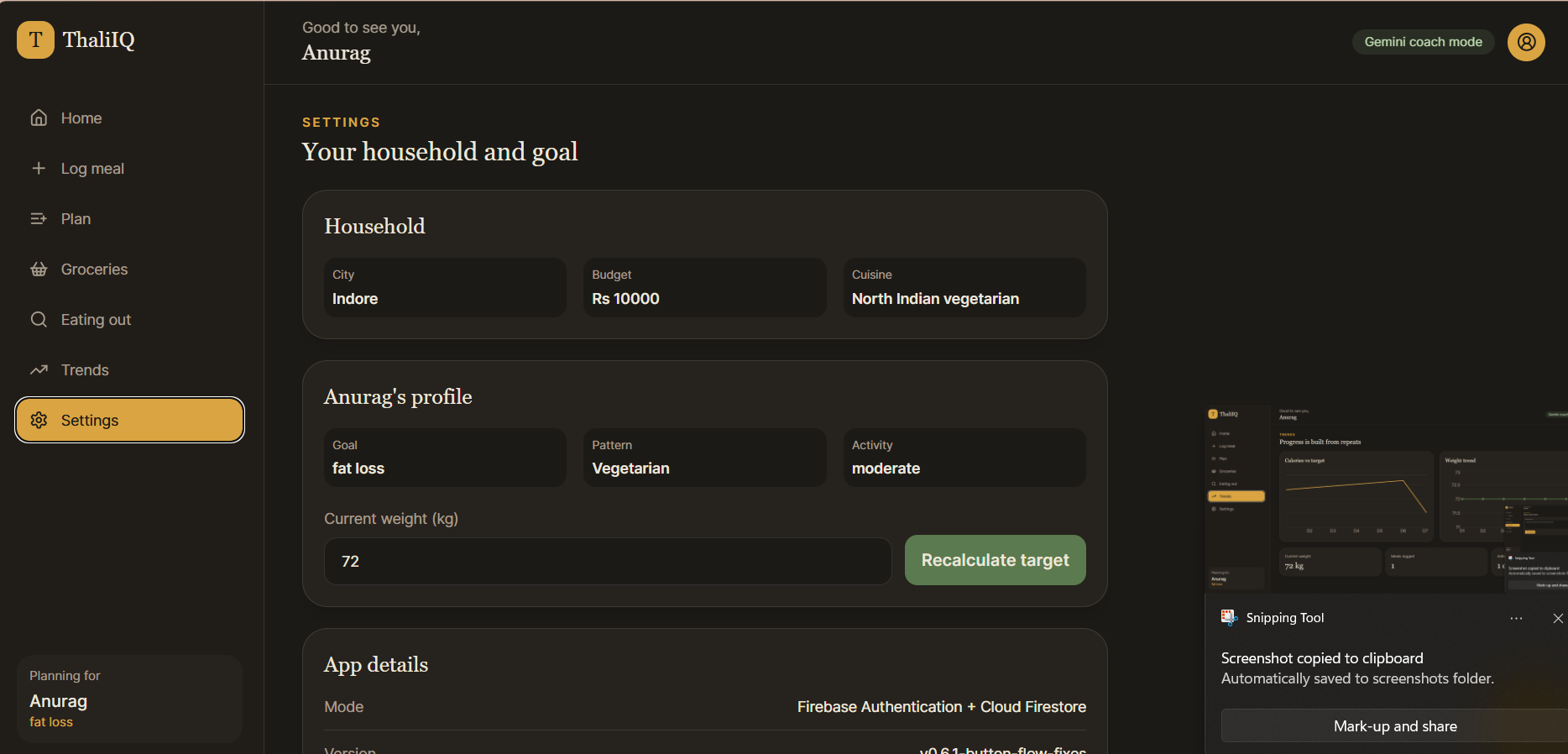
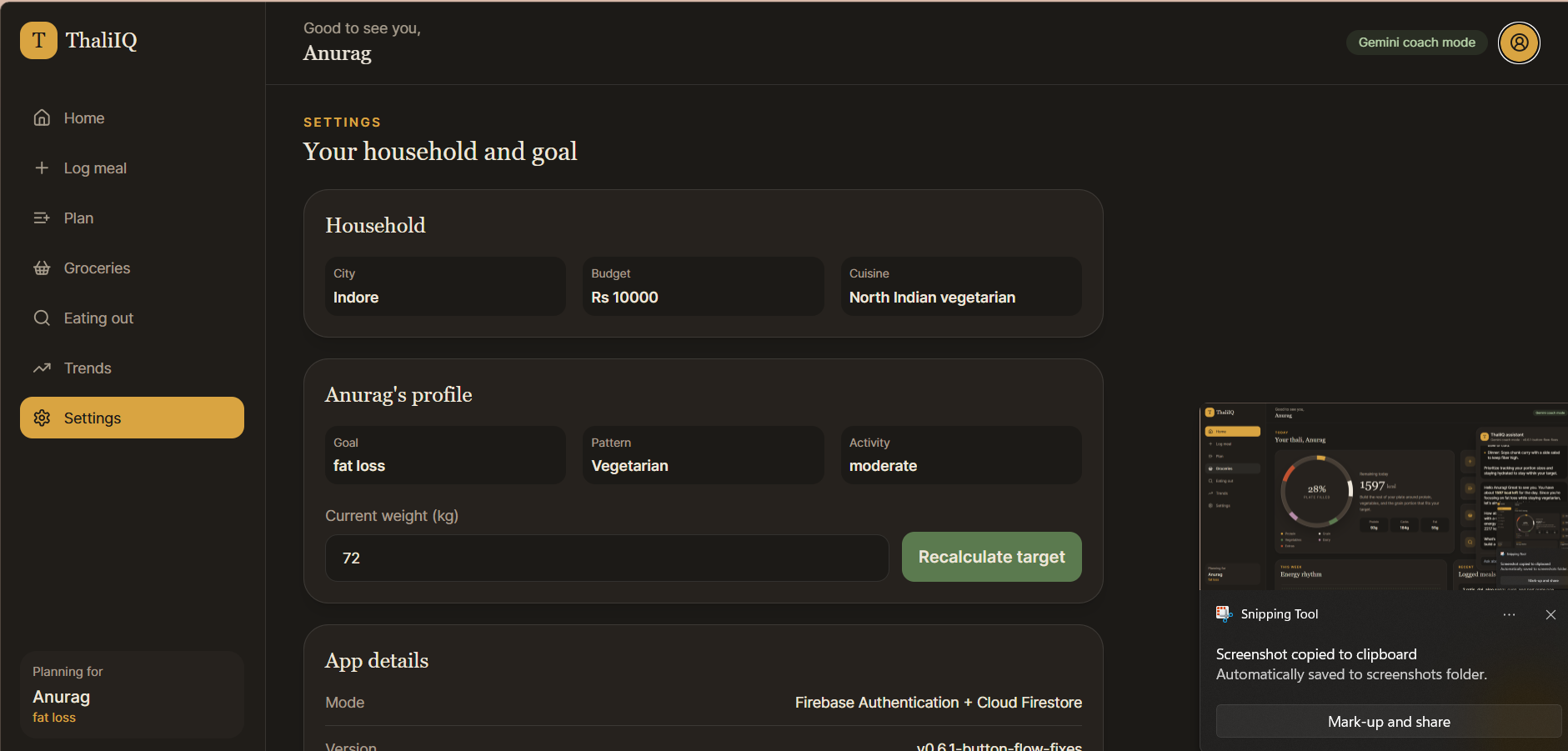
I also noticed this problem around me. Many friends and families have different goals like weight loss, vegetarian protein intake, diabetes awareness, PCOS support, or budget-friendly eating. That inspired me to build ThaliIQ: an AI-powered diet copilot designed for Indian households.
What it does
ThaliIQ helps users make healthier food decisions without forcing them to completely change what they eat.
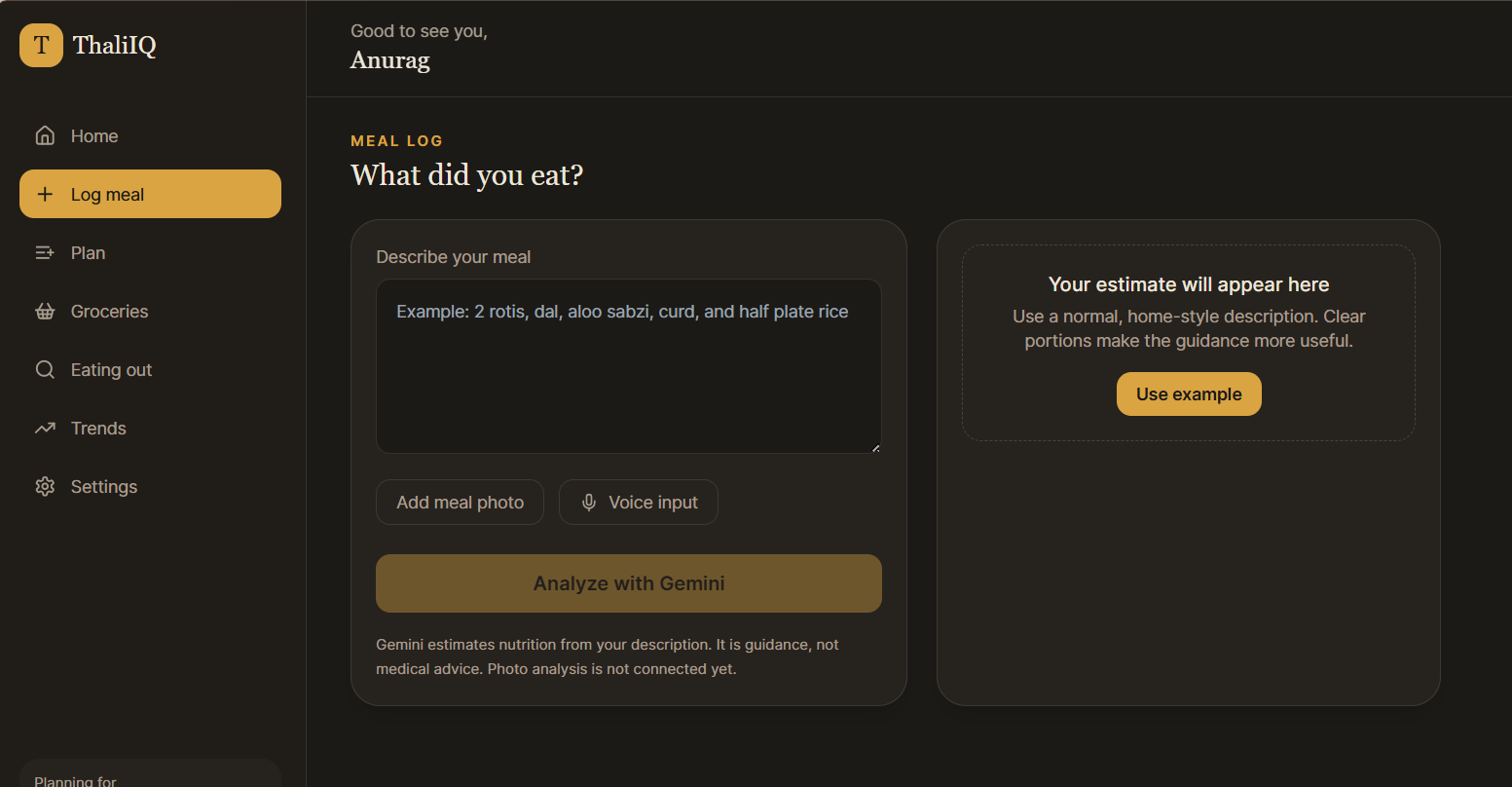
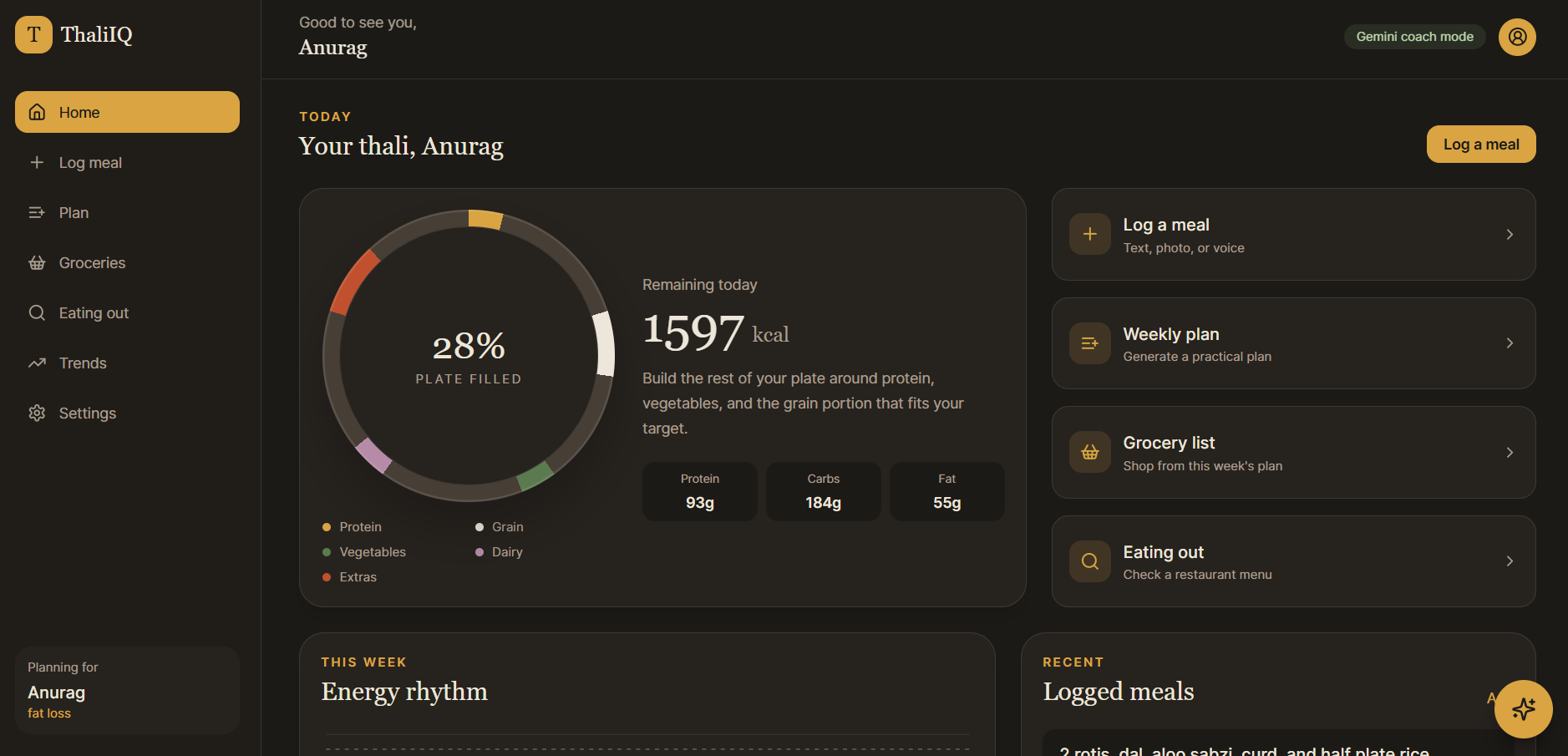
Users can enter a meal such as “2 rotis, dal, aloo sabzi, curd, and rice,” and ThaliIQ estimates the nutrition, explains its assumptions, and suggests practical healthier changes. It supports family profiles, so different members can have different goals and portion needs.
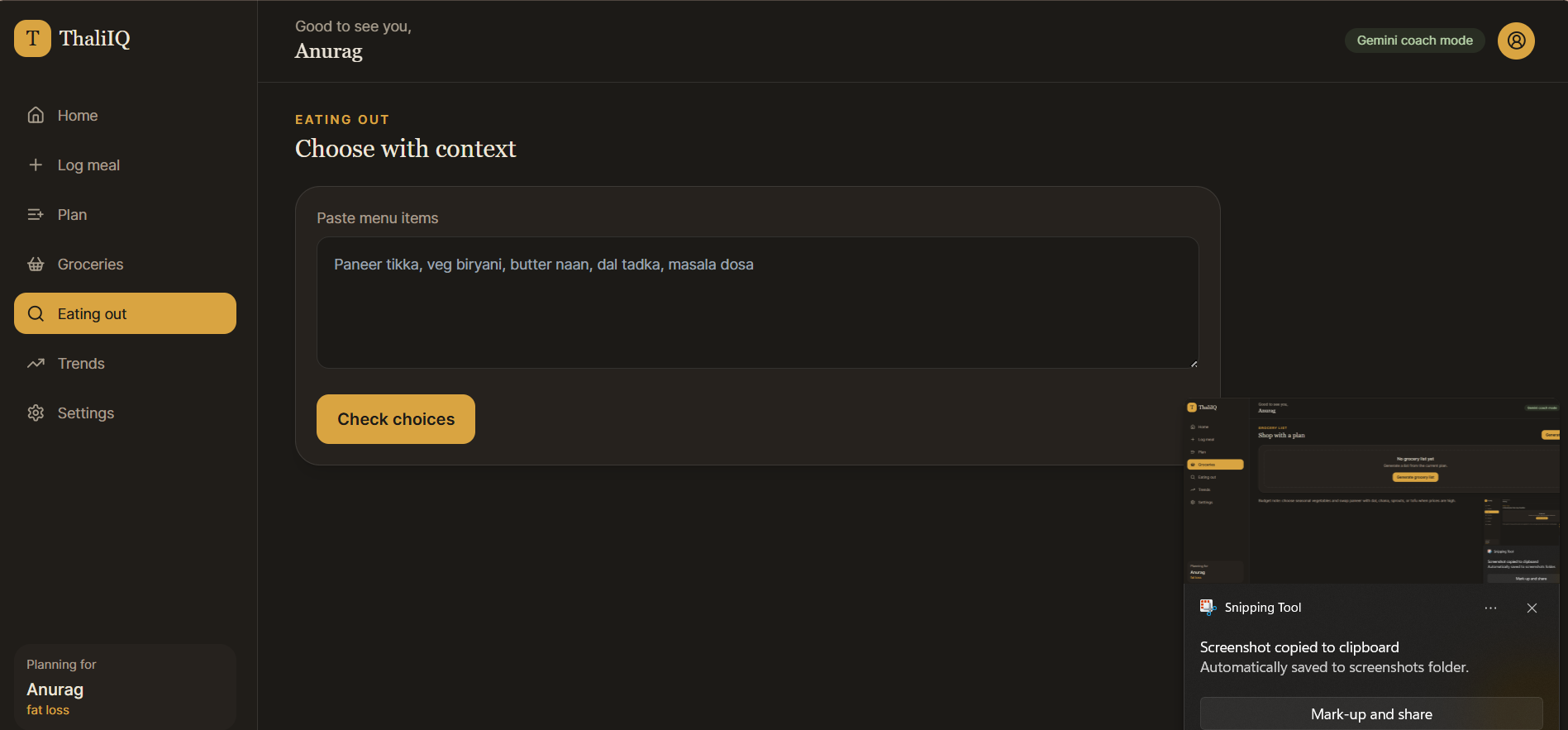
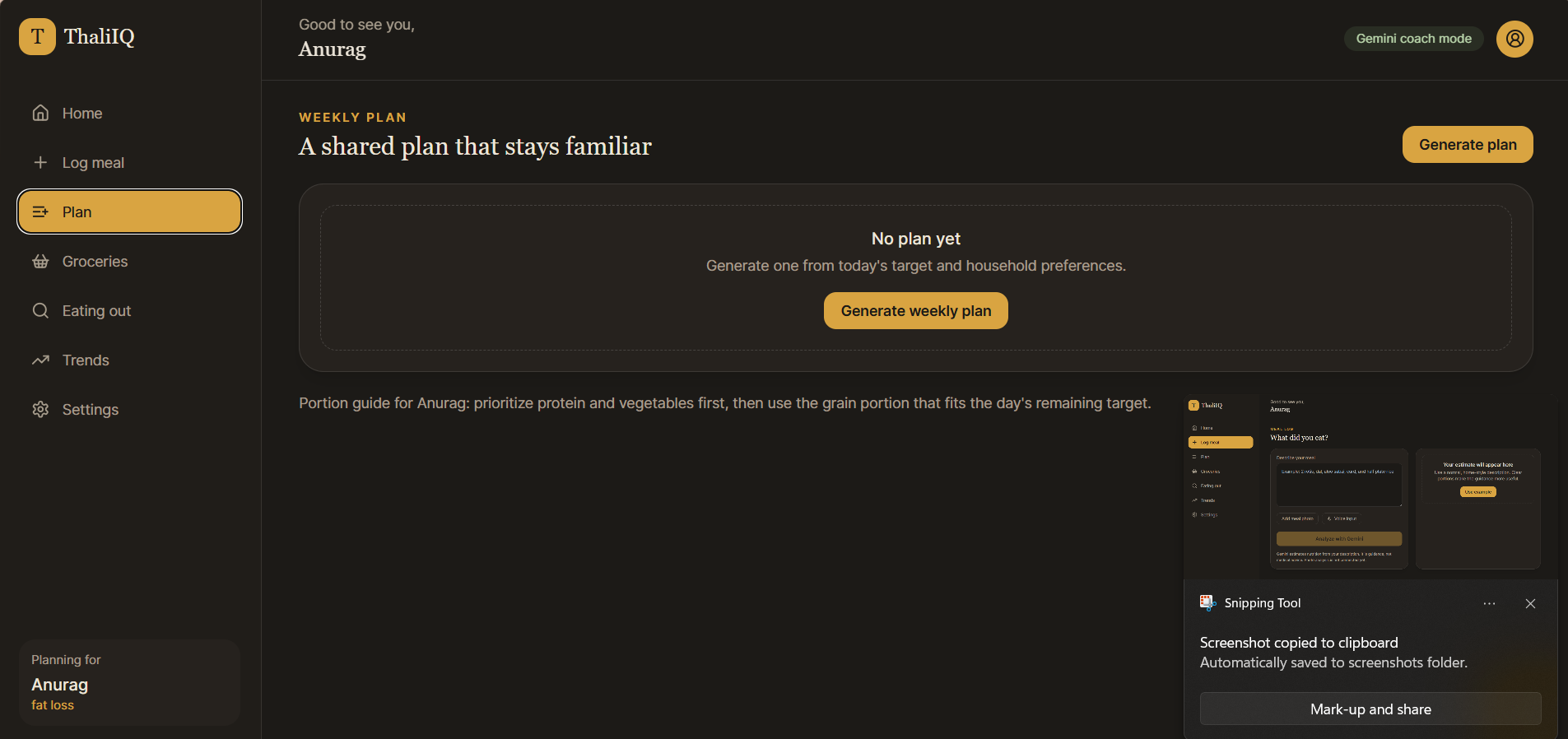
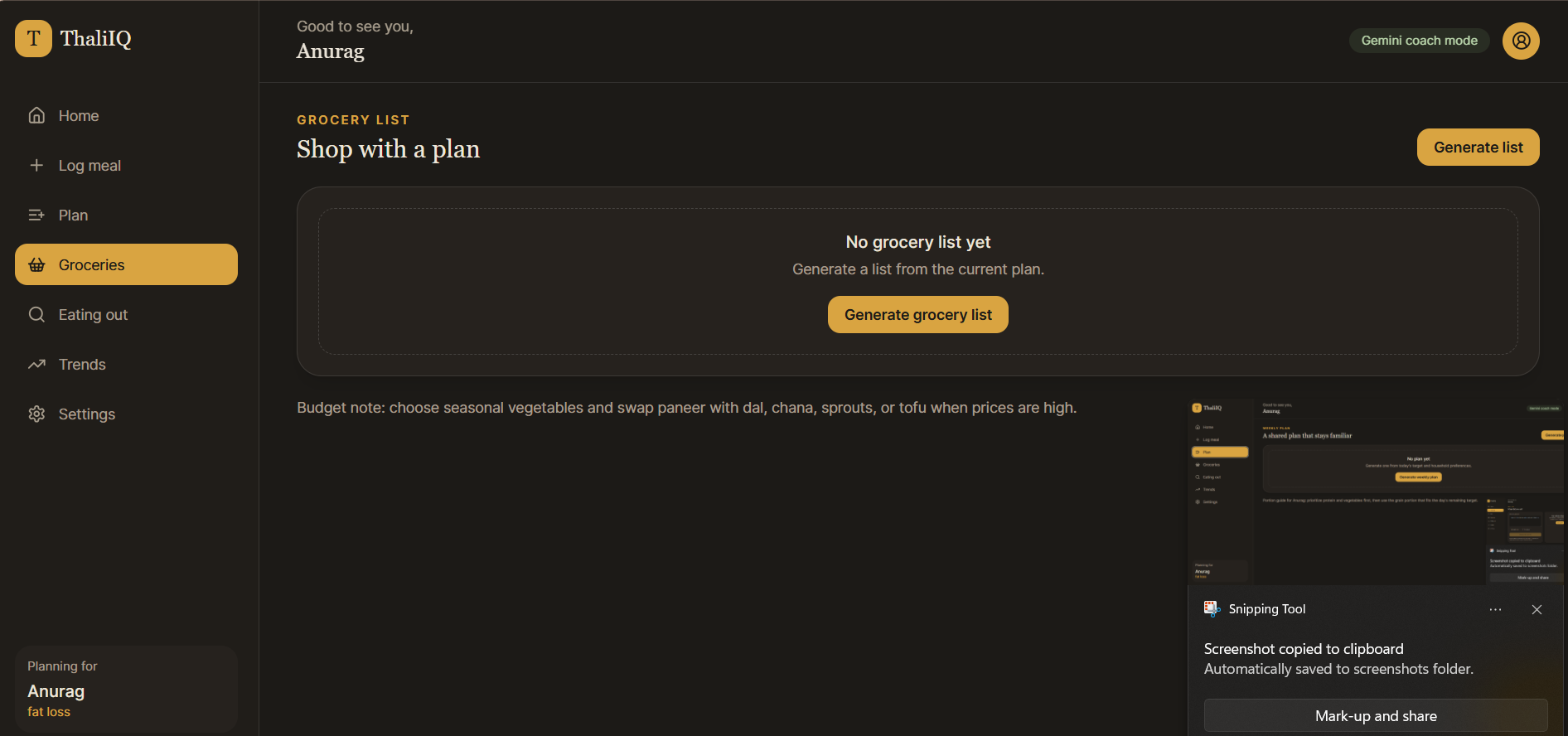
The app can also generate weekly meal plans, create grocery lists based on the family’s plan and budget, and help users choose better options from restaurant menus when eating outside.
ThaliIQ is not a replacement for doctors or dieticians. It is a nutrition education and planning assistant that helps people make more informed everyday food choices.
How we built it
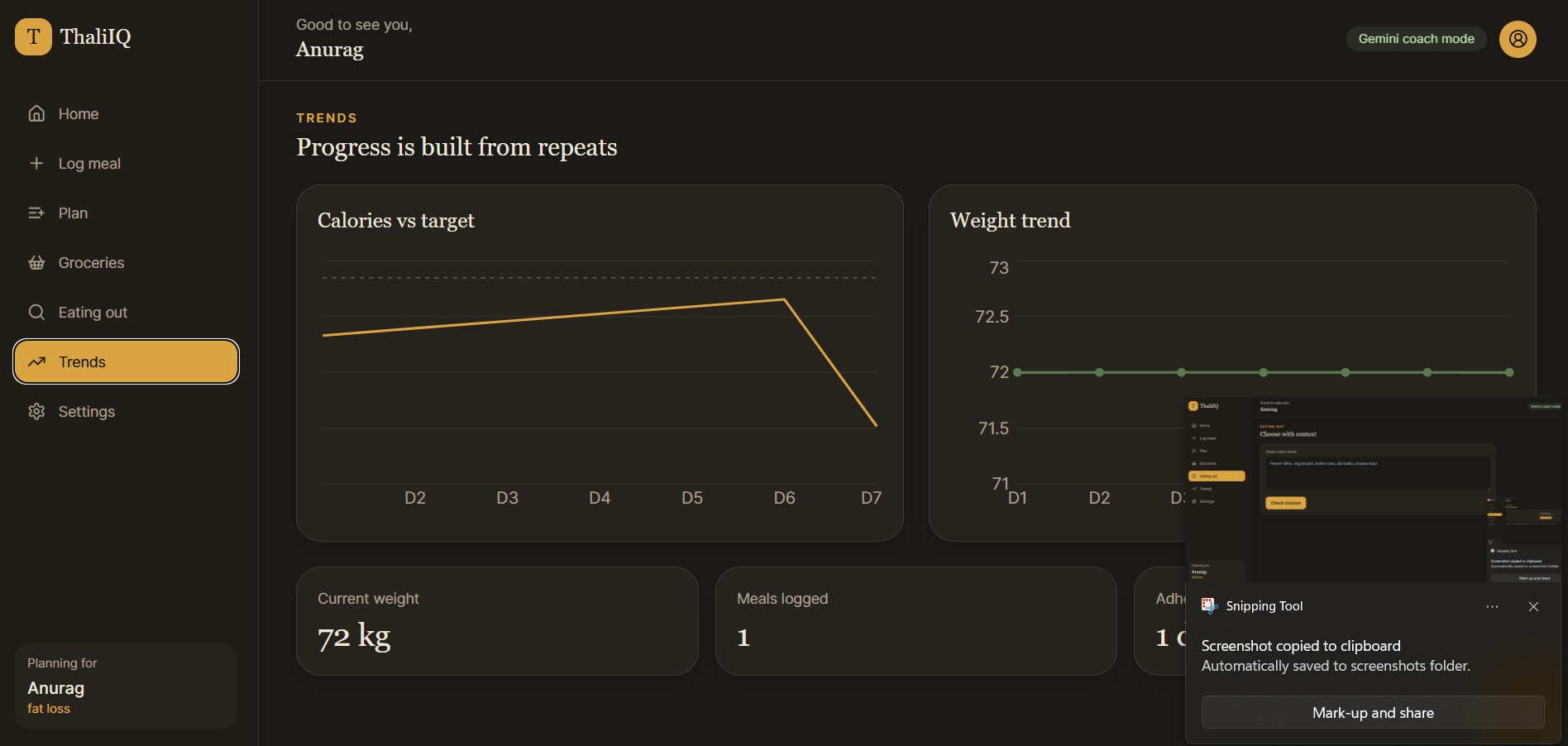
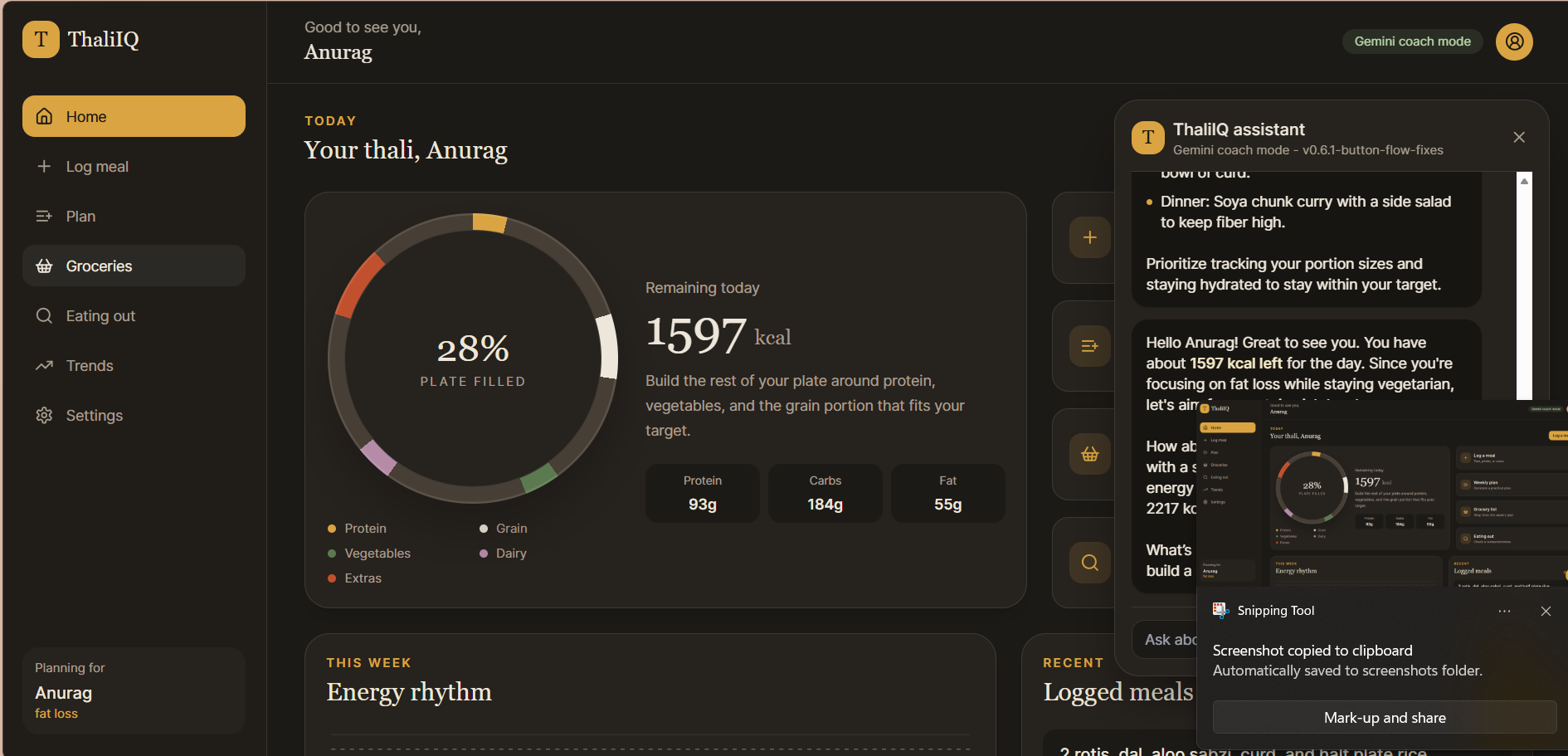
We built ThaliIQ as a React, TypeScript, and Vite web app with a clean dashboard-style interface. The project is structured around the main daily diet workflow: profile setup, meal logging, nutrition analysis, planning, groceries, restaurant choices, and progress tracking.
We created typed data models for family profiles, meal analysis, grocery lists, weekly plans, and restaurant recommendations. The app uses a mock-first AI service layer so the demo works reliably, while keeping the structure ready for a real AI backend later.
We also added a safety-focused calorie engine, local JSON persistence, routed app screens, a floating assistant, and Firebase configuration foundations for future authentication, database storage, and image uploads.
Challenges we ran into
One of the biggest challenges was scope. Diet management is a huge problem, and it was easy to imagine too many features. We had to focus on a hackathon-friendly MVP while still making the product feel useful and realistic.
Another challenge was Indian food itself. Homemade meals are hard to estimate because nutrition changes based on portion size, oil, preparation style, and regional variations. Instead of pretending the numbers are perfect, ThaliIQ shows assumptions and gives practical improvement suggestions.
Health guidance was also important to handle carefully. Since users may have conditions like diabetes, PCOS, fatty liver, or hypertension, we designed ThaliIQ as an educational assistant, not a medical tool.
Accomplishments that we're proud of
We are proud that ThaliIQ solves a real problem we personally experienced. It is not just another calorie tracker. It is designed around Indian households, shared meals, vegetarian protein challenges, budgets, and everyday food decisions.
We are also proud of how practical the product feels. It does not only say “eat healthy.” It helps users understand what is already on their plate, how to improve it, what to buy for the week, and what to choose when eating outside.
Most importantly, we are proud that the idea has real potential beyond the hackathon. ThaliIQ could support individuals, families, dieticians, gyms, clinics, grocery platforms, and food delivery platforms.
What we learned
We learned that diet planning is not just a math problem. Calories matter, but real diet success also depends on culture, habits, budget, family cooking patterns, protein availability, and consistency.
We also learned that Indian meals need a different approach from standard Western calorie-tracking apps. Common foods like roti, dal, sabzi, rice, paneer, chana, poha, idli, dosa, and curd need more culturally aware guidance.
The biggest learning was that AI becomes most useful when it turns confusing nutrition information into simple, practical decisions.
What's next for ThaliIQ
Next, we want to make ThaliIQ more accurate, personal, and useful in daily life.
Future improvements include AI-based meal photo analysis, a more accurate Indian nutrition database, regional cuisine support, budget-aware grocery optimization, personalized vegetarian protein planning, long-term progress tracking, and a dietician dashboard.
The long-term vision is to make ThaliIQ a practical AI nutrition companion for Indian households, helping people eat healthier without losing touch with the food they already love.
Built With
- css
- firebase
- html
- javascript
- node.js
- openai-api
- react
- tailwind-css
- typescript
- vite

Log in or sign up for Devpost to join the conversation.