-
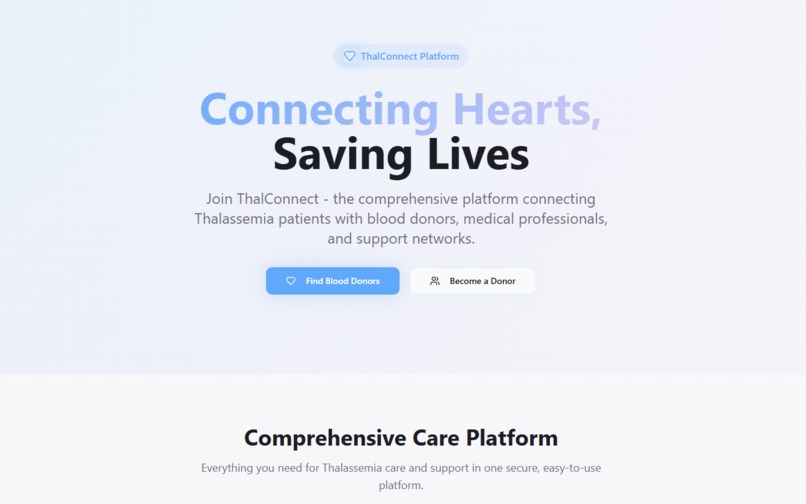
WebSite
-
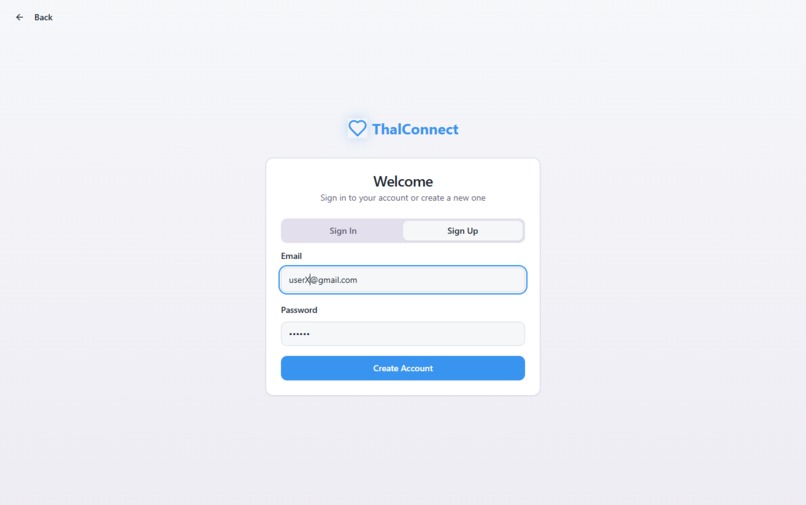
SignUp Page
-
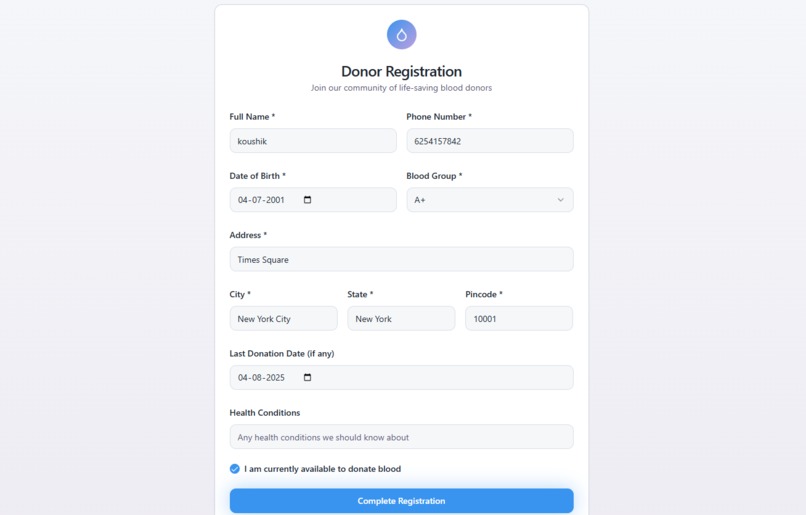
Register as Donor Page
-
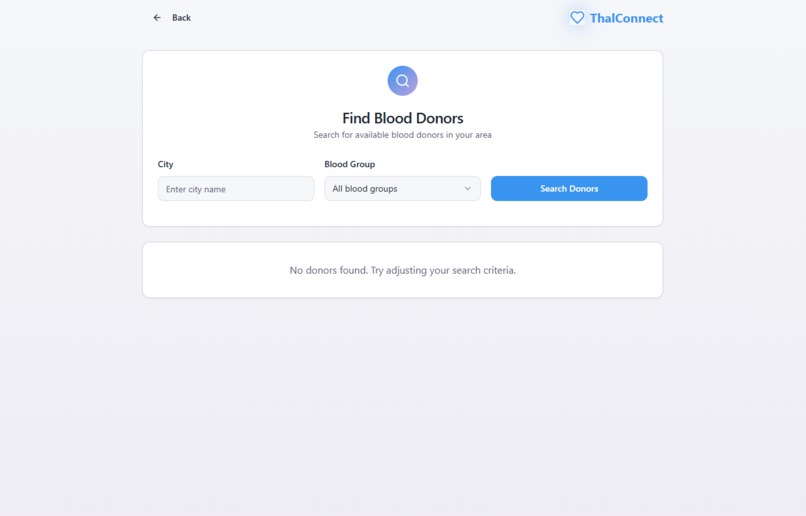
Finding Donors Page


Inspiration We were deeply moved by the struggles faced by Thalassemia patients—especially children—who need regular, timely blood transfusions to survive. Many families are unable to find consistent donors, and awareness about the disease remains low across India. Inspired by Blood Warriors’ efforts and the need for tech-enabled medical support, we decided to build ThalConnect.
What We Learned Building healthcare tools requires deep empathy and privacy-first engineering.
Predictive AI models can play a major role in preventing crisis rather than reacting to it.
Integrating government platforms like e-RaktKosh and creating secure communication between patients, donors, and doctors can reduce friction significantly.
How We Built It Frontend: Built using React.js and TailwindCSS with mobile-first, accessible UI.
Backend: Node.js (Express) API with JWT authentication, RESTful routes, and WebSocket real-time communication.
Database: PostgreSQL for structured patient/donor data, Redis for real-time caching.
AI Model: A donor behavior prediction model built with Scikit-learn to forecast next likely donation date using past behavior.
Deployment: Hosted backend on Railway, frontend on Vercel.
Security: End-to-end encryption for messages, data access via role-based controls.
Challenges We Faced Ensuring real-time matching at scale without overloading backend.
Creating a lightweight AI model that could run with limited data and compute.
Handling medical data privacy compliantly and designing a consent-first architecture.
Integrating with public APIs like e-RaktKosh, which required fallback handling for inconsistent data.
Built With
- avascript
- css
- java
- node.js
- python
- railway-(backend)-apis:-e-raktkosh-(blood-bank)
- react
- redis
- redis-(caching)-hosting:-vercel-(frontend)
- socket.io-(for-real-time-events)-backend:-node.js-(express)
- sql
- sql-frontend:-react.js
- tailwindcss
- vercel
- websocket-api-ai/ml:-python-(scikit-learn)-database:-postgresql

Log in or sign up for Devpost to join the conversation.