-
-
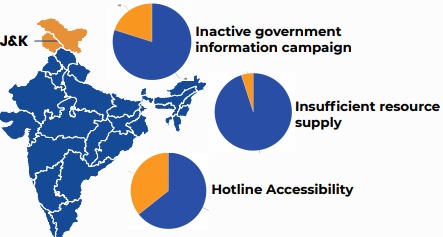
Case study on Jammu and Kashmir
-
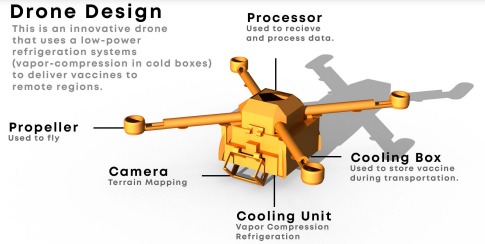
Drone Delivery of Medical Supplies
-

Mapping
-
-

-
-
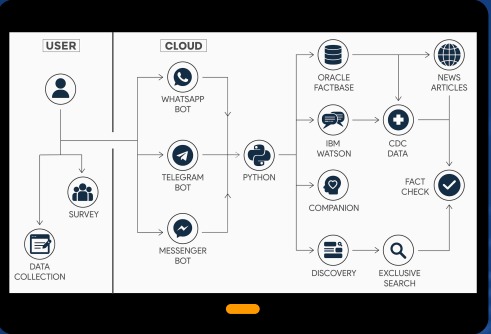
Chatbot Architecture
-
-

Inspiration:
The advent of the COVID-19 pandemic is ravaging the globe--from overwhelmed healthcare institutions, the acceleration of transmission, and an increasing death toll--it suffices to say that drastic steps need to be taken to ameliorate the social, economic, and public health impacts of the corona-virus. The decentralized efforts made by governments to resolve the crisis has left much to be desired; social distancing measures have been widely infringed, misinformation is rampant, and growing fears mount over spontaneous outbreaks of the virus after 2020. There is an inherent lack of efficient resource distribution, be it in terms of essential services to local people or health care supplies to hospitals. Moreover, the traditional emergency response supply chain appears to be breaking up due to the novel nature of the crisis. About 350 million people around the globe are experiencing emotional imbalance due to multiple factors including uncertainty about the future. Should a vaccine be available for distribution, major accessibility concerns remain over the implementation of a worldwide vaccination effort.
The solution:
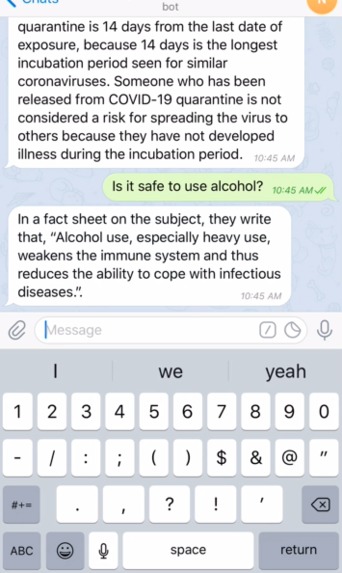
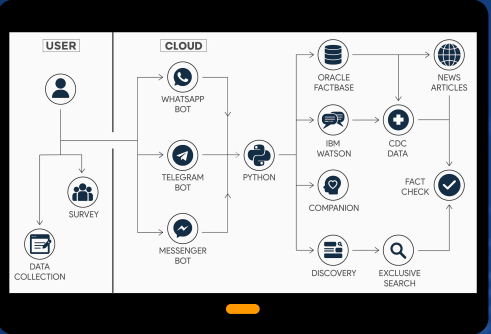
★ To that end, we designed a virtual assistant or chatbot massaging. Users will be able to communicate to the chatbot, a cloud-based instant messaging platform that has over 400 million monthly active users. Any question the user submits will be sent to IBM’s servers, which can answer all questions and retrieve live data from many different APIs. In the event that Watson Assistant cannot find an adequate answer, we run the question through our custom FactBase algorithm. We provide users with accurate information about government responses, emergency resources, statistics on COVID-19, and what they can do to help (behavioral guides, linking to charities).
★ Users can enter in supposed rumors to check if they have a factual basis. We use the transformer neural network BERT for natural language inference in order to detect if a statement is a rumor. To do so, we check the entry against the most similar sentences from the FactBase and see if it contradicts one of our facts. If it does, it is declared a rumor. If it entails one of our facts, we declare that it is a fact.
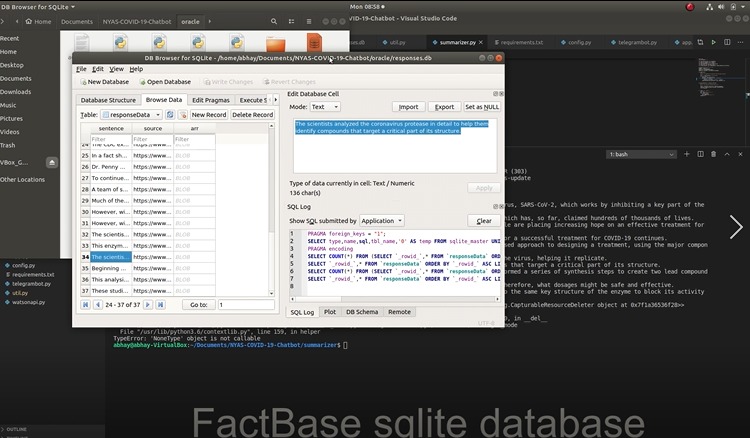
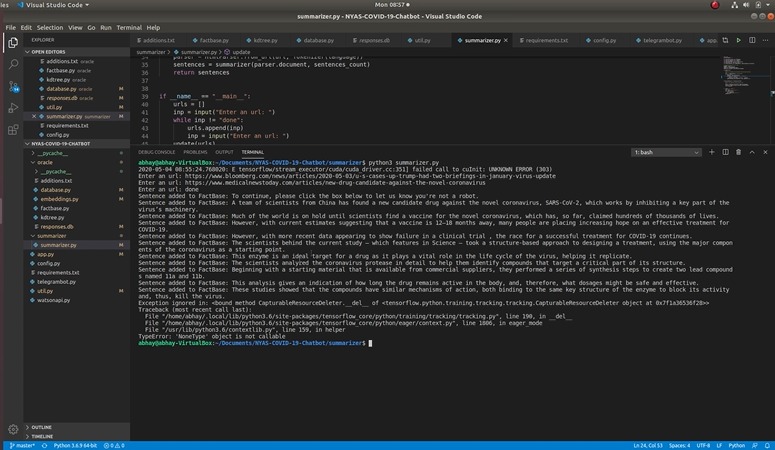
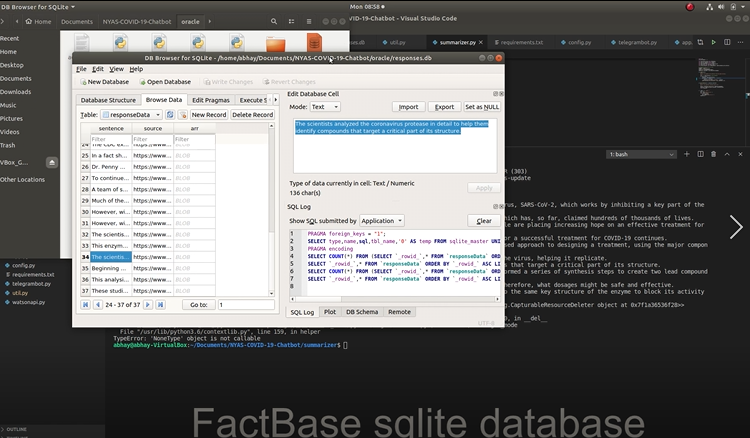
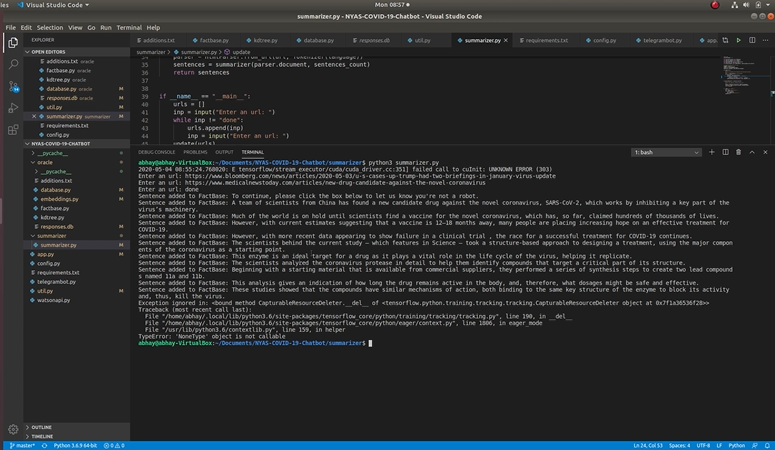
★ The facts that FactBase uses are automatically updated. An admin with access to the database would enter URLs to articles that contain information that should be added to the database. The program downloads the contents of the webpage and scans the text. Using Latent Semantic Analysis, the program constructs an extractive summary of 10 sentences, which are added to the database. In future queries from users that are fed to the FactBase, these sentences will be available as responses.
★ Data will be extrapolated to make automated assessments about a user’s mental health using a sentiment analysis engine -- users will be directed to recognized psychologists in a self-improvement portal or a specialized virtual program in order to meet their needs. To ensure that the pandemic is thoroughly addressed, sufficient herd immunity must be established with far-reaching and timely vaccination campaigns. Currently, deployment strategies contain gaps that exacerbate the potential of accessibility issues; specifically, the most vulnerable and underprivileged groups at risk might not receive vaccines soon enough. We plan to address this by the following steps:
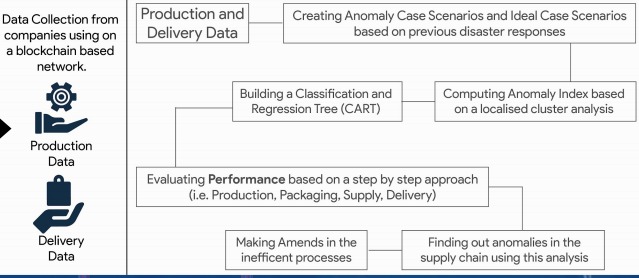
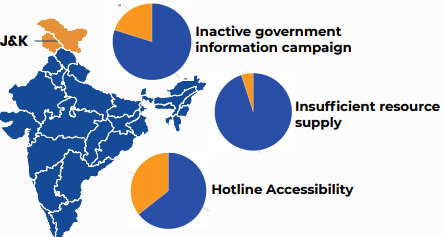
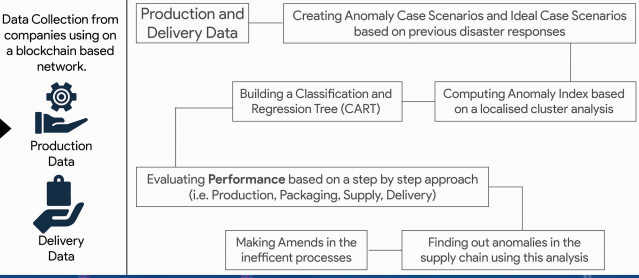
➔ Data from the users about their residential area will be gathered using the chatbot. Users will rate their area based on certain parameters daily. We utilize this grassroots feedback about the accessibility of resources to aid officials in various geographic regions in tailoring strategies that meet the needs of at-risk populations. The officials can reallocate resources accordingly, hence ensuring an equitable distribution of resources. Connecting with essential service companies, we will track crucial features such as physical assets and exploitative behavior such as hoarding to optimize supply chain and increase delivery efficiency. This will help in optimizing future emergency responses by strengthening the strategies used.
➔ Collecting user data for GIS (geospatial information system) based analysis by integrating the Missing Maps project into the chatbot, using radio and governmental news to increase involvement and participation in mapping efforts. This is intended to optimize vaccine distribution by providing coherent delivery directions to remote or rural regions; this effectively minimizes viral reservoirs and carriers in the population.
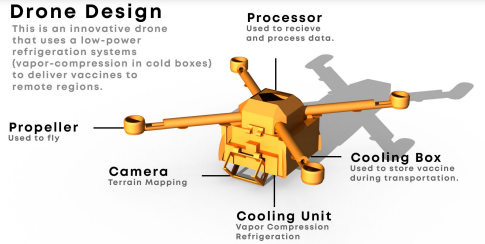
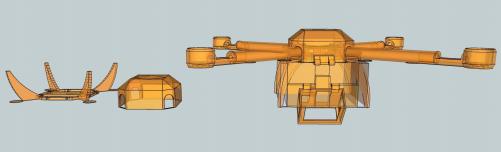
➔ An innovative drone system using low-power refrigeration (vapor-compression in transportable boxes) will be applied to deliver vaccines and other essential medical supplies to remote regions in a timely manner.
process of Ideation:
Hypotheses
- If we provide trustworthy information to people, the spread of misinformation will be reduced.
- If we map the supply chains and identify problems, then the emergency response will be improved.
- If an efficient and affordable system of vaccine distribution is used, a large health crisis can be mitigated.
Proposed solution
Initially, our team planned on tracking user information from social media activity to accurately trace COVID-19 cases and obtain movement data. However, after research on the implications of the idea, we realized that there were several logistical and ethical issues with such a major undertaking. We decided to target our solution towards a specific region and tailor our strategy to that end to maximize the impact of the solution.
We decided to create a coherent program that supplies resources and information to the citizens in need. After researching various API based integration and assessing the faults within current AI tools, we decided that it was necessary to utilize human feedback and create the chatbot. This chatbot would be the main proponent in delivering accurate and relevant information to the masses, however, it will not be the end to the solution. We decided to pursue a solution because the accessibility of both essential services and vaccines was a major concern, displaying a massive disconnect in society.
Research plan
➔ For our solution, it was found to be important to research the feasibility of medical drones, GIS mapping, the growing industry of telemedicine, the use of AI in healthcare. ➔ To do this, we examined sources from US National Library of Medicine National Institutes of Health, UNICEF, Science-direct, and firsthand accounts of health-care workers during this crisis. ➔ Additionally, we had to conduct extensive research on anomaly detection algorithms and their use in the logistics sector. ➔ For testing the chat-bot, we released a public version to gain feedback from the users.
Case study at Jammu and Kashmir:
Jammu and Kashmir was a state(now UT) in Northern India. It is a distressed region with frequent terror attacks and lockdowns. Only recently the state got some relief after it was declared a Union territory. The state economy was only beginning to thrive again and people were starting to move around; all this happened for a short while until the advent of Covid-19. Srinagar, the capital of Kashmir, was amongst the first cities in India to be declared a high-risk zone. We decided to make a solution that is not only localized to this region but scalable to other regions that are similarly going through the heightened social and economic hardships caused by COVID-19. As shown in figure 1 above
Chat-bot Operations
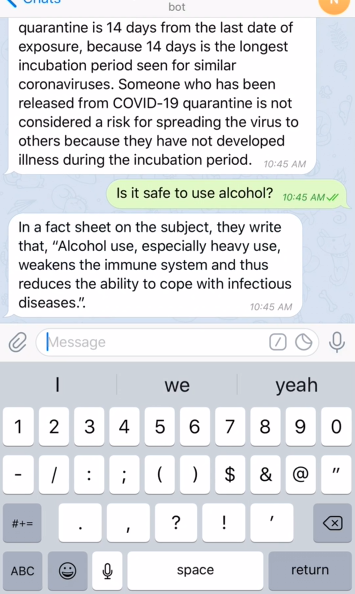
This chat-bot is designed to help disseminate trustworthy information and facts about the pandemic to the public. By answering questions and detecting rumors, it will help create a more informed public who will be able to make educated decisions. Users will be able to ask chat-bot any question regarding the pandemic. The chat-bot will provide a quick and information-packed response.
Upon receiving a message from the user. Upon receiving the message data, our server sends a request to IBM’s Watson Assistant and Discovery APIs. IBM’s Watson Assistant and Discovery API can answer most questions and has the ability to get live data from many different APIs. In the event that Watson Assistant cannot find an adequate answer sends our server an error, we run the question through our custom FactBase algorithm. Using google’s Universal Sentence Encoder, we convert the question into a 512-dimensional embedding vector. Additionally, we store hundreds of sentences and their corresponding embedding vectors in a K-Dimensional Tree data structure. We query the K-Dimensional Tree data structure with the questions embedding vector to find and return the response associated with the closest response embedding vector.
Other Features of our Chat-bot Platform:
Auto-Summarizer
In order to add new facts to the FactBase as soon as they are published, we have produced an Auto-Summarizer capable of selecting sentences from the article that best describe its contents. We perform this extractive summarization using an unsupervised approach. We use latent semantic analysis to select a diverse set of sentences that represent the article. For each selected sentence, we insert it, along with its 512-dimensional embedding, into our SQLite database for future use. We can collect articles either manually or automatically through the use of news APIs.
Rumor Detection
We also utilize the FactBase to fact check rumors. Users can enter potential rumors they want fact checked into a separate chat-bot that also operates on Telegram. The bot returns a guess of the truth value of the claim, along with facts that could potentially entail or contradict the claim. In order to detect whether a fact in our FactBase either contradicts or entails the claim, we use BERT, a state-of-the-art transformer network for the natural language inference task. We only compare the claim with some number of facts most similar to it from the FactBase.
Supply Distribution:
Drone Delivery of Medical Supplies
We will use unmanned aerial vehicles to deliver essential medical commodities like testing kits, vaccines, and antiviral medicine to underserved and geographically rural communities around the world. To combat problems with GPS, drones are based on vision based precision target landing in which the camera is able to identify man-made structures to accurately deliver items. An inexpensive vapor-compression refrigeration system (uses R600a refrigerant) based on solar power will be used to safely store temperature sensitive items. As shown in figure 3 above
Mapping
Our virtual assistant/chatbot platform will integrate the OpenStreetMap, a NGO platform of volunteers that independently contribute to a world map by ascribing structures, paths, and infrastructure in their region. Using media like radio to persuade residents to map their areas to aid in public health campaigns such as vaccine distribution, we intend to engage citizens to streamline the process of reaching isolated communities in light of the global pandemic. As shown in figure 4 above
Reflection:
Impact
We were able to help the public of Jammu & Kashmir acquire trustworthy information about COVID-19. Additionally, we were able to map public attitudes and vaccine inaccessibility by geographical area, to facilitate improved vaccine and supply distribution in the future.
Scalability
Our solution has the potential to be adapted to the different needs of the government even after the crisis ends. It may be used for a trustworthy information campaign, an efficient feedback mechanism, or for logistical analysis. Our solution is sustainable and efficient in terms of both usability and outreach.
Next Steps
The next steps are to integrate our virtual assistant and accessibility efforts into multiple localized regions for governments and organizations to implement. We hope to gather user feedback from citizens who utilize our application for improvement. We also hope to further integrate different methods to curtail the spread of COVID-19, unify different efforts on a singular platform, and investigate the possibility of connecting citizens to researchers and leaders with a feedback/grievances receptor. We would also like to investigate more effective ways to test people for COVID-19, such as different diagnostic methods, decreasing cost through alternative tests, and more.


Log in or sign up for Devpost to join the conversation.