-

New Teammate Michael
-
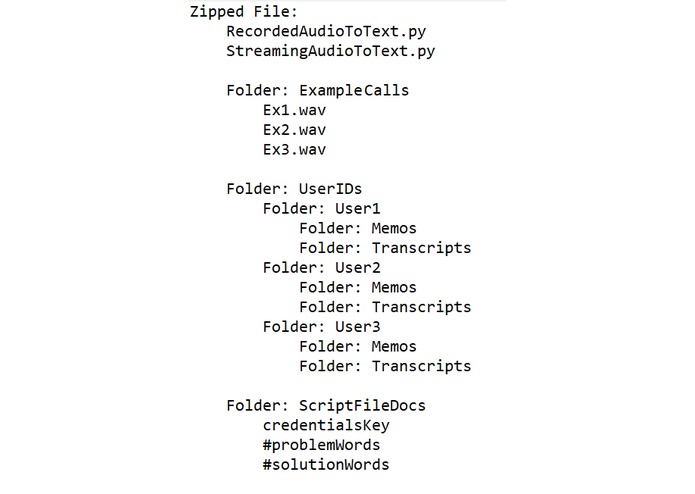
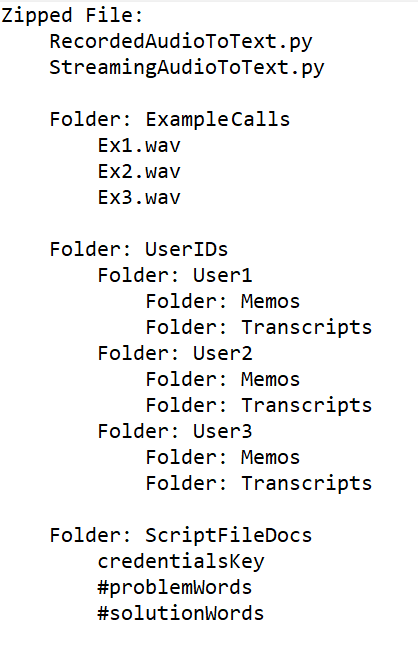
Folder Setup

Inspiration
We knew T-Mobile's dedicated Team of Experts were trying to know their customers better so we tried to develop a tool to help document the customer's past workings with T-Mobile
What it does
It translates the audio (of a hypothetical phone call) into text and then searches for key words to try to identify what the user has had/done in the past. It will type up of the full transcript of the call, and will try to create a memo about the key points it identified. There's two different versions, one that will translate the call in real time and one that will translate pre-recorded audios.
How we built it
We found tutorials about text-to-speech, tried several versions, settled on Google's Cloud translator, managed to set it up with a lot of trial and error, then we had to go back and do a lot of parsing commands and special additions to make the memo file work, as well as change everything from hard-coding to generics.
Challenges we ran into
Two team members didn't show, one's laptop broke early on and had to leave, sleepiness, and we couldn't really get Jazz working in the time remaining after we'd built the code.
Accomplishments that we're proud of
We got a new team member that's a pumpkin, Ben tried out Python for the first time, and Abbas pulled an all-nighter
What we learned
Not to trust those two teammates
A fair bit about Python
Several in-browser speech-to-text programs work better than Google's Cloud version
Hack-a-thons usually have enough coffee to keep up with the high demand
What's next for Text-To-Speech
The primary way of upgrading the functionality of this program will be to improve the results printed in the memo. In order to more fully capture what customers are saying, users would have to submit more common phrases for the parser to catch to identify problems and solutions. In order to make cleaner memo files, the parser would have to be able to identify and cut out unnecessary words


Log in or sign up for Devpost to join the conversation.