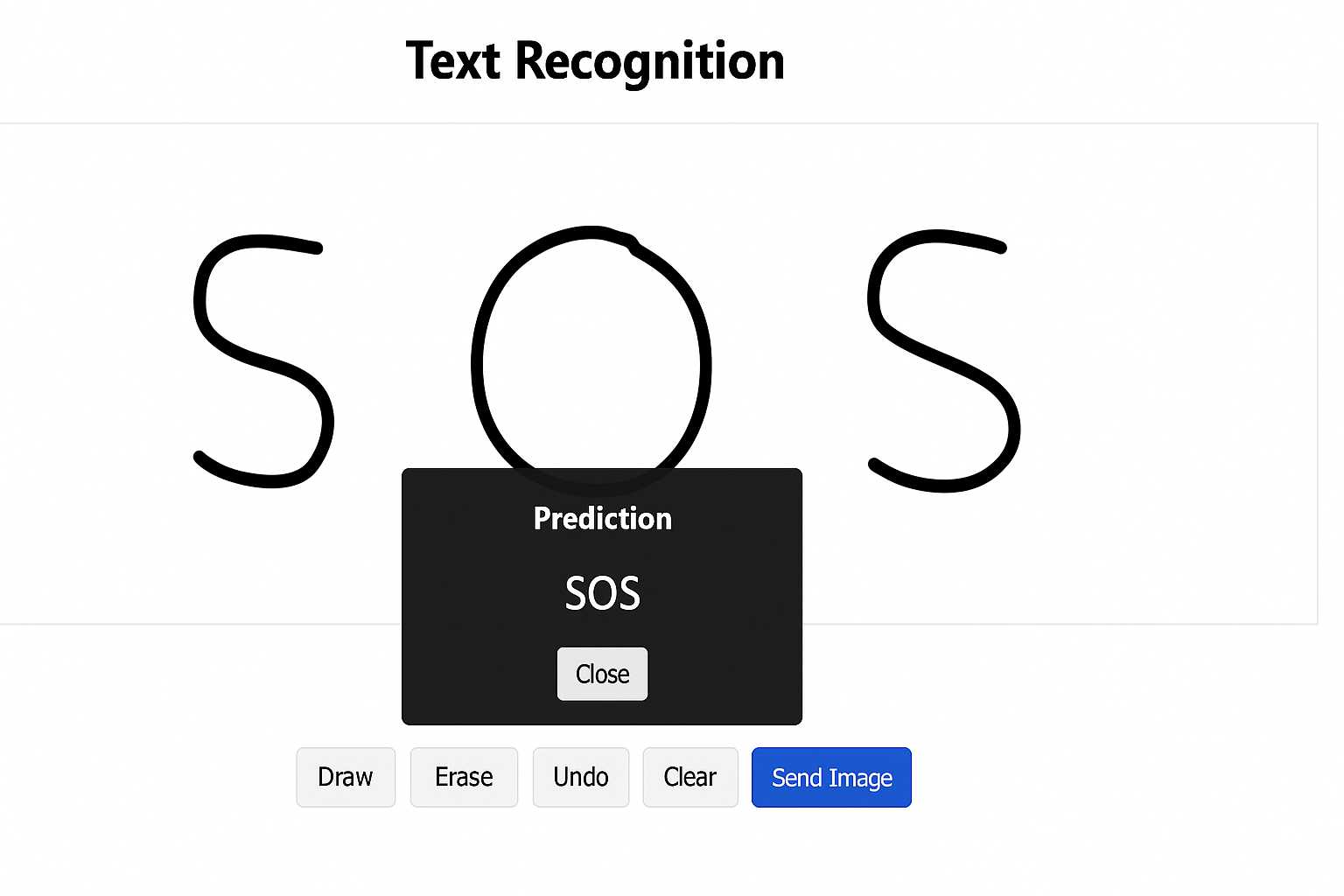
What is the problem you are solving?
The problem is text recognition, particularly in situations where text data is inconsistent or noisy. This is a critical task for various real-world applications, such as document digitization and automated data extraction.
Why did you choose this problem?
Text recognition is an essential component in numerous industries, including healthcare, finance, and accessibility. Its potential to automate tasks and improve accuracy in data handling made it a compelling problem to tackle.
Briefly explain the models you experimented with to solve the problem.
We experimented with Convolutional Neural Networks (CNNs), tweaking their architecture, image size, and hyperparameters to improve performance. OpenCV was used for preprocessing tasks like text segmentation, ensuring the CNN received optimal input data.
What challenges did you face?
A significant challenge was dealing with dirty data, which led to difficulties in model training and deployment. Additionally, there were issues with poor model translation from training accuracy to real-world application performance.
What is the result you are the most satisfied with (accuracy, other metrics, etc)?
The most satisfying result was the accuracy achieved after refining the model, which demonstrated the effectiveness of our data preprocessing pipeline. We were also pleased with the insights gained on how data quality impacts model performance.
If you were to continue this project, what would you explore doing / improve?
If we were to continue, we'd focus on exploring data augmentation techniques to see how they affect the model's ability to generalize across different text inputs. We would also refine the model further by incorporating more diverse datasets.
How would you recommend approaching similar projects?
A methodical approach is key—start by creating a clear plan with well-documented steps and ensure each change is tested and tracked. Taking the time to clean and preprocess data thoroughly can significantly impact the quality of the model's performance.

Log in or sign up for Devpost to join the conversation.