🌟 Inspiration Mental health tools often feel like two extremes: either they are too clinical and scary, or they are "black box" AI models that feel impersonal and untrustworthy. We wanted to build a "middle ground"—a digital check-in tool that is transparent, fast, and private. Our goal was to create a digital mirror that helps people visualize their stress levels using clear logic they can actually understand.
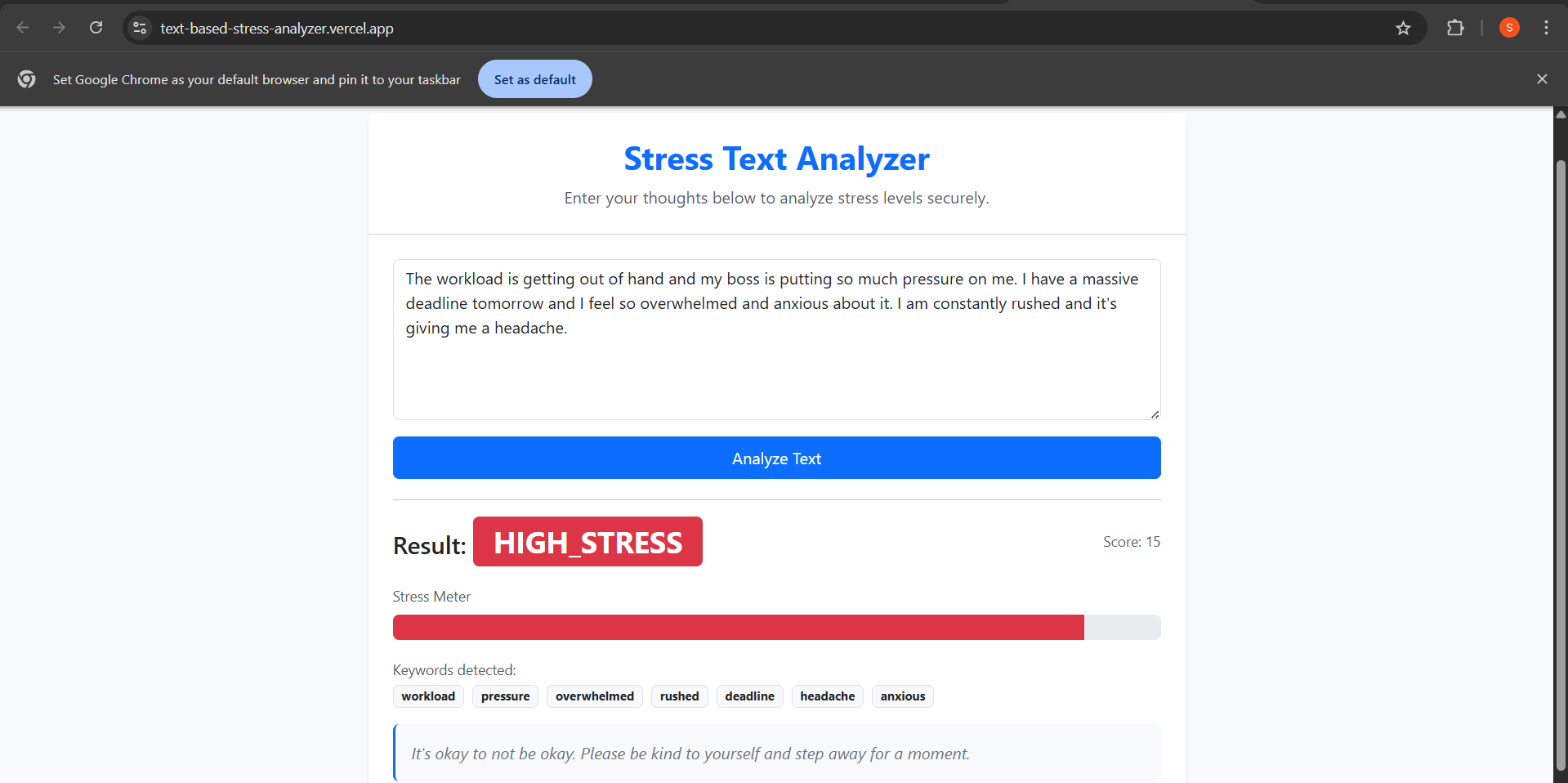
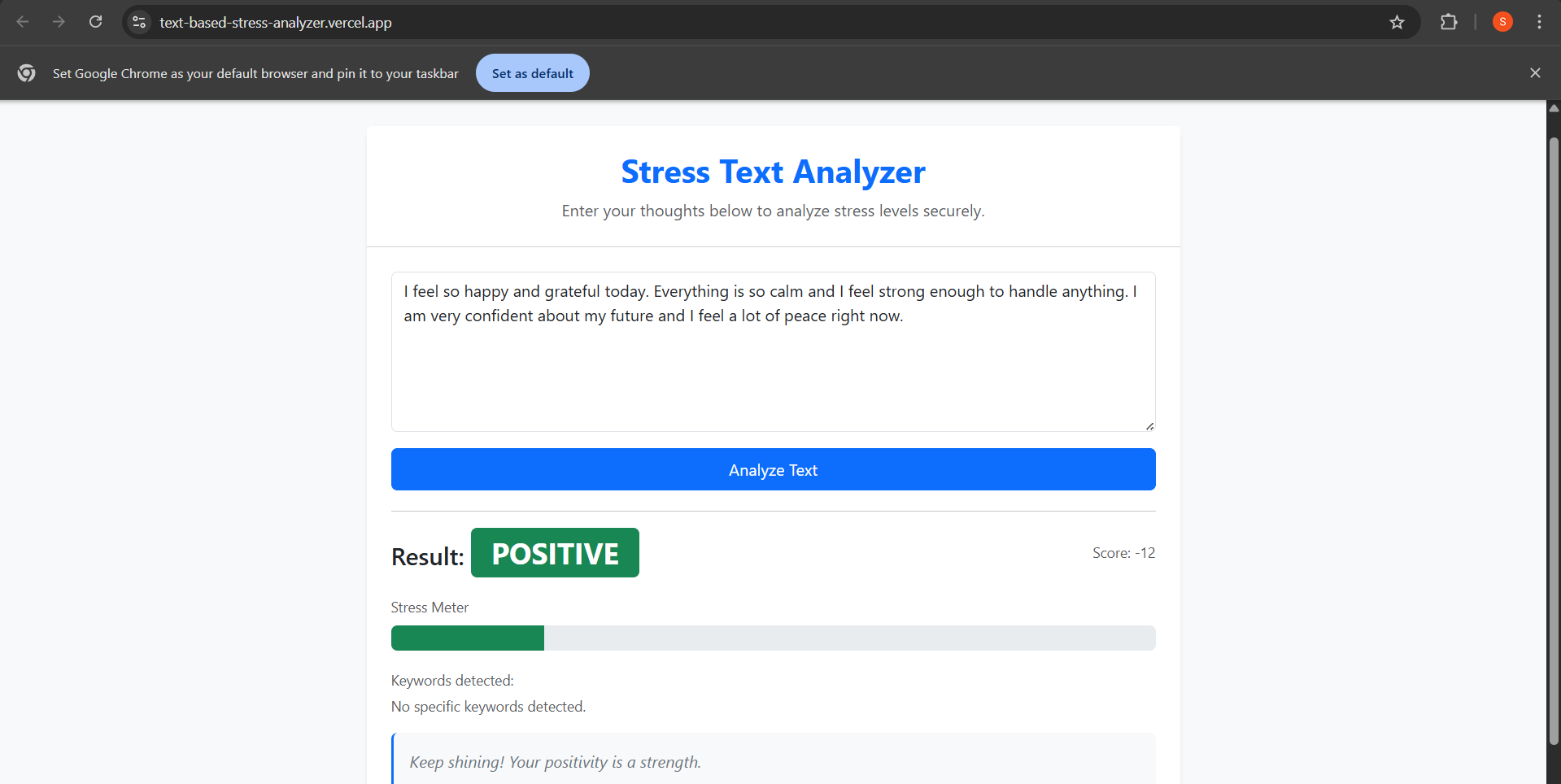
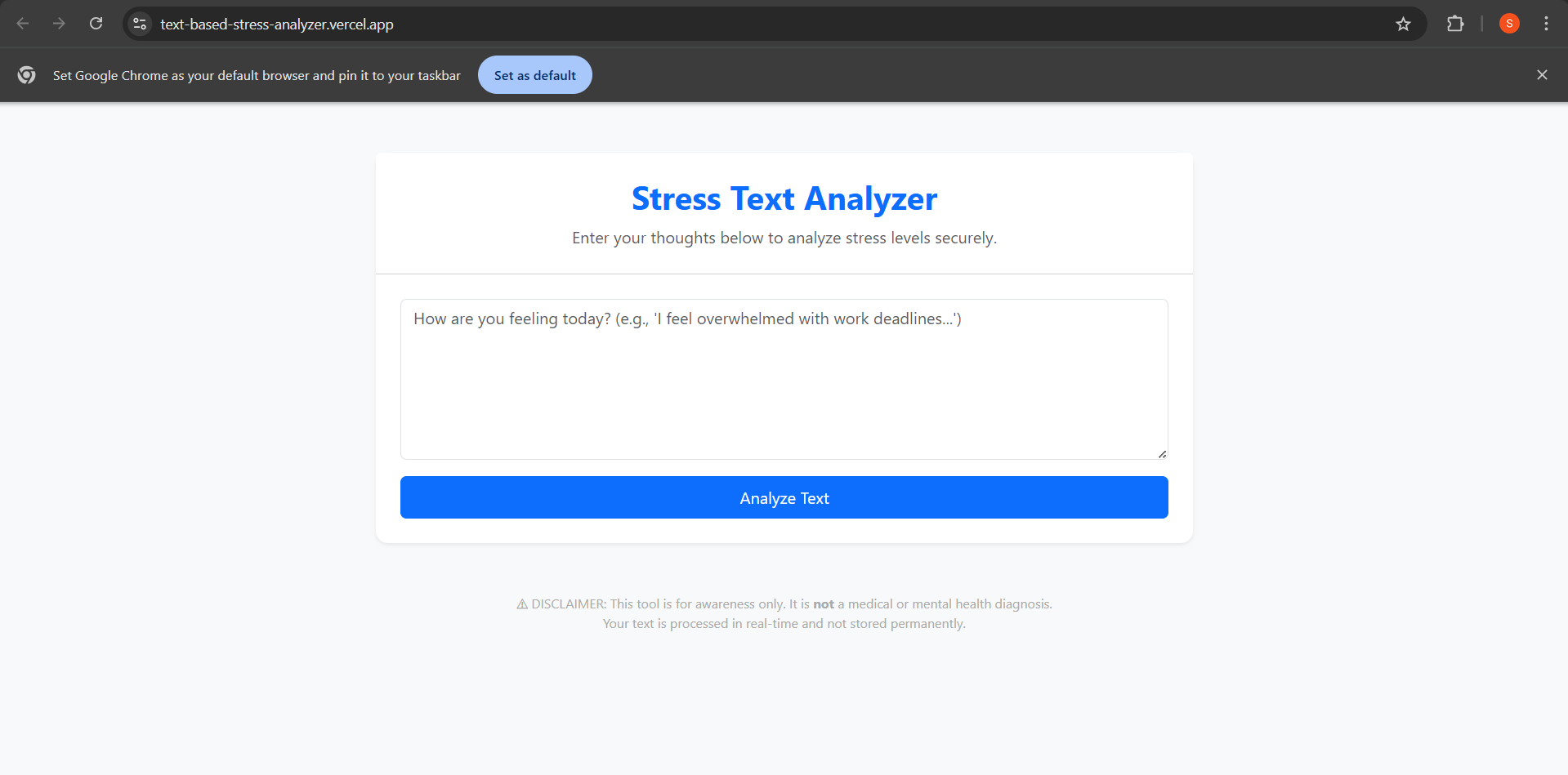
🛠️ What it does The app takes a user's text input and analyzes the emotional weight of their words. It doesn't just look for "bad" words; it balances stress and depressive signals against positive ones to give a nuanced score.
The Stress Meter: Provides a visual gauge of current tension.
Smart Quotes: Offers grounding advice based on the detected mood.
Safety Net: The most critical feature is the "Critical Override." If high-risk language is detected, the app stops the analysis and immediately displays verified crisis helplines.
⚙️ How we built it We prioritized a "Low Code, High Reliability" stack:
Python & FastAPI: For a lightning-fast backend that handles the logic.
CSV-Driven Logic: Instead of a heavy AI model, we used weighted CSV files. This makes the "brain" of the app easy to update and audit.
Vanilla JavaScript & Bootstrap: For a responsive, clean frontend that works on any device without a long loading screen.
🚧 Challenges we ran into The biggest hurdle was context. Words like "pressure" can be negative (work pressure) or neutral. We spent a lot of time "tuning" the weights in our CSV files to ensure the math reflected real human emotions. Another challenge was deployment—making sure the frontend on Vercel could securely talk to our backend on Render while handling the "cold start" delay of free-tier hosting.
🏆 Accomplishments that we're proud of We are incredibly proud of the Critical Override logic. It was vital to us that the app was responsible. If a user is in a dark place, the app doesn't just give them a "score"—it acts as a bridge to real-world help. We also succeeded in keeping the entire app under two main code files, making it incredibly maintainable.
📚 What we learned We learned that you don't always need a massive Neural Network to solve a human problem. Sometimes, deterministic logic (if/then/else) is better because it is 100% predictable and safe. We also deepened our understanding of CORS, environment variables for cloud ports, and how to build "stateless" applications that protect user privacy by design.
🚀 What's next for Text-Based-Stress-Analyzer The next step is to expand our lexicons to include multi-language support, specifically focusing on regional Indian languages. We also want to add a "Trend Tracker" that allows users to download a local file of their scores over a week so they can see patterns in their stress without their data ever touching a database.
Built With
- and-pandas-for-a-logic-driven-backend
- bootstrap-5
- bootstrap-5-and-vanilla-js-for-a-responsive-frontend
- fastapi
- github
- javascript
- pandas
- python
- render
- vercel


Log in or sign up for Devpost to join the conversation.