-
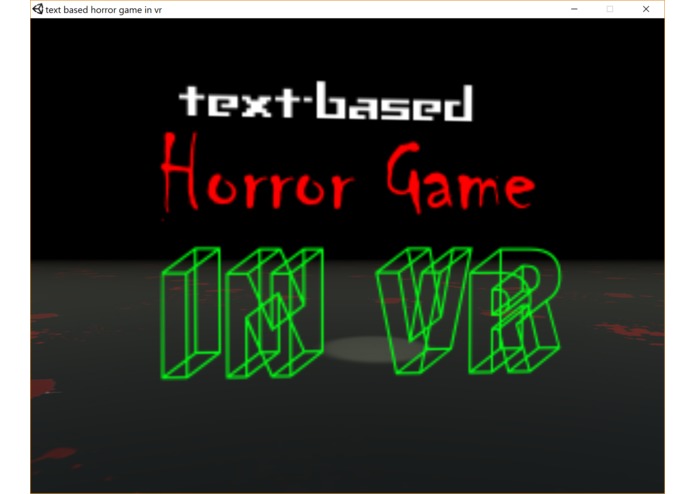
View when you first drop into our virtual world
-
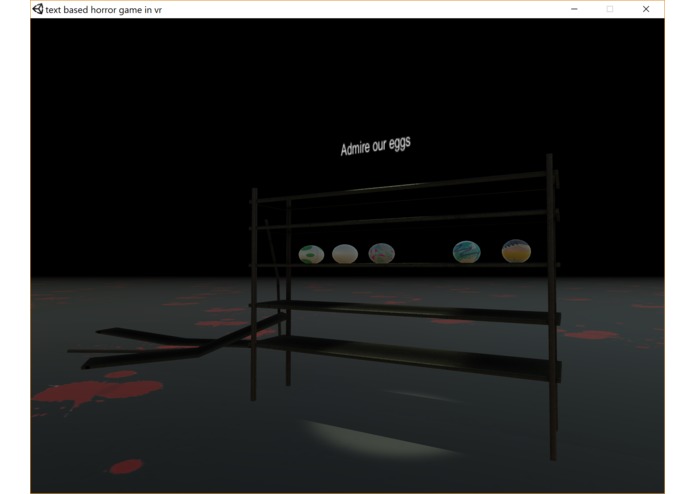
Shelf with easter eggs in the opening scene
-
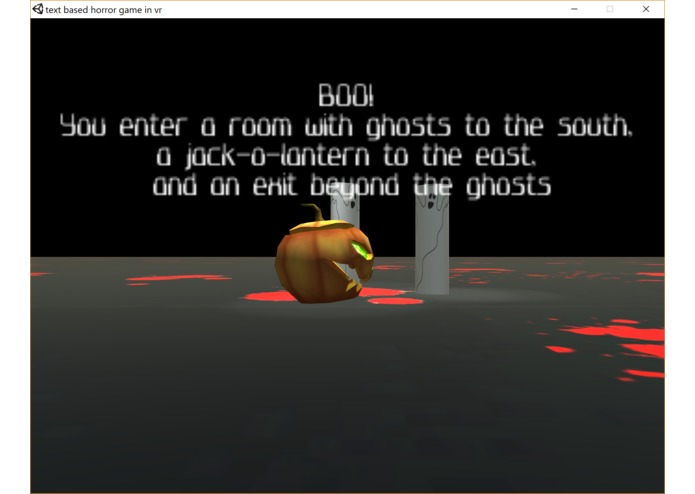
Another room within the maze/game
-
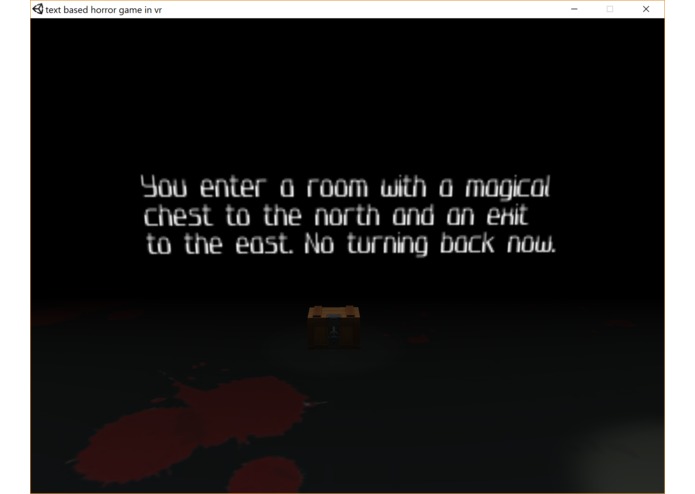
Beginning of the maze/game part of our virtual world
-
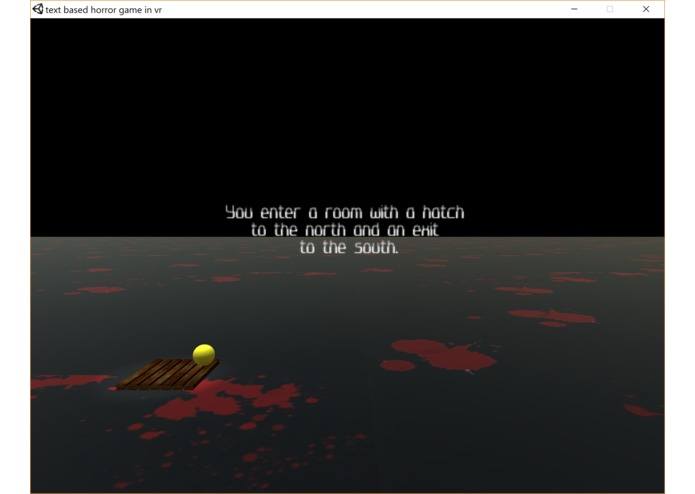
Another room within the maze/game. Users are given short instructions on their current room and how to proceed
-
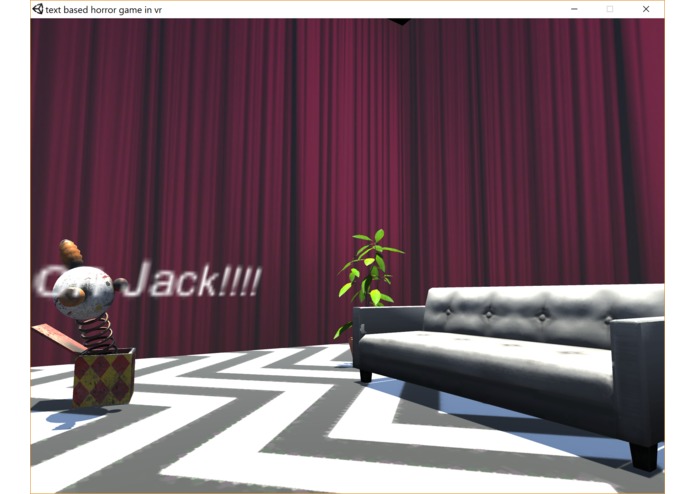
Twin Peaks Black Lodge room--accessible from the opening scene
-
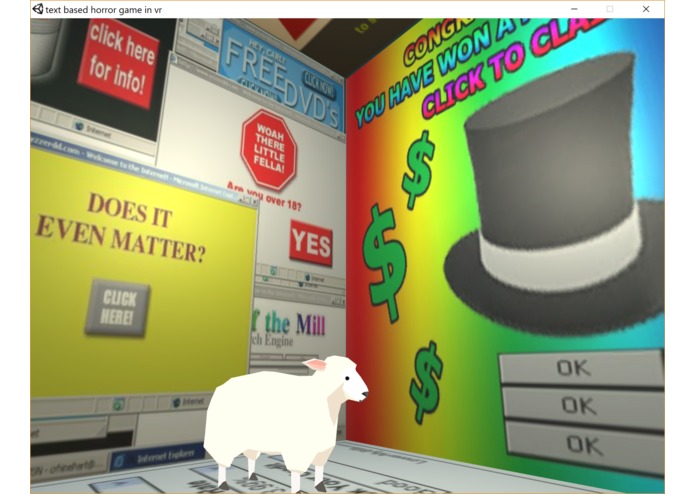
Advertisement room--accessible from opening scene and twin peaks room couch


Inspiration
It all started with Cal's idea: a text-based horror game in VR. And that is what we ended up making. From a unique base idea like that, ideas sprouted left and right. Also, a detailed unity tech talk/tutorial run by a VandyHacks organizer got us started with 3D game development. Some of the ideas that made it to the end product are the twin peaks room, the advertisement room, and the computer terminal based maze game. A few others didn't make the cut (for this weekend)--a room with a cat chasing a laser pointer, a VR fidget spinner, a jump scare scene, and an iPod interface c. 2005 to match the iPod-like controller for the Oculus.
What it does
Our virtual world is navigated in a first-person context and consists of a game and several other areas to explore. The game is guided by computers stationed in each room that lead further into the maze. Spooky characters and objects populate the maze and 3D text informs the user of their current state. When the user reaches the end of the game, they fall through a room, passing by Lisa Frank posters, and fall into a magical room that congratulates them on their successful pass through the maze. The additional rooms in our virtual world can be accessed by colliding with objected in the opening scene or in the rooms themselves. They allow for a fun exploration period before the game begins, if the user chooses to do so.
How we built it
We built our virtual world using Unity, which we learned to use in a tech talk at the beginning of the hackathon weekend. Our world is made up of downloaded and self-made Unity assets, and c# scripts to control navigation and actions. Testing was made possible by a borrowed Oculus.
Challenges we ran into
One challenge we ran into was using collisions between the first-person player and objects to trigger navigation between rooms. Another challenge we had was working with the hardware. The Oculus did not work with any mac computers, and none of our PCs met their processing/GPU requirements for high-quality VR. Despite this, we were able to deploy our VR game to the Oculus with a quality that met our standards.
Accomplishments that we're proud of
-Our team name: Bumble Beginnings -Creating a virtual world -Making our virtual world spooky -Top-of-the-line sound effects throughout our virtual world -Cascading falling confetti images in the win room -The number of easter eggs incorporated in our virtual world -How much fun we had with this project
What we learned
-We all learned how to use Unity and design in 3D
What's next for text-based horror game in VR
We definitely want to add in that cat chasing a laser pointer. Additionally, we would like to use Raycast to allow the user to select an easter egg by looking at it, which will then transfer it to another room.
Log in or sign up for Devpost to join the conversation.