-
-
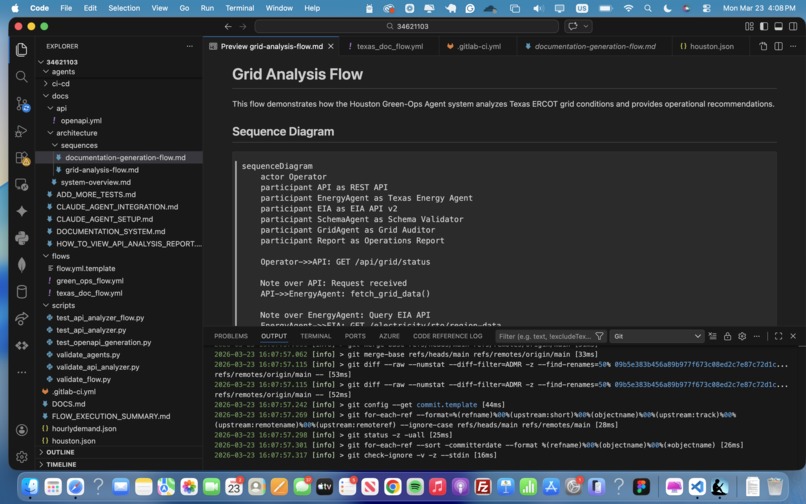
Graph Knowledge for API
-
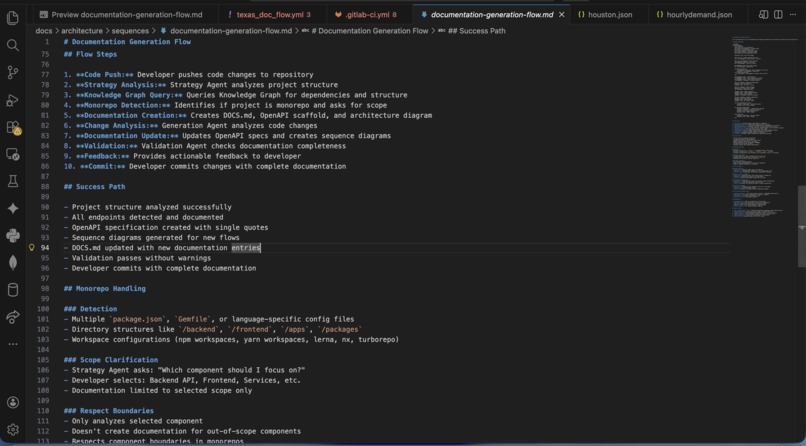
Documentation Writer
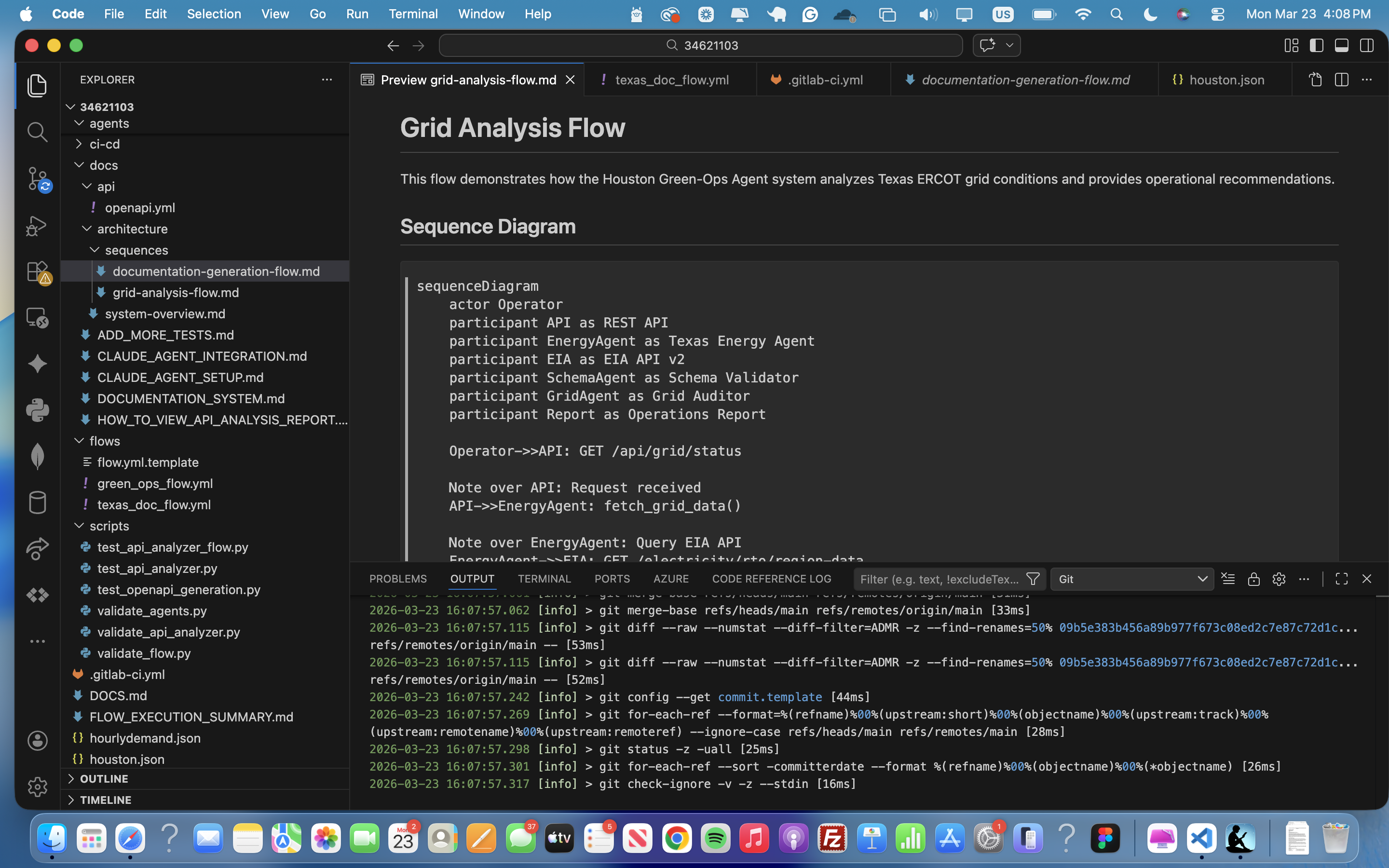
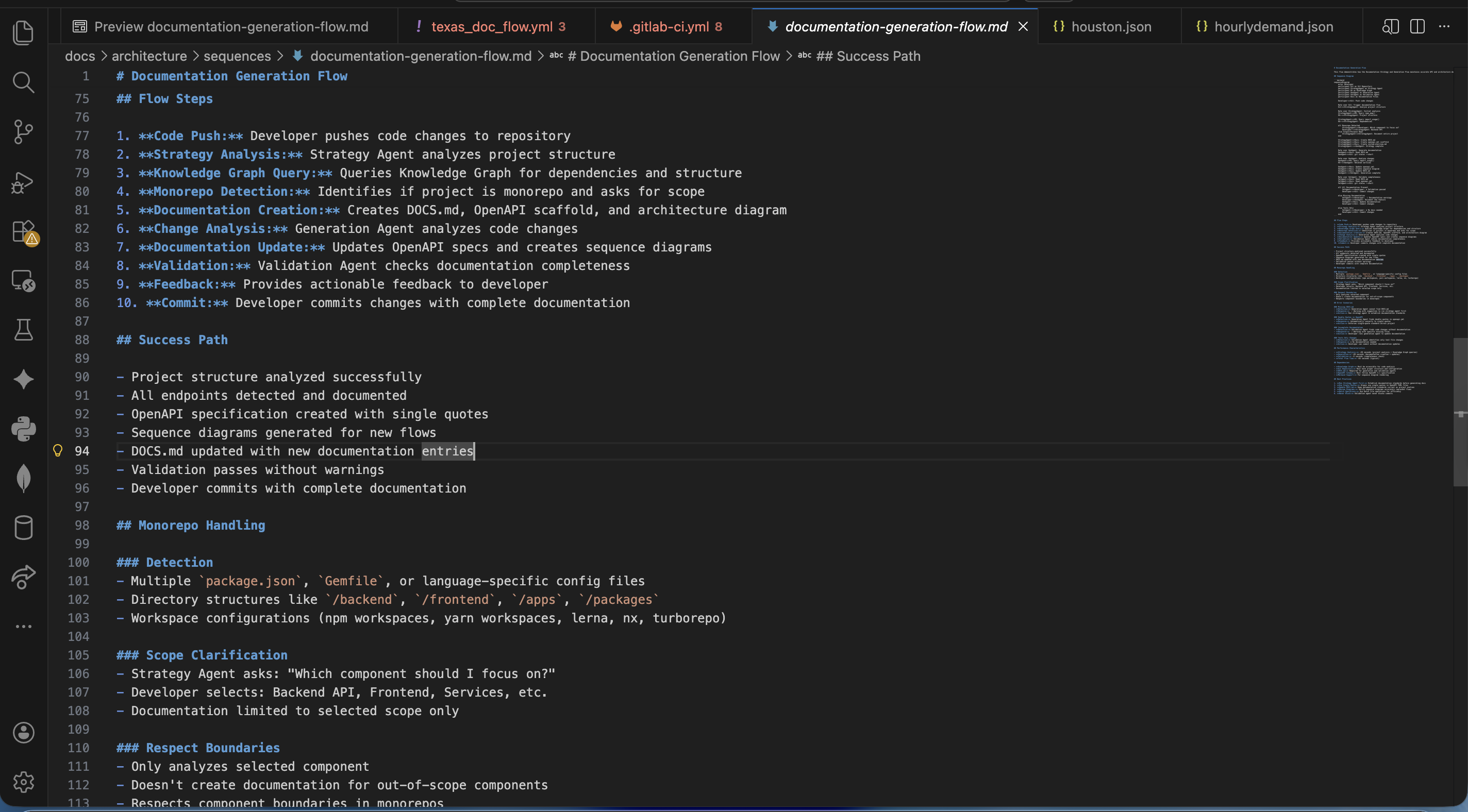
Inspiration
Texas runs on energy, but the grid is under constant pressure from weather, demand spikes, and fuel mix volatility. I wanted to build an AI-native system that helps new engineers and any energy engineering teams make better operational decisions without slowing delivery. The core idea was simple: if software workflows can adapt to real grid conditions, we can reduce cost, carbon impact, and unnecessary stress on infrastructure.
What it does
Texas Green Ops Agentic System is an agent-driven workflow that analyzes ERCOT-style demand data, evaluates grid conditions, and generates actionable outputs for developers and operators.
It can:
Expose API endpoints for grid status, forecast, and hourly demand data.
Classify risk levels and provide recommended actions.
Automatically generate and validate project documentation, including OpenAPI and architecture artifacts.
How I built it
I built the project around a multi-agent flow architecture:
Strategy agent: analyzes project context and sets documentation standards.
Generation agent: creates and updates OpenAPI/docs artifacts.
Validation agent: checks completeness and consistency.
For API simulation and testing, we used an OpenAPI-first approach with a local mock server, then fed realistic examples from hourly demand JSON data to avoid synthetic placeholder responses. The result is a reproducible environment where both API behavior and documentation pipelines can be tested quickly.
Challenges I ran into
Strict YAML/schema validation for flow and agent definitions caused multiple hard failures.
Tool enum restrictions required careful remapping of agent toolsets.
Router wiring mistakes created orphaned components until flow transitions were corrected.
Mock server path issues (/ and /api/) caused repeated 404 errors until explicit endpoints were added.
5, Port conflicts and CLI environment gaps made local execution inconsistent at first.
Accomplishments that we're proud of
Built a working end-to-end agentic documentation flow with clear stage handoffs.
Stabilized OpenAPI contract validation and mock API execution.
Upgraded mock responses from unrealistic generated values to domain-relevant ERCOT-style examples.
Improved reliability by adding validation scripts and CI-friendly checks.
Created a practical foundation for carbon-aware engineering workflows, not just a demo concept.
What I learned
Agent workflows are powerful, but only if schema contracts are enforced early.
Small router and toolset mismatches can break entire orchestration pipelines.
Documentation automation is most effective when strategy, generation, and validation are separated.
Operational polish (paths, ports, CLI setup) matters as much as model logic for real
What's next for Texas Green Ops AgenTic System
Expand this Agentic model to other engineers who working on this Energy Data Application with EIA and help with Documentation on Certain Quarter Requirements and Forecast.
Built With
- agent
- api
- ci/cd
- gitlab
- openapi
- python


Log in or sign up for Devpost to join the conversation.