-
-
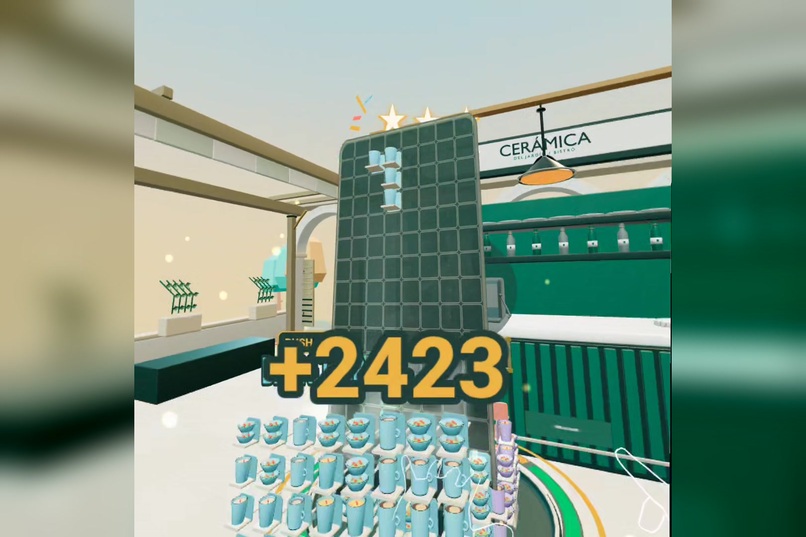
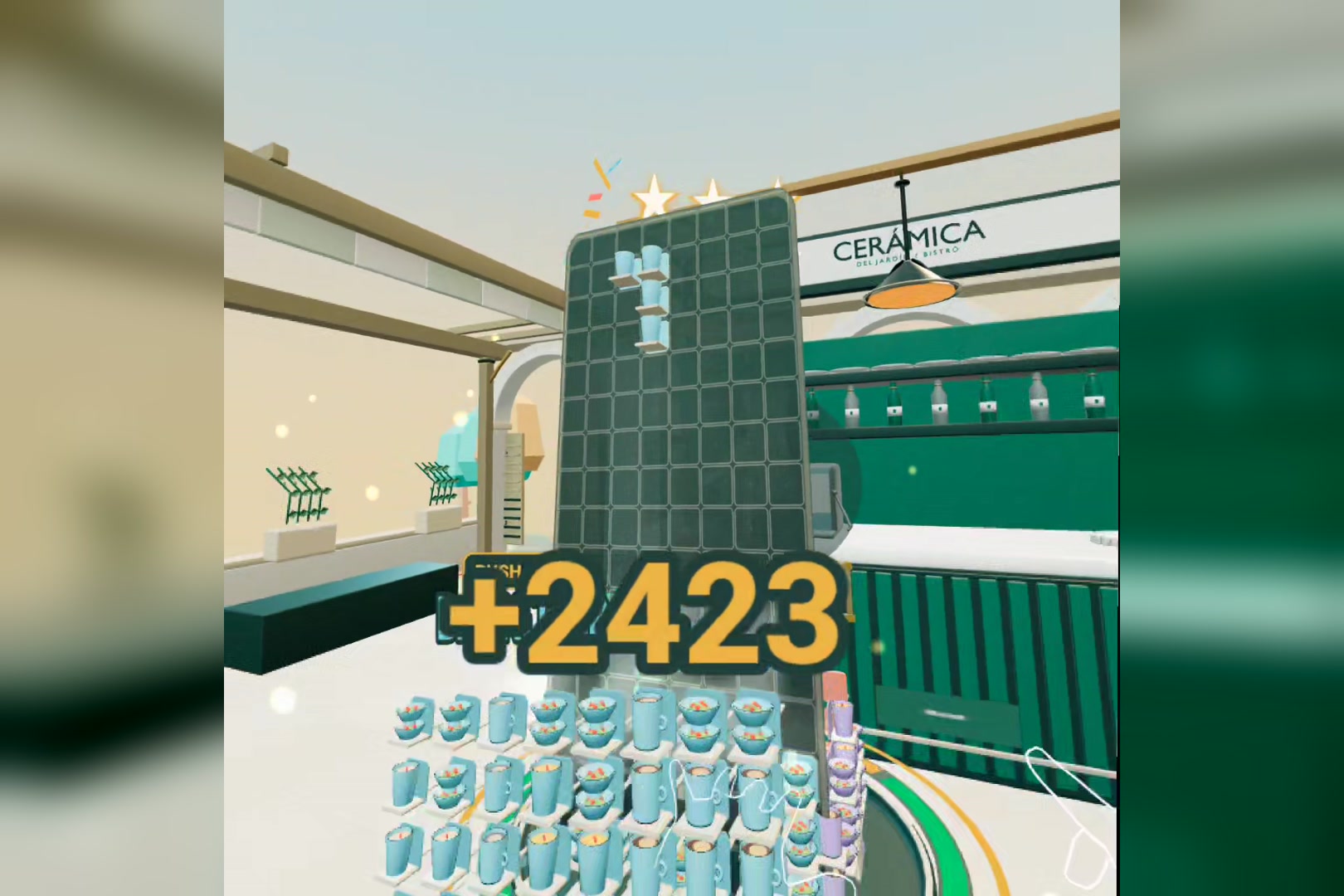
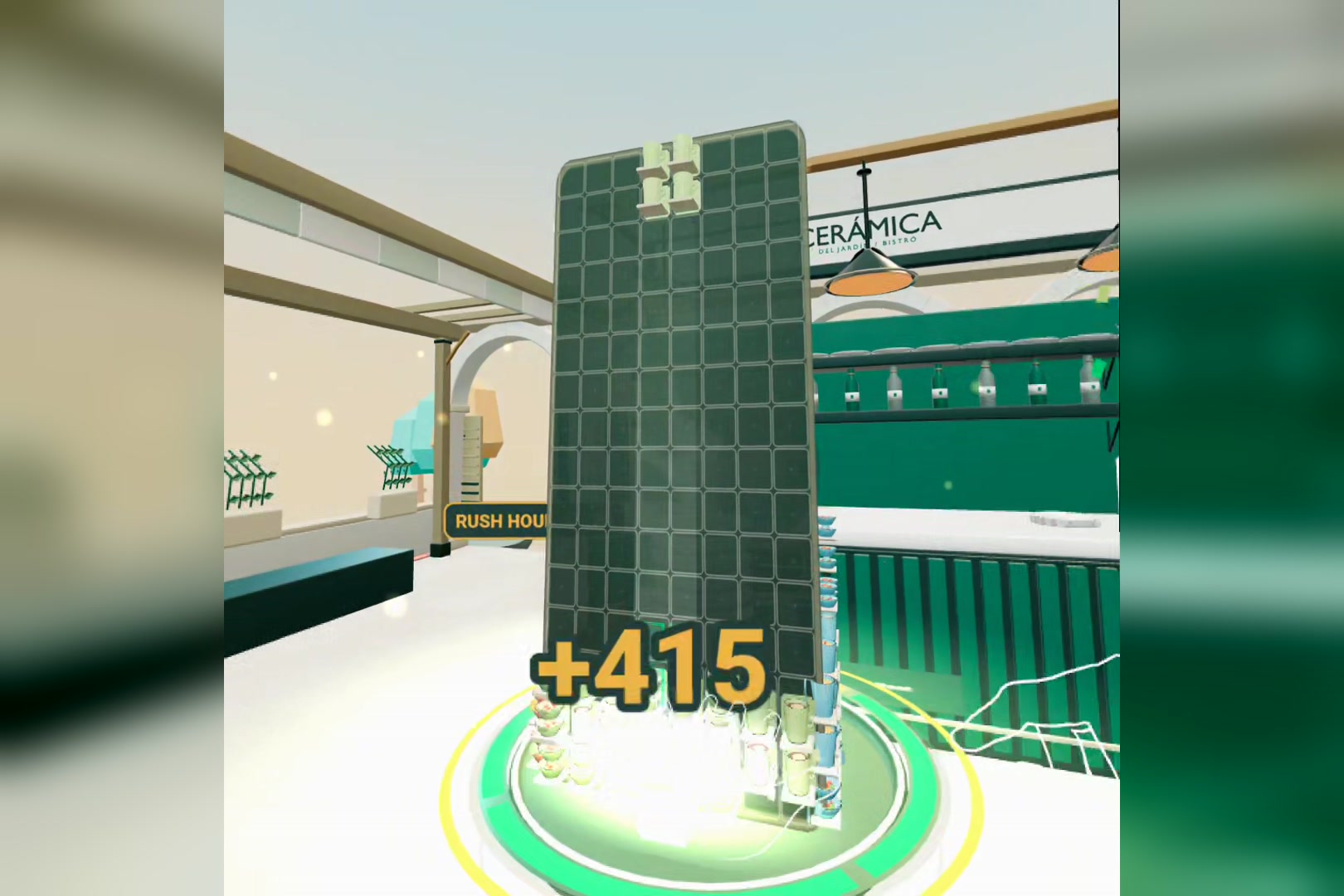
A +2423 back-to-back serve: four tables, one tower on the back of your hand
-
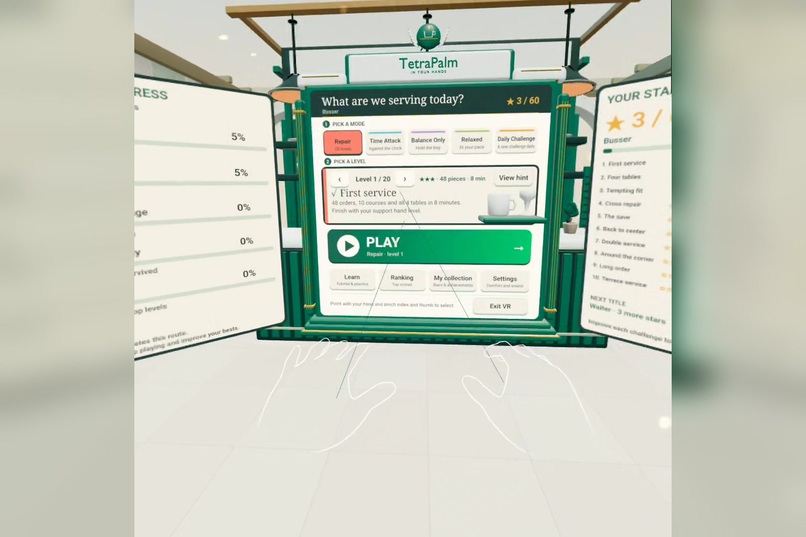
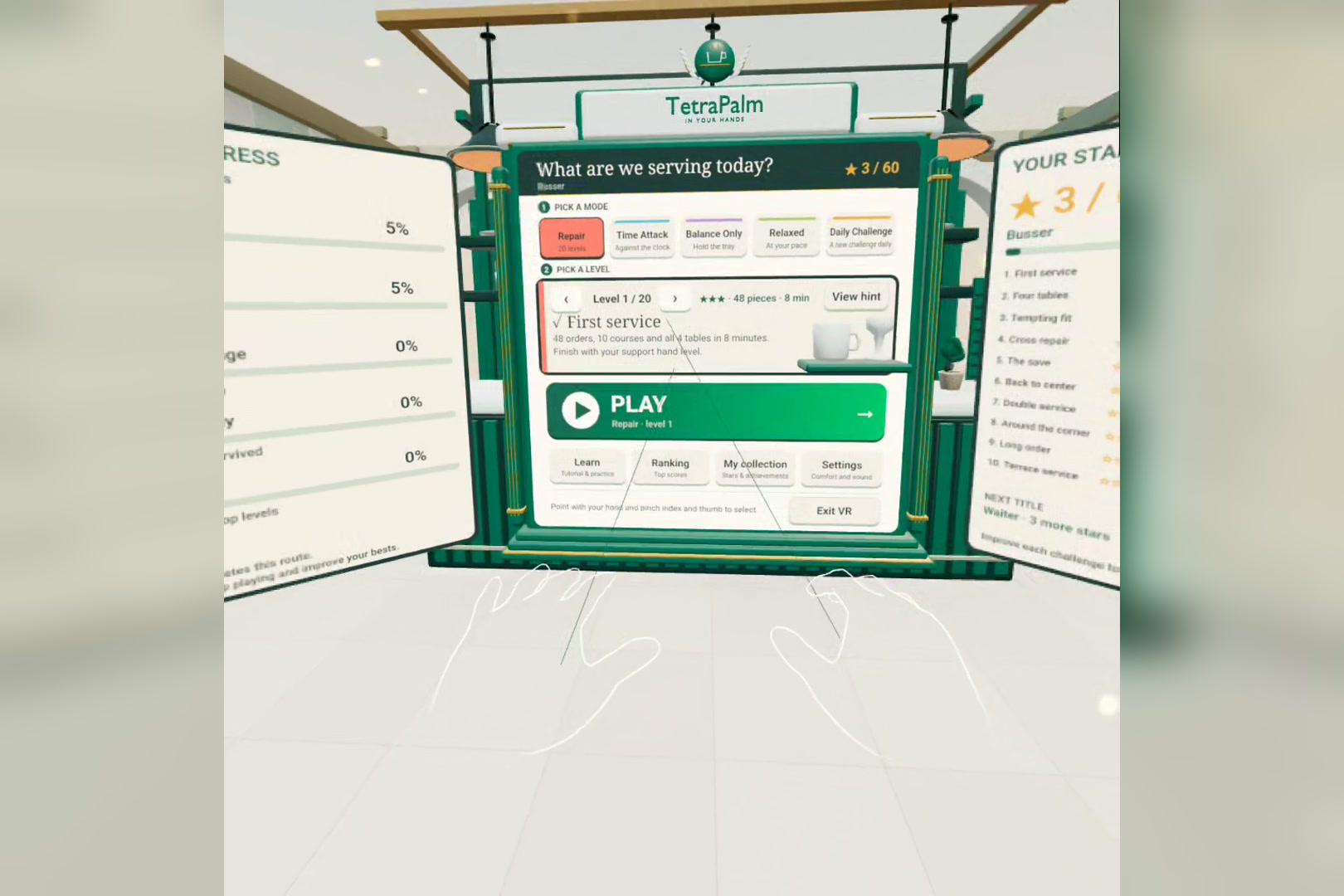
The bistro menu lectern: point and pinch, no controllers
-
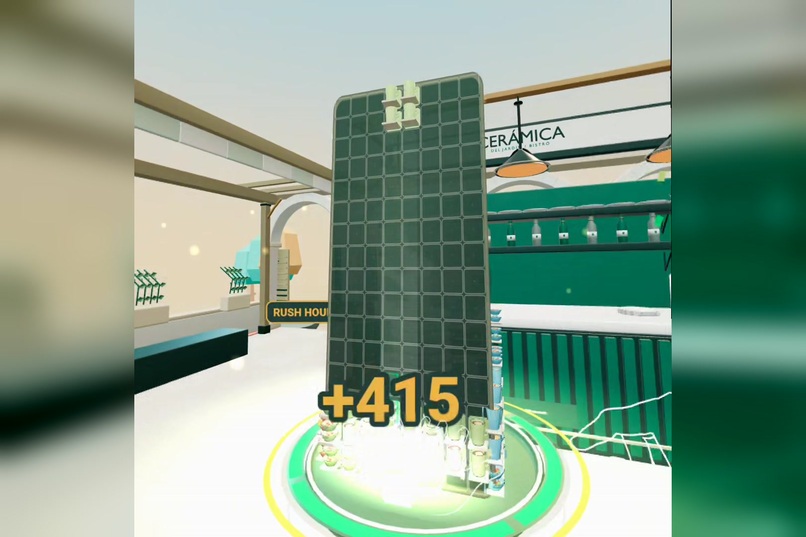
Rush Hour: double points and faster pieces
-
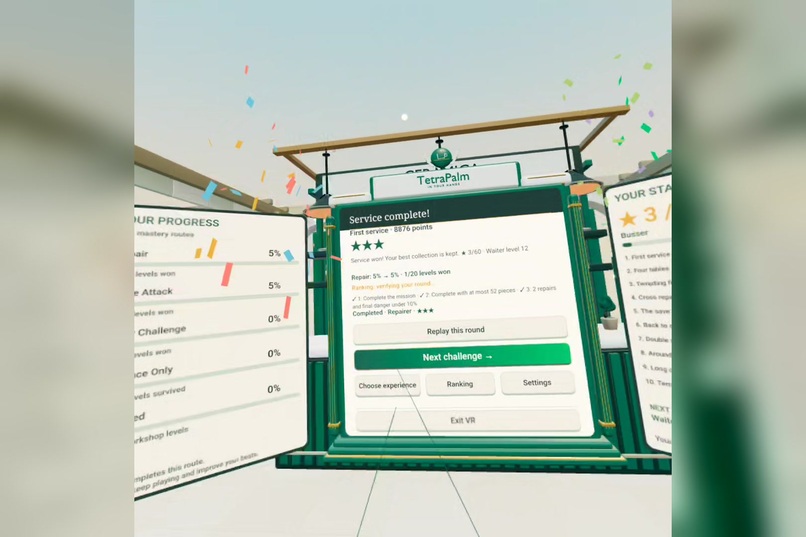
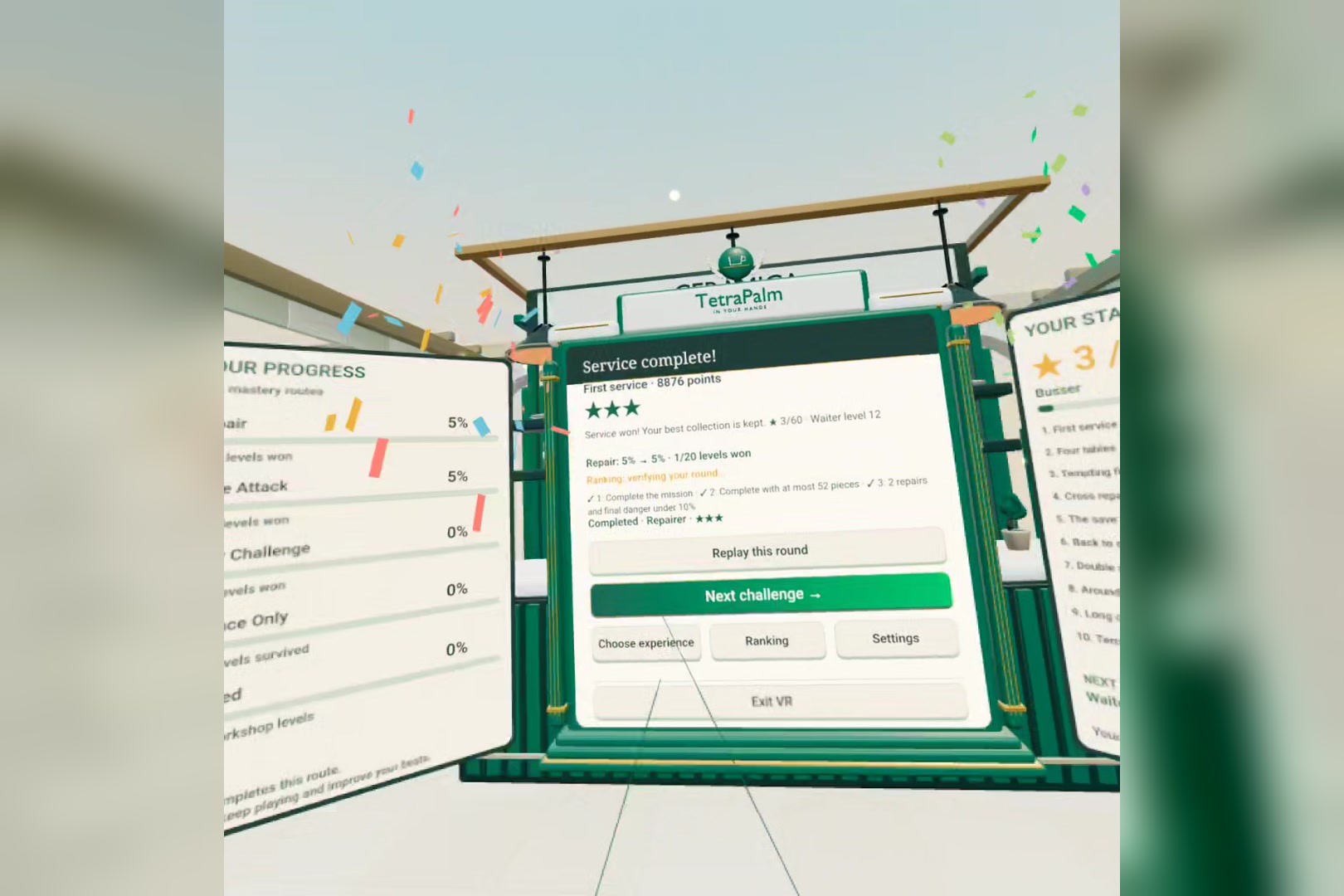
Service complete: stars, confetti and an original fanfare
-
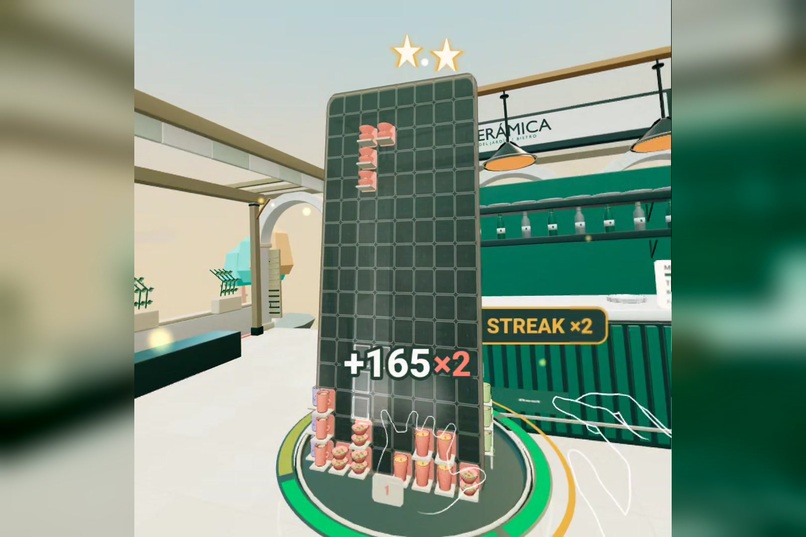
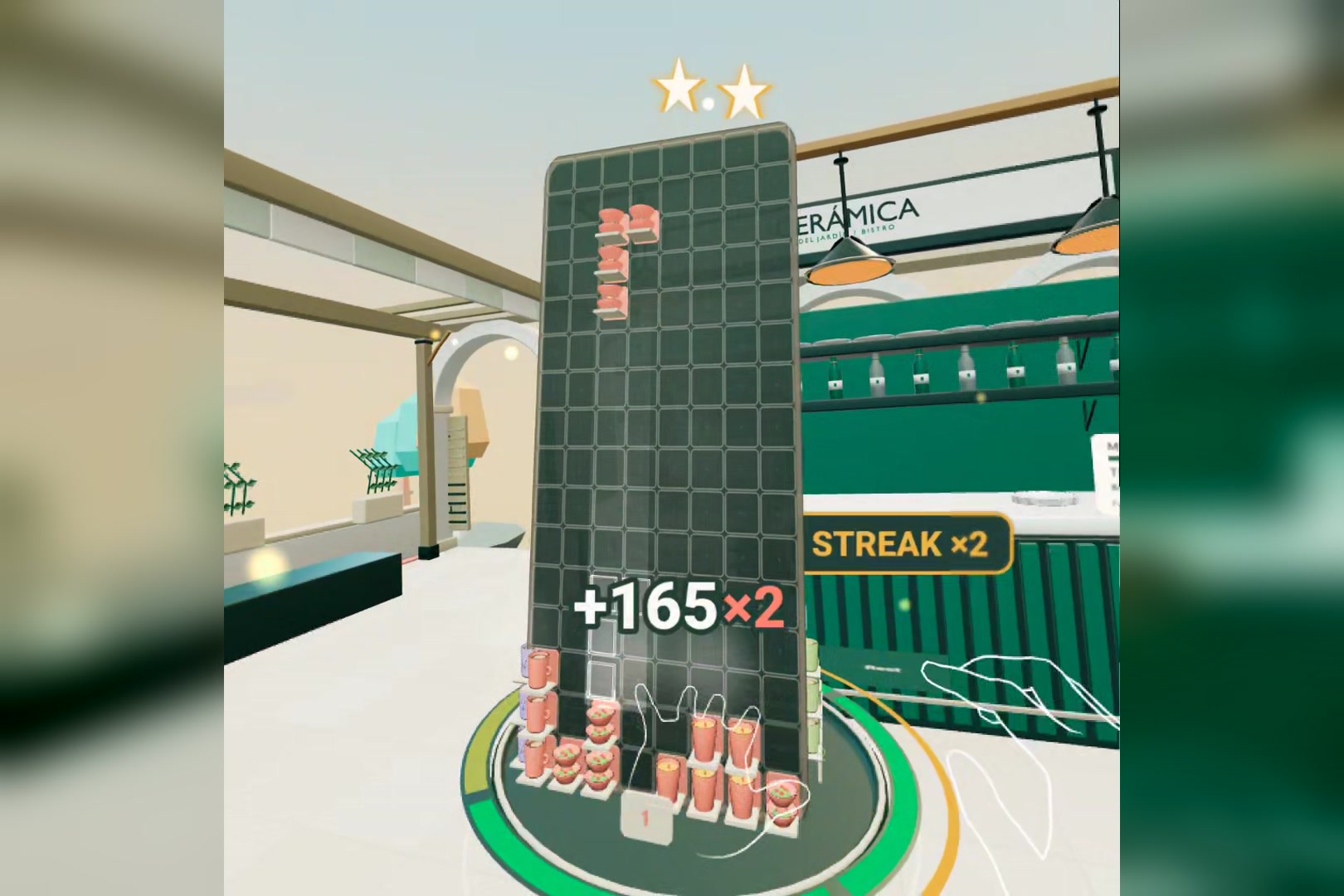
Chain serves for streaks
-
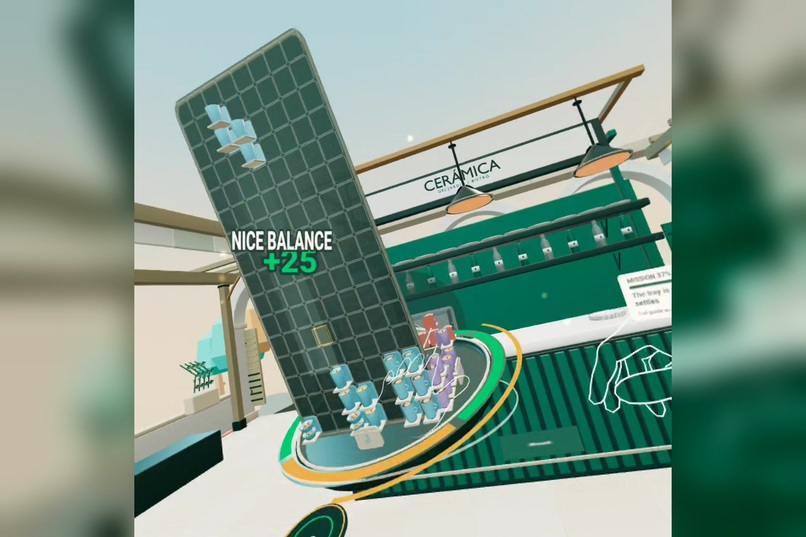
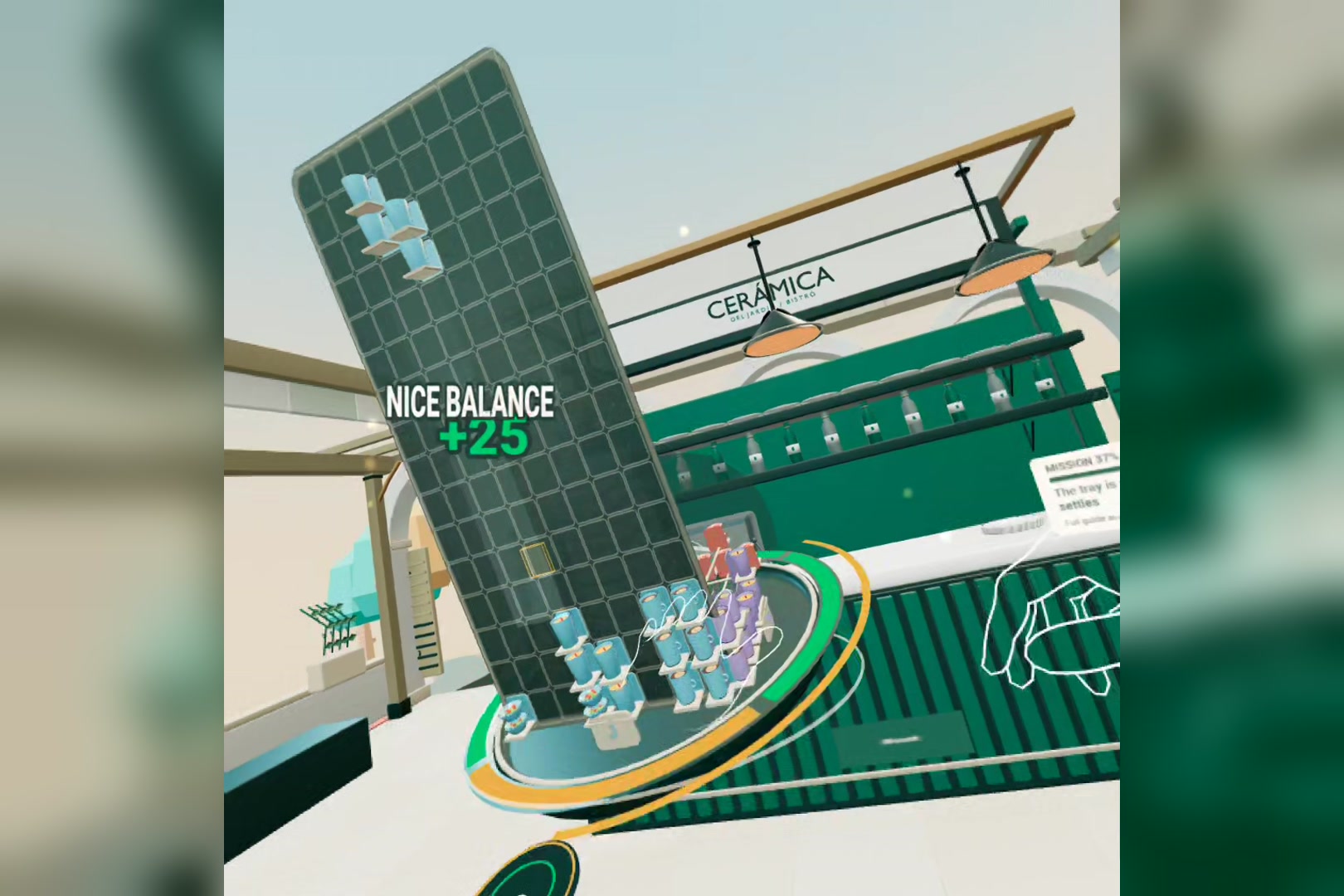
Tilt your wrist to stop the tray from tipping — "Nice balance!"
Inspiration
We wanted a puzzle that could only exist with hand tracking: what if the board wasn't floating in front of you, but sitting on your own hand? TetraPalm turns the back of your hand into a waiter's tray. You don't just place pieces — you physically carry the consequences of every placement.
What it does
A four-sided tower of plates rests on the back of your support hand. Each side is a table with its own falling-block board, but all four share one mass and one balance. Complete a row and you serve a course to that table — which also removes weight and shifts the balance. When the load leans, the tray starts to tip with real inertia: you tilt your wrist like a ramp against the heavy side to slow it down, then rebalance by building on the opposite table so you can return to level.
Your free hand plays: index up to move, fist-and-twist to rotate, point down to drop, and swipes to turn the four tables. Everything works seated, within a small radius, with no controllers.
Modes: Repair (20 levels with 3 stars each), Time Attack (20 levels against an adaptive rival), Daily Challenge, Balance Only (survive groups of glasses landing on the tray) and Relaxed (no clock, no losing). Every round starts level, with one different piece on each table; higher levels are faster and shorter. There is a 60-star collection, streaks, Rush Hour, a global leaderboard where every run is re-simulated on the server, and celebrations with confetti and an original fanfare.
How we built it
- Meta Immersive Web SDK (IWSDK) on three.js, WebXR hand tracking, played directly in Quest Browser.
- Our own deterministic rules core (TypeScript) separated from tracking: synthetic inputs, replays and 300+ automated tests. The same core re-simulates leaderboard runs on the server.
- Gestures are read from hand joints with stabilization windows; the support-hand plane is computed from the wrist and knuckles, and its tilt drives a signed-force balance model with inertia.
- The bistro, menu lectern, tutorial glove and chalkboards were modeled in Blender and exported as glTF. Music and sound effects are synthesized; the victory fanfare is original.
- In-game 3D tutorial with demonstrator hands that mirror you, plus optional guide hands during play.
- Developed with AI coding assistants under the developer's direction.
Challenges we ran into
Making balance readable: early versions punished any wrist angle, which felt unfair. The current model only reacts to the combined force of load and tilt, so correcting slows the fall gradually and over-correcting pushes the other way. We also had to make gestures robust to tracking loss: losing a hand pauses the rules instead of punishing you.
Accomplishments that we're proud of
A full game loop that is hands-only from the first second, a tutorial that teaches with 3D hands instead of walls of text, and a balance mechanic that you feel in your own wrist.
What we learned
Comfort decides everything in hand-tracked games: rest poses, short sessions, gestures that don't fight each other, and UI placed in a narrow field of view.
What's next
Performance and comfort tuning from player sessions on Quest 3/3S, more challenge packs, accessibility options (seated one-hand modes, high contrast), and a mixed reality mode where the restaurant sits on your real table.
Target launch date
March 2027 — free WebXR release in Quest Browser, then evaluate a Meta Horizon Store build.
Built With
- blender
- hand-tracking
- havok
- immersive-web-sdk
- node.js
- three.js
- typescript
- vite
- webxr


Log in or sign up for Devpost to join the conversation.