-
-
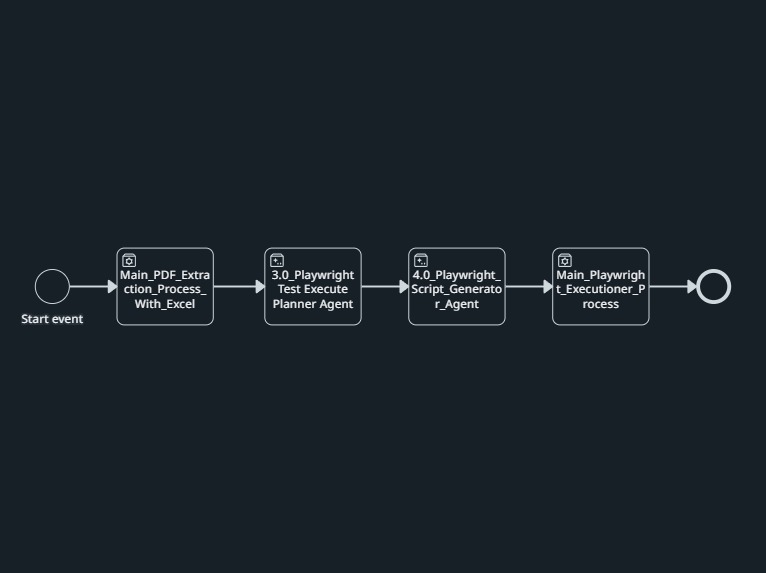
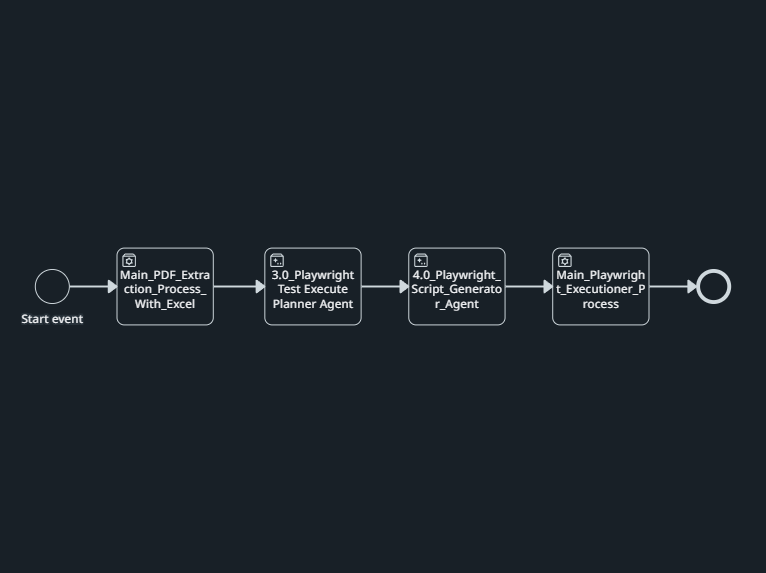
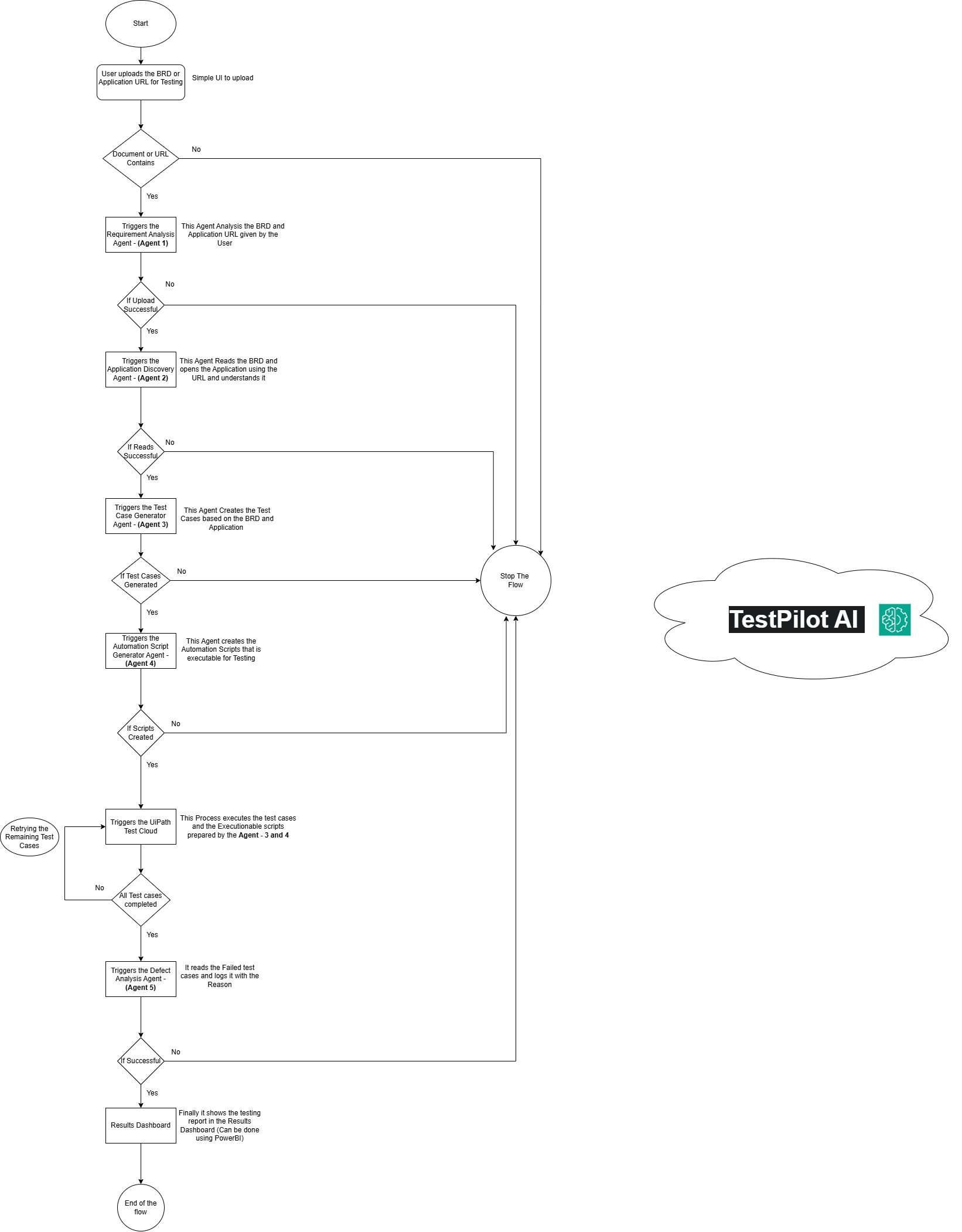
This is the Maestro flow for connecting the Multiagent system with RPA Workflows
-
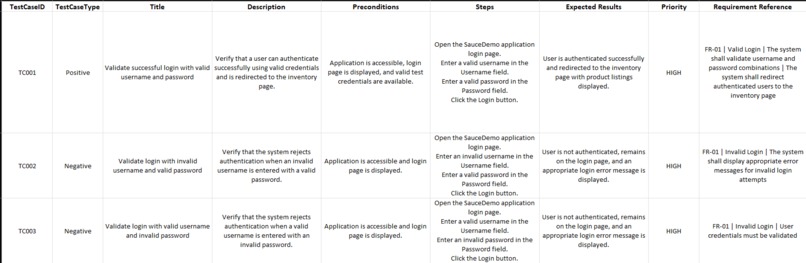
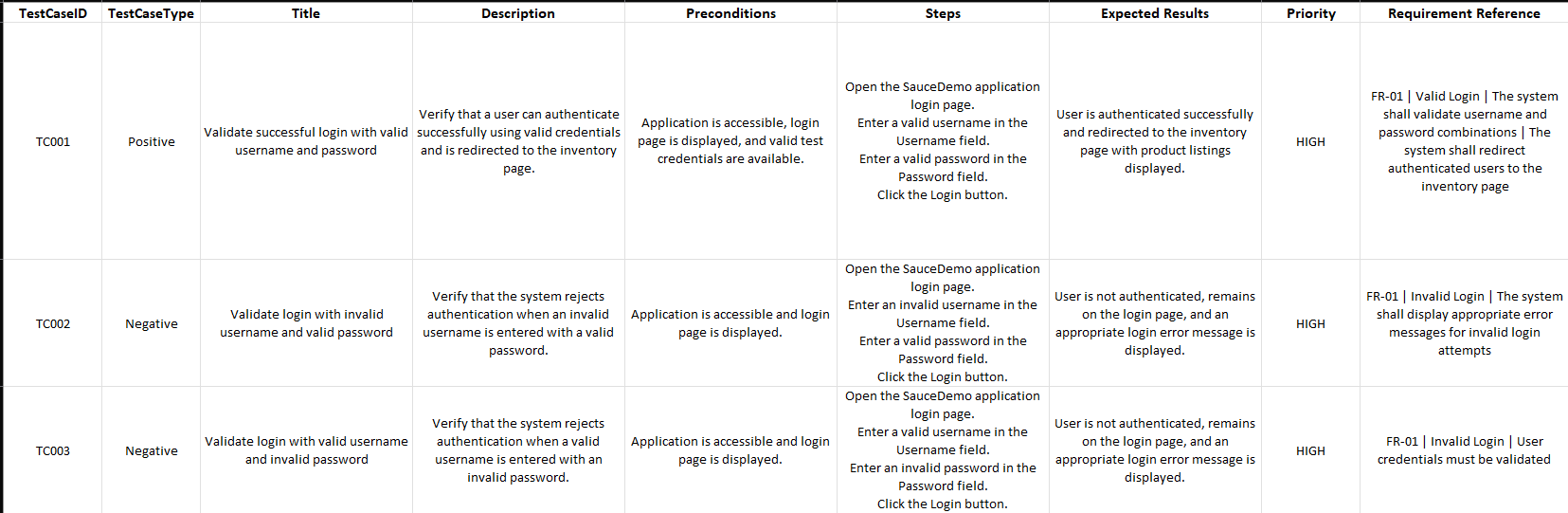
This image contains the Agent generated Test cases based on the BRD
-
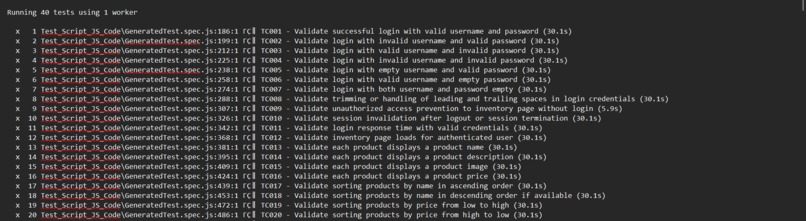
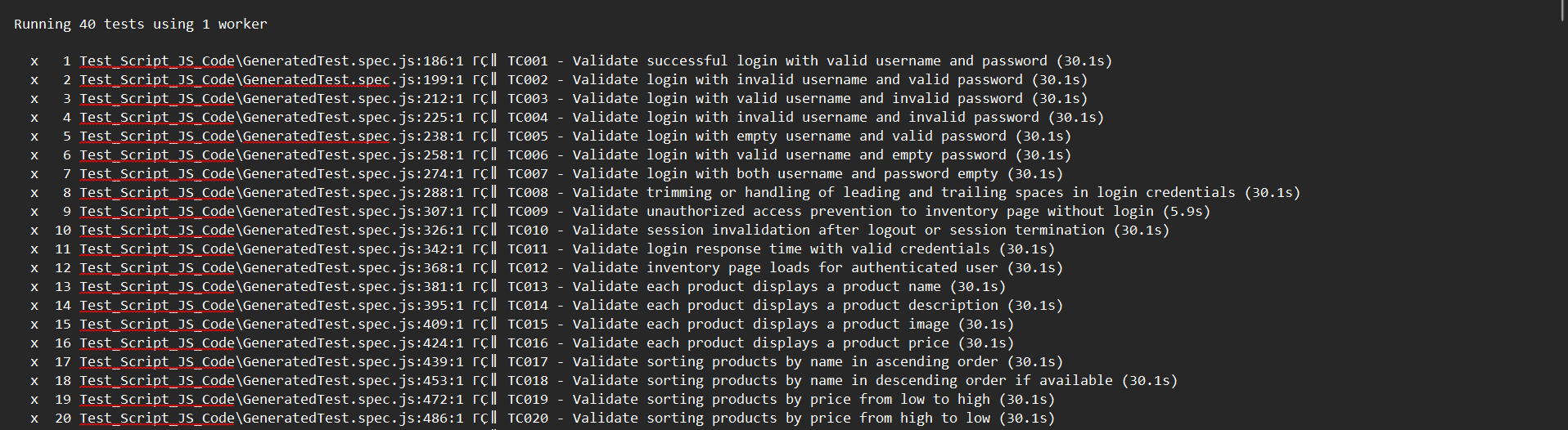
This is the Final Test case Report
-
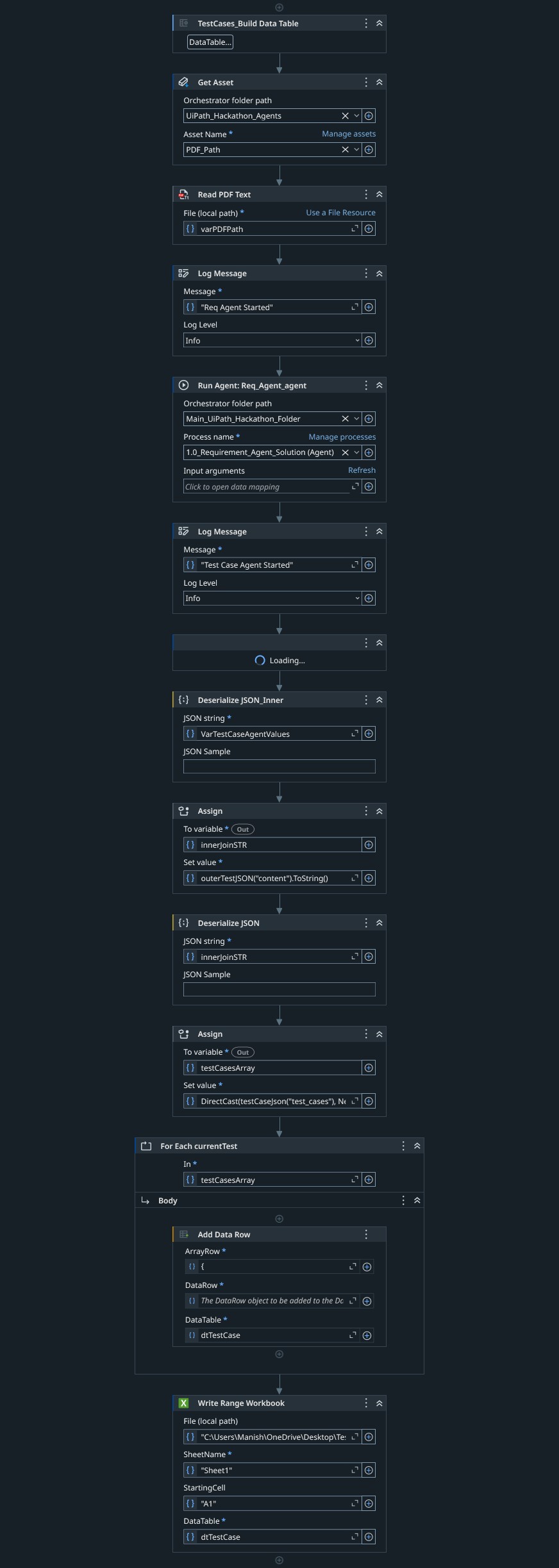
This is the PDF Extraction Process for getting the text from the BRD
-
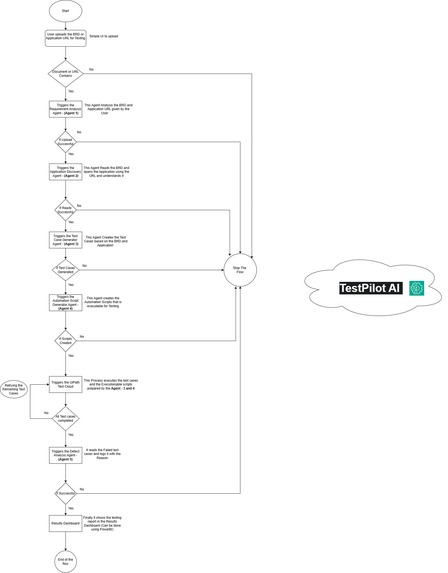
This is the Architecture Diagram
-
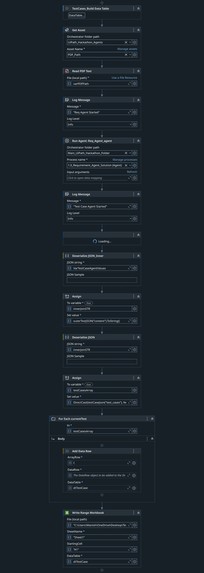
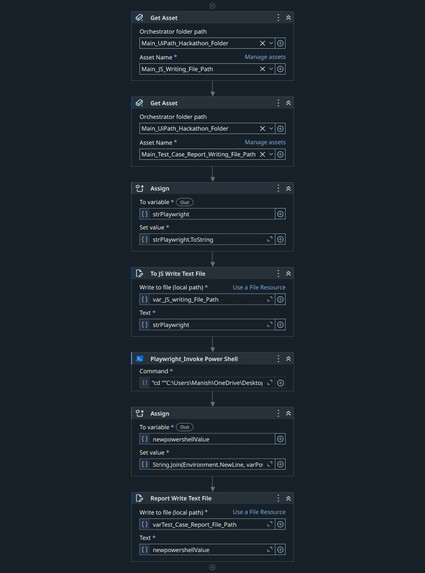
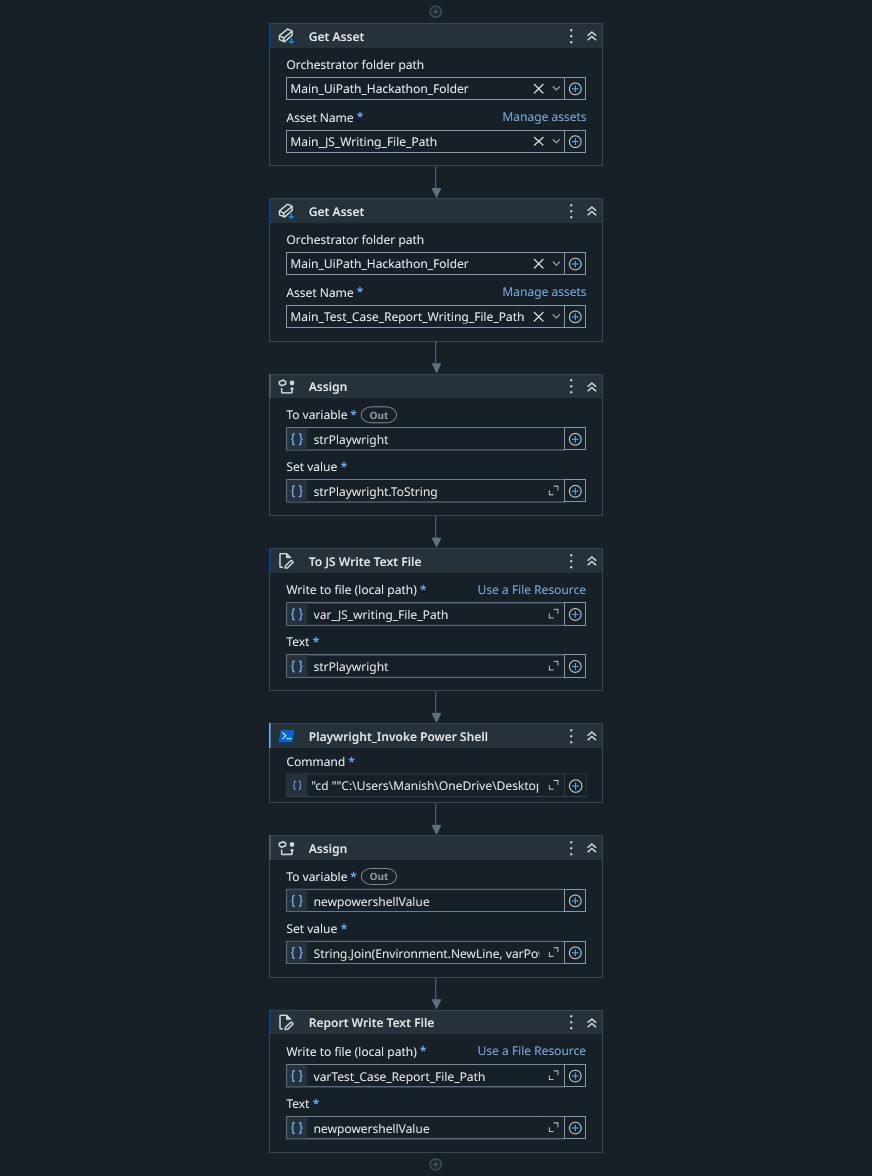
This workflow contains Playwright Testing RPA Workflow for executing from the test cases
Inspiration
Software testing often requires multiple teams to collaborate across requirement analysis, test case creation, automation development, execution, and reporting. These activities consume significant time and effort, especially when requirements change frequently.
We wanted to explore whether AI agents could work together as a virtual QA team capable of understanding business requirements, generating test scenarios, creating automation scripts, and executing tests with minimal human intervention.
This idea became TestPilot AI an autonomous AI-powered testing framework that transforms business requirements into executable automated tests.
What it does
TestPilot AI currently starts with a Business Requirements Document (BRD) as its input.
The platform:
- Understands and analyzes the BRD using AI.
- Extracts business requirements and application behavior.
- Generates comprehensive functional test cases automatically.
- Converts test cases into a structured execution plan.
- Generates Playwright automation scripts dynamically.
- Executes the generated tests automatically.
- Produces execution reports and validation results.
Instead of manually writing test cases and automation scripts, the entire testing lifecycle is driven by AI agents working together.
How we built it
We built TestPilot AI using a combination of:
- UiPath Maestro for agent orchestration.
- AI Agents for reasoning and content generation.
- UiPath RPA Studio Workflows for process execution and integration.
- Playwright as the automation execution engine.
The solution consists of multiple specialized agents:
1. Requirement Analysis Agent
- Reads and understands the BRD.
- Identifies modules, workflows, business rules, and user actions.
- Converts business requirements into structured application knowledge.
2. Test Case Generator Agent
- Uses the extracted requirements to generate test cases.
- Produces positive, negative, validation, and boundary test scenarios.
- Prioritizes test coverage based on business functionality.
3. Execution Planner Agent
- Converts generated test cases into a standardized JSON execution plan.
- Extracts test data, prerequisites, validation steps, and expected outcomes.
4. Playwright Script Generator Agent
- Dynamically generates executable Playwright scripts from the execution plan.
- Produces
.spec.jsfiles automatically without manual coding.
5. Execution Workflow
- Built using UiPath Studio workflows.
- Saves generated scripts.
- Executes Playwright tests.
- Captures execution results and reports.
UiPath Maestro orchestrates the communication between all agents and workflows, creating a complete autonomous testing pipeline.
Challenges we ran into
- Designing reliable prompts that consistently produce structured outputs.
- Maintaining standard JSON contracts between multiple AI agents.
- Dynamically generating automation scripts that work across different applications.
- Integrating Playwright execution with RPA workflows.
- Managing PowerShell execution policies during script execution.
- Ensuring the solution remained generic rather than tied to a single application.
Accomplishments that we're proud of
- Built an end-to-end AI-driven testing pipeline.
- Successfully transformed business requirements into executable automation.
- Eliminated manual test script creation.
- Integrated AI agents, orchestration, and RPA workflows into a single solution.
- Demonstrated autonomous generation and execution of test cases using modern browser automation technologies.
What we learned
Throughout the project we learned:
- How multiple AI agents can collaborate to solve complex enterprise workflows.
- The importance of structured outputs between autonomous systems.
- How RPA workflows can complement AI agents by handling deterministic execution tasks.
- The value of orchestration platforms such as UiPath Maestro for managing agent interactions.
- The challenges involved in converting natural language business requirements into executable automation.
Most importantly, we learned that AI can evolve from being an assistant for testers into an active participant in the testing lifecycle.
What's next for TestPilot AI
The current version of TestPilot AI understands applications through a Business Requirements Document (BRD) provided by the user.
In future versions, we plan to extend the platform so that it can:
- Analyze applications directly using only an application URL.
- Crawl application pages automatically.
- Discover workflows and business processes autonomously.
- Generate tests without requiring a BRD as input.
- Support API, mobile, and desktop applications.
- Introduce self-healing locators and resilient automation.
- Enable cloud-based parallel execution for large-scale regression suites.
- Scale from dozens of test cases to hundreds or thousands through batching and memory mechanisms.
- Continuously improve generated tests using execution feedback and learning mechanisms.
Our long-term vision is to create an AI-powered testing platform capable of understanding, generating, executing, and maintaining tests entirely autonomously.
Built With
- agentic
- javascript
- maestro
- orchestrator
- playwright
- powershell
- studio
- uipath

Log in or sign up for Devpost to join the conversation.