-
-
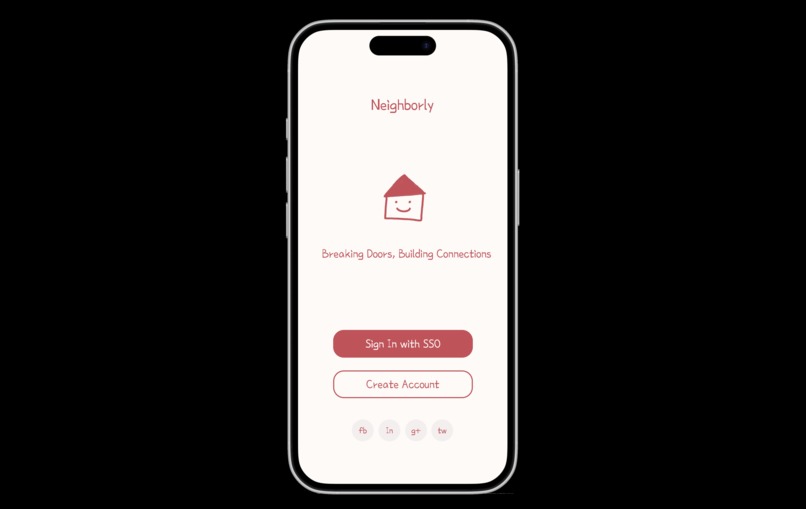
Neighborly!
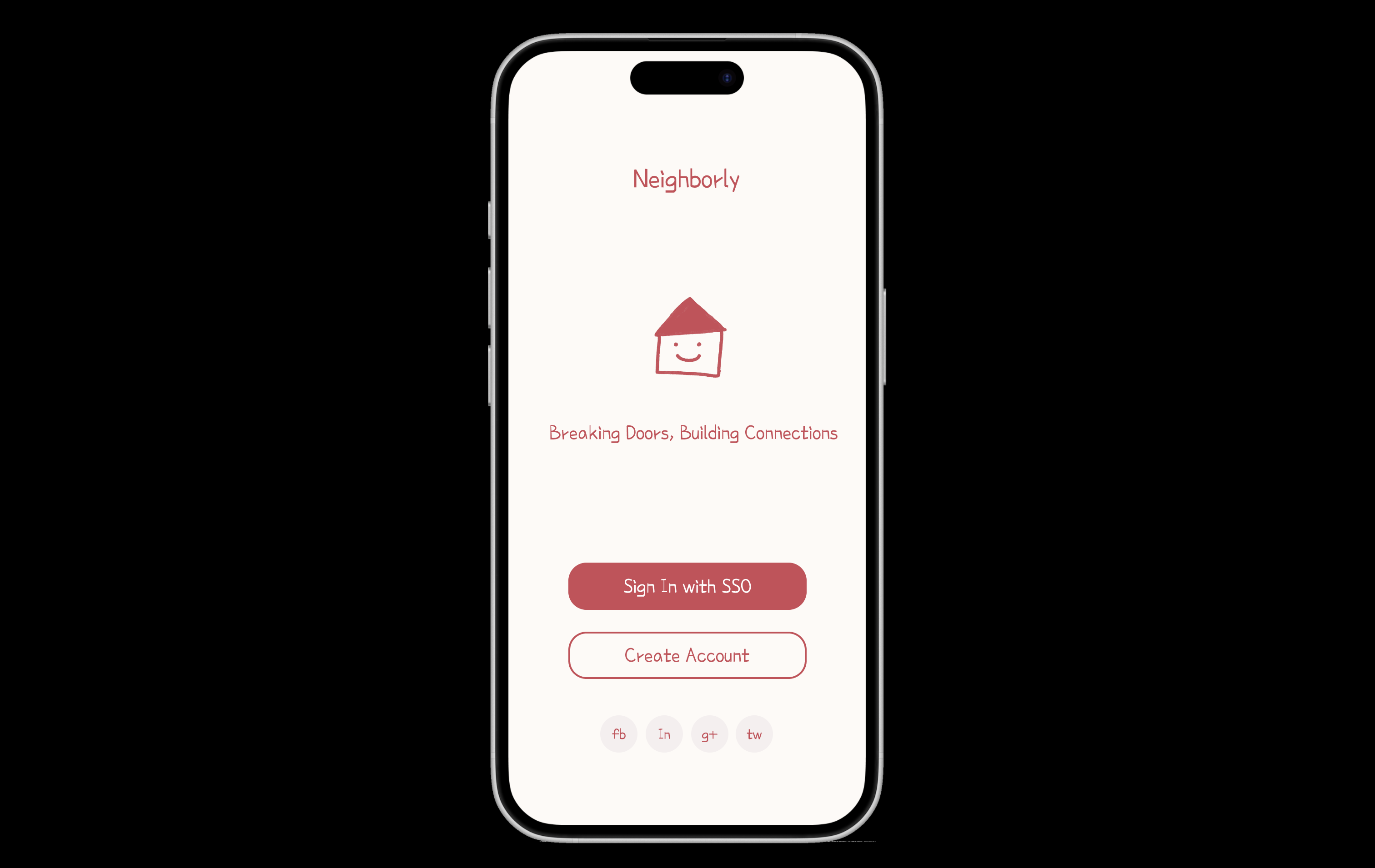
Prototype link (Please submit a link to a playable prototype, not a link to your design file) Link https://www.figma.com/proto/qb3QeA0BPG5cg1UC3GegEo/Prototype?node-id=336-950&t=Cr4q2kfI9C0ol5of-1&scaling=scale-down&content-scaling=fixed&page-id=336%3A441&starting-point-node-id=336%3A950
Describe your project (max 150 words) Write your answer here.
Unlike projects that address obvious user needs, our team explores a deeper impulse of humans that has been neglected in an increasingly virtual world: to connect with the physical world around them, to have deep conversations with people nearby, and having a personal voice--Neighborly is an app that aims to reconstruct our nearby: it is design to rebuild the sense of community by fostering real-life connections with those who live nearby. By making it easier to engage with neighbors, Neighborly helps users cultivate meaningful relationships and a true sense of belonging in their local environment.
From doing small favors for each other like borrowing pepper for cooking, to building a lasting friendship and sharing about both problems of life and laughter, the app encourages organic interactions and a sense of belonging. Ultimately, this project aims to transform college residential spaces into vibrant, supportive communities where students feel comfortable, connected, and engaged with those around them.
Describe your research process and findings. If you conducted any surveys or interviews, please include the survey form and/or interview questions here. If you conducted secondary research by pulling from online sources, please include a link to your sources. (Max 500 words) Write your answer here.
Our research focuses on understanding the importance of in-person social experiences with neighbors among college students. The primary goal was to explore how students interact with their neighbors, the barriers they face, and the potential for strengthening these connections. To gather data, we conducted a quantitative Google Form survey and qualitative interviews.
The survey was distributed to college students, asking them a series of questions related to their comfort level and frequency of interactions with their neighbors. Questions included: "How comfortable do you feel having a conversation with your neighbors?" and "What blocks you from building stronger relationships with your neighbors?" The survey aimed to capture the students’ experiences and perceptions around in-person interactions with those living nearby. In addition to the survey, we conducted qualitative interviews with college students to delve deeper into their thoughts on neighborly relationships. Interview questions included: “What defines a neighbor to you?” “What would you do to get to know the neighbors on your floor or in your building?” and “Can you share any stories of past interactions with your neighbors?” Many students reflected on the idea of an ideal neighbor as someone friendly, approachable, and willing to engage in spontaneous interactions, such as chatting in common areas or helping each other with everyday tasks. (Survey link: https://docs.google.com/forms/d/e/1FAIpQLSfopkAKyDYoR1m1gYc_-vZqEiKlglNmFlyP_6eT4CFBudBRKA/viewform?usp=sharing)
Our findings revealed a concerning lack of engagement among students in terms of neighborly communication. A substantial number of respondents reported limited interactions with their neighbors. Most interactions were brief, with 95.4% of students engaging in small talk lasting less than five minutes. Of these, 41.9% of students reported speaking for less than a minute during a quick greeting, and 31.8% never spoke to their neighbors at all.
However, when it comes to reasons behind these limited interactions, we surprisingly find that the top responses were the physical layout of the building (such as closed doors and lack of communal spaces), and personal factors like shyness, social anxiety, busy schedules, and lack of interest in getting to know neighbors, were, in fact, not the most formidable barrier that prevents students from interacting with their neighbors.
Despite these barriers, students also expressed ways to overcome them. The survey indicated that students felt they could connect with their neighbors by helping each other out with small favors, participating in group activities, and bonding over shared interests and experiences. This highlights a potential pathway for fostering stronger social ties within student communities.
According to a study published on PMC (PubMed Central), "Individuals who report a higher sense of community in their neighborhoods experience fewer symptoms of depression, anxiety, and stress." (Source: https://pmc.ncbi.nlm.nih.gov/articles/PMC10314672/?utm_source=chatgpt.com) This highlights the crucial role that social connections play in well-being and how college students construct their identity through a critical phase in their life, and we will start our designs from here.
Describe your most important design decisions. What research findings and/or user testing results led you to make these decisions? (Max 500 words)
Our design decisions were guided by key insights from user interviews, surveys, and secondary research, which revealed three critical findings about young adults in college towns: Lack of Accessible Shared Spaces: Young adults are open to connecting with neighbors but often lack accessible physical or digital spaces that naturally facilitate interactions. Uncertainty About Reciprocity: A major barrier to neighborly connections is the uncertainty about mutual interest, leading to overestimated potential awkwardness and discouraging initial outreach. Impact of Shared Interests: Shared interests and a sense of identity significantly enhance the likelihood of forming meaningful connections with neighbors.
To address these insights, we designed a mobile app with features targeting each challenge:
Removing Barriers to Connection: Our app provides a safe digital space that eliminates the physical barriers to communication, directly addressing the first insight. Interviewees noted the absence of common areas in their apartments as a barrier to neighborly interactions, with some feeling intimidated by the idea of knocking on a neighbor's door to initiate a friendship. The app’s online communication feature simplifies this initial phase, allowing users to connect comfortably. However, recognizing that face-to-face interactions are what constitute “humanness” in this digital era, the app also encourages in-person meetups. When asked, "What defines a neighbor to you?" one interviewee highlighted the importance of physical interactions, distinguishing neighbors from distant friends. To complement this, the app matches users based on shared interests and event preferences, enabling meetups in familiar, comfortable environments.
Reducing Uncertainty Through Reciprocity: To mitigate uncertainty about mutual interest, the app features event-based matching, where participation itself signals reciprocity. Users can join or host events, indicating shared enthusiasm for specific activities. We designed two navigation modes based on interview feedback: Quick Mode (lightning icon) caters to users with specific needs, such as finding help with moving or assembling furniture—a common request from interviewees. Explore Mode (eye icon) supports the spontaneous discovery of nearby events for users seeking casual social opportunities. Additionally, the "High Five" feature adds an element of fun, offering a lighthearted way to acknowledge mutual interest and willingness to connect.
Fostering Connections Through Shared Interests: To leverage the power of shared interests, the app integrates interest-based personalization from the sign-up phase. Users answer questions like "What are your hobbies?" to enable the algorithm to recommend relevant events. Personal profiles prominently display these interests, serving as conversation starters and encouraging organic interactions. This design choice was inspired by feedback highlighting that shared activities and hobbies significantly ease the process of getting to know new people.
In summary, our design decisions were rooted in user insights, aiming to create a platform that lowers barriers to connection, reduces the awkwardness of initial outreach, and fosters meaningful neighborly relationships through shared experiences.
Built With
- figma


Log in or sign up for Devpost to join the conversation.