-
-
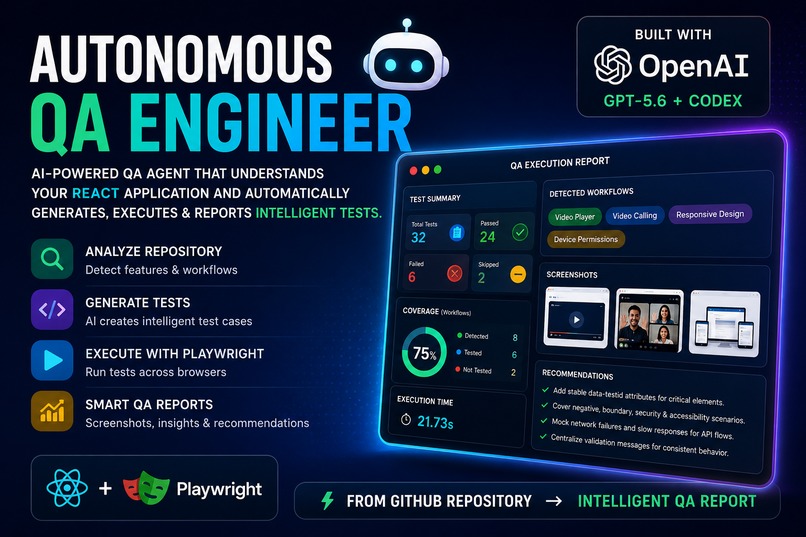
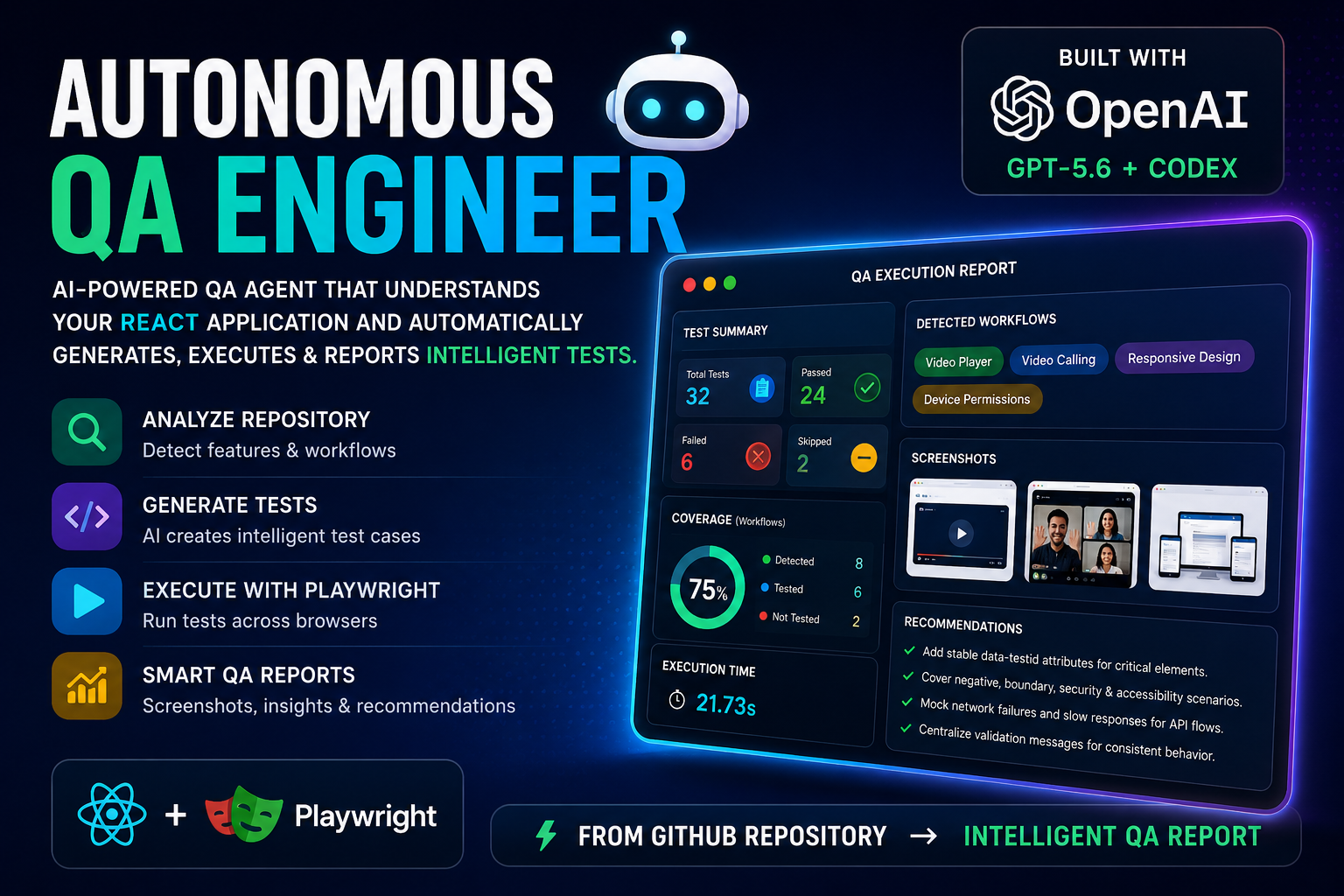
Thumbnail
-
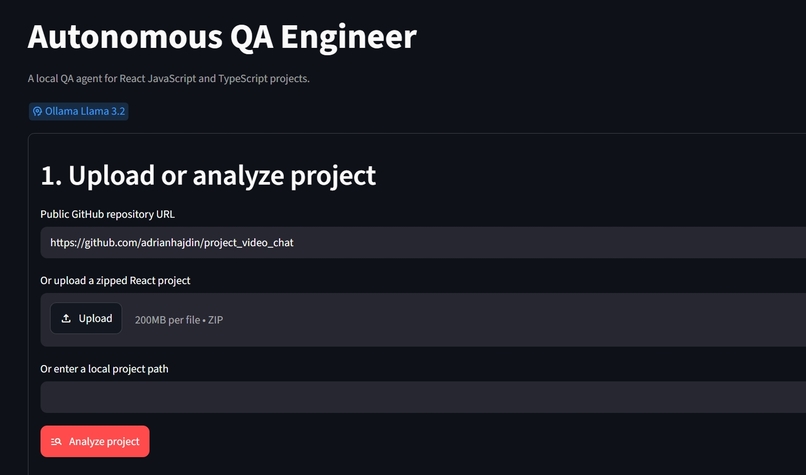
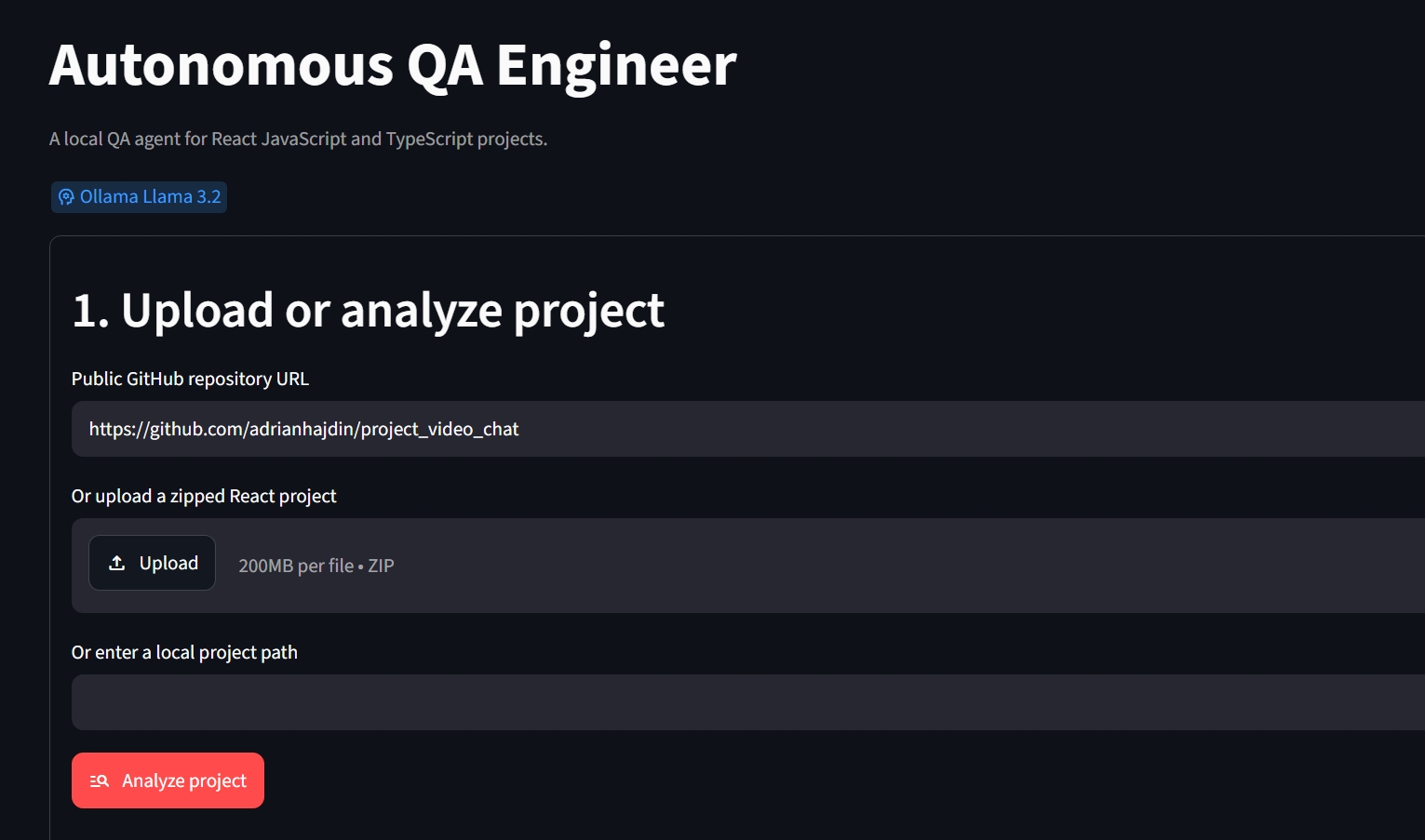
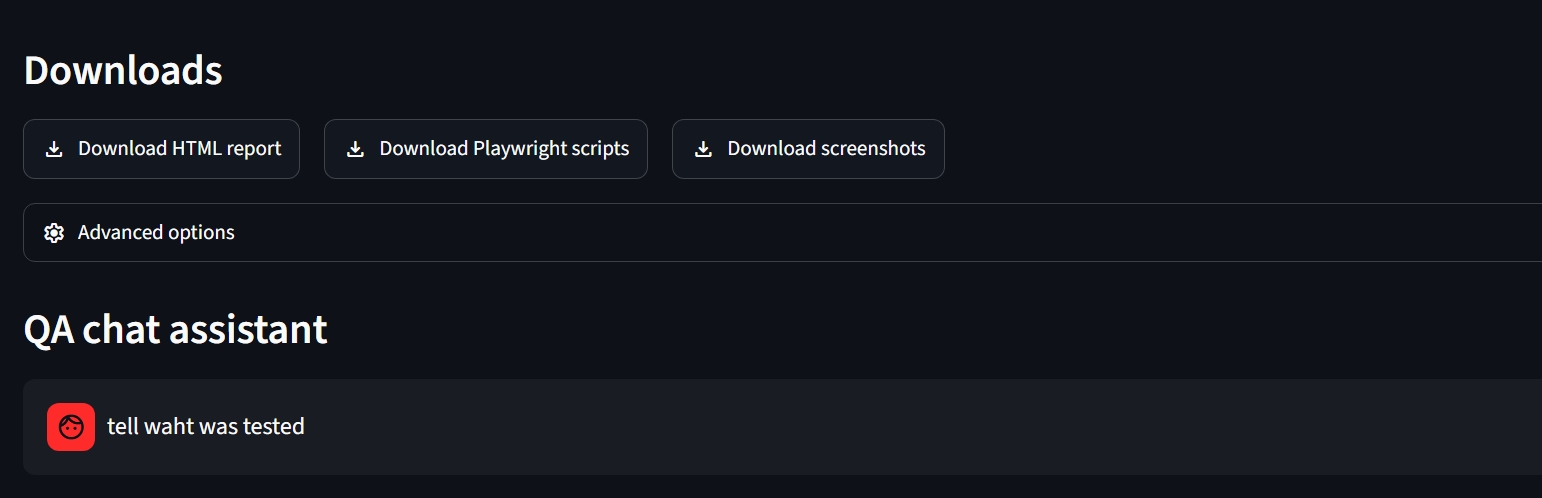
Stream lit Interface
-
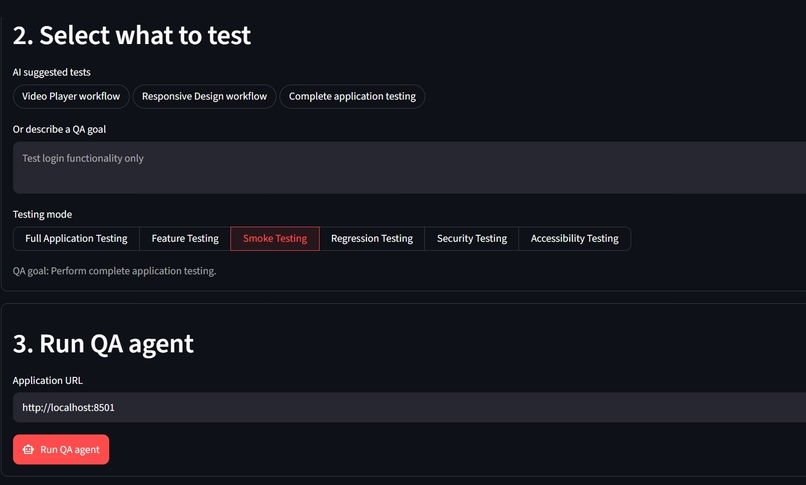
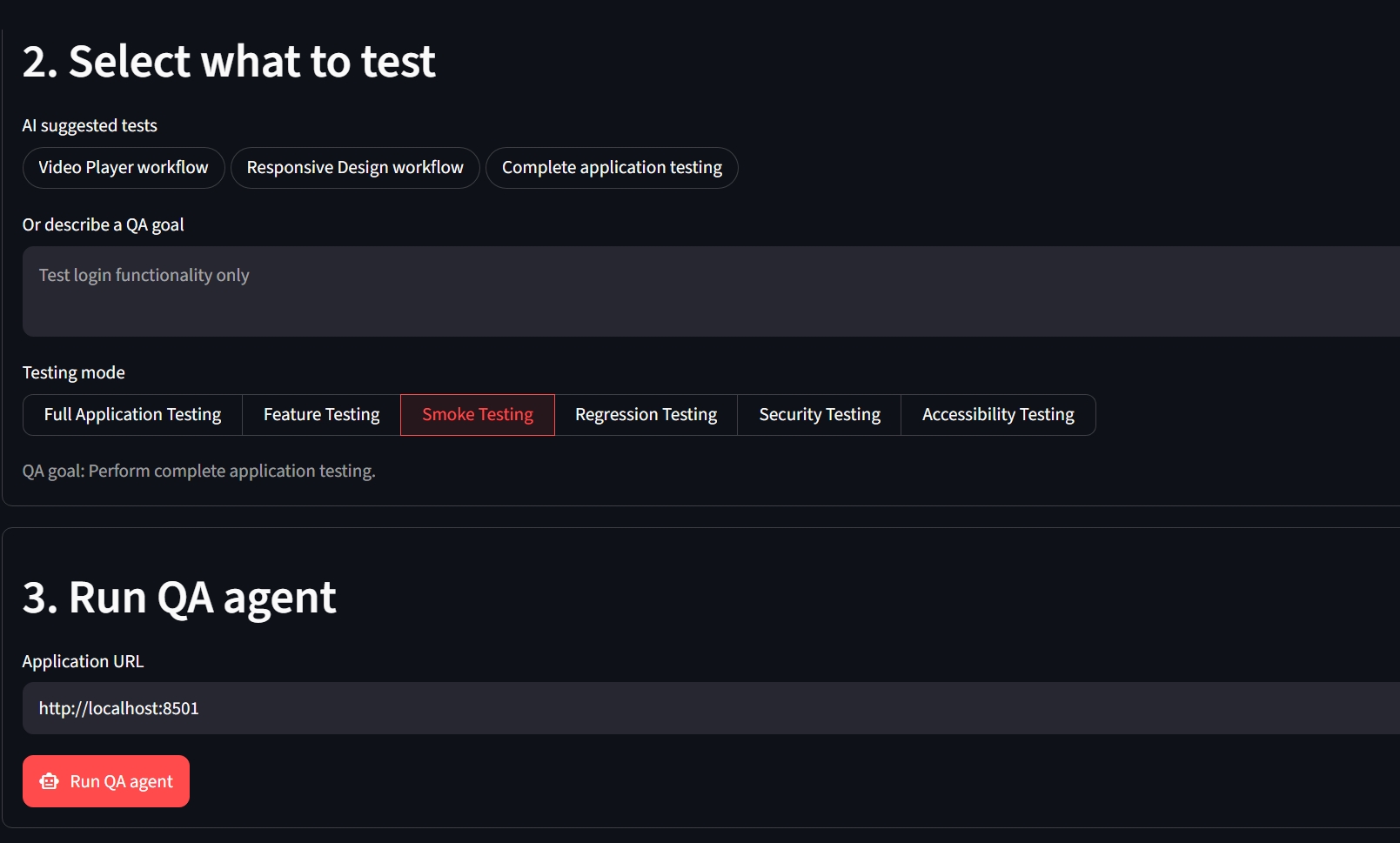
Specific test feature using Playright
-
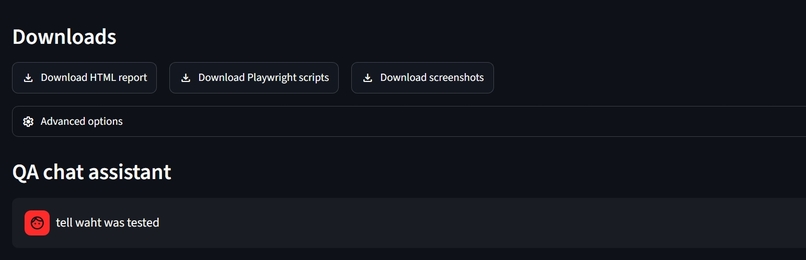
Lama 3.2 based AI chat, screenshot feature
-
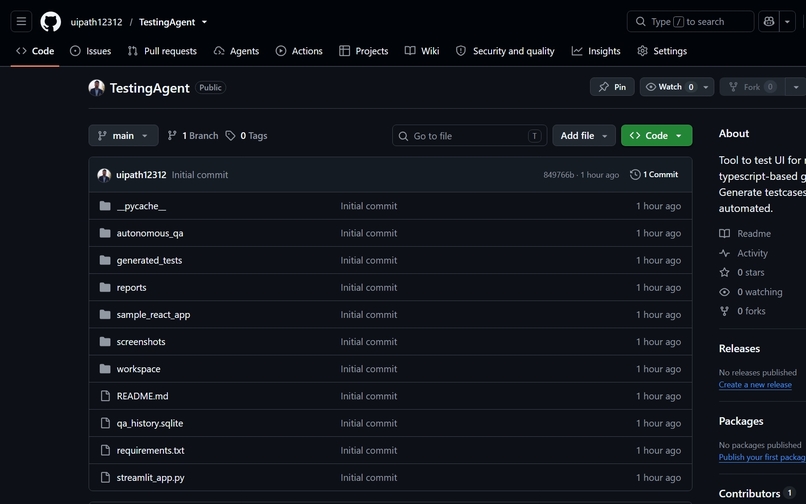
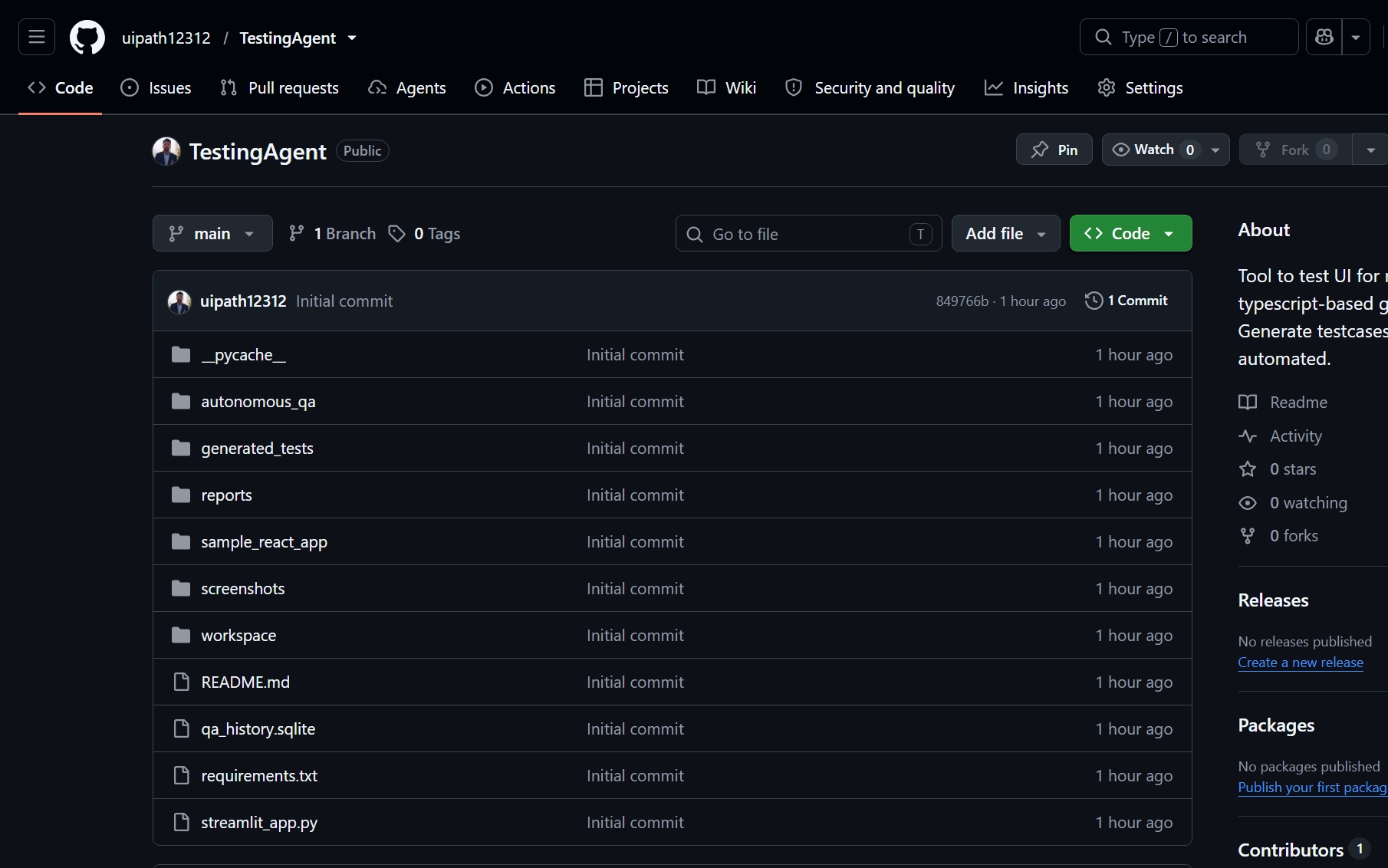
Git Repo
Autonomous QA Engineer
Inspiration
Modern frontend applications are becoming increasingly complex, and writing UI and functional test cases is still a time-consuming and repetitive task. Developers often spend hours understanding a codebase before they can even begin writing Playwright or Selenium tests.
I wanted to build an AI-powered QA agent that behaves like a senior QA engineer. Instead of manually creating test scripts, developers should be able to provide a React application and simply ask:
"Test the login functionality."
or
"Perform complete application testing."
The idea was to reduce the time and effort required for QA automation while making intelligent testing accessible to every developer.
What it does
Autonomous QA Engineer is an AI-powered QA agent for React JavaScript and TypeScript applications.
It can:
- Analyze a GitHub repository or local React project.
- Detect application features and workflows.
- Understand natural language QA instructions.
- Generate intelligent test cases.
- Generate Playwright test scripts.
- Execute automated tests.
- Capture screenshots during execution.
- Generate QA reports and recommendations.
- Work completely offline using a rule-based engine.
- Use Ollama with Llama 3.2 when available for richer requirement understanding and recommendations.
The goal is to transform the traditional QA workflow into a simple three-step experience:
- Analyze the project.
- Select what to test.
- Run the QA Agent.
How we built it
Autonomous QA Engineer was built using:
- Python
- Streamlit
- Playwright
- Pytest
- Ollama (Llama 3.2)
- SQLite
- Git repository analysis techniques
- Rule-based testing workflows
The architecture consists of several independent modules:
- Repository Analyzer
- Code Parser
- Instruction Engine
- Test Case Generator
- Playwright Generator
- Test Executor
- Screenshot Manager
- Report Generator
- QA Chat Assistant
- Rule-Based Engine
- Llama Integration Layer
The application intelligently analyzes React projects and generates repository-specific testing workflows rather than relying on static test templates.
Built with GPT-5.6 and Codex
This project was extensively developed using GPT-5.6 and Codex during OpenAI Build Week.
Codex was used to accelerate:
- System architecture design
- Repository analysis modules
- Playwright integration
- Streamlit UI implementation
- Rule-based testing engine development
- HTML report generation
- Test execution pipelines
- Feature detection improvements
- Refactoring and code optimization
- Documentation generation
GPT-5.6 significantly accelerated development by helping design autonomous QA workflows and transforming the idea into a working prototype in a short timeframe.
Challenges we ran into
Some of the biggest challenges included:
- Automatically understanding different React codebases.
- Detecting meaningful application workflows.
- Generating intelligent test cases for different project types.
- Integrating Playwright and pytest execution pipelines.
- Making the QA experience simple enough for developers.
- Supporting offline execution without relying on paid APIs.
- Designing repository-specific recommendations instead of generic testing outputs.
Building an autonomous QA agent that works across different React applications proved to be one of the most interesting technical challenges of the project.
What we learned
Throughout the project, I learned that intelligent QA automation is much more than simply generating Playwright scripts.
A useful QA agent must be able to:
- Understand the application's intent.
- Identify critical workflows.
- Recommend meaningful tests.
- Execute those tests autonomously.
- Present actionable insights to developers.
I also learned how powerful GPT-5.6 and Codex can be for rapidly prototyping non-trivial developer tools.
Accomplishments that we're proud of
- Built a working autonomous QA agent for React applications.
- Integrated repository analysis with automated testing workflows.
- Implemented Playwright-based test execution.
- Added screenshot capture and HTML reporting.
- Designed an offline rule-based fallback engine.
- Created an intuitive three-step QA workflow.
- Successfully combined AI-assisted development with practical QA automation.
What's next for Autonomous QA Engineer
Future improvements include:
- Support for Next.js, Angular, and Vue applications.
- CI/CD pipeline integration.
- Visual regression testing.
- Multi-browser and mobile testing.
- Git commit-based regression testing.
- Performance and accessibility analysis.
- Autonomous bug-fix recommendations.
- Cloud and team collaboration features.
The long-term vision is to create an AI-powered QA engineer that can autonomously understand, test, and validate modern applications with minimal developer effort.
Built With
- 3.2
- ai
- automation
- codex
- git
- github
- gpt-5.6
- javascript
- llama
- ollama
- openai
- playwright
- python
- qa
- react
- streamlit
- testing
- typescript
- ui

Log in or sign up for Devpost to join the conversation.