-
-
Home
-
Phases
-
Dashboard
Inspiration 🚨
If you’ve ever pushed code to production at 4 PM on a Friday and immediately heard your Slack notifications explode, you know exactly what the QA bottleneck feels like.
In a recent project, our team spent weeks building a massive new feature. The Product Manager handed us a flawless 20-page Product Requirement Document (PRD), we wrote the code, and handed it off to QA. Then came the nightmare. QA engineers spent agonizing days translating the English PRD into hundreds of lines of brittle Playwright and Selenium code. When the code finally shipped, a frontend developer changed a single CSS class name. Every single automated test failed. Production was blocked.
We realized the current state of QA automation is fundamentally broken. Humans shouldn't be manually translating PRD text into fragile CSS selectors. We wanted to build a system where the PRD itself could autonomously drive the browser.
What it does 🤖
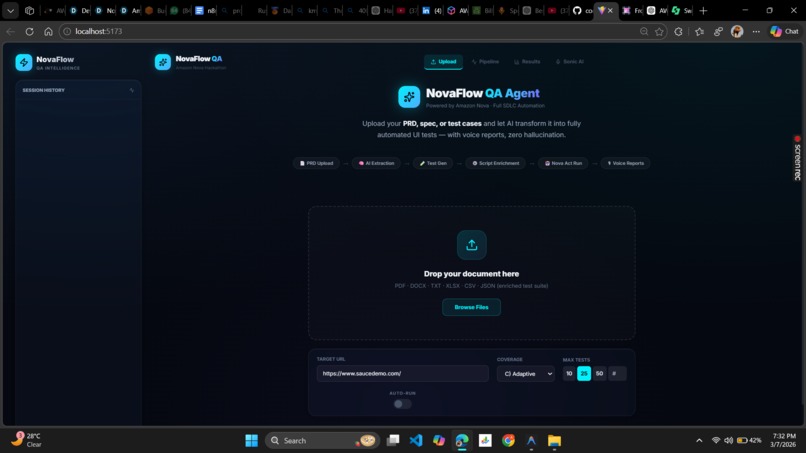
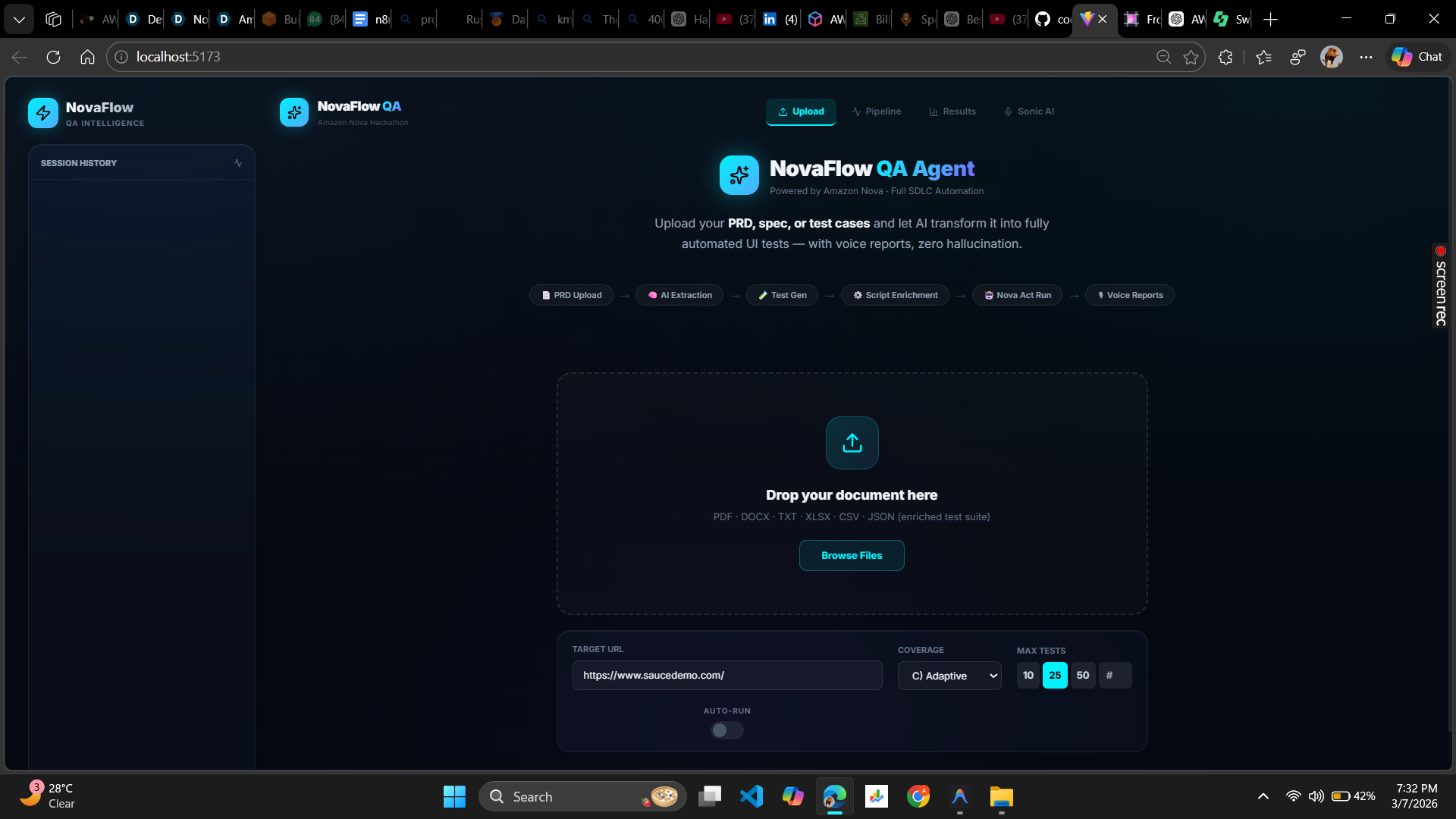
NovaFlow is an autonomous AI testing ecosystem that converts unstructured Product Requirement Documents directly into executable browser automation, completely eliminating the need for engineers to manually write UI test scripts.
It bridges the gap between Product Managers and QA Engineers by operating as a multi-agent system:
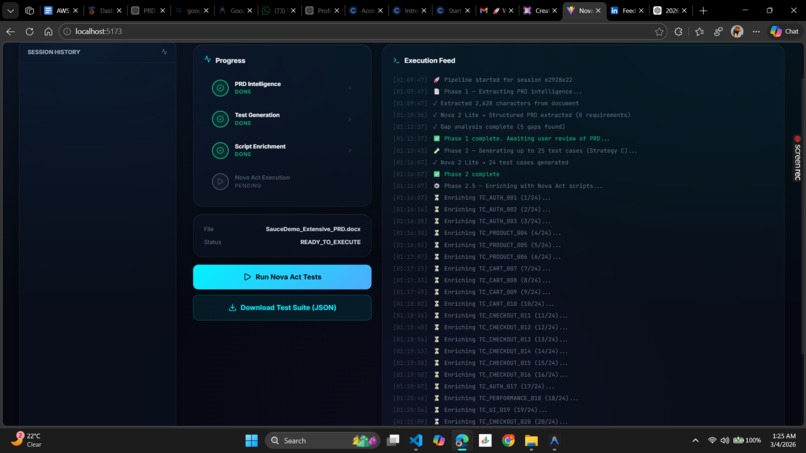
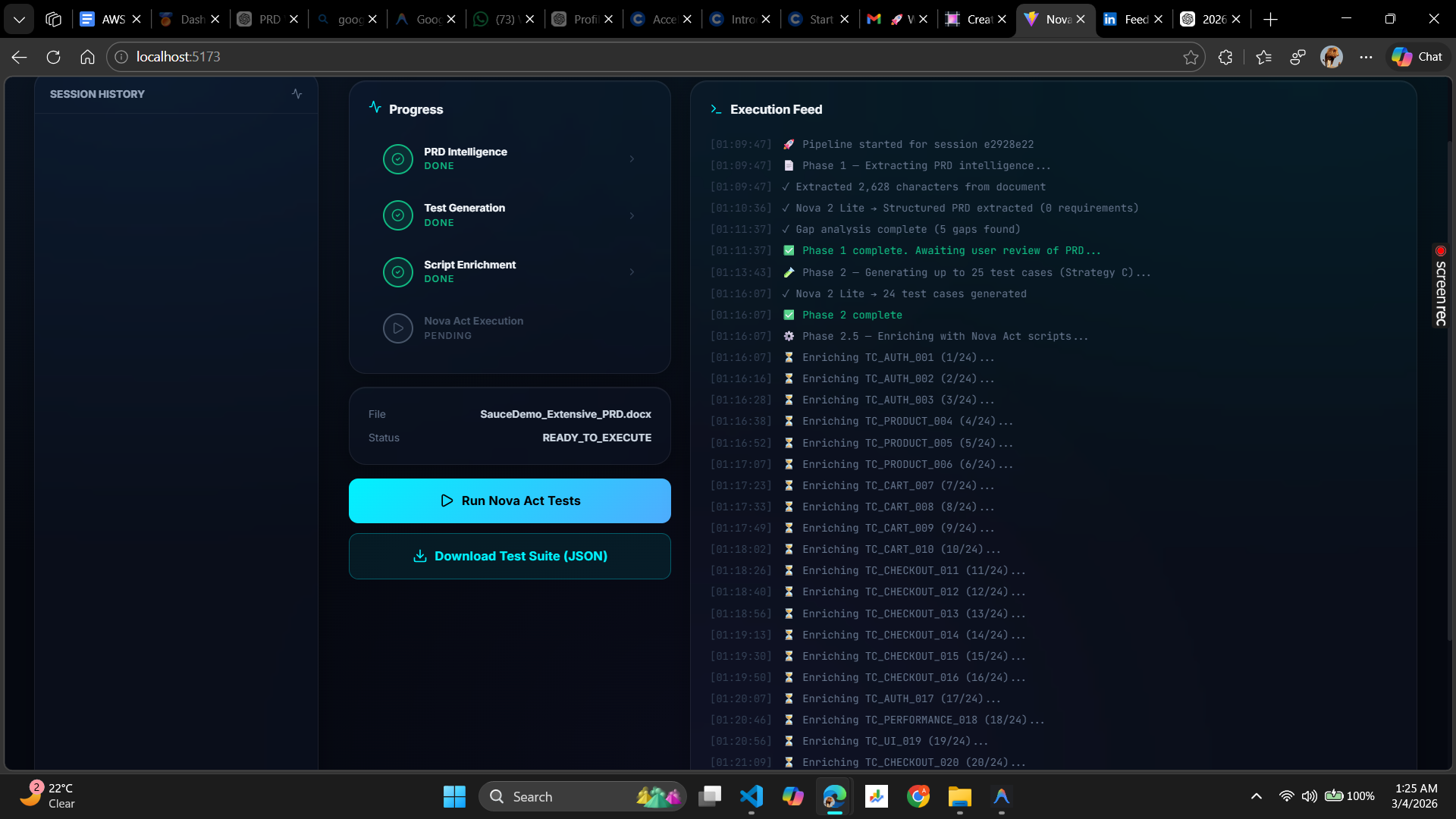
- Intelligent Extraction: You upload a raw PDF or Word document containing your product specs. NovaFlow processes the text, extracts the business logic, flags missing edge cases, and instantly generates a structured array of atomic test cases.
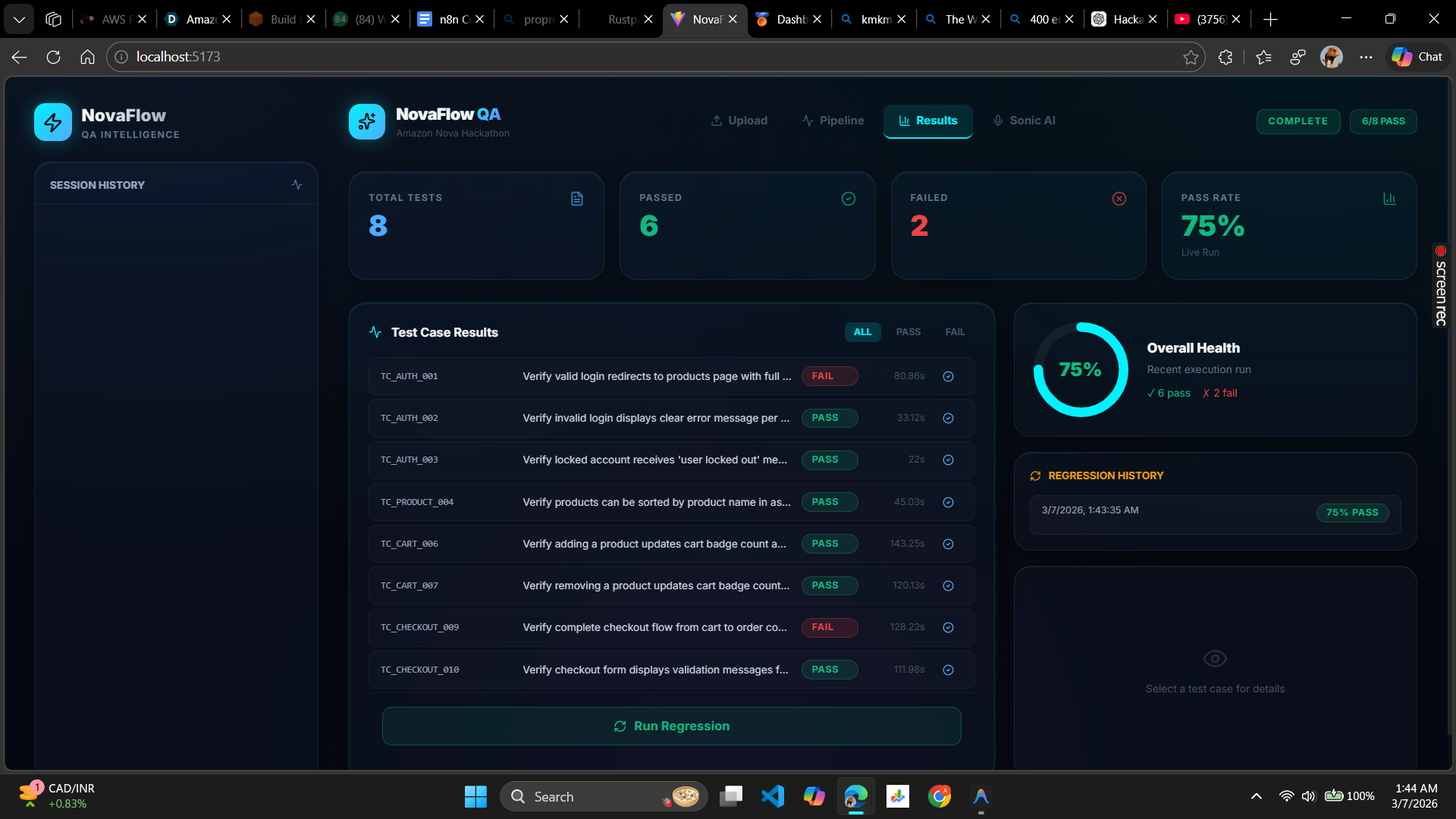
- Autonomous Execution: NovaFlow physically launches a Chromium browser and visually navigates the UI to execute the tests without relying on brittle CSS selectors. If a button moves or changes color, the agent dynamically adapts.
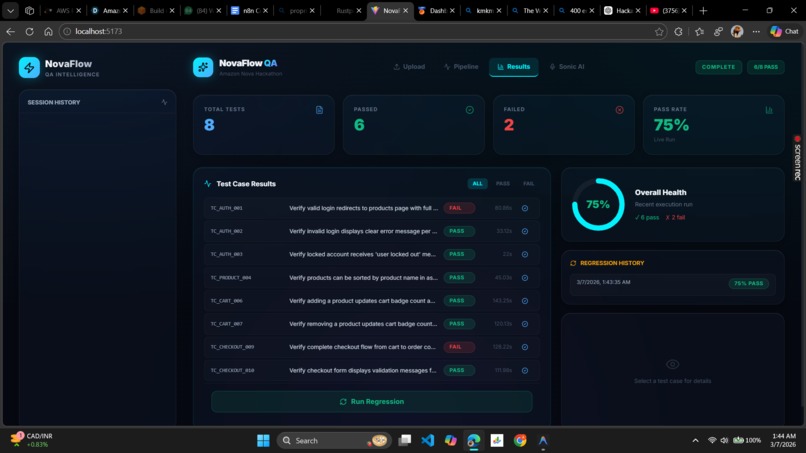
- Conversational Insights: Instead of scrolling through endless failed execution logs, developers can use their microphone to have a bidirectional voice-chat with the testing pipeline to ask exactly why a test failed.
How we built it 🛠️
We built NovaFlow entirely from scratch using a monolithic Python FastAPI backend and a React/Vite dynamic frontend. We heavily utilized three powerful Amazon Nova models to power our multi-agent architecture:
System Architecture Breakdown
                        ┌─────────────────────────────────────┐
                        │        QA Developer / User          │
                        │    (Uploads PRD & Views Results)    │
                        └─────────────────┬───────────────────┘
                                          ▼
                        ┌─────────────────────────────────────┐
                        │     React / Vite Dashboard (UI)     │
                        │   (Live Logs & Audio Dashboard)     │
                        └─────────────────┬───────────────────┘
                                          ▼ [REST API]
  ┌───────────────────────────────────────┴───────────────────────────────────────┐
  │                        FastAPI Backend Orchestrator                           │
  │                                                                               │
  │  ┌───────────────┐     ┌───────────────────────┐     ┌─────────────────────┐  │
  │  │ Phase 1 & 2   │     │ Phase 3 Validation    │     │ Nova Sonic Router   │  │
  │  │ (Parse & Gen) │ ──► │ (Action Mapping)      │ ──► │ (Audio Streaming)   │  │
  │  └───────┬───────┘     └──────────┬────────────┘     └───────────┬─────────┘  │
  └──────────┼────────────────────────┼──────────────────────────────┼────────────┘
             ▼                        ▼                              ▼
  ┌───────────────────────────────────────────────────────────────────────────────┐
  │                         Amazon Bedrock Intelligence                           │
  │                                                                               │
  │  ┌───────────────┐     ┌───────────────────────┐     ┌─────────────────────┐  │
  │  │ Nova 2 Lite   │     │ Nova Act              │     │ Nova Sonic          │  │
  │  │ (Logic rules) │     │ (Visual DOM parsing)  │     │ (Voice execution)   │  │
  │  └───────────────┘     └──────────┬────────────┘     └─────────────────────┘  │
  └───────────────────────────────────┼───────────────────────────────────────────┘
                                      ▼
                        ┌─────────────────────────────────────┐
                        │   Autonomous Execution Engine       │
                        │  (Playwright + Chromium Browser)    │
                        │  Executes Tests & Captures DOM      │
                        └─────────────────────────────────────┘
- Amazon Nova 2 Lite: Used as the 'Brain' of the system. We leveraged its incredible speed and reasoning capabilities to ingest massive PRD documents, perform semantic extraction, and generate logical test arrays.
- Amazon Nova Act: Used as the 'Hands' of the system. We integrated Nova Act alongside Playwright to visually interpret the DOM. Instead of hardcoding click coordinates, Nova Act dynamically reasons through the UI to complete the tests.
- Amazon Nova Sonic: Used as the 'Voice' of the system. We implemented real-time binary audio streaming to allow developers to verbally interrogate their execution reports.
Challenges we ran into 🧗♂️
- The Hallucination Problem: Autonomous browser agents often hallucinate in complex or unknown UI environments. To solve this, we built a hybrid Failsafe Architecture. If a developer explicitly provides a CSS selector in their PRD, NovaFlow bypasses the AI reasoning entirely and uses lightning-fast native Playwright commands. If they use vague English, it falls back to Nova Act's visual reasoning.
- Environment Portability: AI agent frameworks are notoriously difficult to set up locally. We spent days stripping out hardcoded paths and replacing them with OS-agnostic relative resolutions, creating dual start.sh and start.bat scripts so that judges and users on Mac, Linux, or Windows can spin up the entire ecosystem in under 3 minutes.
- Nova Sonic Audio Streaming: Dealing with binary audio streaming arrays in Python to pass voice data seamlessly back and forth to the React frontend required complex base64 encoding and asynchronous event-loop management.
Accomplishments that we're proud of 🏆
We are incredibly proud of building a system that successfully orchestrates three different Amazon Nova models simultaneously in a single, cohesive user journey. Transitioning seamlessly from text-processing (Lite) to visual UI execution (Act) to conversational audio (Sonic) feels like looking directly into the future of software development.
What we learned 🧠
We learned that the true power of GenAI isn't just generating boilerplate code—it's orchestrating agents that can actively reason and act on production environments. We also learned how incredibly capable the Amazon Nova model family is, particularly Nova Act's ability to interpret complex web DOMs without explicit training.
What's next for NovaFlow 🚀
For NovaFlow to become a staple in enterprise engineering, it needs to live where developers live. Our next step is to package NovaFlow as a GitHub Action. We envision a future where every time a developer opens a Pull Request, NovaFlow autonomously reads the linked Jira ticket, spins up an ephemeral environment, visually tests the new UI against the PRD, and leaves a Nova Sonic voice memo for the developer if their code broke the build.


Log in or sign up for Devpost to join the conversation.