Inspiration
Most AI test generation tools are a single prompt → single output with no review. You trust it blindly and it always misses something — security edge cases, ambiguous requirements, boundary conditions nobody thought to check. I wanted to build something that catches its own mistakes before a human ever sees the result.
What it does
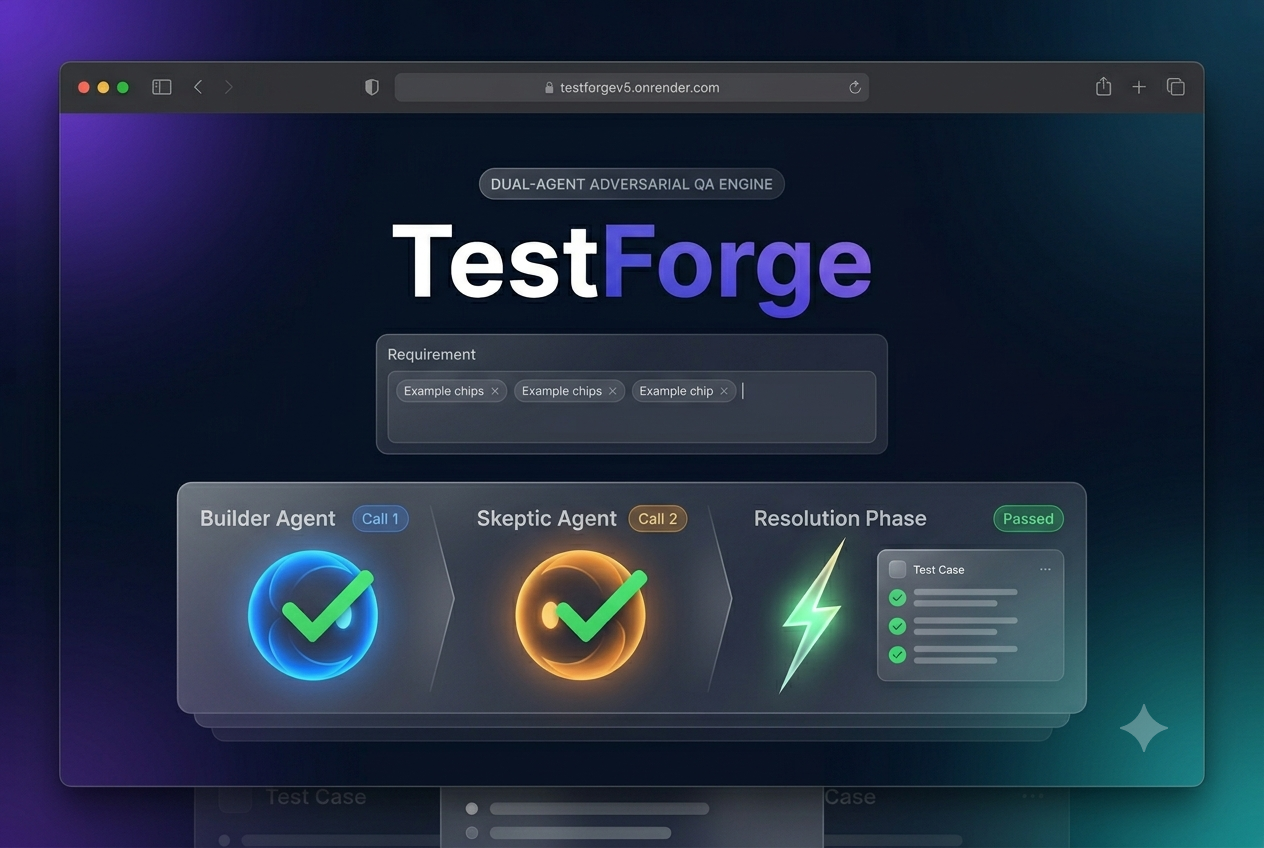
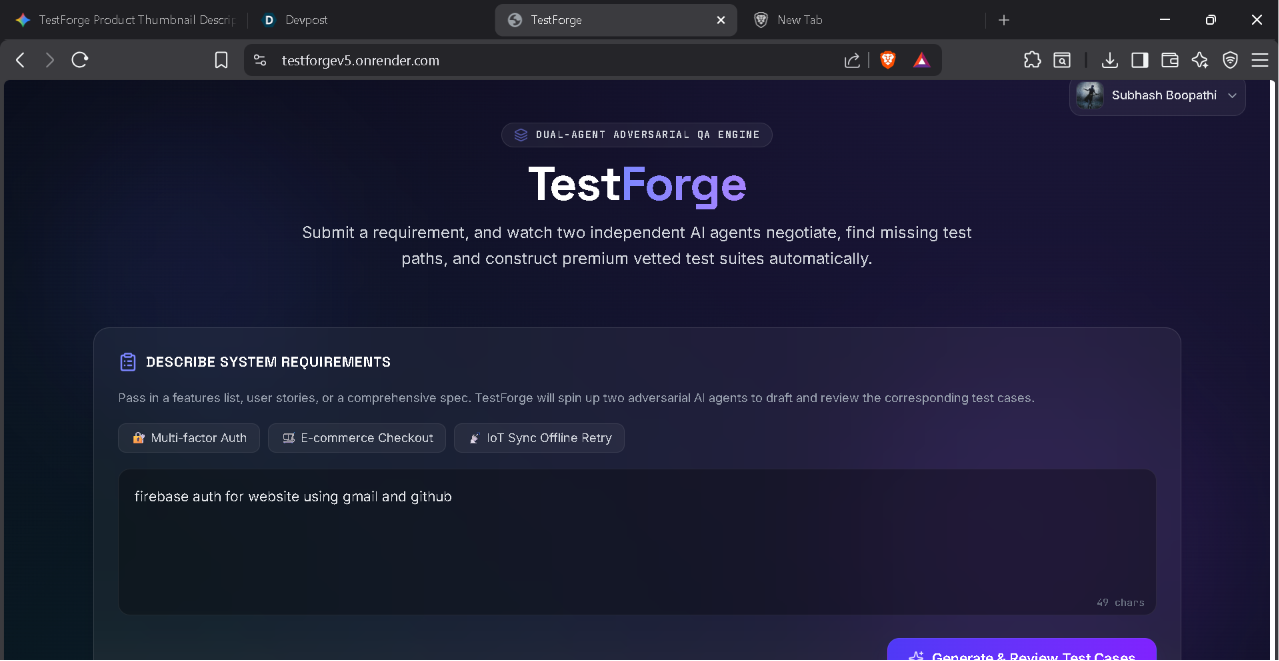
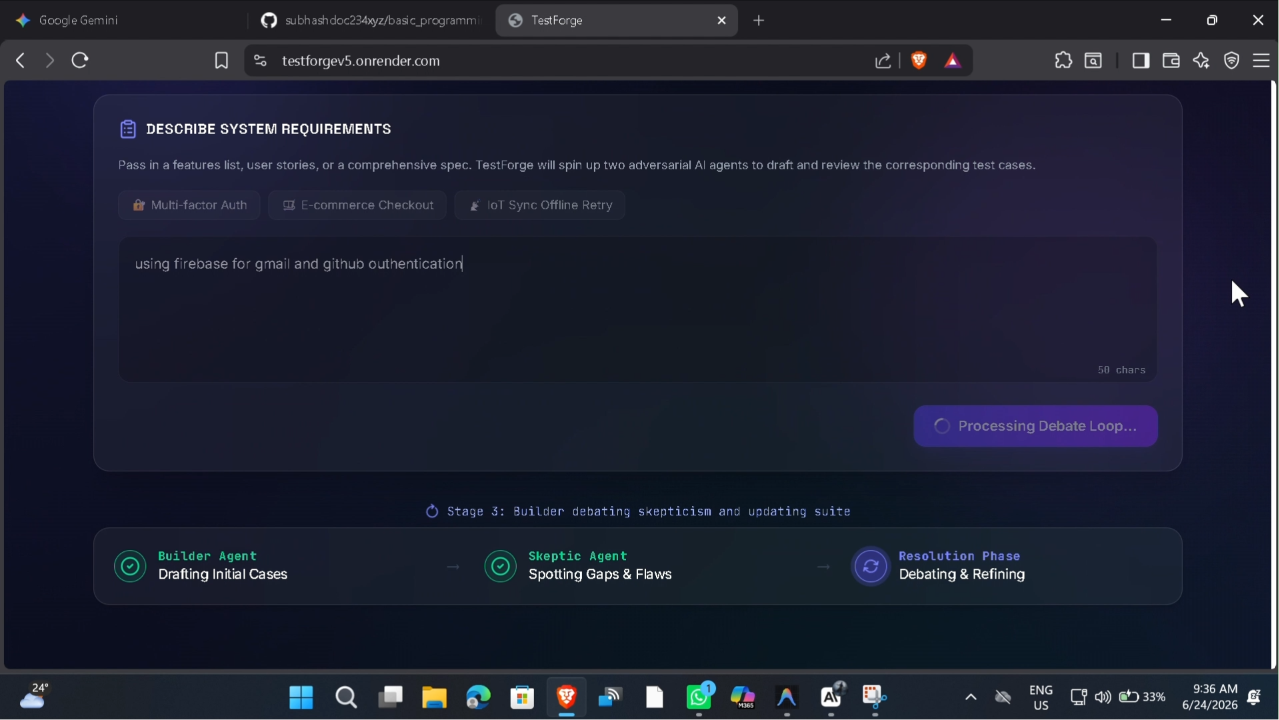
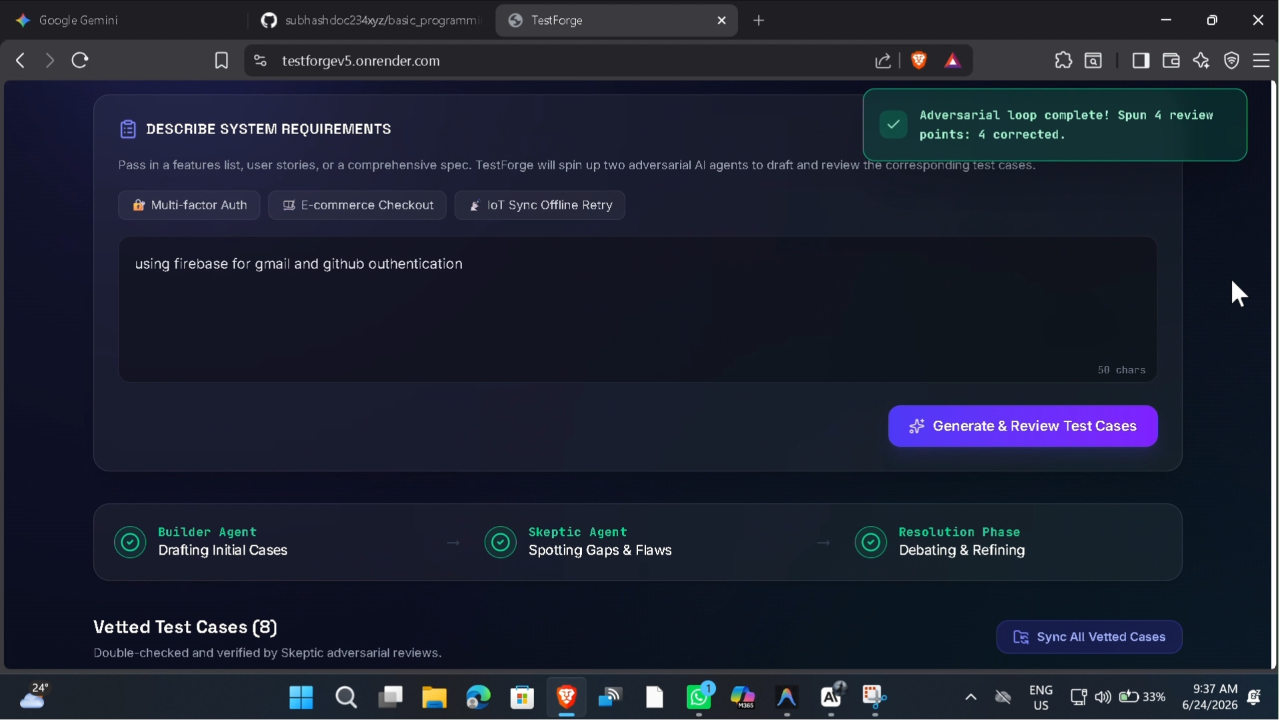
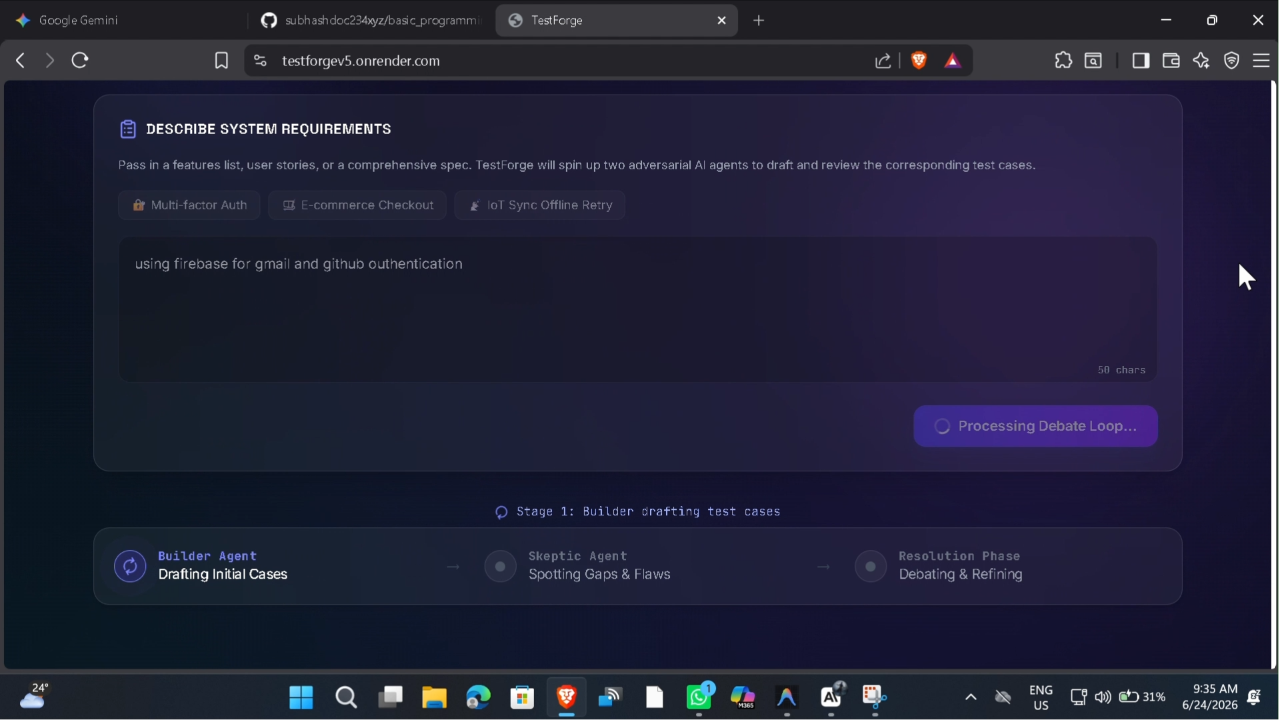
TestForge runs two independent Gemini 2.5 Flash AI agents in an adversarial debate loop:
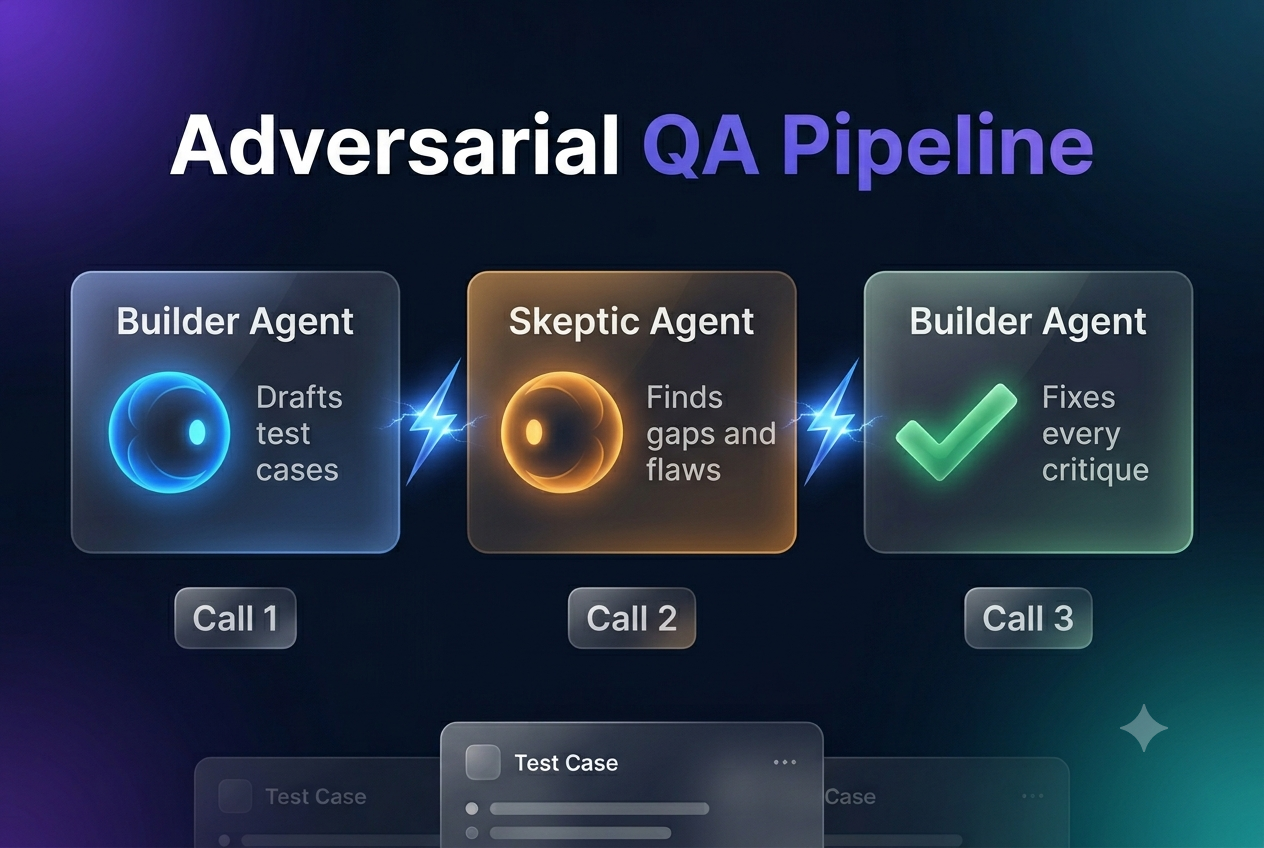
- Builder Agent drafts a complete test suite from your plain-English requirement
- Skeptic Agent independently reviews it against the original requirement — finding missing scenarios, security gaps, and ambiguous coverage the Builder missed
- Builder Agent responds to every single critique — fixing or defending each one with a clear justification
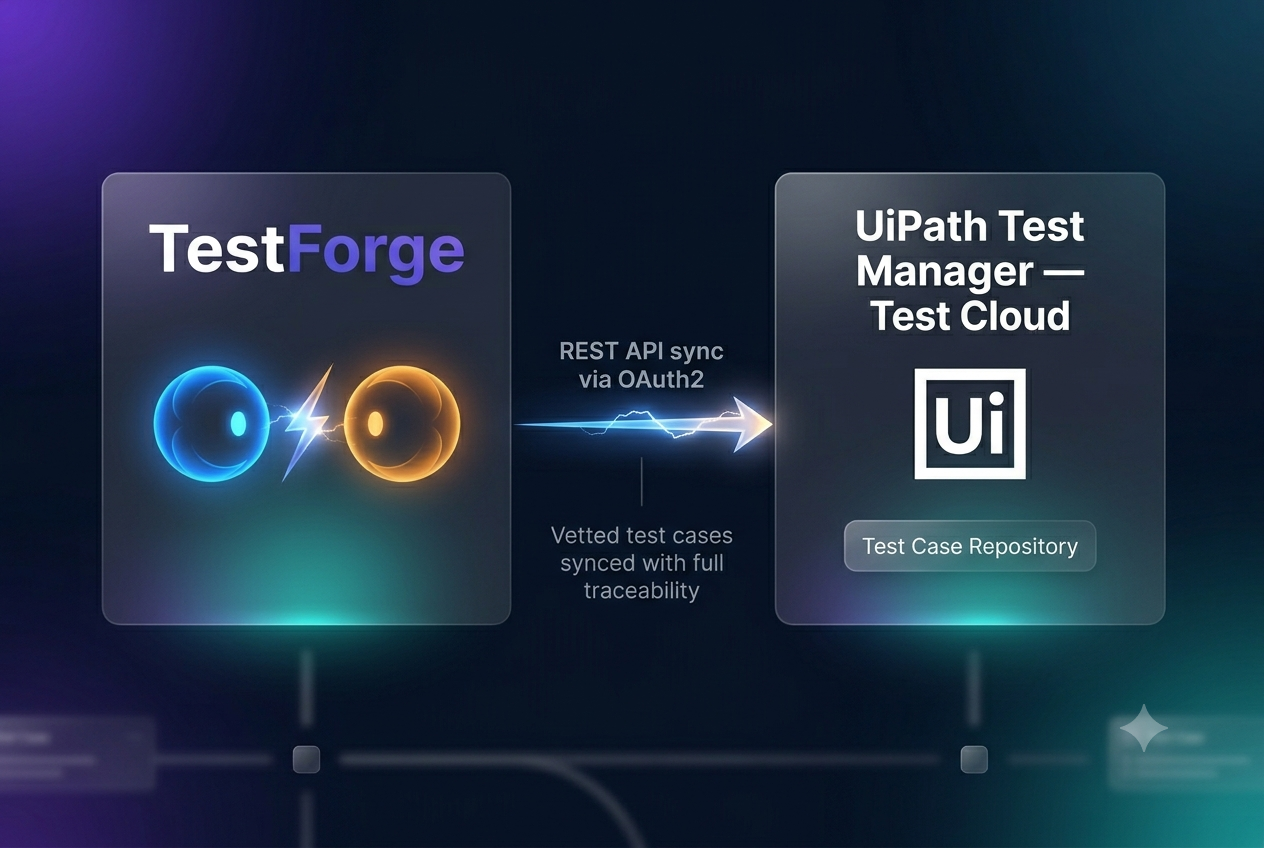
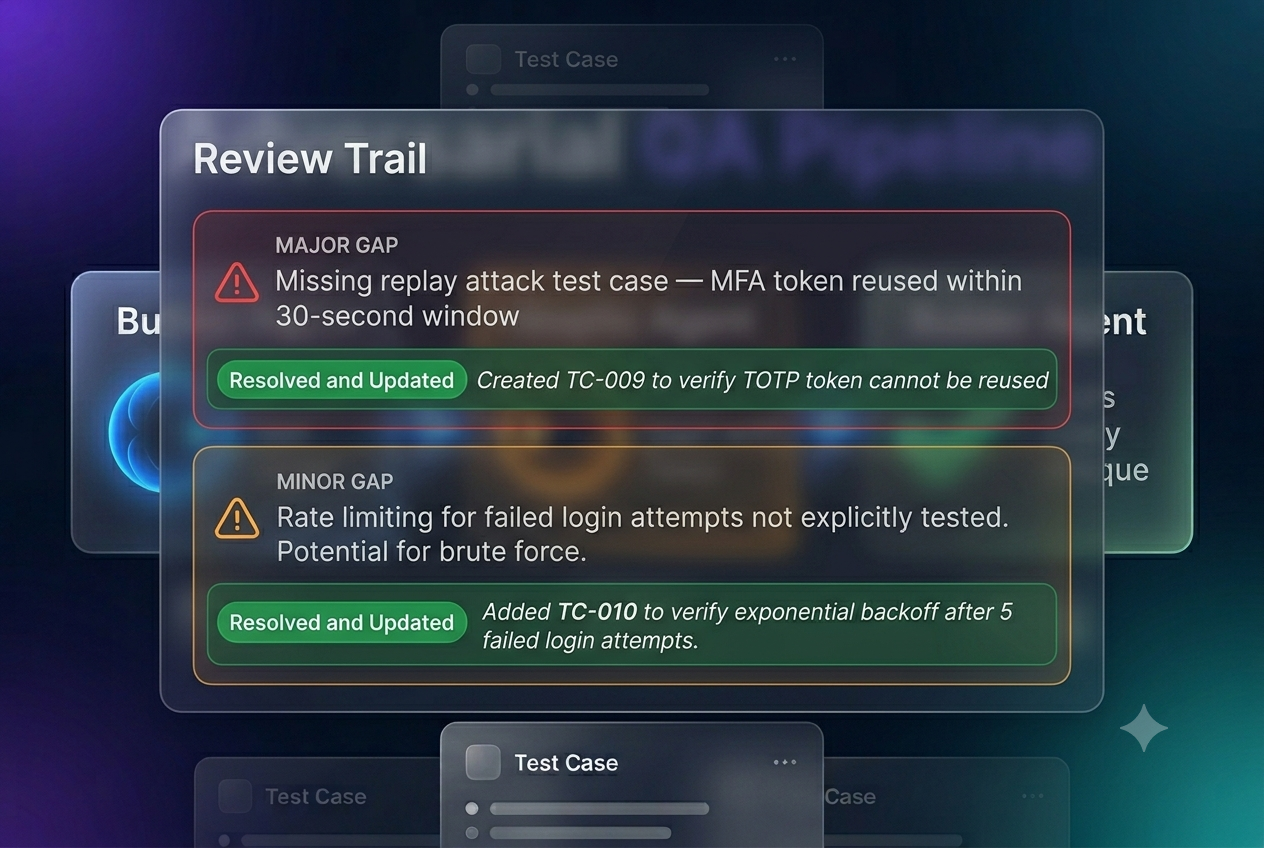
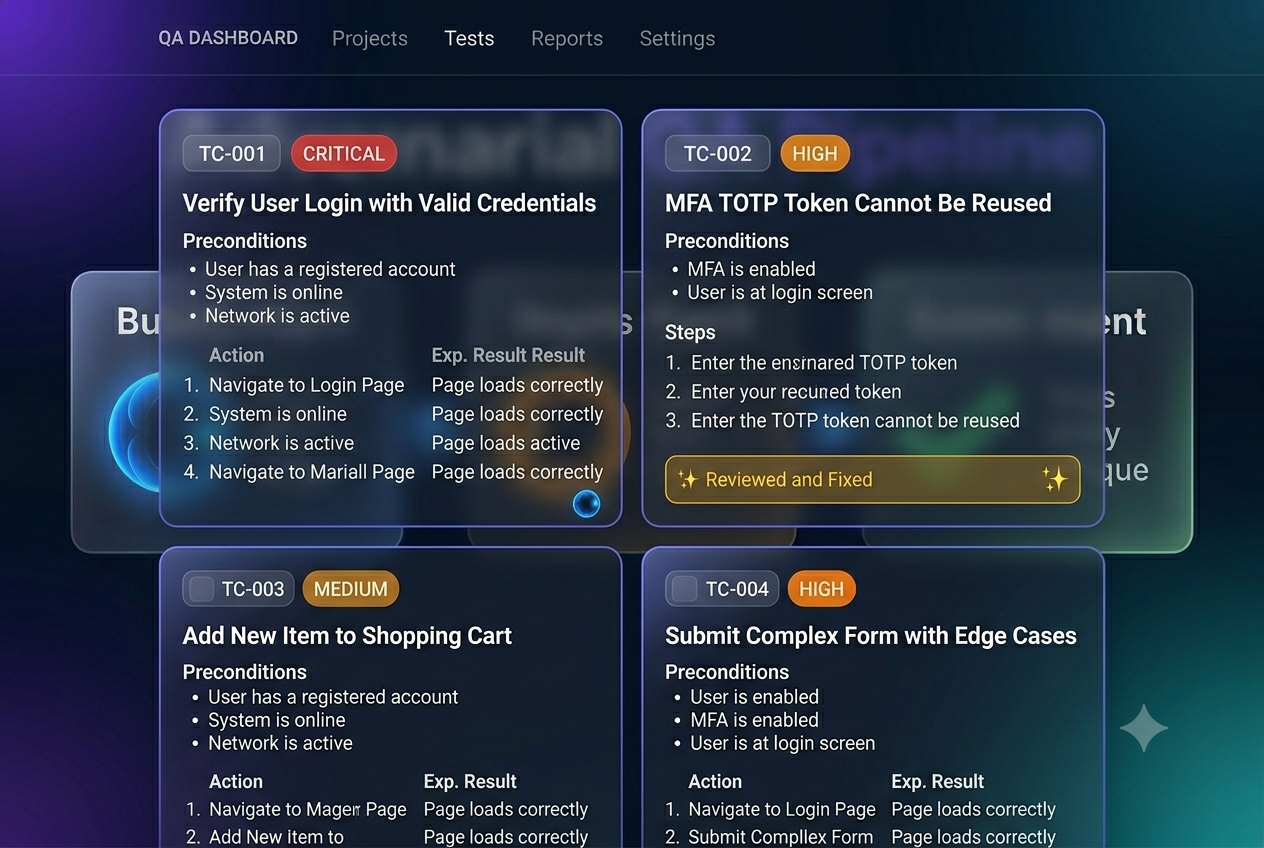
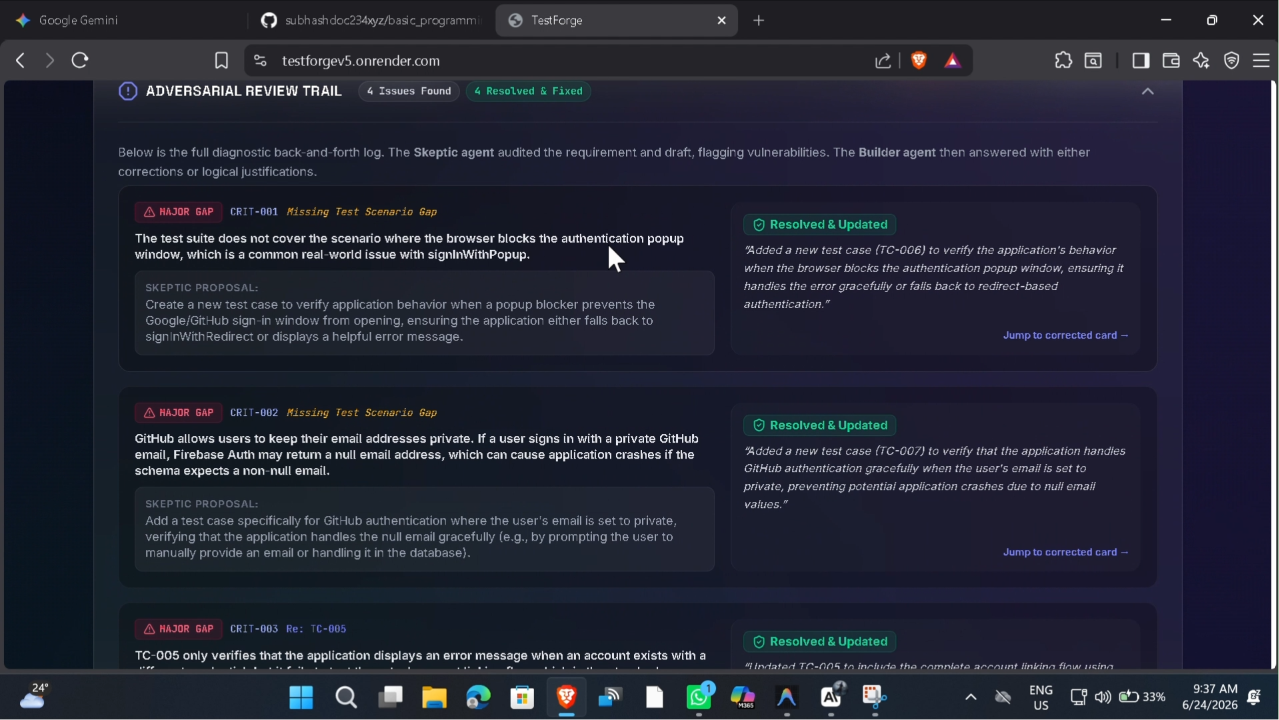
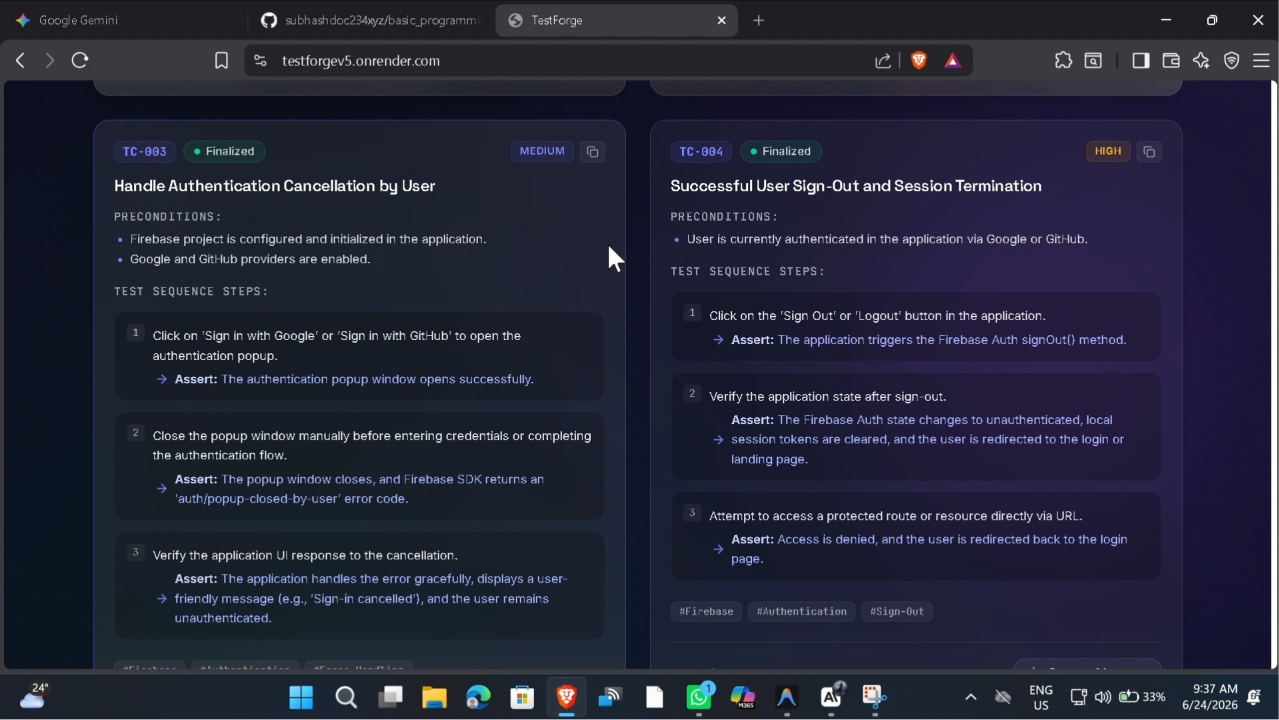
The final, debated test cases sync into UiPath Test Manager (Test Cloud) via REST API. The full debate transcript is shown as an Adversarial Review Trail — a visible audit of exactly what was caught and why.
In a real run on a Multi-Factor Authentication requirement, the Skeptic caught 4 issues the Builder missed: a replay attack scenario, MFA lockout ambiguity, counter-reset coverage, and a boundary test at the 14-minute lockout mark. All 4 were fixed before the user saw anything.
How we built it
- Three-call Gemini 3.5 Flash pipeline via @google/genai SDK with
strict JSON schemas enforced via
responseMimeType: application/jsonandresponseSchema— no relying on prompt instructions alone to enforce structure - React + TypeScript frontend with glassmorphism UI — animated gradient mesh background, glass cards with backdrop-filter blur, staggered card animations, 3-step pipeline progress tracker
- Node.js + Express backend (server.ts) handling the UiPath OAuth2 Client Credentials flow server-side so no secrets are exposed to the browser
- UiPath Test Manager API for syncing vetted test cases into Test Cloud with full traceability
- Built agent-first: the entire app was scaffolded by writing a senior-engineer-level prompt spec covering exact data contracts, system instructions per agent role, UI behavior, error handling, and build order — then executing that spec through Google AI Studio Build Agent and Google Antigravity
Challenges
- Getting three sequential Gemini calls to maintain context correctly without the Skeptic being influenced by the Builder's own framing — solved by giving the Skeptic the original requirement independently, not filtered through the Builder
- UiPath OAuth2 Client Credentials flow in a staging environment with tenant-specific API paths that had to be confirmed against the live Swagger rather than assumed from documentation
- Designing the JSON schemas for critiques and Builder responses tightly enough that the merge step never produces malformed output
Accomplishments
- A working three-call adversarial pipeline that genuinely catches real gaps — not decorative filler — as proven by the MFA demo run
- A visible Adversarial Review Trail that shows every critique and resolution, giving teams an actual audit trail rather than a black-box result
- Live deployment on Render with UiPath Test Manager integration
What we learned
The most important design decision was making the Skeptic receive the original requirement independently — not just the Builder's output. That single choice is what lets it catch things the Builder's own framing caused it to miss. Without it, it's just a proofreader. With it, it's an independent reviewer.
What's next
- Second debate round option (Builder → Skeptic → Builder → Skeptic → Builder) for high-stakes requirements
- Coverage gap analysis: pull existing Test Manager test cases and find what's missing rather than only generating new ones
- CI/CD webhook integration so TestForge runs automatically on every new requirement ticket
Built With
- express.js
- gemini-2.5-flash
- google-ai-studio
- google-antigravity
- node.js
- oauth2
- react
- render
- typescript
- uipath-automation-cloud
- uipath-test-cloud
- uipath-test-manager
- vite


Log in or sign up for Devpost to join the conversation.