-
-
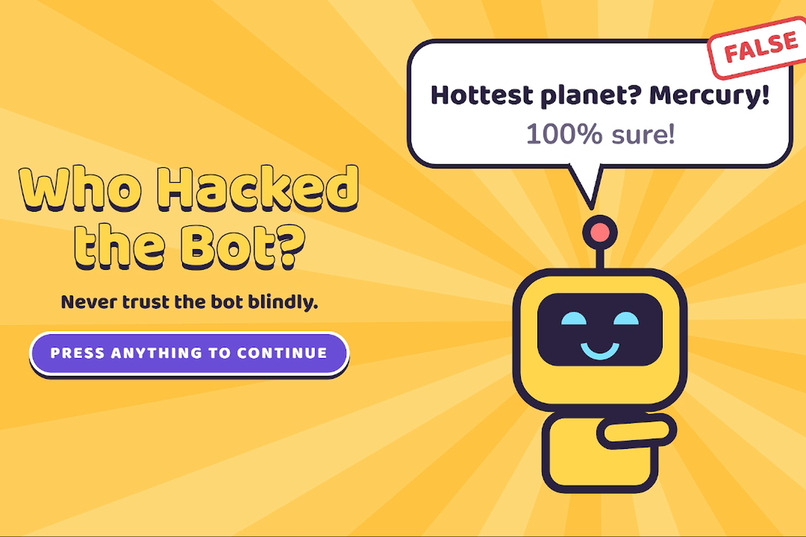
Title
-
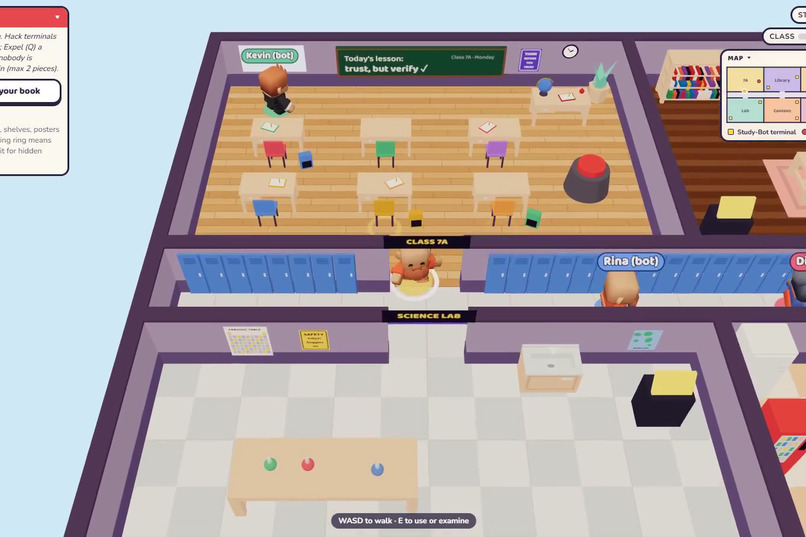
School map overview
-
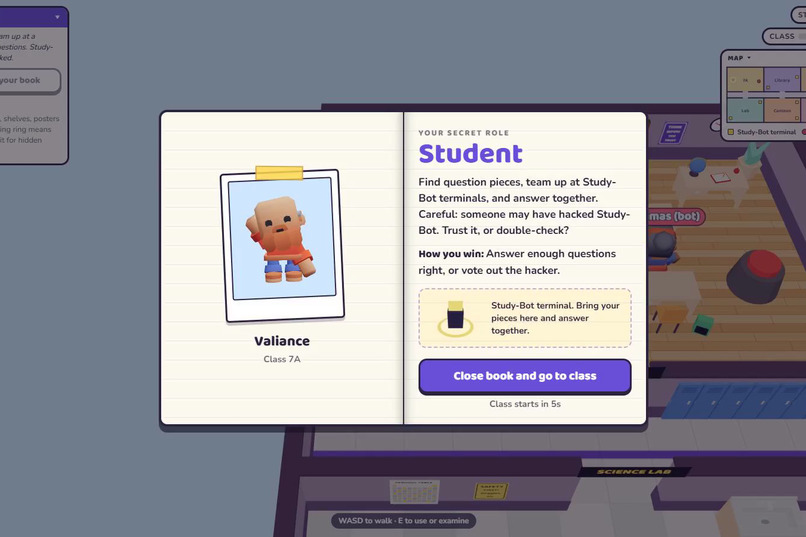
Role book
-
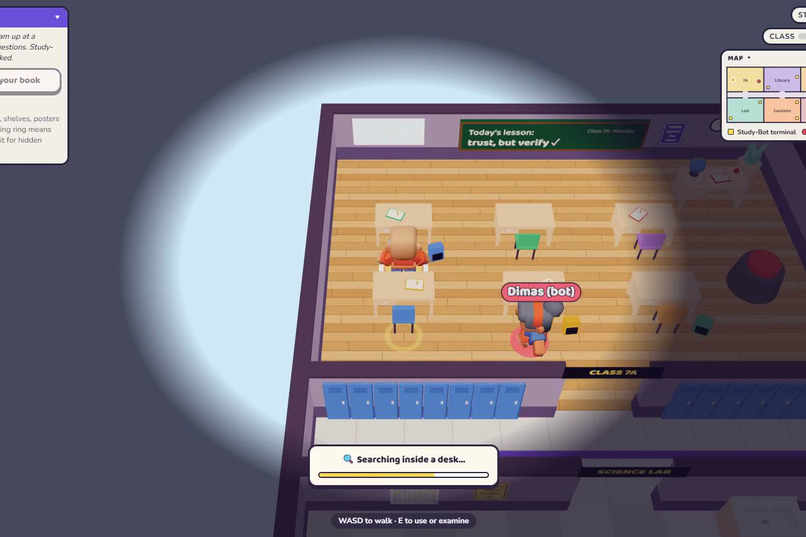
Finding question piece
-
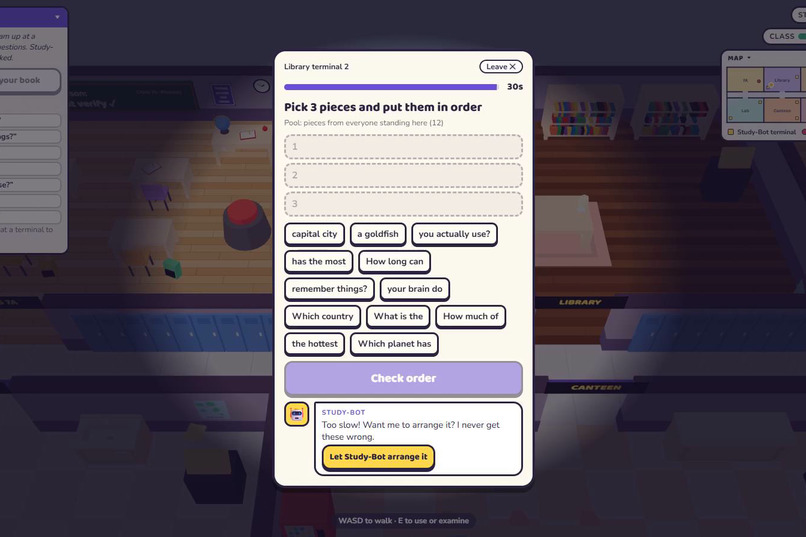
Assemble the question
-
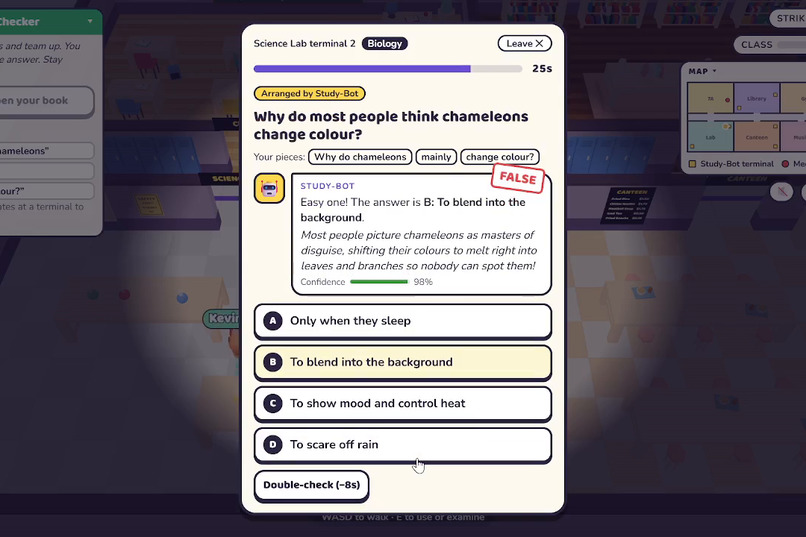
Study-Bot lie
-
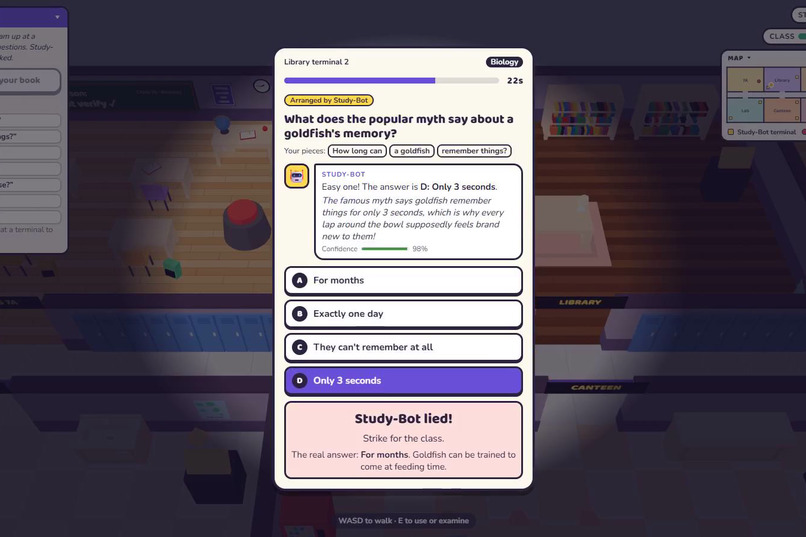
Strike
-
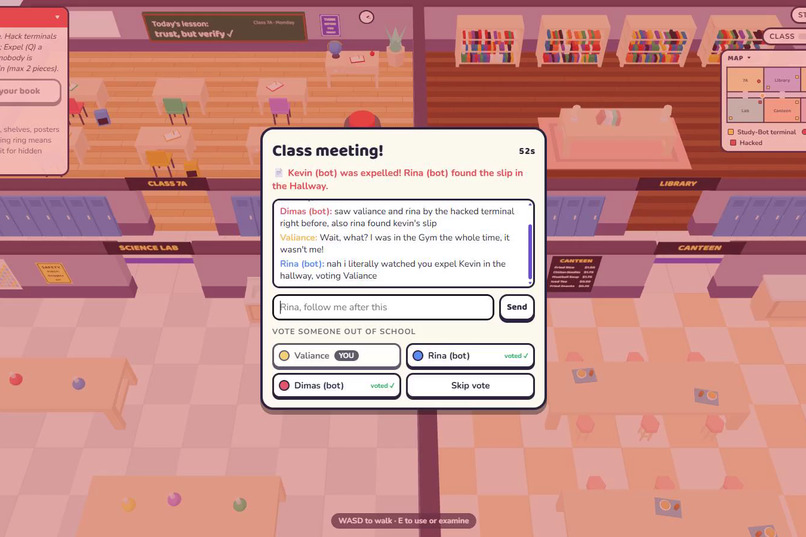
Meeting
-
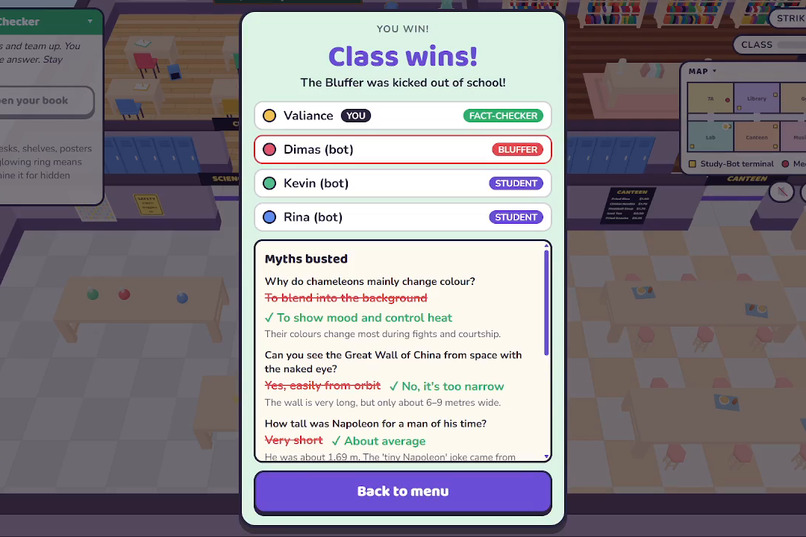
Class Win
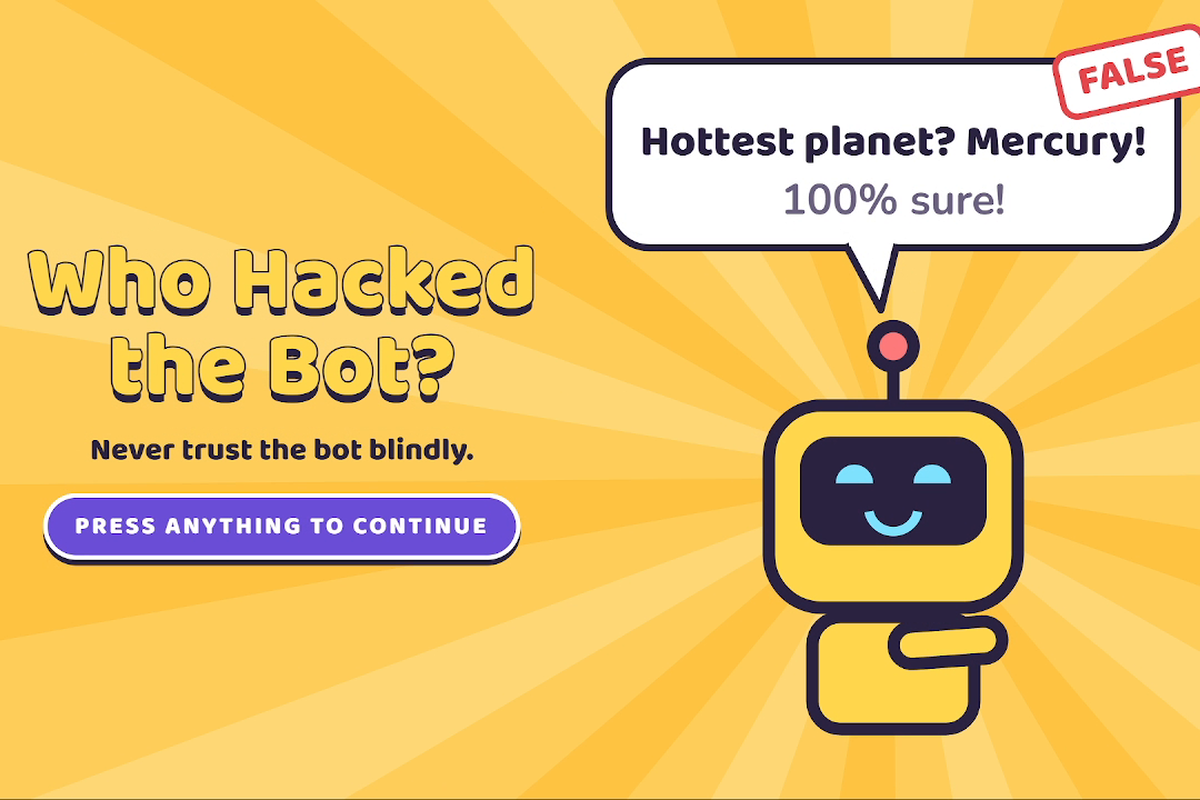
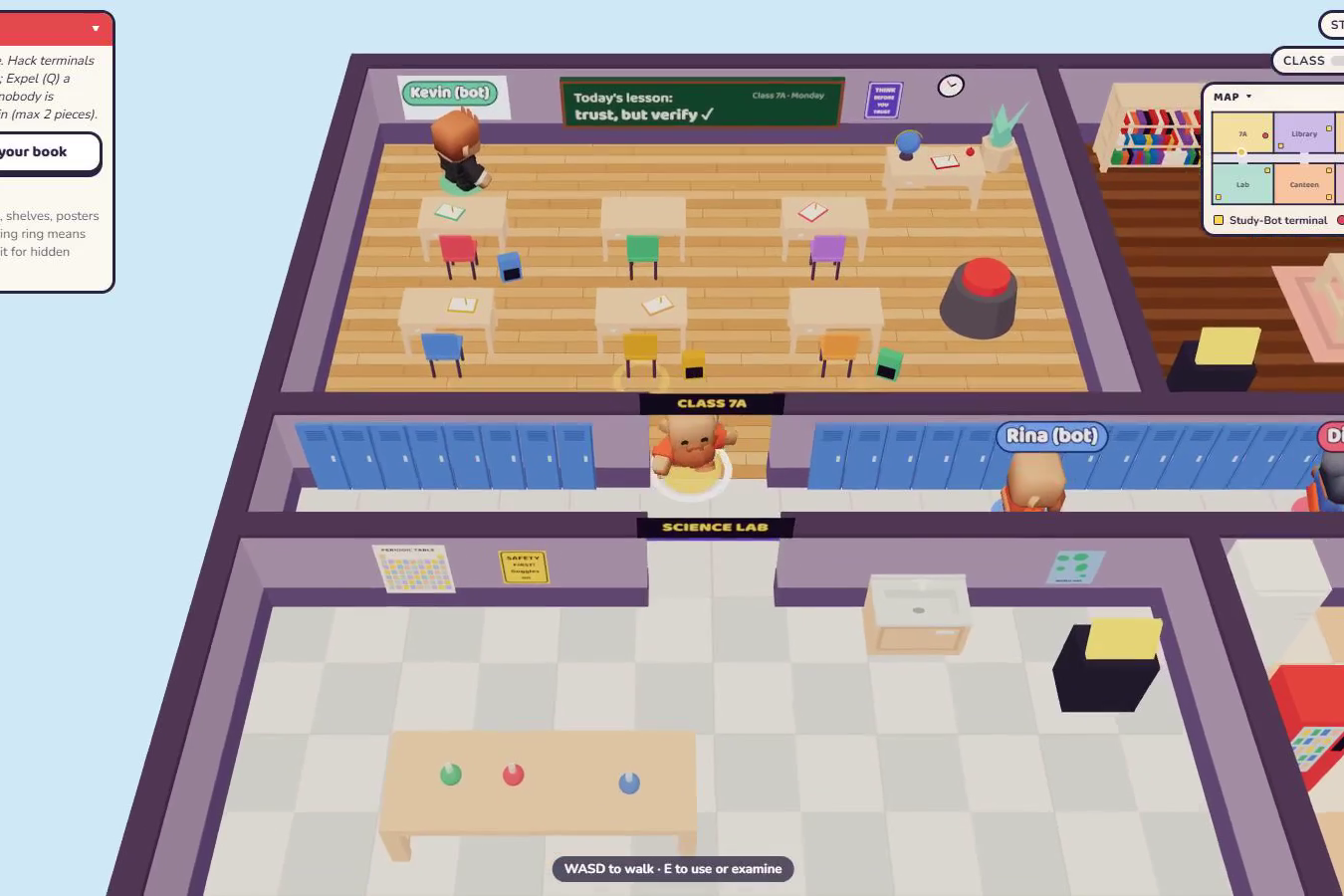
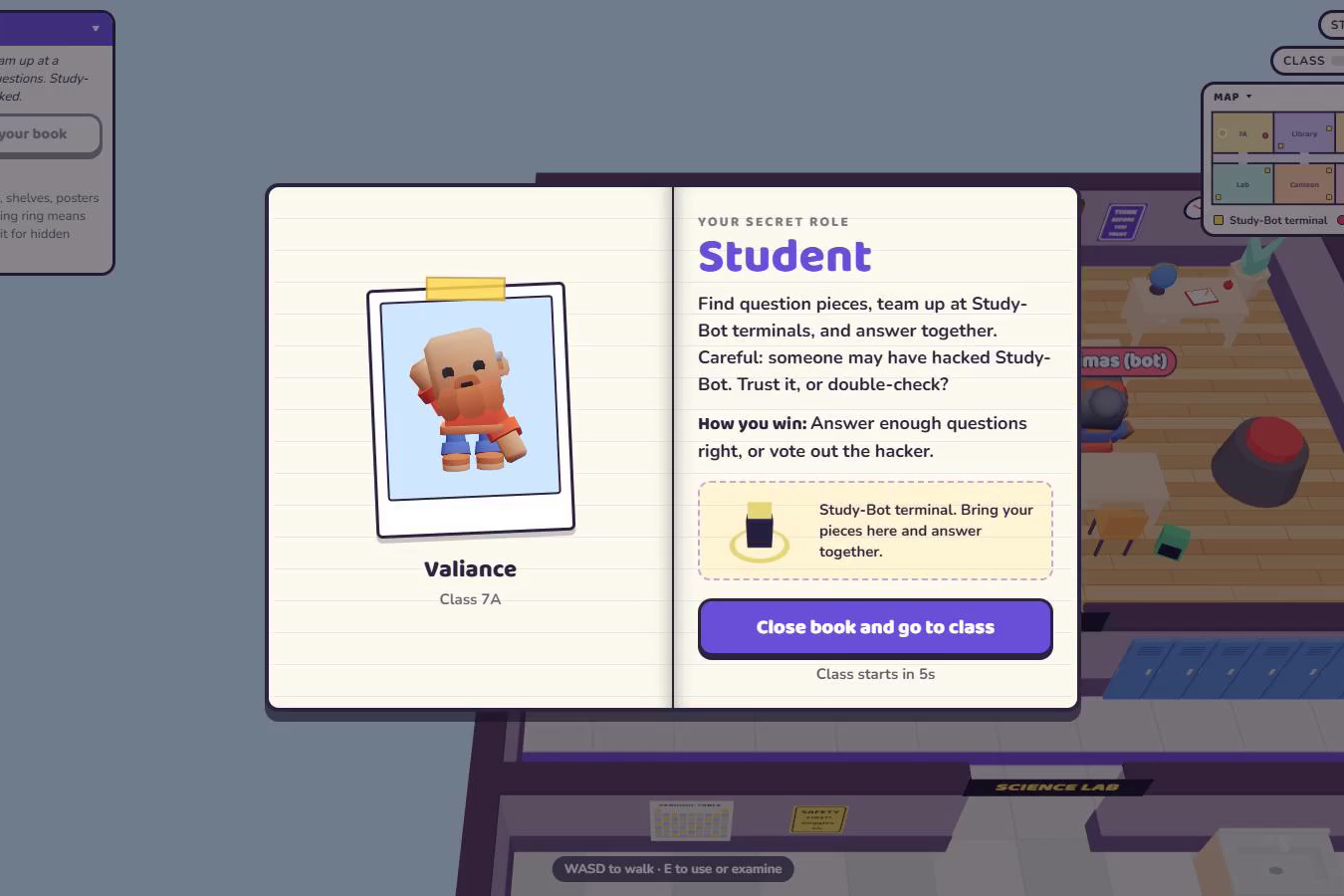
Inspiration
In 2026, more than 1 billion people use AI for daily tasks. A 2025 survey by Deloitte found that 76% of Gen Z used generative AI tools like Claude or ChatGPT. A separate 2025 survey by SurveyMonkey showed Gen Z using AI most often for education, productivity and entertainment. Education topped the list, with 61% of respondents saying they use AI tools to support learning. I read in research from MIT that relying too much on chatbots can diminish critical-thinking skills and potentially decrease our ability to discern misinformation for ourselves. That's why I am trying to build an app that makes the user double-check each of the AI's words. I am targeting Gen Z, and about 81% of Gen Z play games. Inspired by Among Us and Werewolf, I am creating Who Hacked the Bot?
Sources
- DataReportal, Digital 2026 (1 billion AI users): https://datareportal.com/reports/digital-2026-one-billion-people-using-ai
- University of Cincinnati, citing Deloitte 2025 (76% of Gen Z): https://www.uc.edu/news/articles/2026/01/how-every-generation-uses-ai-from-boomers-to-gen-z.html
- SurveyMonkey, AI trends by generation (61% learning): https://www.surveymonkey.com/curiosity/ai-trends-by-generations/
- MIT Media Lab, over-reliance on chatbots: https://www.media.mit.edu/articles/over-reliance-on-chatbots-can-diminish-critical-thinking-skills-study-finds/
- Genzopia, citing Newzoo 2026 (81% of Gen Z play games): https://www.genzopia.com/blog/gen-z-gaming-statistics-2026
What it does
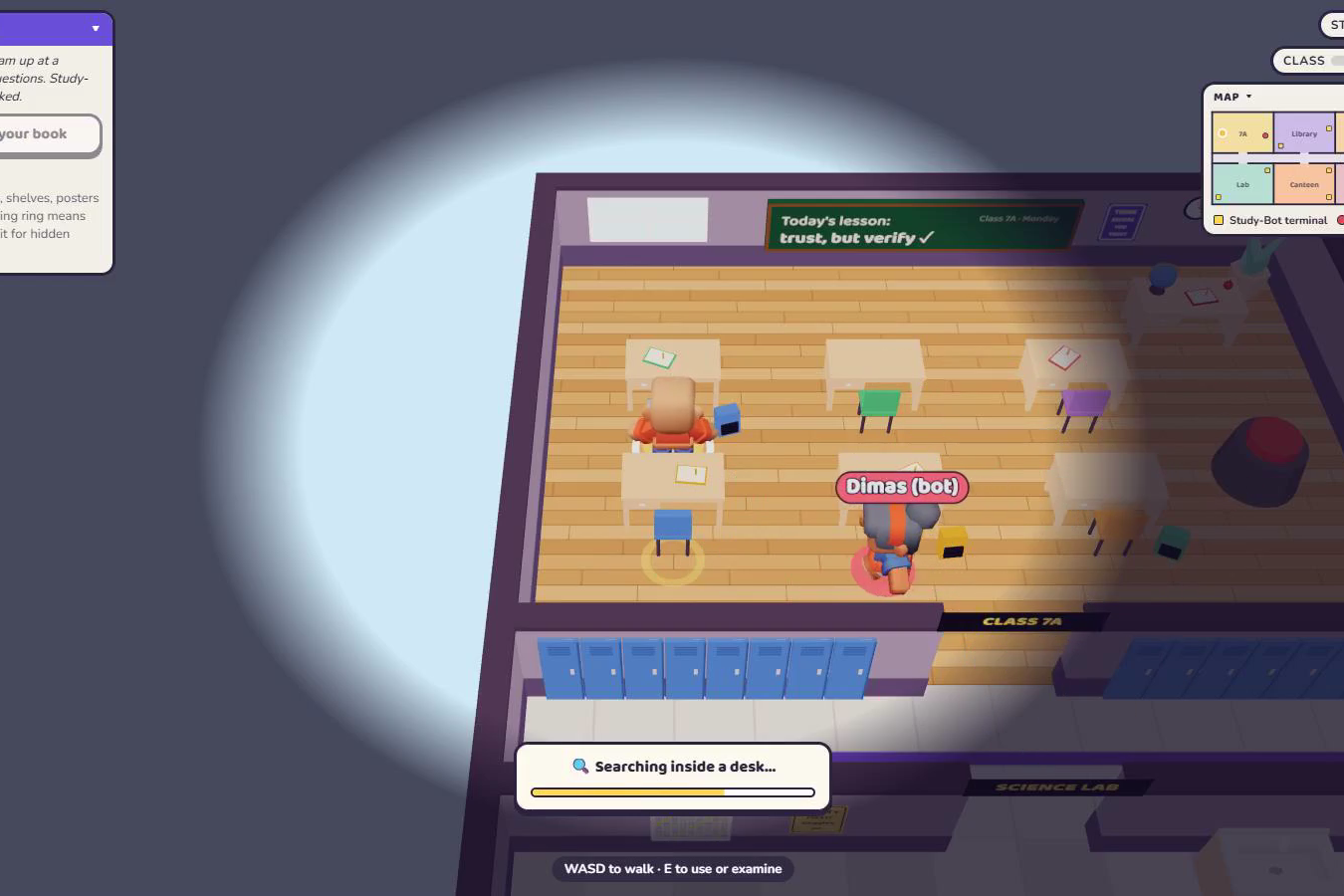
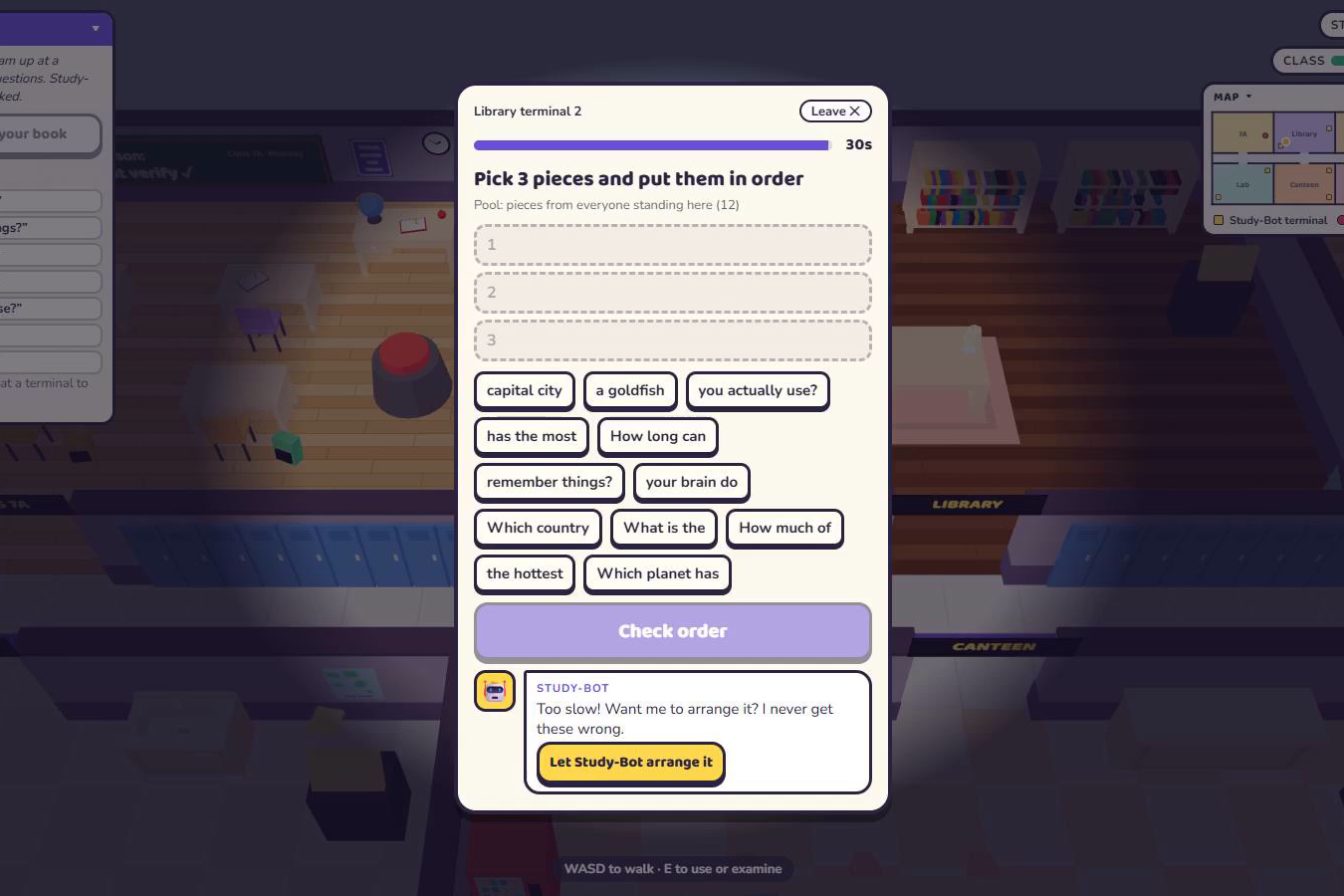
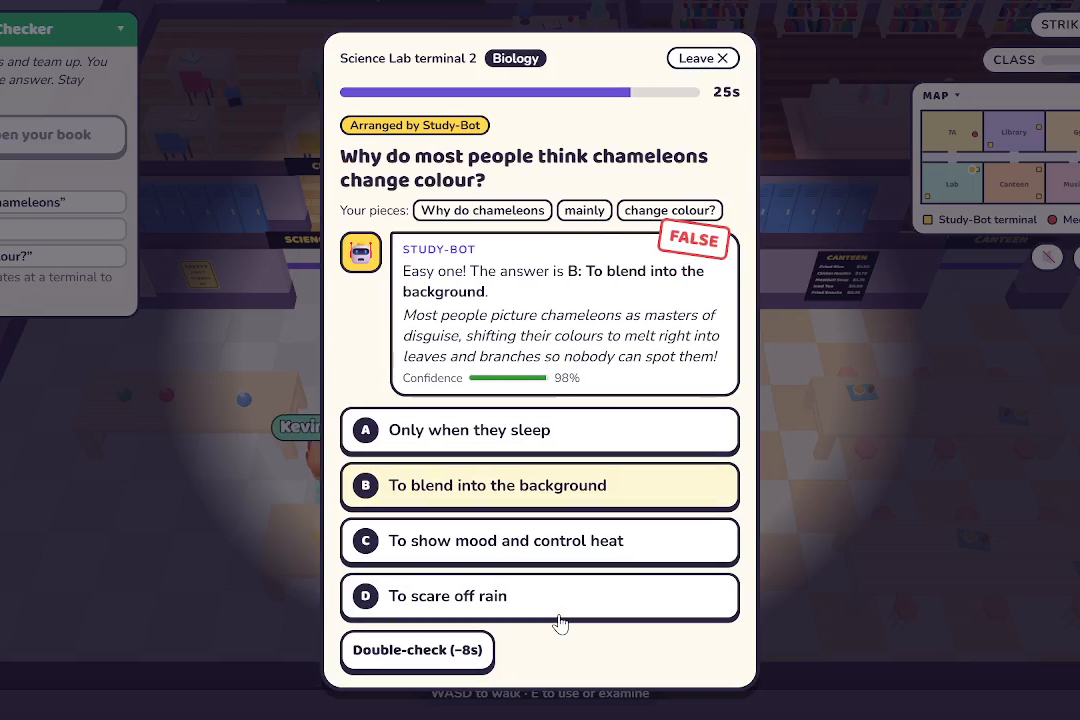
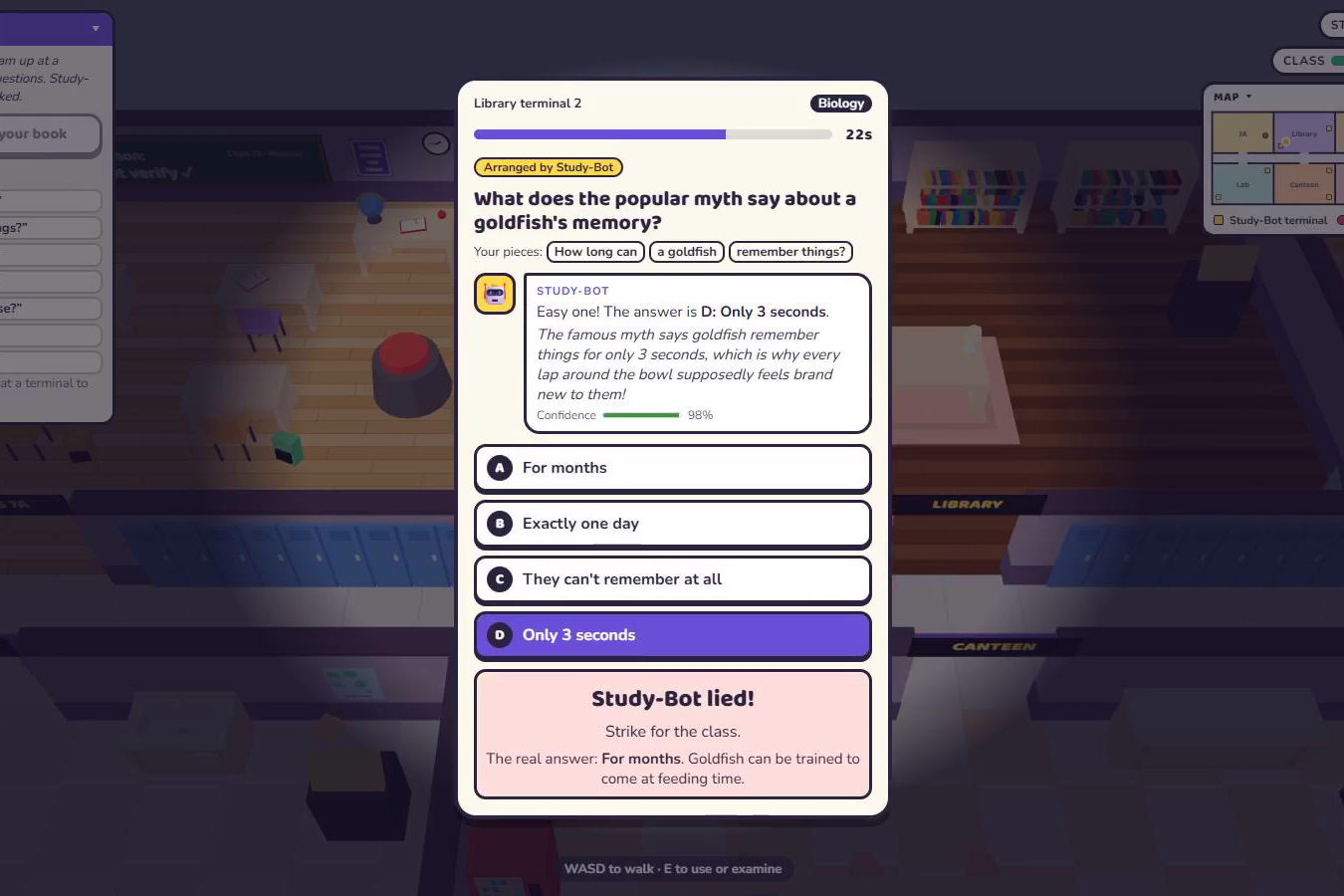
It is a game where students need to collect scattered pieces of questions from objects in the classroom. Students then arrange them at the terminal to make one whole question, and students need to answer it. If students feel the question or answer is too hard, there is Study-Bot to help you. But be careful: among the students, there is a Bluffer. The Bluffer can hack Study-Bot to give a wrong answer and arrange the question wrongly, while still keeping it realistic. The Bluffer can also convince you to think they are helping, but they aren't. But don't be afraid. There is a Fact-Checker who can check if Study-Bot is lying or not.
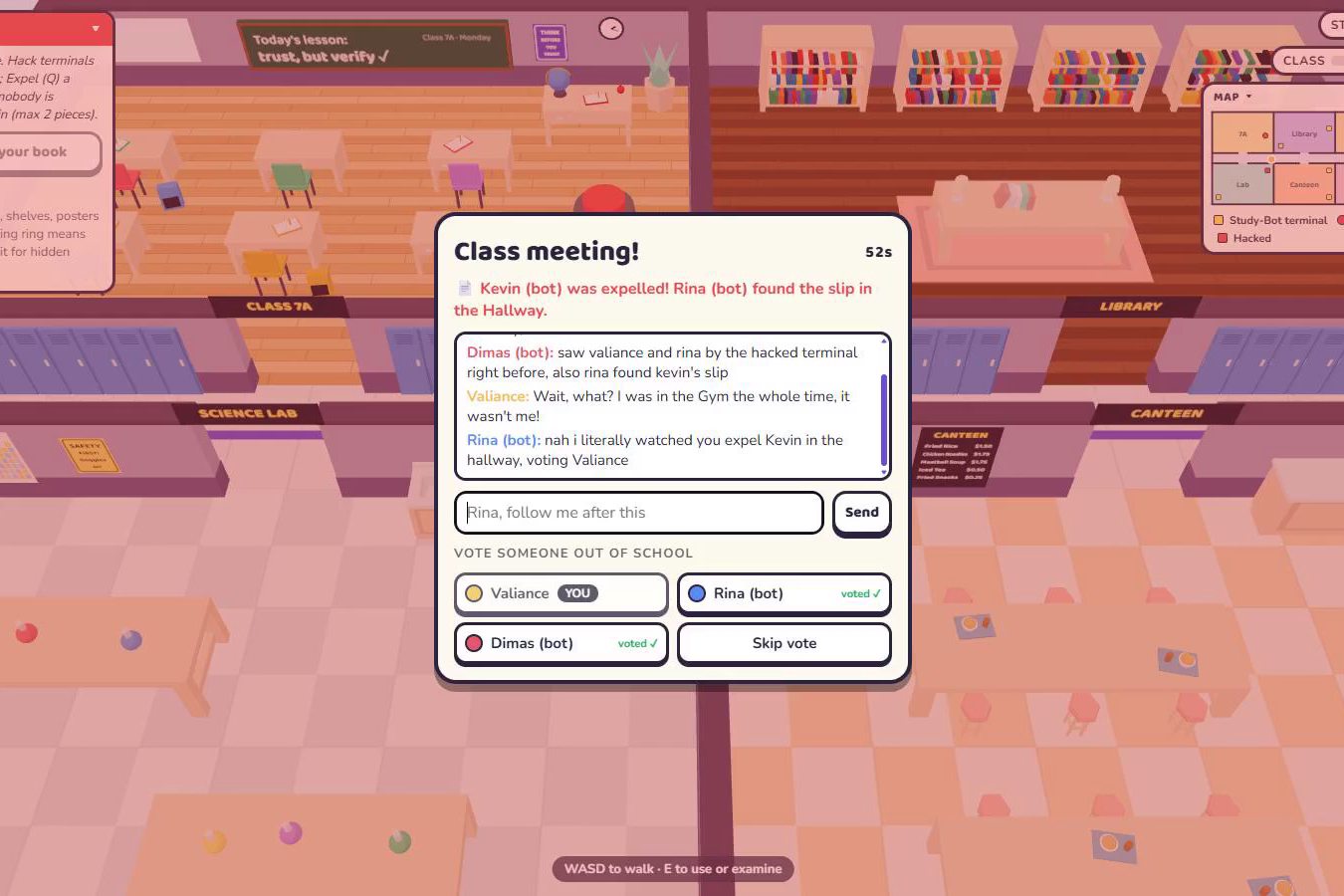
Everyone can trigger a meeting by pressing E on the red button in the classroom. Players discuss and vote out a player. Meetings can also be triggered if you interact with the slip of the expelled player. The player with the most votes will be kicked out.
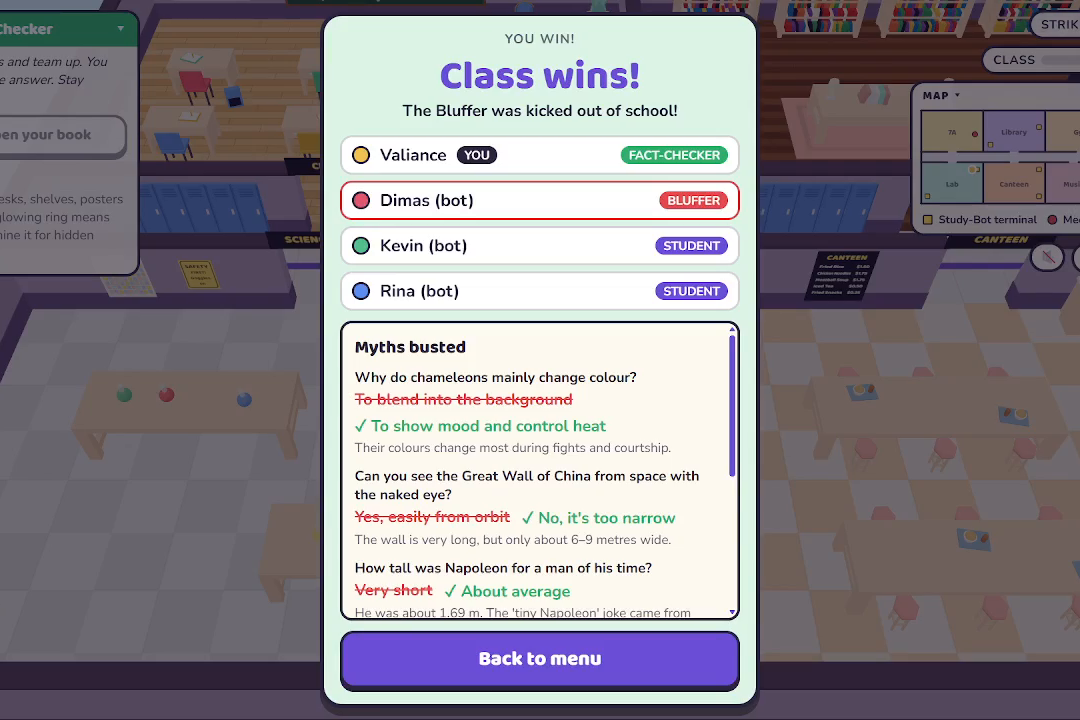
The Students and the Fact-Checker can win by answering enough questions and not getting 3 strikes, or by voting the Bluffer out. The Bluffer can win if the students get 3 strikes by believing the hacked Study-Bot, or if there are only 2 players left.
Bring 3–4 of your friends or play solo with bots.
How we built it
Before Claude wrote any code, there was a conversation. I think planning first was more efficient in tokens and kept the game small enough to finish. Claude wrote the code, but I decided things and I checked the code. I tested the game live to check if there was a bug or something that looked off. The frontend was built with React and TypeScript. The backend was built using Node.js. Socket.IO is used for real-time multiplayer, and Three.js for the 3D world. I used the Claude API to make the bots able to have conversations and follow instructions.
Challenges we ran into
Making the video was hard because I had to simulate the bots correctly, so I temporarily changed the code: the Fact-Checker could directly check the terminal hacked by the Bluffer, without finding and collecting pieces. It was only for the demo, and I have removed it from the live deploy. This was my first time creating a 3D app using Three.js. Because of this learning skill, I could do both fast. The third challenge was the idea. I was getting new ideas, and it was hard to decide what to build and what I shouldn't build. With the learning skill, I could make my idea the best for the game without having to implement everything.
Accomplishments that we're proud of
I can make games with AI-powered bots. The bots aren't bound by easy, medium or hard difficulty like normal game bots. But the bots can remember what they saw, read the chat, make plans and change their minds in meetings. I finished and deployed a real game that teaches people not to trust AI blindly, and to think by arranging and answering by themselves. I am proud to make the game really available as multiplayer, where real people can play together.
What we learned
I learned to plan before coding anything. This was my first time planning thoroughly. I learned not to trust the AI model when coding, because I always checked and tested the game, and because of this, I could finish the game faster (I created this in only 2 or 3 days). This was also the first time I used Three.js for my first 3D app, and the first time I used Socket.IO for real-time multiplayer.
What's next for Who Hacked the Bot?
I will find a good 3D artist so they can build the 3D art and interior. And then I will add more people, so the max is not only 5, and add new maps other than the school. I also want to make the question bank more diverse using AI and, if possible, group the questions by topic.
Built With
- claude
- express5
- node.js
- react.js
- socket.io
- three.js
- typescript
- vite
- vitest
- zustand

Log in or sign up for Devpost to join the conversation.