-
-
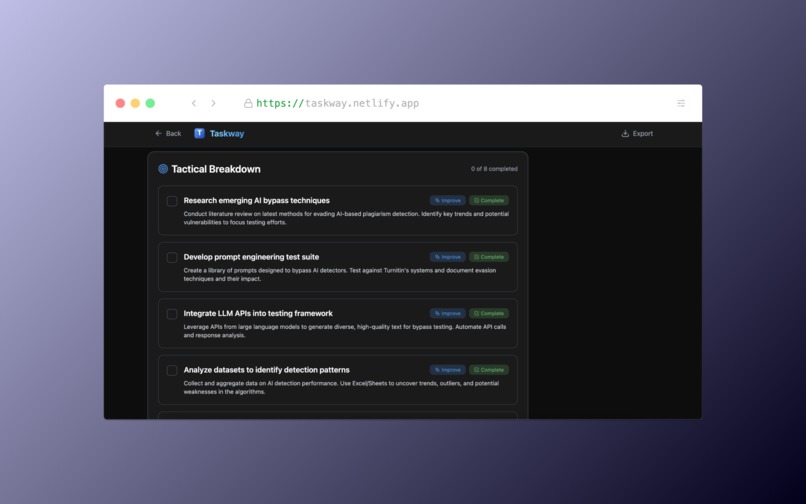
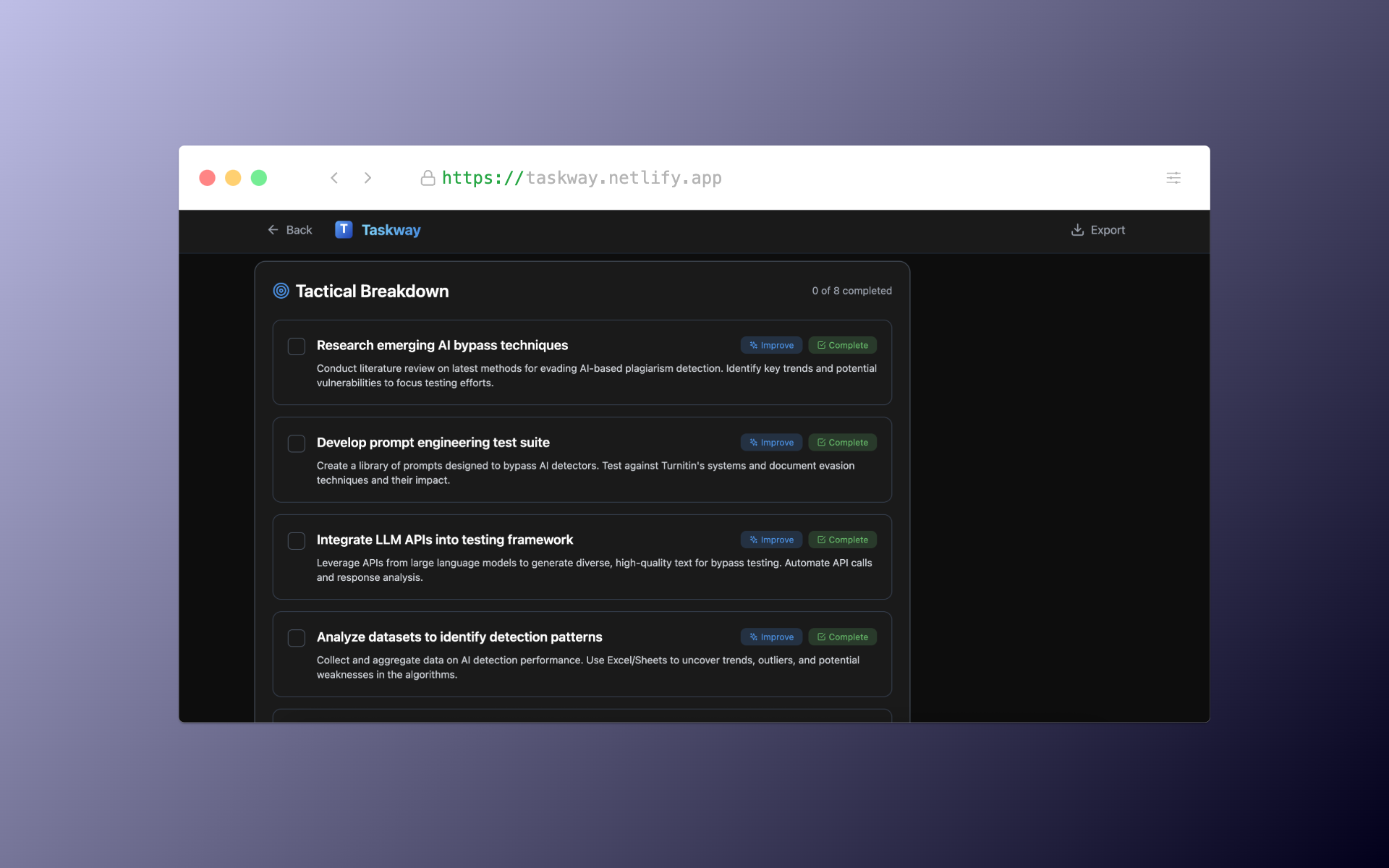
Task Breakdown
-
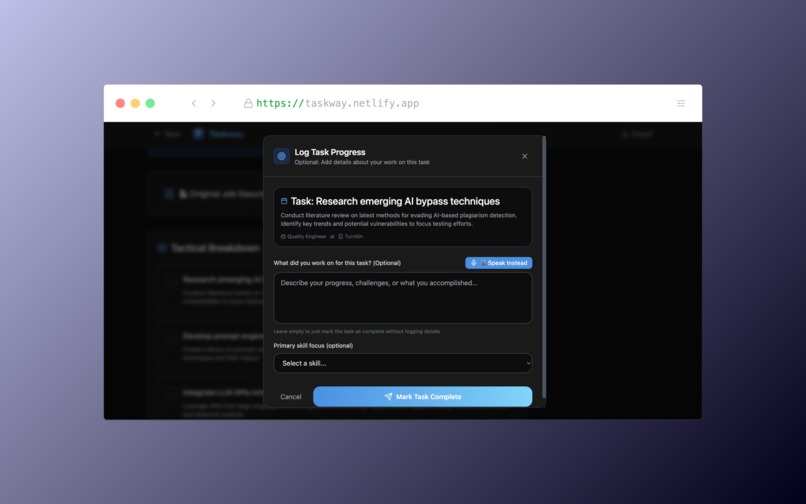
Log Task
-
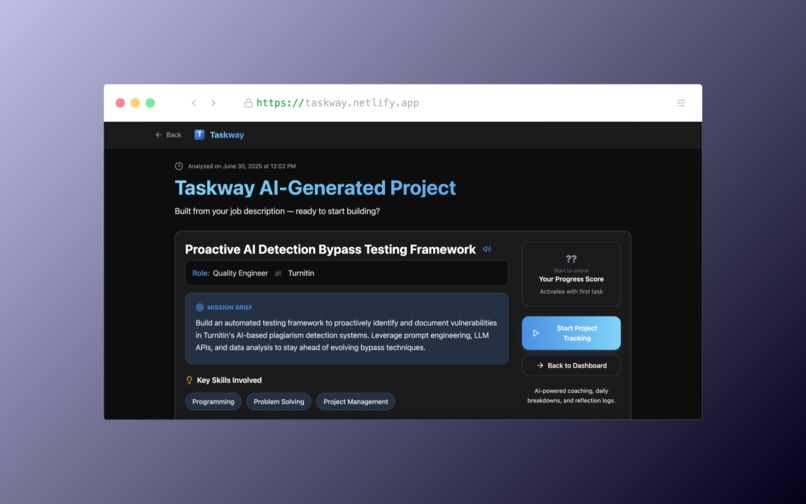
Project Generation
-
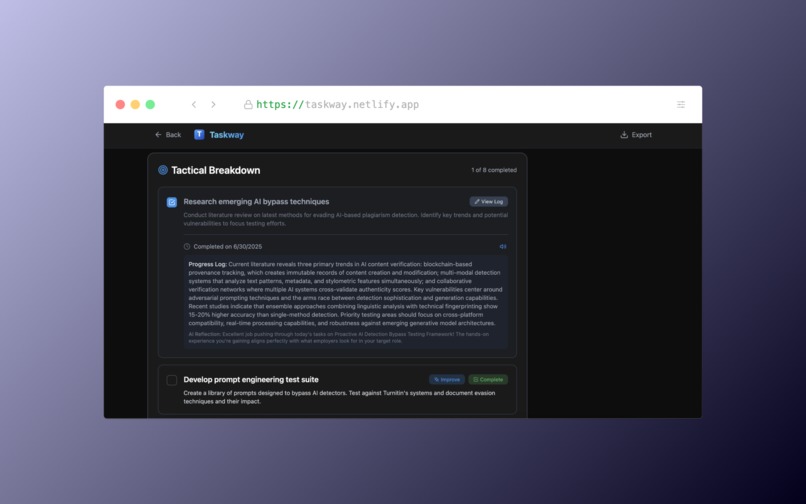
Progress Tracking
-
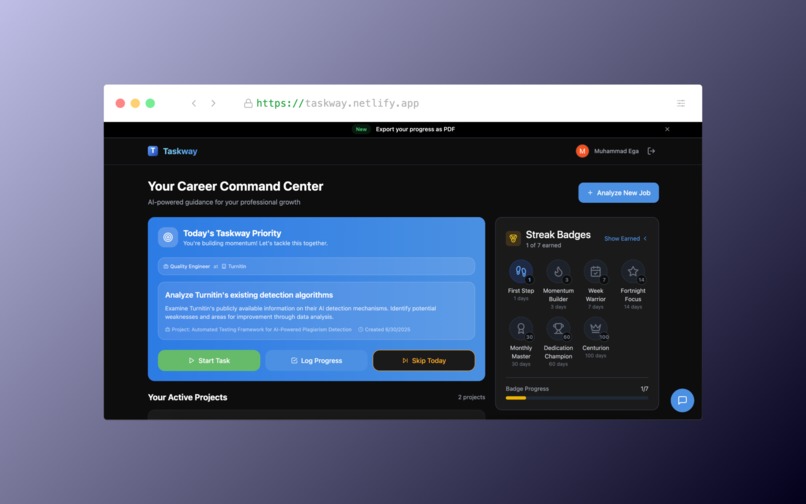
Streak Badges
-
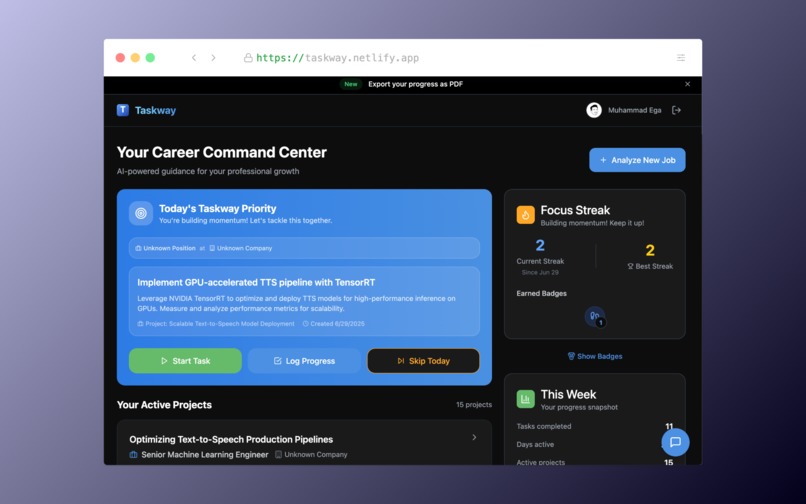
Dashboard
-
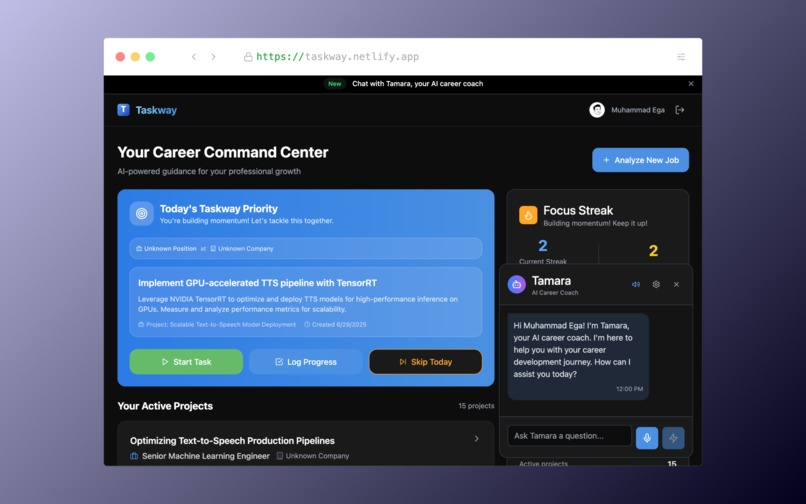
Career Coach - Tamara



Inspiration
We've all been there: staring at a dream job description, feeling a mix of excitement and overwhelm. "What exactly do I need to build to prove I'm ready for this role?" Traditional learning paths often feel generic, leaving a huge gap between theoretical knowledge and the specific, demonstrable skills employers are actually looking for. For one of our team members, this hit particularly hard while struggling with LeetCode challenges, amidst a landscape of widespread tech layoffs and a clear trend of companies shying away from fresh graduates and junior talent.
At the same time, we recognize the rapid, inevitable growth of AI. This isn't just about individual survival; it's about the survival and evolution of businesses themselves. Companies need to foster a culture of continuous upskilling, not to become overly reliant on AI, but to use it as an augmentation tool that enhances employee value and drives innovation. Our inspiration for Taskway came from this very challenge to bridge that gap by transforming vague job requirements into clear, actionable, and portfolio-worthy projects. We wanted to create a personalized "career operating system" that guides users, step-by-step, to build exactly what they need to land their next opportunity, ensuring they're not just surviving, but thriving in an AI-augmented future. This vision was deeply influenced by my own journey in learning to communicate effectively with AI, experimenting with various prompting techniques, and even role-playing with AI models to refine my interaction strategies.
What it does
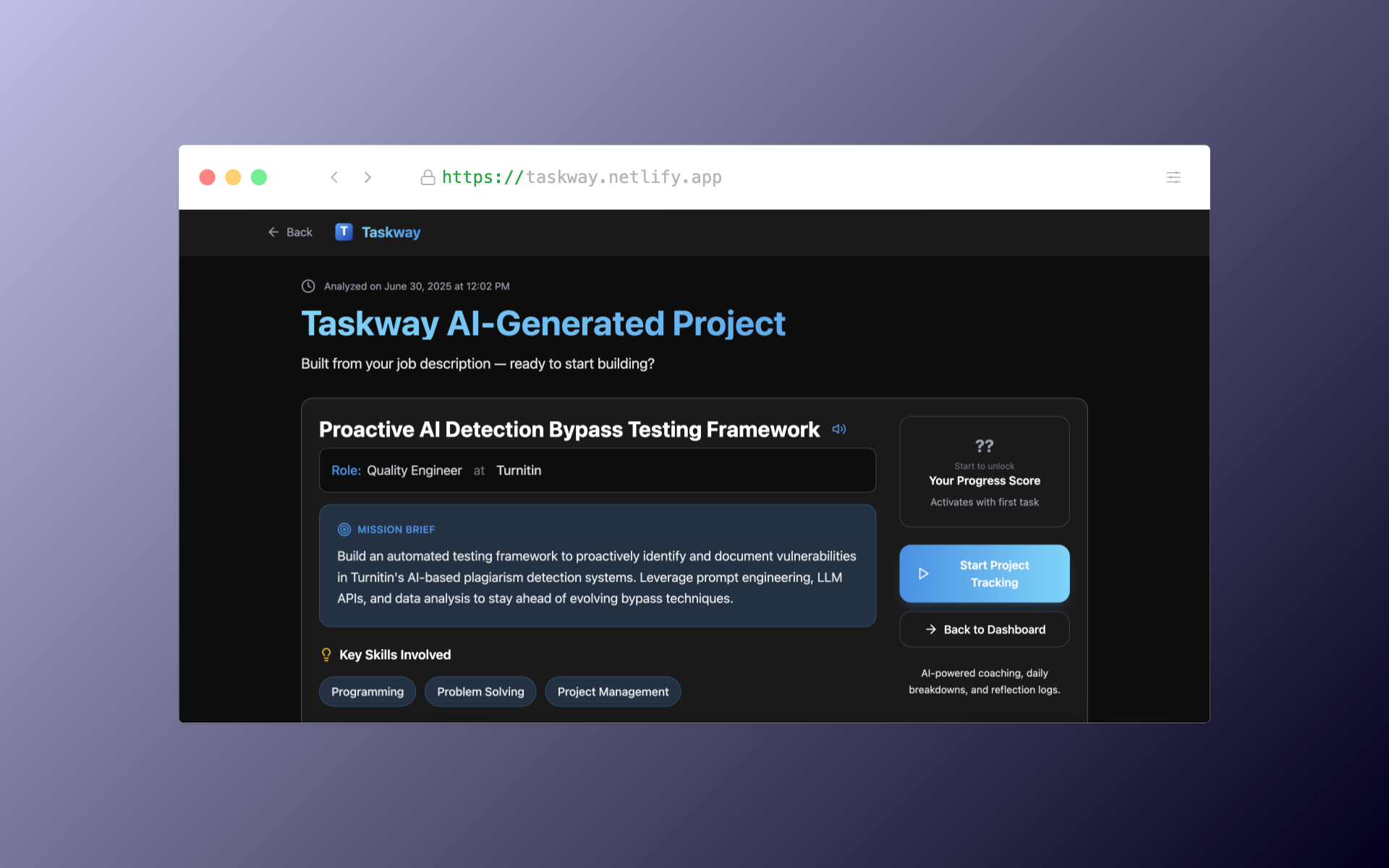
Taskway is your AI-powered career co-pilot, transforming any job description into a personalized, actionable development plan. Here's how it works:
- Job Description Analysis: You paste a job description, and our AI instantly analyzes it to extract key responsibilities, required skills, and underlying objectives.
- Personalized Project Generation: Based on the analysis, Taskway generates a unique, buildable project tailored specifically to that job role. These aren't generic exercises; they're real-world simulations designed to produce portfolio-worthy deliverables.
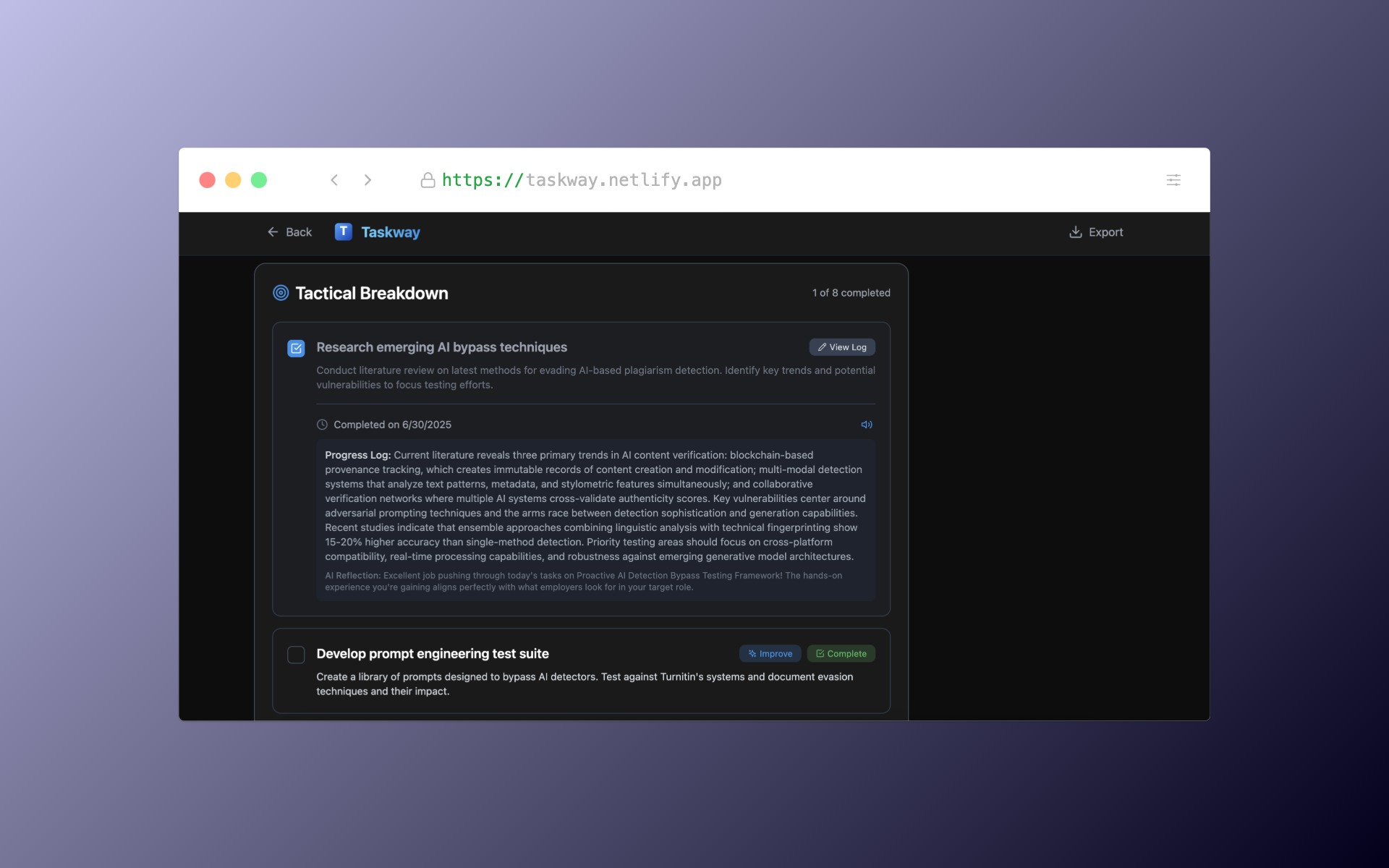
- Tactical Task Breakdown: Each project is broken down into a series of granular, daily tasks (typically 1-2 hours each) that start with strong action verbs, making them immediately actionable and manageable.
- AI-Powered Coaching & Reflection: As you log your daily progress, Taskway's AI coach, Tamara, provides personalized reflections, celebrates milestones, and offers strategic next steps. She understands your context and helps you stay motivated and unstuck.
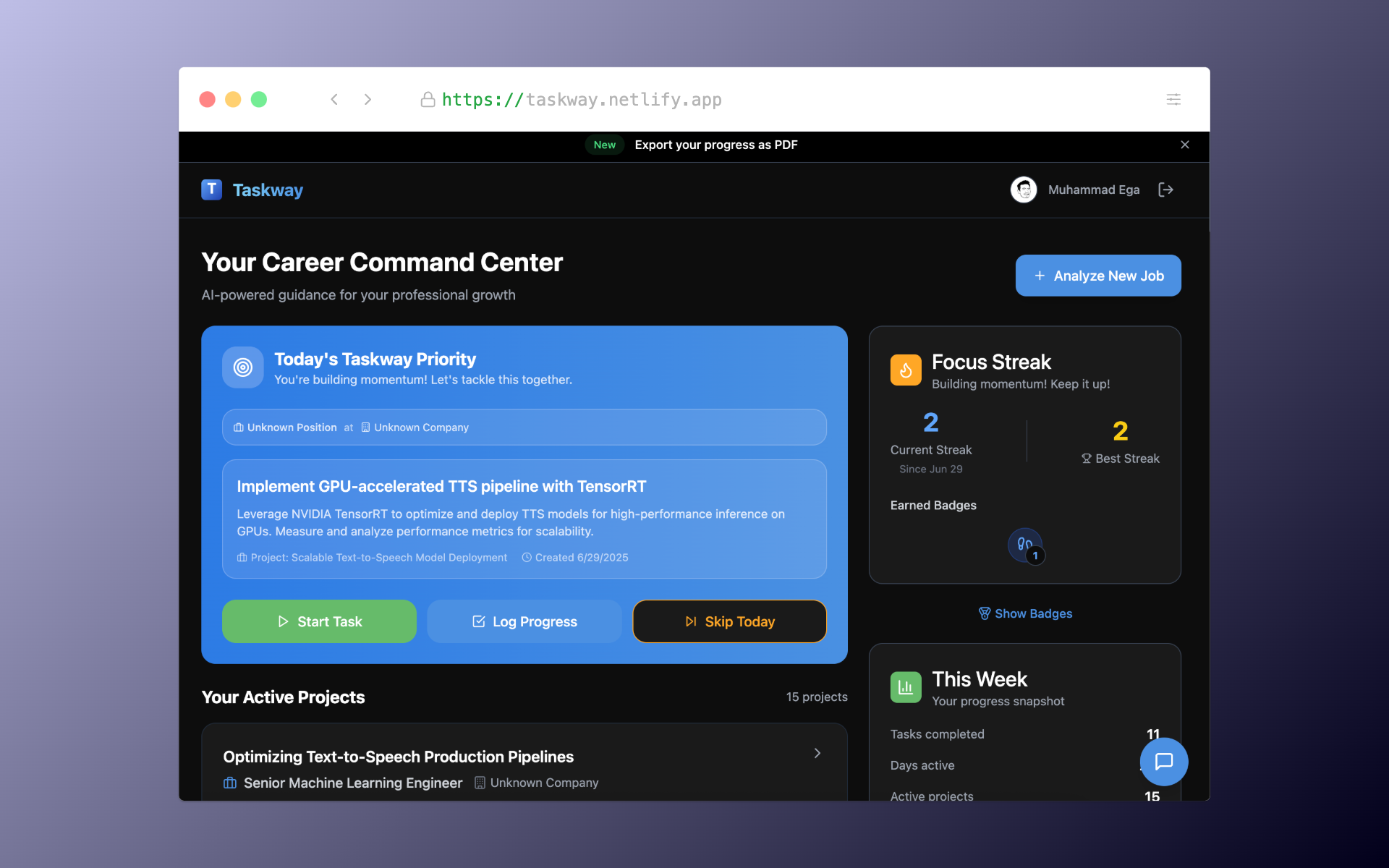
- Progress Tracking & Gamification: Track your daily streaks, earn badges for consistency, and monitor your "Taskway Score" – a dynamic metric reflecting your engagement and progress.
- Portfolio Building: Every completed task and project contributes to a tangible body of work that you can showcase to potential employers, demonstrating practical skills and commitment.
- Upcoming Team Collaboration: We're building out features to enable team collaboration on projects, allowing users to work together and share progress.
How we built it
Taskway is built on a modern, robust web stack designed for performance and scalability:
- Frontend: We used React for a dynamic and responsive user interface, leveraging Tailwind CSS for rapid and beautiful styling. Lucide React provides our clean, consistent iconography, ensuring a polished look without unnecessary bloat.
- Backend & Database: Firebase serves as our backend, providing secure user authentication with Firebase Auth and a flexible NoSQL database Firestore to store user data, job analyses, projects, tasks, and progress logs
- AI Integration: This is where the magic happens, we use OpenRouter to help us switching LLM models flexibly and use ElevenLabs for our coach and audio-related features
- OpenRouter: We integrated with OpenRouter to access powerful large language models, specifically Anthropic's Claude 3 Haiku. OpenRouter acts as a unified API for various LLMs, allowing us to select the best model for specific tasks like generating project ideas, breaking down tasks, and crafting AI reflections. Its flexible pricing model and access to cutting-edge models make it incredibly powerful for dynamic AI content generation
- ElevenLabs: For our AI coach, Tamara, we utilized ElevenLabs for high-quality text-to-speech (TTS) synthesis. This allows Tamara to provide audio feedback, project briefings, and motivational messages, creating a more engaging and human-like coaching experience. ElevenLabs' natural-sounding voices significantly enhance the user's connection with the AI
- Subscription Management: RevenueCat handles our subscription logic, managing free tier limits and premium "Pro" and "Team" plans. This allows us to focus on product development while RevenueCat securely manages payments and entitlements
A significant part of our development involved advanced prompt engineering. We meticulously crafted and iterated on prompts for OpenRouter, ensuring the AI consistently generates highly specific, actionable, and contextually relevant output. This involved extensive testing to guide the models to produce structured JSON, filter out instructional text, and maintain a consistent, encouraging tone.
Challenges we ran into
Building an AI-powered career coach presented several fascinating challenges:
- Precision in Prompt Engineering: Getting LLMs to consistently generate highly specific, actionable, and correctly formatted output (like JSON for projects and tasks) was a continuous battle. Models often wanted to be conversational or include meta-commentary, requiring intricate prompt design, few-shot examples, and strict output constraints. My personal journey in learning different prompt techniques, including role-playing with other AI models to understand their "personalities" and how to guide them more effectively, was directly applied here.
- Robust AI Response Parsing: Even with well-crafted prompts, LLMs can sometimes deviate from the requested format. We had to build resilient parsing logic with multiple fallback strategies to extract meaningful data from AI responses, ensuring the application remained stable even with imperfect AI output.
- Real-time AI Interaction: Integrating external AI APIs meant dealing with network latency and ensuring a smooth user experience. Implementing effective loading states, progress indicators, and optimistic UI updates was crucial to make the AI feel responsive.
- Firebase Data Modeling for Complex Relationships: Structuring user-specific projects, tasks, and daily logs in Firestore while maintaining efficient querying and updates for features like streak tracking and project summaries required careful planning.
- Streak Logic Accuracy: Implementing a bulletproof streak tracking system that correctly handles different timezones, missed days, and ensures accurate calculation of current and longest streaks proved surprisingly complex.
- Seamless Multi-API Integration: Orchestrating interactions between Firebase, OpenRouter, ElevenLabs, and RevenueCat required careful management of API keys, authentication, and error handling across different services.
Accomplishments that we're proud of
- Functional End-to-End AI Workflow: We successfully built a complete pipeline that takes a raw job description and transforms it into a personalized, trackable career development project, powered by multiple AI services.
- Highly Personalized Learning Paths: The ability to generate unique, actionable projects tailored to specific job descriptions is a core differentiator and a significant technical achievement.
- Engaging AI Coaching Experience: The integration of ElevenLabs' voice AI for Tamara, our AI coach, adds a deeply personal and motivating dimension to the user experience, making the coaching feel more human and supportive.
- Resilient AI Integration: Our robust error handling and intelligent fallback mechanisms ensure that the application remains functional and provides helpful guidance even when AI models return unexpected or malformed responses.
- Clean and Intuitive User Interface: We prioritized creating a beautiful, non-cookie-cutter design that is both visually appealing and easy to navigate, enhancing the overall user experience.
- Mastery of Prompt Engineering: We're particularly proud of the sophisticated prompt engineering techniques developed to consistently extract high-quality, structured, and actionable insights from large language models. This was a direct result of continuous learning and experimentation.
What we learned
- The Art and Science of Prompt Engineering: We learned that communicating effectively with AI is a skill as critical as coding. Crafting prompts that are precise, context-rich, and constraint-driven is paramount. 2. My personal experience in trying to learn how to interact more effectively with you, the AI, and my experiments with role-playing prompts with ChatGPT (asking it to be a consultant) directly informed our approach. It taught me that understanding the AI's "mindset" and guiding it with clear, unambiguous instructions is key to unlocking its true potential.
- The Indispensability of Fallbacks: AI models, while powerful, are not infallible. Designing robust fallback mechanisms and graceful error handling is not just good practice; it's essential for building production-ready applications that rely on external AI services.
- AI as Augmentation, Not Replacement: Taskway reinforced our belief that AI's greatest power lies in augmenting human capabilities. It doesn't replace the user's effort but guides, motivates, and personalizes their learning journey.
- The Value of Iteration: From prompt design to UI/UX, continuous iteration and user feedback were crucial in refining the product and addressing unforeseen challenges.
- Managing External Dependencies: Integrating multiple third-party services (Firebase, OpenRouter, ElevenLabs, RevenueCat) highlighted the complexities and rewards of managing diverse APIs and ensuring their seamless interoperability.
What's next for Taskway
We have an ambitious roadmap for Taskway:
- Enhanced Team Collaboration: Fully implementing shared projects, real-time activity feeds, and team-based AI insights to foster collaborative career development.
- AI-Powered Skill Assessments: Developing AI-driven assessments to identify specific skill gaps and recommend hyper-targeted projects for improvement.
- Interview Preparation Module: Generating mock interview questions and providing AI-driven feedback based on the user's project progress and logged reflections.
- Native Mobile Applications: Expanding Taskway to iOS and Android platforms to provide a seamless experience across devices.
- Advanced Analytics & Insights: Offering users deeper insights into their learning patterns, progress velocity, and skill development over time.
- Community Features: Building a vibrant community where users can share their projects, get peer feedback, and connect with mentors.
- Integration with Learning Resources: Suggesting relevant courses, articles, or tutorials based on the AI-identified skill gaps and project needs.
- B2B Expansion: Robust skill evaluation will help users to build their portfolio that eventually can be used as their resume as well as future offering for employers that are looking high performing individuals from Taskway talent platform

Log in or sign up for Devpost to join the conversation.