-
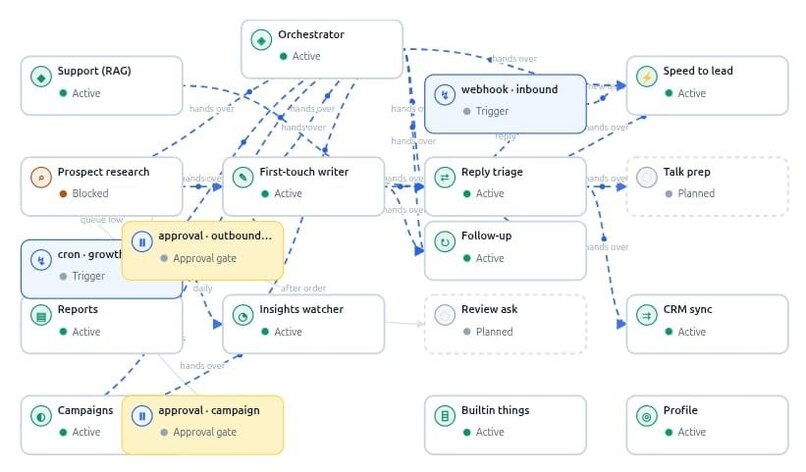
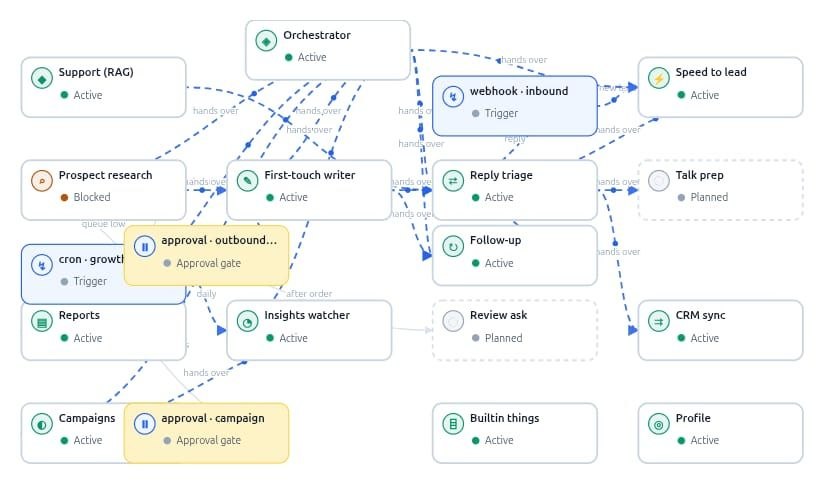
Diagram representing Swarm of autonomous agents and its connections in our B Swarm Project
-
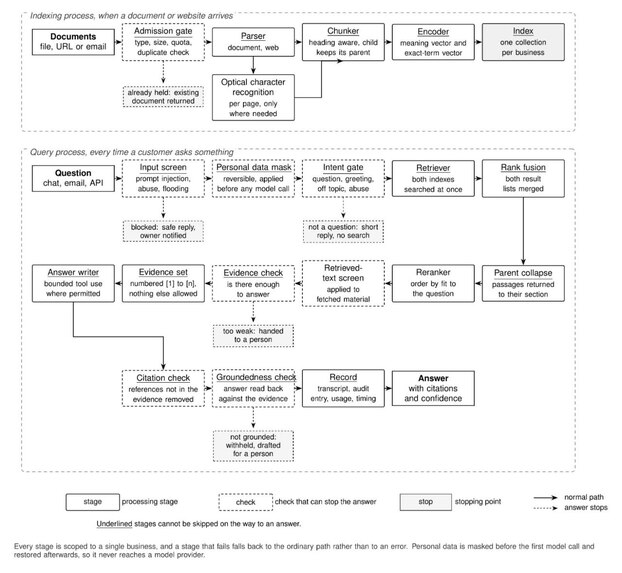
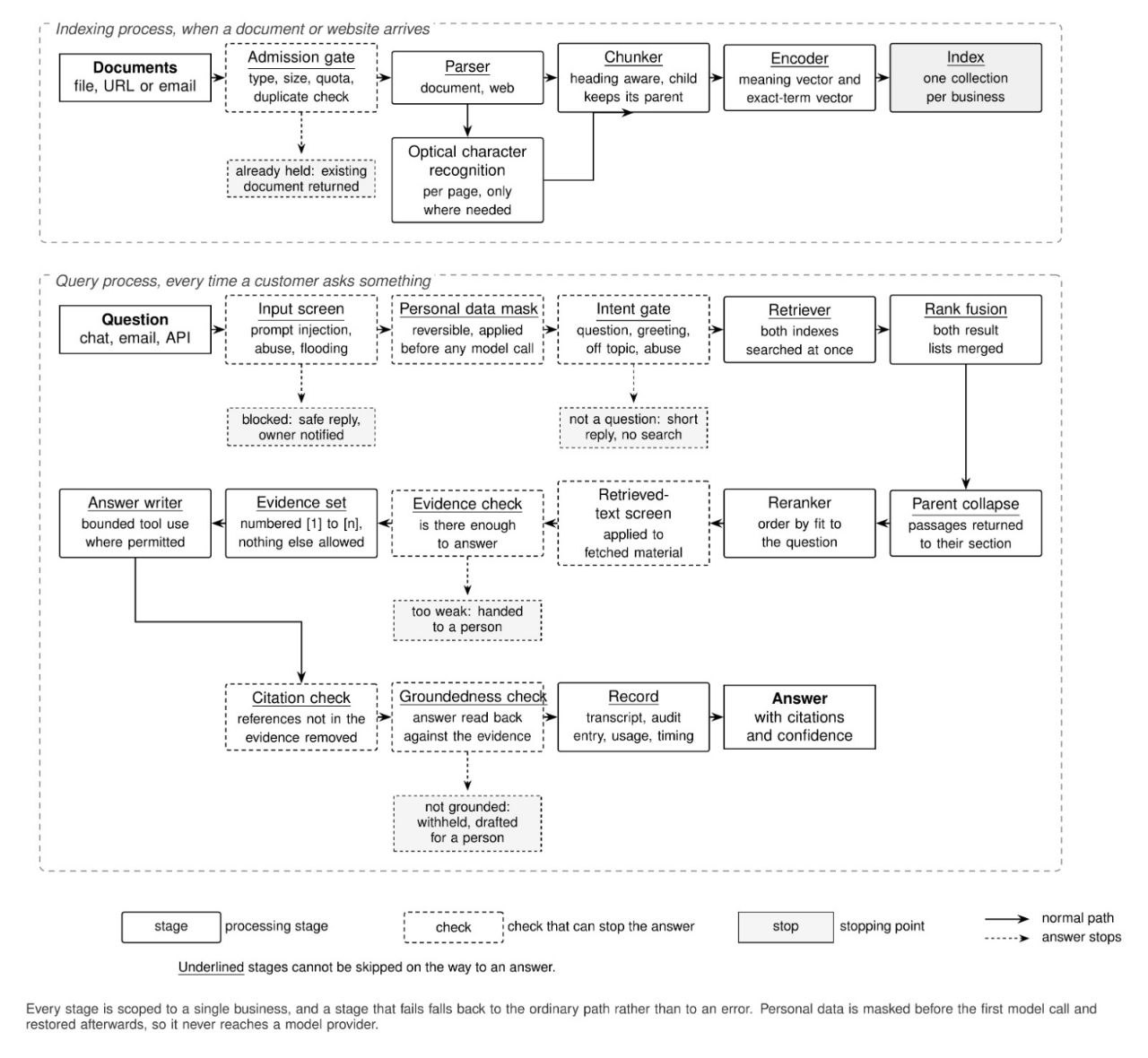
Production grade RAG system design to tackle real world business workflows we will be using in B Swarm
Inspiration
Small business owners often become the link between every tool they use. An enquiry needs an accurate answer, a lead needs a follow-up, and the customer record needs updating. Even when each tool does its job, the owner still has to keep the whole process moving.
We wanted to build a fully autonomous swarm of agents that could carry business context from one task to the next and keep routine work moving 24/7. The owner would set the direction and approve important actions, while the agents handle the steps between them.
What it does
B Swarm is an autonomous swarm of specialised AI agents designed to keep sales and customer operations moving 24/7 for small businesses. The agents share business information and workflow state across customer support, prospect research, outreach, follow-ups, reply handling, campaigns, CRM sync and reports.
Scheduled jobs and incoming events trigger workflows without the owner starting each step. For example, once a lead batch is approved, agents can prepare outreach, schedule follow-ups, process replies and update the CRM. A customer reply pauses further follow-ups, while an opt-out suppresses further outreach in the workflow.
Owners choose which actions run automatically and which require batch or individual-message approval. They can review, edit or reject proposed actions. This lets routine work continue while important decisions stay with the owner.
For HackYard, we plan to make B Swarm accessible through MCP and A2A, so external AI assistants/bots like Muse , Grokbot can discover and use its business workflows. An owner could ask their preferred assistant to research leads, prepare a campaign or retrieve a report, and have the swarm coordinate the work with shared context and owner control.
We also plan to improve meeting scheduling and strengthen the existing swarm for real business use, focusing on customer replies and handoffs between agents. Our priorities are stronger evidence checks when business information is missing or verification fails, clearer handling of interrupted workflows, and faster responses with fewer unnecessary retrieval and model calls.
How we built it
Our earlier prototype uses Python and FastAPI, a custom agent orchestrator, PostgreSQL for shared records, and a React and TypeScript dashboard. Scheduled background jobs and event-triggered handlers coordinate work between agents. Retrieval combines semantic and keyword search through Qdrant; Crawl4AI ingests websites, and Redis supports caching and send locks.
This prototype is pre-existing work . At HackYard, we plan to extend these into a usable external-agent integration, improve meeting scheduling, and strengthen the reliability and speed of one customer workflow. The demo would show an external assistant requesting a task, the swarm coordinating it, and the result returning to the assistant, with owner approval where required.
Challenges we ran into
In the earlier prototype, keeping agents consistent was harder than adding them. Incorrect information can travel through several steps. Shared business profiles, structured workflow records and approval gates made those handoffs easier to inspect.
The next challenge is making the external-agent interfaces work consistently across clients while preserving business permissions, approval rules and useful failure information.
Accomplishments we're proud of
The earlier prototype connects support and growth workflows into a coordinated swarm, with shared records, scheduled execution and an owner dashboard. It gives us a foundation for making business workflows usable by external agents at HackYard.
What we learned
More agents do not automatically make a better product. Clear responsibilities, inspectable handoffs and owner control matter more than agent count. We need to evaluate usefulness before claiming time savings.
What's next for B Swarm
After the event, we want to expand tested client integrations and evaluate the swarm with real businesses, comparing response times, follow-up completion and owner corrections against an earlier baseline. We would use owner edits and observed outcomes to refine suggestions. Further work includes meeting preparation, post-delivery feedback and review requests, and handling more users and approval requests without losing visibility into the workflow.
Built With
- crawl4ai
- fastapi
- fastmcp
- httpx
- langfuse
- postgresql
- pydantic
- python
- qdrant
- react
- redis
- sqlalchemy
- tailwind-css
- typescript
- vite

Log in or sign up for Devpost to join the conversation.