-
-
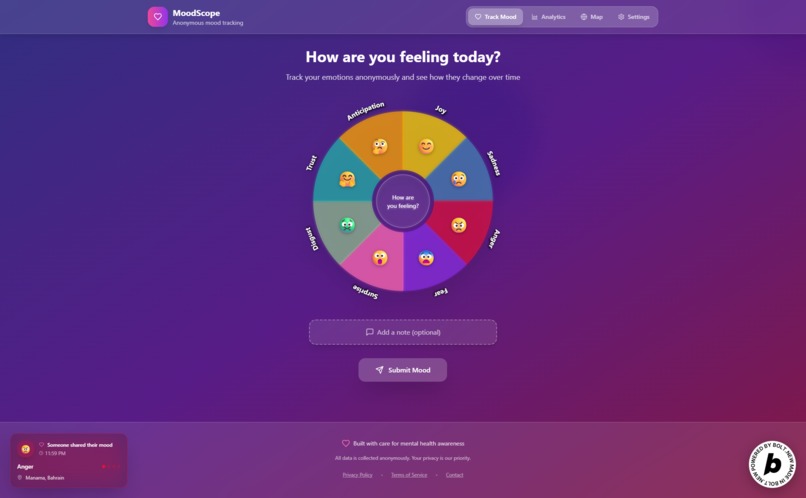
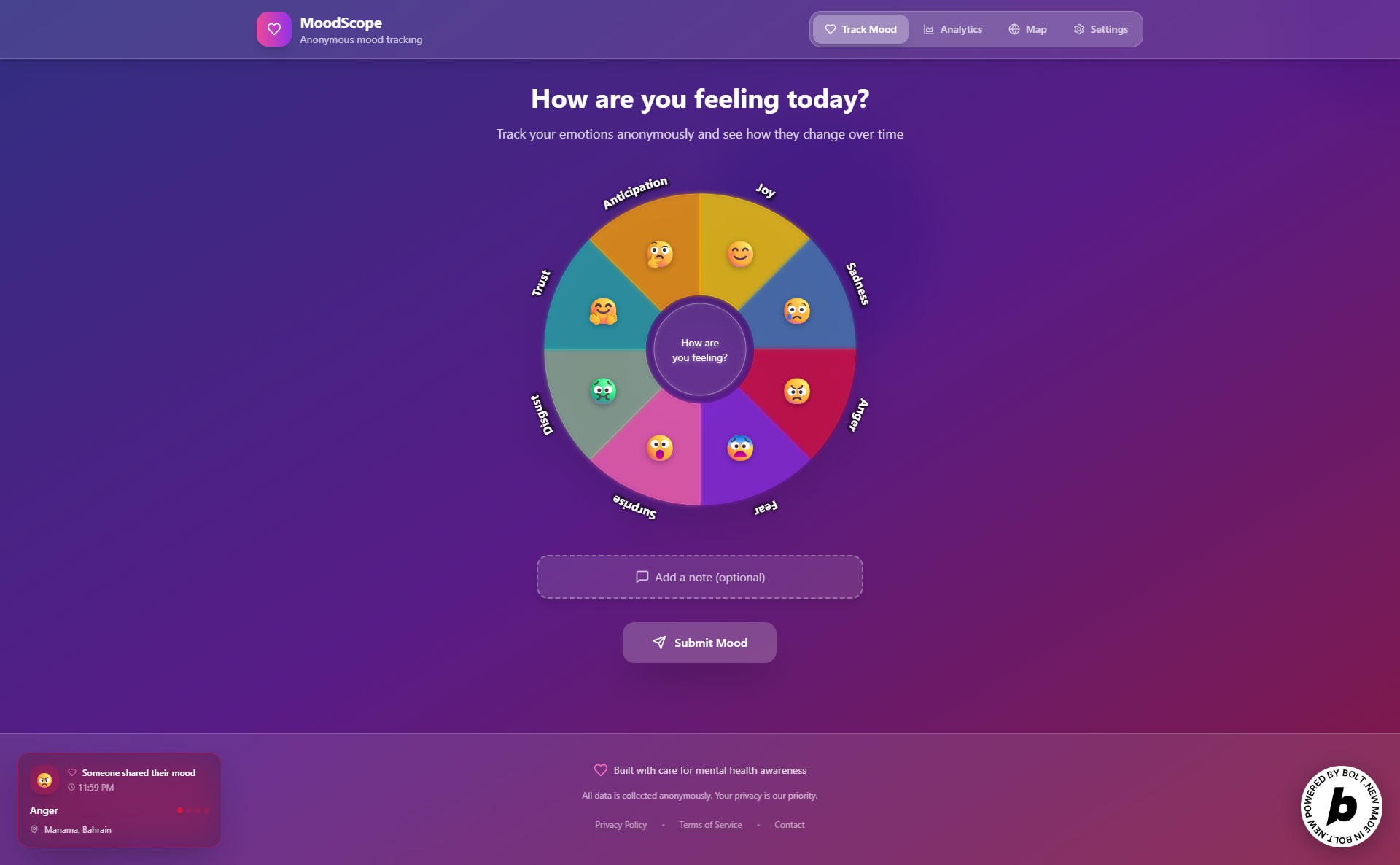
1. Home page - Users can track their mood by selecting an emotion from the mood wheel. Floating notifications provide live mood updates
-
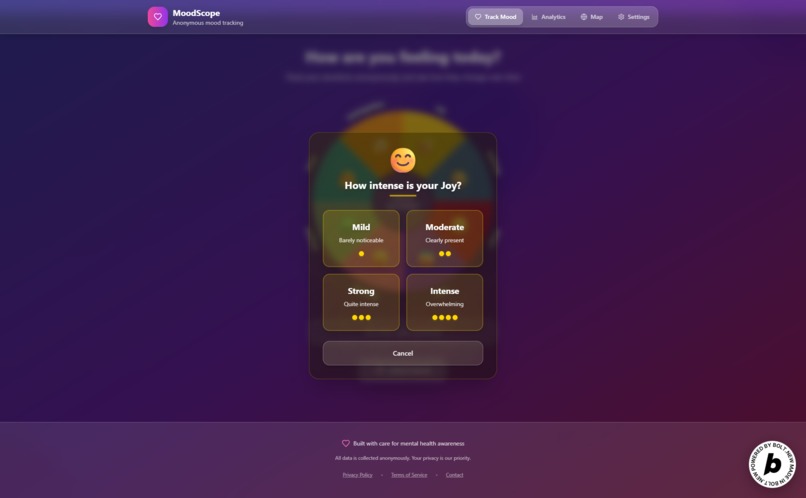
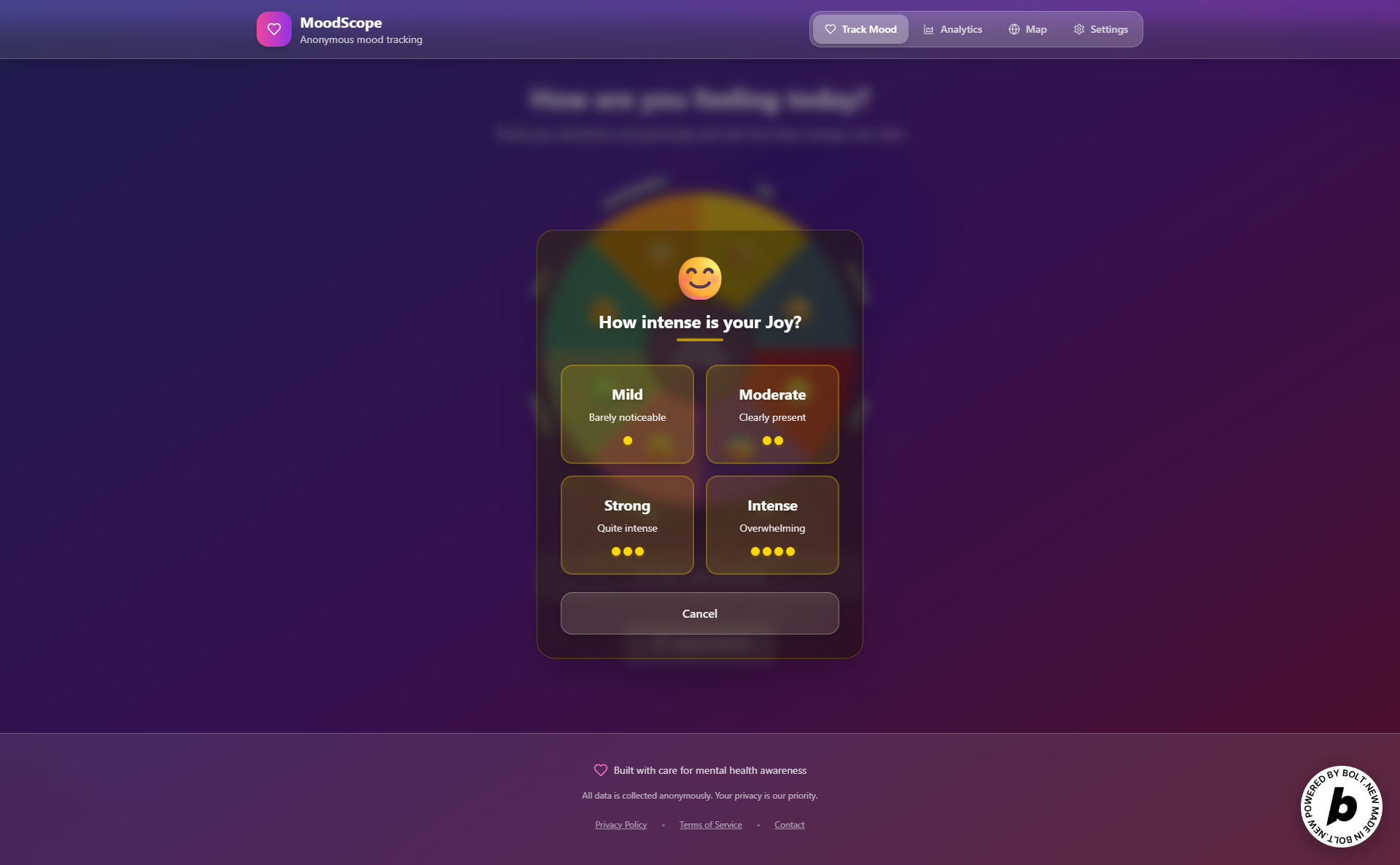
2. Choose mood intensity - Users get to choose the intensity of the emotion they are feeling
-
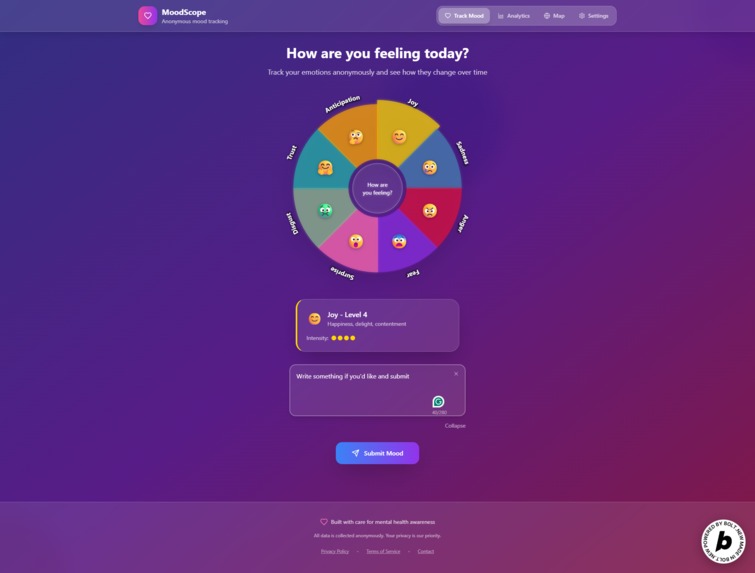
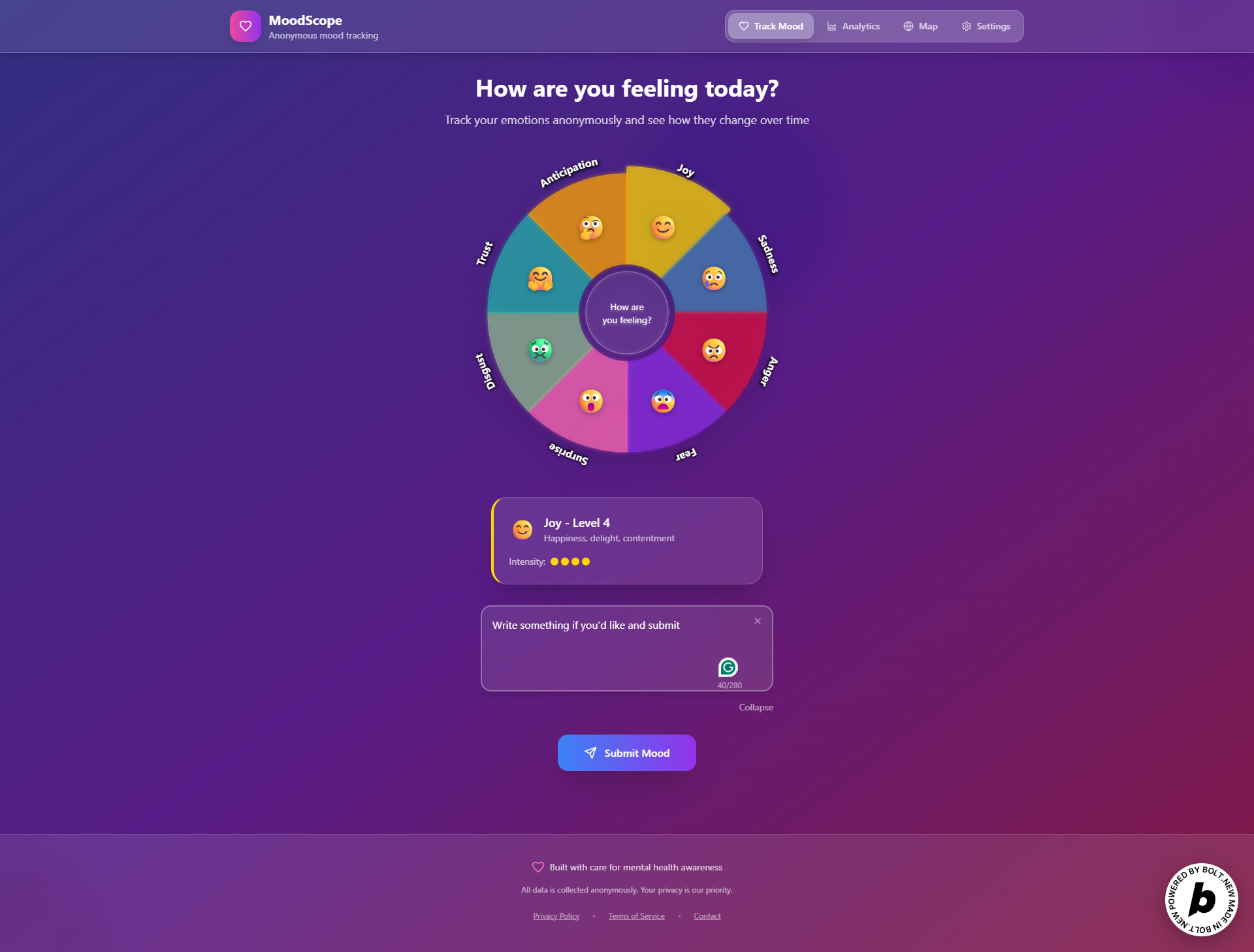
3. Before submitting their mood user can type a custom note to share how they feel
-
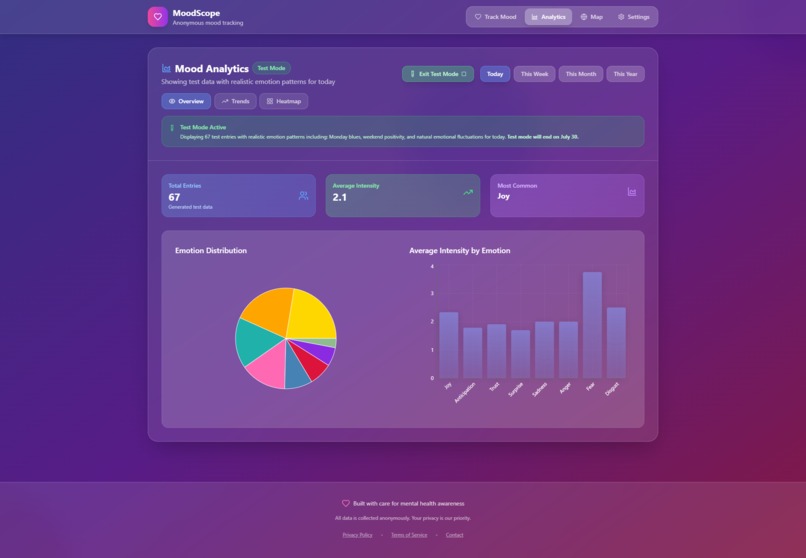
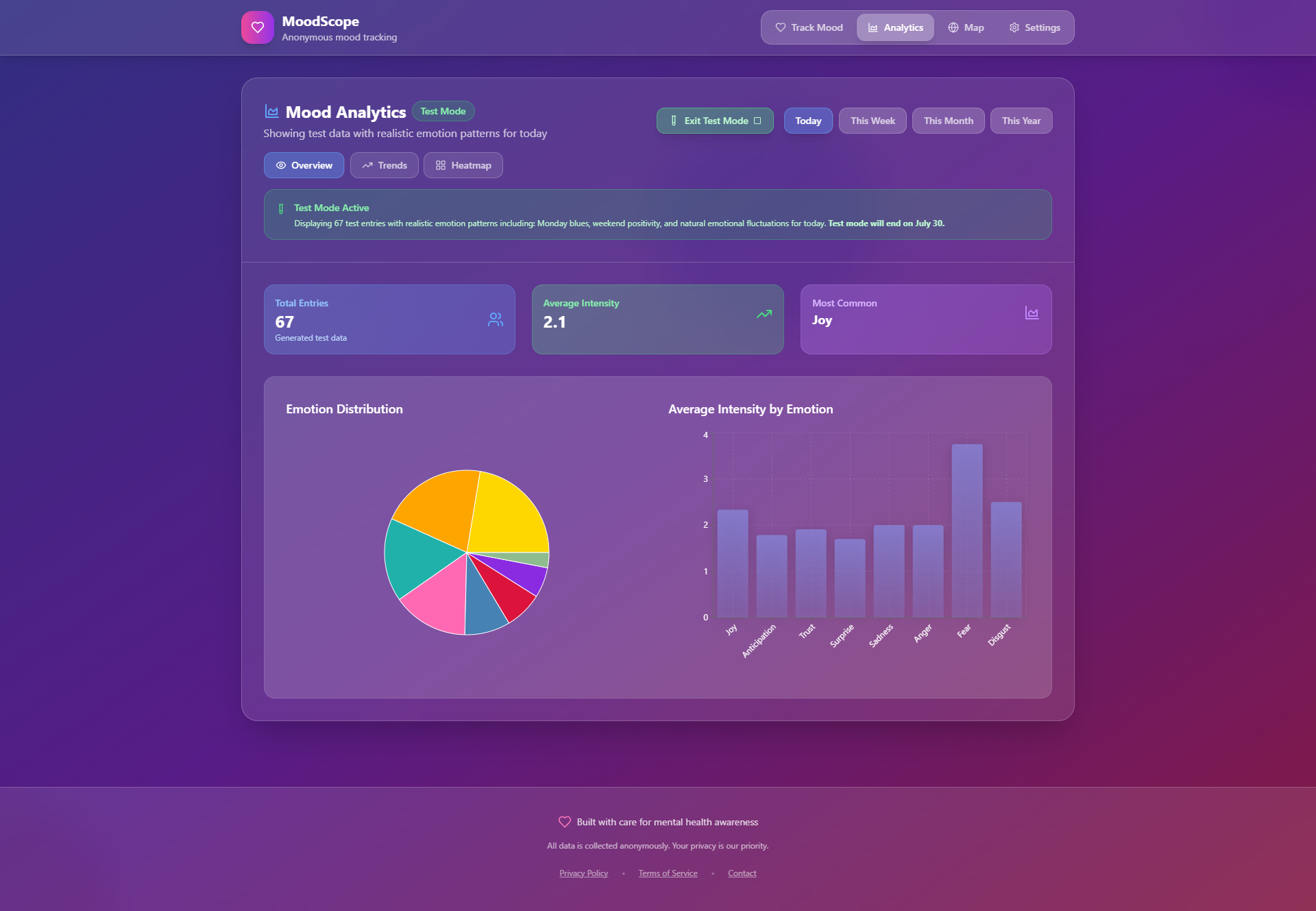
4. Analytics Overview -Tab shows collective emotion distribution and intensity charts that can be filtered further
-
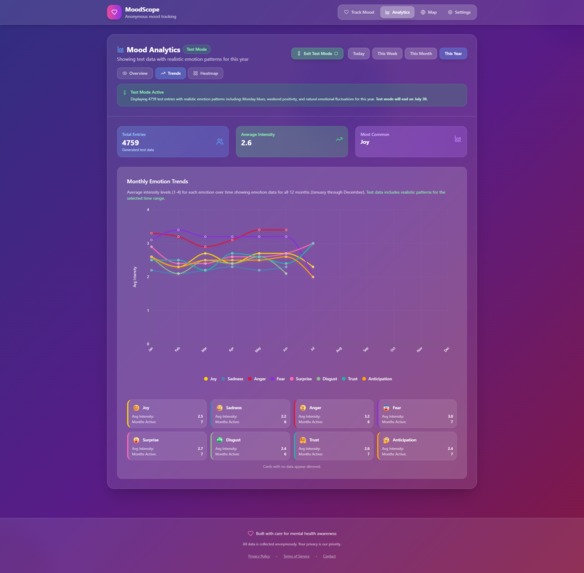
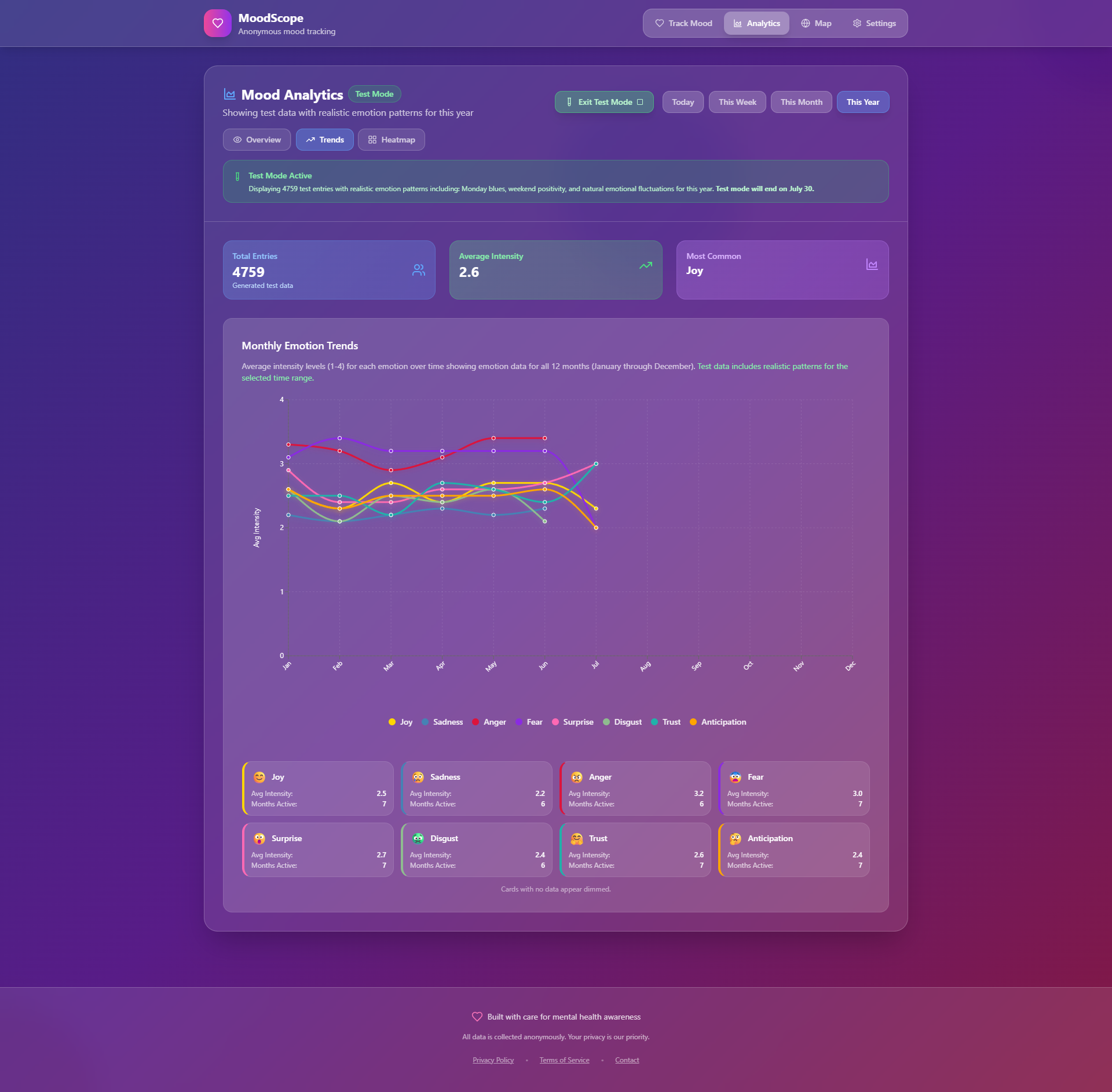
5. Analytics Trends - Tab shows line chart graph to further study varying emotions and intensity over several periods of time
-
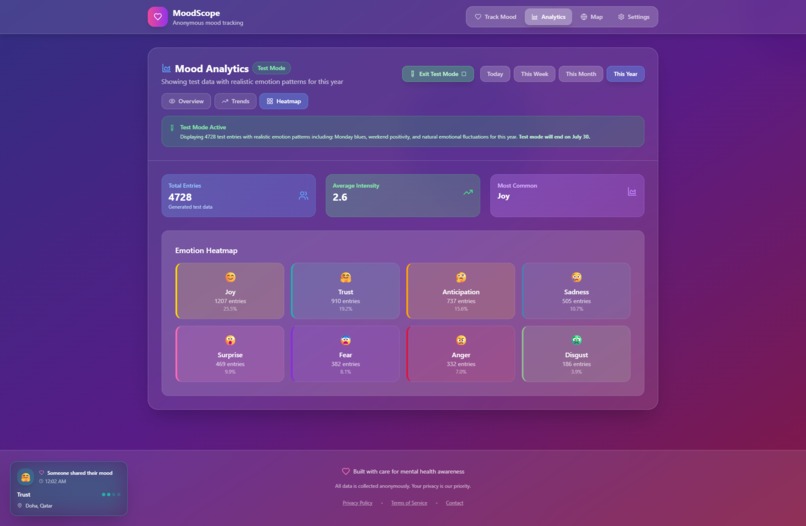
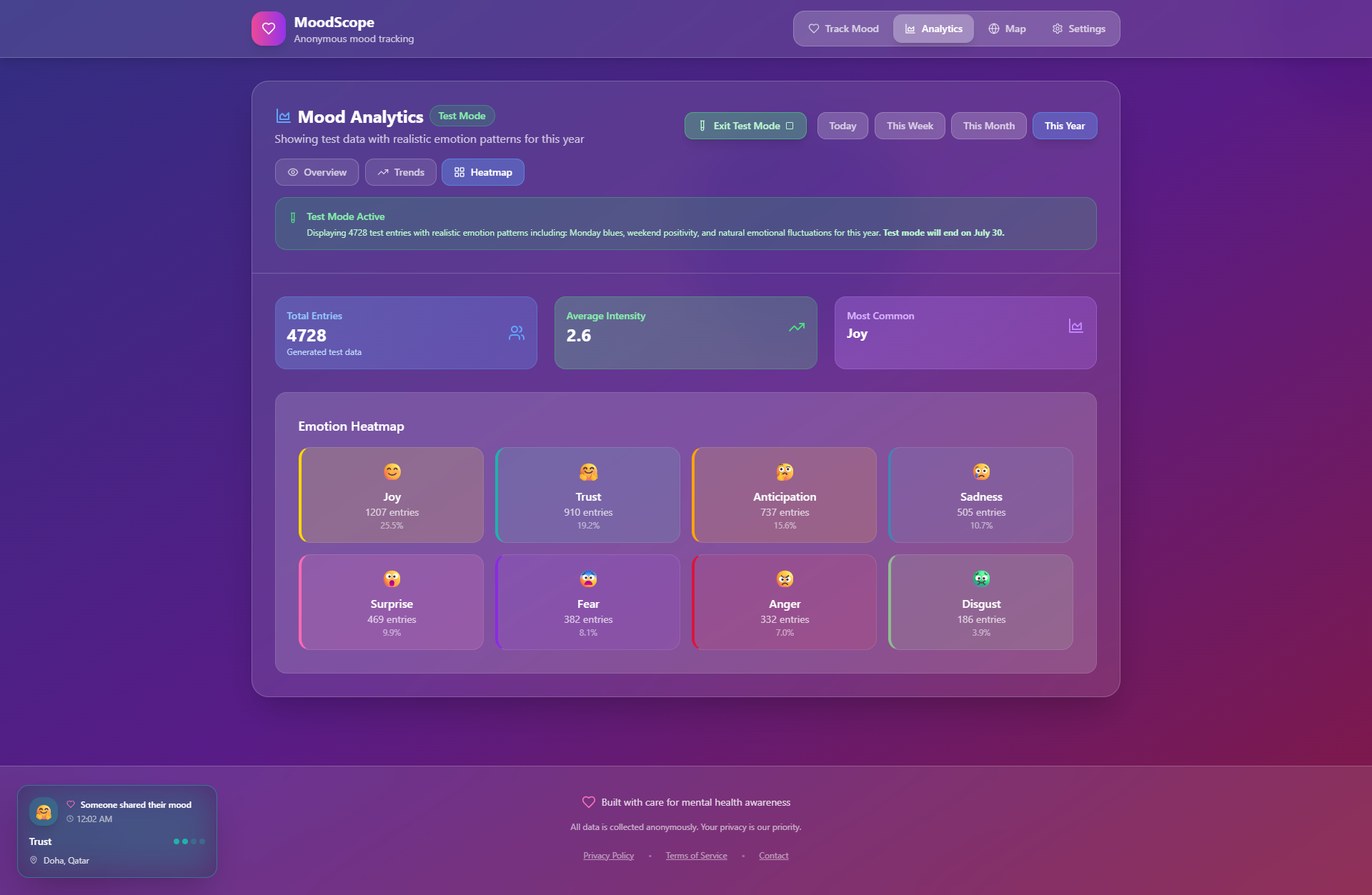
6. Analytics Heatmap - Shows overall emotion statistics with number of entries for different periods of time
-
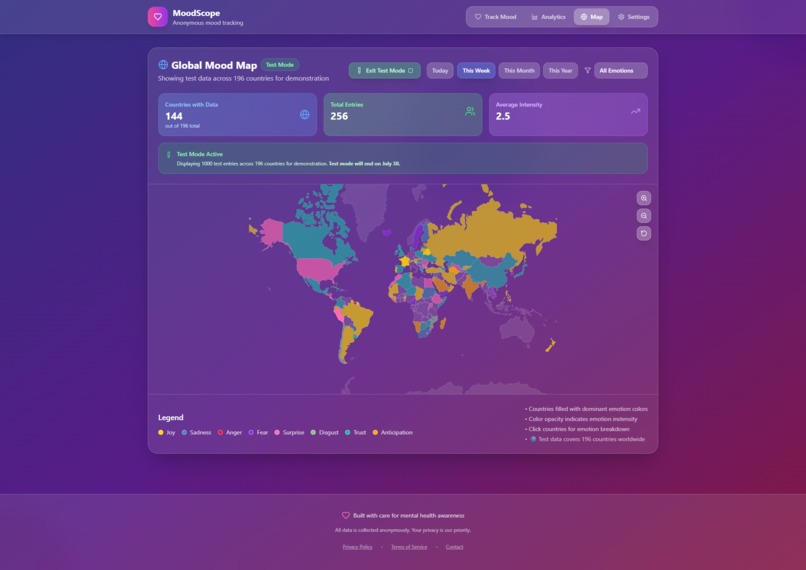
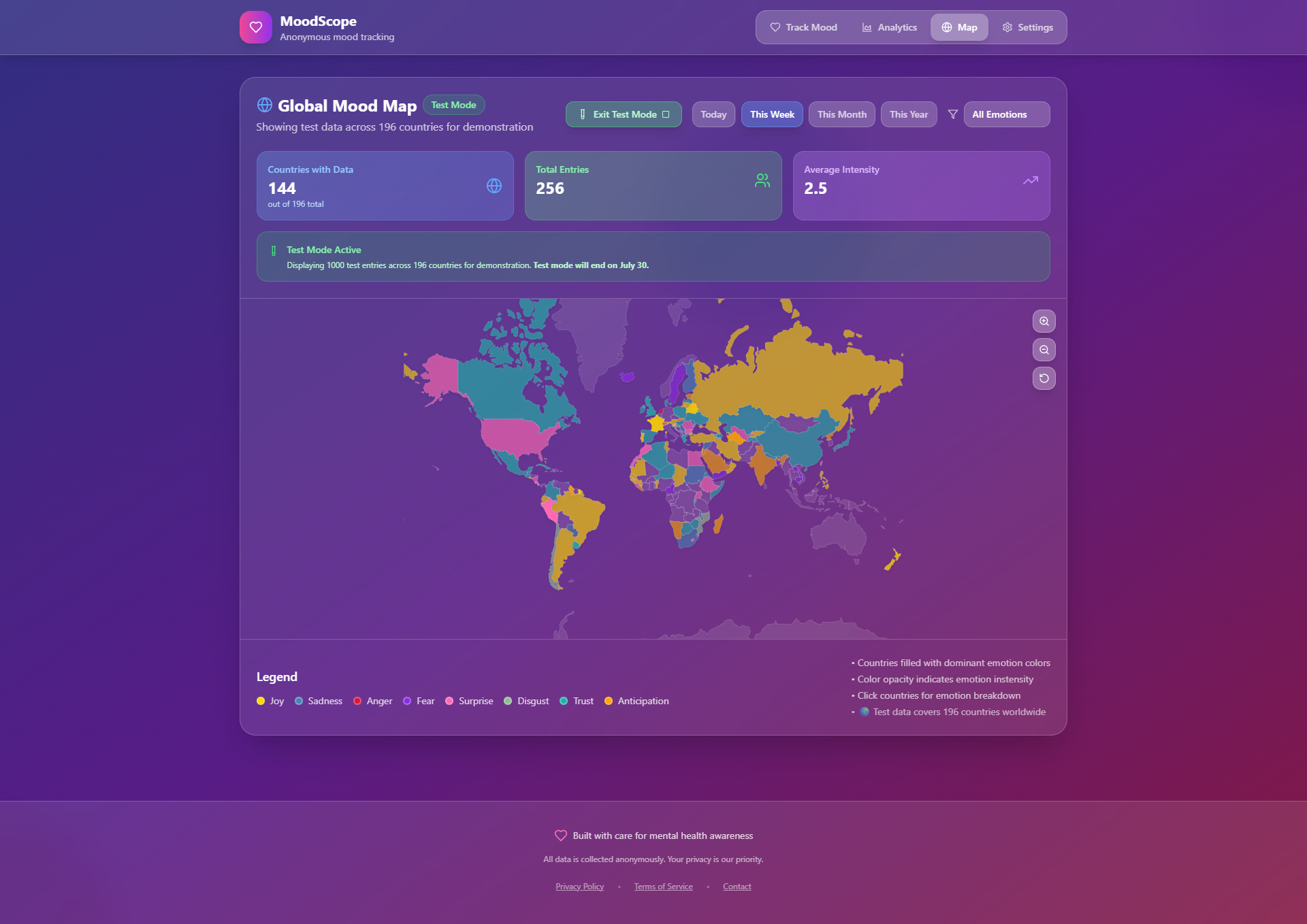
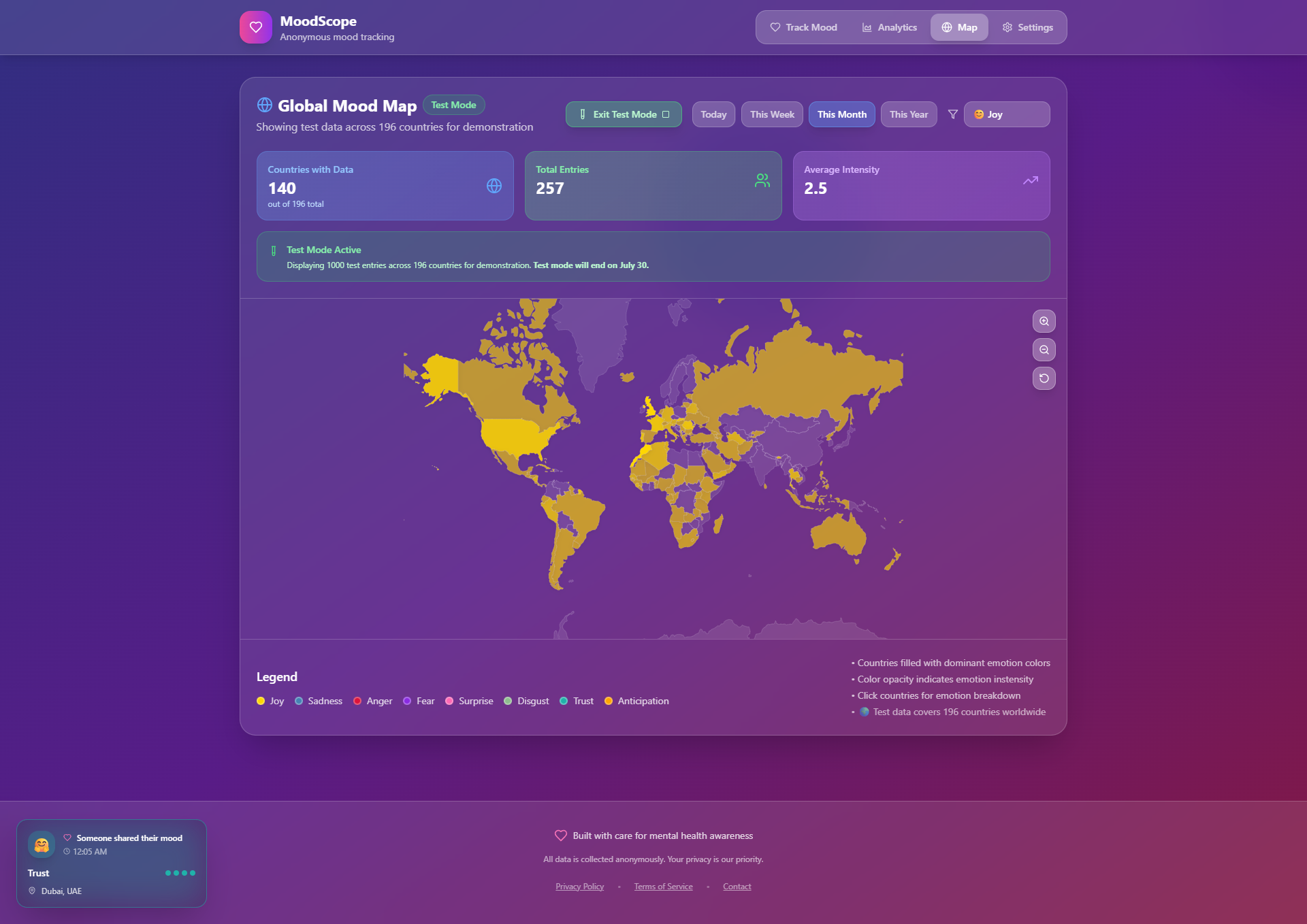
7. Map - Visualizes dominant global emotion for each country with detailed breakdown that can be studied across various time periods
-
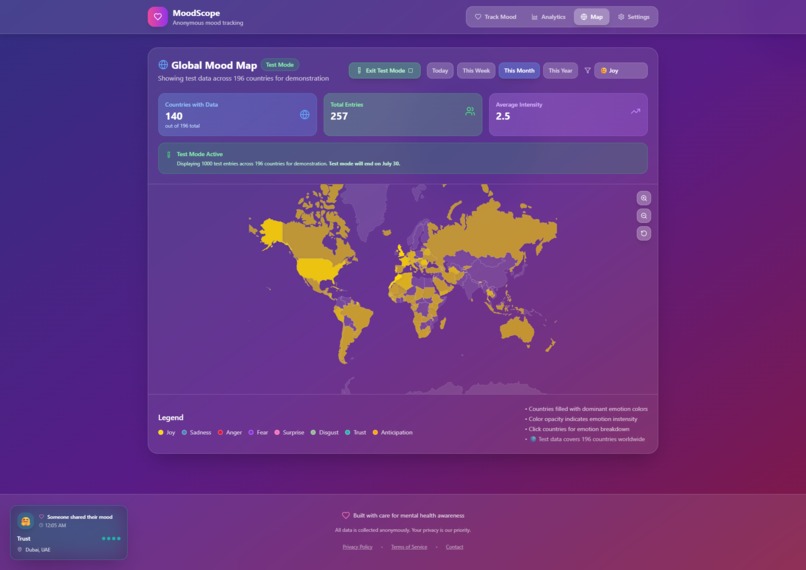
8. Map Emotion Filter - Can be used to visualize how single emotion has been felt in terms of intensity across the world
-
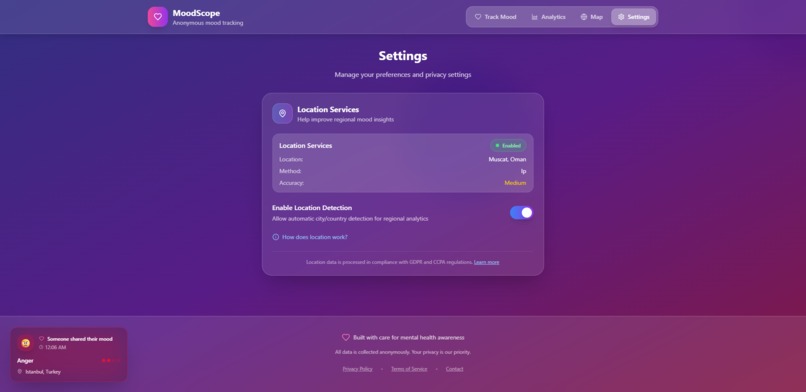
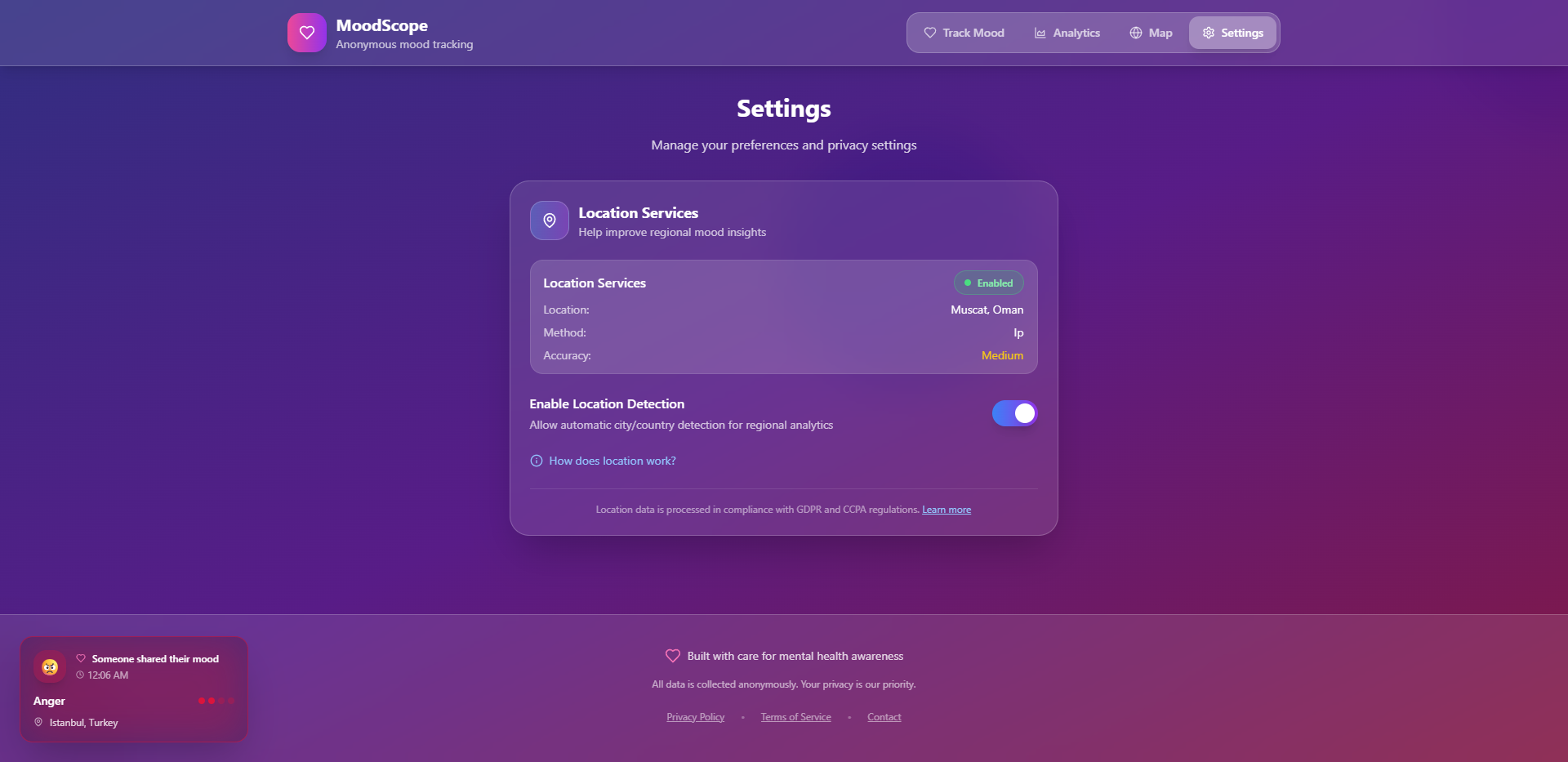
9. Settings - Allows users to toggle Location. Disabled location still results in state wide accuracy ensuring correct country is recorded
Moodscope.io — A Global Mood Reflection Tool
Inspiration
The idea for Moodscope.io came from a simple realization: we track so many aspects of our lives—steps, calories, sleep—but we rarely pause to log how we’re actually feeling. I noticed that most mood tracking tools are either overengineered, tied to personal identity, or end up becoming cluttered digital journals no one revisits. There was no fast, frictionless way to say “here’s how I feel” without committing to some form of tracking ecosystem.
That got me thinking: what if there were a way for people to anonymously log their emotions—quickly, safely, and without any account or judgment? A way to contribute to something bigger, not for validation or feedback, but simply to feel seen. And what if those feelings could be visualized on a global scale, giving us a collective snapshot of how people around the world are doing emotionally?
What it does
That’s where Moodscope.io began. It’s a privacy-first mood tracking app that allows users to check in with their emotions anonymously. The mood data is visualized on an interactive world map, showing emotional trends by location, and paired with daily and historical analytics to help users (and potentially researchers or organizations) observe patterns and shifts over time.
It’s not just about the map—it’s about emotional visibility through:
- Bar graphs
- Mood frequencies
- Evolving trend lines
How I built it
I used Bolt.new to build the frontend for its smooth development experience and clean design flexibility. Supabase powers the backend, storing mood entries in a way that’s fast, anonymous, and reliable.
Challenges I ran into
One of the trickiest parts was getting the map to render properly across different zoom levels and ensuring country seams didn’t break the visual experience.
I also worked on building out custom analytics to summarize global and daily trends—without overwhelming the user. Since everything is anonymous and sessionless, I had to make thoughtful decisions about how data is collected, displayed, and preserved without losing clarity or emotional nuance.
Accomplishments that I'm proud of
This project taught me how to build with empathy at the center—how to design not just for functionality but for emotional comfort.
“Does this feel safe and human?”
That single question shaped every interface and logic decision I made.
What I learned
Moodscope.io taught me how to approach development with a quiet kind of purpose. I realized that even small, minimal tools can carry deep emotional value if built with intention.
The project also gave me insight into:
- Balancing data clarity with user privacy
- Creating a gentle UX for emotionally vulnerable users
- Handling geoJSON rendering and frontend optimization
What's next for MoodScope
The journey is just beginning...
I’m excited about possibilities like:
- 🤝 Partnerships with mental health orgs
- 📊 Deeper analytics and trend visualizations
- 🌍 Localized emotional insights
- 🧠 Community features for shared journaling (optional)
But at its core, Moodscope.io will always stay true to its intention:
A quiet, respectful space where emotional expression can happen freely and anonymously.
Built With
- bolt
- supabase


Log in or sign up for Devpost to join the conversation.