Due to the current regulations by European governments to fight the COVID virus, local stores are closed (in most countries). This results in a drastic decrease in revenue with bankruptcy as a possible outcome. In addition, consumers tend to shop online since they want to avoid health risks by going to stores that are still open. Local stores are trying to cope with the competition of large e-commerce enterprises but their knowledge and skills of “going online” are mostly insufficient.
On the other hand, since local stores are closed, consumers are forced to use online e-commerce systems which do not provide social interaction between the consumer and shop assistants.
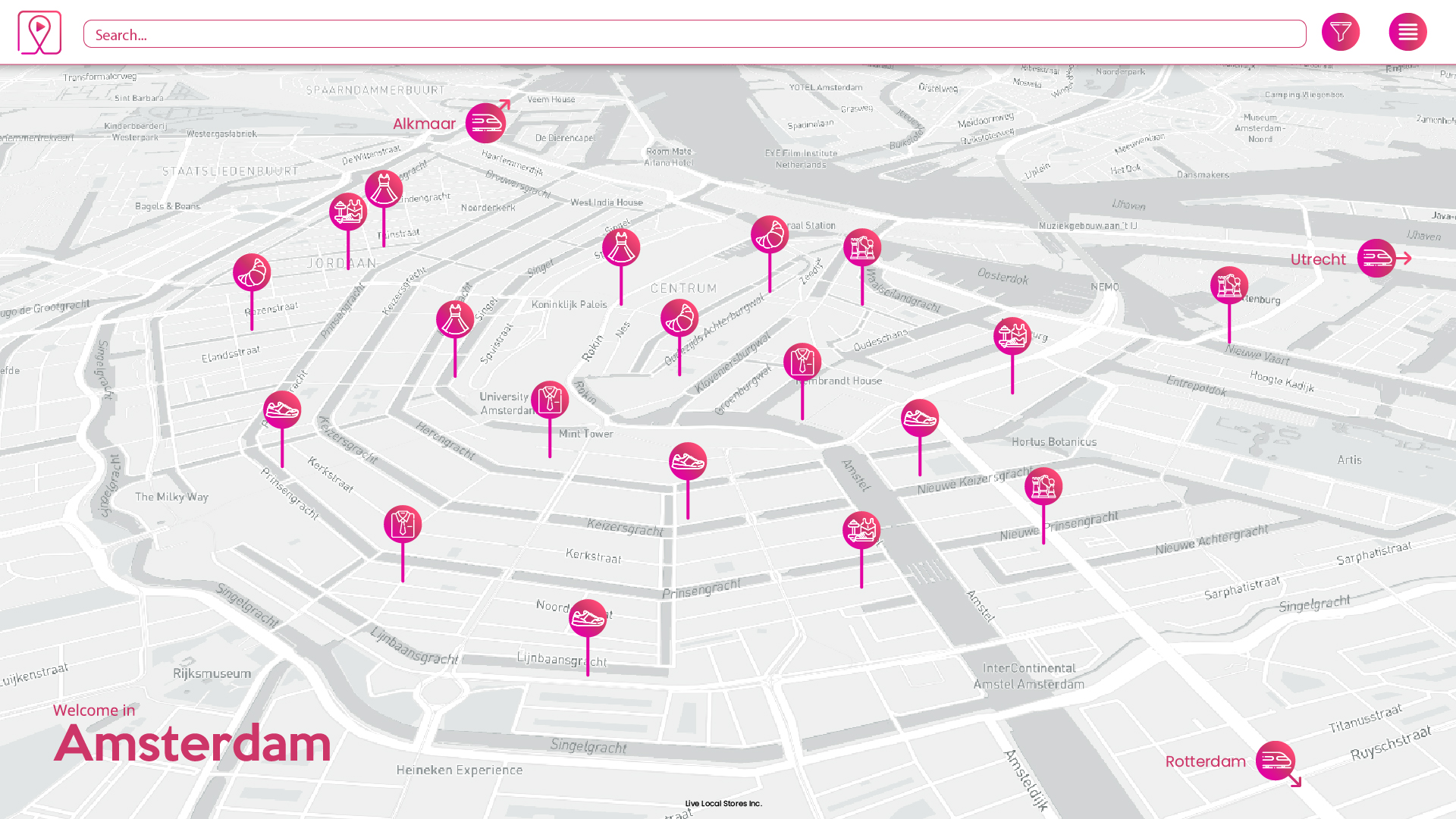
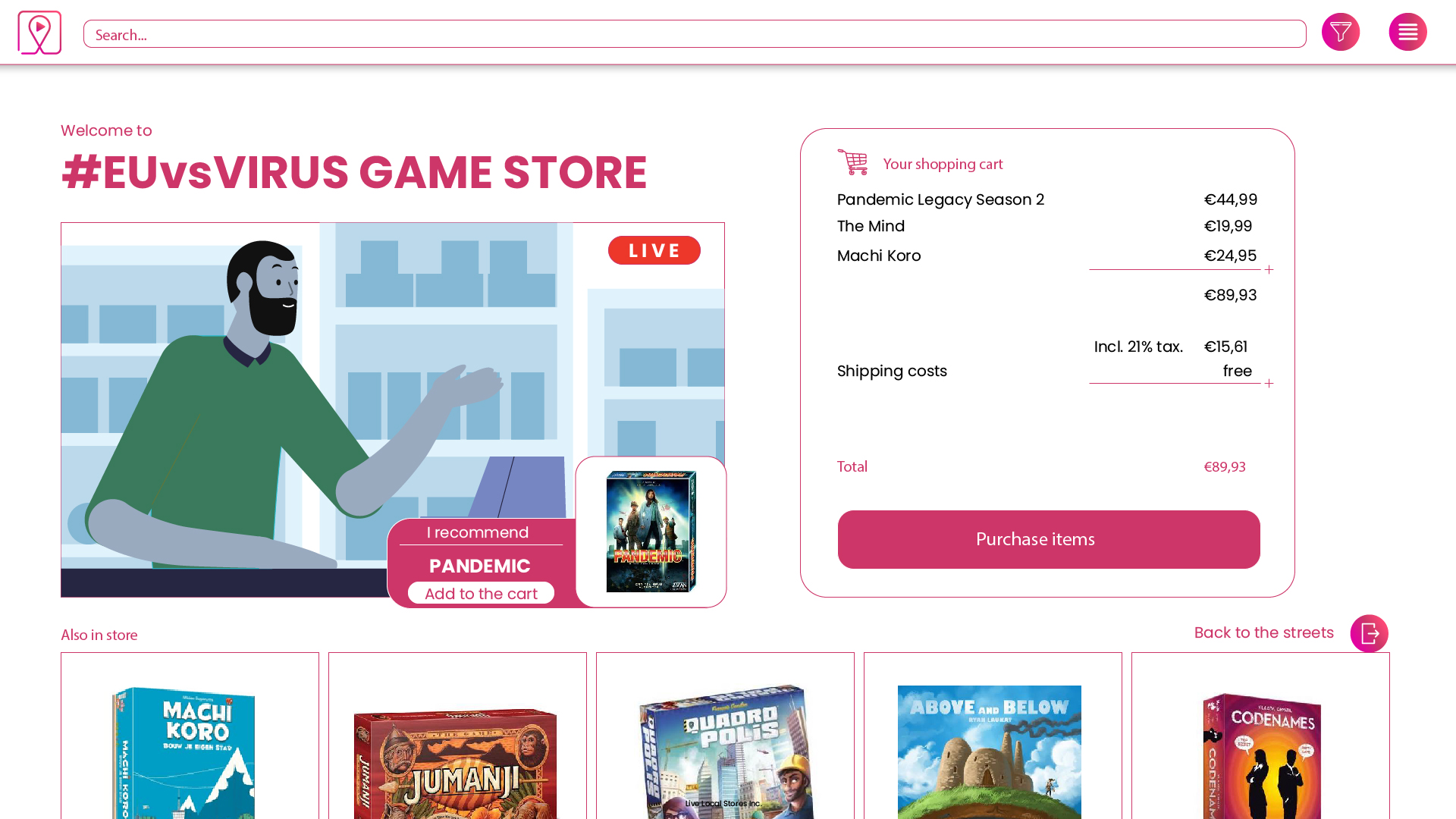
Live Local Store (temporary working title) tries to tackle the above-mentioned problems by providing an online platform which enables the customer to remotely visit local stores. The platform reflects the local city centre with affiliated local stores that a user can stroll through. Once the user enters one of their favourite local stores, the interior of the shop is visualized on the platform (mimicking the users’ presents at the physical store). The shop assistant (present in the physical store) gets notified (a metaphor for the ring of the physical doorbell) that there is a customer in their online shop. By making use of video conference tools, the customer gets welcomed and help is offered. With the help of the platform, the missed social interaction is re-established and customer relationship can increase again. In addition, customers that experience trouble, inconveniences and a lack of trust due to online payment systems, are now assisted by the shop assistant.
During the hackathon, our team (consisting of three students of the University of Technology Eindhoven) began with a brainstorm session. Based on personal experiences, journals, research and social media trends, the focus towards local stores was created. As a result of the brainstorm session, Live Local Store took shape. The next day, Saturday, our team attended all webinars to ensure knowledge gathering was maximized. Between the webinars, the market segment, pains and gains are explored by using the value proposition canvas. In addition, a first sketch of the platform is designed and further develop throughout Saturday and Sunday. In order to continue the project, validation should be done. Interactions with customers of local shops and local shop owners will help out with optimizing the platform. In order to optimize the platform, an API should be developed, allowing the platform to be implemented more easily. Next to this, the video calling function should be added to the platform in a suitable way. After all of this is done, the user experience should be optimized.
Throughout the project, we have already been thinking about some business aspects, but a business model should still be worked out to make sure everything is clear. A start of the business model canvas has already been made by filling in the Value Proposition Canvas, but the model itself should be completed.
Built With
- e-commerce
- video-chat-engine
- website


Log in or sign up for Devpost to join the conversation.