Inspiration
Since high school, we've been told that college is the BEST time for us to go out there, socialize, and live our best lives. However, at commuter-heavy community colleges, many students spend most of their day at home and come to college solely to attend class.
In fact, 50% - 65% of college students report loneliness, and it's not even their fault. Everyone lives on their own schedule, and so it's super hard to find common timings with your friends or even meet new people. Because there's so much friction for people to socialize, it doesn't happen at scale.
So, I built Mingle.
What it does
The concept is very simple.
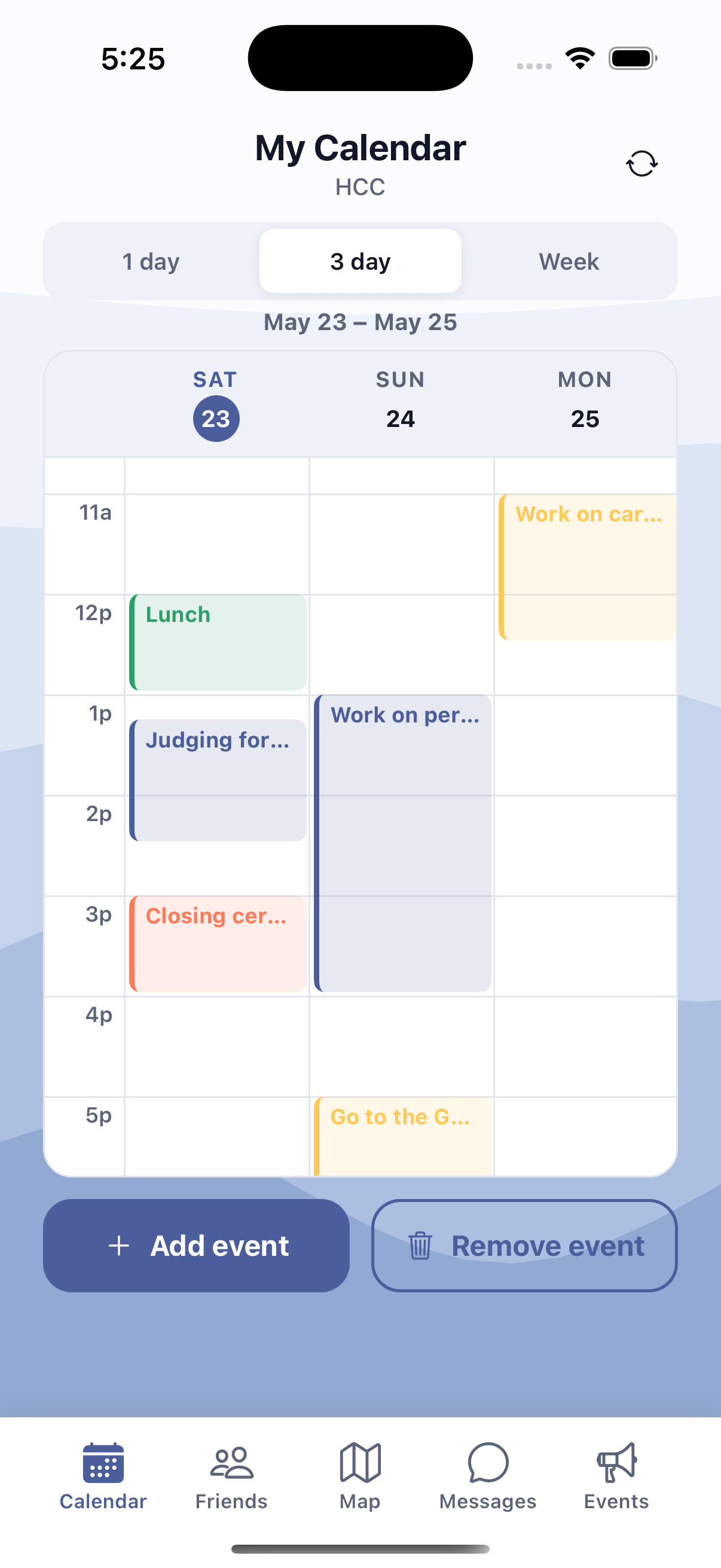
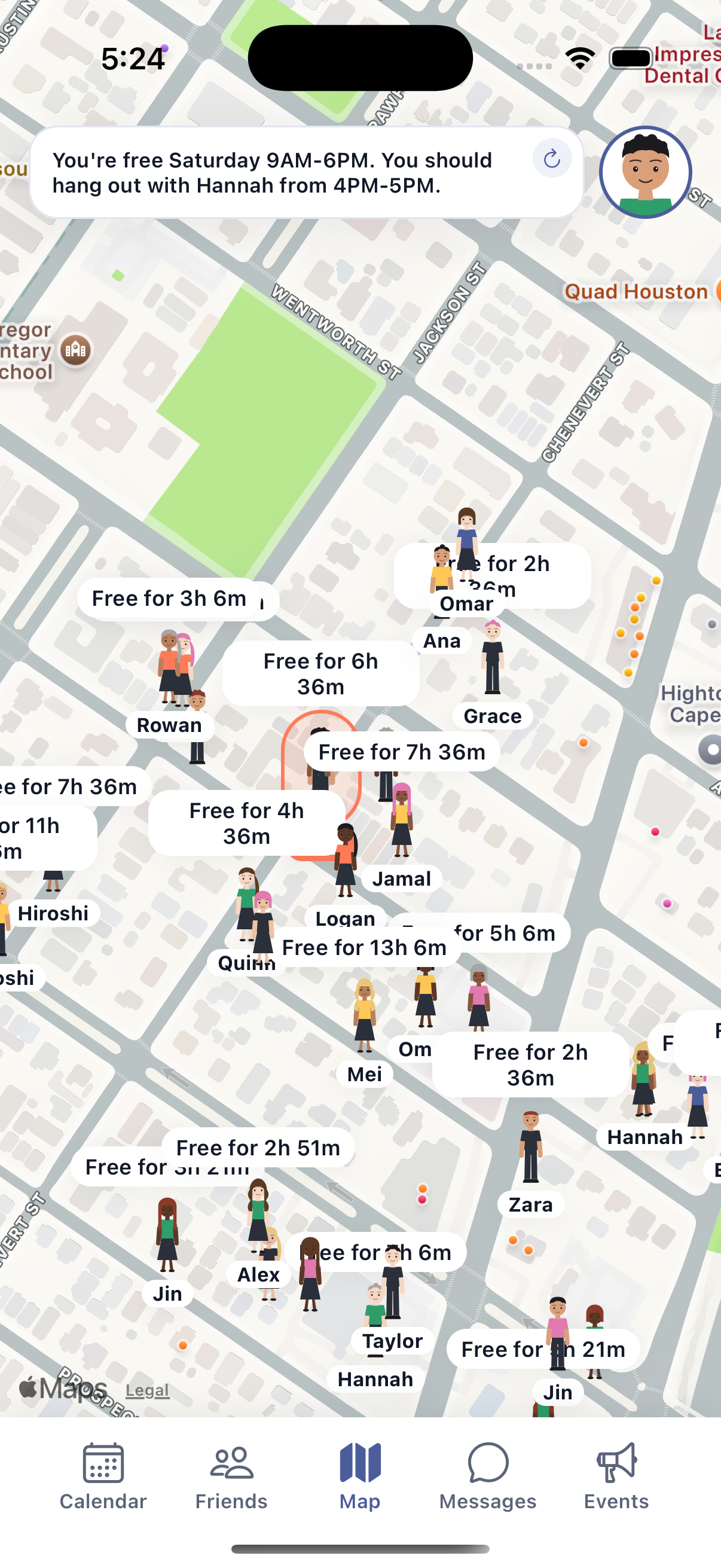
You start by giving us your schedule, as well basic info about yourself. Then, we match you with people based on your interests, and we compare your schedules to find common free time.
You can use the same feature with your friends to identify free time across everyone's schedules so that you can plan your hangouts then.
With Mingle on your side, there's no reason for you to ever suffer loneliness.
How we built it
I used React Native + Expo for our frontend, Node.js + Express for our backend, MongoDB Atlas for our database, and I used Google's links to pull from Google Calendar (applicable to any user). I also used Google Gemini's API for AI-powered tooltips based niche social scenarios.
Challenges we ran into
While building Mingle, I had problems of overloading the Google Gemini payload, resulting in inefficient prompts and rate limiting. To combat it, we passed only the information that was necessary.
I also faced the issue of getting people's messaging and interactions because social systems are complex and I needed to display / manage them in the most efficient way possible, both in the backend and frontend.
Finally, it took a lot of experimentation to arrive at the UI / UX design I ended up finalizing for Mingle.
Accomplishments that we're proud of
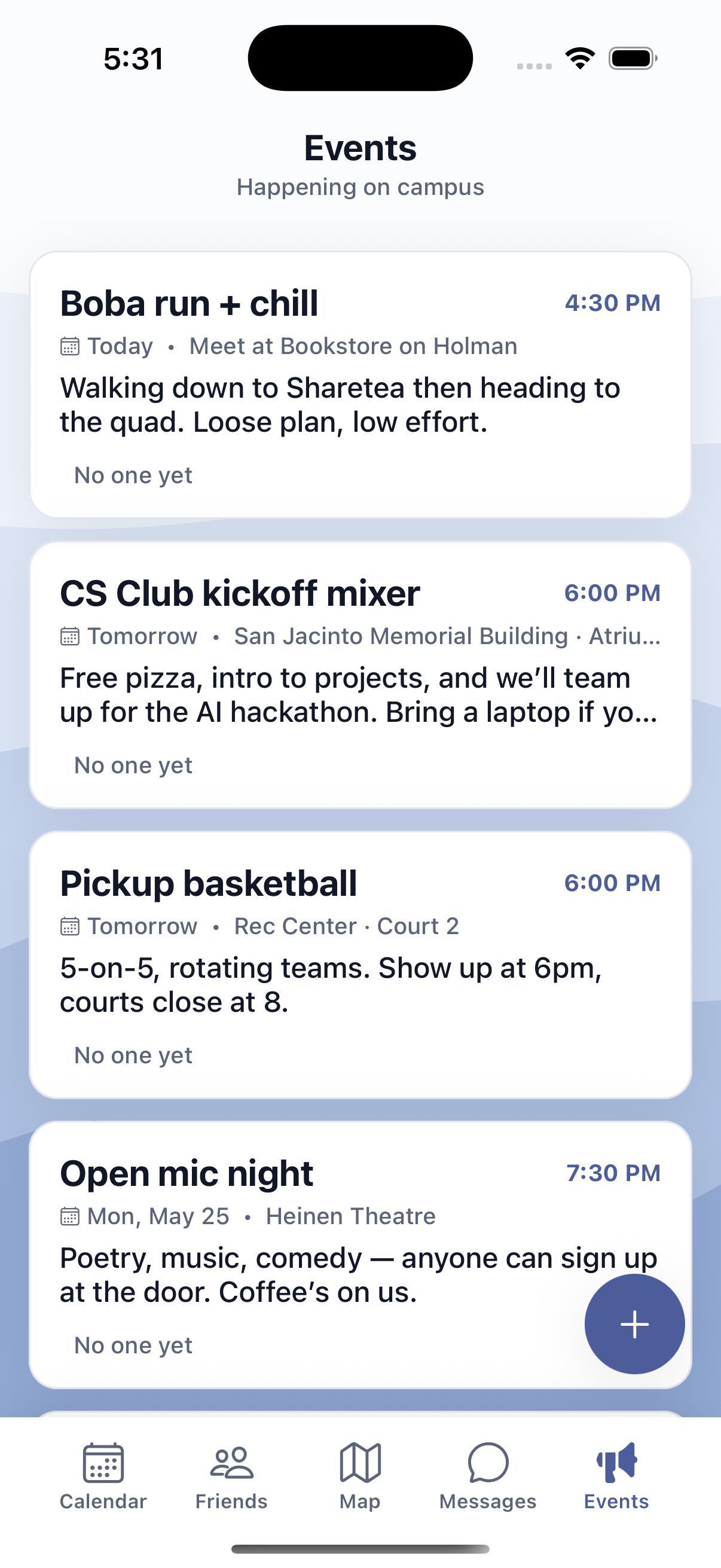
I'm proud of my ability to have made a system to manage everyone's social connections all in one app; from meeting new people to strengthening relationships with existing friends. I'm glad that I was able to take a problem that I personally faced, and turn it into a solution I would use beyond the hackathon.
What we learned
Throughout my development, I learned about MongoDB Atlas and had more practice with Google Gemini's API.
I had never worked with MongoDB prior to HackHCC, so I was able to learn and work with a new technology for managing my data, and I can compare its useability to tools like Supabase and Firebase—tools I am already well versed in.
I also worked more with Google Gemini in this hackathon than I did in the past, and now I can use it mode efficiently and find use cases for Gemini API that extend beyond chatbot interfaces.
What's next for Mingle
I could implement groups, better socialization suggestions, connection to real-time school data (like timings for buildings), notifications, and so much more. What I've built in the past 24 hours is barely scratching the surface of what's possible, and I know that the potential is limitless.


Log in or sign up for Devpost to join the conversation.