-
-
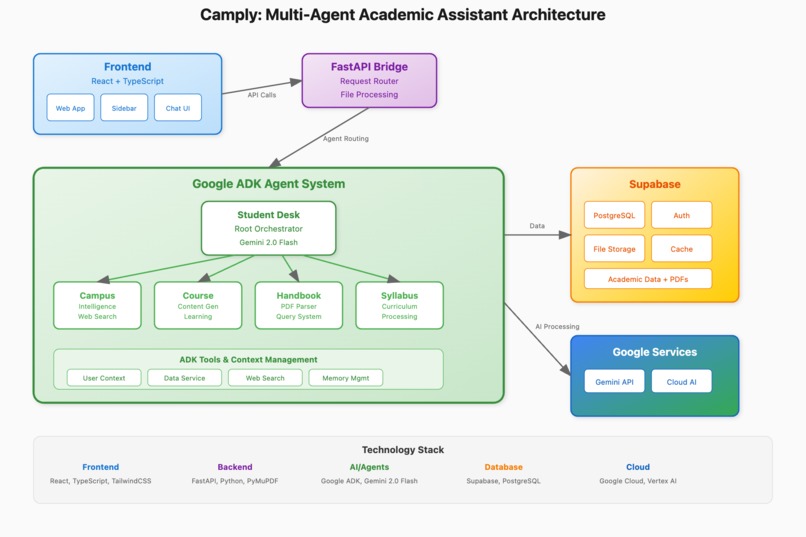
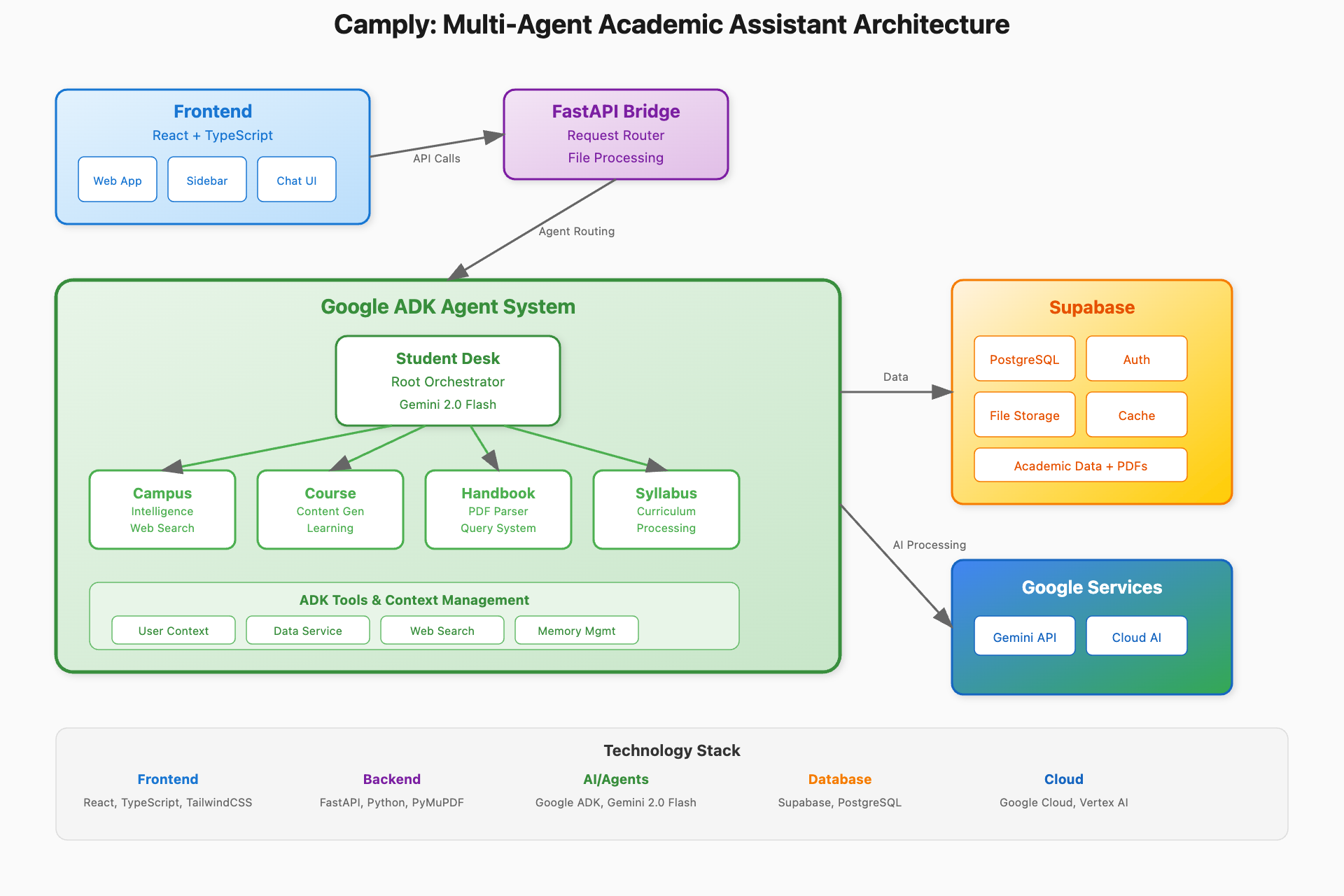
Camply Architecture
-
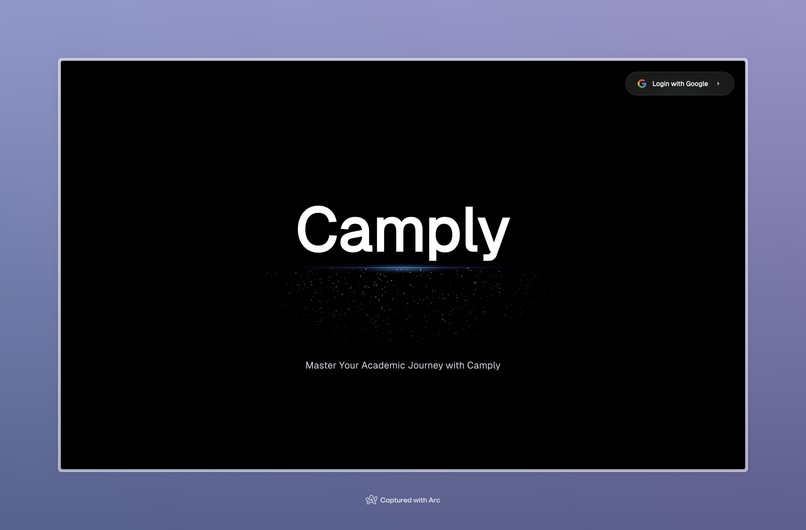
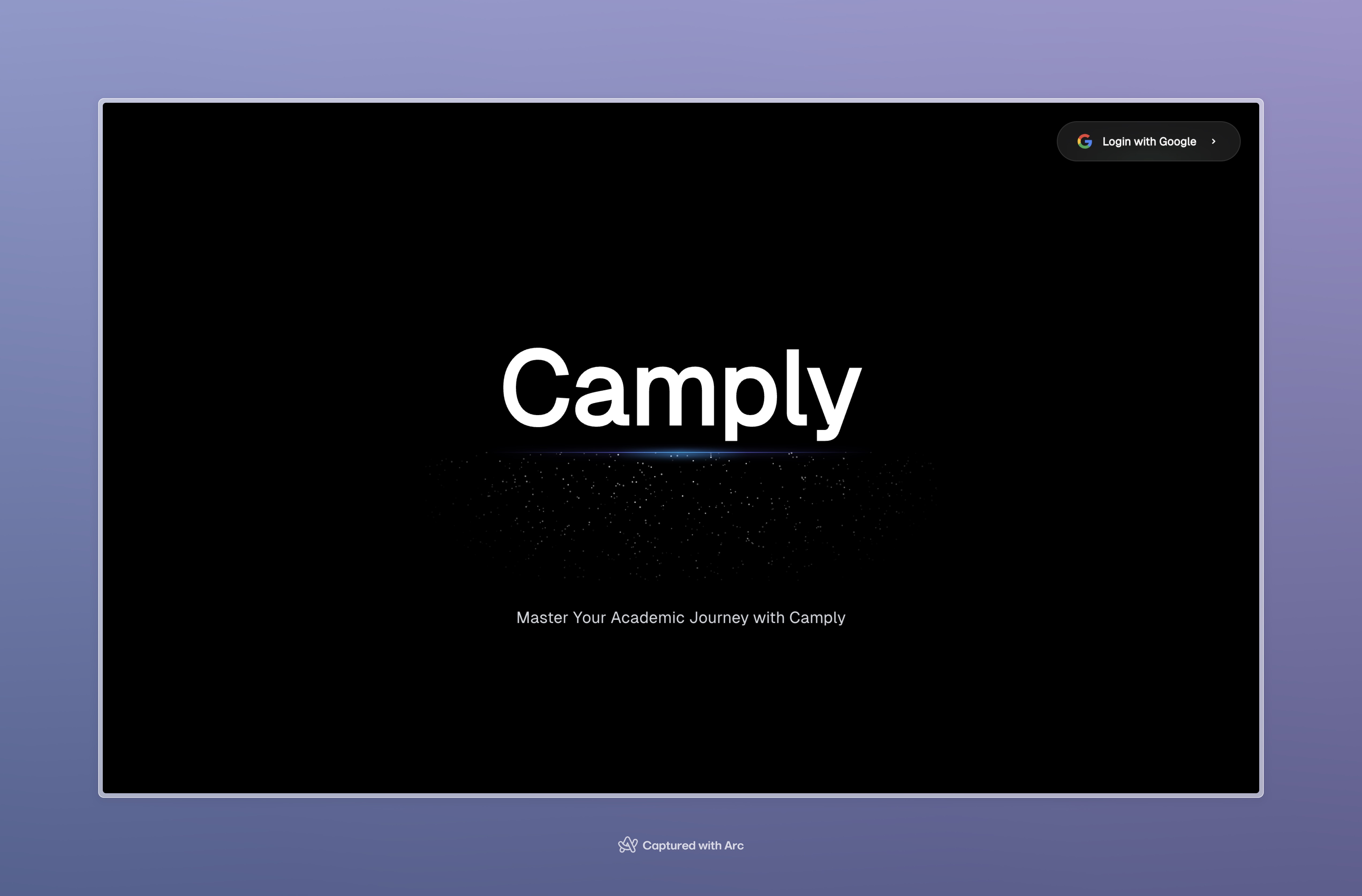
Landing Page
-
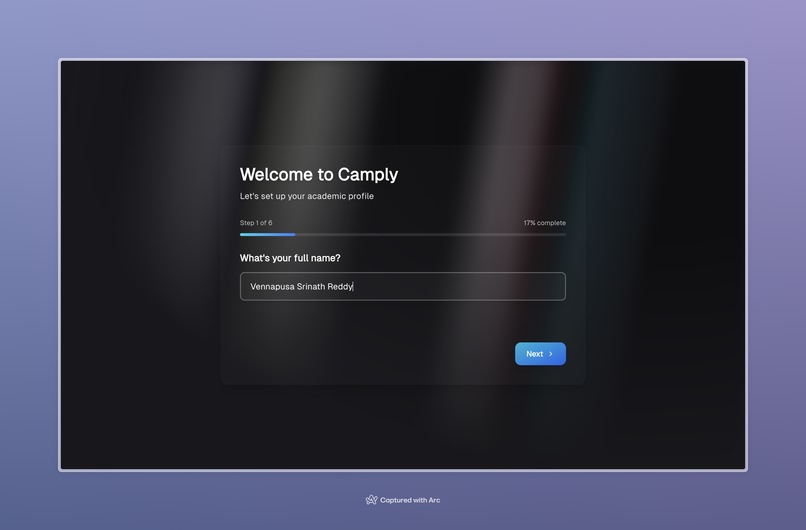
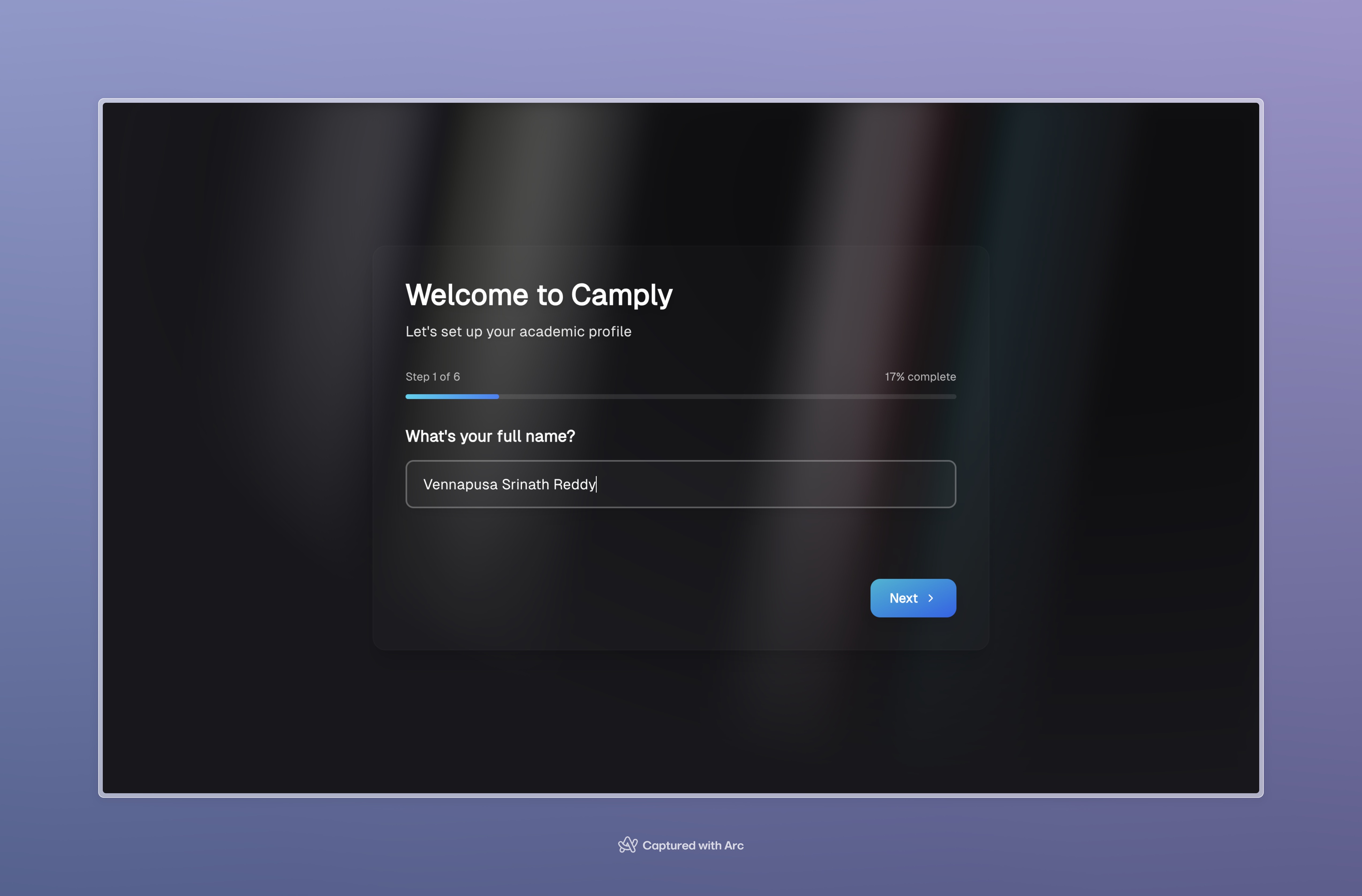
Academic Form - 1
-
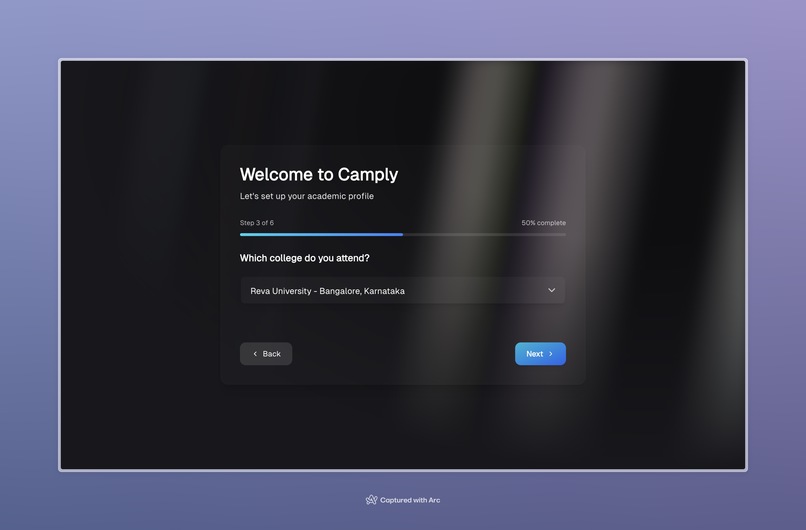
Academic Form - 2
-
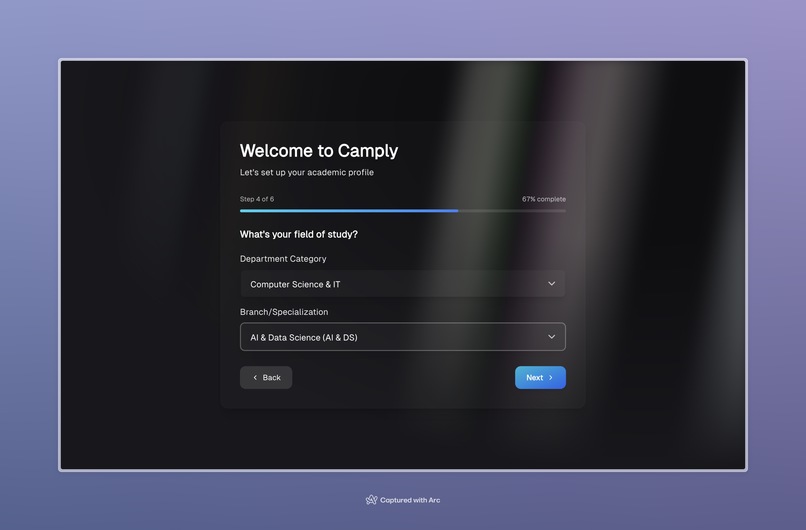
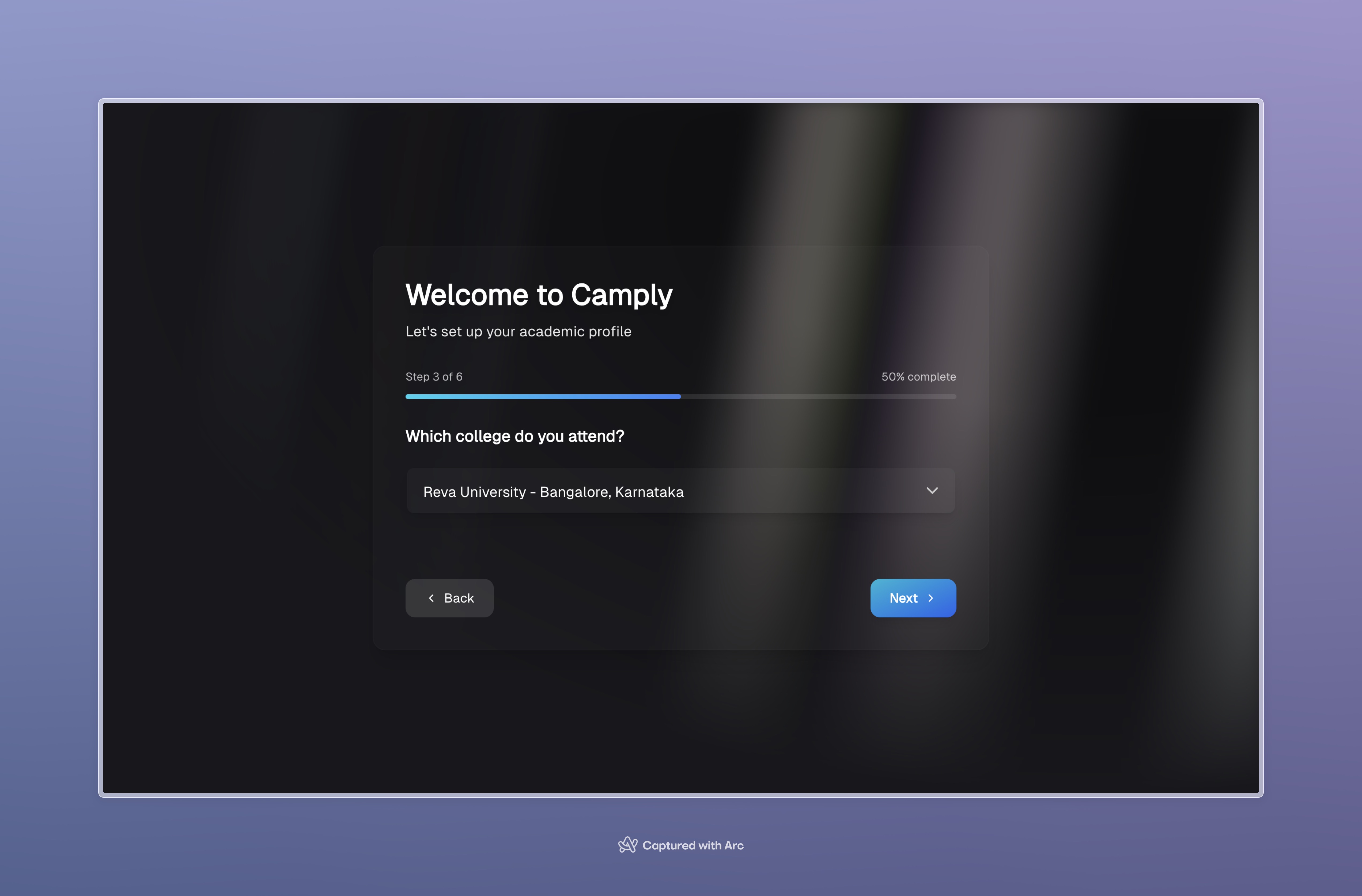
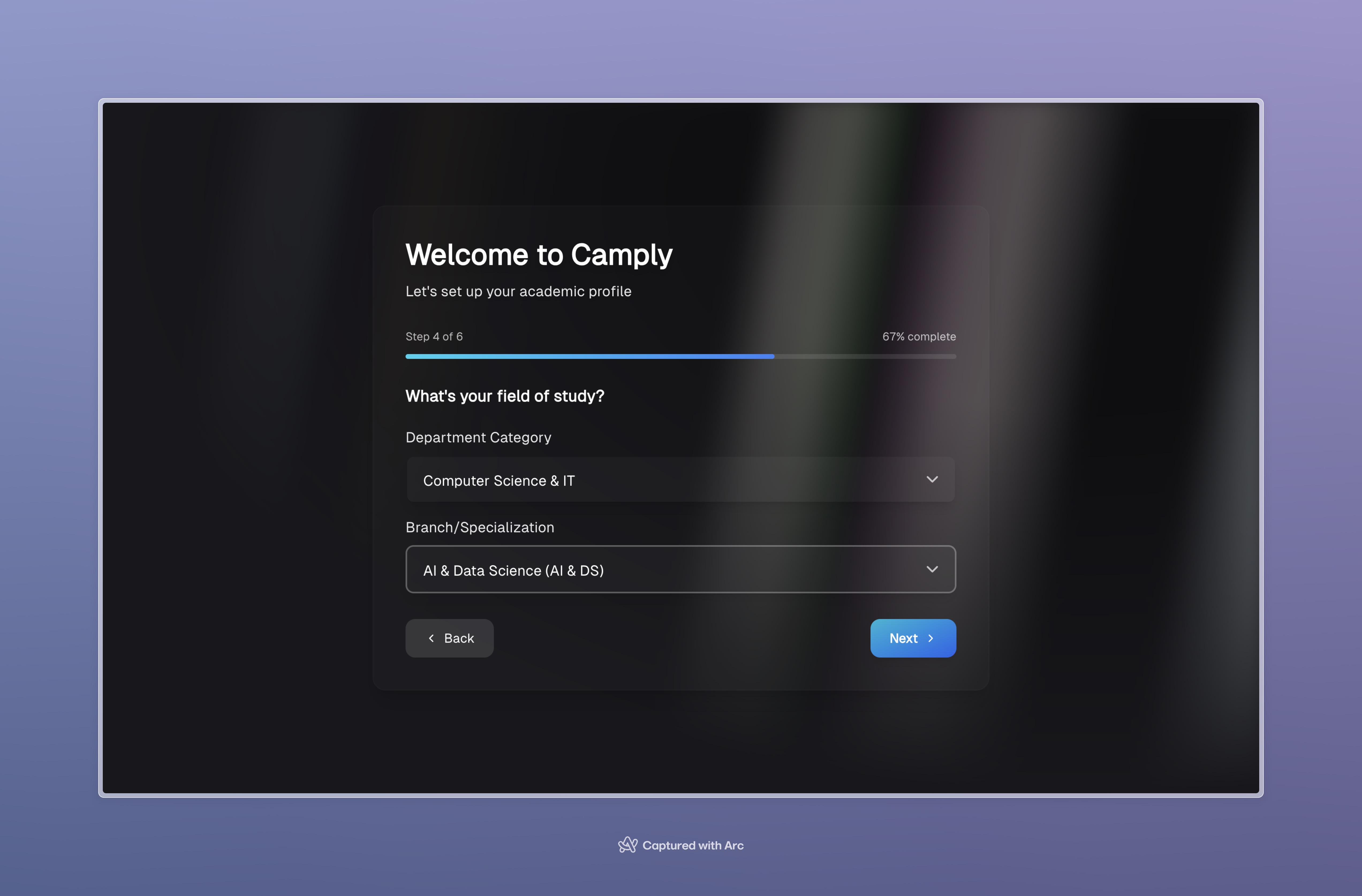
Academic Form - 3
-
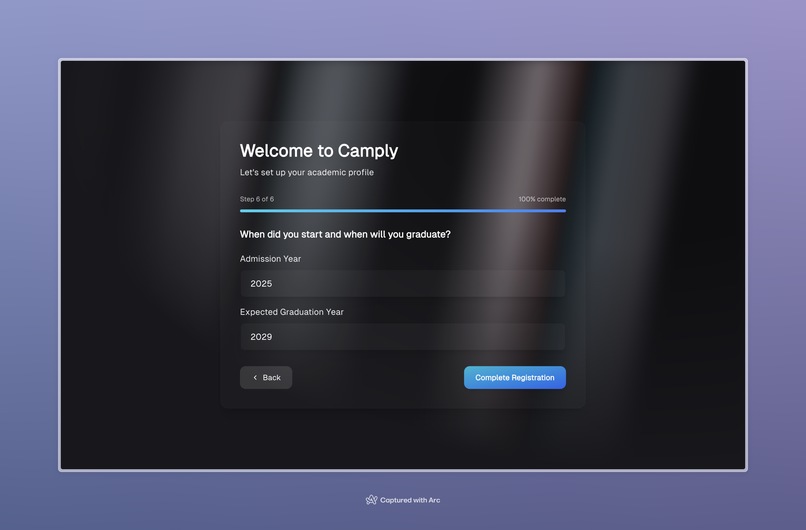
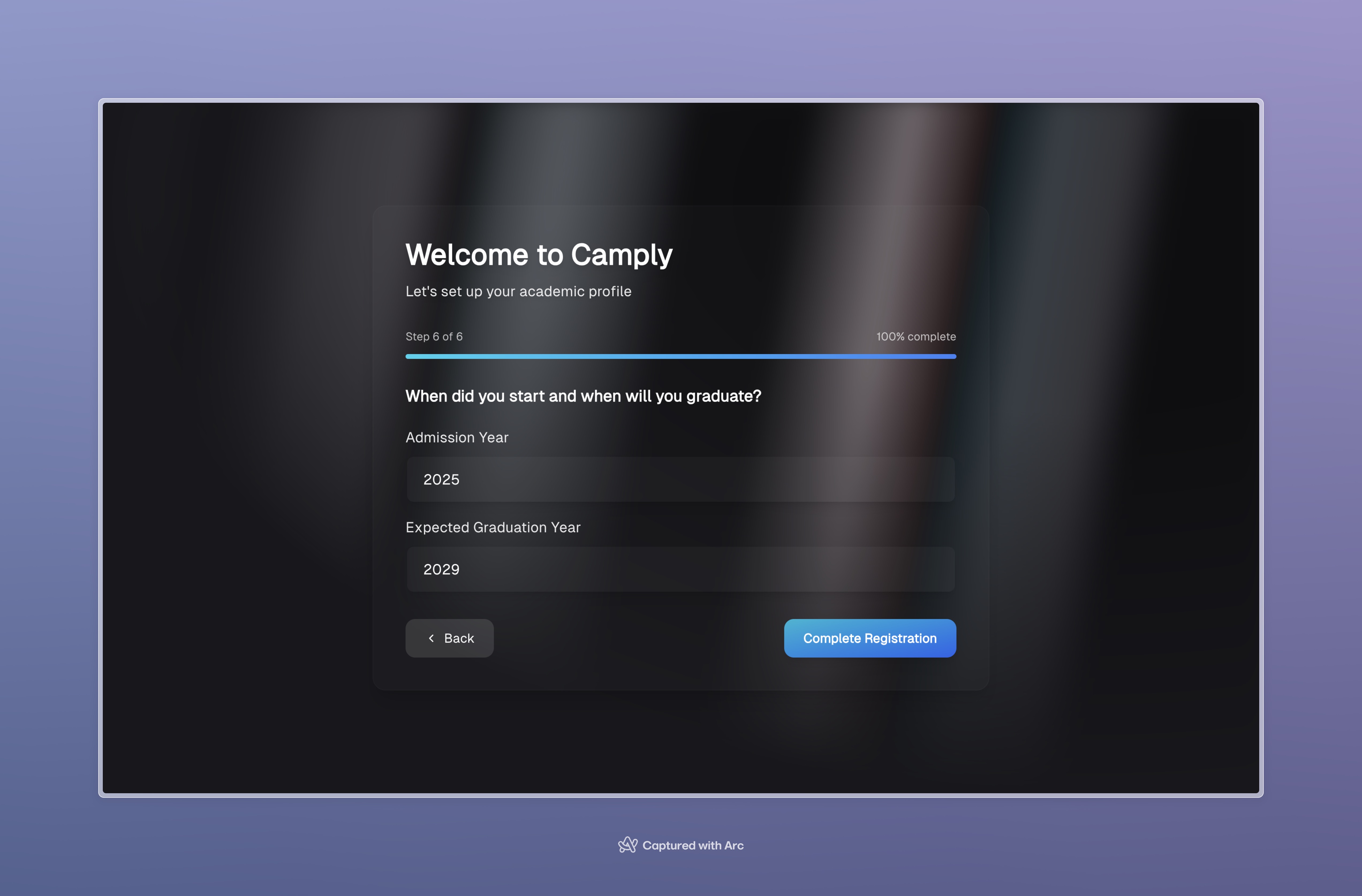
Academic Form - 4
-
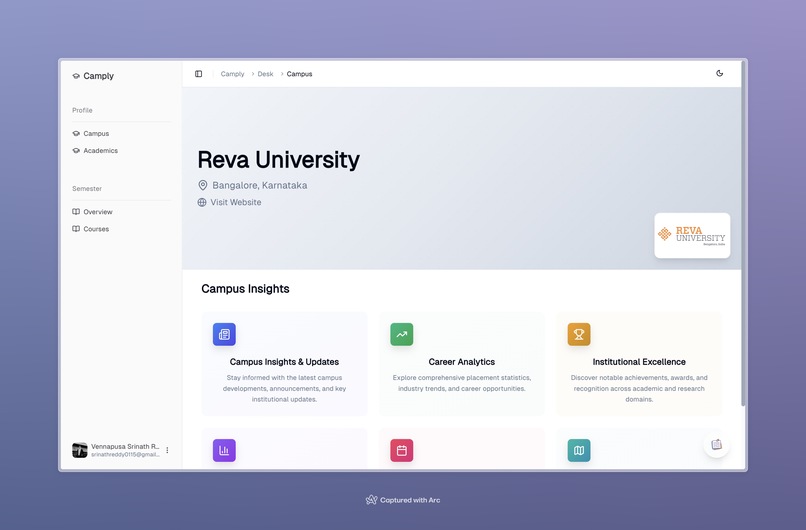
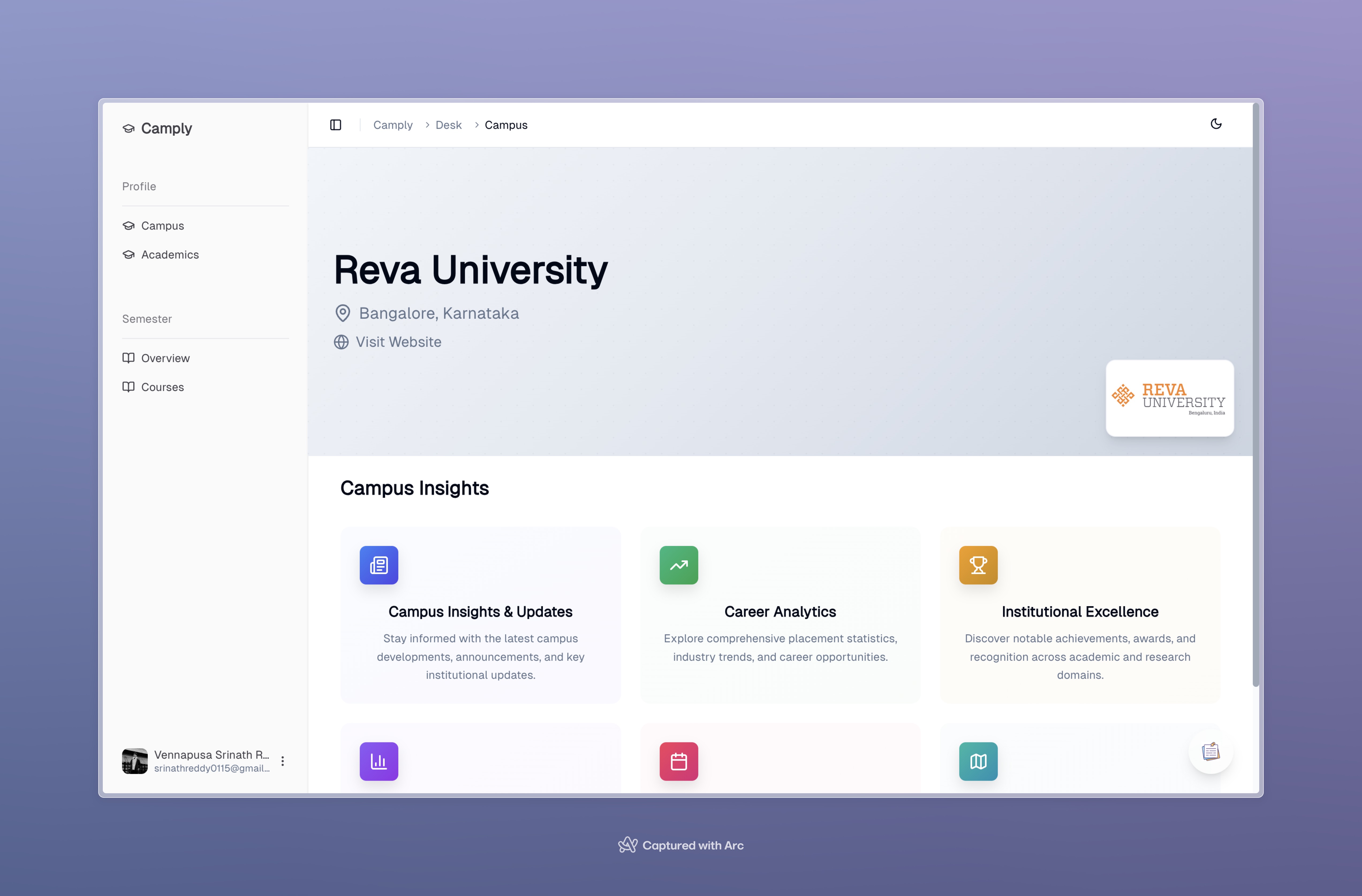
User campus Section
-
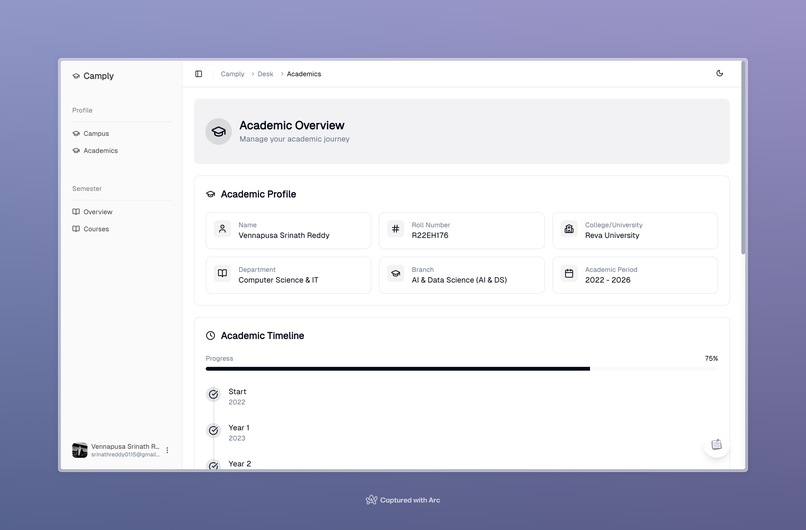
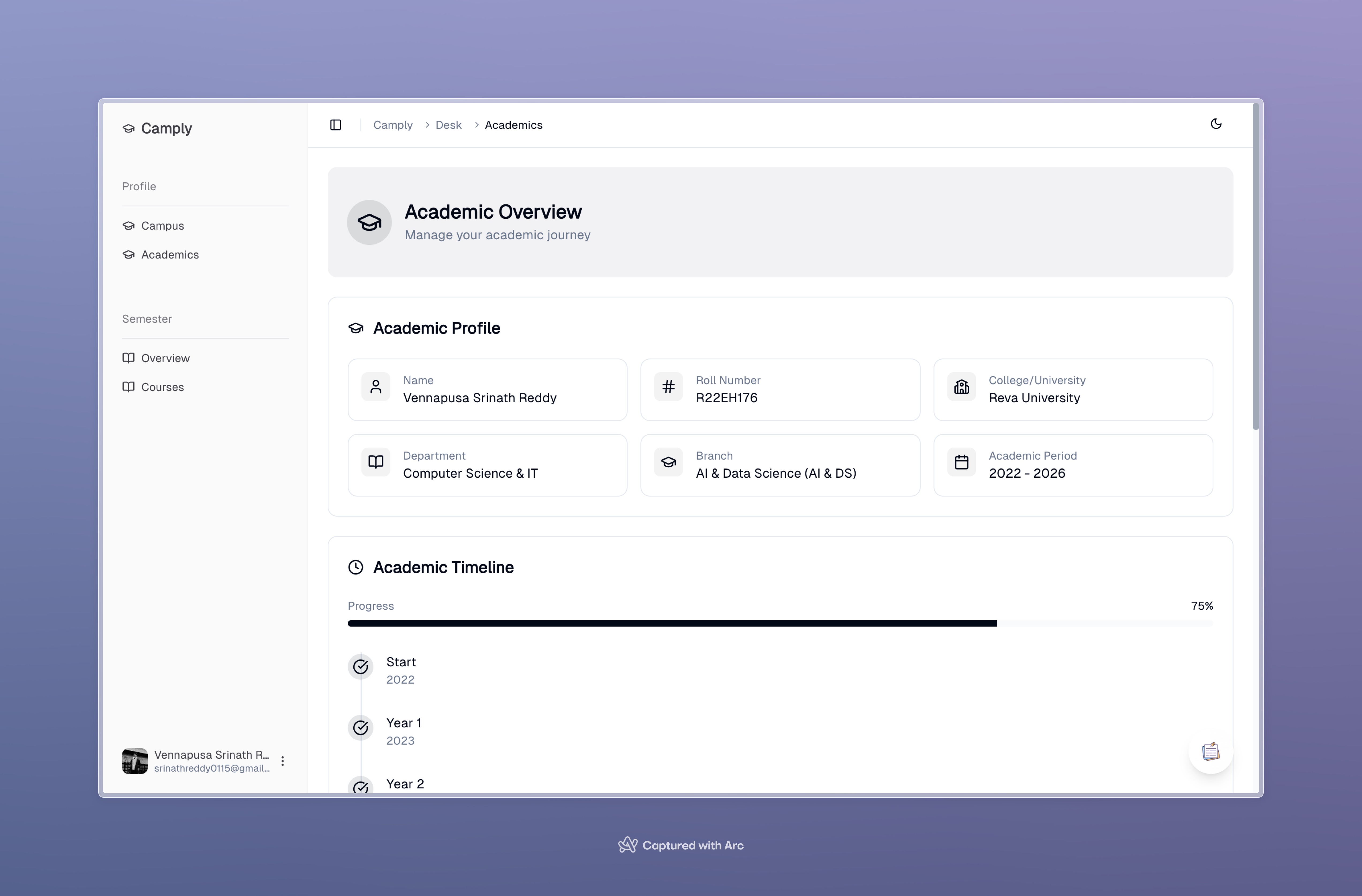
User Academic Section
-
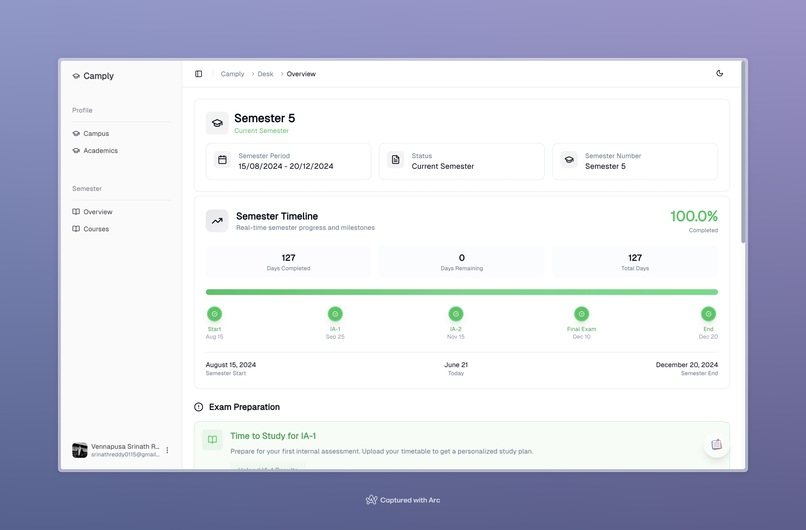
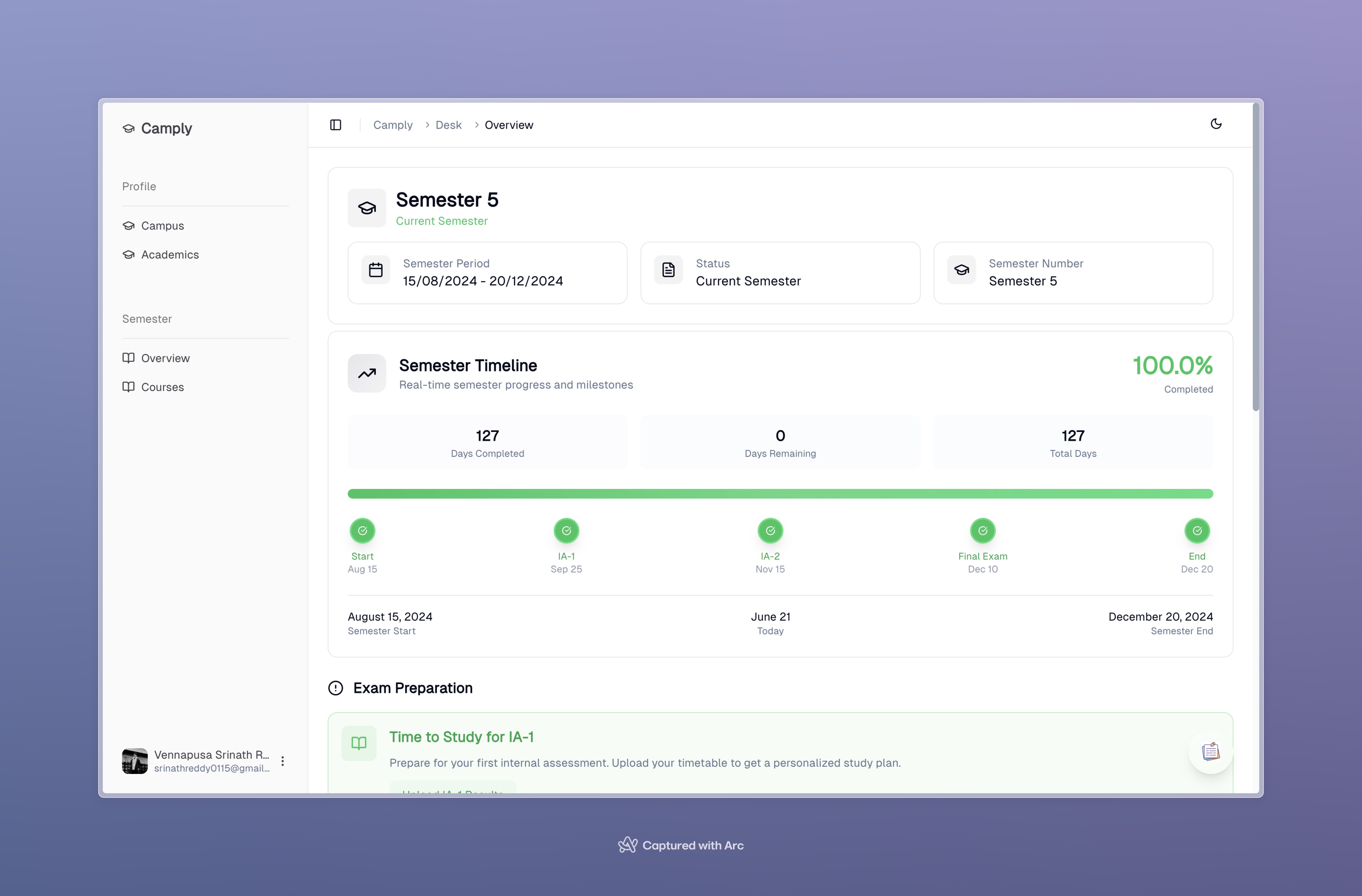
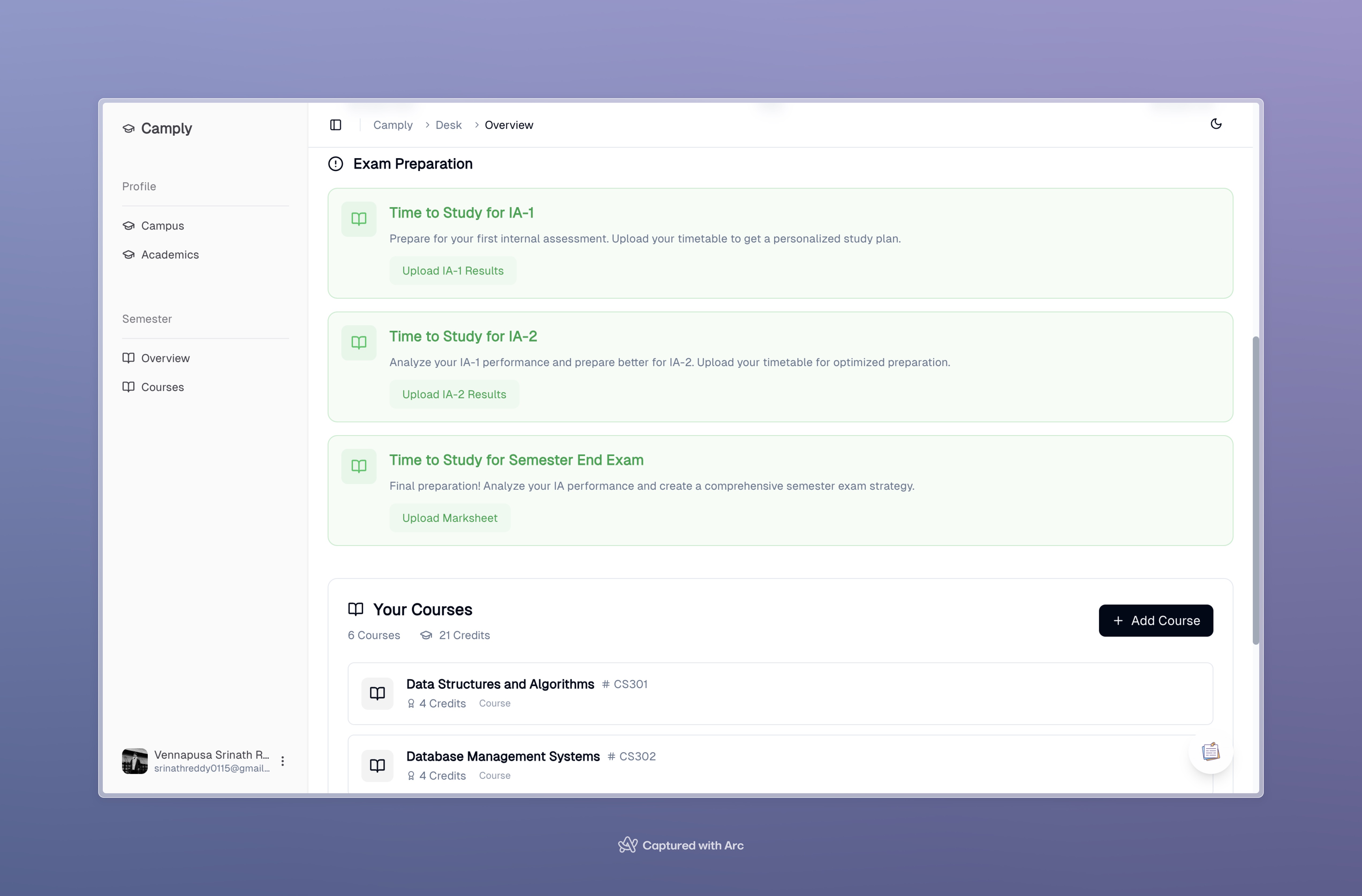
User Current Semester Section
-
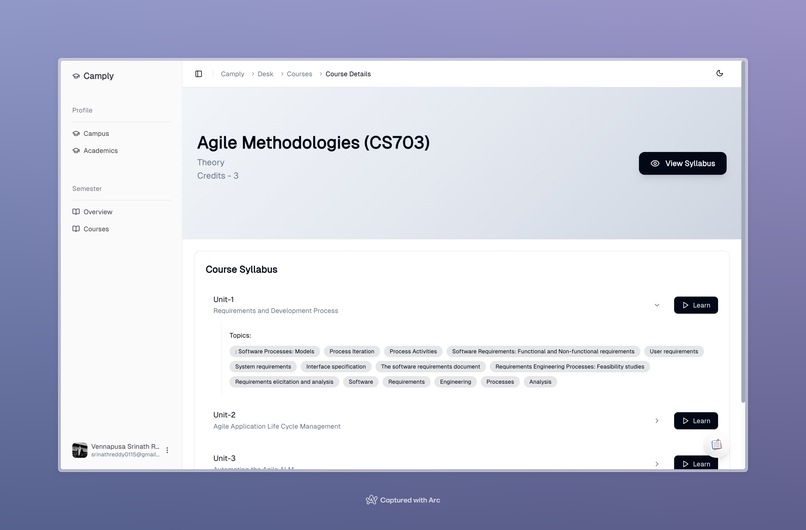
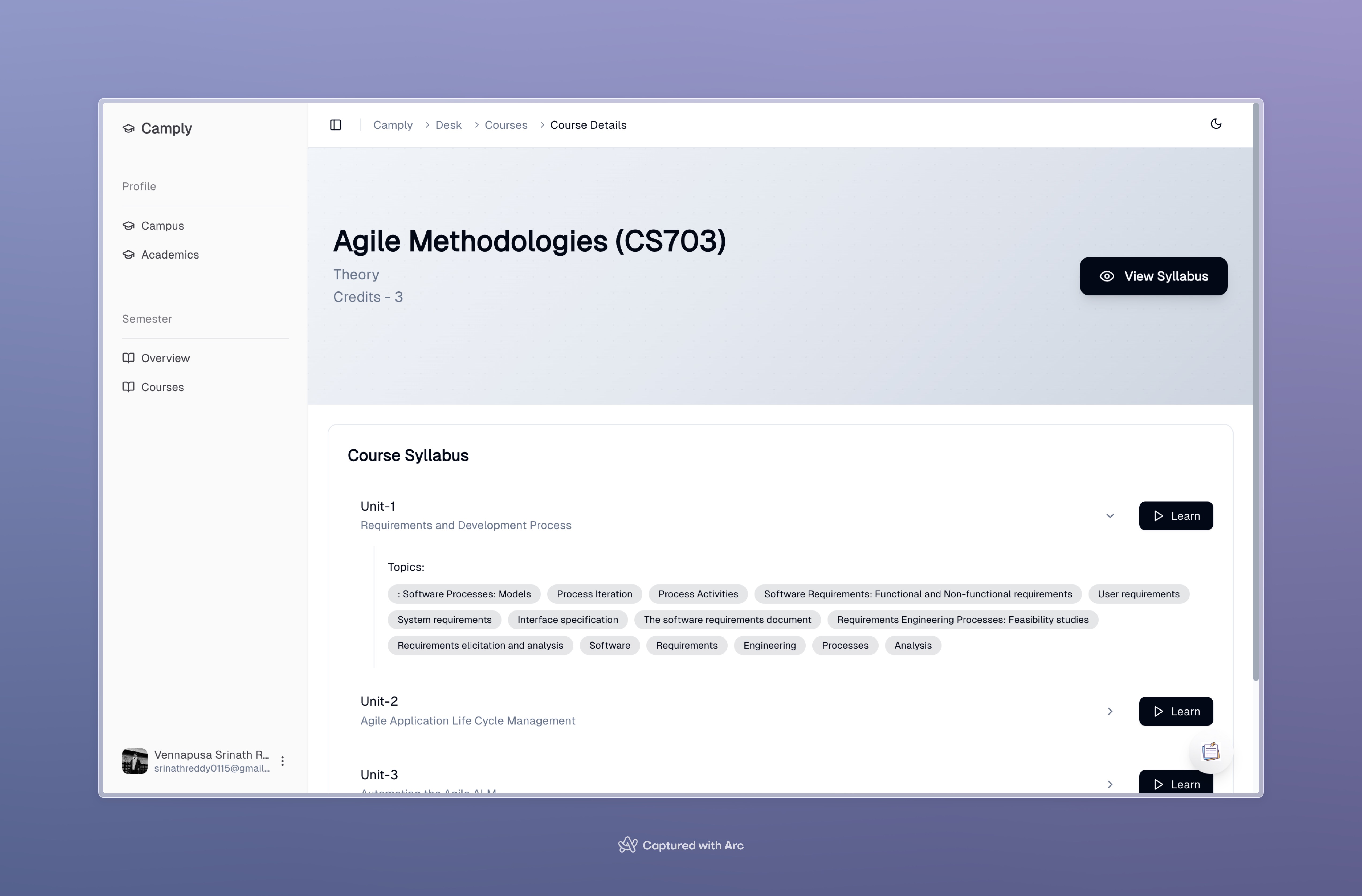
Current Semester Course with syllabus
-
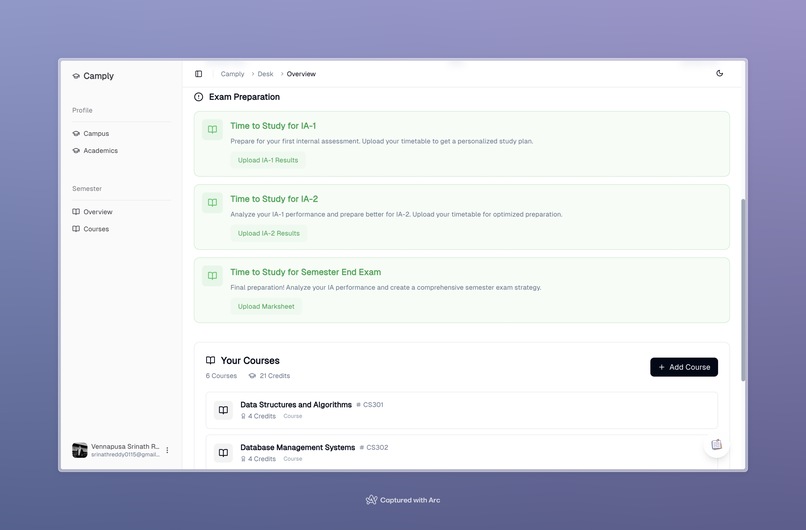
User Current Semester Section
-
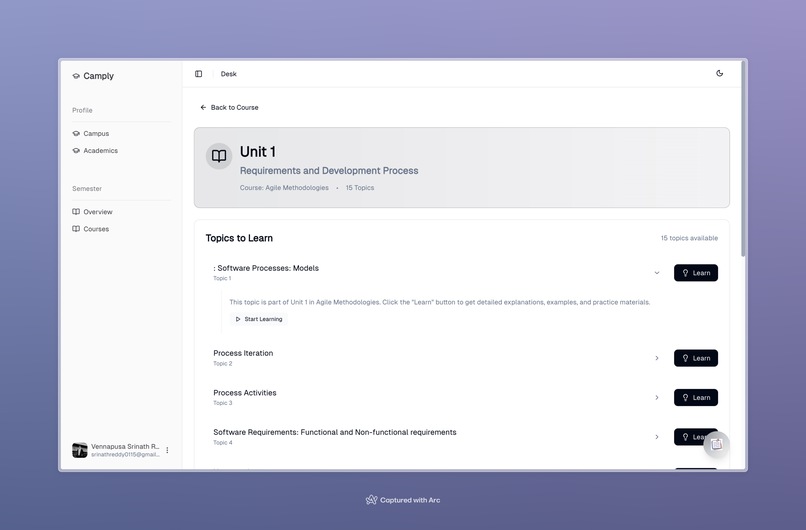
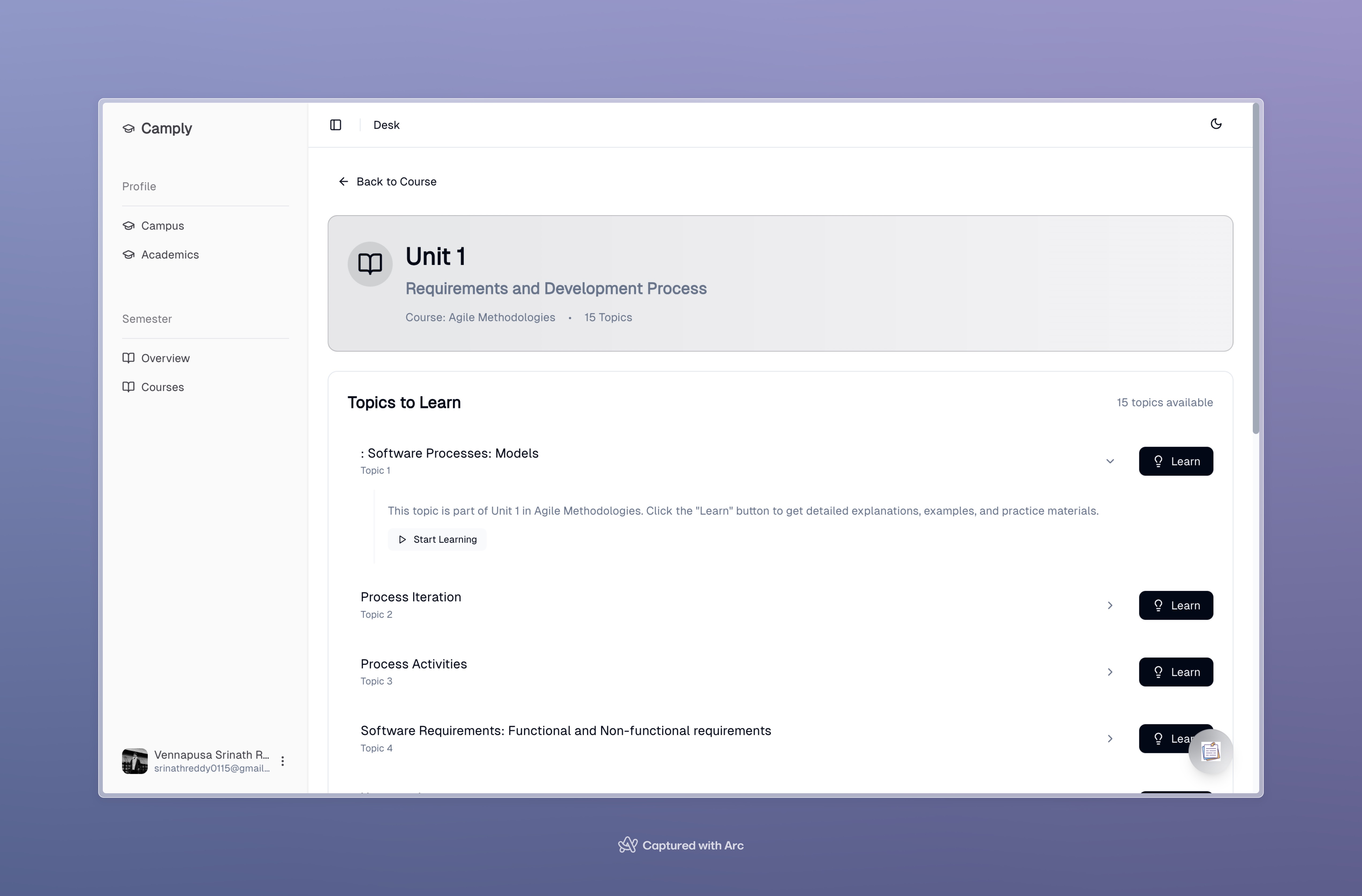
Unit section of a Course with Topics of unit
Camply: AI-Powered Academic Assistant for Indian Engineering Students
Inspiration
I'm in my final year of engineering and came to a harsh realization: I don’t have any organized record of my academic journey. My marks, syllabi, notes, and achievements are scattered across WhatsApp chats, PDFs, and random folders. Most students in Indian colleges face the same issue — institutions rely on outdated communication methods and lack student-centric infrastructure.
Camply was born out of this frustration — a smart, centralized platform that brings structure, clarity, and meaningful tools to help students thrive academically. Built using Google's cutting-edge Agent Development Kit (ADK) and powered by Gemini 2.0 Flash, Camply turns college chaos into calm.
What Camply Does
Camply is an AI-powered platform with specialized agents that support students throughout their college journey. Here's how it helps:
- The Student Desk acts as the central command center, understanding your needs and routing your queries to the right AI agent.
- The Campus Agent pulls structured insights about your college – facilities, placements, and even the latest updates from your campus.
- The Handbook Agent reads your rulebooks and answers policy-related questions like attendance requirements or backlog rules.
- The Syllabus Agent processes semester-wise curriculum documents and transforms them into unit-level learning paths. It generates structured academic plans and links them to assessment milestones.
- The Course Agent creates personalized study material, from concise notes to flowcharts, exercises, and learning checks.
Students can upload syllabi, query handbooks, and get targeted help based on their semester, subjects, and learning style — all in one place.
How We Built It
Camply is powered by Google’s ADK and Gemini 2.0 Flash. Our backend is built using FastAPI, while the frontend is developed with React, TypeScript, and TailwindCSS. Supabase handles authentication, storage, and data.
The ADK system coordinates a root agent (Student Desk) with multiple specialized agents. These agents communicate through shared memory and intent-based routing, allowing for seamless context retention across all interactions. Our document processing layer currently uses PyMuPDF, but we’re migrating to Docling for smarter PDF understanding.
The Course Agent is particularly powerful — it generates modular learning content from a topic name, complete with visuals, examples, and practice exercises, all tailored to a student's syllabus.
Challenges We Faced
Building a multi-agent system wasn’t easy. Indian college PDFs are inconsistently formatted, so parsing them reliably was our first challenge. Ensuring agents could share context without interfering with one another required a carefully structured memory layer.
Generating real-time educational content also pushed the limits of what AI can do — our prompts had to be precisely engineered to avoid generic output. And building a scalable data model that adapts to the diverse structures of Indian colleges took multiple iterations.
What We’re Proud Of
We built a functioning, production-ready AI system that understands Indian college life.
- Our Course Agent can generate full topic-wise study plans with visuals and knowledge checks.
- Our handbook processor accurately parses messy PDFs into structured formats.
- We laid the foundation for a student-centered college ecosystem where academics, events, achievements, and rules live together — structured, accessible, and actionable.
What We Learned
- Prompt engineering is just as important as model choice — clarity and context produce better answers.
- Indian educational data is messy — handling it requires flexibility, fallbacks, and some assumptions.
- Students don’t need dashboards. They need tools that reduce stress and offer real help at the right time.
- Specialization beats generalization — modular agent design creates better performance and trust.
What’s Next
We’re expanding fast:
- Switching to Docling for smarter document processing
- Introducing a Semester Agent to analyze internal assessments and project outcomes
- Adding collaborative student groups, alumni directories, and college-specific feeds
- Creating guardian portals and performance summaries
- Letting students turn their academic journey into a visual portfolio
We also plan to optimize Gemini integration and fine-tune our models for department-specific performance.
Built With
- docling
- fastapi
- google-adk
- postgresql
- pymupdf
- python
- react
- supabase
- typescript
- vercel


Log in or sign up for Devpost to join the conversation.