-
-
App
-
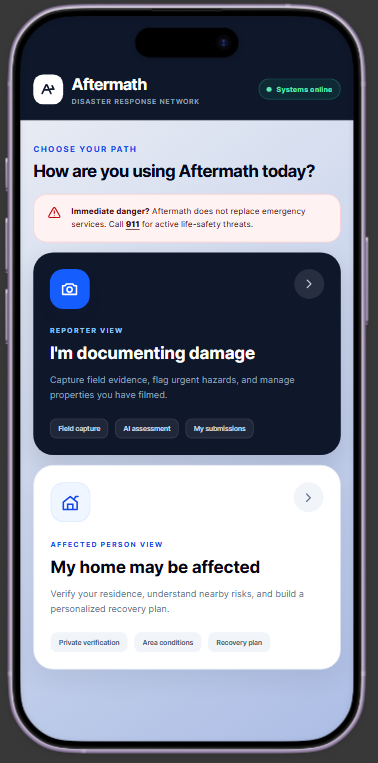
HomeScreen
-
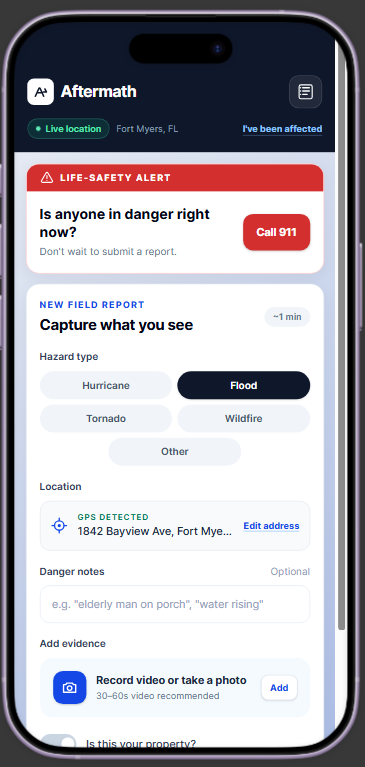
Report
-
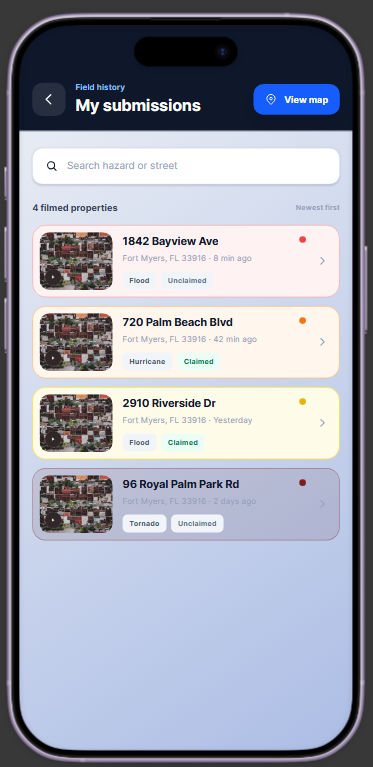
Previous Submissions
-
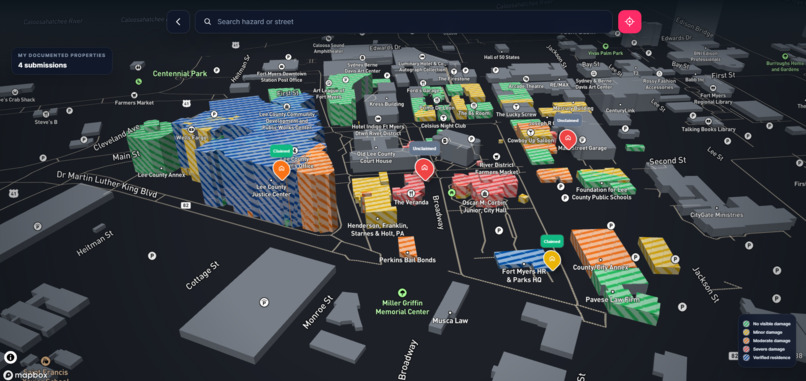
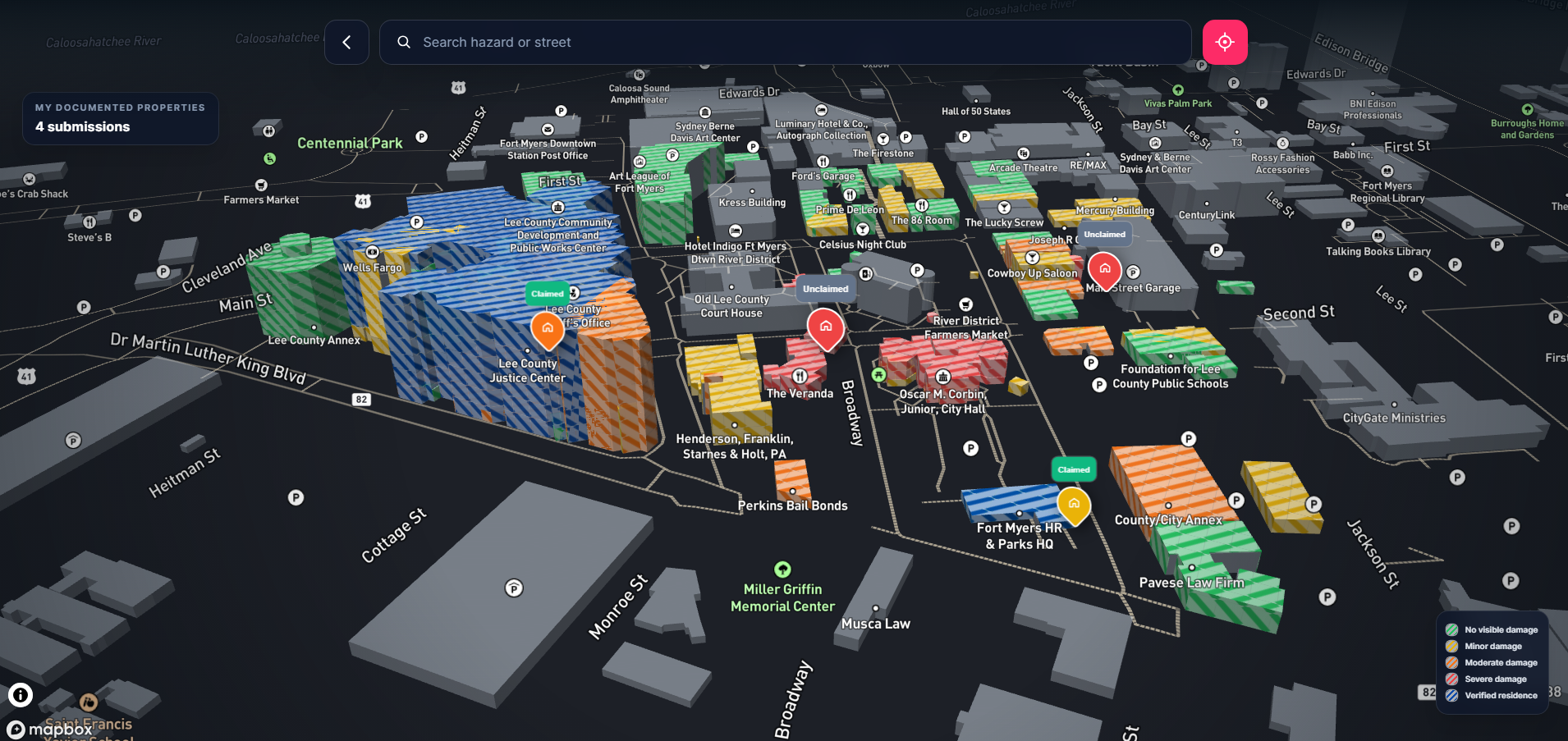
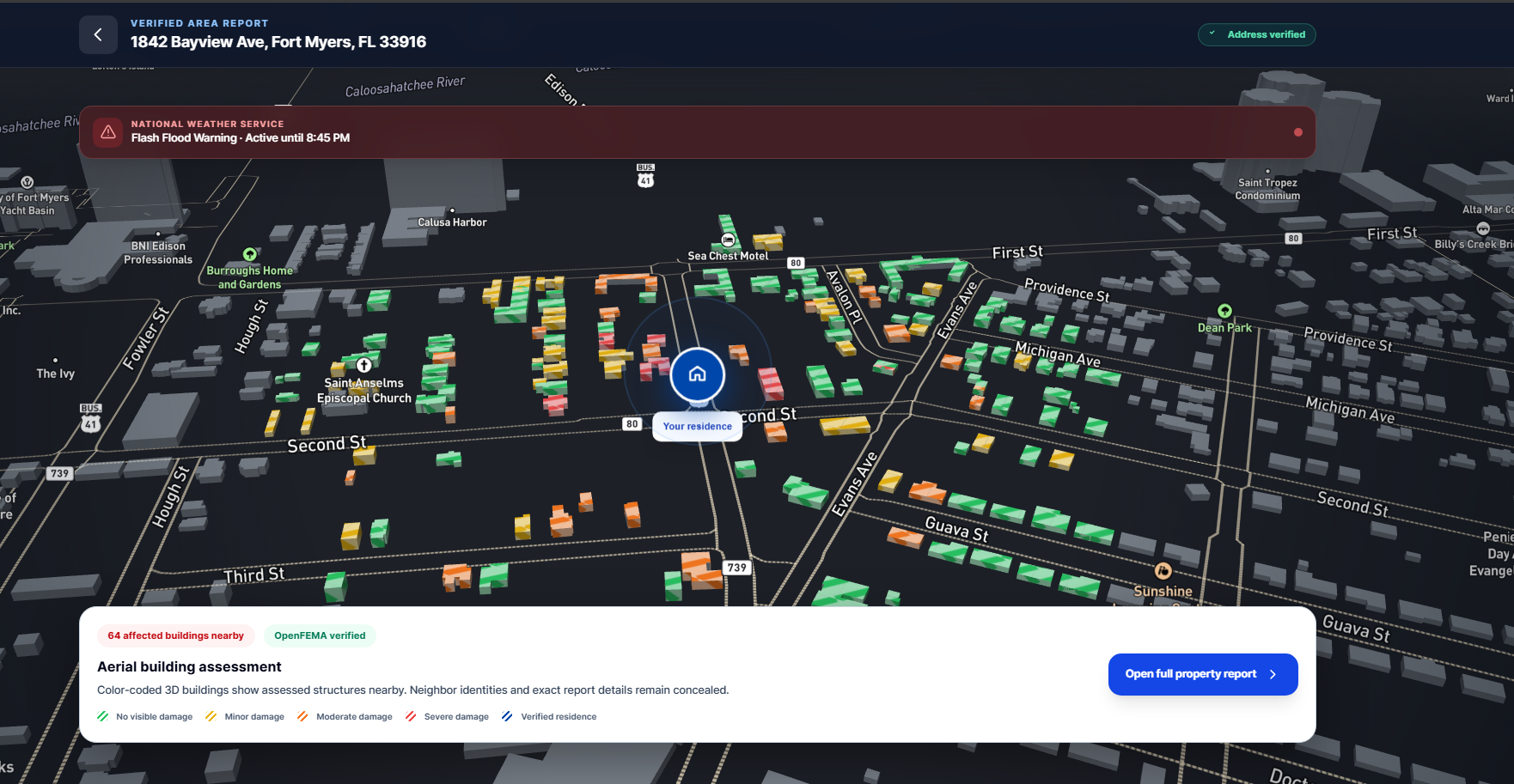
Report map view
-
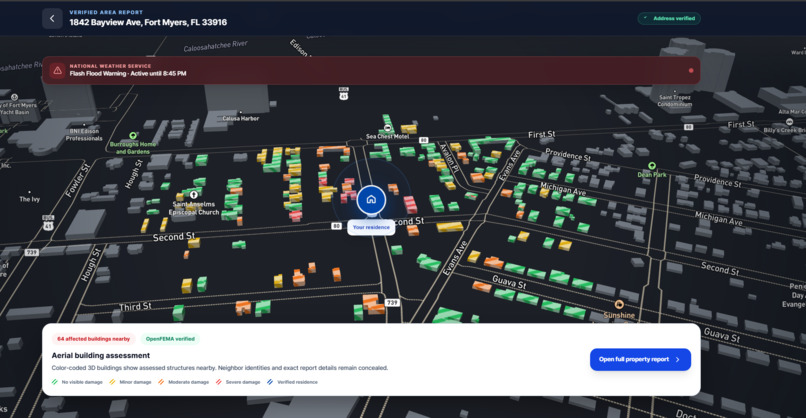
Residents view
-
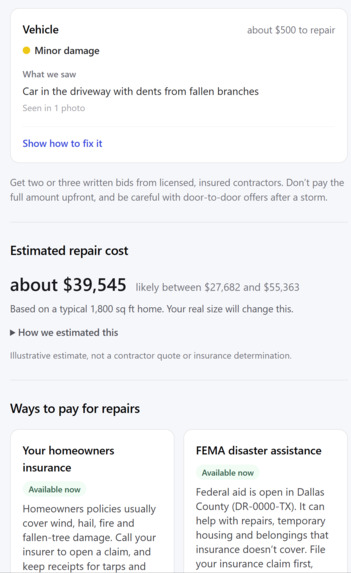
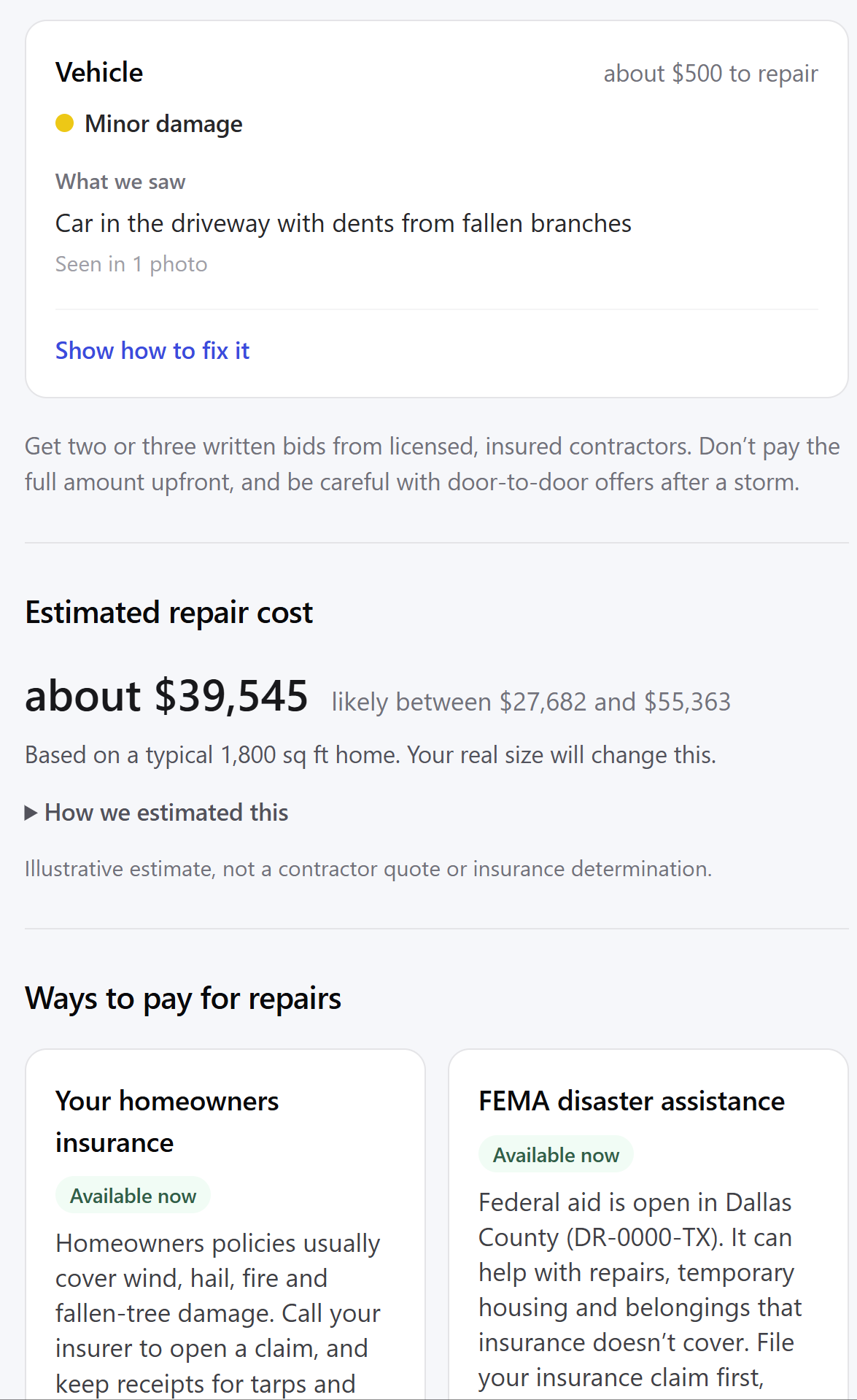
Financial Report view
Inspiration
When a natural disaster damages a neighborhood, residents are often evacuated and left in the dark about the condition of their homes. Not knowing, and then facing the work of rebuilding without support, can feel overwhelming and isolating.
We built Aftermath to give residents timely information on their homes and a clear way forward to rebuilding.
What it does
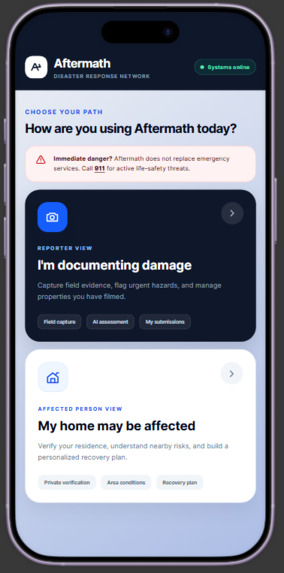
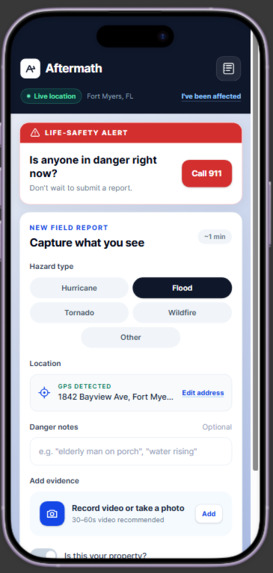
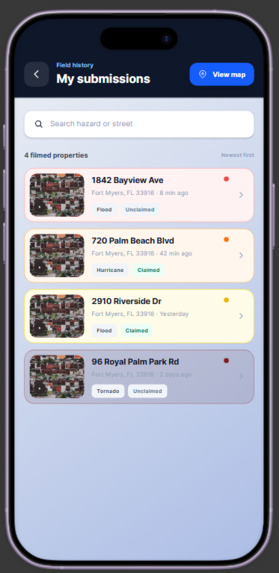
Rescue volunteers and first responders can submit photos and videos of property damage, so residents can see whether their homes were affected. From there, residents receive a recovery plan that estimates the cost and resources needed to rebuild, along with connections to community resources, repair estimates, and relief services to help them move forward.
Residents view their reports in a secure, private space, and two-step ID verification confirms that the person viewing a recovery plan is the resident of that home.
How we built it
We built Aftermath by splitting the work across frontend design, backend infrastructure, AI damage assessment, and recovery guidance. We used SpacetimeDB for our real-time backend and deployed NVIDIA Nemotron vision and language models on an H100 through Brev. Our AI pipeline analyzes submitted damage imagery, produces structured findings, and combines them with rule-based repair estimates to support recovery planning. Working in parallel through GitHub, we brought the pieces together while iterating on model prompts, output validation, and access controls.
Challenges we ran into
Initially, we had to work hard to identify the two user roles (reporter vs affected) and make sure everyone was on the same page of which user did what/had access to certain information. We ran into challenges implementing a custom Mapbox API in our app to highlight affected buildings and ensuring the addresses shown matched the map view. Our infrastructure also pivoted as we started on a Vultr hosting plan. We then moved the Nemotron worker stack to Nvidia Brev which took time for everyone to onboard.
Accomplishments that we're proud of
We were able to create a fully functioning map of both the recovery map and the report view map. We were able to keep merge conflicts to a minimum by clearly delegating tasks and areas of our project.
What we learned
We learned how to create an interactive 3D map with the Mapbox API and how to analyze real-world data using Nemotron. AI sped up our implementation, but we found that to connect more naturally with our users, we needed to change the UI layout and wording.
What's next for Aftermath
In the future, we hope to add a feature that allows rescue helicopters to send photogrammetry images and footage of structural damage after a storm.
Built With
- brev
- figma
- nemotron
- spacetime
- typescript

