🚀 Inspiration
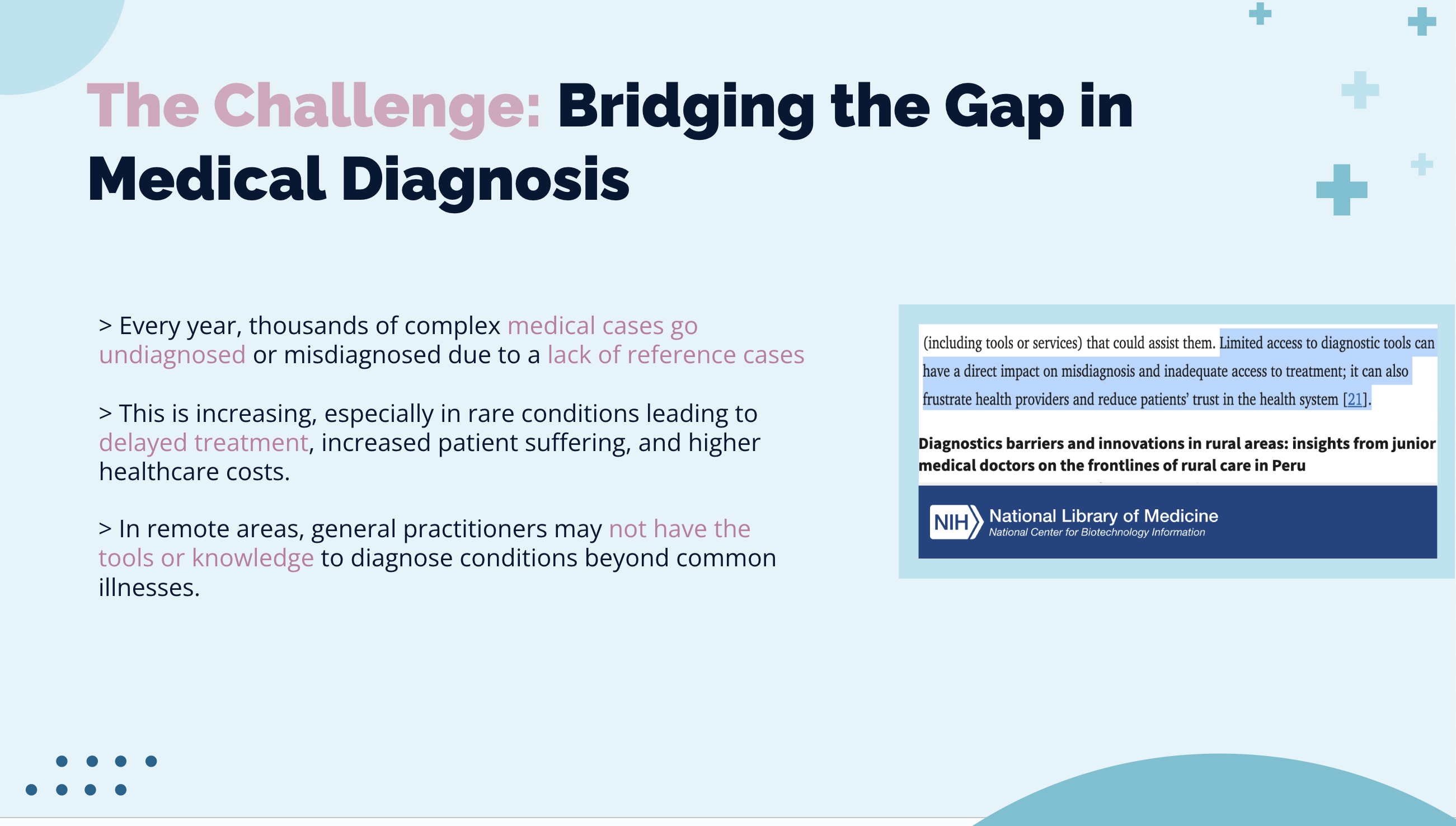
Medical case reports contain valuable diagnostic insights, but they remain scattered and underutilized. Many rare diseases are misdiagnosed, and in remote areas with limited access to healthcare, timely medical insights are scarce. MediGraph aims to bridge this gap by structuring case reports into a graph-based system that enables efficient symptom-diagnosis retrieval.
🔍 What it does
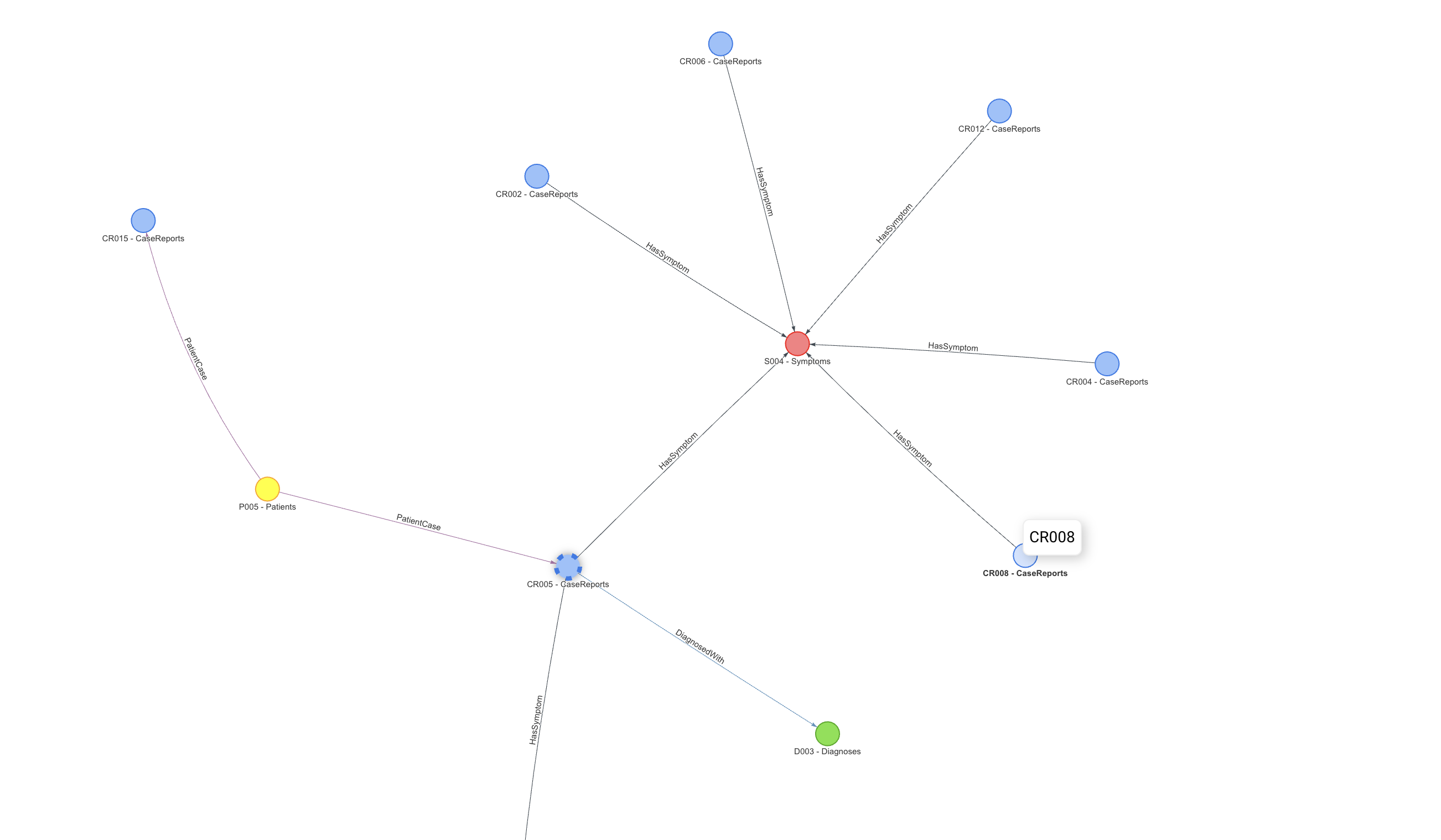
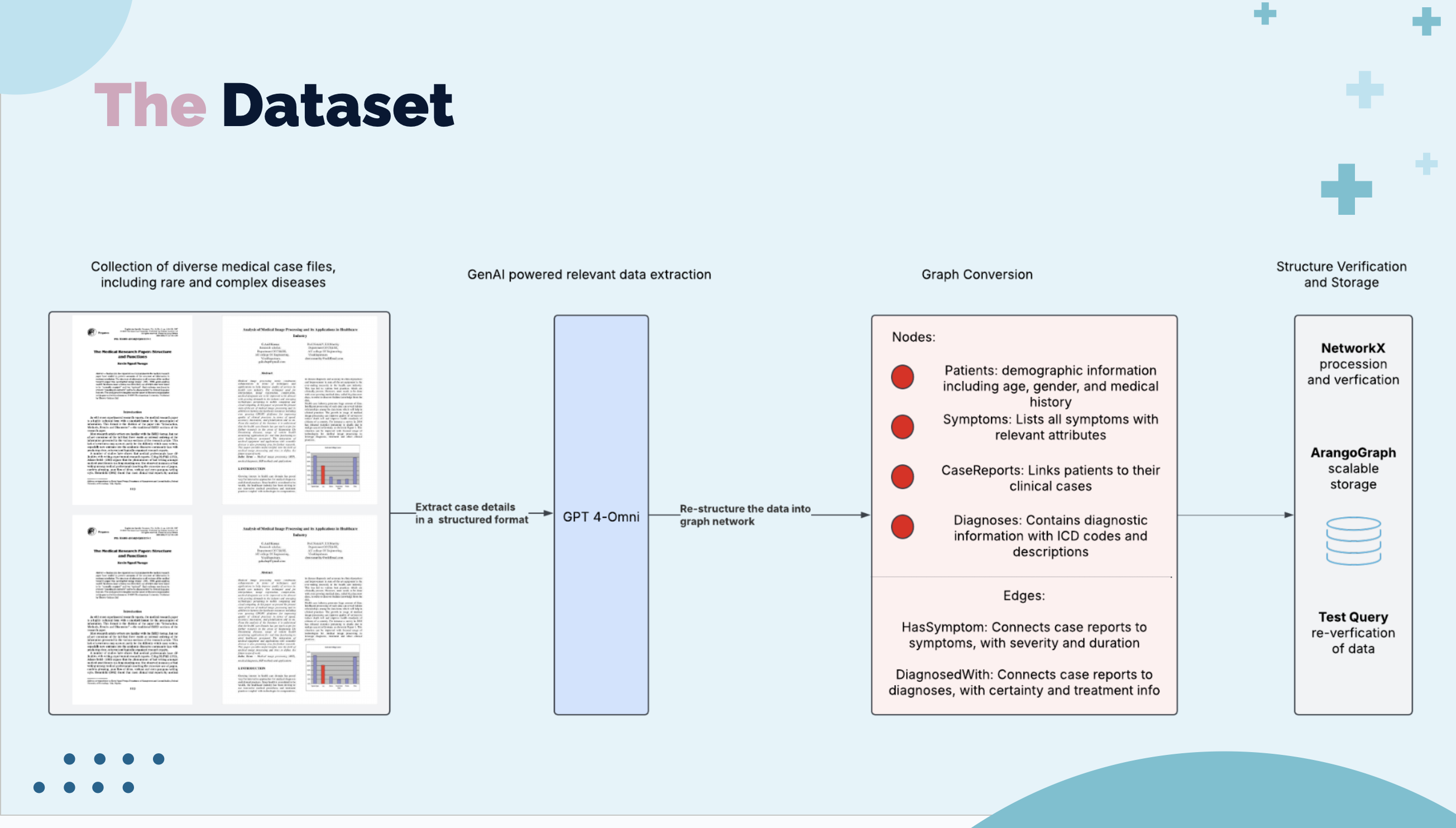
MediGraph ingests medical case reports and diagnostic datasets and converts them into a graph structure using ArangoDB and NetworkX.
- Graph Structure: Nodes represent patient demographics, symptoms, and diagnoses, while edges define their relationships.
- Hybrid Querying: Uses GraphRAG to retrieve relevant cases, combining:
- Graph traversal for symptom-based search.
- Centrality scores in NetworkX to rank important connections in the diagnosis graph.
- Graph traversal for symptom-based search.
- Use Cases:
- Identifying rare diseases by linking to similar historical cases.
- Supporting healthcare in remote areas where expert doctors are unavailable.
- Medical education & research, providing quick access to case-based knowledge.
- Identifying rare diseases by linking to similar historical cases.
🛠️ How we built it
- Data Processing: Preprocessed dummy medical data into a structured format.
- Graph Database: Modeled relationships in ArangoDB for efficient querying.
- Graph Analytics: Used NetworkX to calculate centrality scores and optimize search results.
- Query Optimization: Implemented hybrid queries combining graph traversal & ranking.
- Natural Language Input: Used GraphRAG to process queries and retrieve relevant cases dynamically.
⚠️ Challenges we ran into
- Graph query optimization – Balancing traversal efficiency with accurate results.
- Hybrid query implementation – Combining centrality-based ranking with graph searches.
- Ensuring medical relevance – Filtering noise from the dataset to improve response accuracy.
🏆 Accomplishments that we're proud of
✅ Successfully built a graph-based symptom-diagnosis retrieval system.
✅ Implemented centrality-based ranking to improve diagnosis relevance.
✅ Developed a working prototype capable of answering natural language medical queries.
📚 What we learned
🔹 The benefits of graph-based knowledge retrieval for medical insights.
🔹 How centrality measures can enhance graph-based search.
🔹 The importance of hybrid query optimization for real-time diagnosis suggestions.
🚀 What's next for MediGraph?
🔹 Expanding dataset coverage to include more diverse medical cases.
🔹 Refining search algorithms for better accuracy and response time.
🔹 Validating results with medical experts to improve practical usability.
Built With
- arangodb
- networkx
- python
- streamlit

Log in or sign up for Devpost to join the conversation.